57,964  PAGES BROWSED TODAY PAGES TODAY • 231 ANTIQUES UPLOADED TODAYNEW ARRIVALS
GIFTS
231 ITEMS ADDED TODAY
Sort Order
Items Per Page
Browse Categories
Sort order
Relevant Links
Items per page
ID #SA1244043
FOR SALE
£150
Email Phone
Save
Rare Pair 18th Century Facet Cut Bucket Bowl Dram Glasses C1780
For sale by Exhibit Antiques
for sale €176     $191
£150
Exhibit Antiques

Exhibit Antiques

Sellingantiques Verified Since Mar 2019
Browse dealers 222 items
  • About Us
    Specialists in 18th & 19th century antique glass
Id #SA1244043
PDF SHARE
SAVE

Rare Pair 18th Century Facet Cut Bucket Bowl Dram Glasses C1780

18th century
For Sale by Exhibit Antiques
Description

Description

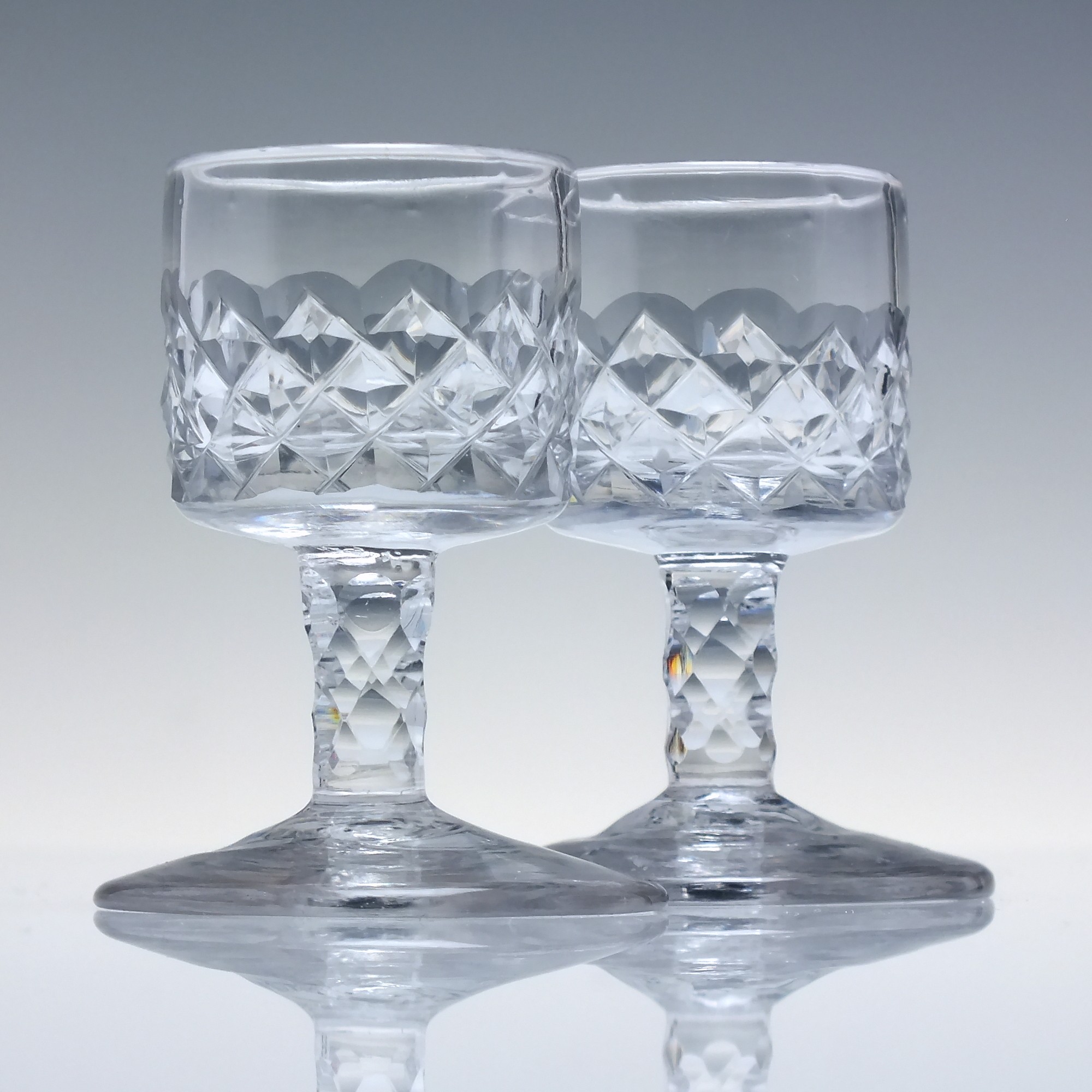
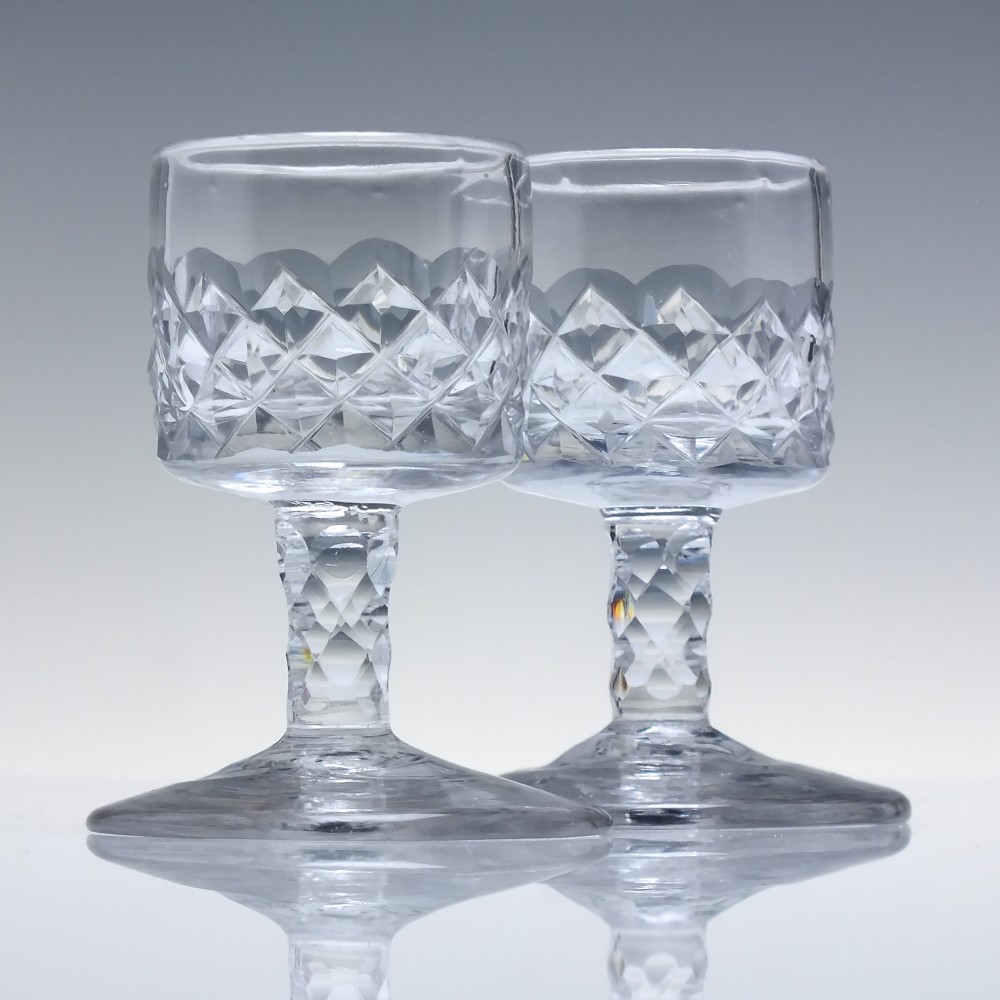
An exceptionally rare pair of 18th-century Whiskey Dram glasses dating to c.1780.

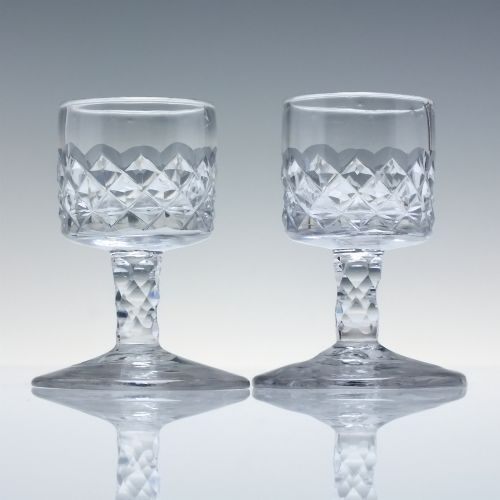
They have small bucket bowls decorated with a field of diamond cutting around the lower half of the bowls. The glasses stand on diamond facet-cut stems above conical feet with snapped pontils.
These glasses fall into the category of miniature dram glasses, though despite their diminutive appearance they will still comfortably hold the 25ml required for a standard single measure.

Miniature dram forms are among the rarest surviving categories of 18th-century drinking glass, and examples with fully facet-cut stems are exceptionally unusual. We have specialised in dram glasses for over twenty years and these are the very first examples of this distinctive form that we have owned or encountered.

Date & Origin

England c1780. Period of King George III

Condition

Excellent, age-related wear. No chips, cracks or restoration.

Dimensions

Height: 7.7cm

Bowl Diameter: 3.4cm

Foot Diameter: 5.2cm

Date of Manufacture

Exhibit Antiques has dated these Georgian Facet Cut Dram Glasses to the Georgian era.

Independent Date Check ID 09708301
Dealer's Item DateGeorgian era
Sellingantiques DateGeorgian era
Sellingantiques agingItem 225-260 years old
Test ResultsPassed dating check
Why Sellingantiques dated this piece to THE GEORGIAN ERA:
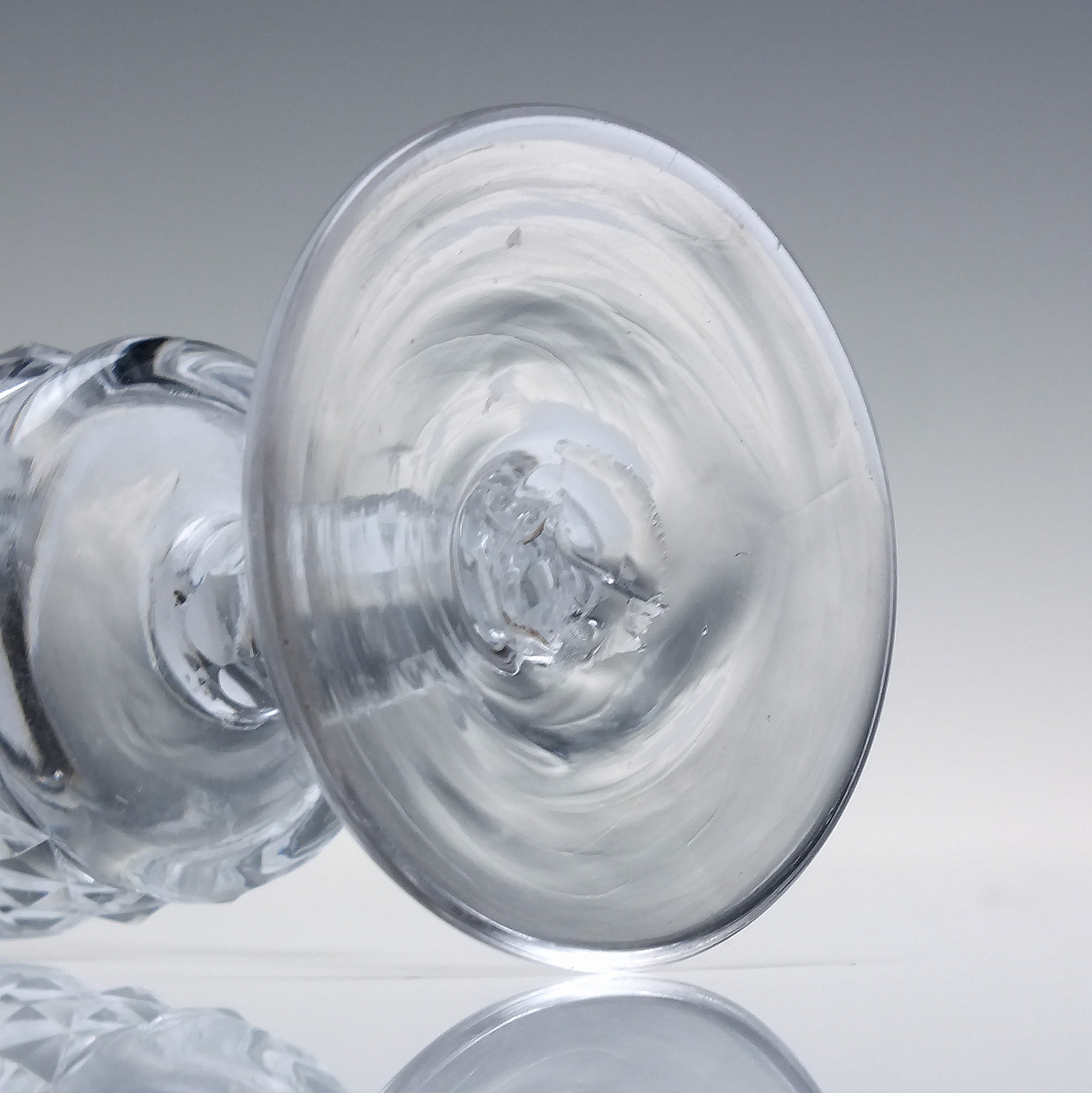
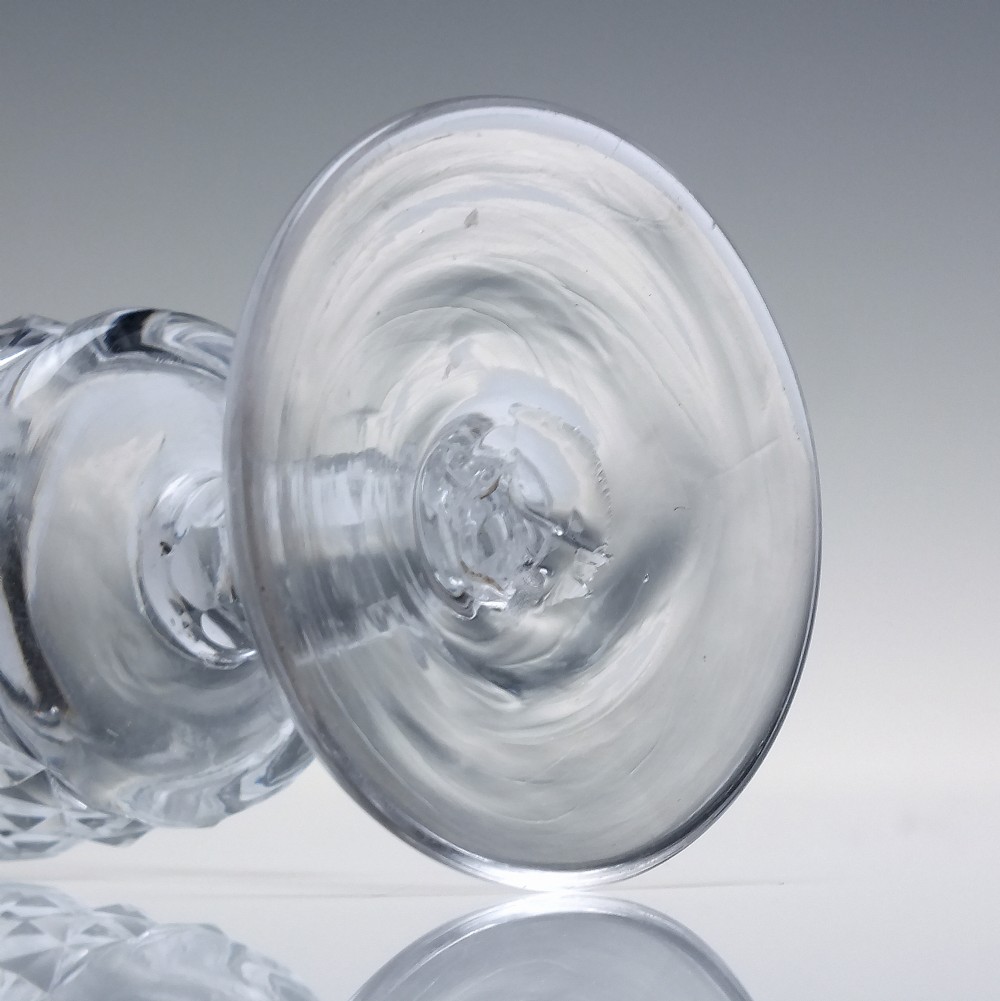
Rough snapped pontil scar on the underside: hand-blown glass before ground pontils became standard.
Diamond facet cutting on the stem: late eighteenth-century wheel work.
Uneven circular wear scratching beneath the foot rim: prolonged handling across tabletops.
Minute bubbles and seeds trapped in the lead metal: early hand-melted glass.

This is an independent date report produced by Sellingantiques using its own proprietary system. The process uses the photographs shown on this page. The system is never told the date the dealer has declared. This report shows that the two dates corroborate.

Reference Numbers
Sellingantiques Reference
SA1244043
Dealers Internal Reference
SG026031305
Description
Description

An exceptionally rare pair of 18th-century Whiskey Dram glasses dating to c.1780.

“
They have small bucket bowls decorated with a field of diamond cutting around the lower half of the bowls.
Exhibit Antiques

The glasses stand on diamond facet-cut stems above conical feet with snapped pontils.

fig 1. A pair of clear eighteenth-century lead glass dram glasses featuring bucket-shaped bowls with diamond facet cutting, short faceted stems, and wide conical bases.
fig 1. Rare Pair 18th Century Facet Cut Bucket Bowl Dram Glasses C1780

These glasses fall into the category of miniature dram glasses, though despite their diminutive appearance they will still comfortably hold the 25ml required for a standard single measure.

Miniature dram forms are among the rarest surviving categories of 18th-century drinking glass, and examples with fully facet-cut stems are exceptionally unusual. We have specialised in dram glasses for over twenty years and these are the very first examples of this distinctive form that we have owned or encountered.

Date & Origin

England c1780. Period of King George III

Condition

Excellent, age-related wear. No chips, cracks or restoration.

Dimensions

Height: 7.7cm

Bowl Diameter: 3.4cm

Foot Diameter: 5.2cm

Date of Manufacture

Exhibit Antiques has dated these Georgian Facet Cut Dram Glasses to the Georgian era.

Independent Date Report ID 09708301
Dealer's Item DateGeorgian era
Sellingantiques datingGeorgian era
Sellingantiques agingItem 225-260 years old
Test ResultsPassed dating check
Why Sellingantiques dated this piece to the Georgian era:
Rough snapped pontil scar on the underside: hand-blown glass before ground pontils became standard.
Diamond facet cutting on the stem: late eighteenth-century wheel work.
Uneven circular wear scratching beneath the foot rim: prolonged handling across tabletops.
Minute bubbles and seeds trapped in the lead metal: early hand-melted glass.

This is an independent date report produced by Sellingantiques using its own proprietary system. The process uses the photographs shown on this page. The system is never told the date the dealer has declared. This report shows that the two dates corroborate.

Reference Numbers
Sellingantiques Ref
SA1244043
Dealers Internal Ref
SG026031305
Exhibit Antiques
Exhibit Antiques
Sellingantiques verified Since Mar 2019

Specialists in 18th & 19th century antique glass

Dealer Profile

You can view the stock and full dealer information on the Exhibit Antiques Profile Page
PDF SHARE
SAVE
A pair of clear eighteenth-century lead glass dram glasses featuring bucket-shaped bowls with diamond facet cutting, short faceted stems, and wide conical bases.
1 / 4
Archive I A pair of clear eighteenth-century lead glass dram glasses featuring bucket-shaped bowls with diamond facet cutting, short faceted stems, and wide conical bases.

Rare Pair 18th Century Facet Cut Bucket Bowl Dram Glasses C1780
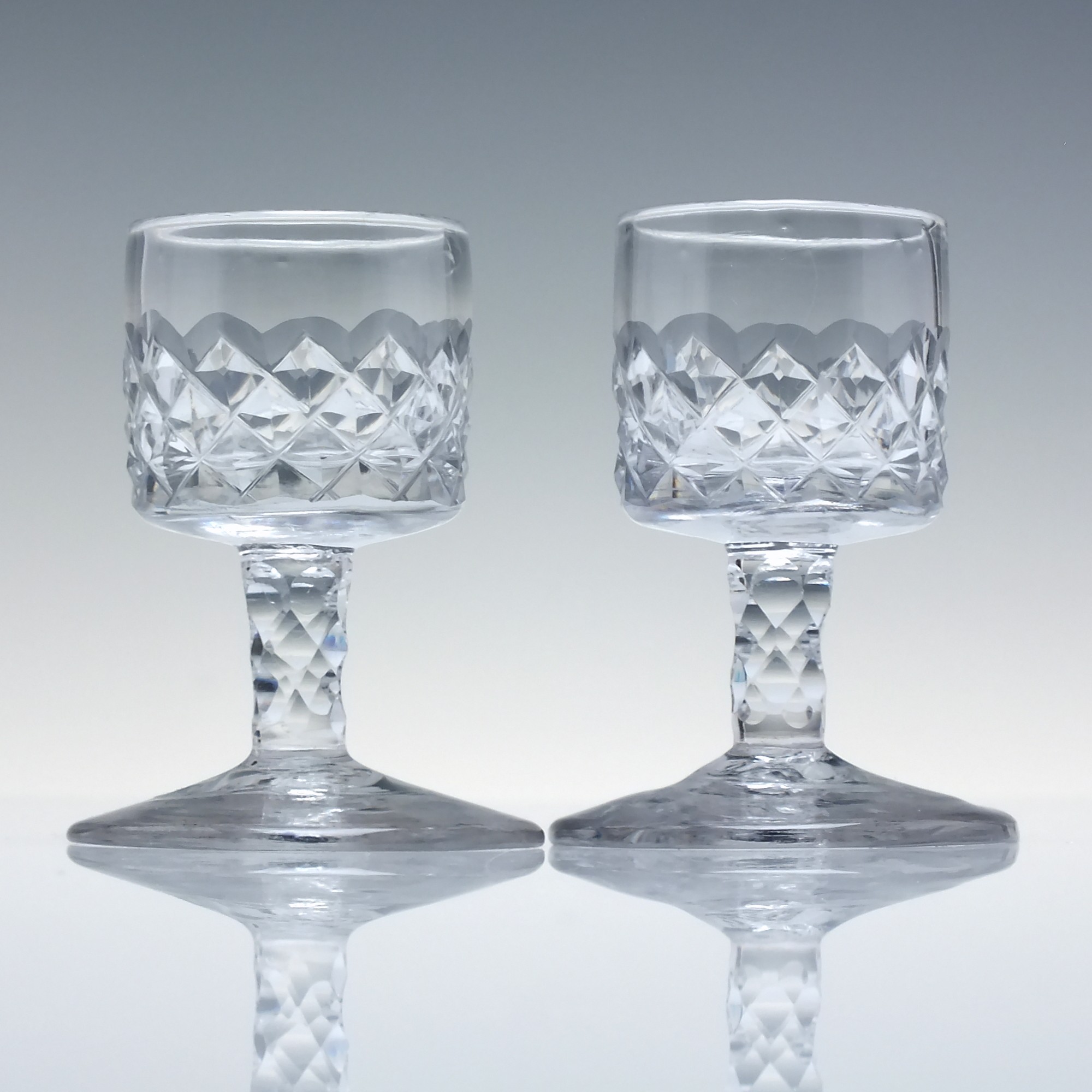
Archive II A pair of clear eighteenth-century lead glass dram glasses featuring bucket-shaped bowls with diamond facet cutting, short faceted stems, and wide conical bases. View II
Archive III A pair of clear eighteenth-century lead glass dram glasses featuring bucket-shaped bowls with diamond facet cutting, short faceted stems, and wide conical bases. View III
Archive IV A pair of clear eighteenth-century lead glass dram glasses featuring bucket-shaped bowls with diamond facet cutting, short faceted stems, and wide conical bases. View IV
FURTHER BROWSING

Visitors also looked at these ⇣

Enlarged Archival View
Telephone 01501 228 282
Location
Glasgow
Scotland
United Kingdom
Verified Since Mar 2019
Items For Sale 222
Items Sold 2,197
Exhibit Antiques
Exhibit Antiques
Verified Since Mar 2019
View Dealer Info
Location: Glasgow, Scotland, United Kingdom
Verified
Mar 2019
For Sale
222
Sold
2,197
A pair of clear eighteenth-century lead glass dram glasses featuring bucket-shaped bowls with diamond facet cutting, short faceted stems, and wide conical bases.
Rare Pair 18th Century Facet Cut Bucket Bowl Dram Glasses c1780
Ref: SA1244043
A pair of clear eighteenth-century lead glass dram glasses featuring bucket-shaped bowls with diamond facet cutting, short faceted stems, and wide conical bases.
Detail View 1
Detail View 2
Detail View 3
Archival Detail
Every single antique dealer on our platform is individually approved by our internal team. We verify their professional trade history, ethical standards, and photographic quality to ensure a secure, high-standard buying environment. Upon joining, every dealer agrees to a strict 9-point code of conduct. While issues can occasionally arise, our dealers typically resolve them swiftly and directly with the buyer. In fact, since our founding in 2002, Sellingantiques has only had to step in to help resolve an issue on roughly five occasions—a true testament to the quality of our dealers and their dedication to your happiness.
Our dealers are highly experienced in packing and shipping fragile, high-value antiques. Because you are in direct contact with the dealer, you will be able to easily go through all available shipping and insurance options together to ensure your item arrives safely.
Antiques are the ultimate green purchase. By choosing historical pieces over newly manufactured goods, you completely eliminate the carbon footprint of modern mass production while preserving exceptional, timeless craftsmanship.
Written by Sellingantiques from the dealer’s photographs and listing
  • ObjectDrinking Glasses
  • Period18th century
  • StyleGeorgian
  • MaterialLead Glass
  • ColourClear
  • MotifsFacet cut stem, Bucket bowl, Diamond cut engraving, Conical foot

These Georgian dram glasses are eighteenth-century drinking vessels fashioned from clear lead glass. Each piece takes a bucket-shaped form, featuring a diamond-cut field around the lower bowl, a short diamond facet-cut stem, and a wide conical foot with a snapped pontil. The clear material displays a colourless finish under natural light, whilst age-related wear manifests through subtle surface marks typical of handling and historic use. Appropriate for display upon a gentleman's library sideboard or within a cabinet display, these items serve as decorative period accents or functional spirit measures holding standard single volumes. Standing at 7.7 cm high with a bowl diameter of 3.4 cm and a foot diameter of 5.2 cm, the compact dimensions suit traditional table settings and historical glass collections.

Dram glasses were small stemware vessels designed during the eighteenth century specifically for consuming spirits such as gin, brandy, or whisky. Produced during the Georgian era, they reflect the evolution of glassmaking techniques following the introduction of lead crystal and the implementation of English glass taxes based on weight.

These glasses were hand-blown using lead crystal, also known as flint glass, which provided high clarity and refractive quality. Craftsmanship involved shaping the bucket bowl and stem by hand before applying geometric facet cuts using abrasive wheel-grinding techniques.

Authentic pieces typically display hand-ground pontil scars or smoothed disc pontils on the underside of the conical base. Microscopic wear patterns on the resting rim of the foot, slight asymmetry from hand-blowing, and a characteristic greyish-blue tint under light are common indicators of age.

Period stemware is frequently displayed on silver or mahogany trays atop sideboards, drinks carts, or inside illuminated glass cabinets. Placing these pieces where natural light or directional spotlighting can catch the faceted diamond cuts highlights their geometric optical qualities.

Historic glass should be washed gently by hand using lukewarm water and a mild detergent, avoiding modern dishwashers entirely. To prevent thermal shock and clouding, dry immediately with a soft lint-free microfibre cloth without applying rotational stress to the stem.
items
Add keywords to the filter
Price
£100
£250000
Era
Period
Style
Material
Origin
Stock Location
Recently Added
Online Payments
Categories