







Antique Dram Glasses
These antique dram glasses are small vessels for strong spirits, prized by collectors for their heft and historical glass-making character.
Antique Dram Glasses
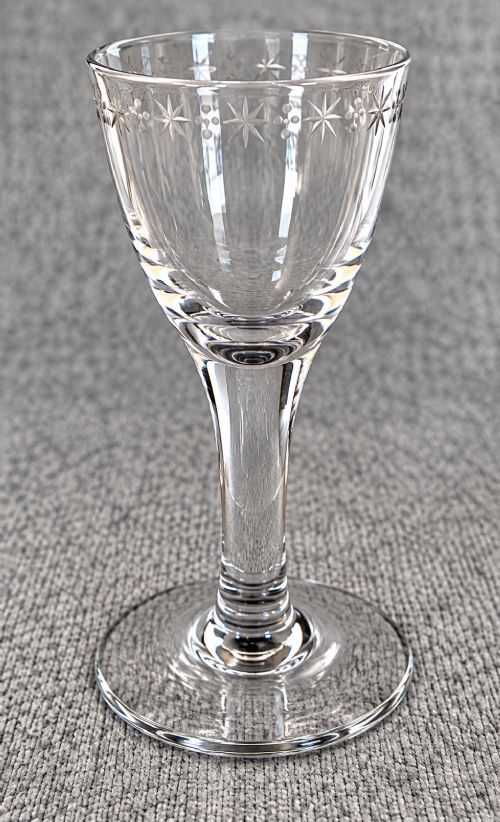
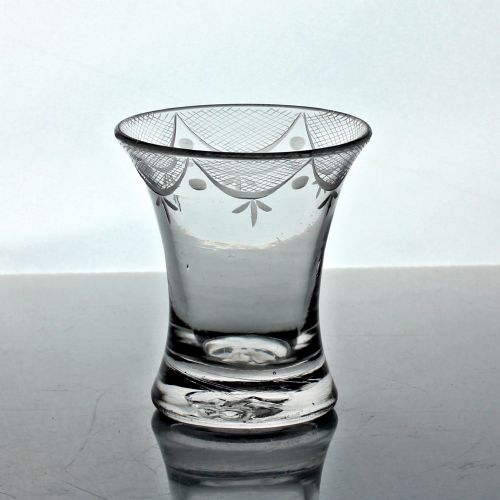
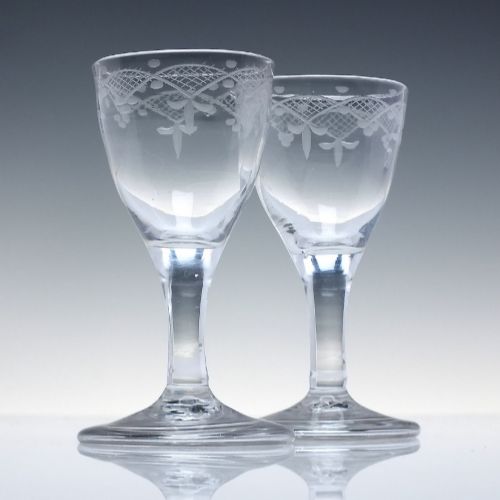
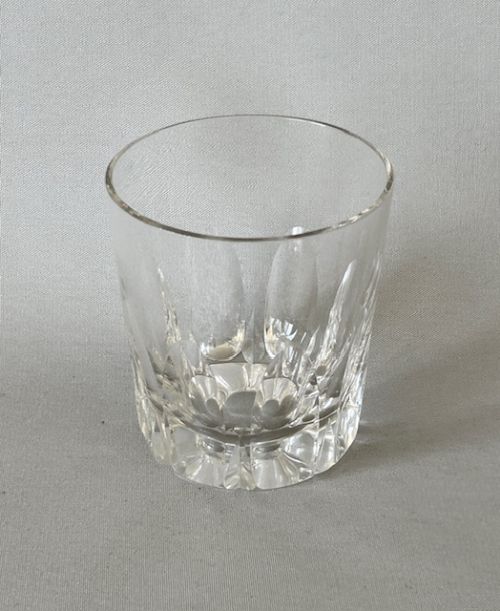
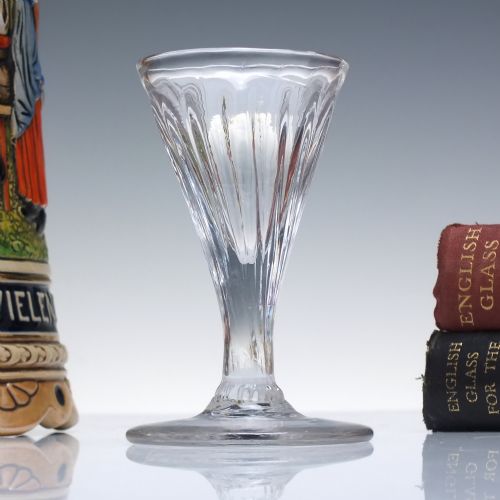
When you search for antique dram glasses, you encounter small drinking vessels designed specifically for serving strong spirits like whisky or gin. The pieces span from the early eighteenth century through the Georgian and Victorian eras up to the twentieth century, taking forms such as firing glasses, baluster stems, toastmaster glasses, and silver-mounted whisky noggins.
The most common examples you meet on this page are eighteenth-century lead glass and clear glass items featuring engraved or etched decoration, folded feet, and rib moulding. Alongside these traditional stemware pieces, the selection includes silver-topped spirit flasks and noggins dating from the Edwardian and later periods.
How they were made
These pieces rely primarily on lead glass and clear glass, shaped through hand-blowing and rib moulding to achieve characteristic eighteenth-century forms with basal bubbles and folded feet. Artisans utilised cut glass techniques as styles shifted into the nineteenth century, adding faceted surfaces to heavy baluster and tumbler designs.
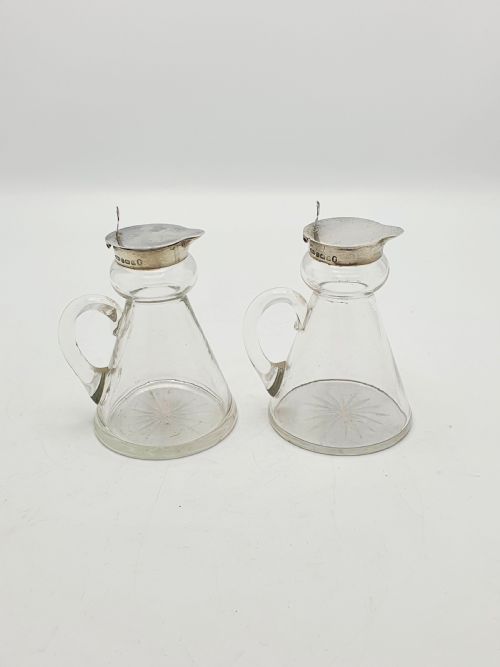
Later nineteenth and twentieth-century pieces incorporate sterling silver mounts, silver-gilt details, and applied jubilee marks alongside the glass body. The combination of mouth-blown glass vessels and hallmarked silver collars defines the manufacturing approach of the Edwardian and later spirit noggins.
Antique Dram Glasses Retail Price Guide 2026
Typical asking prices for dram glasses among the pieces listed under this phrase on Sellingantiques today, from the lower quarter to the upper quarter. They describe what is for sale here now, not the wider market.
Toastmaster glasses were deliberately made with deceptive bowls holding barely a sip, sparing hosts from expensive refills during long evenings.
What varies in quality
Quality in these drinking vessels rests upon the crispness of the hand-engraving and the purity of the lead glass or crystal. Early baluster stems and rib moulded bodies show superior handling when the metal possesses a deep resonance and clear tone.
The distinction between standard items and finer examples also involves the weight of the glass and the precision of silver mounts where applicable. Pieces featuring intact folded feet and unblemished surface cutting represent the higher end of the range.
Hukin and Heath·Elkington
The Antique Dram Glasses Glossary
- Folded foot
- A rim turned under during manufacture to strengthen the base of a drinking glass. This technique is frequently seen on eighteenth-century pieces to prevent chipping.
- Baluster
- A heavy, turned stem style popular in early glass-making. It gives seventeenth and eighteenth-century drinking vessels a substantial, weighty feel in the hand.
- Firing glass
- A small, thick-based drinking glass designed to be thumped on a table instead of toasted. The heavy foot absorbs the impact.
- Whisky noggin
- A small spirit decanter or jug, often fitted with a silver mount and a hinged lid. They appeared frequently in the Victorian and Edwardian periods.
- Rib moulding
- A decorative technique where molten glass is blown into a patterned mould to create raised vertical ridges. This adds texture to the body of the glass.
Antique Dram Glasses: Frequently Asked Questions
What is a dram glass?
A dram glass is a small historical drinking vessel made for holding a single measure of a strong spirit such as whisky or gin. They were produced in various forms across the eighteenth and nineteenth centuries.
These pieces range from heavy baluster stemware to small tumblers and firing glasses designed for communal toasts.
How do I date an antique glass?
Dating relies on observing manufacturing characteristics such as pontil marks, metal composition, stem style, and foot construction. Eighteenth-century examples often feature folded feet and baluster stems.
Later Victorian and Edwardian pieces show machine-cut patterns or incorporate hallmarked sterling silver mounts that provide precise assay years.
What are whisky noggins?
Whisky noggins are small glass spirit decanters paired with a handle and a sterling silver collar or cap. They were commonly used for individual service during the Edwardian era.
Many examples include a matching silver spirit label hanging around the neck to identify the contents.
How should I clean them?
Antique glass requires gentle hand washing in warm water using mild soap rather than immersion in automated dishwashers. Sudden temperature changes must be avoided to protect the historic metal.
Silver mounts should be cleaned carefully with a suitable cloth, keeping polish away from the glass surface.