


A 2026 Guide by Sellingantiques
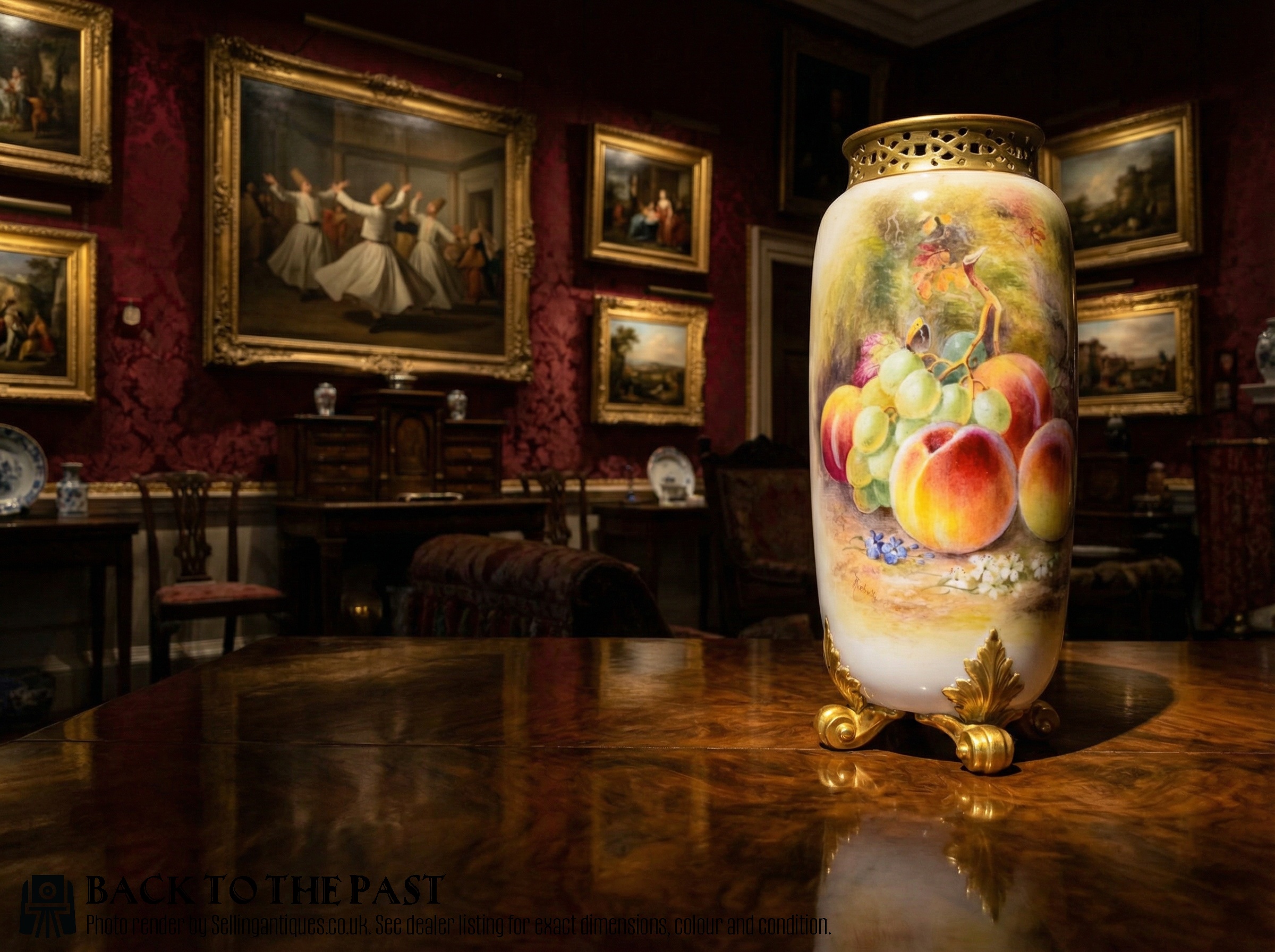
Royal Worcester Painted Fruit Spill Vase by Ricketts, 1920
Priced at £1,350 from Valerie Main Ltd
Production began in 1751 when Dr John Wall and a group of local businessmen secured a lease at Warmstry House.
Soft-paste porcelain was the early focus. Steatite was added to the clay mixture to help these vessels withstand boiling water.
The Flight and Barr families took control in the late eighteenth century, steering the factory towards heavy classical shapes.
Look for royal warrants. George III visited in 1788 and granted the first one, changing the company name.
Grainger and Locke ran rival factories in the same city before eventually merging with the main operation.
Harry Davis worked from 1898 into the twentieth century. His painted landscapes and sheep subjects are well documented on these vases.
Charles Baldwyn focused on painting swans in flight. He was active at the factory between 1874 and 1904.
James Giles ran an independent London decorating studio in the 1760s. He bought undecorated Worcester blanks and applied his own floral sprays.
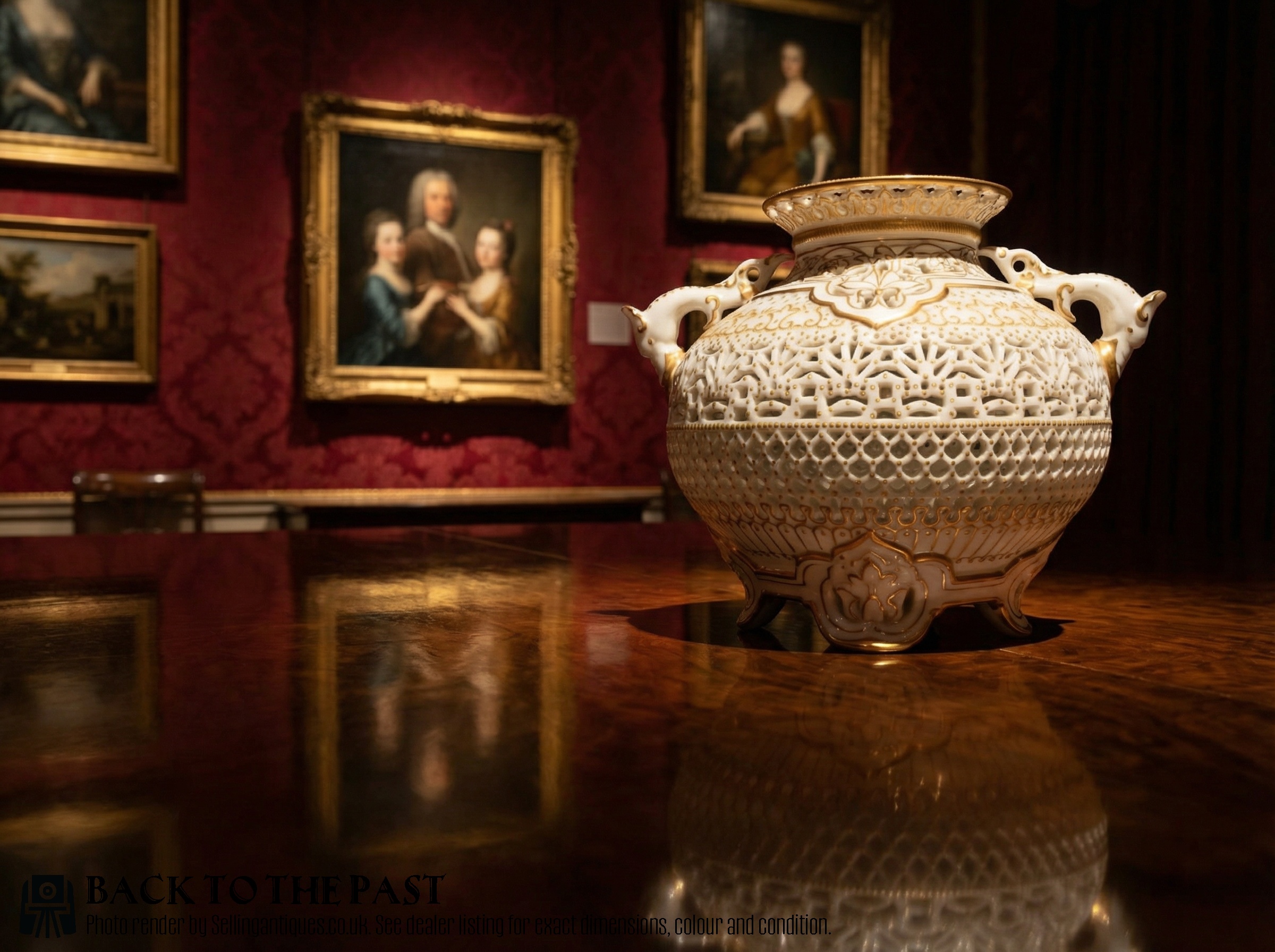
Royal Worcester Vase Reticulated by George Owen, 1910
Priced at £10,750 from Valerie Main Ltd
The 2026 retail price guide for Antique Worcester Vases is drawn from a proprietary archive of over 1.1 million retail prices indexed by Sellingantiques since 2003. This guide relies exclusively on their own internal data; no external sources or auction records are used.
Analysing nearly 25 years of UK antique market history alongside current retail values, the data indicates that typical UK retail prices for Antique Worcester Vases range between £400 and £4,700. Entry-level prices generally fall under £400 and premium examples upwards of £4,700.
Reticulated sections appear on late nineteenth-century wares. The outer walls are pierced with complex honeycomb or geometric patterns.
Painted cartouches sit against ground colours of scale blue or apple green on First Period pieces.
Turn the piece over to find the marks. Standard factory stamps are usually printed or painted on the flat unglazed base.
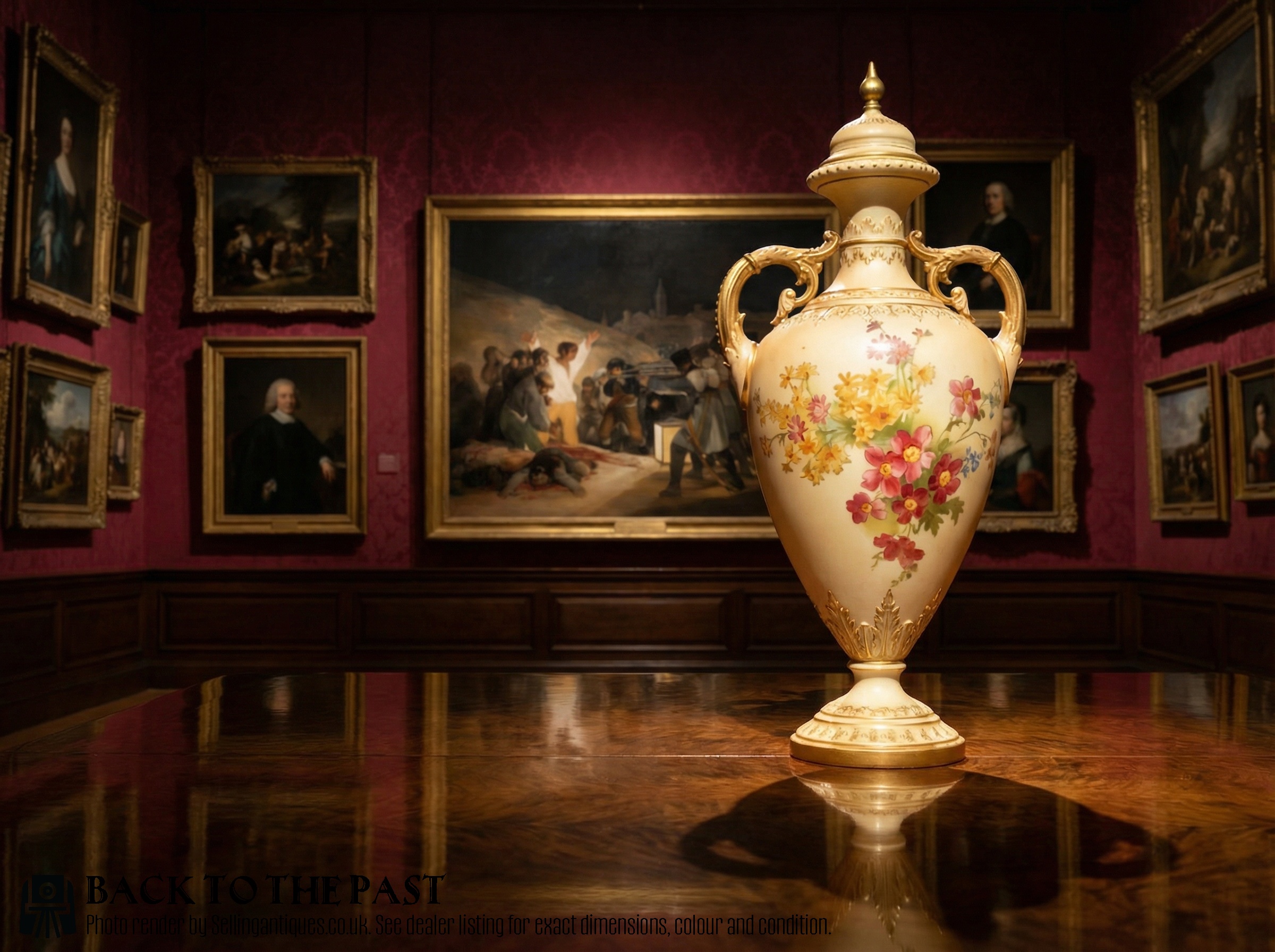
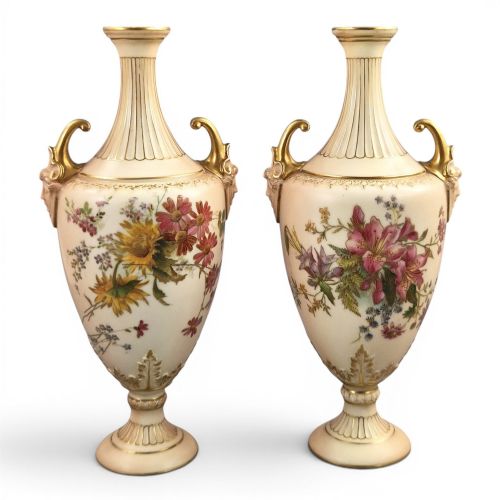
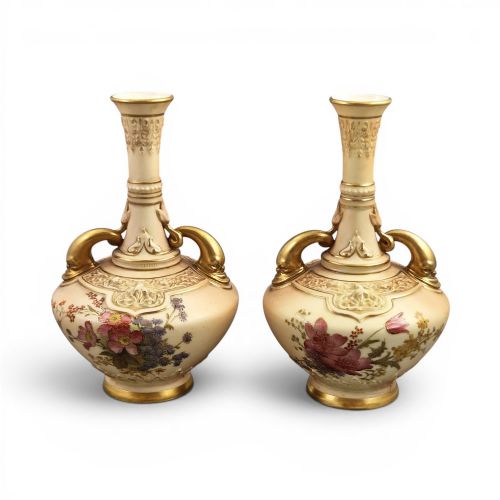
Antique Royal Worcester Blush Ivory Vase, 1900
Priced at £975 from David Wolfenden Antiques
Early vessels were thrown on a wheel and turned on a lathe. You can sometimes feel faint horizontal ridges inside the neck.
Slip casting took over during the Victorian period. Liquid clay was poured into plaster moulds to achieve sharp, complex shapes.
Hand painting requires multiple firings. The factory decorators applied the high-temperature enamel colours first and finished with the low-fire gilding.
"Base marks include a hidden date cipher system. A series of dots or letters placed around the main stamp identifies the exact year the vase was made."
"The factory used specific codes for their vase shapes. Finding a tiny number painted under the base matches the piece to an original nineteenth-century pattern book."
"Some pieces blush. The famous ivory ground colour introduced in the 1880s was designed to mimic the soft appearance of carved elephant tusk."
Based on almost 25 years of Sellingantiques UK antique market data, Antique Worcester Vases appeared 1423 times (out of 1,100,000 antiques) which gives it a rarity score of 75/100.
This score measures scarcity within the Sellingantiques archive only and is not a survey of the entire antiques market, so these statistics may not be indicative of the general availability of Antique Worcester Vases elsewhere.
Use a soft dry brush for general dusting. A clean makeup brush works well to reach into the crevices around the handles and applied decoration without dragging the surface.
Keep water away from the gold. If the vase has a grease mark, a lightly damp cloth on the glazed porcelain is fine, but rubbing a gilded rim with moisture will eventually lift the metal.
Lids stick when a residue builds up on the unglazed flange over several decades. Changes in room temperature can also cause the tight tolerance of the porcelain to lock the cover in place.
Never force the finial. Turn the vase upside down over a thick folded towel and tap the base lightly with the flat of your hand. The vibration is usually enough to break the seal and let the lid drop out.
Most dealers advise against it. The interior glaze on these vases can craze over time, allowing water to seep into the porous ceramic body beneath.
Water causes staining that shows through to the outside. If you want to use them for display, drop a smaller glass tube inside the neck to hold the stems and the water.
Fireplace heat is rarely an issue for the enamel colours. These pigments were fired in a factory kiln at temperatures far beyond what a domestic hearth puts out.
Soot is the main problem. Smoke particles settle on the glaze and dull the appearance of the raised gilding over time.
Please note: This Antique Worcester Vases guide and its associated pricing data are provided for general informational purposes only. It does not constitute formal financial, investment, or appraisal advice and should not be relied upon as the sole basis for any commercial activity, purchasing, or sales decisions. Sellingantiques.co.uk accepts no liability for any actions taken in reliance on this information. Always consult with a qualified professional or independent appraiser.
