
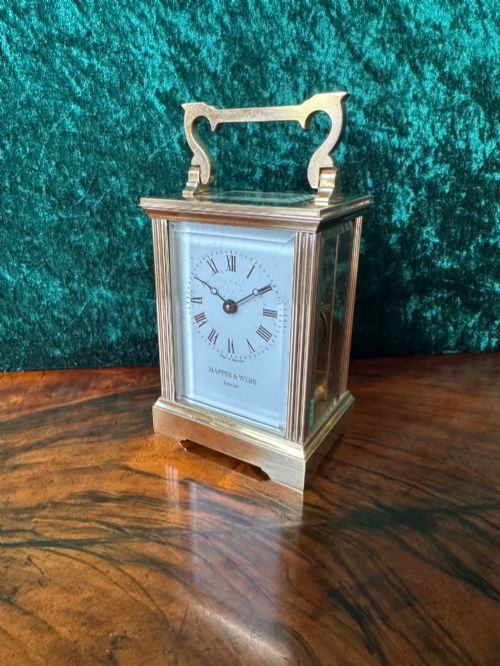


A 2026 Guide by Sellingantiques

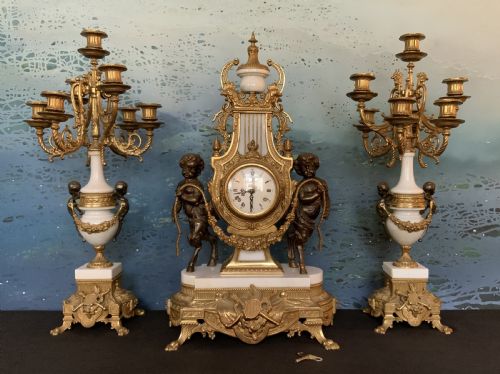
Antique French Ormolu and Sevres Porcelain Clock, 1850
Priced at £2,750 from Dragon-Antiques.com
Antique mantel clocks emerged in France during the middle of the eighteenth century. Spring-driven movements allowed clockmakers to build smaller cases than weight-driven tall clocks required.
Brass and bronze became the standard case materials for wealthy buyers in Paris.
By the nineteenth century, production expanded across Europe and America. Factories began making movements in batches.
Look at the pendulum. Earlier types swing freely on a silk thread suspension before steel springs took over.
Case styles shifted with the fashion of the day. A plain architectural box might replace an elaborate figurative casting within a single decade.
Seth Thomas built wooden and brass cased clocks in Connecticut throughout the nineteenth century.
In Paris, Raingo Frères produced high quality ormolu cases housing precision movements during the mid-to-late nineteenth century.
Check the backplate. Japy Frères supplied unfinished blank movements to dozens of case makers across France.
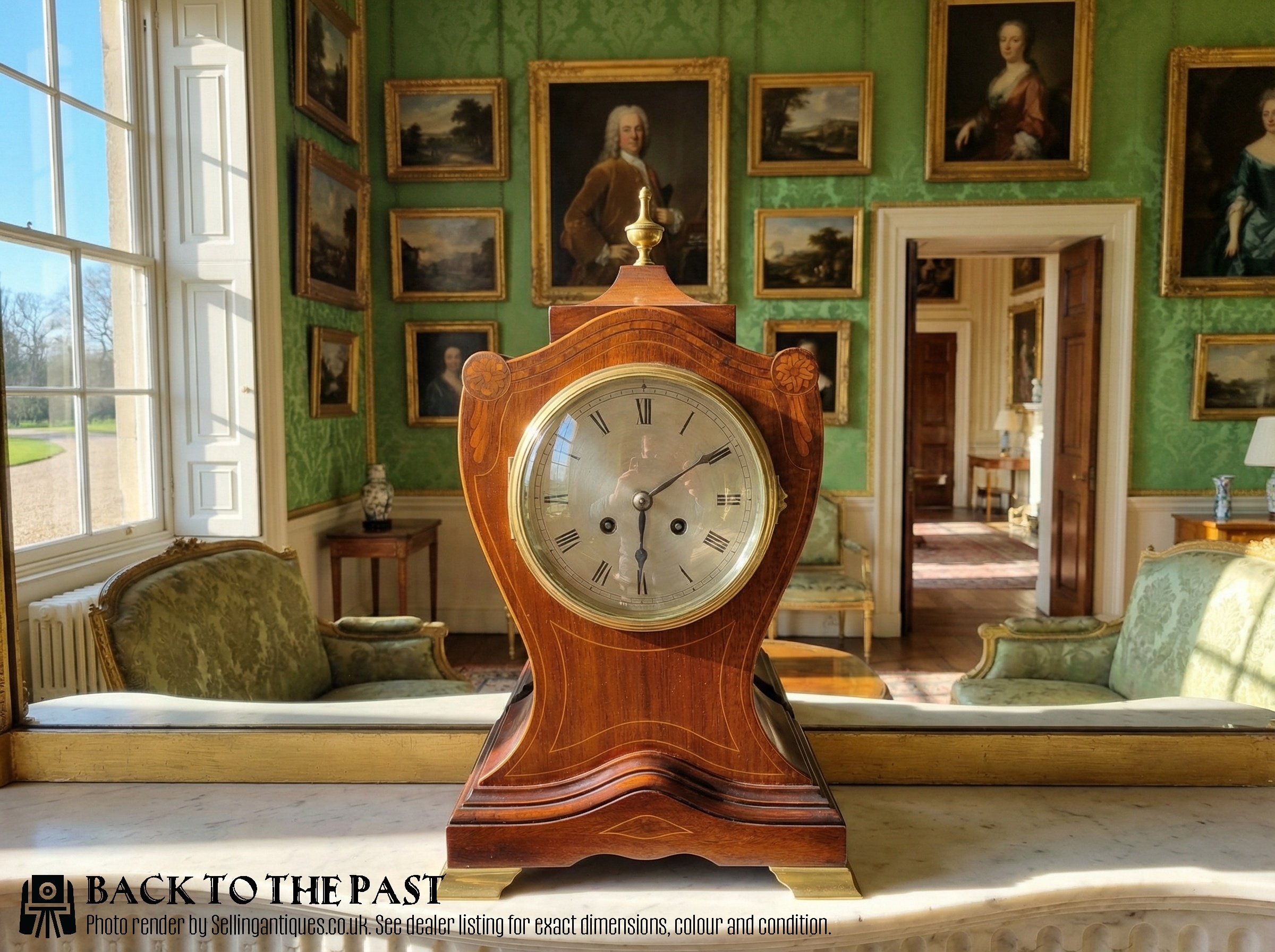
Satinwood Art Nouveau Bracket/mantel Clock, 1900
Priced at £695 from Masons Antiques
The 2026 retail price guide for Antique Mantel Clocks is drawn from a proprietary archive of over 1.1 million retail prices indexed by Sellingantiques since 2003. This guide relies exclusively on their own internal data; no external sources or auction records are used.
Analysing nearly 25 years of UK antique market history alongside current retail values, the data indicates that typical UK retail prices for Antique Mantel Clocks range between £500 and £3,000. Entry-level prices generally fall under £500 and premium examples upwards of £3,000.
A flat base allows the clock to rest securely on a shelf. Four small feet usually elevate the main carcase.
The movement dictates the overall shape. Circular dials sit behind glazed bezels to protect the hands from dust.
Many strike the hours on a bell or gong. A separate winding hole on the dial winds the striking train.
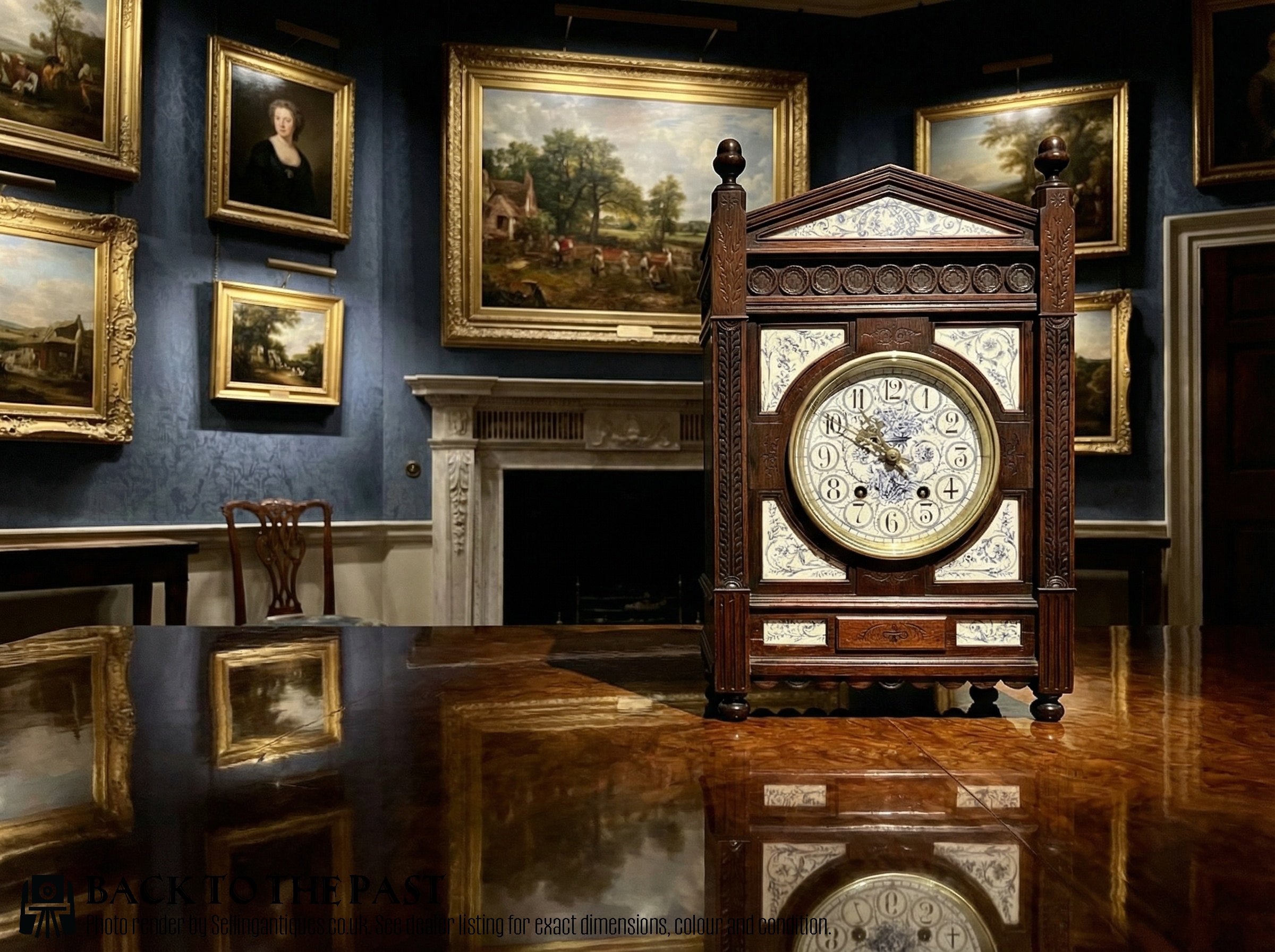
Antique Victorian Quality Ebonies Aesthetic Movement Mantle Clock, 1880
Priced at £795 from Unique Antiques by Emma Jade
Early gear teeth were cut individually by hand using simple dividing engines. The brass plates show file marks from manual finishing.
Mass production introduced stamped brass gears. Factories stamped out dozens of identical wheels in minutes.
Note the joints on wooden cases. Construction moved from solid timber carcases to thin veneers glued over factory-cut blocks.
"Clockmakers often left tiny scratch marks inside the carcase detailing repair dates."
"Striking trains can often be silenced by moving a small lever behind the dial."
"The slow tick of a heavy pendulum was intentionally designed to sound soothing in a quiet room."
Based on almost 25 years of Sellingantiques UK antique market data, Antique Mantel Clocks appeared 7726 times (out of 1,100,000 antiques) which gives it a rarity score of 21/100.
This score measures scarcity within the Sellingantiques archive only and is not a survey of the entire antiques market, so these statistics may not be indicative of the general availability of Antique Mantel Clocks elsewhere.
Most antique mantel clocks run for eight days. You wind them once a week on a designated day to build a routine.
Turn the key smoothly until you feel firm resistance. Don't force it past that point.
The clock might sit out of level. The pendulum needs an even beat on both sides of its swing to keep the escapement running.
Listen to the tick. If it sounds uneven, try sliding a folded piece of paper under one side of the base.
Black slate and marble clocks usually have a small square hole above the twelve o'clock mark on the dial. This controls the speed.
You use the smaller end of your winding key to turn the arbor inside that hole. Turning it left lowers the pendulum slightly and slows the mechanism down.
The hole on the right winds the timekeeping mainspring. The hole on the left winds the striking mechanism for the bell or gong.
You can wind just the right side if you want the clock to run silently. Winding both keeps the time and the chimes running together.
Always wind both springs fully. Some makers set the striking train to stop the clock if it winds down first.
Please note: This Antique Mantel Clocks guide and its associated pricing data are provided for general informational purposes only. It does not constitute formal financial, investment, or appraisal advice and should not be relied upon as the sole basis for any commercial activity, purchasing, or sales decisions. Sellingantiques.co.uk accepts no liability for any actions taken in reliance on this information. Always consult with a qualified professional or independent appraiser.
