


A 2026 Guide by Sellingantiques

19th Century Cedar Collector’s Cabinet of Indian Style, 1850
Priced at £2,500 from Mark Jones Antiques
Developed during the seventeenth century as gentlemen started gathering natural history specimens. They needed secure, organised storage.
Early versions often sat on separate stands. Later examples were built as freestanding pieces of furniture.
Look closely at the drawer depths. Coin cabinets tend to have very shallow drawers, while those built for shells need more clearance.
Victorian entomologists drove a massive surge in demand. This era produced many of the antique collectors cabinets found today.
Travel expanded the materials being collected. Cabinets evolved to accommodate everything from geological samples to bird eggs.
Thomas Brady worked in London during the late nineteenth century. He specialised in mahogany entomological cabinets with precisely fitted glazed frames.
J.T. Crockett & Son operated in the same period. They produced standard sizes for the growing butterfly-collecting market.
Many fine pieces carry no maker mark at all. Regional cabinetmakers built them to order for local naturalists.

Flemish Walnut Collectors Cabinet on Stand, 18th Century
Priced at £850 from I M Chaney Antique Furniture
The 2026 retail price guide for Antique Collectors Cabinets is drawn from a proprietary archive of over 1.1 million retail prices indexed by Sellingantiques since 2003. This guide relies exclusively on their own internal data; no external sources or auction records are used.
Analysing nearly 25 years of UK antique market history alongside current retail values, the data indicates that typical UK retail prices for Antique Collectors Cabinets range between £500 and £3,500. Entry-level prices generally fall under £500 and premium examples upwards of £3,500.
Twin panelled doors usually enclose the drawer banks. A single lock secures the entire collection at once.
Flush brass campaign handles appear on many drawer fronts. Turned wooden knobs are just as common on later pieces.
Check for hidden compartments. Some antique collectors cabinets disguise a bottom drawer in the solid plinth base.
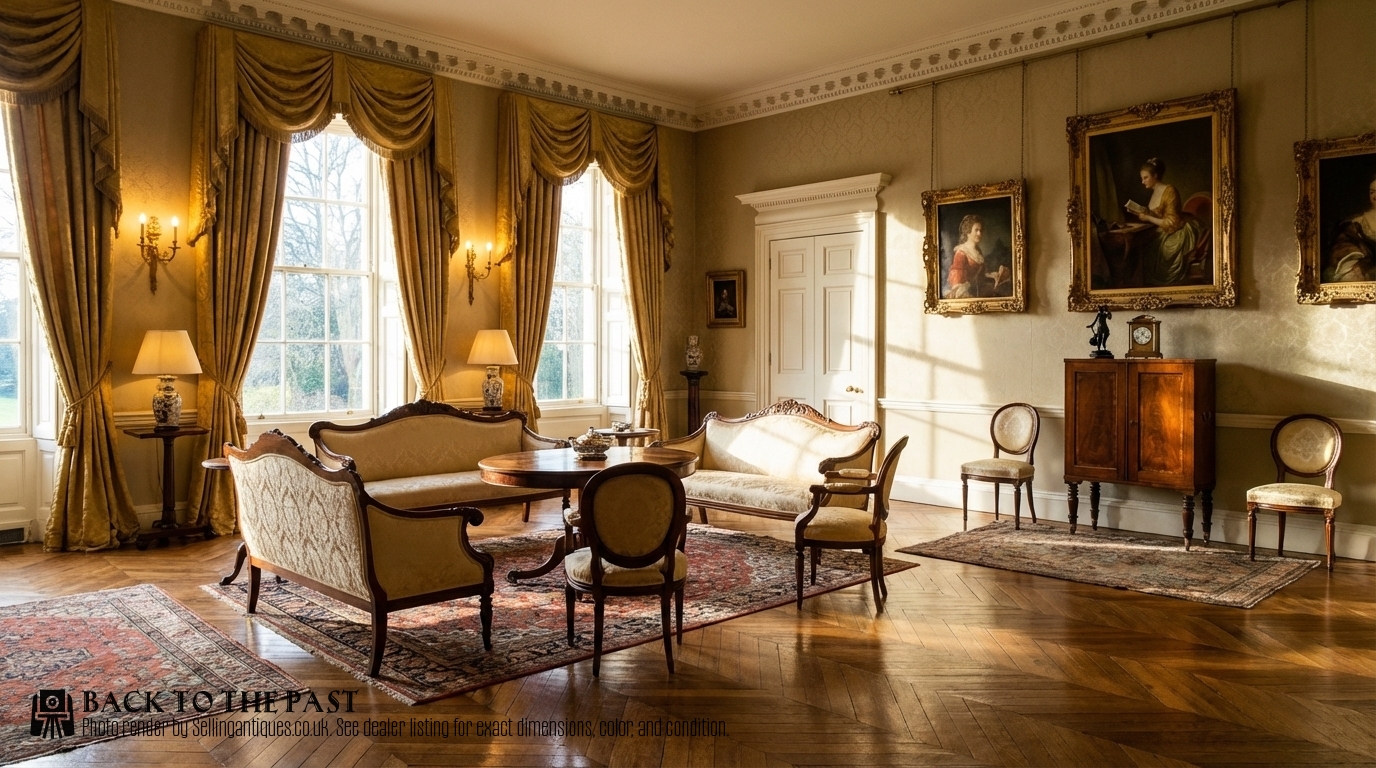
Small Sheraton Mahogany Collector's Cabinet on Stand, Georgian
Priced at £3,650 from Baggott & Co.
Early examples feature hand-cut dovetails on the drawers. The pins are tiny and closely spaced to maximise strength in thin timber.
Dust seals became highly sophisticated. Cabinetmakers cut complex interlocking joints around the drawer edges to keep out mites and dirt.
Notice the glazing bars if present. Later nineteenth-century makers used very thin brass profiles to hold the glass.
"Camphor wood was sometimes used for the internal drawer sides. Its strong scent deterred pests naturally."
"The space behind the drawers often acts as an air buffer. This helps regulate humidity around fragile natural history specimens."
"Some cabinets feature drawers graduated in depth by just a few millimetres from top to bottom. This subtle detail requires precise cabinetmaking skills."
Based on almost 25 years of Sellingantiques UK antique market data, Antique Collectors Cabinets appeared 1800 times (out of 1,100,000 antiques) which gives it a rarity score of 70/100.
This score measures scarcity within the Sellingantiques archive only and is not a survey of the entire antiques market, so these statistics may not be indicative of the general availability of Antique Collectors Cabinets elsewhere.
Not always. It depends on what the original owner collected.
Cabinets made for coins or geological samples rarely have glazed covers. Entomology cabinets almost always do, as the specimens are fragile and need protection from dust.
Most locks are standard lever designs from the nineteenth century. A traditional locksmith can usually cut a new key by taking an impression of the internal mechanism.
It helps if the door is unlocked. If it is shut, the locksmith will need to pick it first, which adds time to the job.
Sometimes the original lock has been removed entirely. Fitting a period-correct replacement is straightforward enough in these cases.
Cork sheets sit in the base of entomology drawers. They provide a soft layer to hold the pins that secure insect specimens in place.
Over time, this cork often dries out and crumbles. Many antique collectors cabinets have had their lining replaced with a modern foam equivalent.
That smell is likely naphthalene. Collectors used it for decades to stop pests eating their specimens.
Getting rid of it takes time. The first step is leaving the drawers open in a dry, well-ventilated space for several weeks to let the wood breathe.
If the smell persists, placing bowls of activated charcoal inside the closed carcase can help draw out the remaining fumes. Never use harsh chemical sprays on the old timber.
Please note: This Antique Collectors Cabinets guide and its associated pricing data are provided for general informational purposes only. It does not constitute formal financial, investment, or appraisal advice and should not be relied upon as the sole basis for any commercial activity, purchasing, or sales decisions. Sellingantiques.co.uk accepts no liability for any actions taken in reliance on this information. Always consult with a qualified professional or independent appraiser.
