8,806  PAGES BROWSED TODAY PAGES TODAY • 17 ANTIQUES UPLOADED TODAYNEW ARRIVALS
GIFTS
17 ITEMS ADDED TODAY
Sort Order
Items Per Page
Browse Categories
Sort order
Relevant Links
Items per page
ID #SA1244685
FOR SALE
£69
Email Phone
Save
George III Glass Dry Mustard Cruet C1800
For sale by Exhibit Antiques
for sale €81     $88
£69
Exhibit Antiques

Exhibit Antiques

Sellingantiques Verified Since Mar 2019
Browse dealers 248 items
  • About Us
    Specialists in 18th & 19th century antique glass
Id #SA1244685
PDF SHARE
SAVE

George III Glass Dry Mustard Cruet C1800

18th century
For Sale by Exhibit Antiques
Description

Description

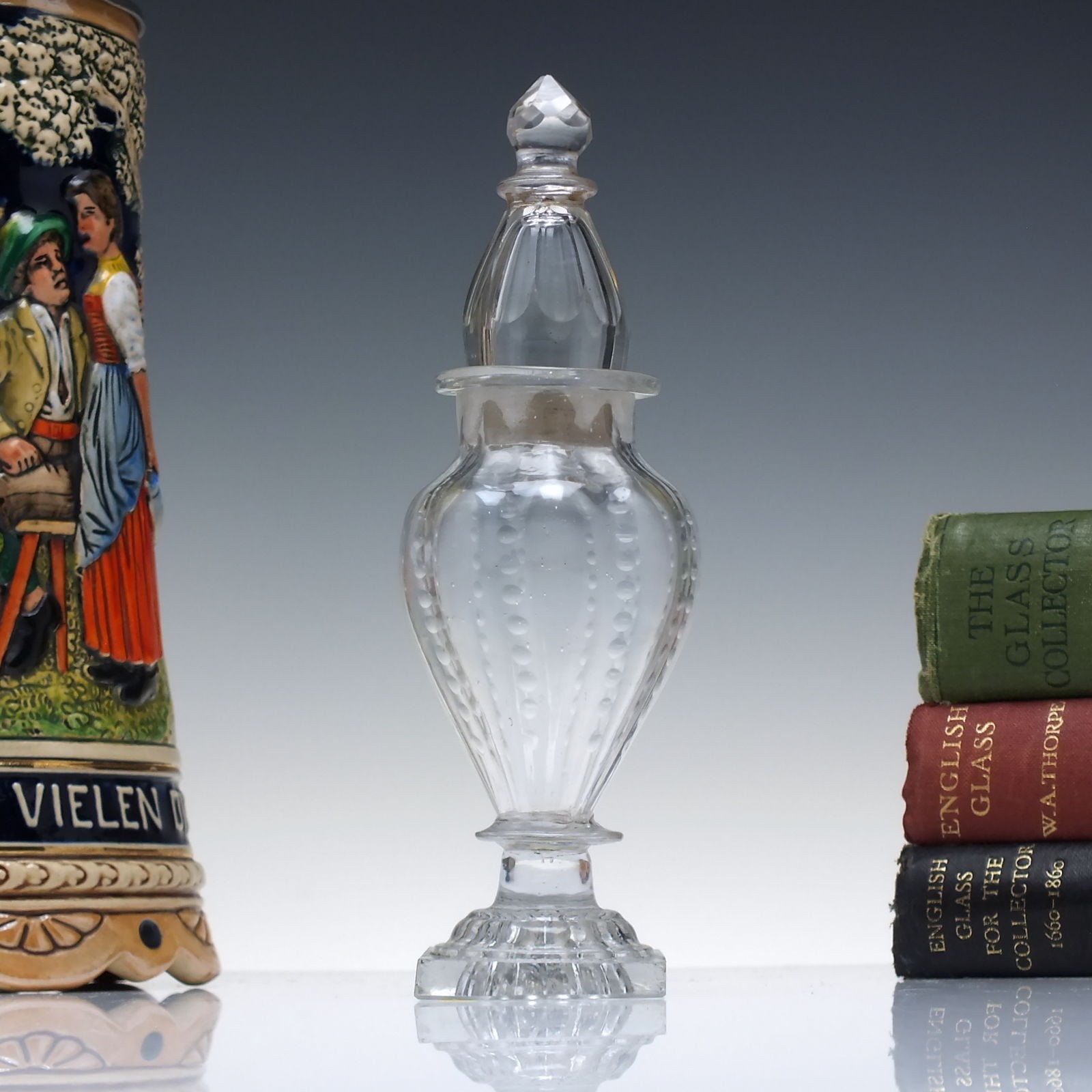
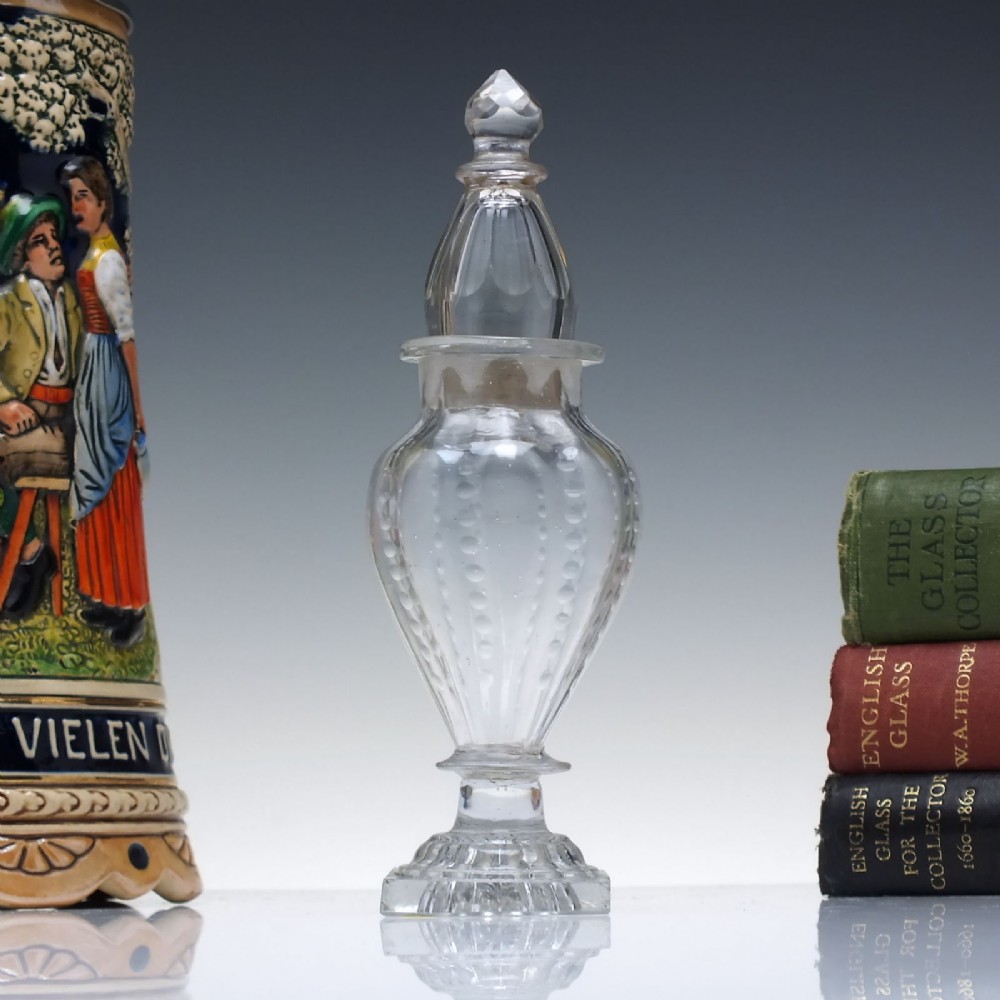
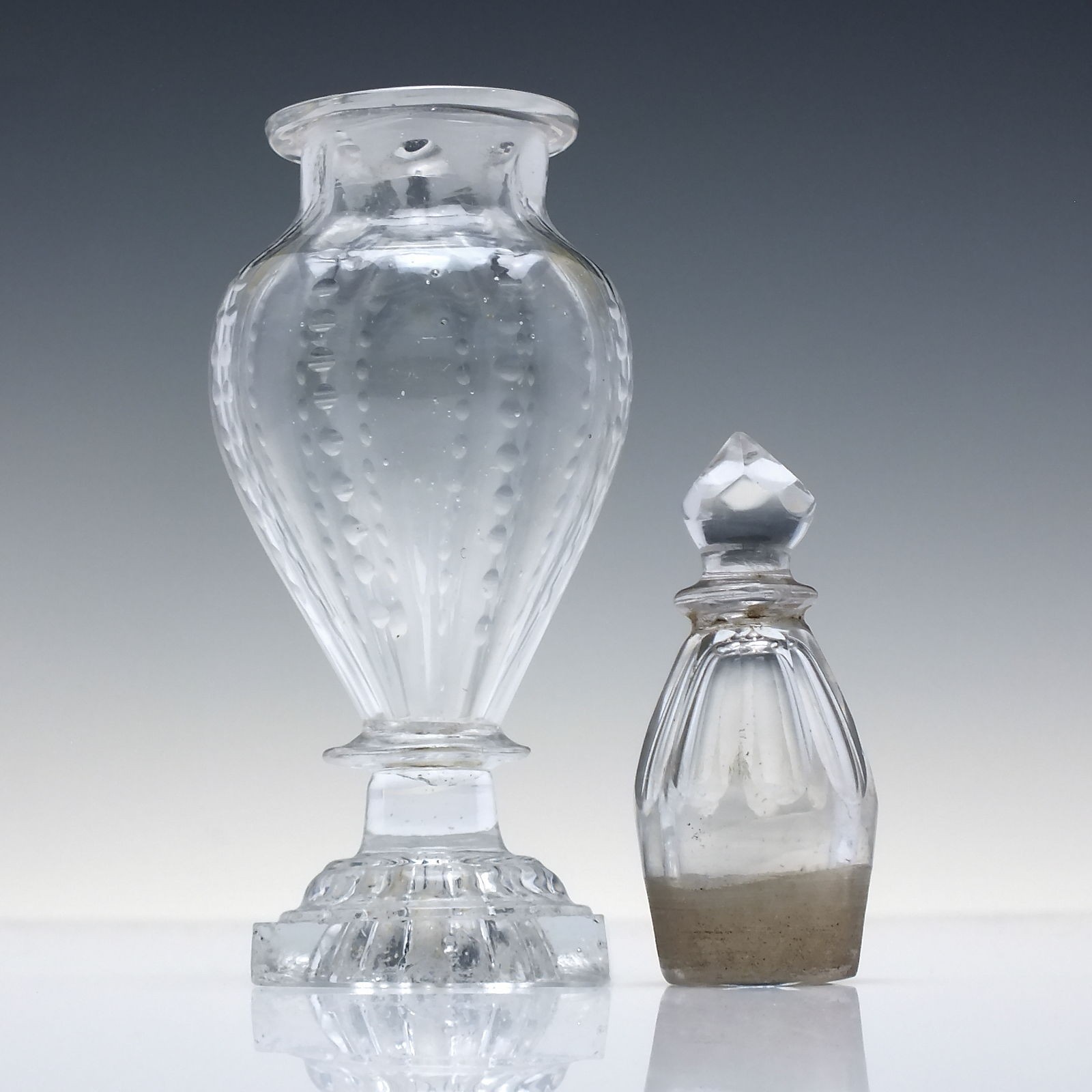
A very fine example of an early 19th-century George III dry mustard pot, dating to c1800.

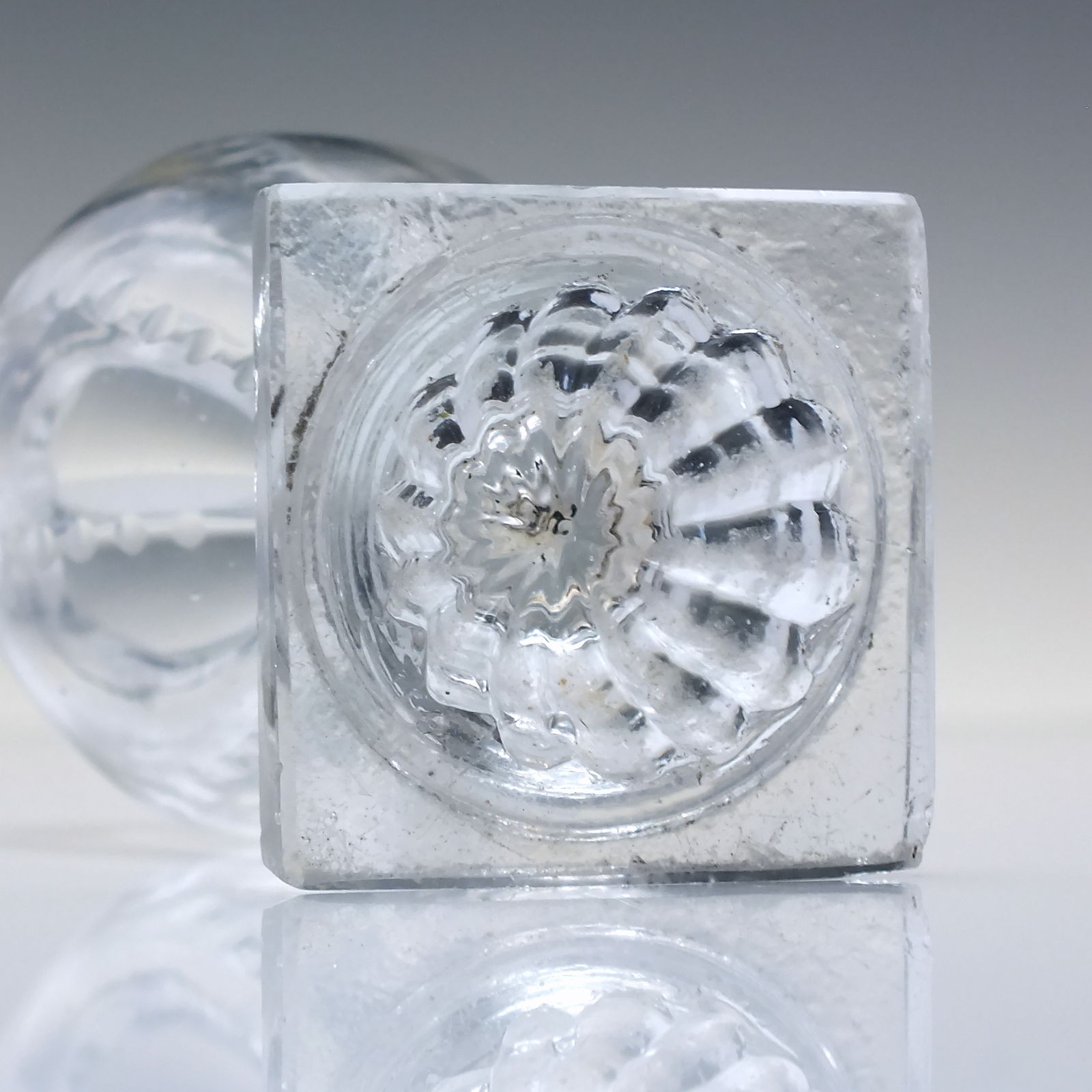
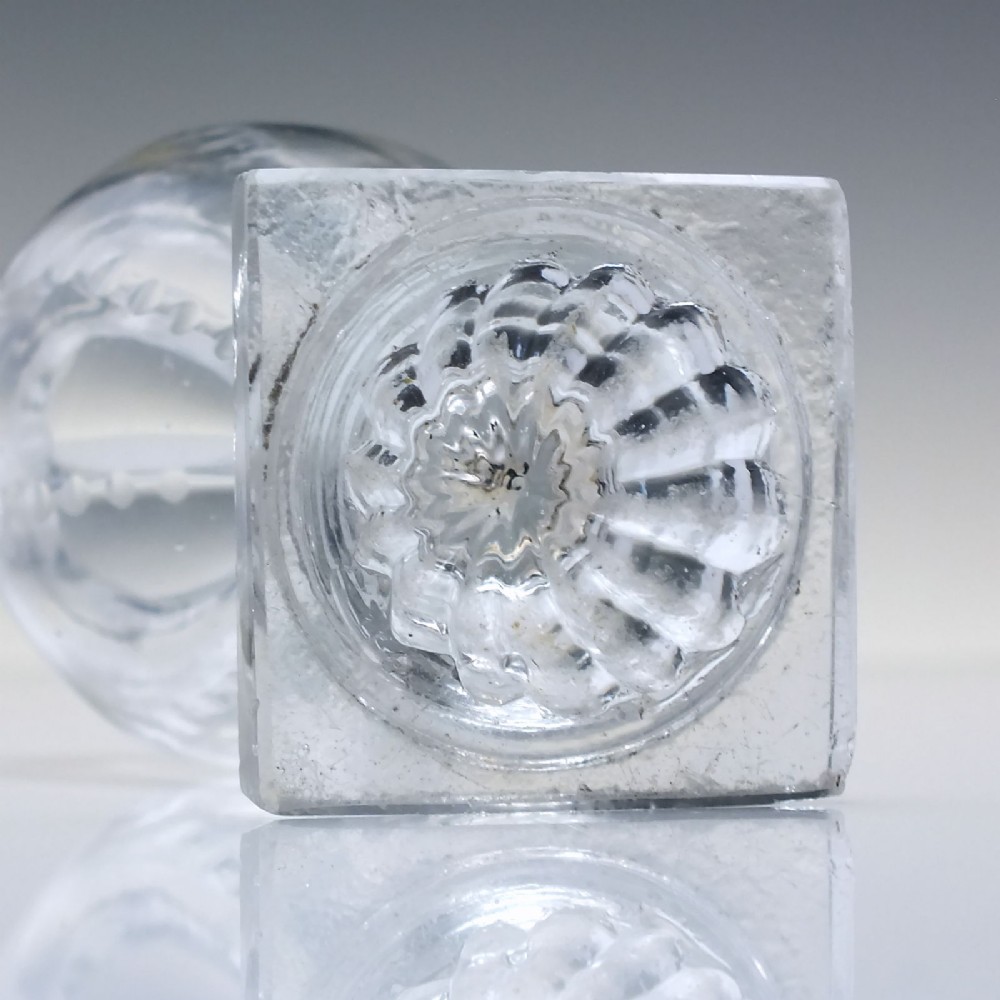
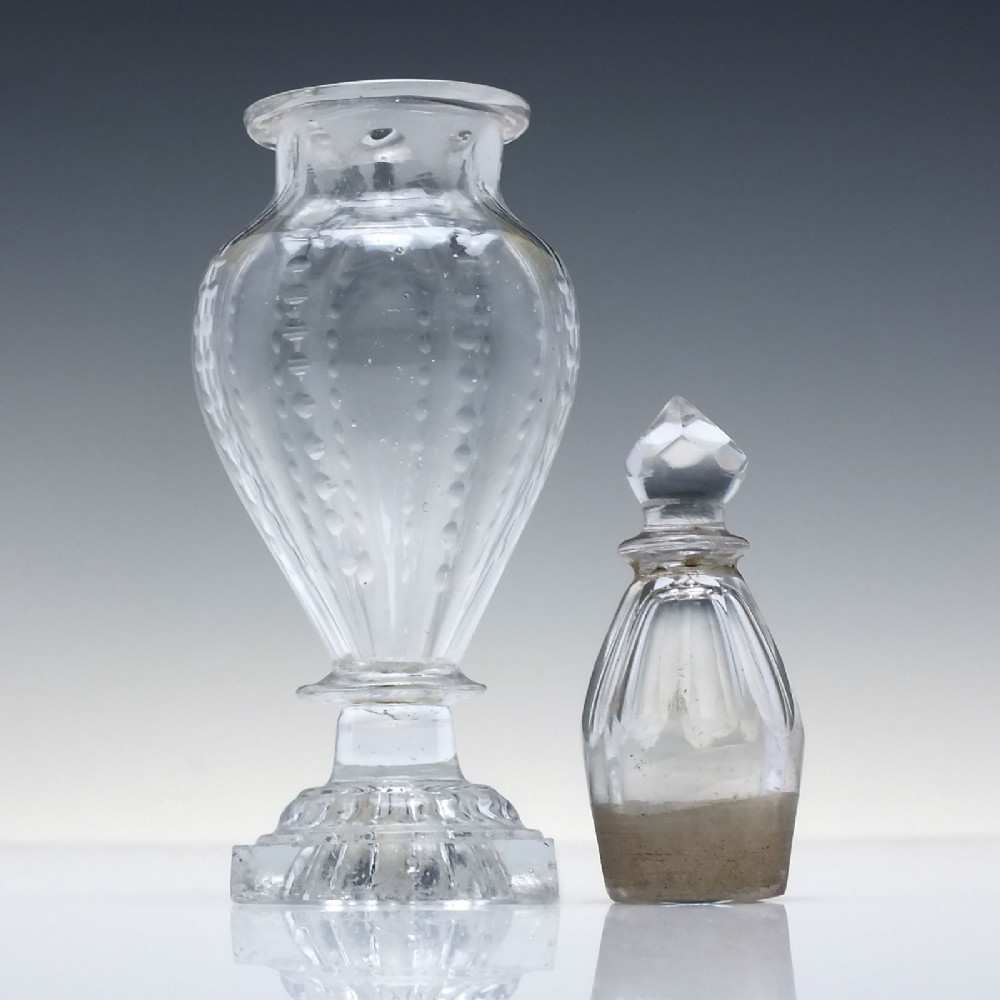
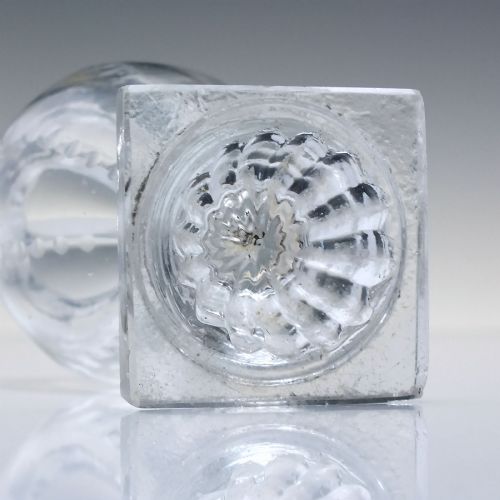
It has an elegant inverted baluster-shaped body with pronounced vertical rib moulding, enhanced by rows of finely executed notch cutting running down the length of the ribs. The body sits upon a short capstan stem above a square lemon squeezer foot.
It retains a period replacement stopper of the correct general form, beautifully flute cut with a facet cut pointed finial. Although contemporary in style, the stopper differs from the rib moulded decoration of the original body.
Date & Origin

England, c1800, King George III.

Condition

Excellent antique condition. A few tiny nibbles to the corners of the square foot and a minute pinprick to the pontil, consistent with table glass over 200 years of age. No cracks or restoration.
The stopper is a period replacement in the correct style, although flute cut rather than rib moulded.

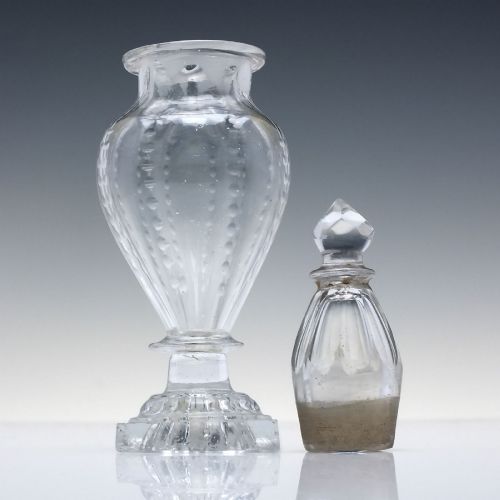
We also have a marginally smaller example with the same design, but with its original stopper.

George III Dry Mustard With Original Lid.

Dimensions

Height: 17.2cm

Diameter: 5.6cm

Weight: 202g

Historical Context

During the Georgian period, mustard was an established accompaniment to meat, fish and other savoury dishes, and was frequently served at the dining table in powdered form.

Before commercially prepared mustard became widely available, households commonly mixed dry mustard powder with water, vinegar or other liquids according to personal preference.

Dry mustard pots were designed to store and present the powdered condiment, with their narrow necks and fitted stoppers helping to protect the contents from moisture.

By the late 18th century, English glassmakers were producing increasingly elaborate examples, reflecting the growing importance of coordinated tableware in fashionable Georgian households.

Rib moulding, notch cutting and square lemon squeezer feet were characteristic decorative features of the period, particularly around 1790–1810. The lemon squeezer foot...with its distinctive square outline and moulded underside... became a fashionable feature of late Georgian glassware, appearing on decanters, salts, mustard pots, rummer and other table accessories.

Date of Manufacture

Exhibit Antiques has dated this Georgian Glass Mustard Cruet to the Georgian era.

Independent Date Check ID 09712795
Dealer's Item DateGeorgian era
Sellingantiques DateGeorgian era
Sellingantiques agingItem 205-240 years old
Test ResultsPassed dating check
Why Sellingantiques dated this piece to THE GEORGIAN ERA:
Square lemon-squeezer foot: late Georgian table glass design.
Rib moulding with notched cut details: early 19th-century glass decoration.
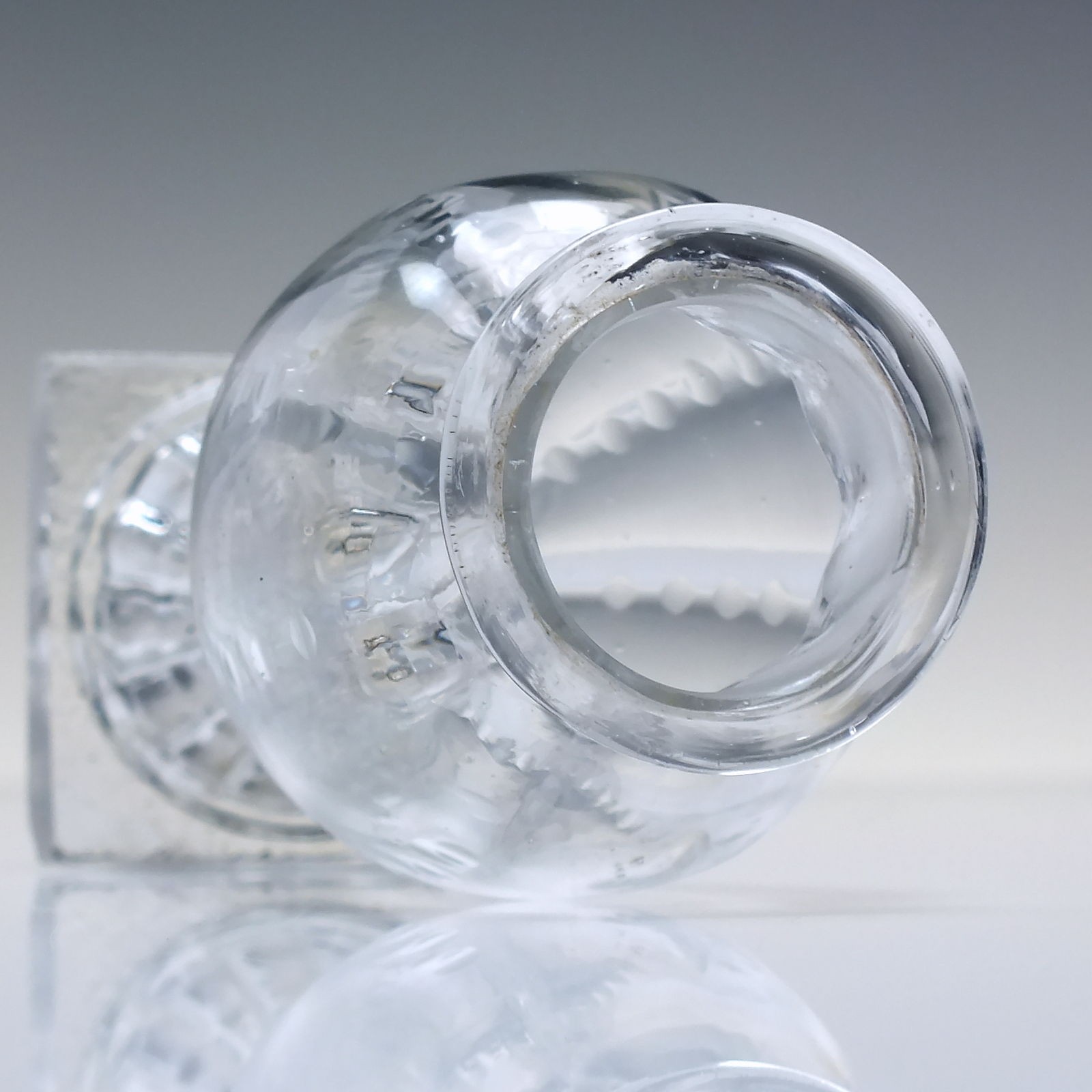
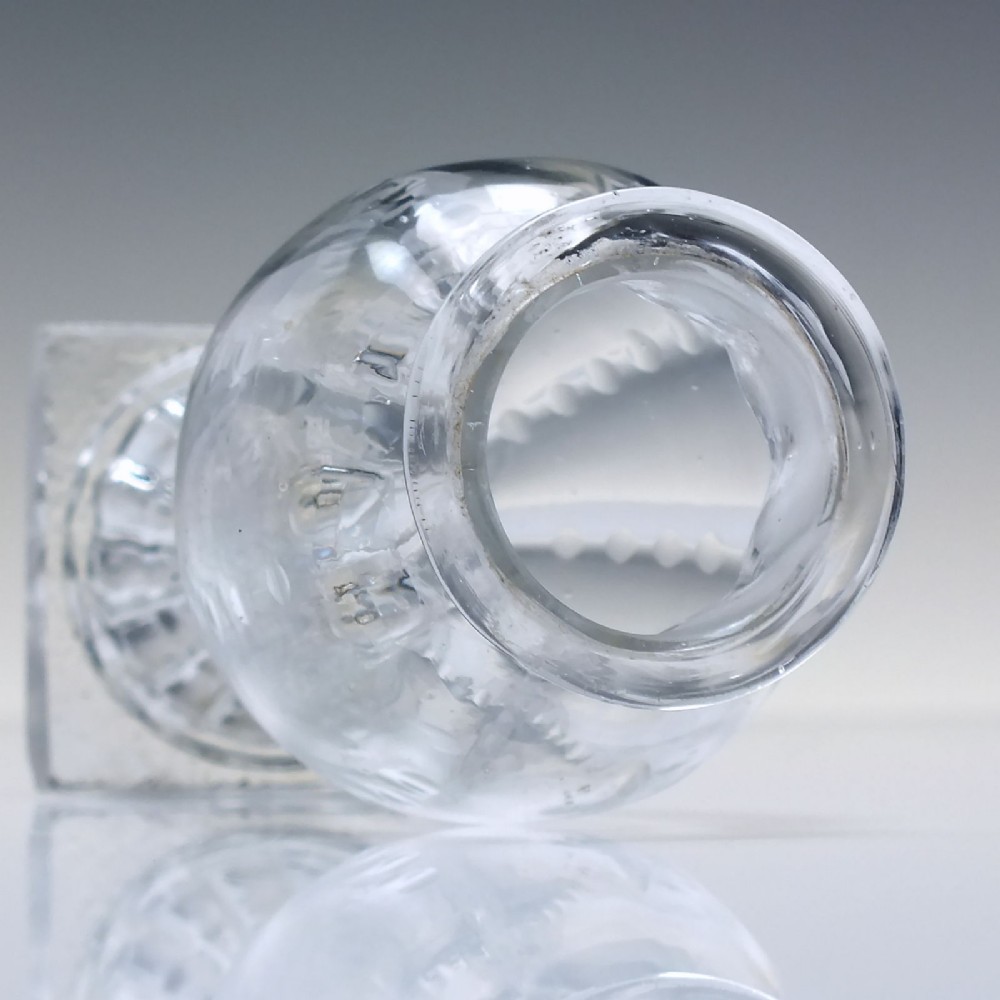
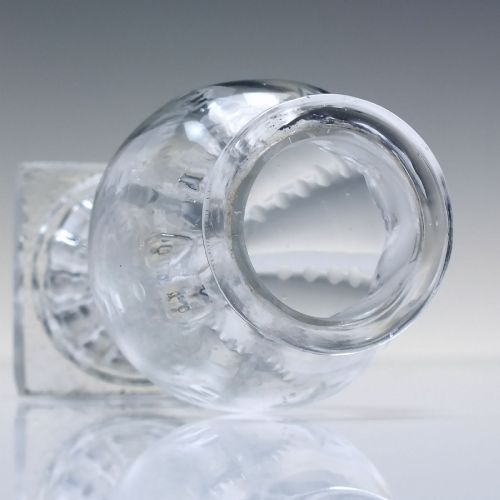
Ground neck aperture: made to seal tightly for powdered condiment storage.
Fine base scratches and corner nibbles: normal wear from table use.

This is an independent date report produced by Sellingantiques using its own proprietary system. The process uses the photographs shown on this page. The system is never told the date the dealer has declared. This report shows that the two dates corroborate.

Reference Numbers
Sellingantiques Reference
SA1244685
Dealers Internal Reference
2026012941
Description
Description

A very fine example of an early 19th-century George III dry mustard pot, dating to c1800.

“
It has an elegant inverted baluster-shaped body with pronounced vertical rib moulding, enhanced by rows of finely executed notch cutting running down the length of the ribs.
Exhibit Antiques

The body sits upon a short capstan stem above a square lemon squeezer foot.

fig 1. A clear cut glass dry mustard cruet bottle with a faceted spire stopper and stepped pedestal base.
fig 1. George III Glass Dry Mustard Cruet C1800

It retains a period replacement stopper of the correct general form, beautifully flute cut with a facet cut pointed finial. Although contemporary in style, the stopper differs from the rib moulded decoration of the original body.

fig 2. A clear cut glass dry mustard cruet bottle with a faceted spire stopper and stepped pedestal base.
fig 2. George III Glass Dry Mustard Cruet C1800

Date & Origin

England, c1800, King George III.

Condition

Excellent antique condition. A few tiny nibbles to the corners of the square foot and a minute pinprick to the pontil, consistent with table glass over 200 years of age. No cracks or restoration.

fig 3. A clear cut glass dry mustard cruet bottle with a faceted spire stopper and stepped pedestal base.
fig 3. George III Glass Dry Mustard Cruet C1800

The stopper is a period replacement in the correct style, although flute cut rather than rib moulded.

We also have a marginally smaller example with the same design, but with its original stopper.

George III Dry Mustard With Original Lid.

Dimensions

Height: 17.2cm

Diameter: 5.6cm

Weight: 202g

Historical Context

During the Georgian period, mustard was an established accompaniment to meat, fish and other savoury dishes, and was frequently served at the dining table in powdered form.

Before commercially prepared mustard became widely available, households commonly mixed dry mustard powder with water, vinegar or other liquids according to personal preference.

Dry mustard pots were designed to store and present the powdered condiment, with their narrow necks and fitted stoppers helping to protect the contents from moisture.

By the late 18th century, English glassmakers were producing increasingly elaborate examples, reflecting the growing importance of coordinated tableware in fashionable Georgian households.

Rib moulding, notch cutting and square lemon squeezer feet were characteristic decorative features of the period, particularly around 1790–1810. The lemon squeezer foot...with its distinctive square outline and moulded underside... became a fashionable feature of late Georgian glassware, appearing on decanters, salts, mustard pots, rummer and other table accessories.

Date of Manufacture

Exhibit Antiques has dated this Georgian Glass Mustard Cruet to the Georgian era.

Independent Date Report ID 09712795
Dealer's Item DateGeorgian era
Sellingantiques datingGeorgian era
Sellingantiques agingItem 205-240 years old
Test ResultsPassed dating check
Why Sellingantiques dated this piece to the Georgian era:
Square lemon-squeezer foot: late Georgian table glass design.
Rib moulding with notched cut details: early 19th-century glass decoration.
Ground neck aperture: made to seal tightly for powdered condiment storage.
Fine base scratches and corner nibbles: normal wear from table use.

This is an independent date report produced by Sellingantiques using its own proprietary system. The process uses the photographs shown on this page. The system is never told the date the dealer has declared. This report shows that the two dates corroborate.

Reference Numbers
Sellingantiques Ref
SA1244685
Dealers Internal Ref
2026012941
Exhibit Antiques
Exhibit Antiques
Sellingantiques verified Since Mar 2019

Specialists in 18th & 19th century antique glass

Dealer Profile

You can view the stock and full dealer information on the Exhibit Antiques Profile Page
PDF SHARE
SAVE
A clear cut glass dry mustard cruet bottle with a faceted spire stopper and stepped pedestal base.
1 / 4
Archive I A clear cut glass dry mustard cruet bottle with a faceted spire stopper and stepped pedestal base.

George III Glass Dry Mustard Cruet C1800
Archive II A clear cut glass dry mustard cruet bottle with a faceted spire stopper and stepped pedestal base. View II
Archive III A clear cut glass dry mustard cruet bottle with a faceted spire stopper and stepped pedestal base. View III
Archive IV A clear cut glass dry mustard cruet bottle with a faceted spire stopper and stepped pedestal base. View IV
FURTHER BROWSING

Visitors also looked at these ⇣

Enlarged Archival View
Telephone 01501 228 282
Location
Glasgow
Scotland
United Kingdom
Verified Since Mar 2019
Items For Sale 248
Items Sold 2,199
Exhibit Antiques
Exhibit Antiques
Verified Since Mar 2019
View Dealer Info
Location: Glasgow, Scotland, United Kingdom
Verified
Mar 2019
For Sale
248
Sold
2,199
A clear cut glass dry mustard cruet bottle with a faceted spire stopper and stepped pedestal base.
George III Glass Dry Mustard Cruet c1800
Ref: SA1244685
A clear cut glass dry mustard cruet bottle with a faceted spire stopper and stepped pedestal base.
Detail View 1
Detail View 2
Detail View 3
Archival Detail
Every single antique dealer on our platform is individually approved by our internal team. We verify their professional trade history, ethical standards, and photographic quality to ensure a secure, high-standard buying environment. Upon joining, every dealer agrees to a strict 9-point code of conduct. While issues can occasionally arise, our dealers typically resolve them swiftly and directly with the buyer. In fact, since our founding in 2002, Sellingantiques has only had to step in to help resolve an issue on roughly five occasions—a true testament to the quality of our dealers and their dedication to your happiness.
Our dealers are highly experienced in packing and shipping fragile, high-value antiques. Because you are in direct contact with the dealer, you will be able to easily go through all available shipping and insurance options together to ensure your item arrives safely.
Antiques are the ultimate green purchase. By choosing historical pieces over newly manufactured goods, you completely eliminate the carbon footprint of modern mass production while preserving exceptional, timeless craftsmanship.
Written by Sellingantiques from the dealer’s photographs and listing
  • ObjectGlassware
  • Period18th century
  • StyleGeorgian
  • MaterialCut Glass, Lead Crystal
  • ColourClear
  • MotifsFaceted spire stopper, Stepped pedestal base, Fluted cut body

This clear cut glass dry mustard cruet dates to the Georgian period around 1800. The piece comprises an inverted baluster body featuring vertical rib moulding and notch cutting, supported by a short capstan stem and a square lemon squeezer foot. A period replacement stopper completes the vessel, displaying flute cutting and a faceted spire finial. Minor age-related wear includes tiny nibbles on the corners of the square foot and a minute pinprick to the pontil. The bottle stands 17.2 cm in height with a diameter of 5.6 cm. In a modern home, this item serves as a decorative accessory for a sideboard top or display cabinet within an English country house interior. The clear lead crystal reflects light, while the geometric facets of the body and stopper add texture. The vessel brings historical character to a dining room setting, offering a tactile example of early 19th-century English table glass.

A Georgian dry mustard cruet is a small glass container used at the dining table during the late eighteenth and early nineteenth centuries to store powdered mustard. Prior to the widespread popularity of prepared liquid mustard, dry mustard powder was dispensed from these stoppers or castors to be mixed at the table.

George III glass cruets were typically blown and hand-cut from lead crystal or flint glass, which provided high clarity and refractivity. Stoppers were individually ground to fit the specific neck of each vessel tightly.

Authentic pieces from this period often display hand-cut facet details, a pontil mark on the base that has been ground flat or left rough, and age-consistent wear on the base and stopper joint. Hand-blown glass from around 1800 may also contain minor air bubbles and slight asymmetry.

Small antique glass vessels can be displayed on a dining sideboard, curated inside a glass-fronted cabinet, or grouped together with other historic glassware on a silver tray to catch ambient light.

Wash hand-blown antique glass by hand using warm water and mild liquid soap, avoiding dishwashers and extreme temperature changes. Ensure the neck and stopper are completely dry before storing to prevent sticking or mineral buildup.
items
Add keywords to the filter
Price
£100
£250000
Era
Period
Style
Material
Origin
Stock Location
Recently Added
Online Payments
Categories