




A 2026 Guide by Sellingantiques
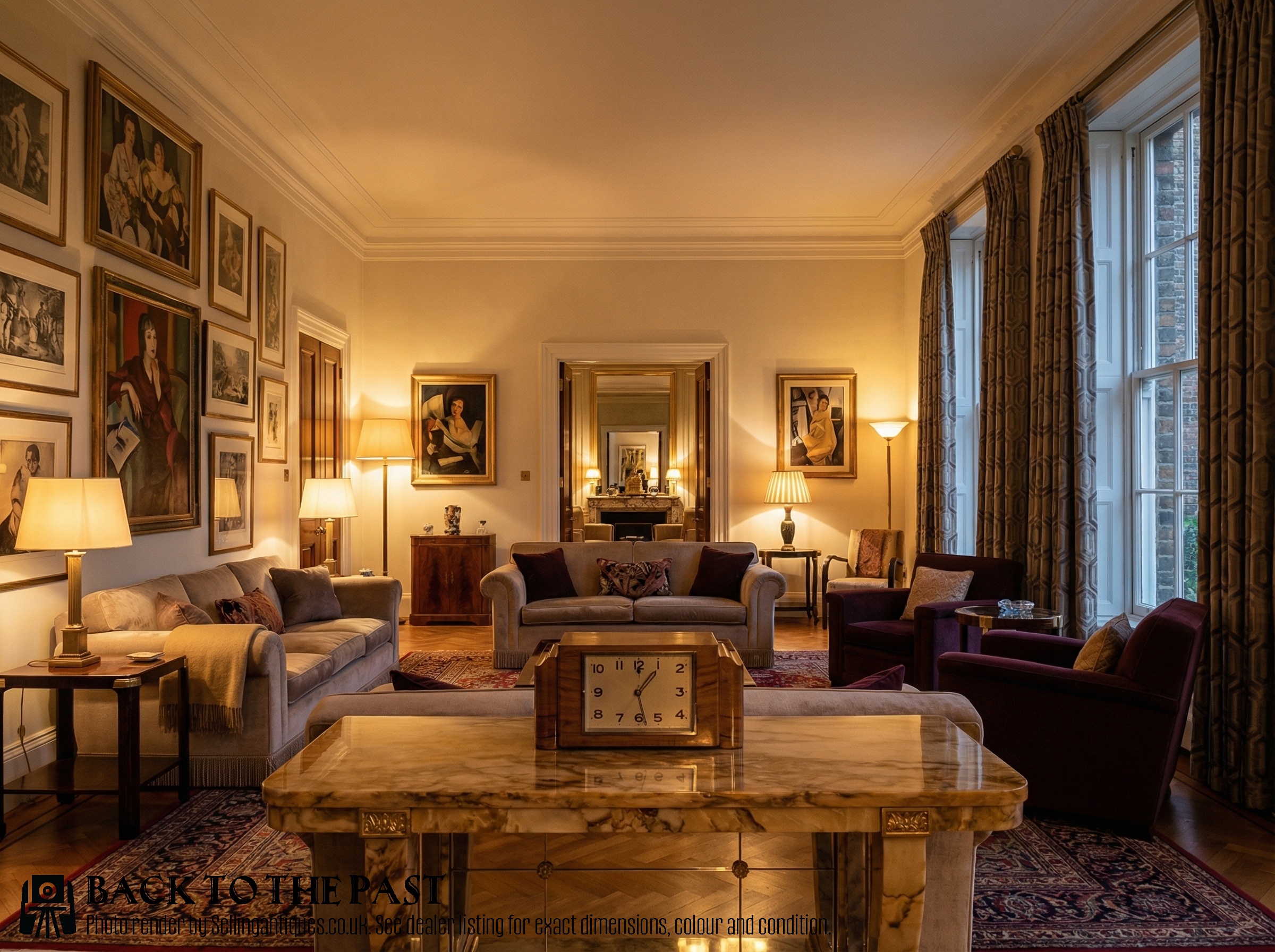
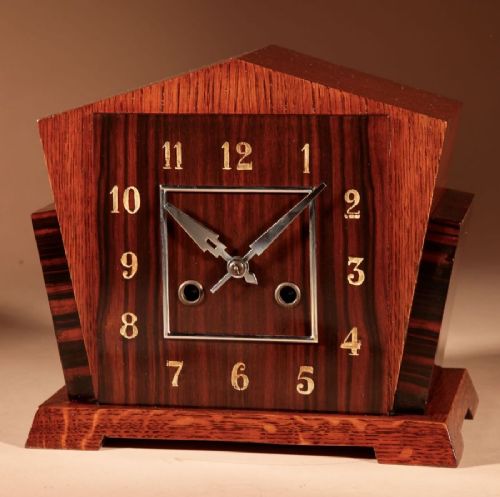
Large Art Deco Walnut Veneered Clock, 1930
Priced at £825 from Dragon-Antiques.com
Emerging right after the First World War. Production peaked following the 1925 Paris exhibition that gave the movement its name.
Look at the shift in domestic spaces during the 1930s. Smaller rooms meant mantelpieces became the natural home for these compact objects.
French workshops dominated the early luxury end of the market with custom Art Deco clocks.
Mass production soon took over in Britain and America. Factories began stamping out standard cases to satisfy middle-class buyers.
Electric movements slowly started replacing spring-driven mechanical parts towards the late thirties.
Leon Hatot made luxury electric timepieces under the ATO brand in Paris during the twenties and thirties.
High-end glass cases from René Lalique. His workshop cast heavy frosted glass forms specifically to house imported Swiss movements.
Smiths English Clocks dominated the mass market in Britain. They turned out thousands of veneered wooden mantel models in the 1930s.
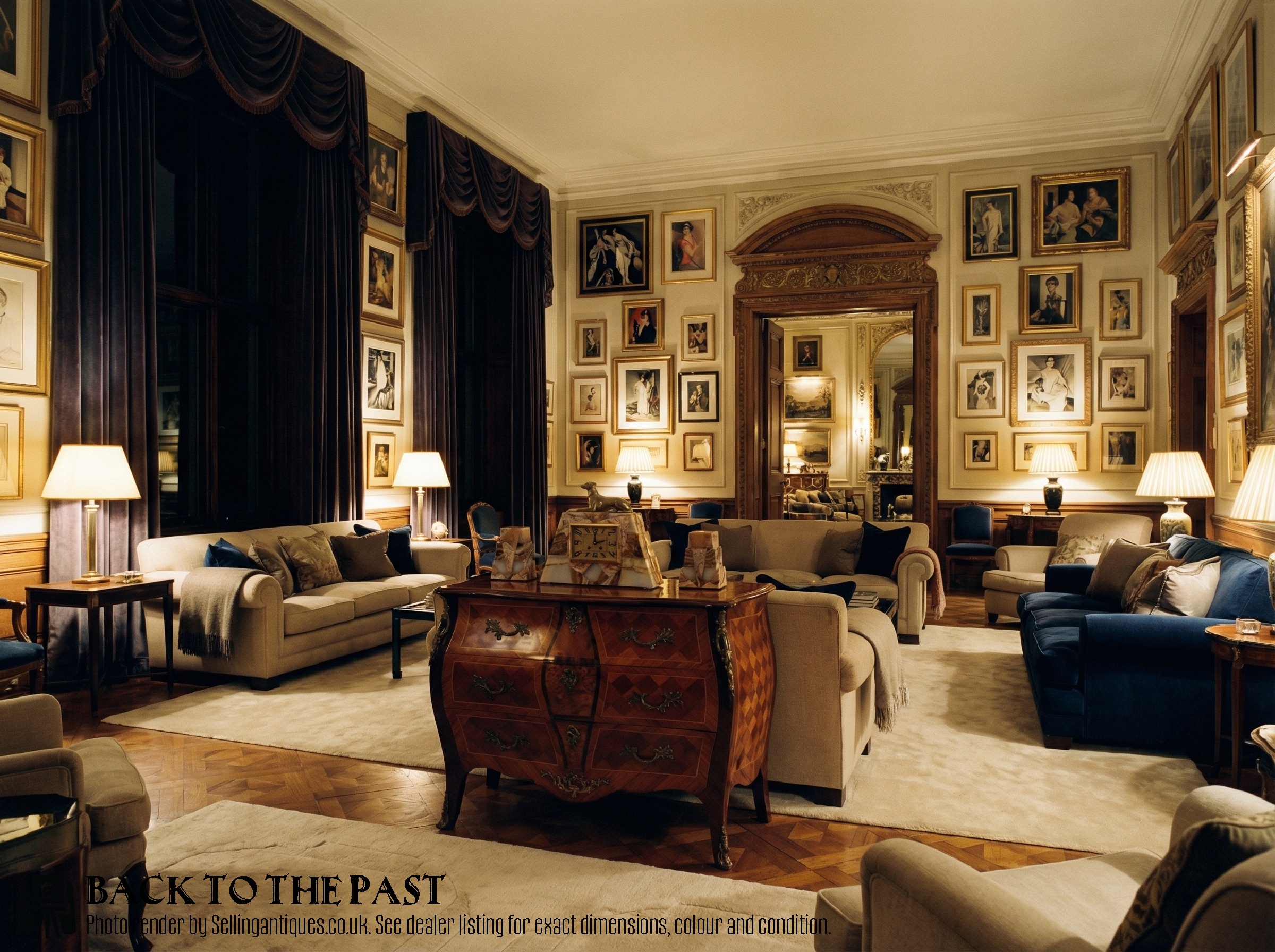
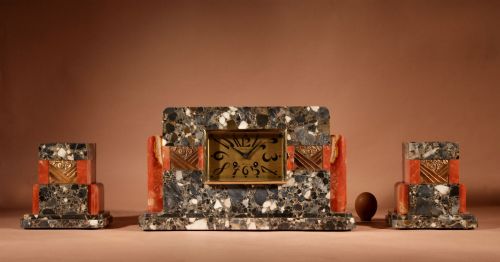
Art Deco French Clock Set - Greyhound, 1920
Priced at £2,150 from Dragon-Antiques.com
The 2026 retail price guide for Art Deco Clocks is drawn from a proprietary archive of over 1.1 million retail prices indexed by Sellingantiques since 2003. This guide relies exclusively on their own internal data; no external sources or auction records are used.
Analysing nearly 25 years of UK antique market history alongside current retail values, the data indicates that typical UK retail prices for Art Deco Clocks range between £300 and £1,800. Entry-level prices generally fall under £300 and premium examples upwards of £1,800.
Stark geometric profiles. The cases rely on stepped sides or sweeping curves rather than carved applied decoration.
Numerals on Art Deco clocks are often stylised. You will see blocked Arabic fonts replacing traditional Roman numerals on many dials.
Notice the contrasting colour blocking. Dark woods sit next to pale chrome bands to emphasise the horizontal lines.
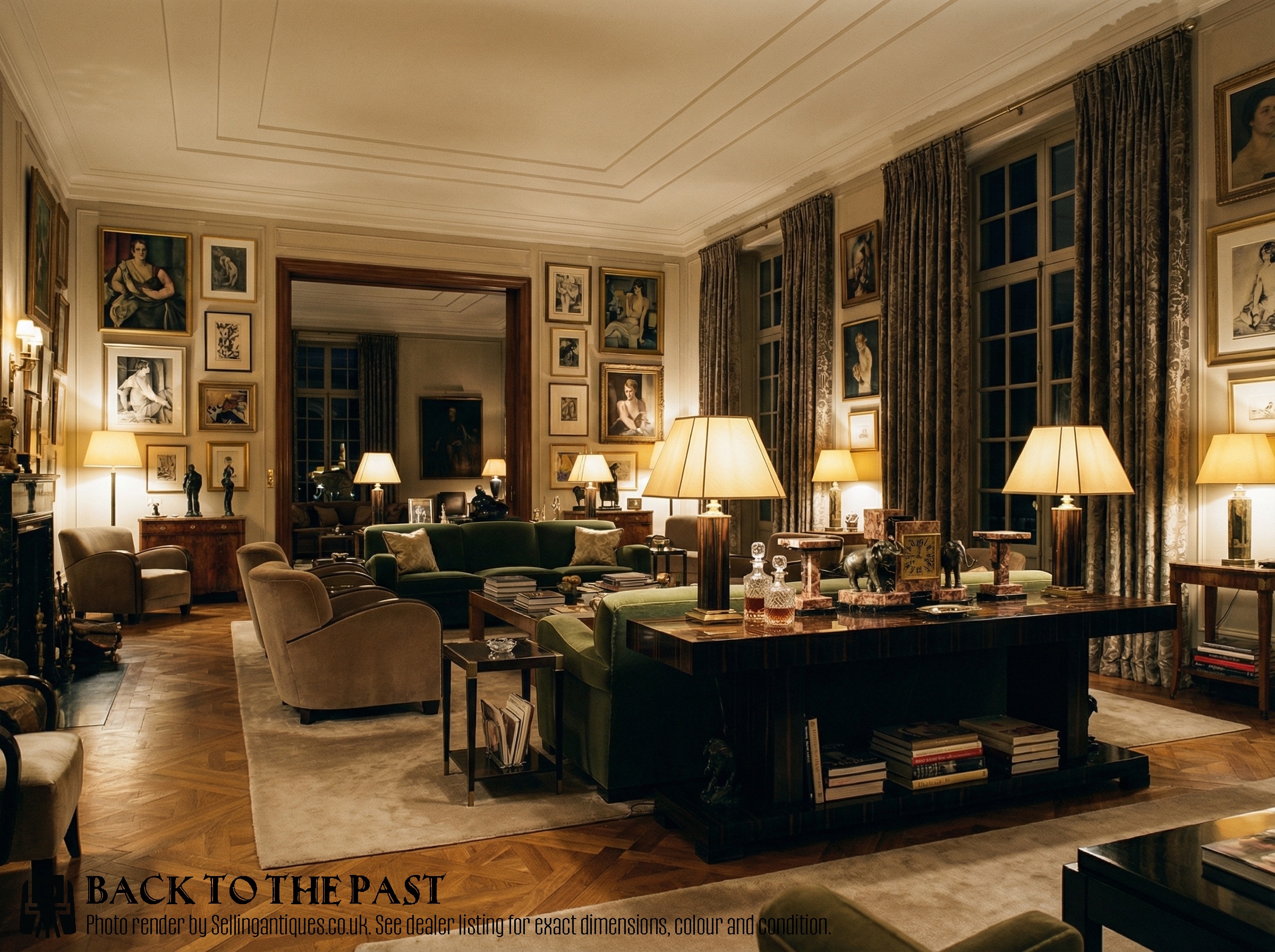
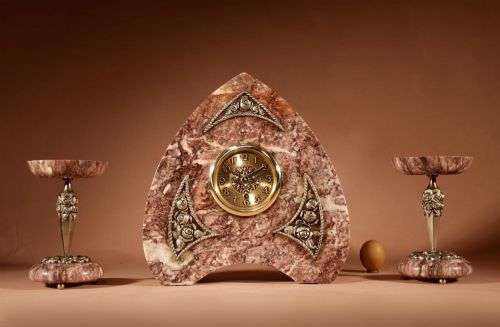
Art Deco Clock Set ~ Elephants, 1930
Priced at £2,950 from Dragon-Antiques.com
Early luxury pieces required hand-cut stone and cast metal. Masons shaped individual slabs of marble to fit around the movement barrel.
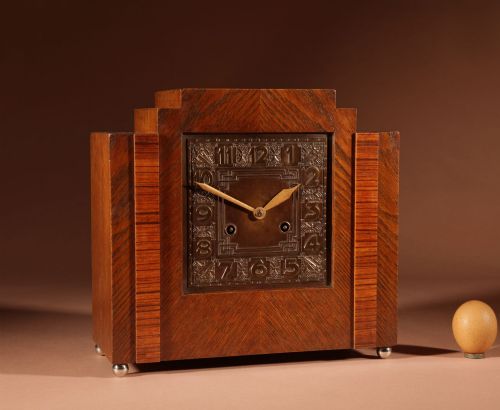
Feel the edges of the wooden cases. Cabinetmakers bent thin strips of ply and veneer over hot cauls to achieve smooth waterfall corners.
Stamped metal cases pressed in large factory runs. This allowed complex geometric patterns to be formed in one rapid mechanical action.
"Many mechanical movements from this era run for eight days on a single wind."
"Silent running. The switch to synchronous electric motors meant bedrooms could have an Art Deco clock without ticking noises."
"Find the hidden compartments. Some heavy marble desk sets were built with subtle sliding panels for storing fountain pens."
Based on almost 25 years of Sellingantiques UK antique market data, Art Deco Clocks appeared 1936 times (out of 1,100,000 antiques) which gives it a rarity score of 68/100.
This score measures scarcity within the Sellingantiques archive only and is not a survey of the entire antiques market, so these statistics may not be indicative of the general availability of Art Deco Clocks elsewhere.
Synchronous movements are early electric clock mechanisms. They rely on the alternating current of the mains power supply to keep time. The motor spins in sync with the grid frequency.
These were popular in the 1930s as homes were wired for electricity. You just plugged them in and they kept ticking without needing a weekly wind.
Most mechanical movements from that era can be serviced by a competent clockmaker. Loose hands often just mean the friction washer behind the dial has worn down.
Parts for common French and British mechanisms are standard. A professional will usually strip the movement and clean the brass plates.
Bakelite responds well to a gentle polish, provided the surface has not degraded. You should start by removing surface dust with a soft dry cloth. Never use harsh chemical sprays.
Specialist pastes are made for vintage plastics. Applying a small amount and buffing lightly will often restore the original shine. If the case looks cloudy, it might require machine buffing.
Numbers stamped on the back door or the movement plates are usually production marks. Factories used them to match the right case to the right movement on the assembly line.
Sometimes they indicate a registered design number. This was a way for makers to protect the shape of their case from being copied by rivals. You can look up British design numbers in the national archives.
Please note: This Art Deco Clocks guide and its associated pricing data are provided for general informational purposes only. It does not constitute formal financial, investment, or appraisal advice and should not be relied upon as the sole basis for any commercial activity, purchasing, or sales decisions. Sellingantiques.co.uk accepts no liability for any actions taken in reliance on this information. Always consult with a qualified professional or independent appraiser.
