



A 2026 Guide by Sellingantiques

19th Century Inlaid Rosewood Fusee London Wall Clock 'J Fisher Esq', 19th Century
Priced at £950 from Abersoch Antiques
Early examples evolved from lantern clocks during the late seventeenth century. Makers needed a way to protect the movement from dust while keeping the dial visible across a room.
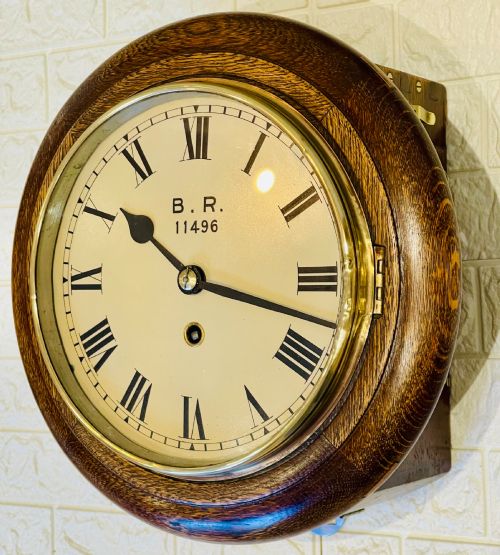
Dial clocks became the standard for British commercial spaces. Look at railway stations and post offices during the Victorian period. They needed reliable timekeeping that passengers could read quickly.
Drop dial variations emerged to accommodate longer pendulums. A longer pendulum swings slower and improves accuracy. This became crucial as regional train schedules tightened.
Vienna regulators changed the market in the nineteenth century. Factories in Austria and Germany started producing these lighter, highly accurate timepieces for middle-class domestic interiors.
American mass production brought antique wall clocks into ordinary homes. Companies in Connecticut stamped out interchangeable brass gears, making them affordable for a broader public.
Seth Thomas operated out of Connecticut during the nineteenth century. They produced thousands of spring-driven drop dials and regulators for the American market.
Gustav Becker made weight-driven Vienna regulators in Silesia. His late nineteenth-century factory pieces often carry an anchor and initials stamped into the backplate.
English provincial makers frequently bought blank dials and raw movements from London or Birmingham. They assembled these antique wall clocks locally and painted their own names on the front.

J.w.benson Twin Fusee Wall Clock, 1880
Priced at £2,550 from Its About Time
The 2026 retail price guide for Antique Wall Clocks is drawn from a proprietary archive of over 1.1 million retail prices indexed by Sellingantiques since 2003. This guide relies exclusively on their own internal data; no external sources or auction records are used.
Analysing nearly 25 years of UK antique market history alongside current retail values, the data indicates that typical UK retail prices for Antique Wall Clocks range between £500 and £2,800. Entry-level prices generally fall under £500 and premium examples upwards of £2,800.
Pendulums regulate the timekeeping. They hang below the escapement and require a steady, level surface on the wall to swing evenly.
Winding squares sit right on the dial face. A key fits over these arbors to coil the mainspring or lift the heavy cast iron weights.
Glass bezels protect the hands. These are usually hinged cast brass rings fitted with convex or flat mineral glass, locking shut with a simple catch.

A 19th Century Twin Fusee Striking Drop Dial Clock, 19th Century
Priced at £2,800 from Chalfont Clocks
Early wooden cases rely on hand-cut dovetails and animal hide glue. You can see the tool marks on the interior pine blocks where the maker shaped them.
Brass movement plates transition from thick sand-cast slabs to thinner rolled sheet metal. Nineteenth-century factories punched these out mechanically rather than cutting them by hand.
Dial painting shifted from hand-applied enamels to transfer printing. Factory workers rolled pre-printed numerals onto painted iron dials to speed up production and ensure uniformity.
"Many heavy regulator cases have built-in levelling screws hidden behind the pendulum. Turn them against the plaster wall to achieve the vertical alignment required for accurate timekeeping."
"Strike trains often feature a clever rack-and-snail mechanism. This ensures the clock chimes the correct hour even if you move the hands forward past the top of the dial."
"Weight-driven movements run longer and more consistently than spring varieties. Gravity provides an even pull through the entire week, meaning the clock keeps a tighter schedule."
Based on almost 25 years of Sellingantiques UK antique market data, Antique Wall Clocks appeared 4128 times (out of 1,100,000 antiques) which gives it a rarity score of 44/100.
This score measures scarcity within the Sellingantiques archive only and is not a survey of the entire antiques market, so these statistics may not be indicative of the general availability of Antique Wall Clocks elsewhere.
Most eight-day antique wall clocks need winding once a week. Pick a specific day and make it part of your routine. Winding on a Sunday morning prevents the springs from running down.
Turn the key steadily until you feel firm resistance. Do not force it past that point.
The most common cause is a case that sits out of beat. The pendulum needs an even swing to keep the escapement running smoothly. If the case leans slightly to one side on the wall, the tick will sound uneven and the clock will halt.
Try nudging the bottom of the wooden case left or right by a few millimetres. Listen to the tick until it sounds even.
If aligning the case fails to solve the issue, the movement likely needs cleaning. Old oil turns to a sticky paste over time, binding the gear train.
You should generally avoid moving the hands backwards on striking antique wall clocks. Forcing the minute hand past a striking point in reverse can bend the delicate levers inside the mechanism.
Time-only models handle reverse setting much better. However, the safest habit is always to move the hands clockwise. If you miss the correct time, pause the pendulum and wait for the time to catch up.
Weight-driven cases exert serious downward force. A standard picture hook hammered into old plaster will tear out quickly. The vibration from the swinging pendulum also works loose weak fittings over time.
You must find a solid wooden wall stud. Use a heavy-duty steel screw driven firmly into the timber. Many larger antique wall clocks have specific metal mounting plates screwed into their backboards for exactly this reason.
Please note: This Antique Wall Clocks guide and its associated pricing data are provided for general informational purposes only. It does not constitute formal financial, investment, or appraisal advice and should not be relied upon as the sole basis for any commercial activity, purchasing, or sales decisions. Sellingantiques.co.uk accepts no liability for any actions taken in reliance on this information. Always consult with a qualified professional or independent appraiser.
