




A 2026 Guide by Sellingantiques
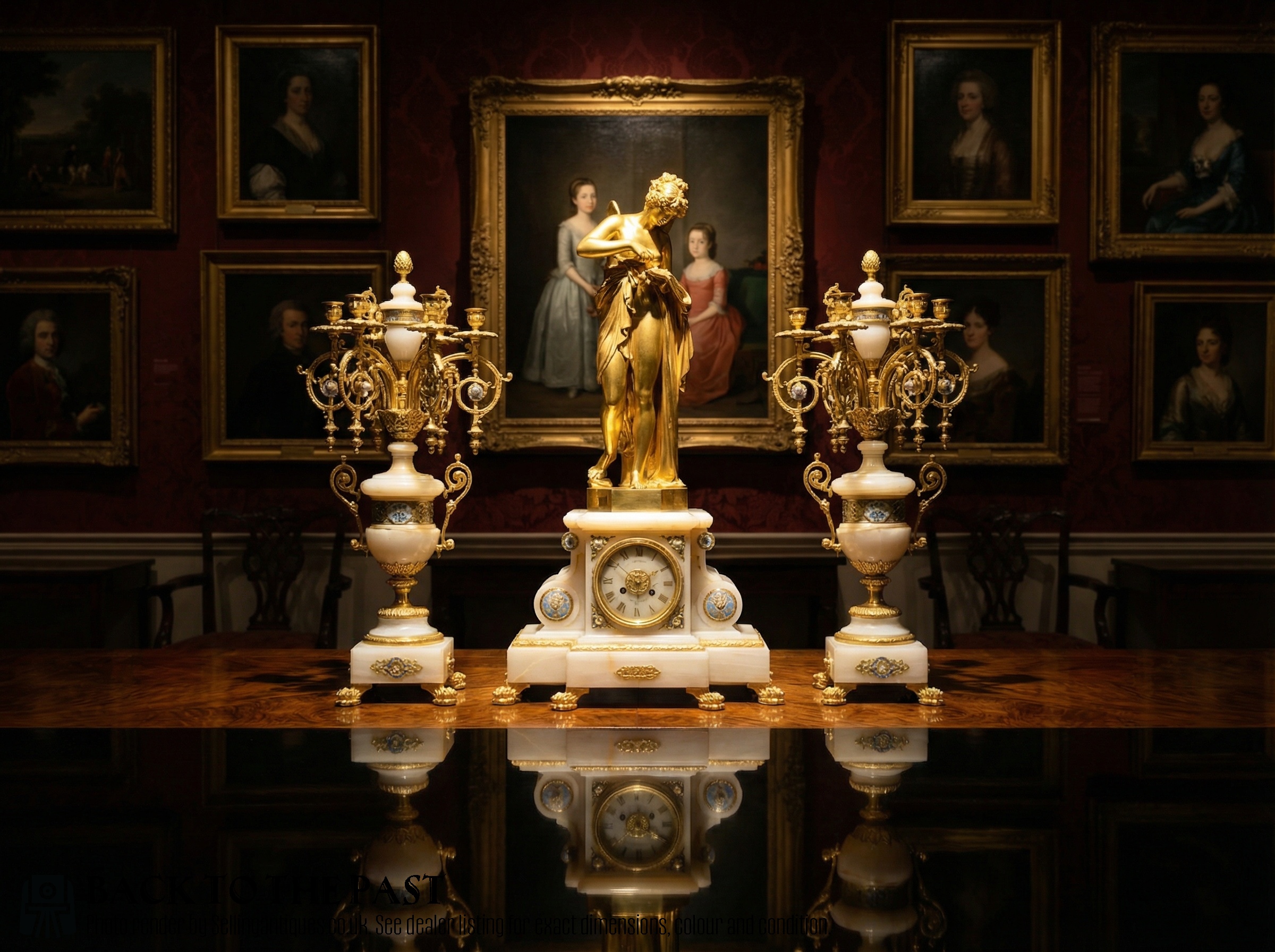
Large 19th Century French Louis Xvi Style Mantel Clock Set, 19th Century
Priced at £18,000 from Patrick Moorhead Antiques
Early production of antique ormolu clocks centred almost exclusively in Paris, where specialist guilds rigidly controlled the trade.
The mercury gilding process reached a peak during the Empire period, before health concerns forced changes.
Look closely at the transition from restrained Louis XVI architectural styles to the heavy figurative cases favoured under Napoleon.
English makers sometimes imported these empty gilded cases just to house their own domestic movements.
Cheaper spelter copies flooding the market by the end of the nineteenth century.
Pierre-Philippe Thomire ran a massive workshop during the Empire period, producing some of the most complex figural cases.
Robert Osmond, specialising in early neoclassical designs during the Louis XVI era and favouring column motifs.
Jean-Joseph de Saint-Germain stamped his heavy rococo bronze clock cases from the mid-eighteenth century.
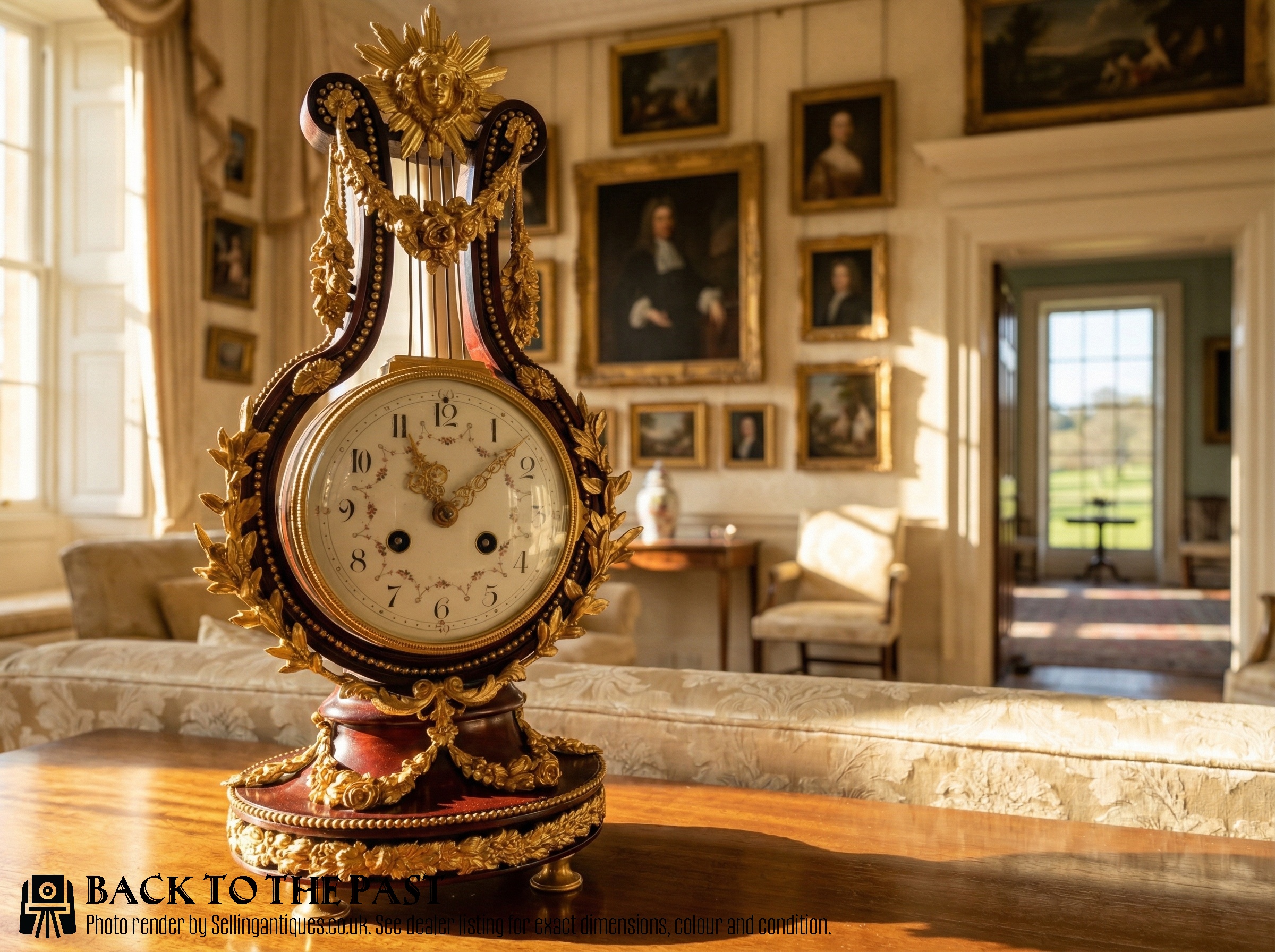
Outstanding Lyre Clock. Maple & Co. Paris., 1860
Priced at £3,750 from Masons Antiques
The 2026 retail price guide for Antique Ormolu Clocks is drawn from a proprietary archive of over 1.1 million retail prices indexed by Sellingantiques since 2003. This guide relies exclusively on their own internal data; no external sources or auction records are used.
Analysing nearly 25 years of UK antique market history alongside current retail values, the data indicates that typical UK retail prices for Antique Ormolu Clocks range between £1,100 and £5,200. Entry-level prices generally fall under £1,100 and premium examples upwards of £5,200.
Elaborate figural mounts often dominate the top section, depicting classical deities or historical scenes.
Check the dial for white enamel faces painted with black Roman numerals and delicate pierced hands.
Heavy glass bezels protecting the face, usually hinged to open from the front.
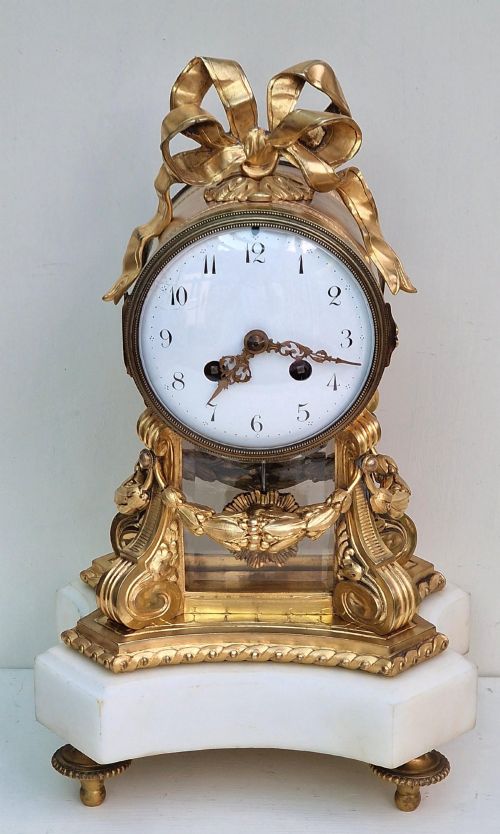
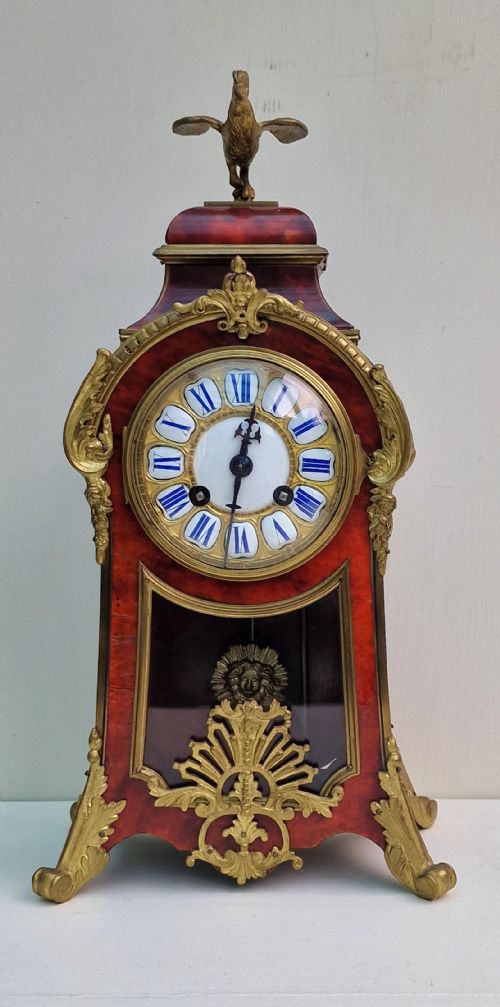
19th-century Mantle Clock Circa 1890.Ormolu. French Mantel Clock, 19th Century
Priced at £900 from Frank Craig Antiques
Note the chasing, where artisans use small steel tools to carve sharp details into the raw bronze before gilding.
Mercury gilding requires baking the amalgam over an open fire. This vaporises the mercury and fuses the gold.
Much thinner layers of gold left on the surface by later nineteenth-century electroplating methods.
"Many large cases were designed in sections, allowing the same central themes to be combined with different bases."
"Intentional dull matte areas, created by applying special acids to contrast with the highly burnished highlights."
"Most clock cases were delivered to the retailer well before a movement was selected."
Based on almost 25 years of Sellingantiques UK antique market data, Antique Ormolu Clocks appeared 2155 times (out of 1,100,000 antiques) which gives it a rarity score of 65/100.
This score measures scarcity within the Sellingantiques archive only and is not a survey of the entire antiques market, so these statistics may not be indicative of the general availability of Antique Ormolu Clocks elsewhere.
Open the glass bezel on the front and insert the key into the small holes on the dial. Most have two holes. One winds the time and the other winds the strike mechanism.
Always turn the key gently in a clockwise direction until you feel solid resistance. Stop when it feels tight to avoid breaking the mainspring.
The movement is likely out of beat. This happens when the case sits unevenly on the surface, causing the pendulum to swing further to one side.
You can often fix this by adjusting the small screw feet under the base. Listen to the tick as you adjust them until the sound is even on both sides.
If levelling the case fails, the internal oil may have dried out. The movement will need stripping and cleaning by a clockmaker.
Never use standard metal polish or abrasive cloths. They will strip the thin gold layer right off the base.
Just dust it with a soft dry brush.
Yes, a clockmaker can fit a replacement bell quite easily. The strike train relies on a specific size of silvered bell to produce the correct tone, and these are standard trade parts.
Missing back doors are a common issue with antique ormolu clocks. The original doors were simple pierced brass frets lined with fabric, which often fell off during handling.
You can have a plain brass replacement cut to fit the aperture. It protects the movement from dust, even if it lacks the decorative piercing.
Please note: This Antique Ormolu Clocks guide and its associated pricing data are provided for general informational purposes only. It does not constitute formal financial, investment, or appraisal advice and should not be relied upon as the sole basis for any commercial activity, purchasing, or sales decisions. Sellingantiques.co.uk accepts no liability for any actions taken in reliance on this information. Always consult with a qualified professional or independent appraiser.
