Dragon-Antiques.com has dated this Ormolu Rococo Mantel Clock to the 1910s.
~~ Excellent condition, fully overhauled ~~
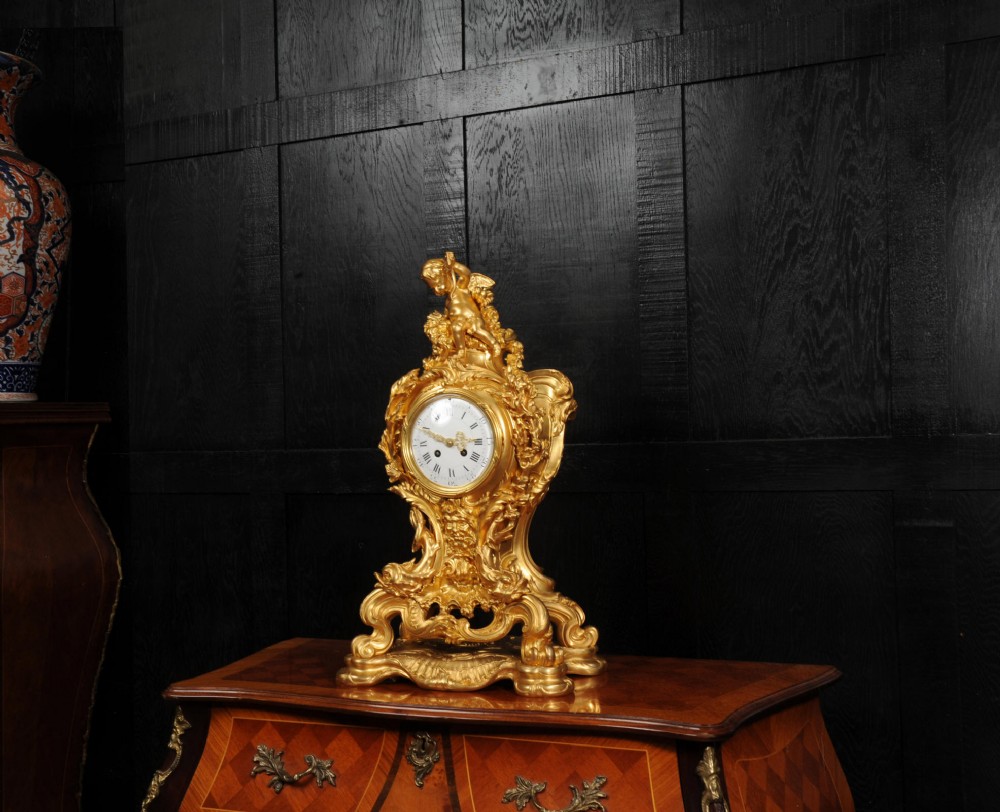
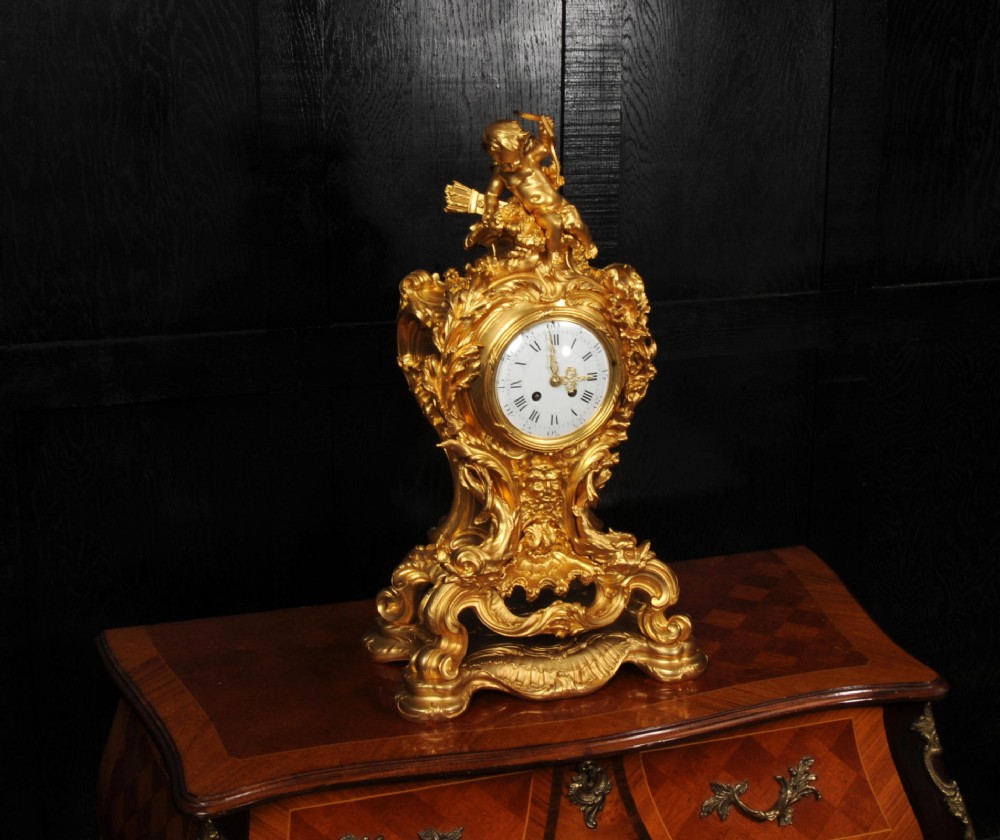
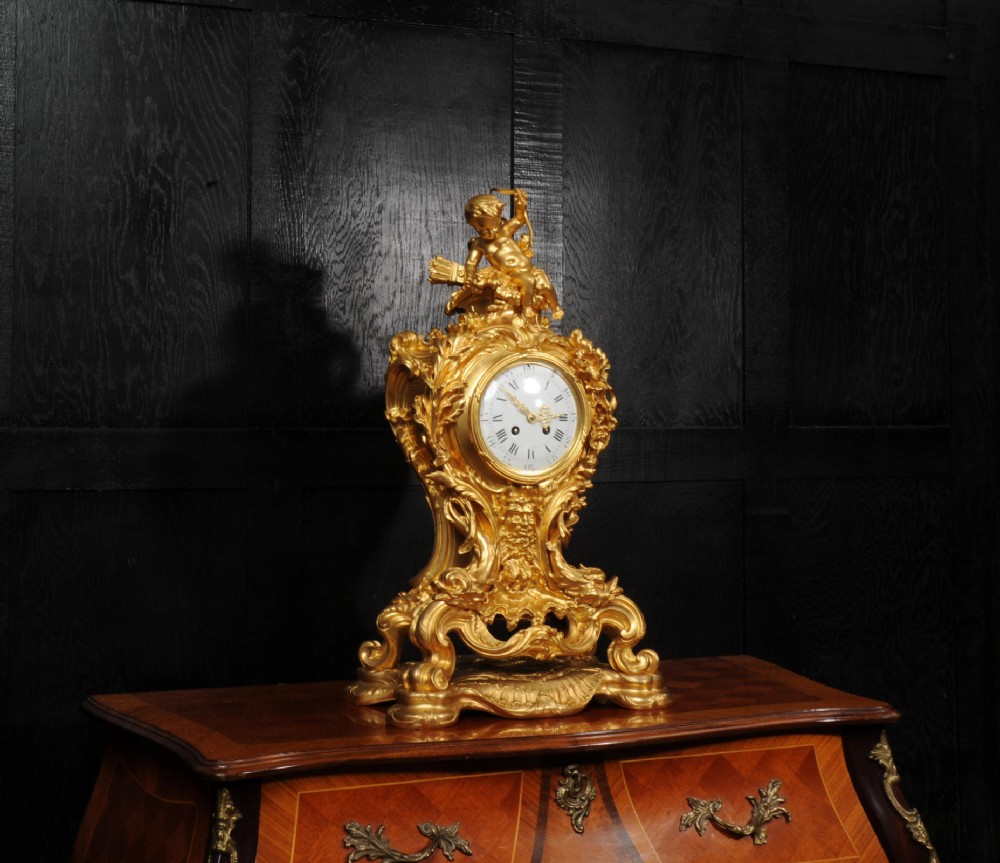
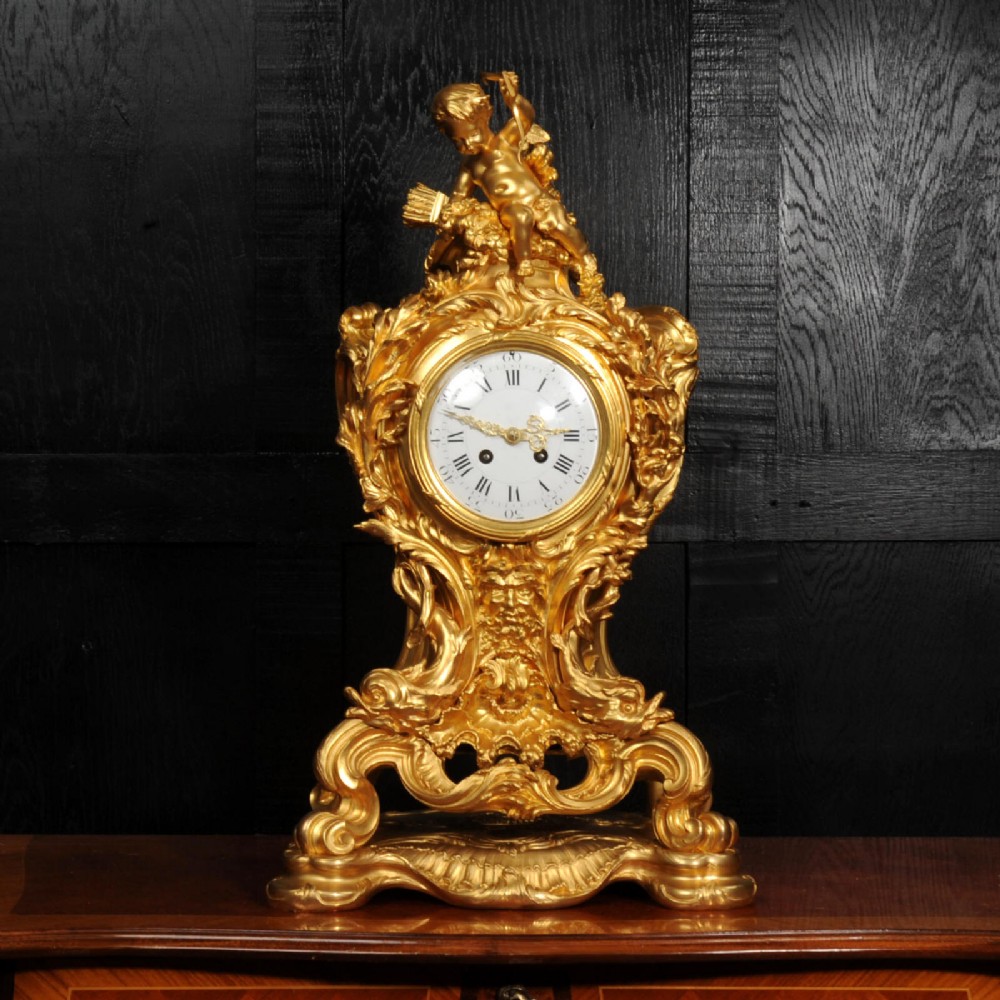
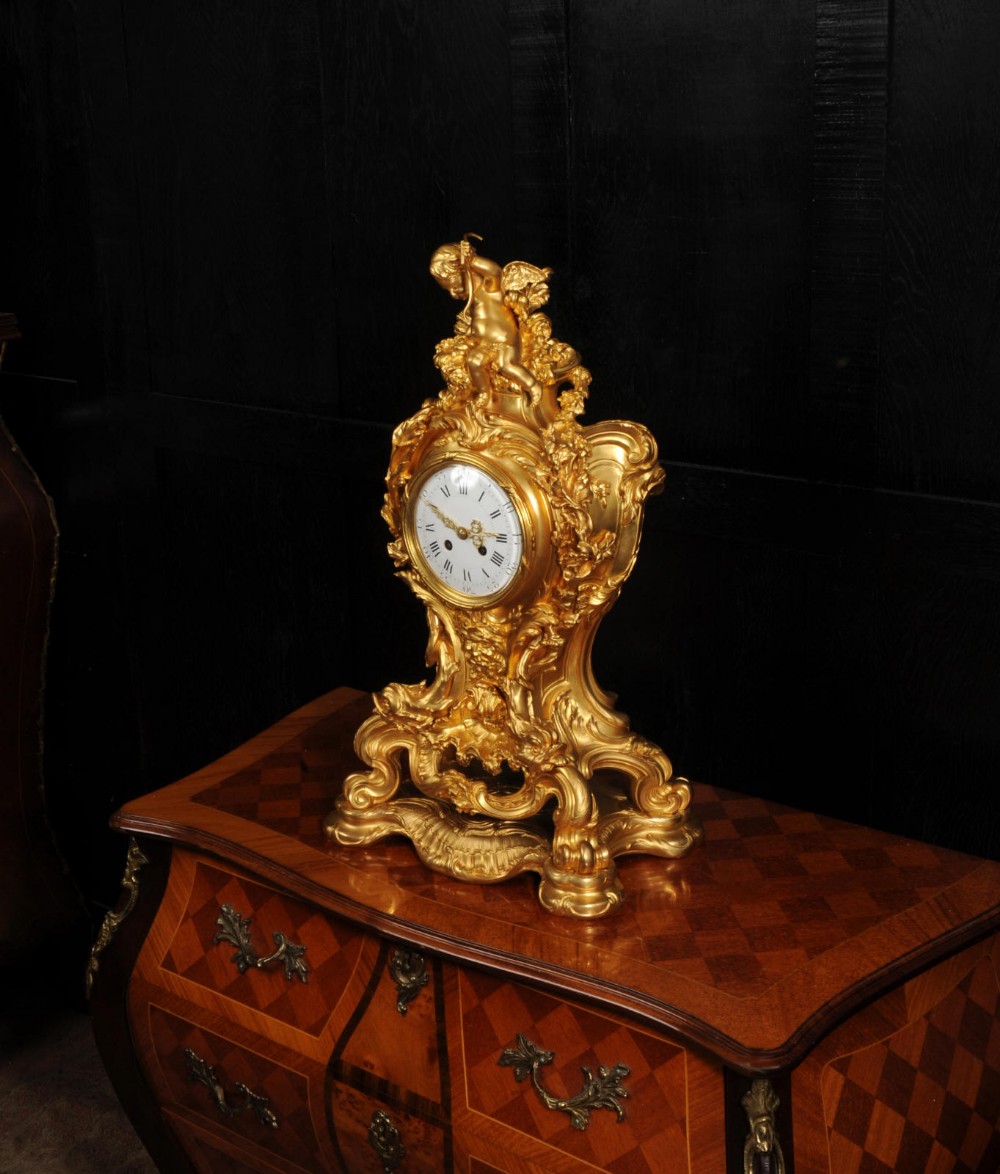
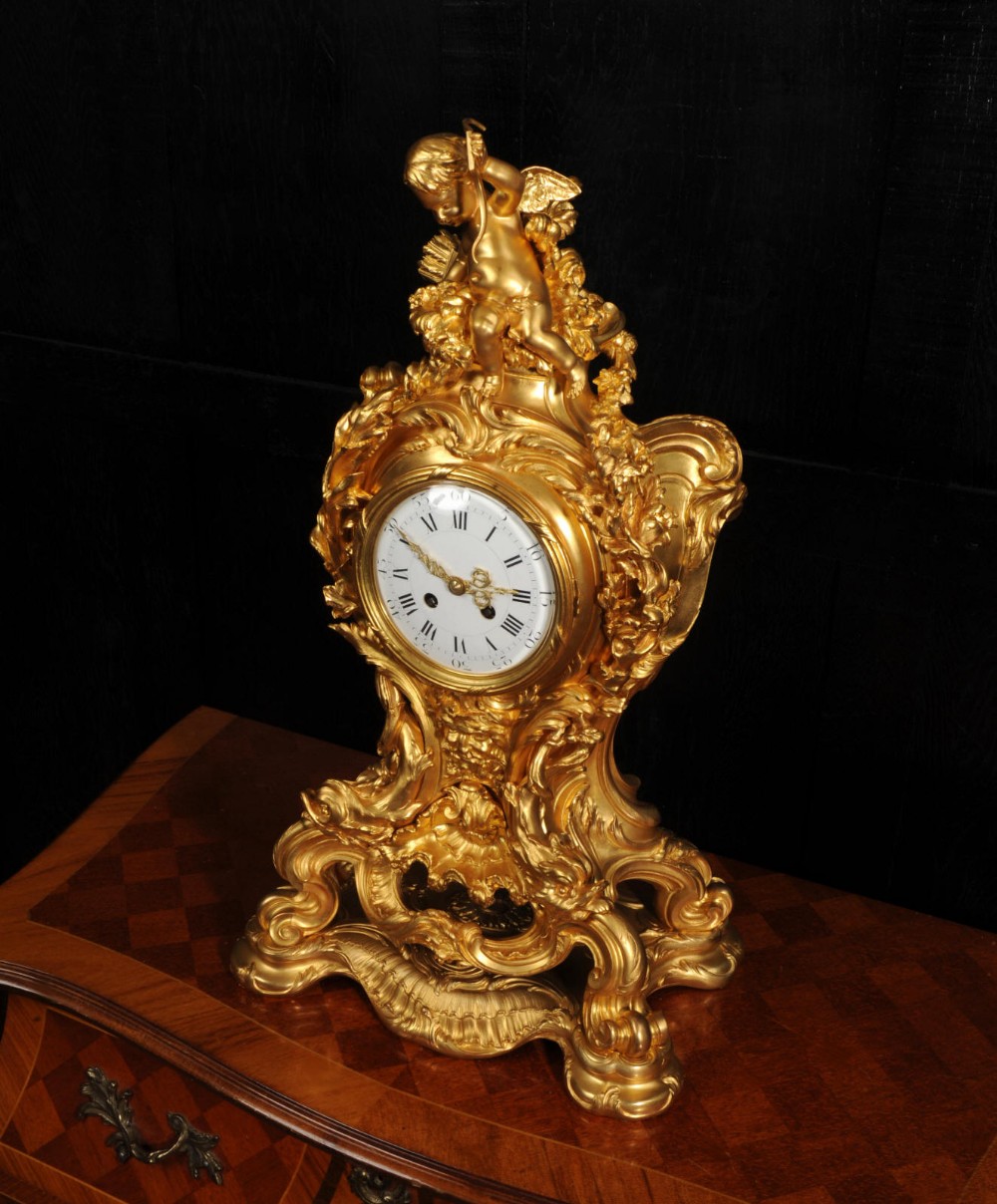
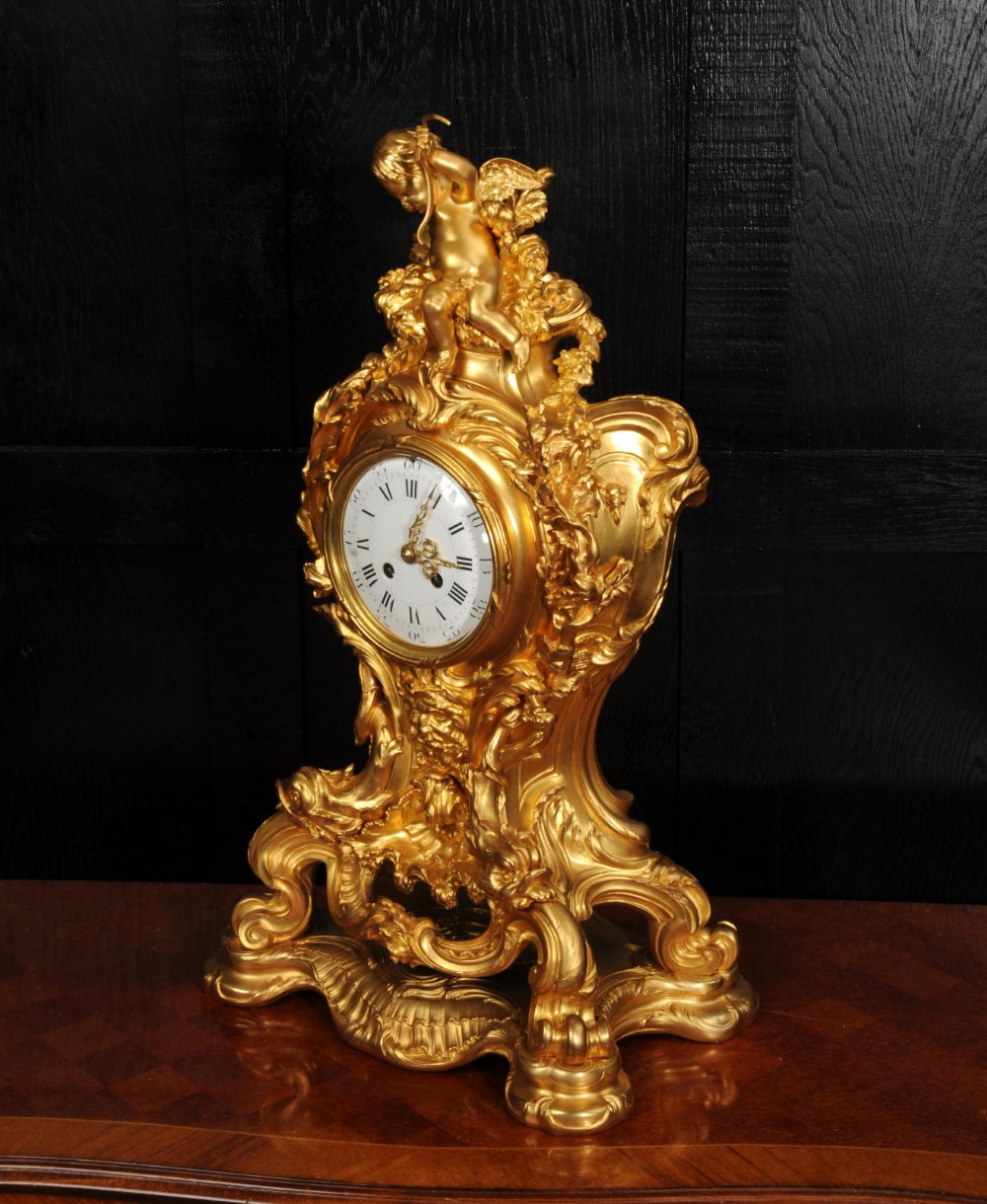
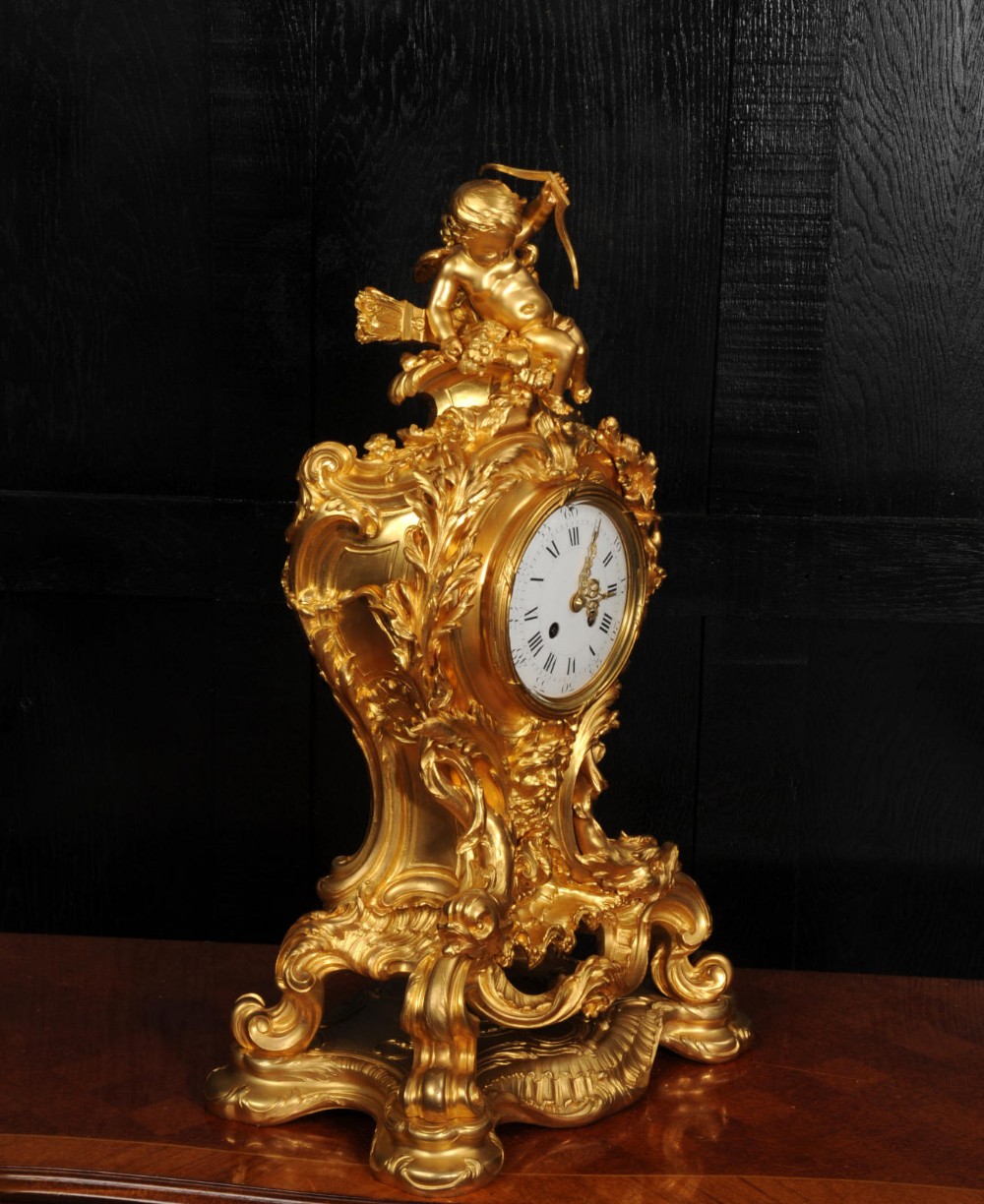
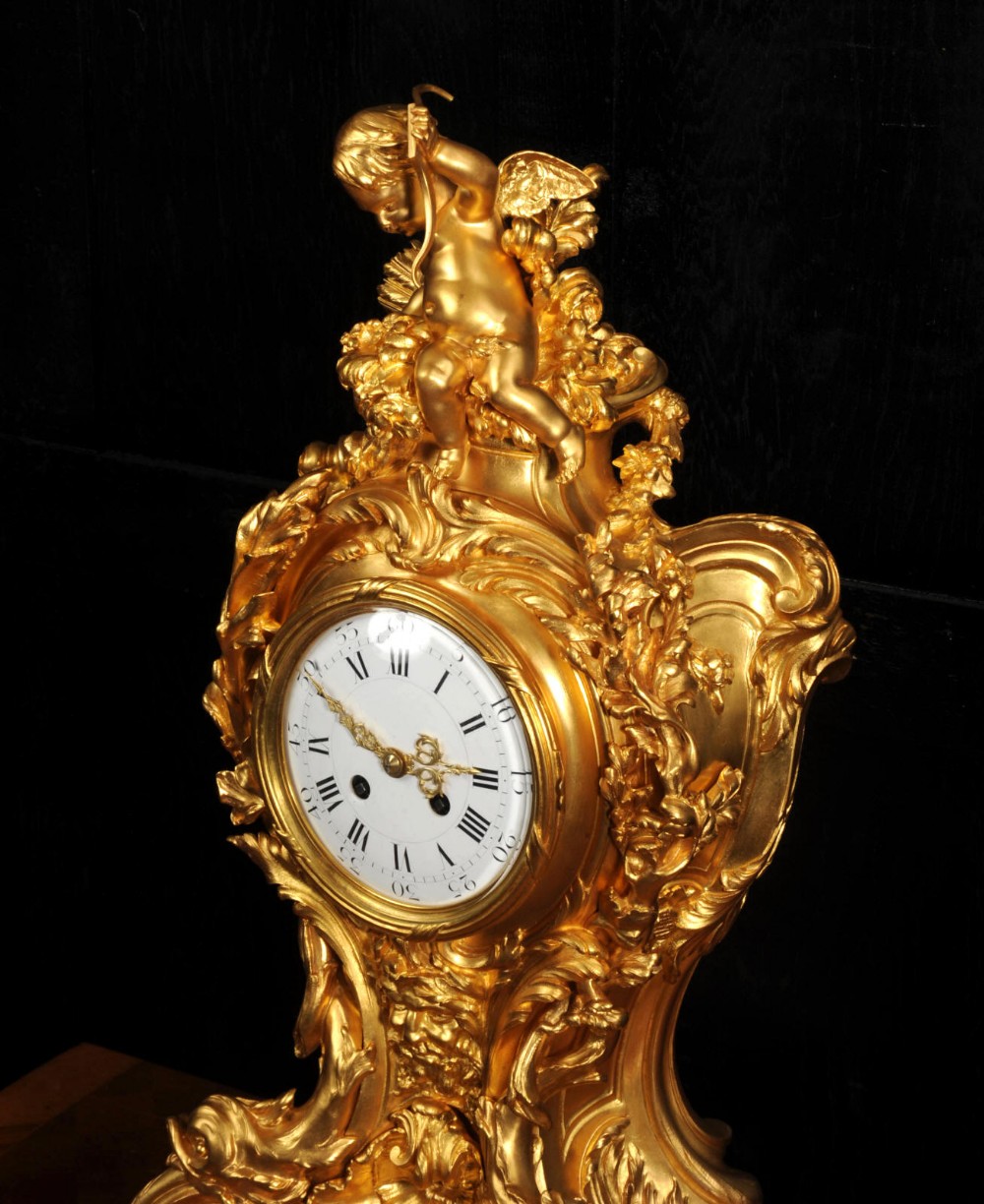
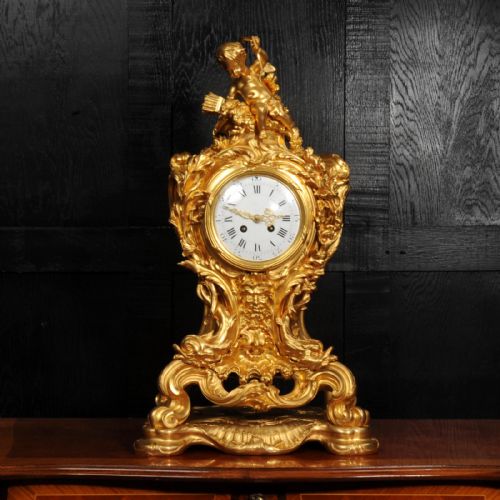
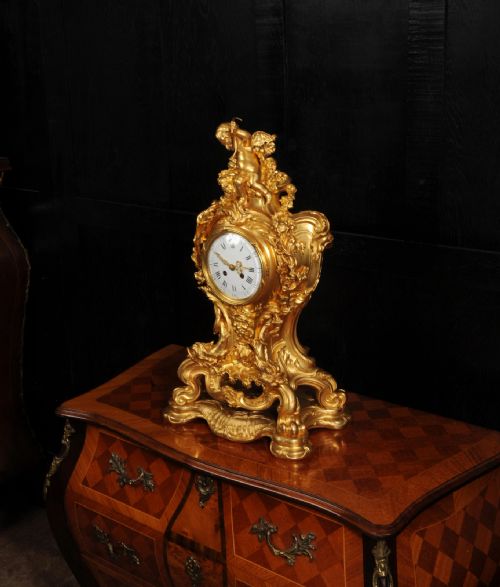
Executed in finely gilded bronze, the composition draws inspiration from the Rococo vocabulary of Juste-Aurèle Meissonnier, characterised by bold movement, asymmetry, and richly animated ornament.
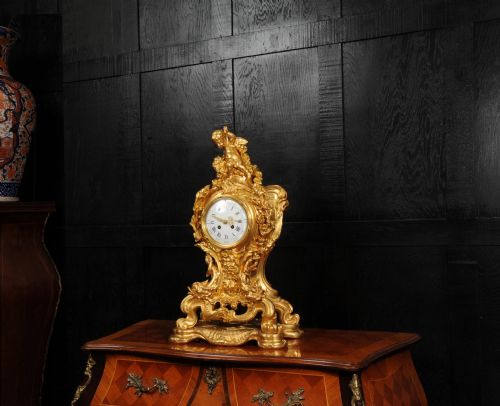
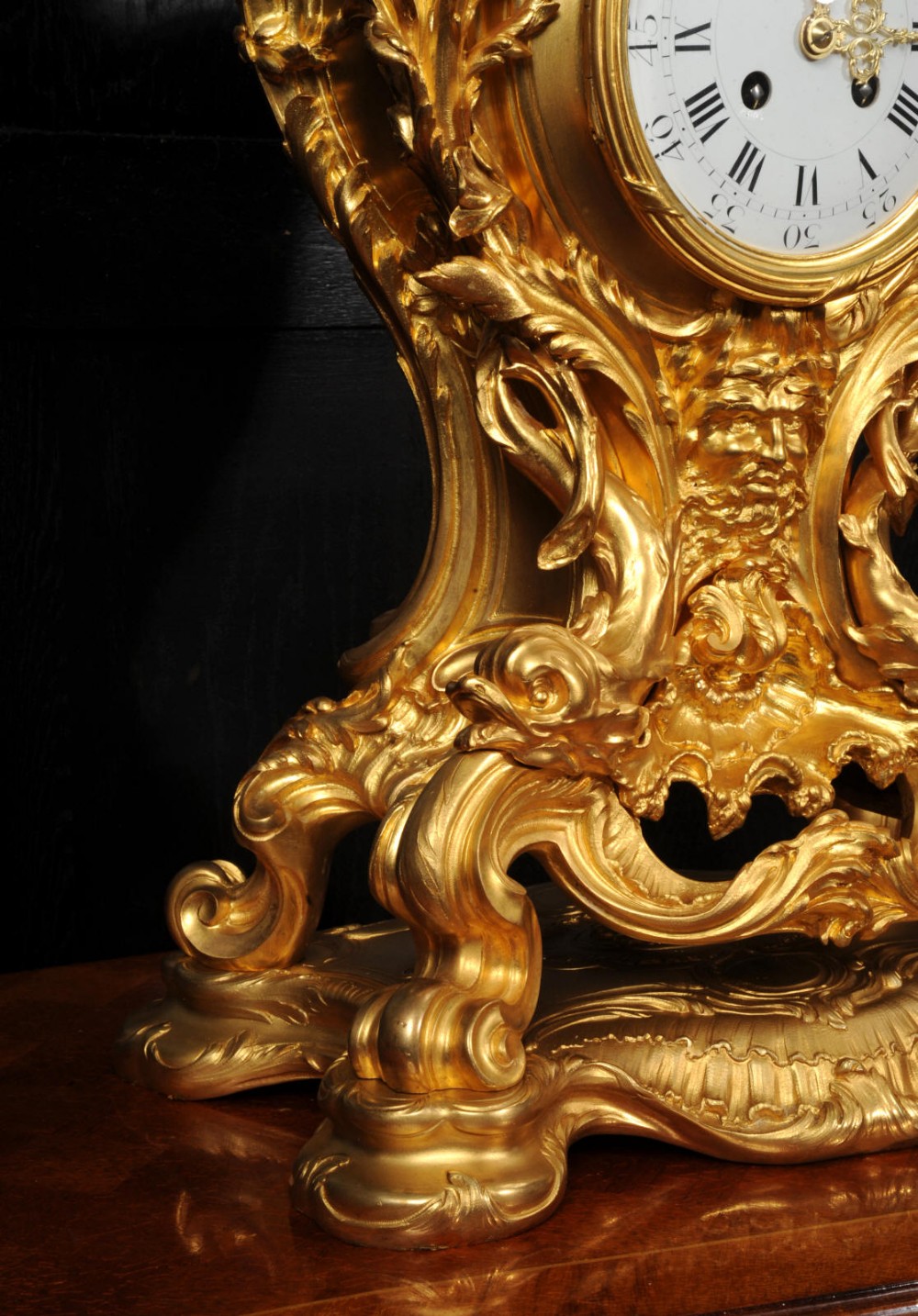
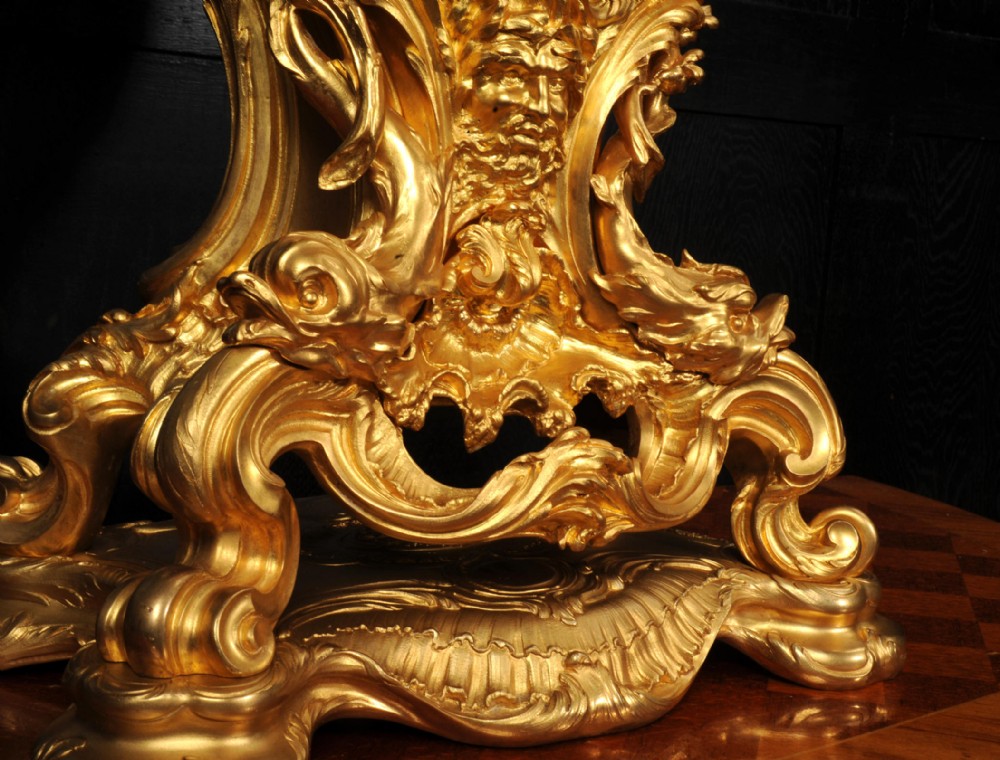
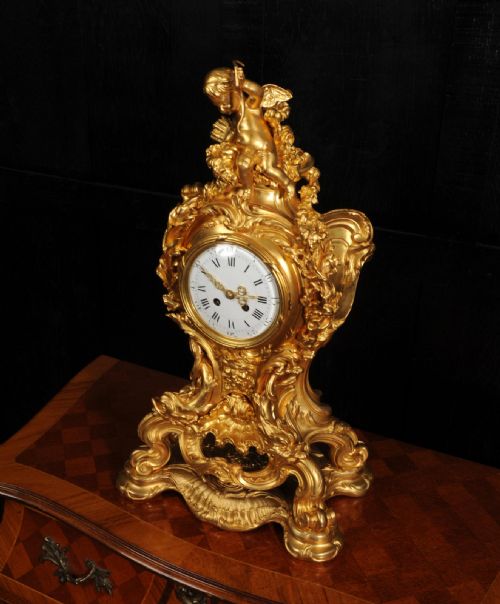
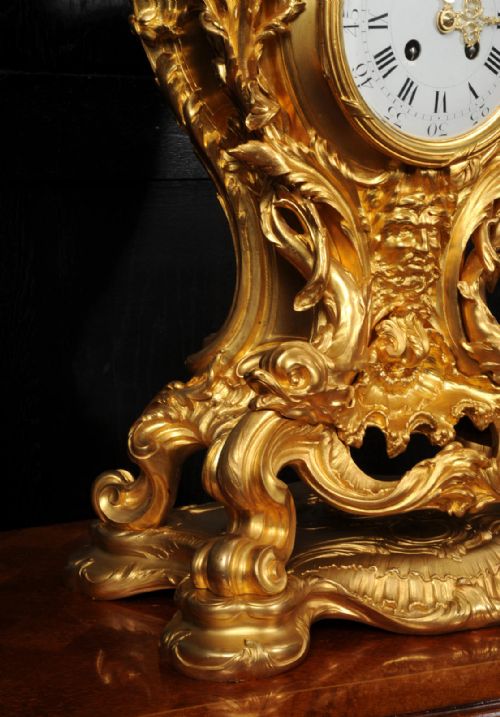
The lower half of the clock is centred on a maritime theme, featuring Neptune flanked by a pair of beautifully modelled dolphins. The dolphins ride stylised surf upon sweeping scrolls that form the feet of the clock, their dynamic movement enhancing the sense of fluidity. Between them, Neptune emerges above a shell motif, conceived as a lively and expressive sea.
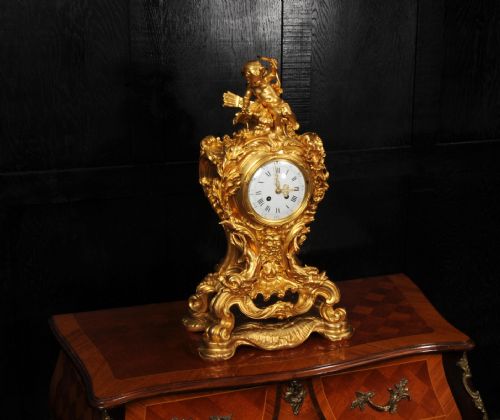
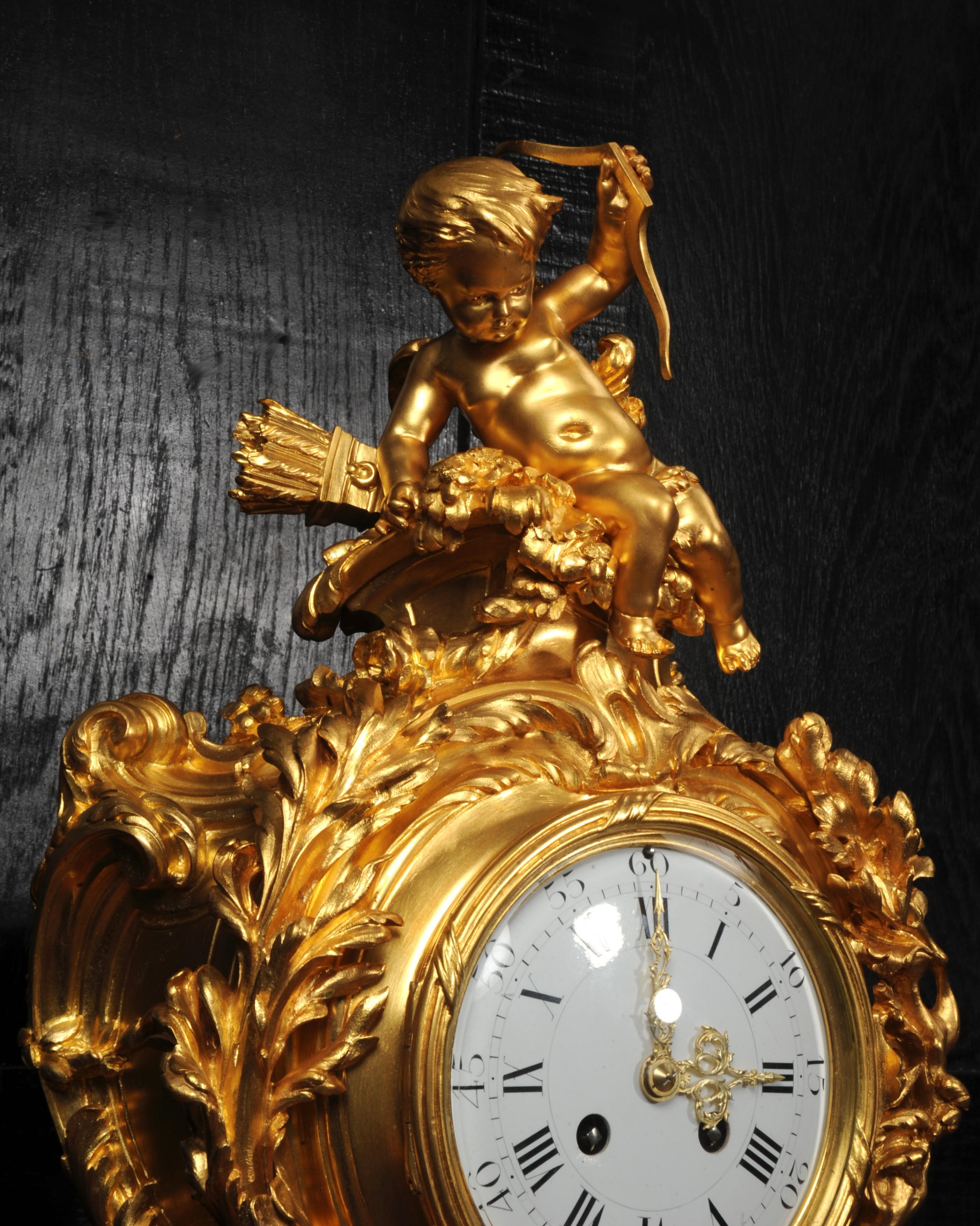
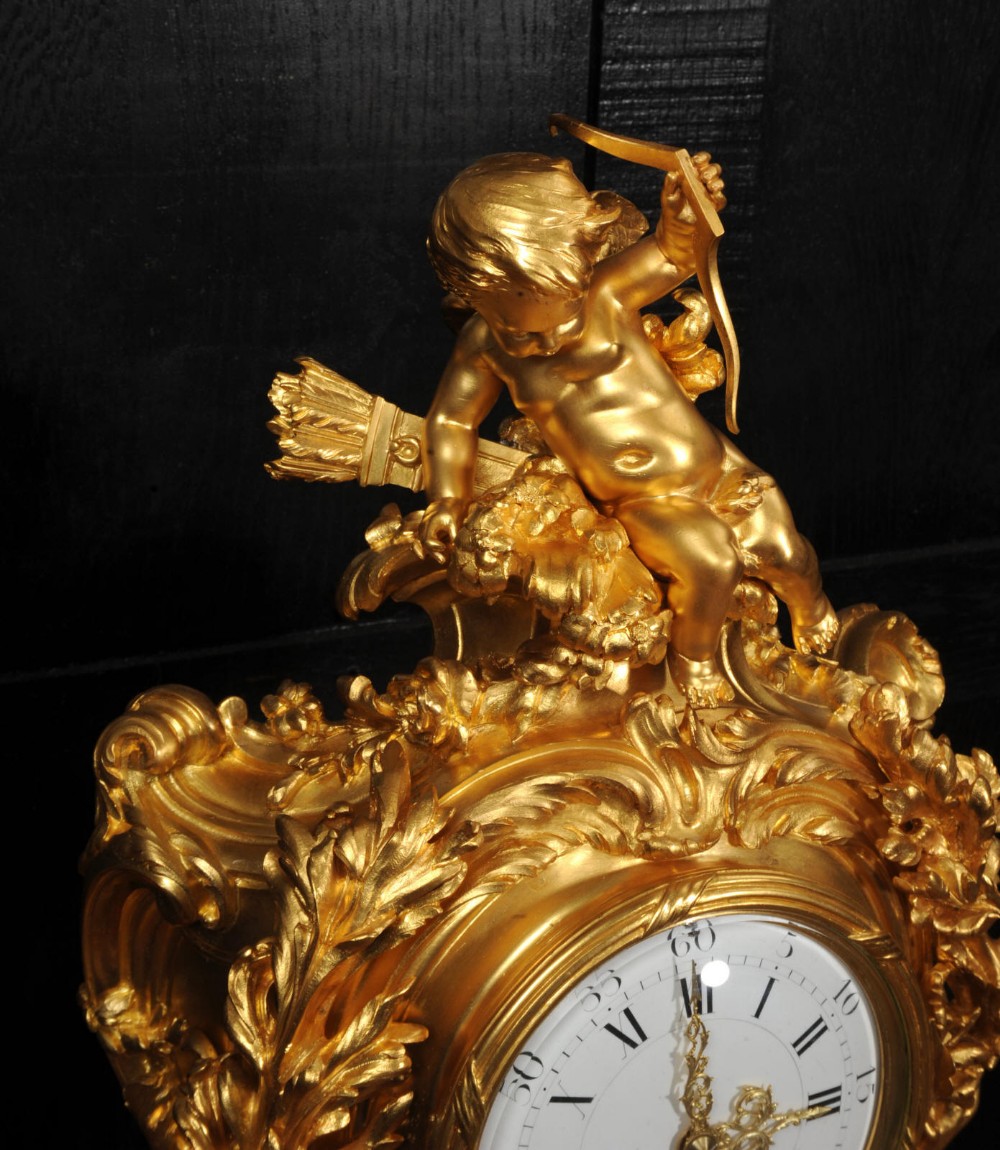
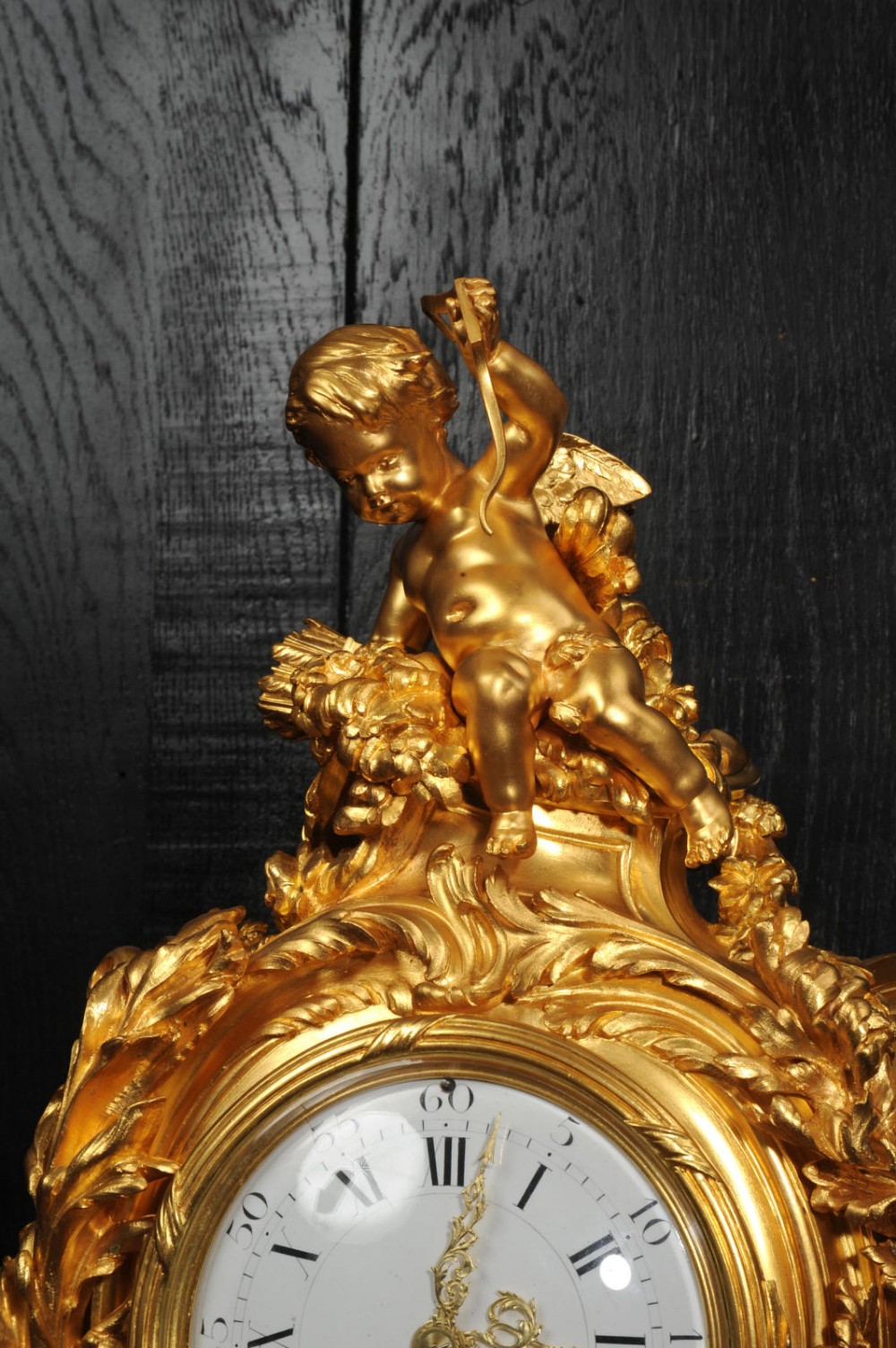
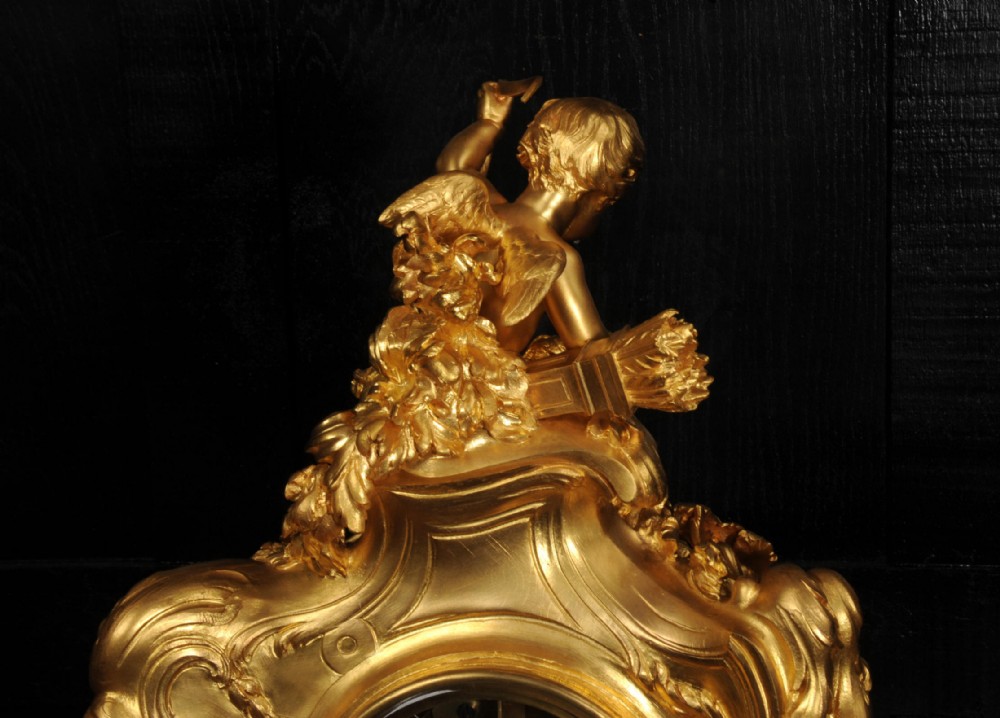
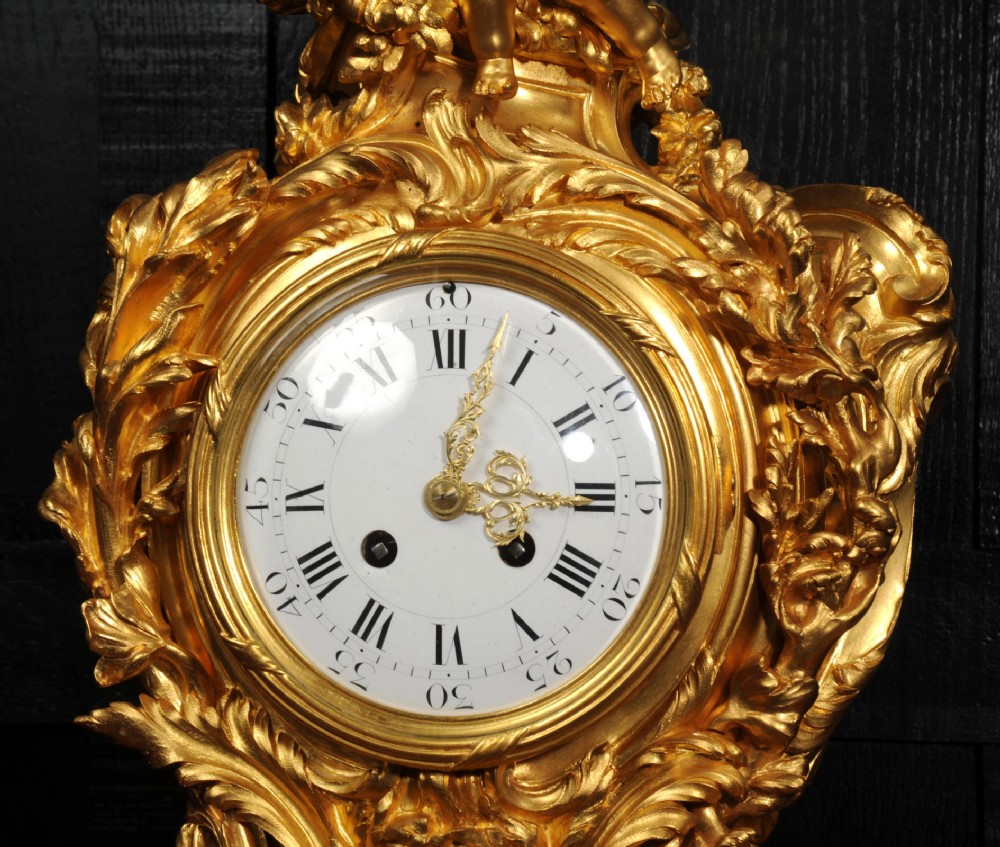
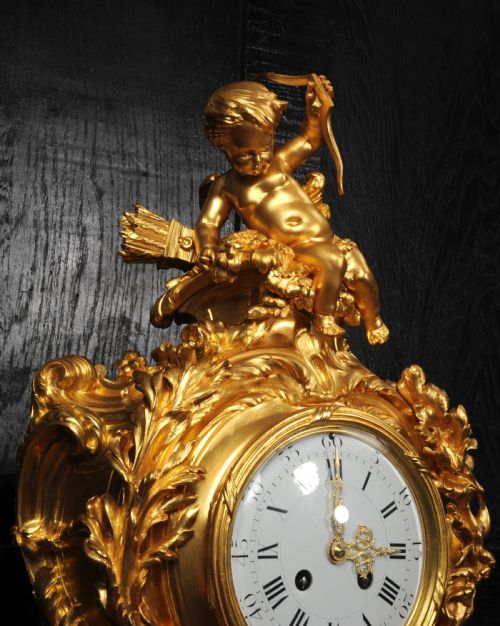
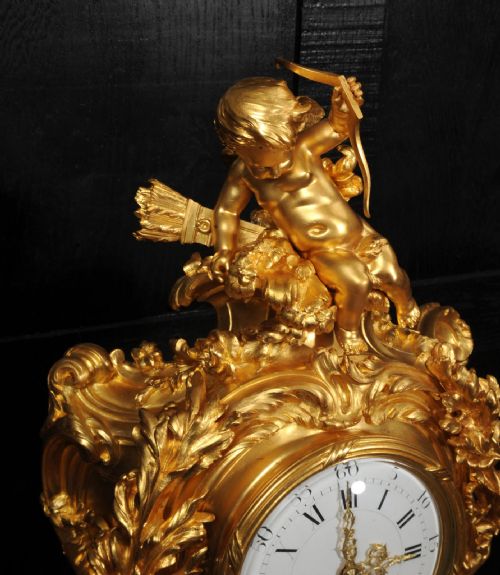
Above the dial, Cupid is shown seated patiently, holding his bow with a quiver of arrows at his side, introducing a contrasting note of tenderness and allegory. The entire case is unified by pronounced curves and finely chased foliate decoration, all crisply cast and richly gilded.
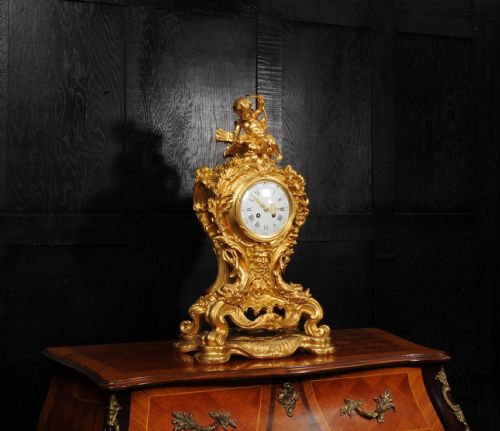
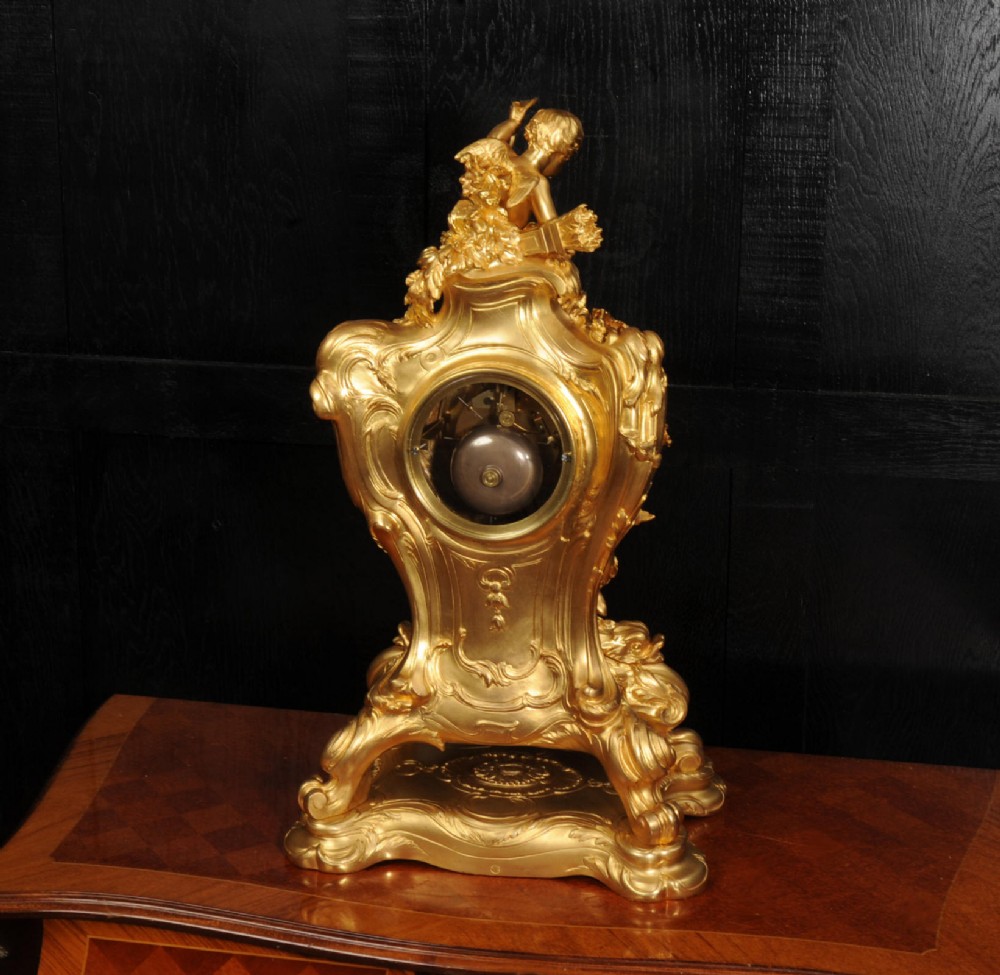
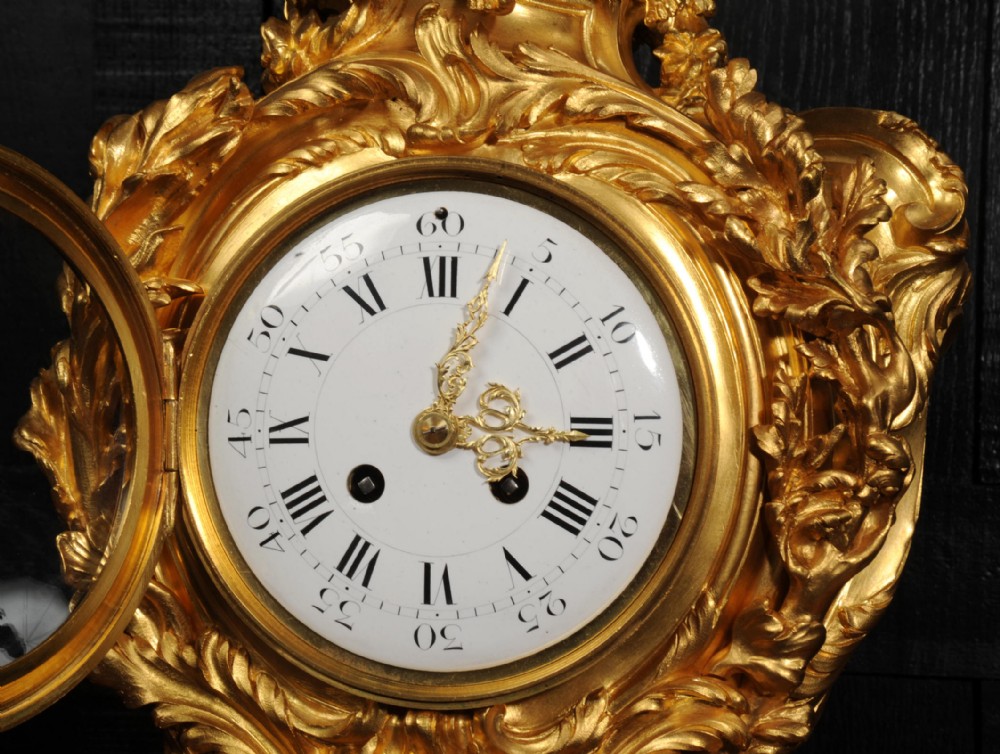
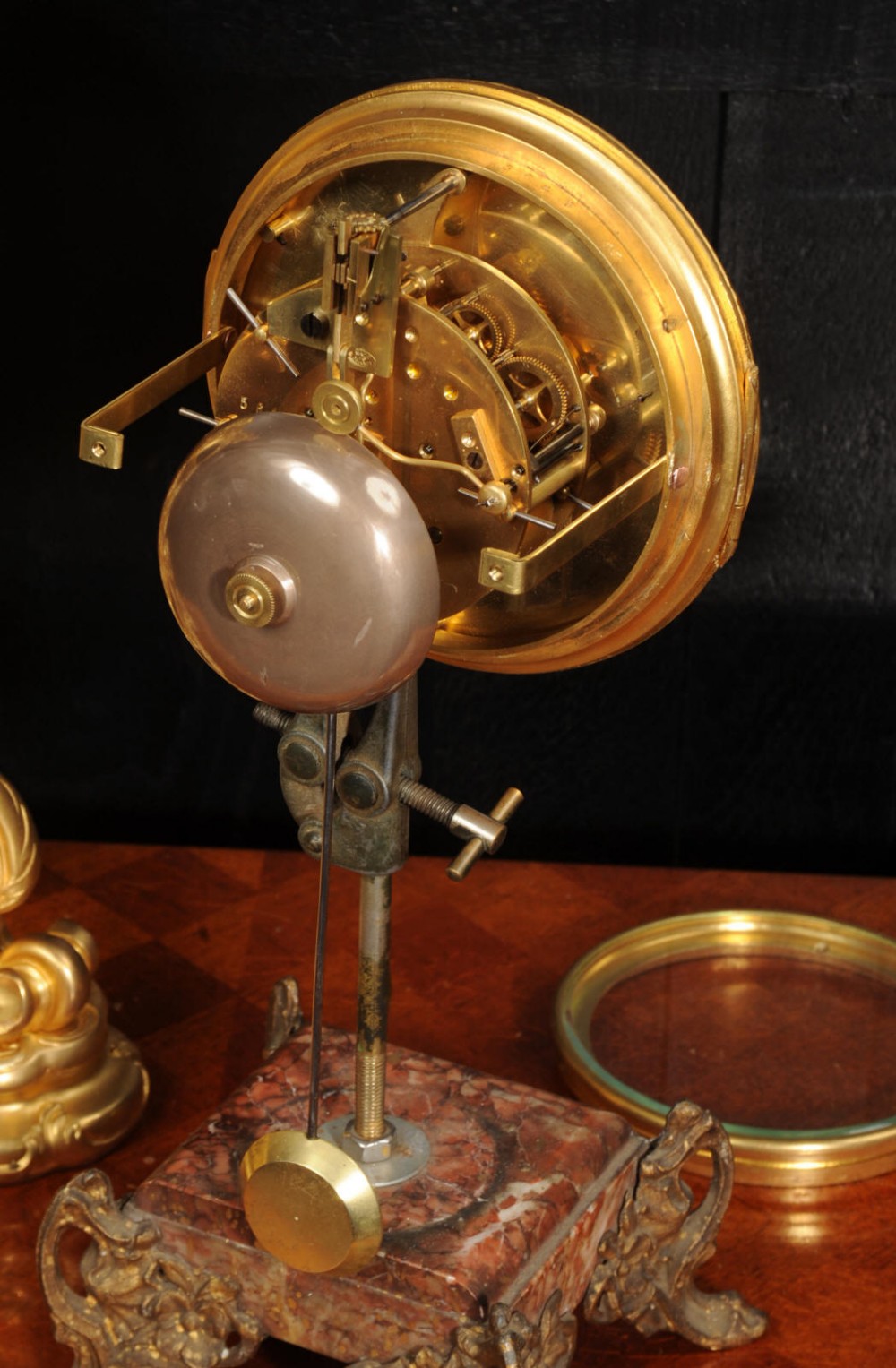
The dial is of porcelain enamel on copper, fitted with finely cut gilt-brass hands and protected by a convex glass. The rear bezel is also glazed, allowing the movement to be viewed, a feature that enhances both the visual appeal and connoisseurial interest of the piece.
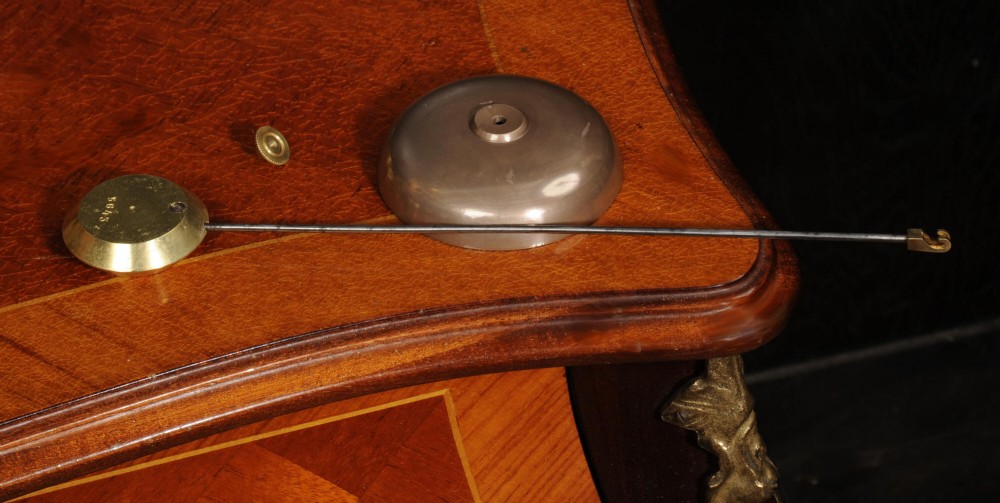
The French movement is of superb quality and was made by Samuel Marti. It is in excellent, clean, and fully functioning condition, having been professionally overhauled by our clockmaker. The pendulum is original to the clock. The movement runs for eight days and strikes the hours and half-hours on a bell. We have a video of the clock, please ask and we will send you a link.
Condition of the case is excellent, the original gilding is beautifully clean and bright with slight wear in places, mainly the base inside the clock. The dial is also excellent with just some slight nibbles to the winding holes.
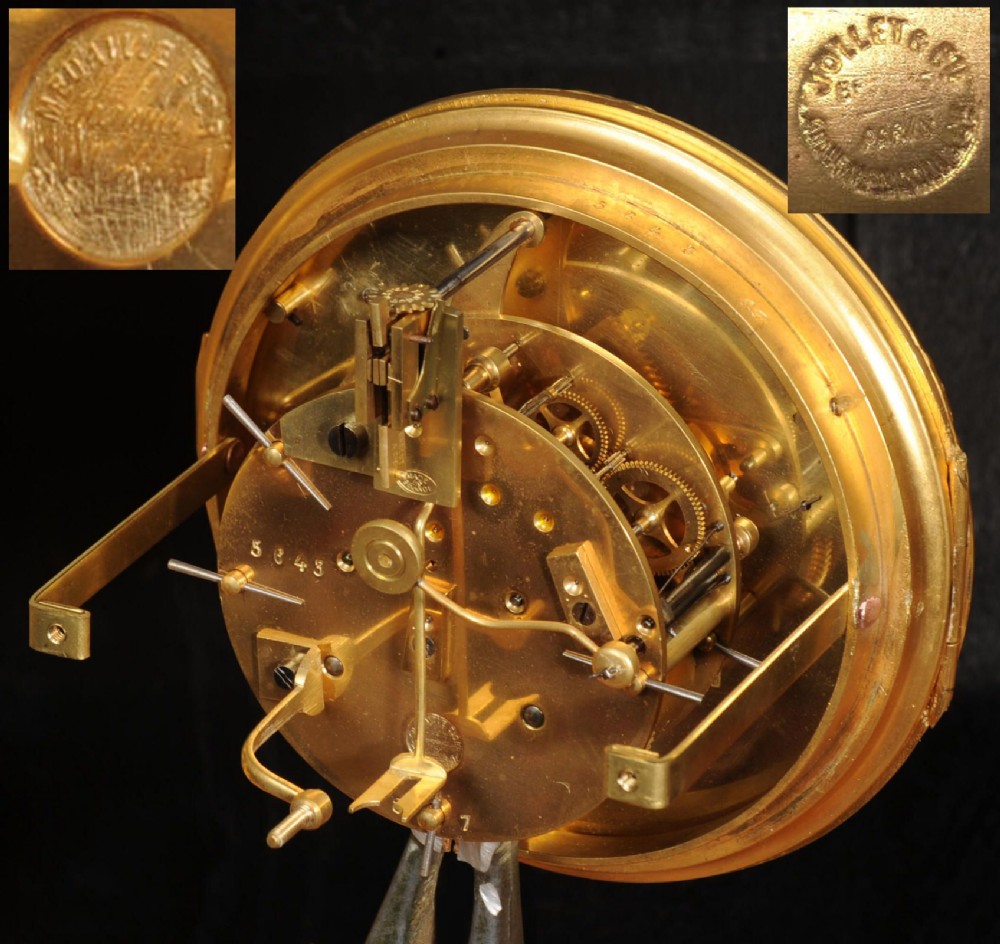
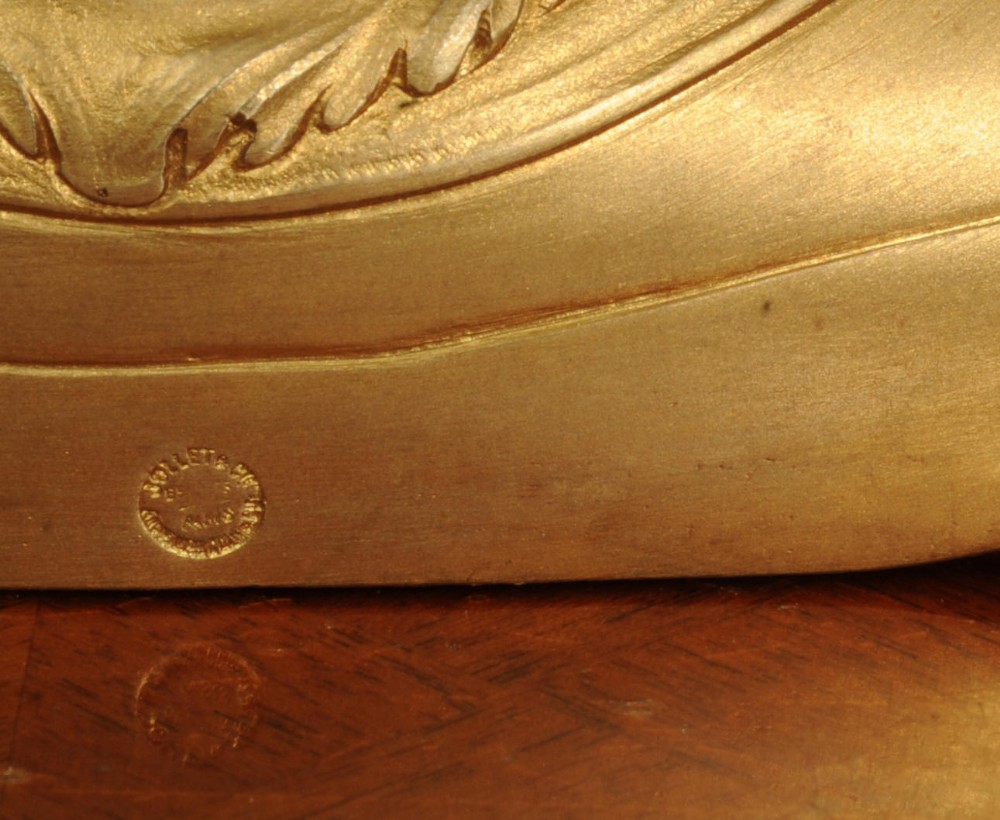
To the rear of the case is the mark Jollet & Cie, Ancienne Maison Colin.
Maison Colin was a highly prestigious Parisian foundry, founded in 1843 and located at 29 rue Sévigné, Paris. Renowned for the exceptional quality of its castings, the firm exhibited at several international World’s Fairs, including the 1893 Chicago World’s Fair and the 1900 Exposition Universelle in Paris, where it was awarded the Gold Medal.
Maison Colin collaborated with many of the leading Parisian bronziers of the nineteenth and early twentieth centuries, including Frédérick Eugène Piat (1827–1903), Albert-Ernest Carrier-Belleuse (1824–1887), Eugène Marioton (1854–1925), and René Rozet (1858–1939), among others.
In 1906, Maison Colin changed its name to Jollet & Cie, retaining the designation “Ancienne Maison Colin” to acknowledge its distinguished heritage.
Jollet & Cie, Ancienne Maison Colin bronze founder's mark on the rear of the case
Although not bearing the signature of Léon Messagé this design is probably by him. Léon Messagé was born March 8, 1842 in Sens, Yonne. At 20 years old, he lived in Paris at 23 rue de Rivoli and was then referred to as 'stone carver.' Around 1885, he began collaborating with François Linke, important cabinetmaker of the Belle Epoque, providing him models for furniture and ornamental bronzes. They collaborated until the death of Messagé, who lived until the age of 58 and died May, 16 1901. It is through this collaboration with François Linke, that Messagé would be successful during the last decades of the nineteenth century. In fact, Messagé was awarded a gold medal at the 1889 World Fair and it was he who designed all the important furniture for the stand of François Linke for the Universal Exhibition in 1900. Even though he worked hard for Linke, Messagé still remained an independent craftsman, working on his own account. In his studio at 40 rue Sedaine, in the 11t
Dragon-Antiques.com has dated this Ormolu Rococo Mantel Clock to the 1910s.
You can view the stock and full dealer information on the Dragon-Antiques.com Profile Page
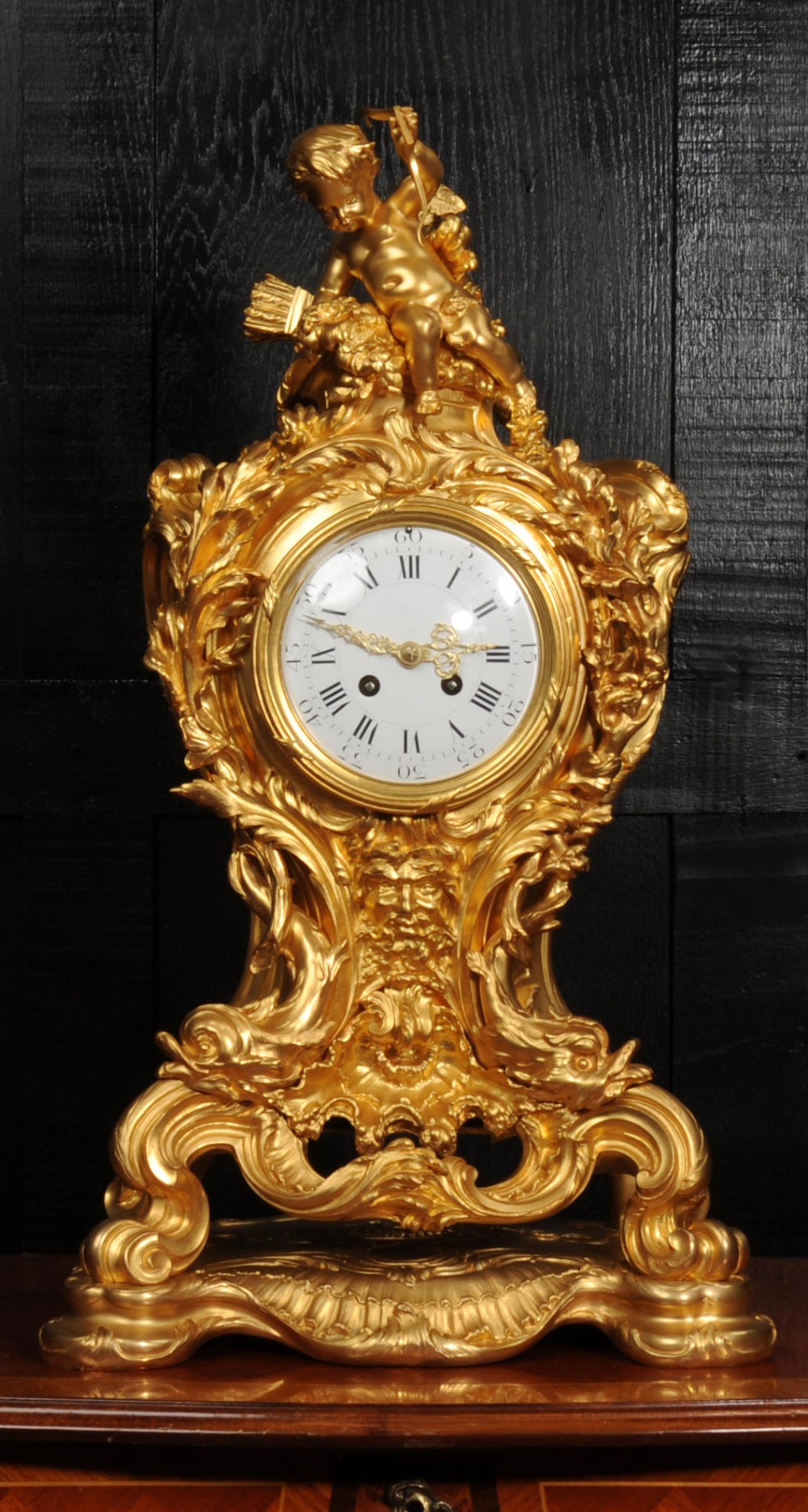
Superb Antique French Ormolu Rococo Clock ~ Leon Message ~ Jollet et Cie