


A 2026 Guide by Sellingantiques
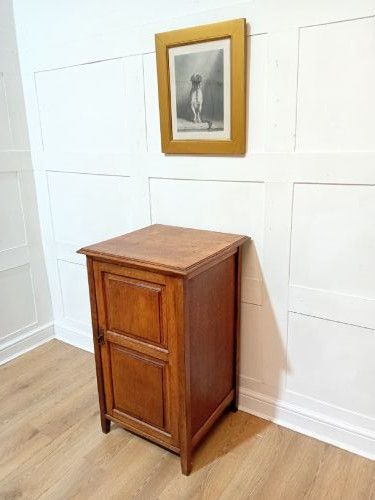
19th Century Walnut and Marquetry Pier Cabinet, 19th Century
Priced at £1,250 from Martlesham Antiques
Output increased rapidly during the nineteenth century. Steam-powered machinery allowed workshops to process timber much faster than before.
Look for shifting tastes across the decades. Early Victorian cabinets often follow heavy classical lines.
Middle-class expansion drove demand. Families needed prominent parlour furniture to signal their social standing to guests.
Later pieces sometimes adopt lighter proportions. The Aesthetic movement brought spindled galleries and ebonised finishes into fashion.
Gillows of Lancaster and London supplied high-quality Victorian cabinets throughout the period. Their stamped pieces often feature precise mahogany casework.
Howard and Sons are known for their seating, but they also produced cabinets. Their cabinet work shares the same standard of execution.
Most examples carry no maker marks. Regional workshops across Britain constructed thousands of unsigned pieces following popular pattern books.
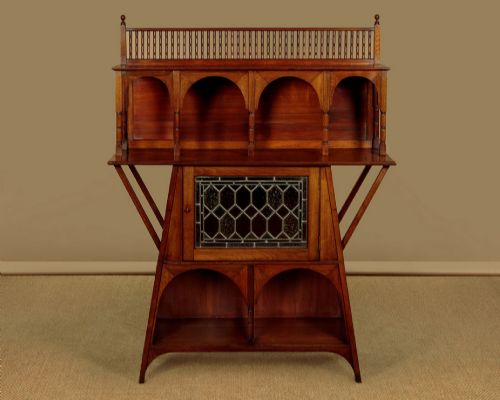
Superb Quality Antique Victorian Marquetry Inlaid Display Cabinet, 1860
Priced at £3,250 from Unique Antiques by Emma Jade
The 2026 retail price guide for Victorian Cabinets is drawn from a proprietary archive of over 1.1 million retail prices indexed by Sellingantiques since 2003. This guide relies exclusively on their own internal data; no external sources or auction records are used.
Analysing nearly 25 years of UK antique market history alongside current retail values, the data indicates that typical UK retail prices for Victorian Cabinets range between £500 and £3,200. Entry-level prices generally fall under £500 and premium examples upwards of £3,200.
Glazed doors regularly feature on upper bookcases and display sections. Some use cylinder glass with slight distortions.
Deep lower cupboards provide substantial closed storage behind solid panelled doors.
Carved corbels or turned columns frequently flank the sides of Victorian cabinets to add visual weight.
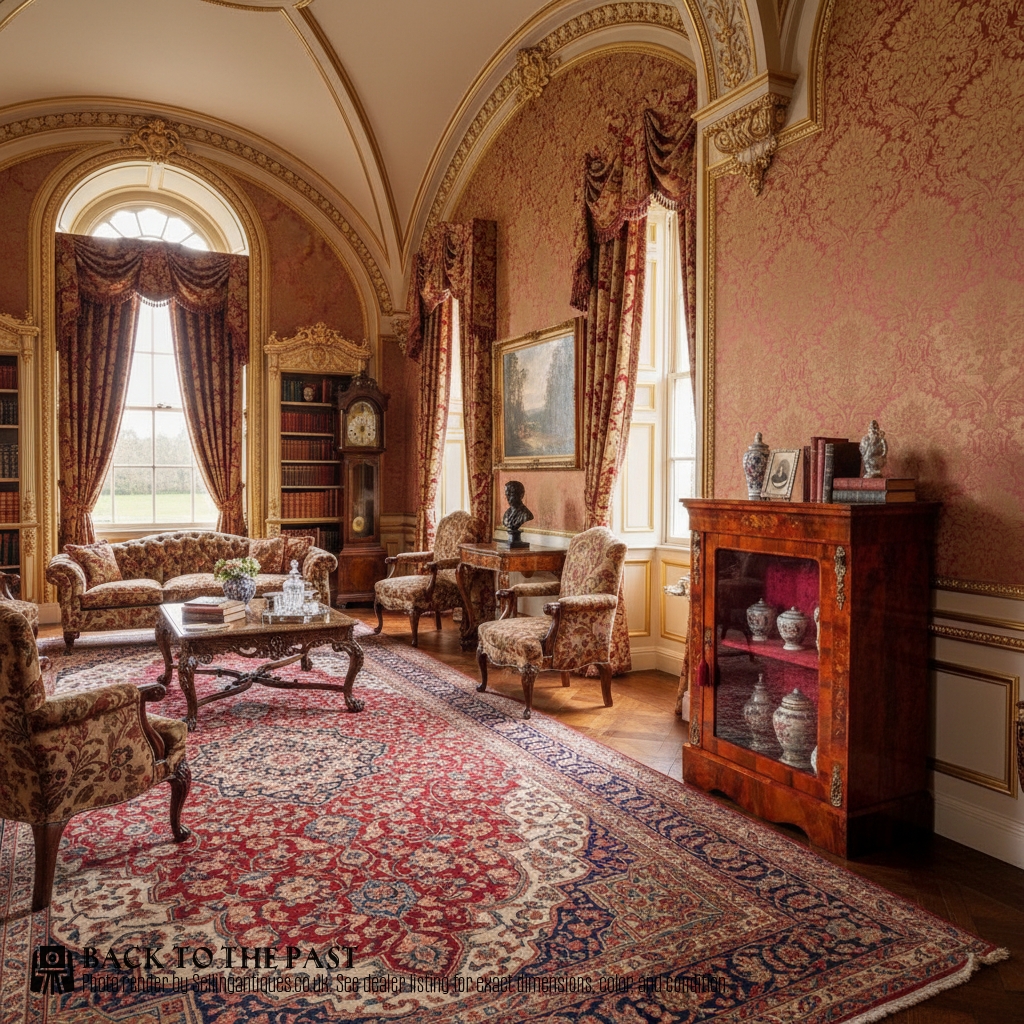
Good Quality Victorian Inlaid Walnut Pier Cabinet, Victorian
Priced at £880 from Andros Antiques
Hand-cut joinery transitions to machine production during this era. Early examples show irregular hand-sawn dovetails on drawer backs.
Veneering techniques evolved. Thick saw-cut veneers gradually gave way to thinner knife-cut sheets as machinery improved.
Assess the back panels. Traditional frame and panel construction remained standard for quality Victorian cabinets well into the late nineteenth century.
"Some contain secret compartments. Small hidden drawers often sit behind false internal fascias to hold personal documents."
"Modular designs existed. Many large examples dismantle into several manageable sections to allow movement up narrow staircase turns."
"Notice the internal shelves. They often feature a grooved line along the back edge to display decorative plates securely."
Based on almost 25 years of Sellingantiques UK antique market data, Victorian Cabinets appeared 11093 times (out of 1,100,000 antiques) which gives it a rarity score of 11/100.
This score measures scarcity within the Sellingantiques archive only and is not a survey of the entire antiques market, so these statistics may not be indicative of the general availability of Victorian Cabinets elsewhere.
Use a soft damp cloth with water. Avoid modern window sprays. The chemicals can drip and strip the polish off the wooden glazing bars.
Dry the panes immediately. This prevents streaks and stops moisture pooling at the edges.
Musty smells usually build up when pieces sit in closed rooms with poor ventilation. The bare pine carcase wood inside absorbs ambient moisture over the years.
Leave the doors open on a dry day to let air circulate through the interior. Some people place a bowl of dry bicarbonate of soda on the bottom shelf to absorb lingering odours.
Avoid spraying modern air fresheners inside. They only mask the smell and the moisture from the spray can dampen the timber further.
You can, but applying paint alters the surface permanently. The thick dark finishes on later Victorian cabinets often bleed through modern paint layers if the timber lacks proper preparation. Stripping the original polish involves messy solvent work.
Many decorators prefer to leave the original finish intact. They rely on the dark timber to ground a room and provide contrast against lighter modern walls.
Most large examples separate into two main parts. The glazed upper section usually sits on wooden dowels locating into the lower base.
Look around the back for metal connecting brackets or large screws joining the two halves. Remove these fittings first. Lift the top section straight up to clear the dowels.
Please note: This Victorian Cabinets guide and its associated pricing data are provided for general informational purposes only. It does not constitute formal financial, investment, or appraisal advice and should not be relied upon as the sole basis for any commercial activity, purchasing, or sales decisions. Sellingantiques.co.uk accepts no liability for any actions taken in reliance on this information. Always consult with a qualified professional or independent appraiser.
