
Edwardian Cabinets
Glazed and cupboard furniture made in Britain around the turn of the twentieth century, most often in inlaid mahogany, built to show china and small collections or to serve a bedside, a music room, an office or a shop counter.
Edwardian Cabinets
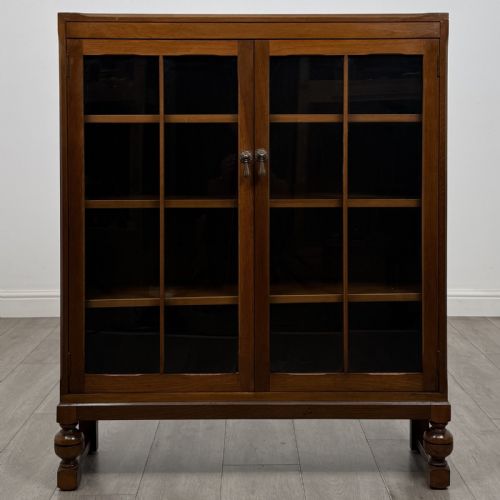
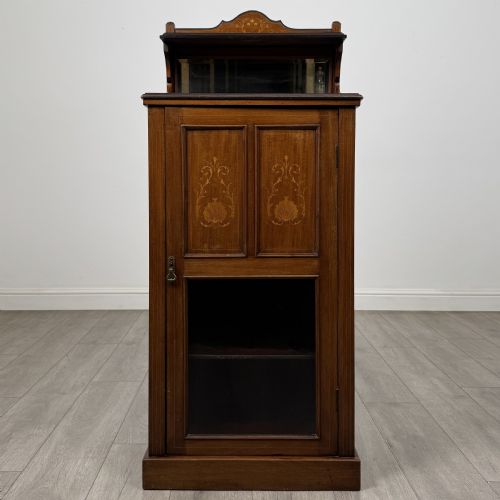
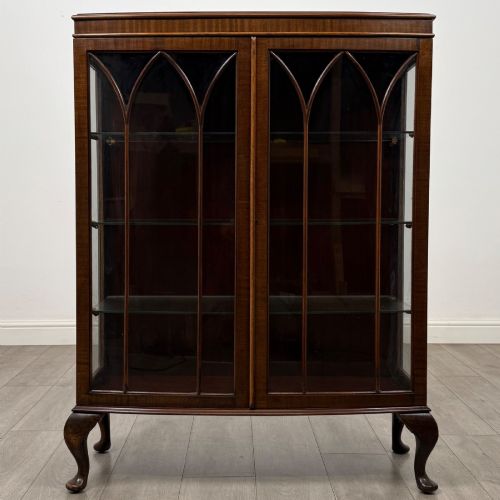
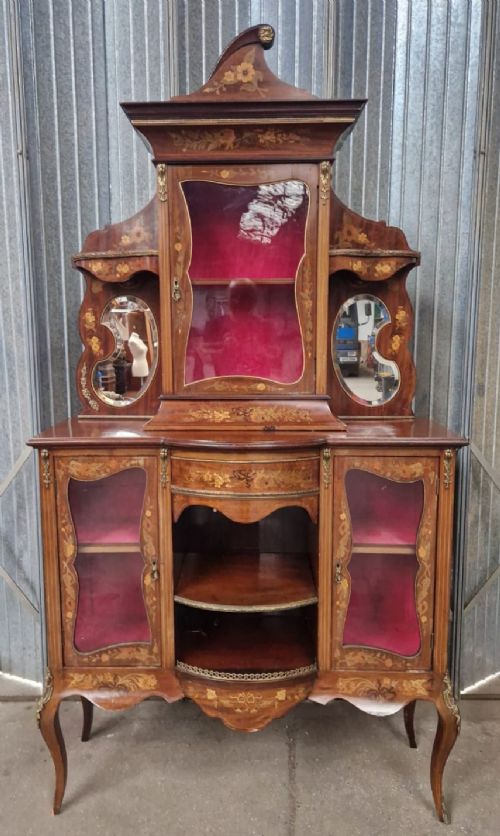
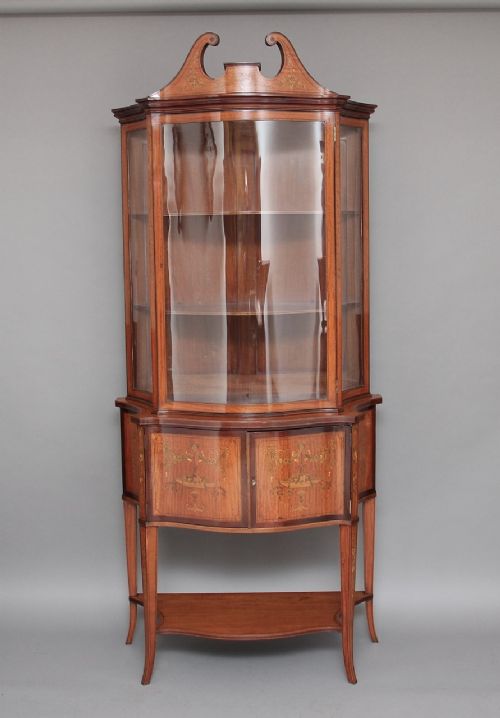
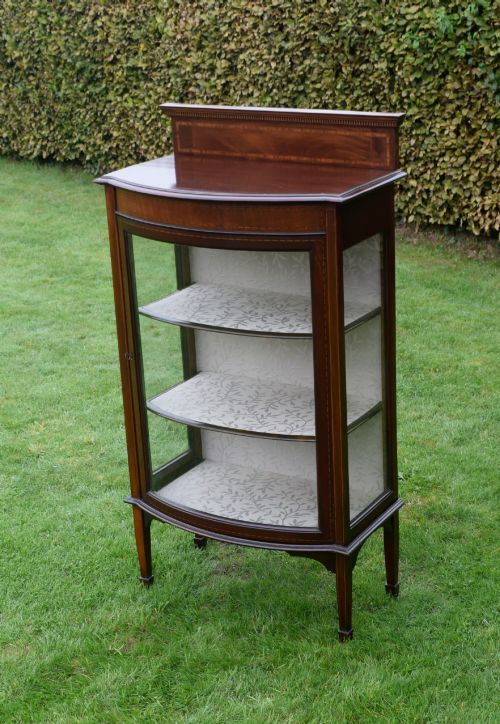
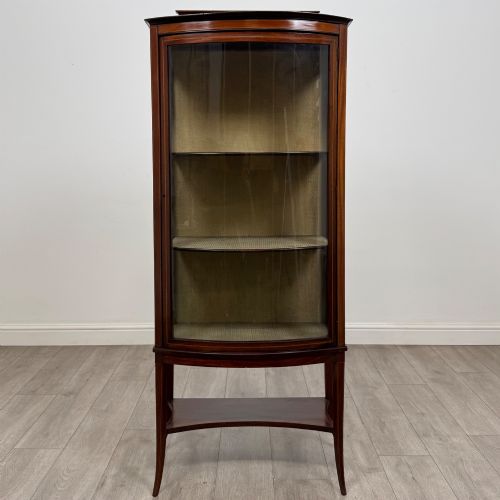
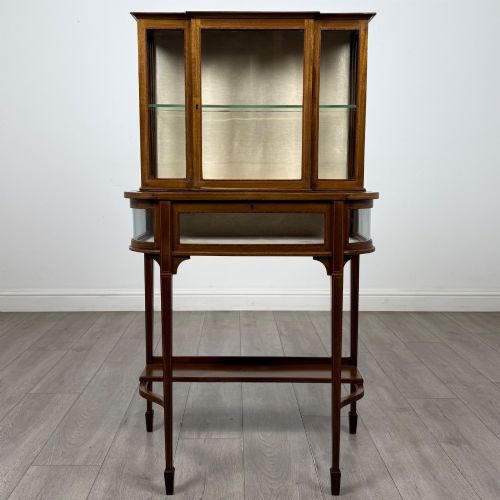
The heading covers a family of forms rather than one object. Mahogany runs through more than half the titles on Sellingantiques, inlay through about a third, and "display" through nearly half, so the piece you are most likely to meet is an inlaid mahogany glazed display cabinet made for a middle-class house.
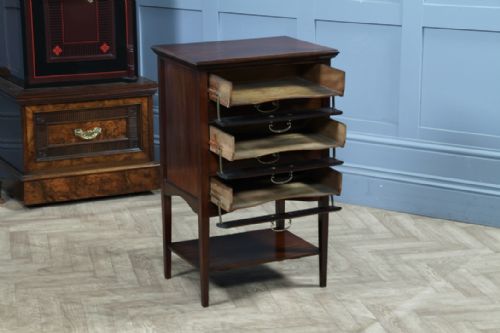
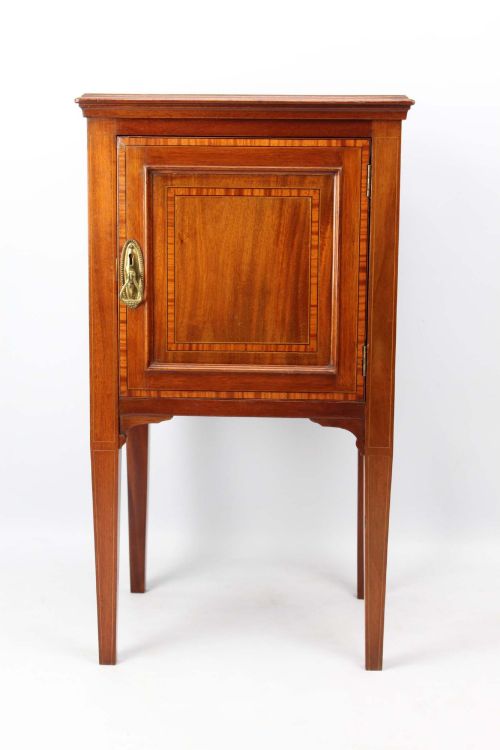
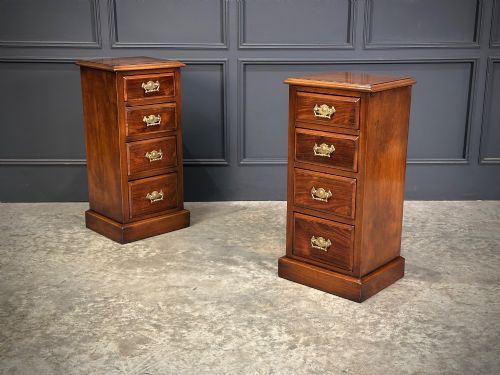
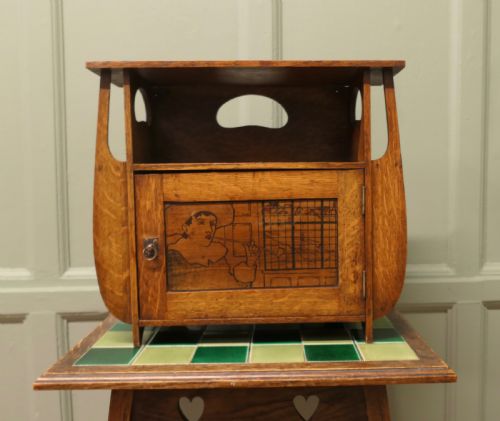
Around that centre sit the smaller carcases. Corner cabinets and cupboards, hanging or standing in two parts, account for about one in ten. Music and folio cabinets with drop-front drawers make up just under one in ten. Bedside cabinets and pot cupboards are about one in twenty, and often come as pairs.
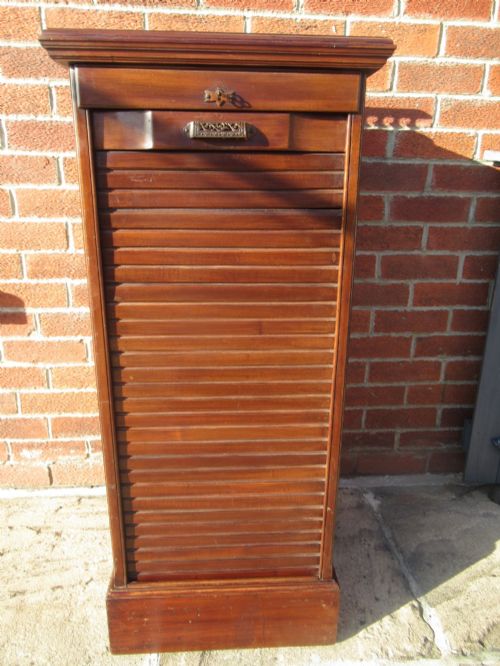
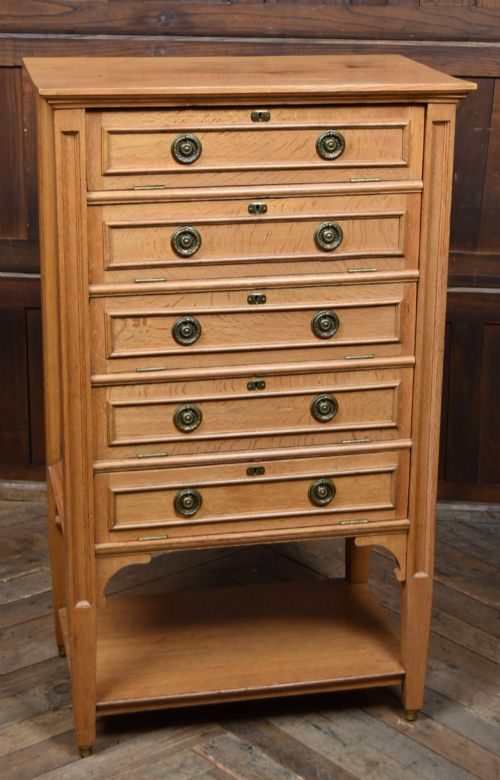
Oak takes over on the trade side. Filing cabinets, tambour-fronted office pieces and glazed counter showcases from haberdashers, jewellers and cigar shops form roughly one in ten of the category, and some counter cases carry later sign-written advertising for confectionery and cocoa. Specimen and collectors' cabinets are described by their drawer count, from twenty up to nearly fifty.
The date field is looser than the heading suggests. Most listings simply say "Edwardian" without a year, and where years are given they stretch from 1800 to 1960, taking in Victorian, 19th century and 1920s pieces. Read "Edwardian" as a style bracket around c.1890-1920, and read the dealer's own year where one is given.
What Sets Them Apart
Timber does most of the work. Satinwood, burr walnut, rosewood and kingwood sit at the top, with amboyna, coromandel and fiddle-back mahogany turning up in single examples. Plain oak and pine sit at the bottom, which is where the office and shop carcases mostly live.
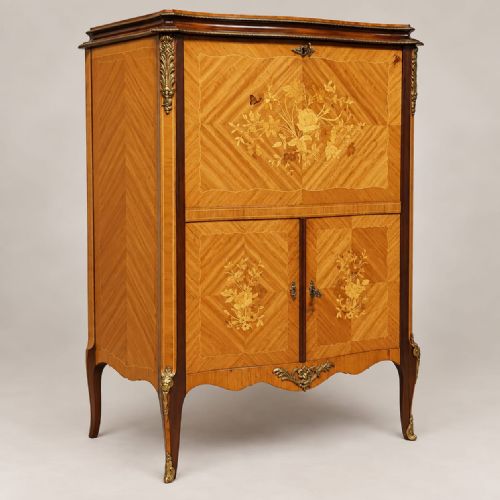
Then decoration. Line and string inlay is the everyday finish; marquetry in shaped floral veneers is scarcer, and hand-painted satinwood scarcer still, both clustering well above the plain carcase. Shape counts for as much: bow, serpentine, demi-lune, kidney and inverted breakfront fronts all sit above the straight rectangular cabinet.
Scale and completeness finish the picture. Large two-part standing corner cabinets and matched pairs of display or pier cabinets reach the top of the range, particularly in satinwood or the Sheraton-revival manner, while single hanging corner cupboards and miniature cases sit at the bottom. A named retailer or cabinetmaker lifts a piece again.
Edwardian Cabinets Retail Price Guide 2026
Typical UK retail prices for edwardian cabinets, calculated from the Sellingantiques database of over a million retail prices indexed since 2003. This retail price guide relies exclusively on Sellingantiques data; no external sources or auction records are used, so the figures do not describe the wider market.
The top sale of the last year on Sellingantiques was an Edwardian oak sideboard by J. Cambell & Co, cabinet makers of Glasgow, in May 2026.

Maple & Co·Edwards & Roberts·Shapland & Petter
The Edwardian Cabinets Glossary
- Display cabinet
- A glazed cabinet made to show china, glass or small collections. It is the commonest form under this heading by a wide margin.
- Inlaid
- Decorated with contrasting woods let into the surface. Listings often specify line, string or satinwood inlay; marquetry means the pictorial or floral kind, cut in shaped pieces of veneer.
- Bijouterie cabinet
- A small glazed case or table with a lift-up glass top, made for jewellery and trinkets. It appears often enough to count as a sub-type of its own.
- Astragal glazed
- Glazing divided by slender moulded bars rather than left as one open pane.
- Bow front, serpentine, demi lune
- Three ways of describing a shaped front: convex, double-curved and half-moon in plan.
- Tambour
- A flexible slatted roll front, found mostly on the oak office and filing cabinets.
Edwardian Cabinets: Frequently Asked Questions
What wood are Edwardian cabinets usually made from?
Mahogany dominates, appearing in more than half of all titles on Sellingantiques, and it is usually inlaid with lighter woods.
Satinwood, walnut and rosewood form the next tier, and single listings name amboyna, kingwood, coromandel, pollard oak and fiddle-back mahogany. Oak and pine turn up mainly on office and shop pieces.
Are these cabinets always from Edward VII's reign?
No. Only around a third of listings carry a clean year, and the field as a whole runs from 1800 to 1960.
Some are labelled Victorian, 19th century, 1880s or 1890s; a smaller tail runs into the 1920s and 1930s. The heading works best as a style bracket around c.1890-1920.
Which types come as pairs?
Pairs are a genuine sub-population, appearing in a good number of titles. Bedside cabinets are the commonest, followed by pier and display cabinets.
Matched pairs in satinwood or the Sheraton-revival manner sit at the very top of the range.
What is a bijouterie cabinet?
A small glazed case, sometimes made as a table, with a lift-up glass top over a shallow lined interior. It was made for jewellery, trinkets and small curios.
It shows up regularly among the display cabinets and is one of the recognised sub-types of the form.
Do shop and office cabinets appear under this heading?
They do, and they form a persistent minority. Oak filing banks, tambour-fronted office cabinets and glazed counter showcases from haberdashers, jewellers and cigar shops all list here.
Several counter cases carry later sign-written advertising for confectionery and cocoa brands.
How many drawers do collectors' cabinets have?
Specimen and collectors' cabinets are described by their drawer count, and the numbers vary widely.
Examples run from twenty drawers up through egg cabinets of twenty-four, oak filing banks of thirty-three, collectors' cabinets of forty, mahogany slide cabinets of forty-four and walnut filing cabinets of forty-eight.