
A 2026 Guide by Sellingantiques
European households commissioned antique spice cabinets as global trade expanded.
Keep an eye out for regional variations across different European countries.
Many early examples sat inside larger cupboards before evolving into freestanding pieces.
Wealthy families kept them locked in the parlour to protect the expensive contents.
They're mostly produced by anonymous provincial joiners rather than famous London makers.
Regional American carpenters built local walnut variations during the eighteenth century.
Traceable individual names are rare for this specific household form.
The 2026 retail price guide for Antique Spice Cabinets is drawn from a proprietary archive of over 1.1 million retail prices indexed by Sellingantiques since 2003. This guide relies exclusively on their own internal data; no external sources or auction records are used.
Analysing nearly 25 years of UK antique market history alongside current retail values, the data indicates that typical UK retail prices for Antique Spice Cabinets range between £400 and £1,800. Entry-level prices generally fall under £400 and premium examples upwards of £1,800.
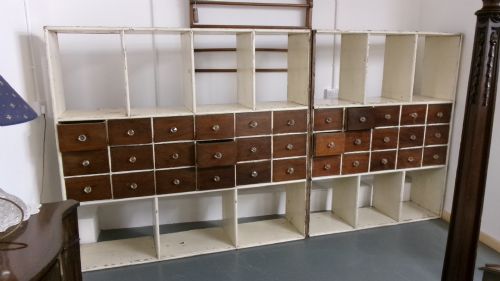
Banks of small, tightly fitted drawers define antique spice cabinets.
Solid panelled doors hide the interior compartments on seventeenth-century chests.
Some designs incorporate a hidden tray tucked behind the central drawer.
Early seventeenth-century boxes rely heavily on simple nailed or pegged joints.
Hand-cut dovetails eventually emerge on the eighteenth-century drawer corners.
Turn the piece around. You'll see rough-hewn backboards showing old adze marks.
"Small bone or ivory labels sometimes survive intact on the drawer fronts."
"Surviving original keys increase the practical use of these early wooden chests."
"You can repurpose the shallow compartments for storing craft supplies or jewellery."
Based on almost 25 years of Sellingantiques UK antique market data, Antique Spice Cabinets appeared 227 times (out of 1,100,000 antiques) which gives it a rarity score of 96/100.
This score measures scarcity within the Sellingantiques archive only and is not a survey of the entire antiques market, so these statistics may not be indicative of the general availability of Antique Spice Cabinets elsewhere.
Wood swells with seasonal humidity changes. The tight tolerances on an antique spice cabinet mean drawers often bind during damp weather.
Rubbing a plain wax candle along the wooden runners usually solves the issue. This creates a dry lubricant layer without damaging the timber.
Most dealers prefer to leave the dull patina on early hardware.
If you must clean them, use a mild metal polish sparingly. Avoid getting the liquid onto the wood.
Many eighteenth-century antique spice cabinets were built without doors. The open bank of drawers became a standard design as spices grew cheaper and less vulnerable to theft.
Check the side edges of the carcase. If there are hinge marks or filled holes, a door was removed. If the front edges are clean and veneered, it wasn't.
Repurposing small cabinets happened frequently throughout the nineteenth century. As purpose-built workboxes became popular, older spice chests found second lives holding sewing materials, buttons or small tools.
The shallow drawers are well suited for flat items. You'll often find ink stains, pinpricks or scraps of Victorian paper lining the drawer bottoms from these later uses.
Please note: This Antique Spice Cabinets guide and its associated pricing data are provided for general informational purposes only. It does not constitute formal financial, investment, or appraisal advice and should not be relied upon as the sole basis for any commercial activity, purchasing, or sales decisions. Sellingantiques.co.uk accepts no liability for any actions taken in reliance on this information. Always consult with a qualified professional or independent appraiser.
