


A 2026 Guide by Sellingantiques
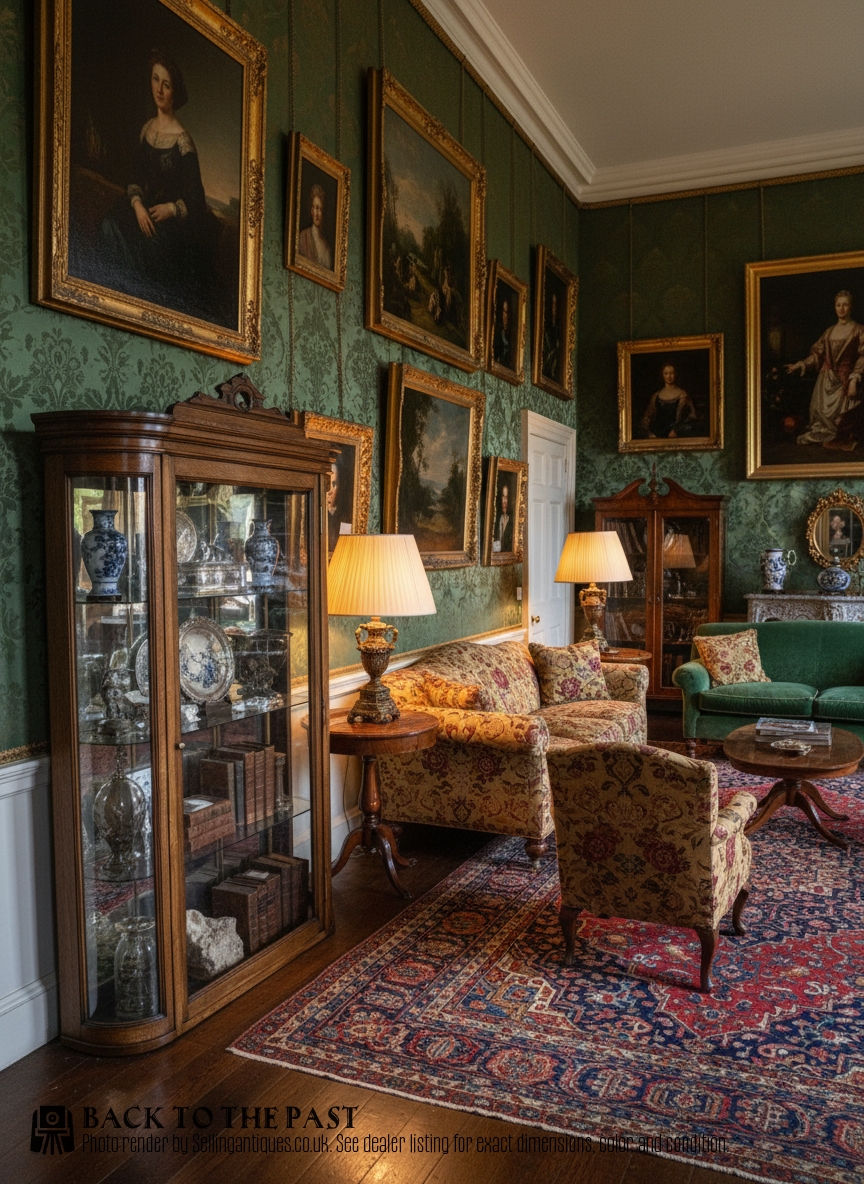
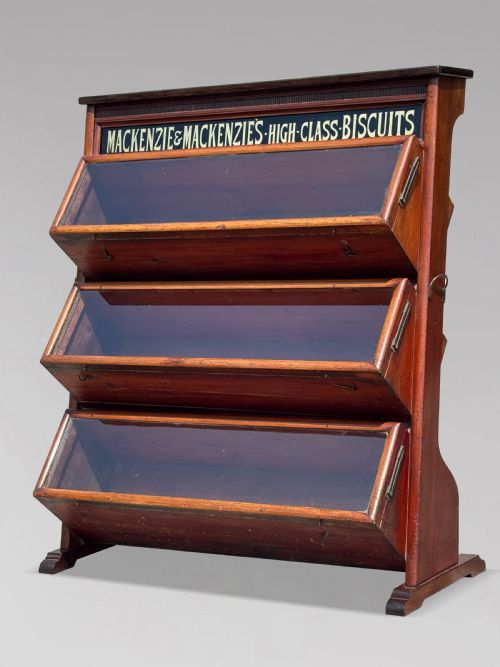
19th Century Shop Display Cabinet, 19th Century
Priced at £1,350 from Youlls Antiques
Consider the sudden shift in retail practices during the late nineteenth century.
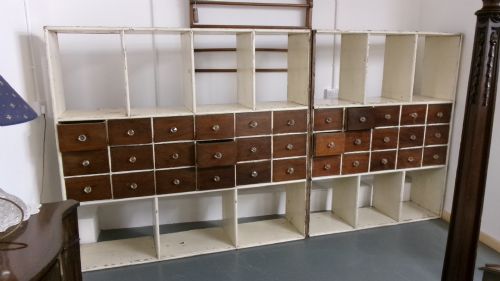
A clear move from goods stored in dark wooden drawers towards visual merchandising.
Early antique shop display cabinets often sat directly on retail countertops.
Gas lighting allowed stores to stay open late, demanding better glass cases to catch the evening trade.
By the Edwardian period, standalone island units directed customer flow around the sales floor.
F. Sage & Company dominated the London shopfitting trade during the late nineteenth century.
Haskins Bros also produced thousands of these commercial units from their Old Street workshops.
Harris & Sheldon in Birmingham, known for supplying complete department store interiors across the country.

Victorian Shop Display Counter Top Cabinet, Victorian
Priced at £1,194 from Elmgarden
The 2026 retail price guide for Antique Shop Display Cabinets is drawn from a proprietary archive of over 1.1 million retail prices indexed by Sellingantiques since 2003. This guide relies exclusively on their own internal data; no external sources or auction records are used.
Analysing nearly 25 years of UK antique market history alongside current retail values, the data indicates that typical UK retail prices for Antique Shop Display Cabinets range between £600 and £3,300. Entry-level prices generally fall under £600 and premium examples upwards of £3,300.
Sliding rear doors are common on countertop units to grant staff quick access.
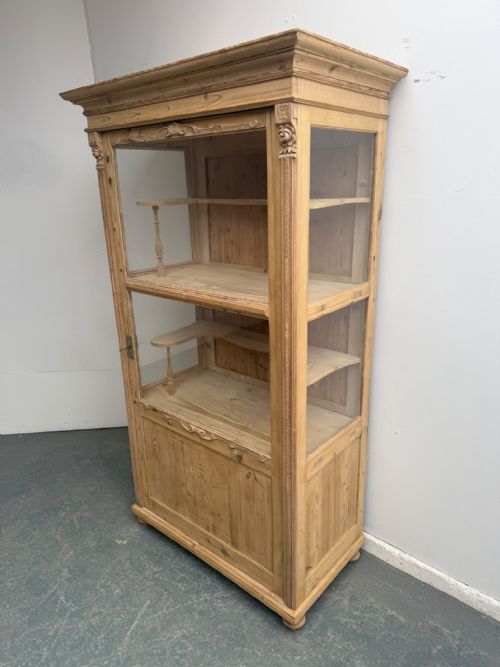
Adjustable brass brackets locking into vertical toothed tracks to support heavy glass shelves.
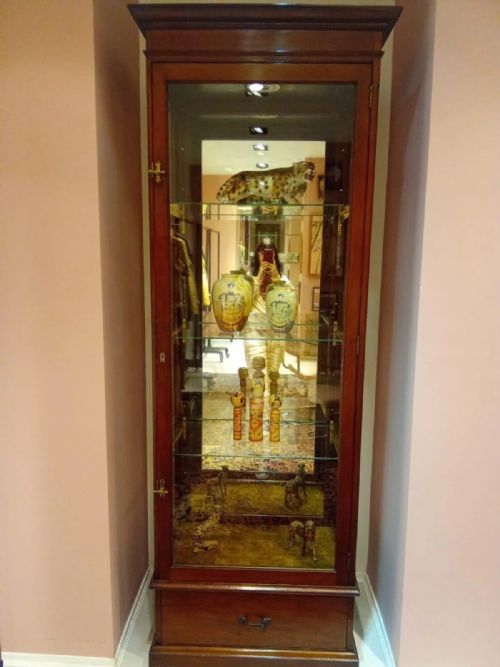
Note the mirrored backs used to bounce light forward and make displays look deeper.
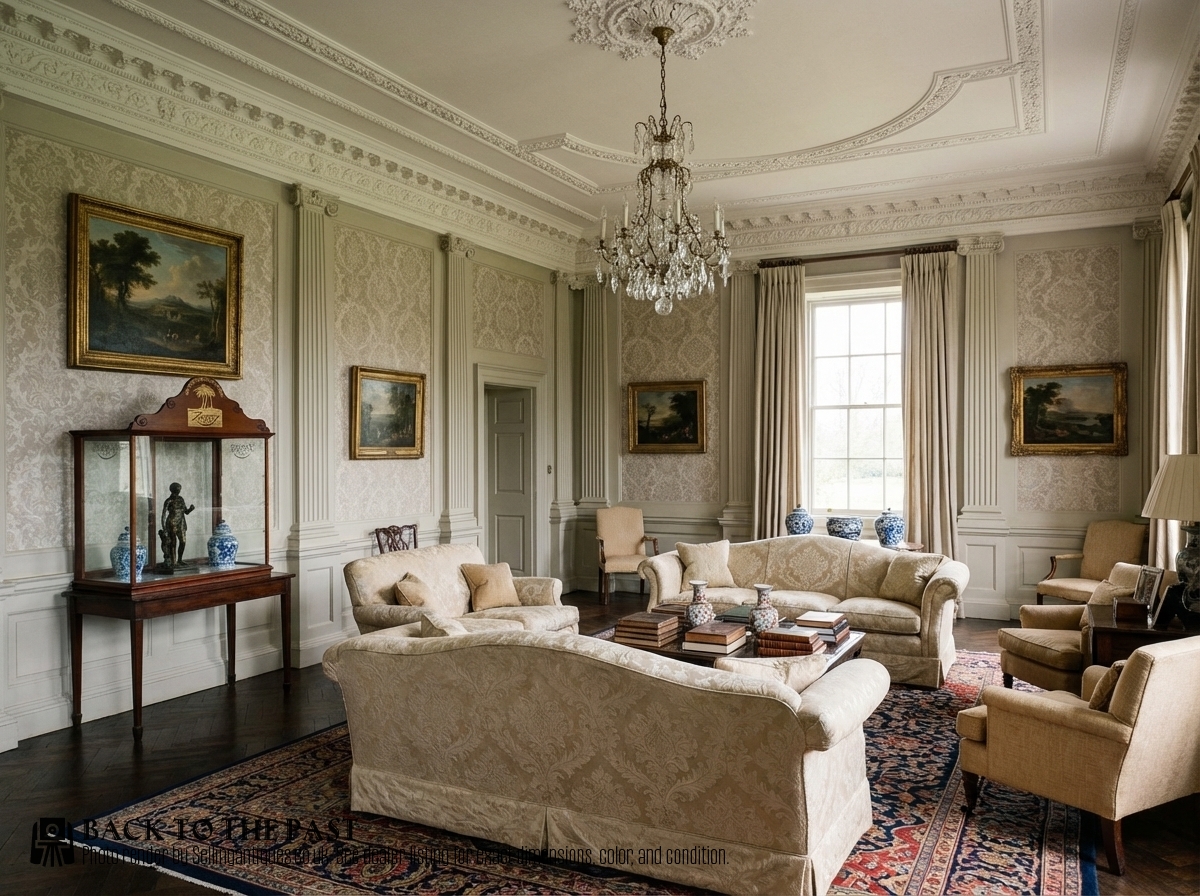
Terry’s of York Chocolate Confectionary Display Cabinet, 1920
Priced at £2,100 from Elmgarden
Early frames relied on deep mortise and tenon joints to compensate for the lack of solid timber panels.
Victorian shopfitters introduced concealed steel tie-rods to stop long banks of cabinets from sagging under their own weight.
Look for the transition to drawn bronze framing in the 1920s, allowing for even thinner sightlines.
"Many modular units were designed to be dismantled flat for easier transport by horse-drawn cart."
"The glass in older units often contains tiny trapped air bubbles that catch the light."
"Countertop models sometimes feature hidden shallow trays originally intended for wrapping string and trade labels."
Based on almost 25 years of Sellingantiques UK antique market data, Antique Shop Display Cabinets appeared 963 times (out of 1,100,000 antiques) which gives it a rarity score of 82/100.
This score measures scarcity within the Sellingantiques archive only and is not a survey of the entire antiques market, so these statistics may not be indicative of the general availability of Antique Shop Display Cabinets elsewhere.
Take all the shelves out first. Remove the doors if they lift off their hinges or lift out of their tracks. Taking the weight down is the main thing you're trying to do.
Never lift an antique shop display cabinet by its overhanging top. The joints carry the weight of the glass, so you'll always want to lift from the solid plinth at the base.
Yes, but it isn't an everyday job. Slumped glass has to be fired over a custom mould in a kiln to match the exact radius of your cabinet.
Flat glass is easy for any glazier to cut. Curved panels take time and you'll need to find an architectural glass maker to do the work.
The tracks often fill with decades of dust and floor wax. Start by cleaning the channels out thoroughly and rubbing a dry candle along the wooden runners.
If they still stick, you'll want to check the brass wheels recessed into the bottom of the doors. The pins holding the wheels can bend, meaning the wood scrapes directly on the track instead of rolling.
Modern shelf pegs rarely fit old shopfitting tracks. The slots use a different pitch.
You'll sometimes find salvaged brackets in architectural yards. Take a remaining bracket with you to check the fit.
Please note: This Antique Shop Display Cabinets guide and its associated pricing data are provided for general informational purposes only. It does not constitute formal financial, investment, or appraisal advice and should not be relied upon as the sole basis for any commercial activity, purchasing, or sales decisions. Sellingantiques.co.uk accepts no liability for any actions taken in reliance on this information. Always consult with a qualified professional or independent appraiser.
