

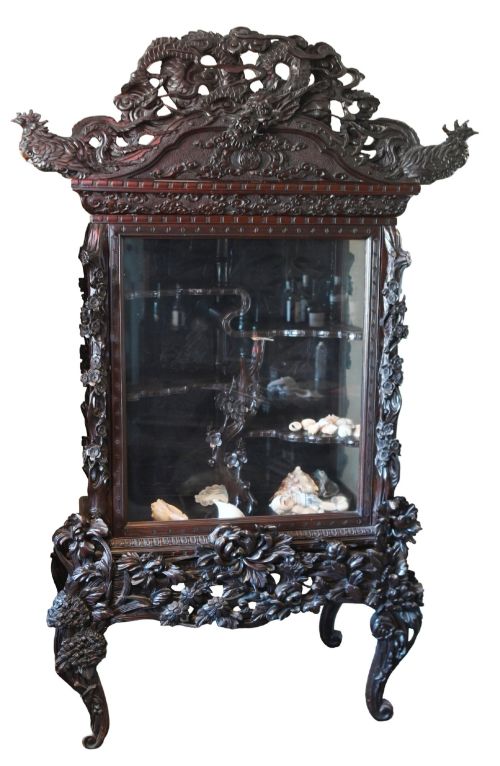
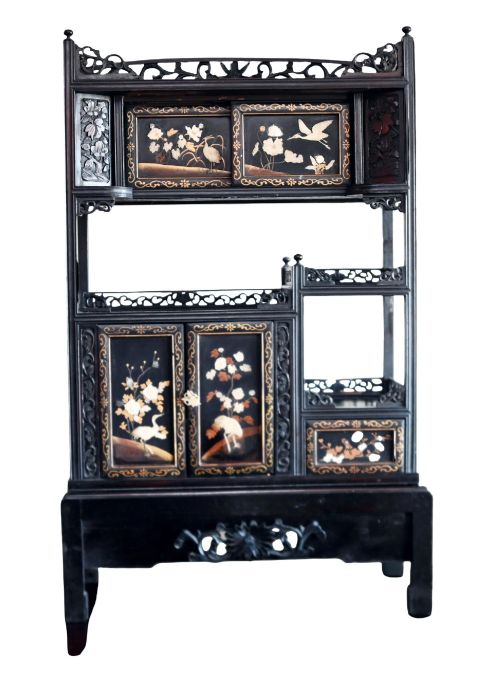
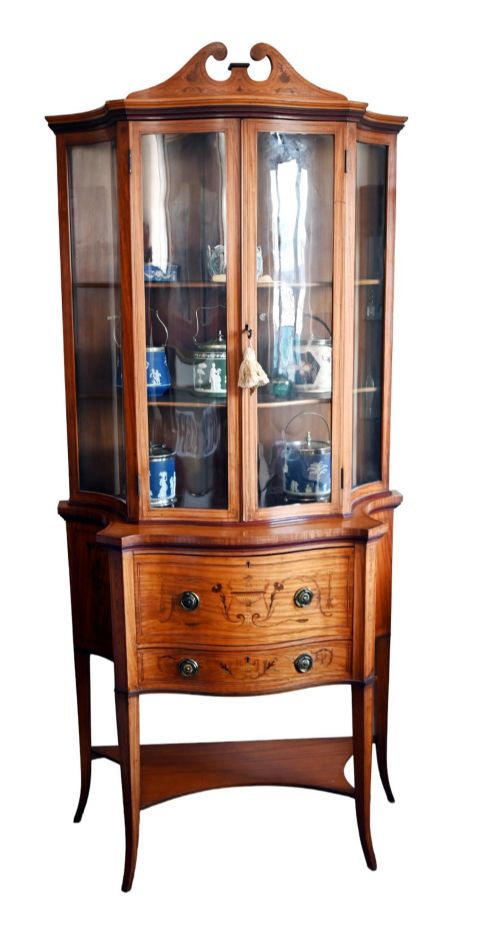
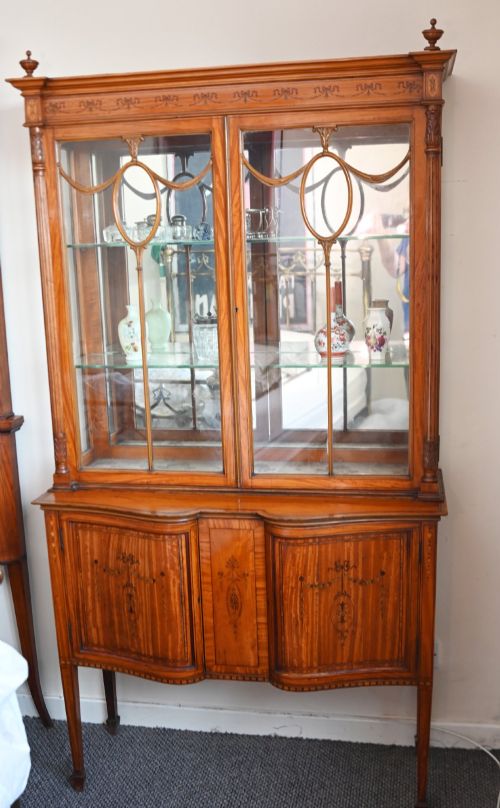
Antique Display Cabinets
A glazed cabinet made to show china, curios and collections rather than shut them away, in forms from a wall-hung case up to a room-sized breakfront, plus the shop showcases and counters built on the same idea.
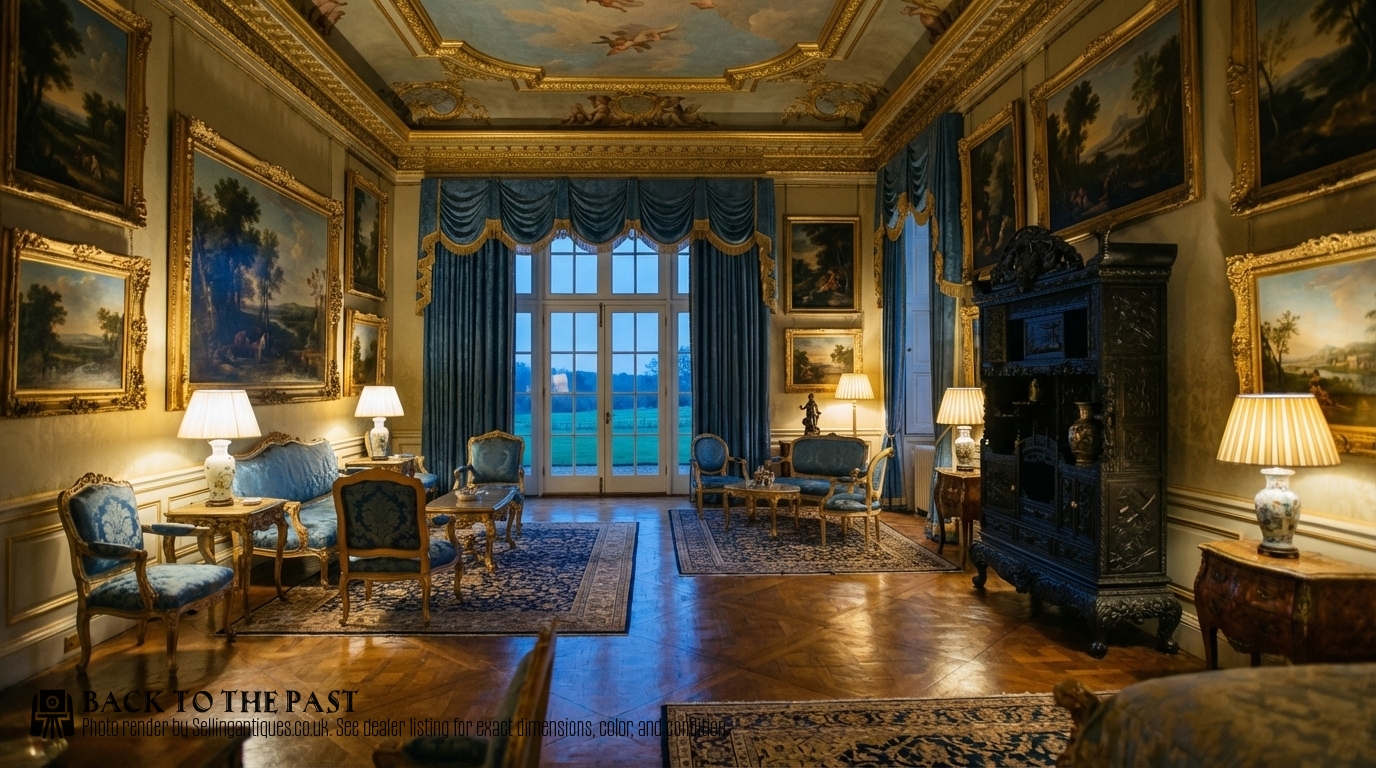
Antique Display Cabinets
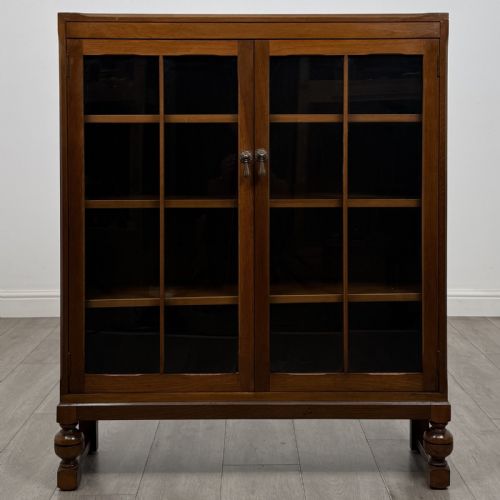
Glass doors or glazed panels are the whole point. The archive covers freestanding cabinets, corner and hanging cases, tall narrow pier cabinets and table-top bijouterie boxes, alongside the retail side of the trade: counter-top showcases and full display counters. Sizes run from a small wall case to museum showcases.
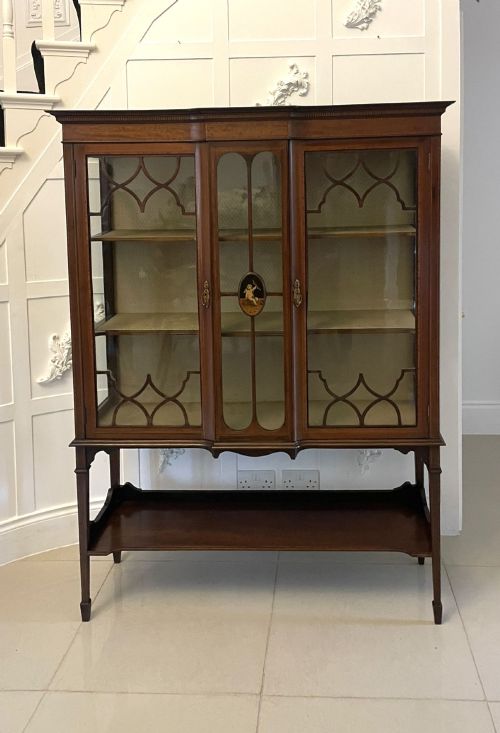
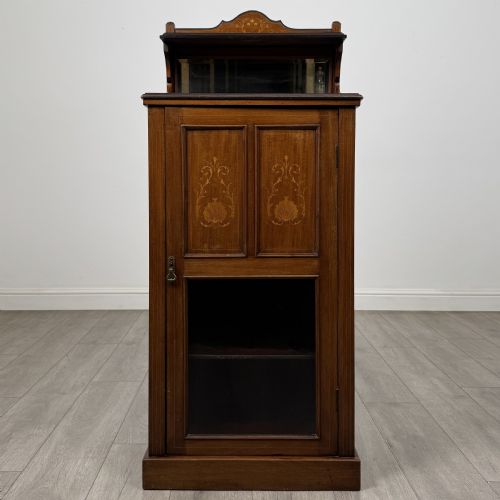
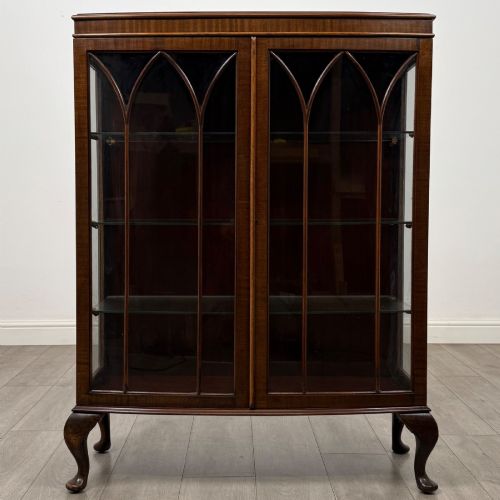
The version you'll meet most often is late-Victorian to Edwardian British cabinetmaking in mahogany, very often inlaid, and frequently bow or serpentine fronted. Mahogany appears in about a third of titles and inlay in a fifth, and the compound phrases show they are the same object rather than two habits.
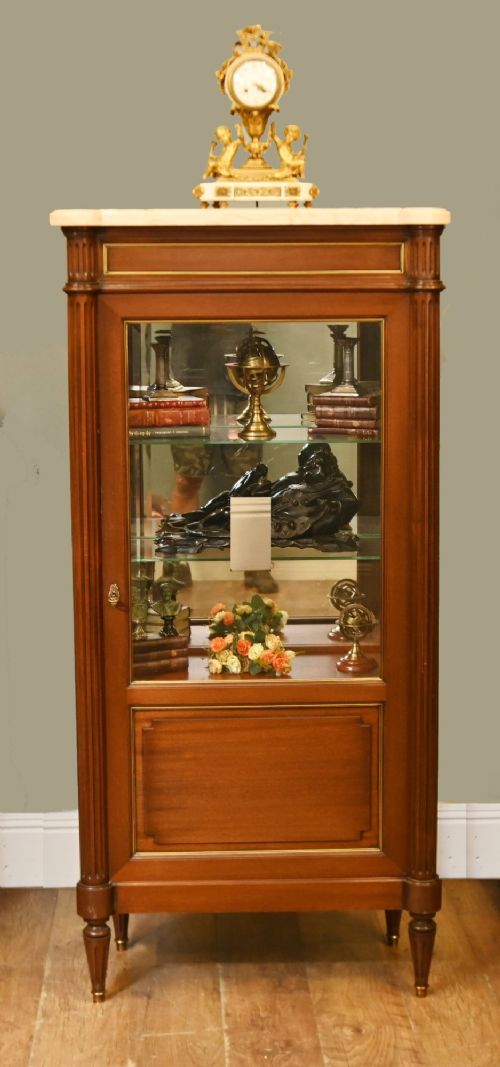
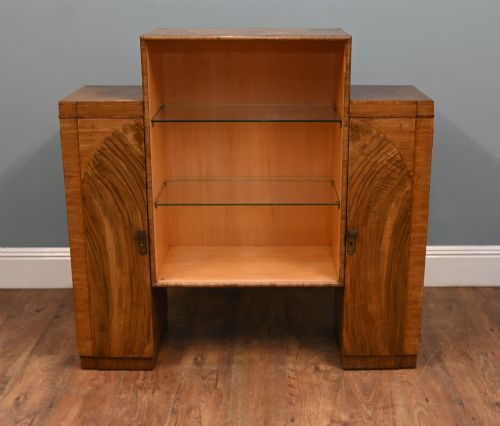
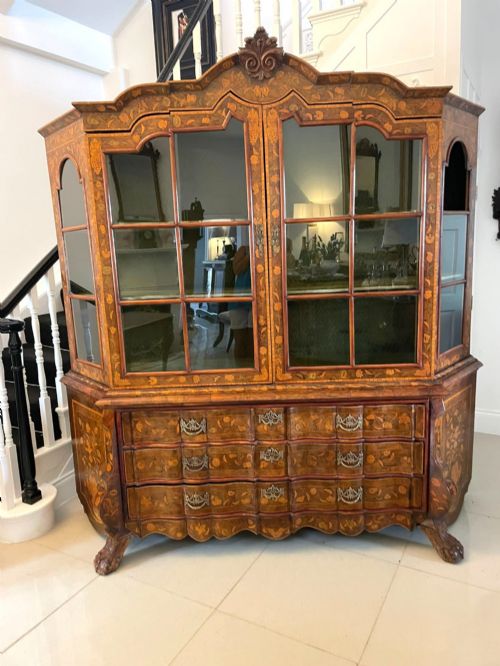
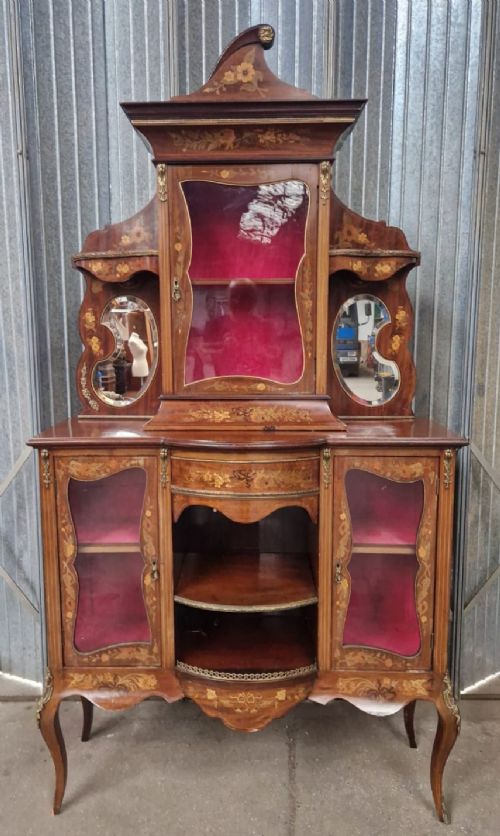
Round that centre sit four smaller strands: Art Deco and 1920s-30s walnut, including burr walnut and some odd shapes; French and Continental vitrines with ormolu mounts, kingwood or Vernis Martin panels, and Dutch marquetry; corner, hanging and pier cabinets; and shop fittings, roughly one listing in ten, from haberdashery and drapers' counters to chemist and apothecary cabinets.
The dated field runs 1750 to 1960, with a little over half of listings carrying a clean year, and the bulk sits either side of 1900. Period words are used loosely: 'Edwardian' sometimes sits against a title saying 1920s, and 'Victorian' pieces land anywhere from the 1850s to about 1900. Georgian and earlier entries occur, but only a handful.
What Moves The Range
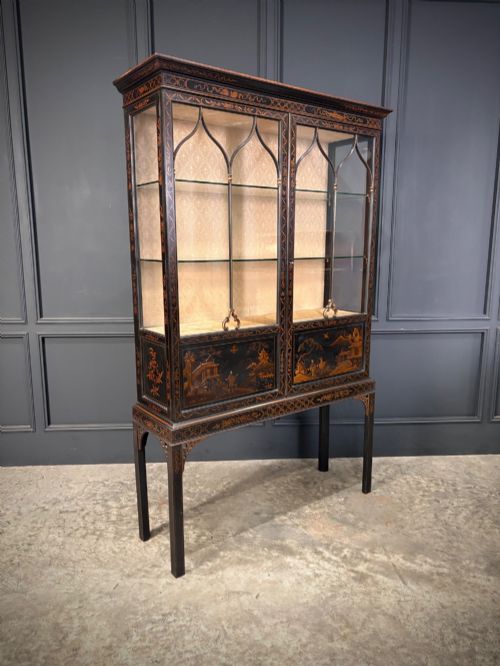
Decoration on the carcase does most of the work. Plain mahogany cabinets cluster at the bottom of the range, while marquetry, satinwood and painted decoration sit well above them, and Vernis Martin painted vitrines gather hard at the top. Gilt-metal and bronze mounts pull in the same direction, on domestic vitrines and on bronze-framed showcases alike.
Origin counts too. French and Dutch pieces sit toward the top, kingwood and Continental marquetry among them, while the bottom of the range is almost entirely small wall-hung and countertop cases.
Shape and number finish the picture. Bow, serpentine and demi-lune fronts outperform flat ones, large cabinets outrun modest ones, and pairs behave as their own class: matched vitrines and pier cabinets turn up at the very top.
Antique Display Cabinets Retail Price Guide 2026
Typical UK retail prices for display cabinets, calculated from the Sellingantiques database of over a million retail prices indexed since 2003. This retail price guide relies exclusively on Sellingantiques data; no external sources or auction records are used, so the figures do not describe the wider market.
Maple & Co is the name that turns up from the most dealers on Sellingantiques for display cabinets, ahead of Edwards & Roberts.
Maple & Co·Edwards & Roberts·Shapland & Petter
The Antique Display Cabinets Glossary
- Vitrine
- A glazed display cabinet, the word used mostly of French and Continental examples. It appears in around 205 titles.
- Bijouterie
- A small case for jewellery and trinkets, often a table with a glazed lifting top. Named in 89 titles, and a recurring sub-form in its own right.
- Bow front
- A convex curved front, in about 119 titles. Serpentine, in 74, means a front that curves in and out rather than in one arc.
- Breakfront
- A front whose centre section projects forward of the ends. Used of the larger room-sized cabinets.
- Astragal glazed
- Glazing divided into panes by slender moulded bars.
- Vernis Martin
- Painted and varnished decorative panels in the French taste, in 66 titles and clustered at the upper end of the range.
Antique Display Cabinets: Frequently Asked Questions
How common are display cabinets on Sellingantiques?
About 338 are listed in a year, and 289 different dealers have handled one. That's close to a dealer apiece, which makes it one of the most widely stocked furniture forms on Sellingantiques.
The archive behind that runs to 3,456 listings.
What wood are they usually made of?
Mahogany dominates, in roughly a third of titles, and it is very often inlaid. Satinwood turns up as inlay and as a ground for painted decoration.
Walnut is the second thread, with burr walnut concentrated in the 1920s and 30s Art Deco cabinets. Kingwood belongs mainly to the French vitrines.
Why are shop cabinets in this category?
Glazed shop fittings were made on the same principle as the drawing-room cabinet, and roughly one listing in ten is retail rather than domestic.
That covers counter-top showcases, drapers' and haberdashery counters, chemist and apothecary cabinets, and cases later sign-written for chocolate and biscuit brands.
What does a pair mean for a display cabinet?
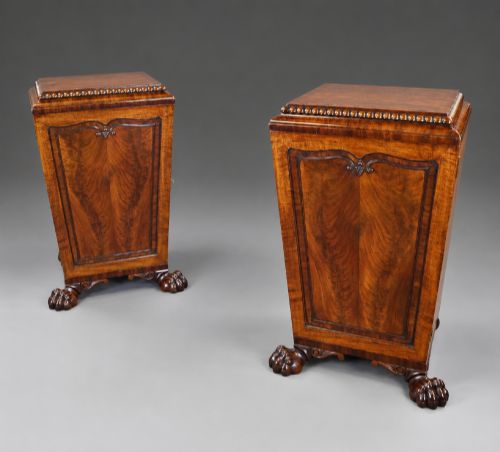
Pairs are a real minority habit, announced in 126 titles. They run from countertop cases up to matched vitrines and pier cabinets.
In the sampled range, pairs appear disproportionately at the upper end.
Are French vitrines different from English cabinets?
They read differently. The Continental strand brings ormolu mounts, kingwood, bombe shaping, boulle and Vernis Martin painted panels, along with Louis XVI style cases and Dutch marquetry pieces.
French appears in around 271 titles and vitrine in 205. These sit toward the top of the range.
Which unusual forms show up?
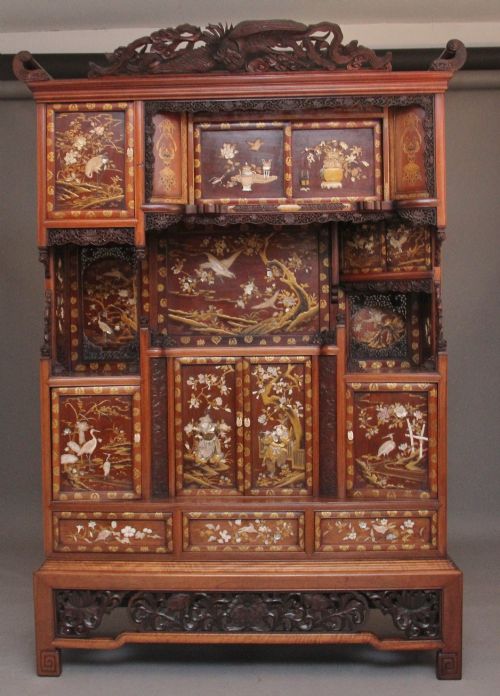
Corner cabinets, hanging cases and tall narrow pier cabinets each form a steady thread, and multi-drawer collectors' cabinets of twelve, sixteen and twenty drawers recur. Museum and institutional showcases in bronze and oak are a small distinct group.
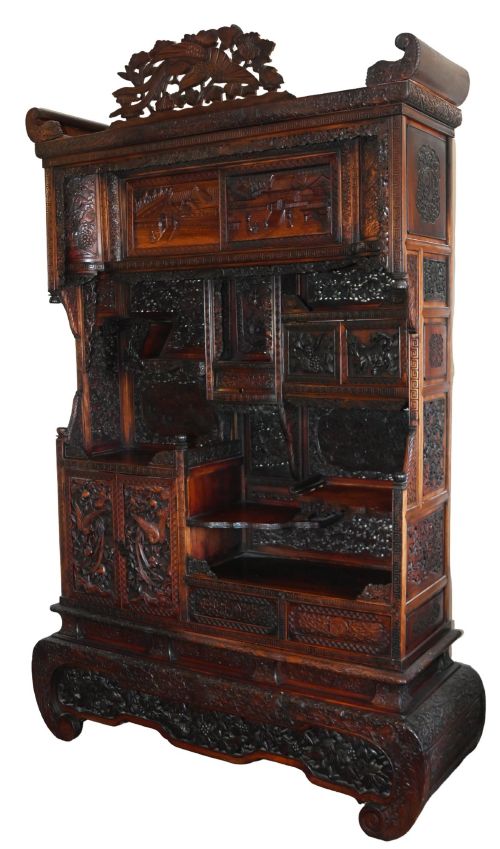
The one-offs include an apprentice miniature cabinet, a table-top sedan-shaped vitrine, a Swedish mazur birch pair, a cedar collector's cabinet in the Indian taste and a steel-and-leather Art Deco case.