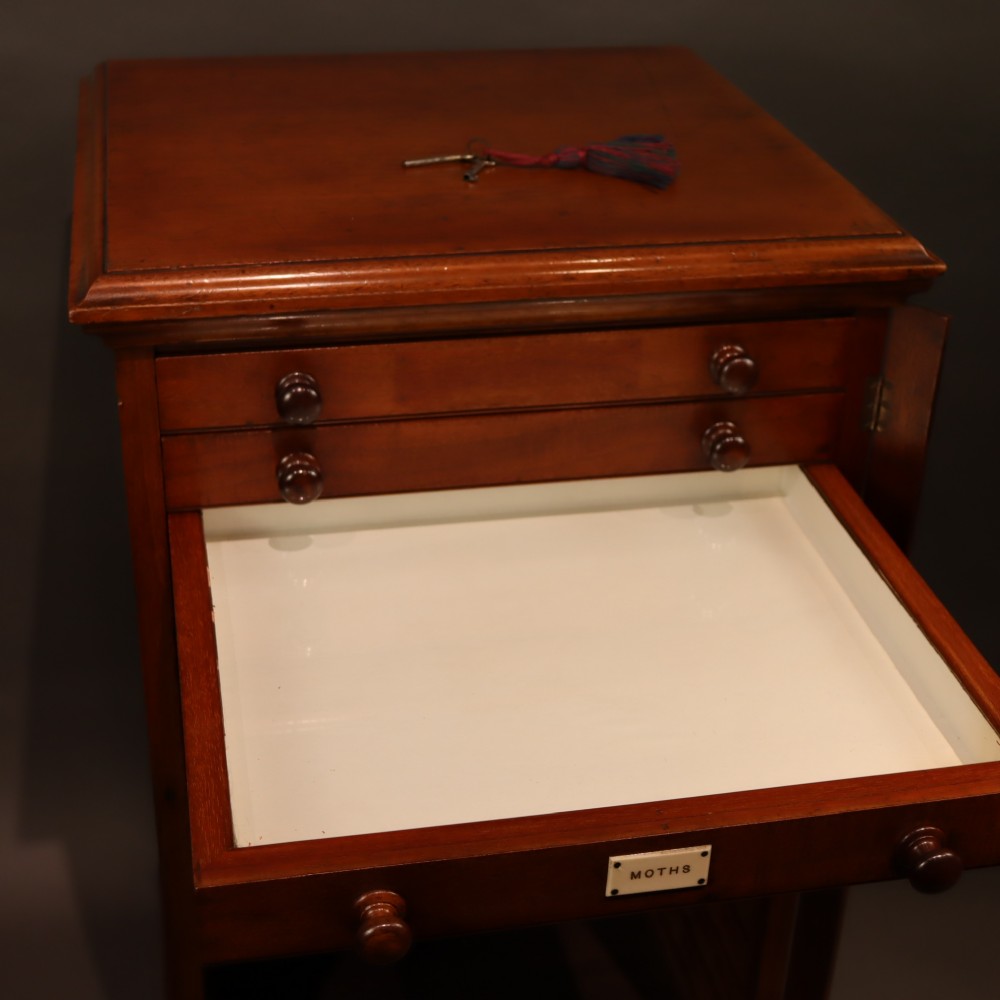
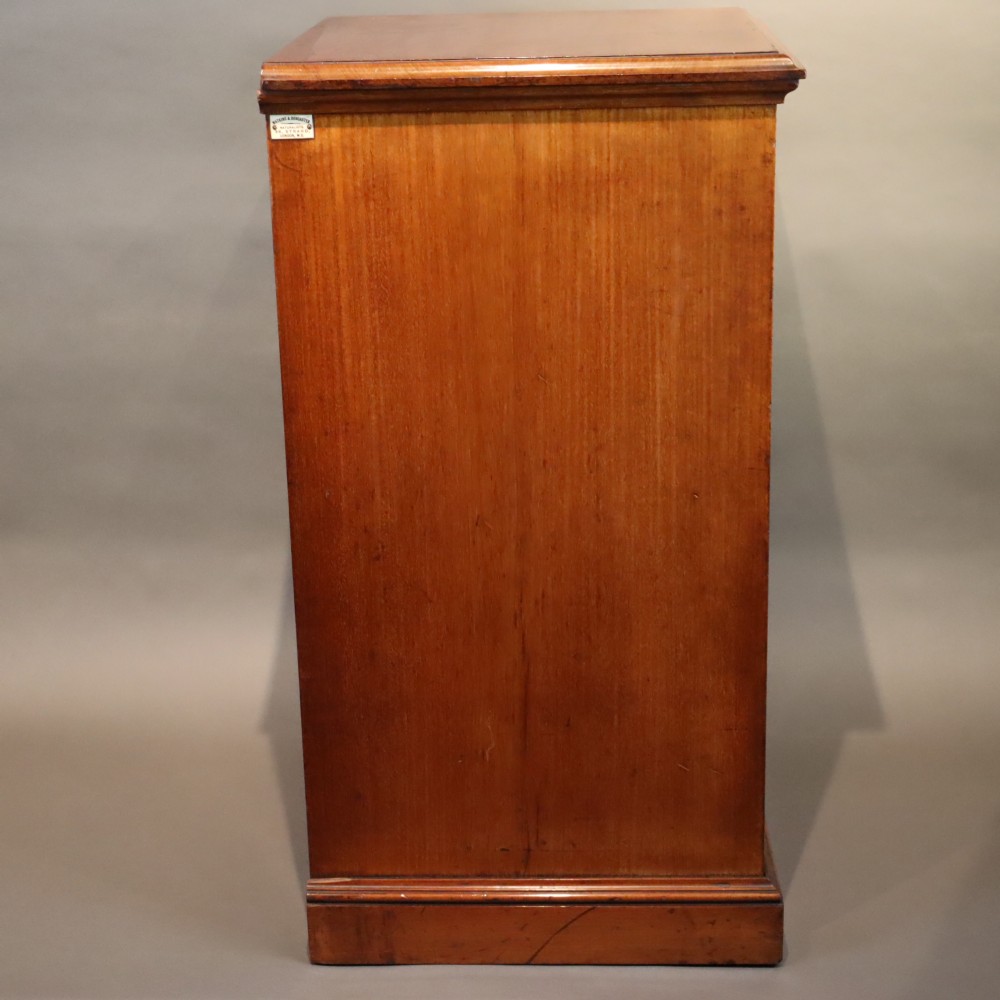
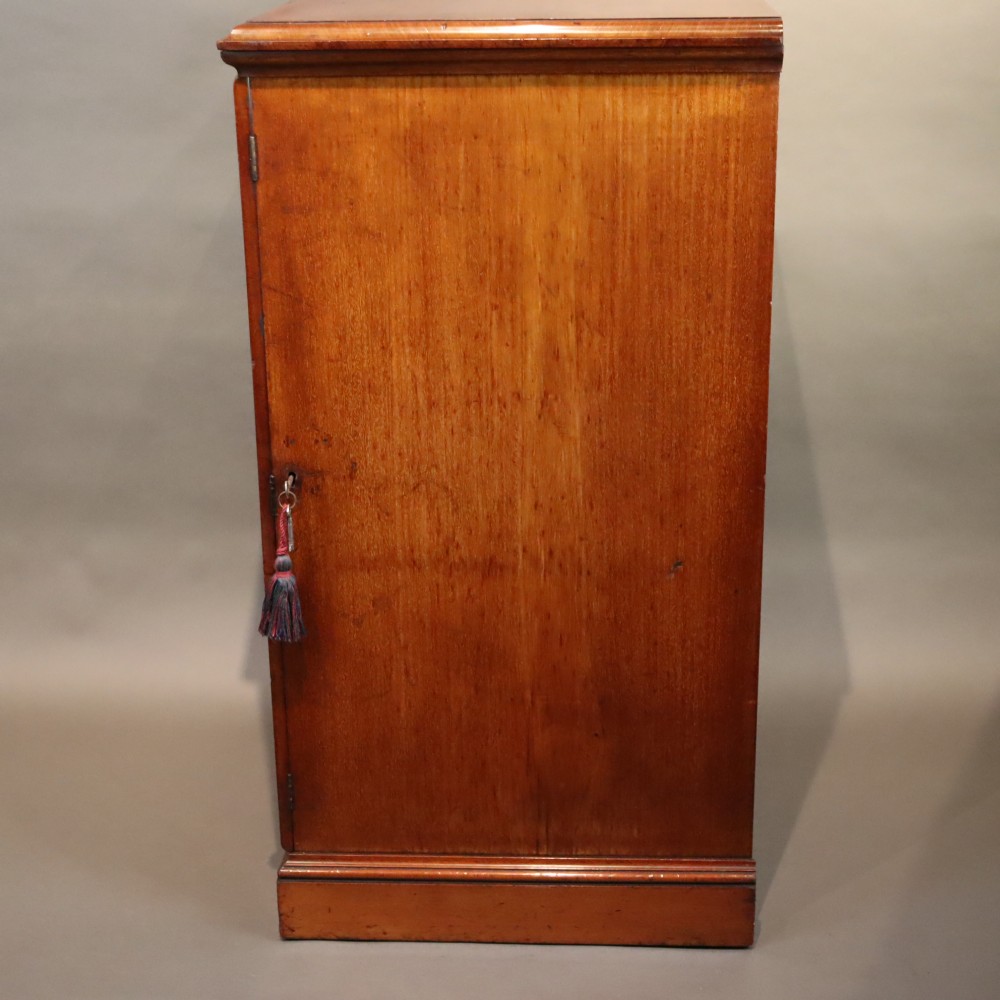
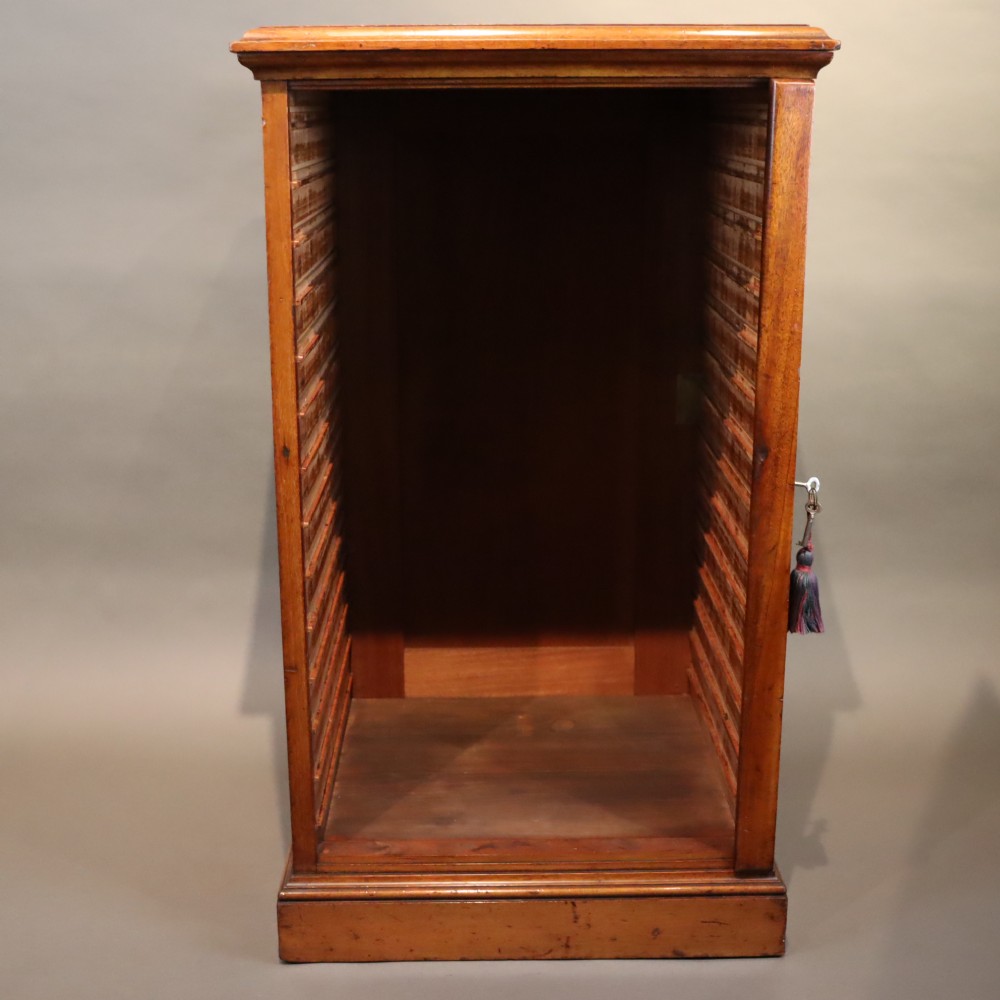
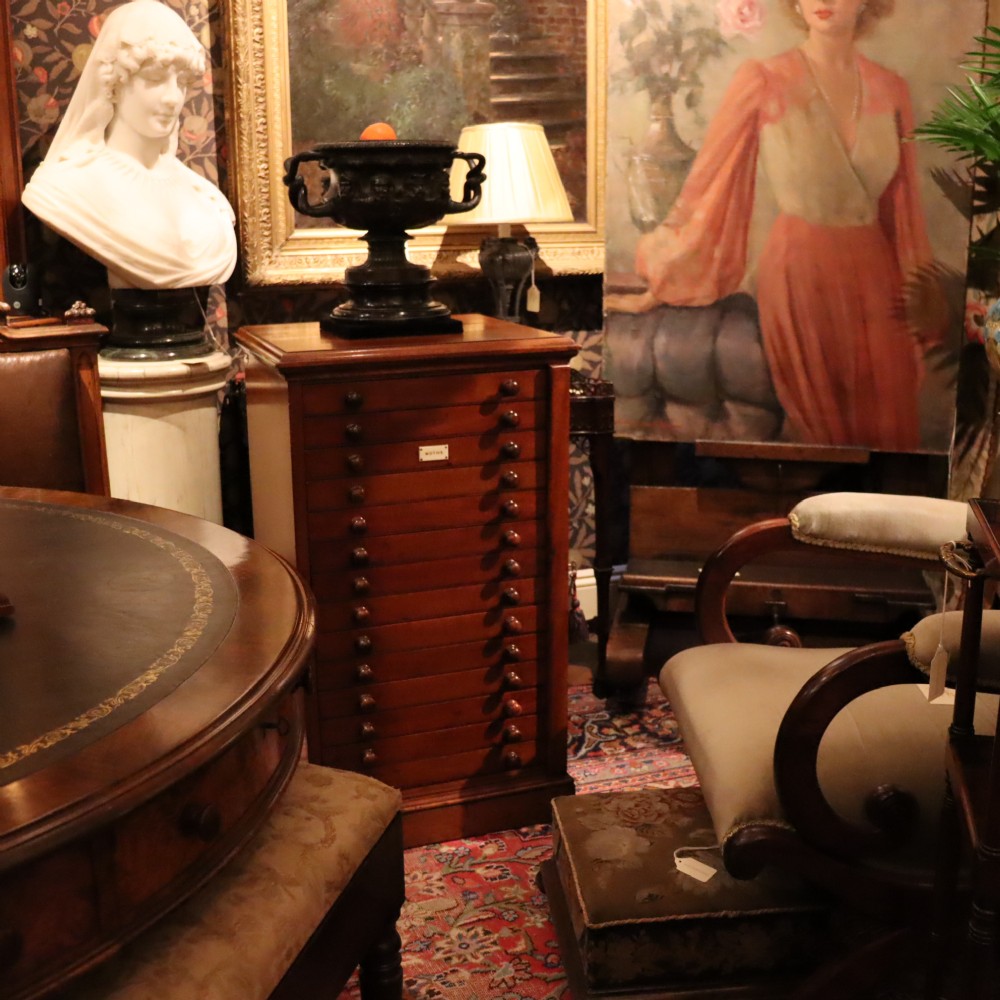
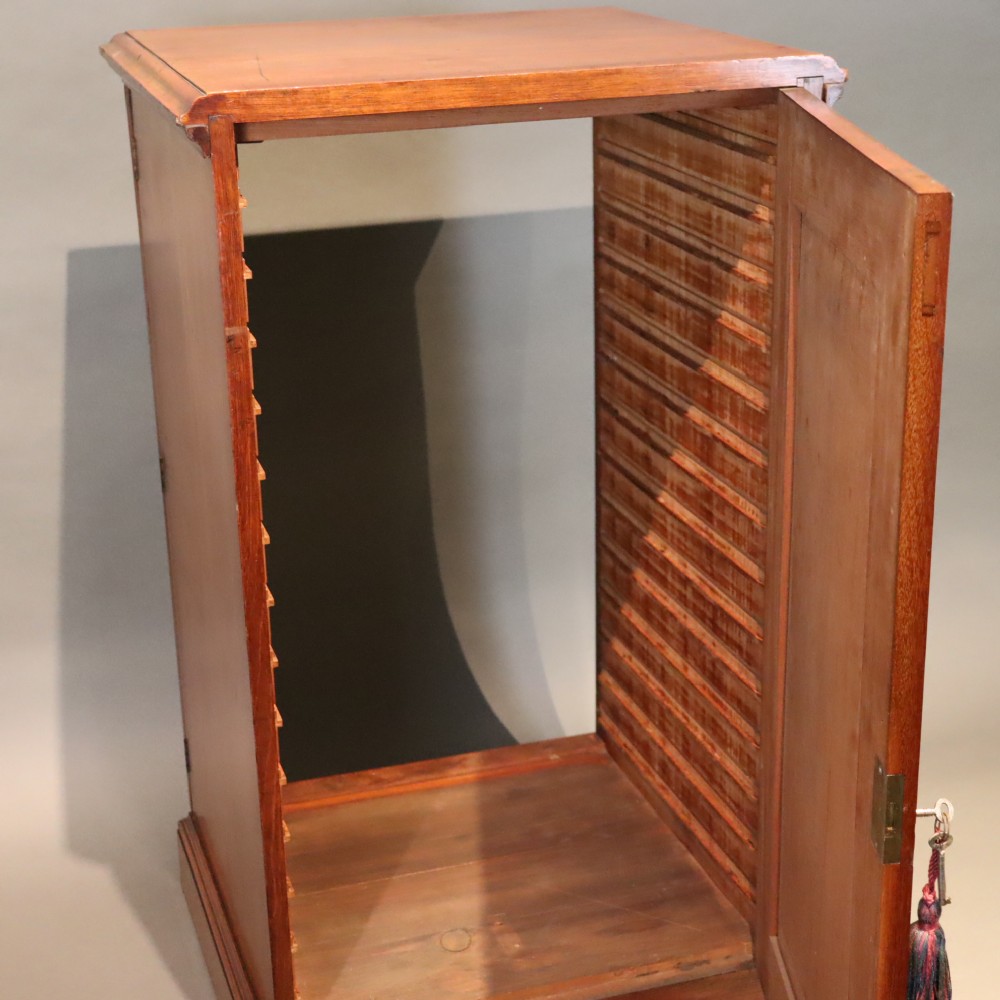
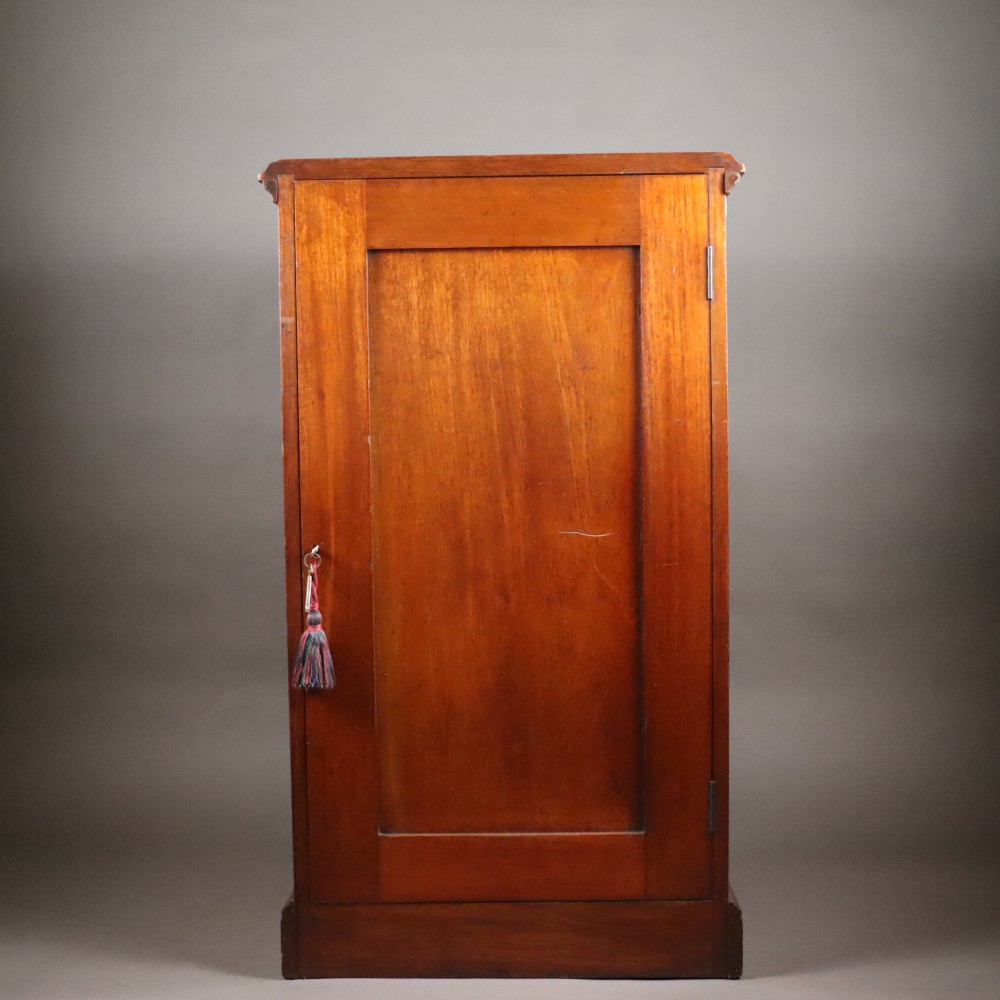
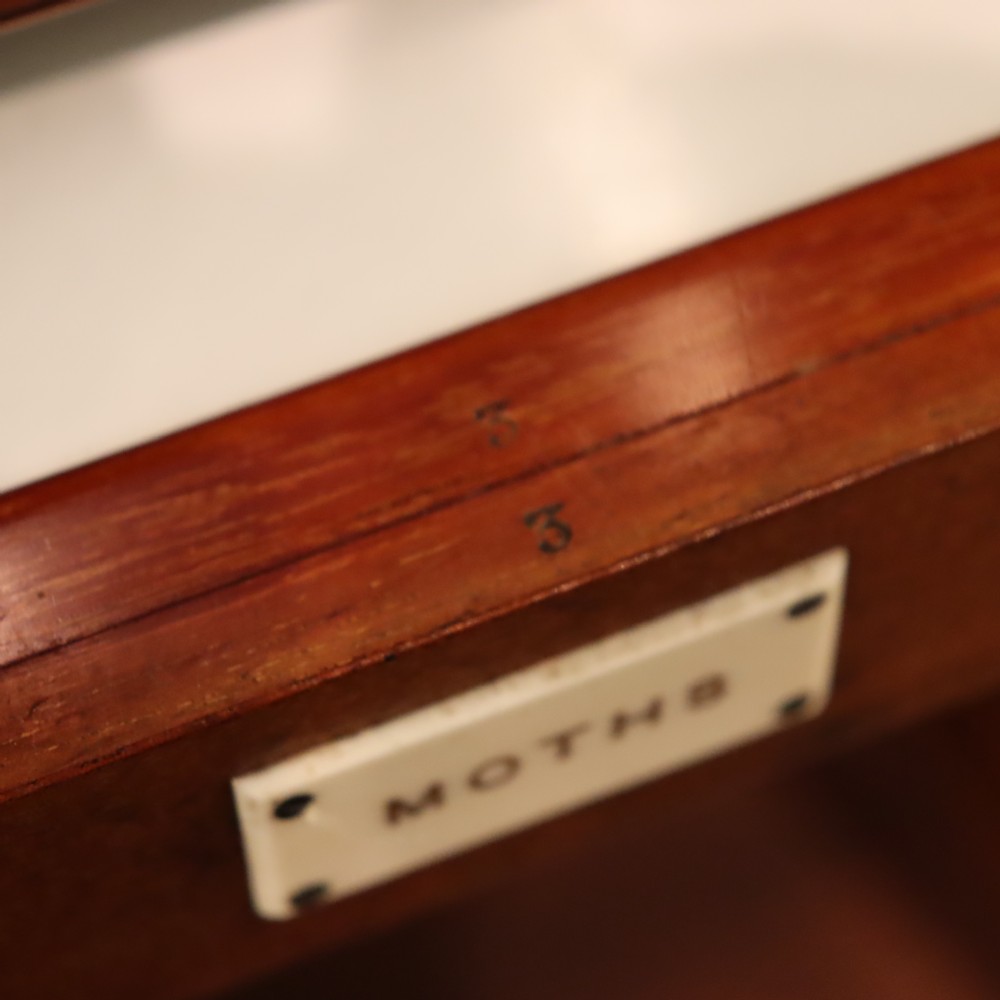
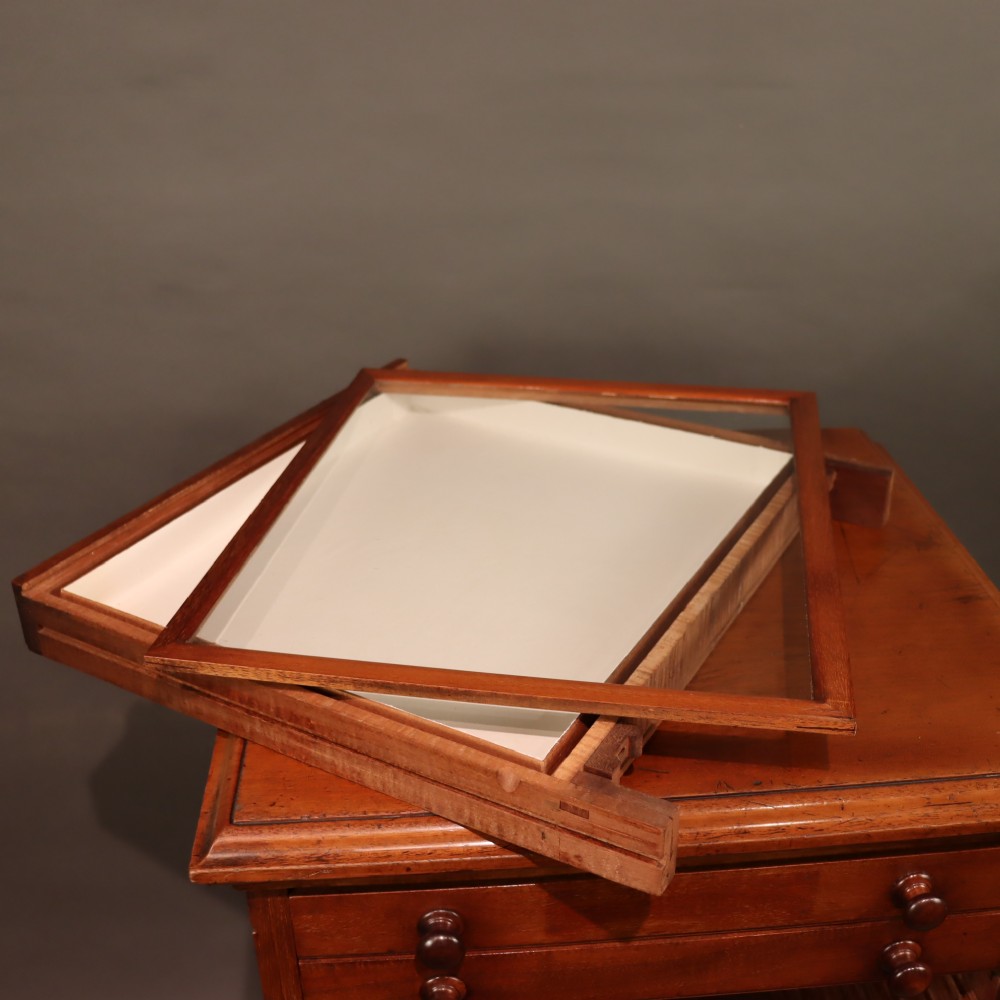
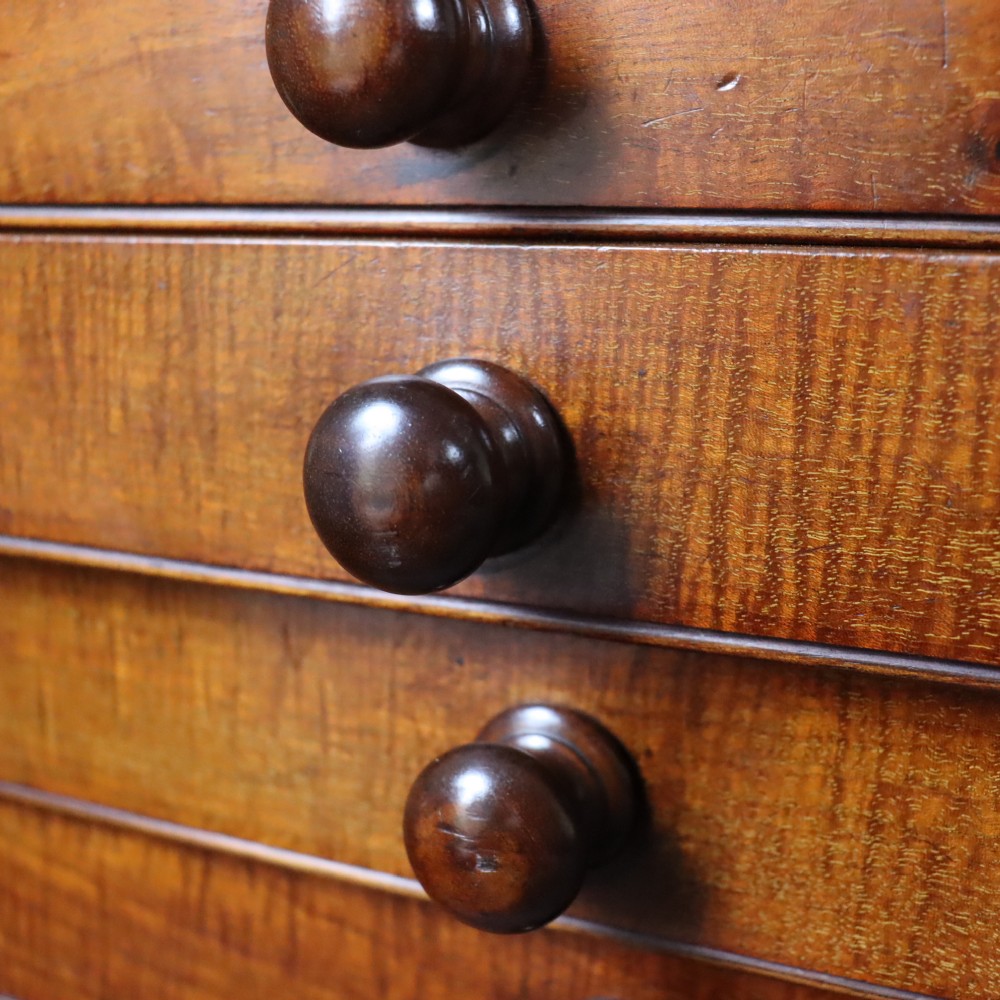
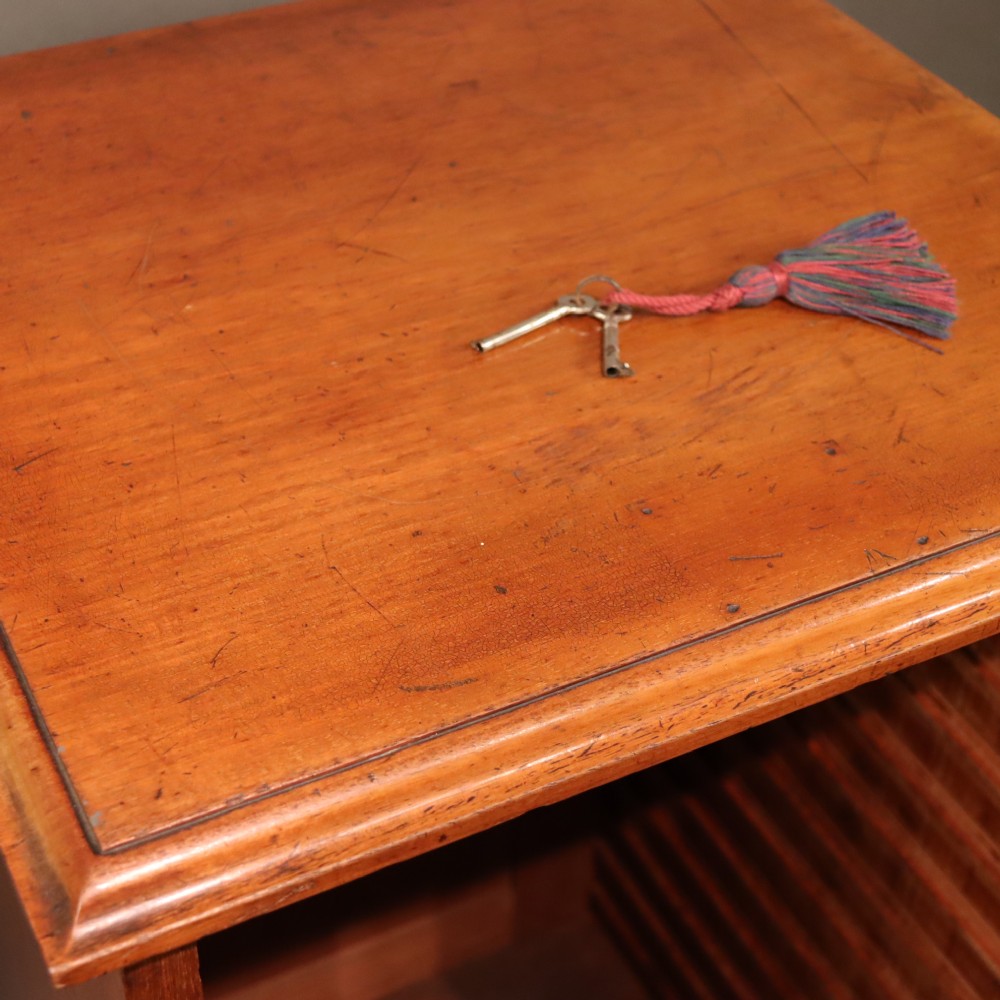
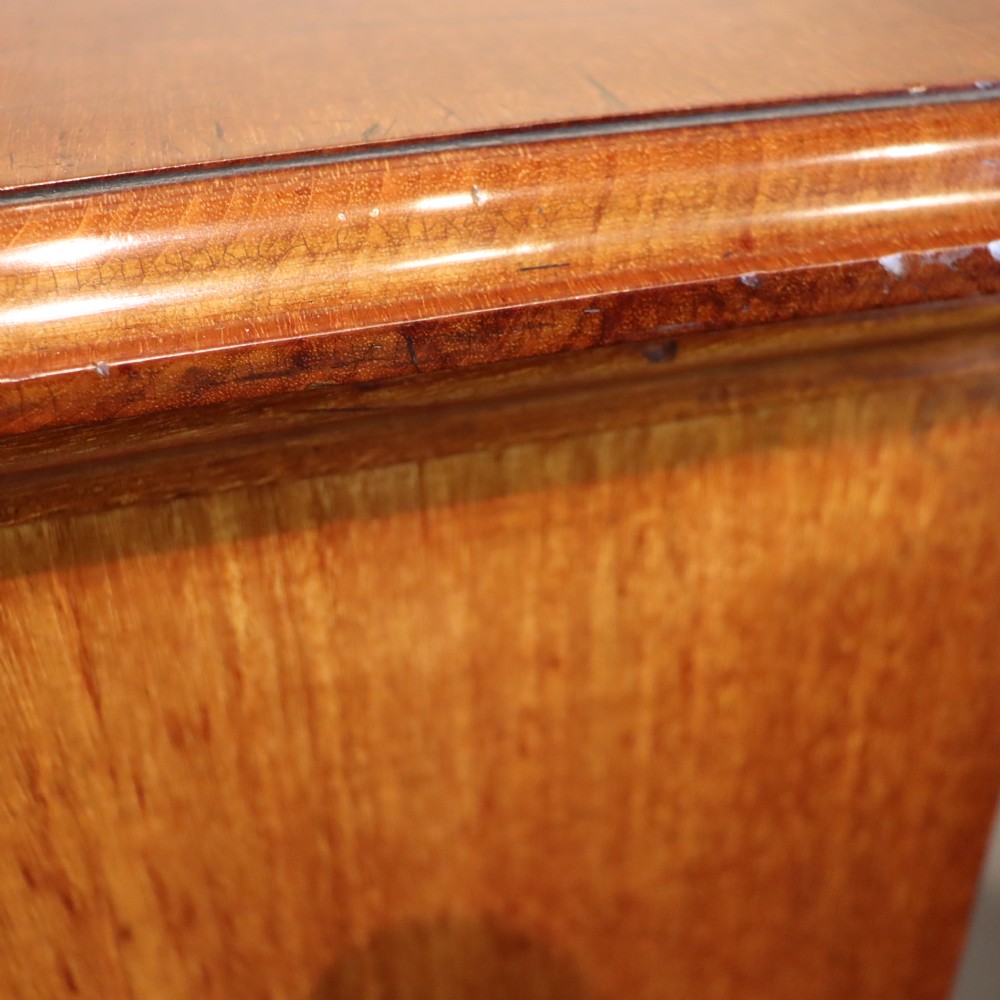
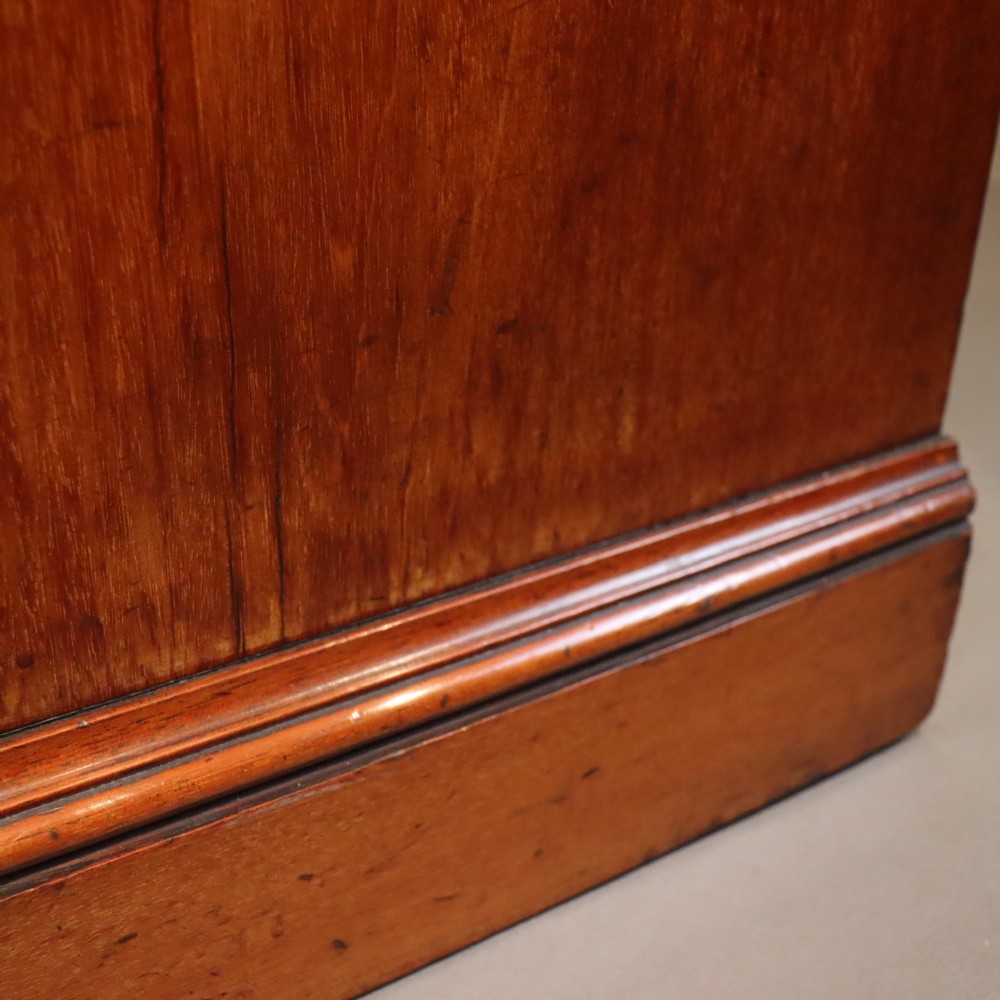
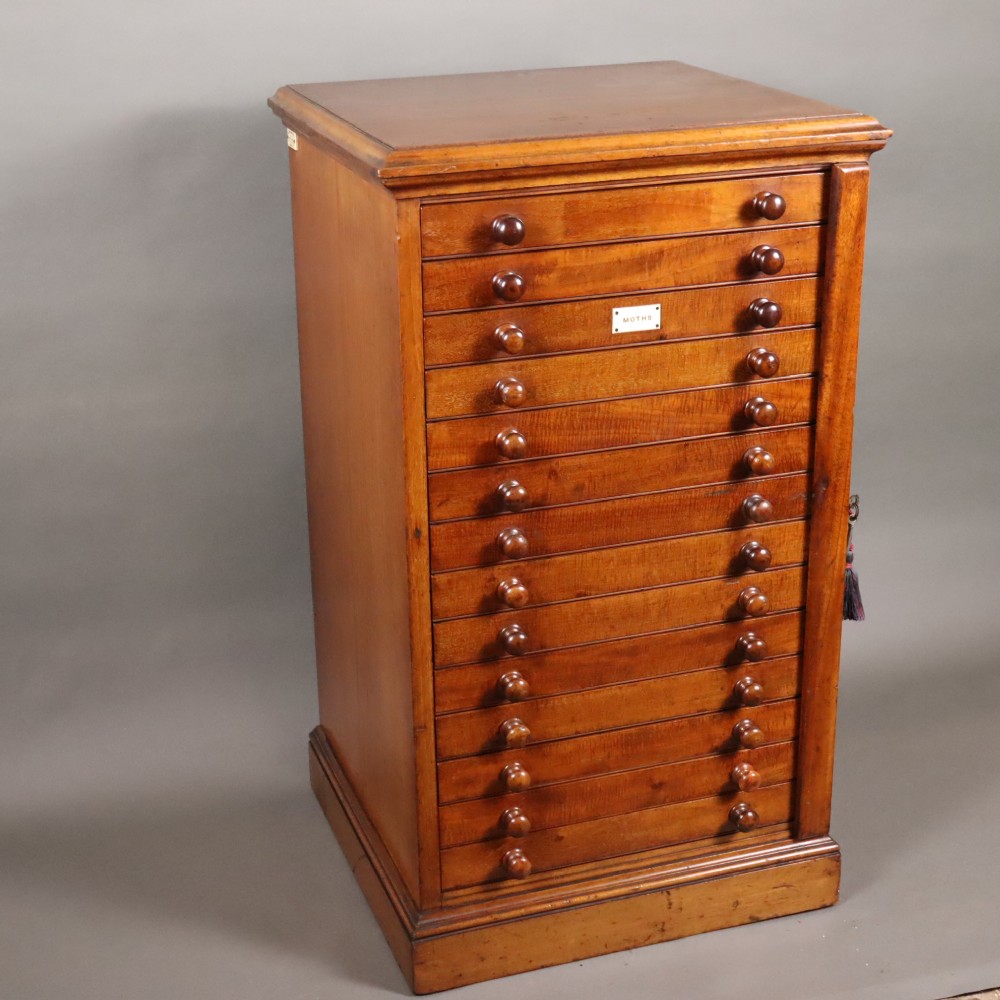
Kendall House Antiques Ltd. has dated this piece to the 1880s.
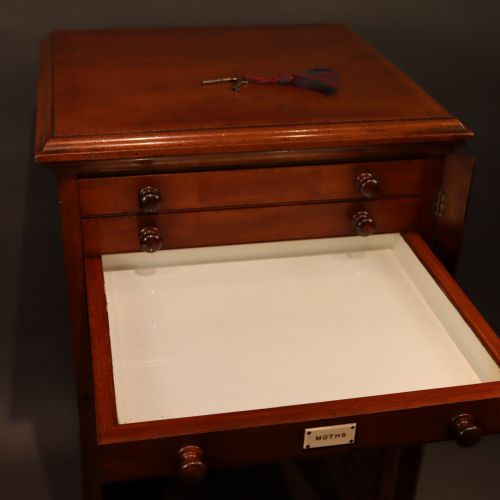
Provenance: The British Natural History Museum.
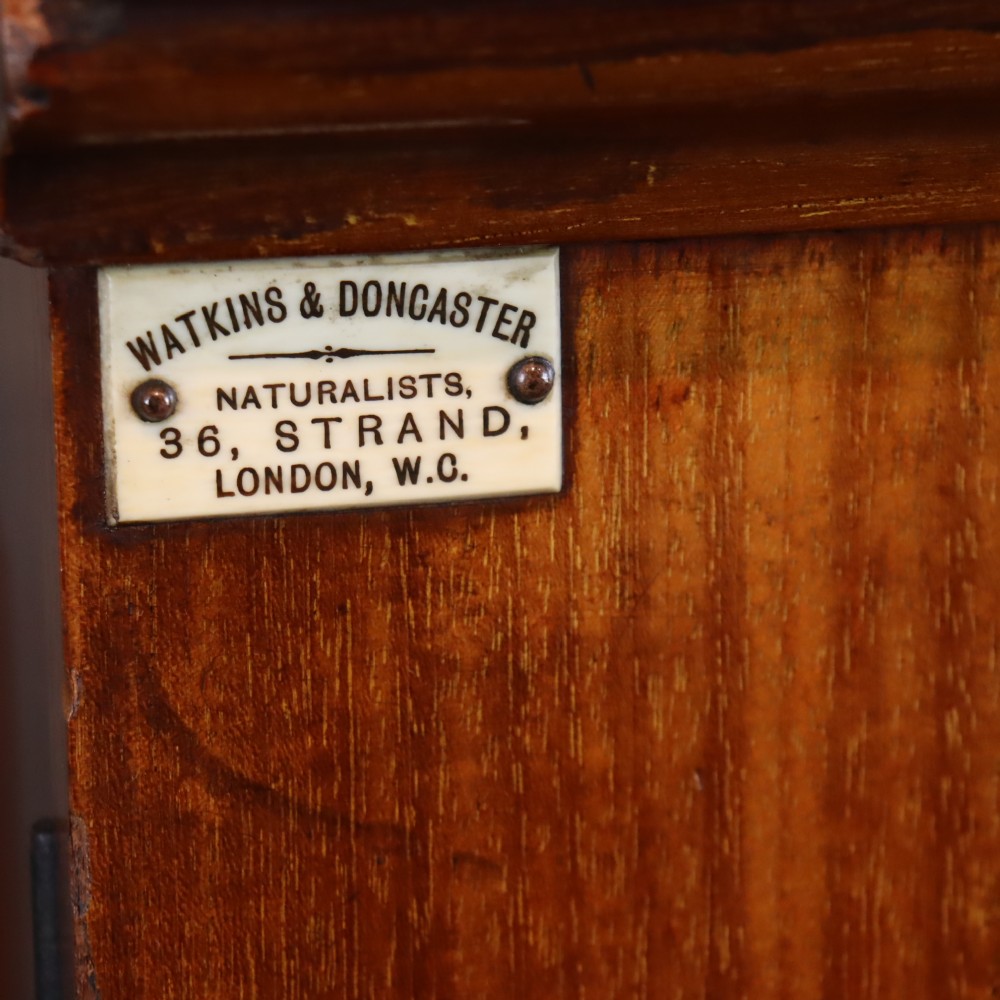
Extract from Watkins & Doncaster’ the Firm:
Founded in 1874 by William Watkins in Eastbourne. His house was named 'The Villa Sphinx' after the Hawkmoth and gained the nickname 'The Villa Stinks' as a result of the all-pervading smell of moth balls. He established a butterfly farm in his grounds, three-quarters of an acre being devoted to rearing Lepidoptera collected from all over the world.
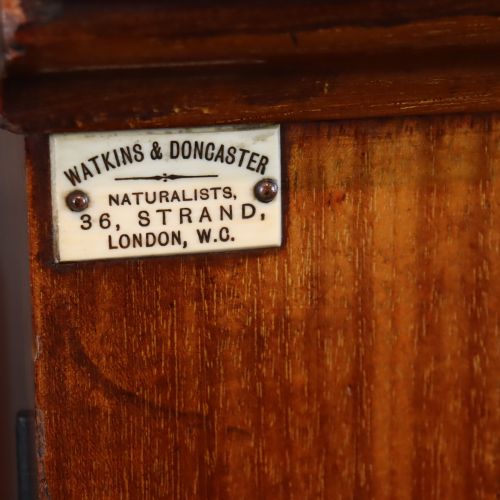
In 1879 Watkins moved the business to 36 The Strand, London and formed a partnership with Arthur Doncaster which only lasted until 1880 when William Watkins left to continue independently.
Arthur Doncaster carried the business on and was a remarkable man. He was completely deaf and speech impaired and all his conversations were carried out on a slate hung around his neck. He became a world authority on tropical butterflies and worked in close conjunction with the British Museum.
Arthur Doncaster had an assistant, Frederick Mette, who later became his partner and finally took over the business when Doncaster retired in the 1930s. He continued until 1939 when he died, and the business ran for about a year with nobody in charge until Richard Ford, a field entomologist, bought the company in 1941.
During the time Richard managed Watkins & Doncaster, the company purchased large entomological collections, this practice continued with William Watkins, Arthur Doncaster and Frederick Mette. These were first offered for inspection to the British Museum (Natural History) now the ‘Natural History Museum’ which resulted over the years in the donation of nearly 27,000 specimens of butterflies and moths to that institution.
Kendall House Antiques Ltd. has dated this piece to the 1880s.
Kendall house antiques a traditional shop in the north cotswold’s market town of chipping campden.
You can view the stock and full dealer information on the Kendall House Antiques Ltd. Profile Page

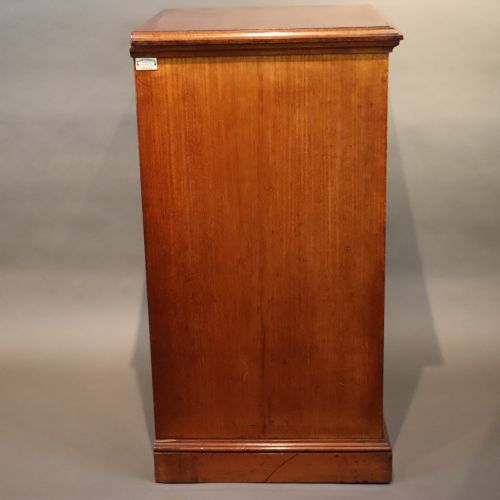
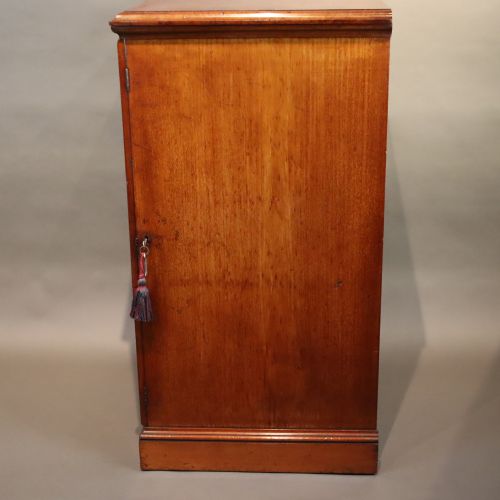
Unusual Watkins & Doncaster Entomology Museum Specimen Cabinet