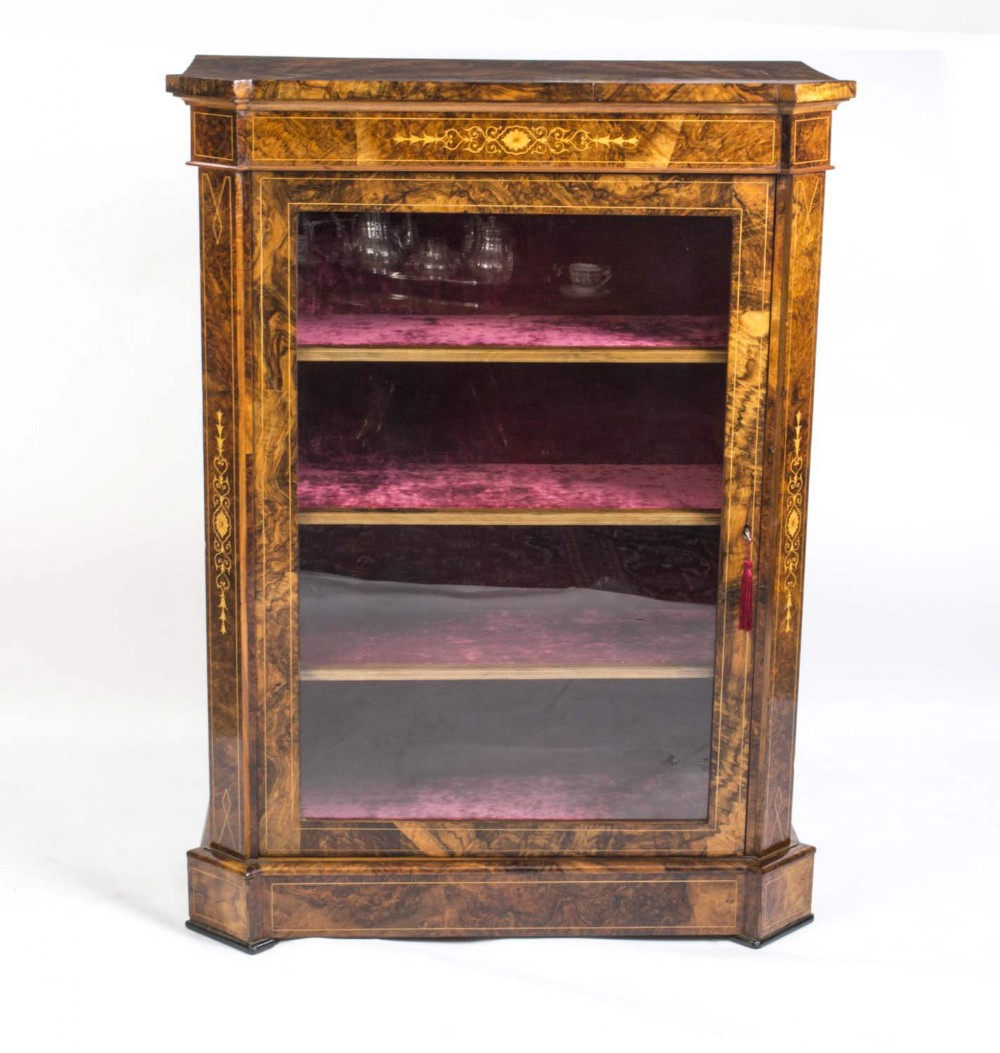
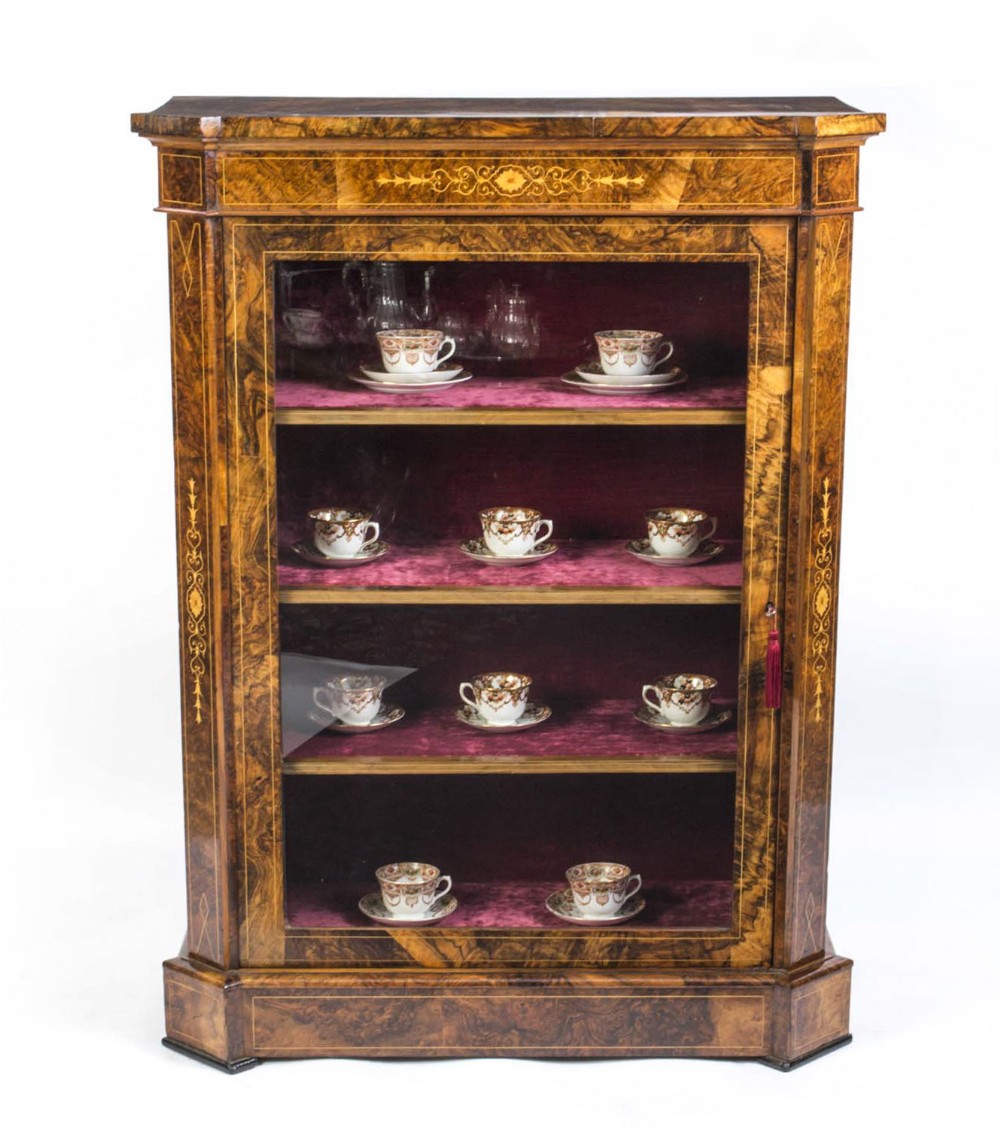
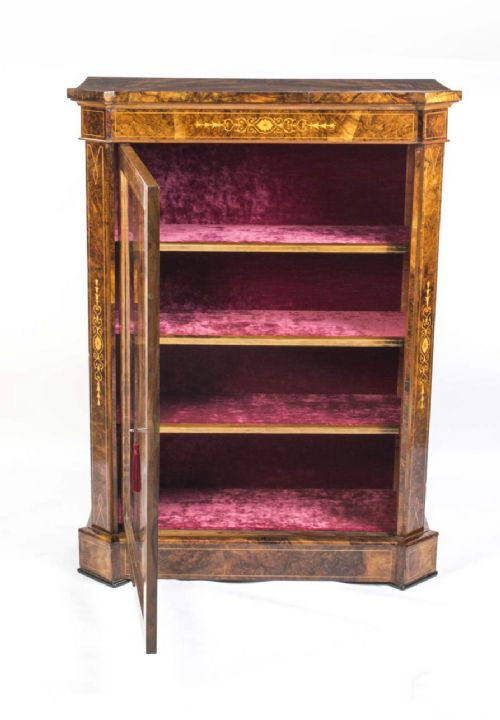
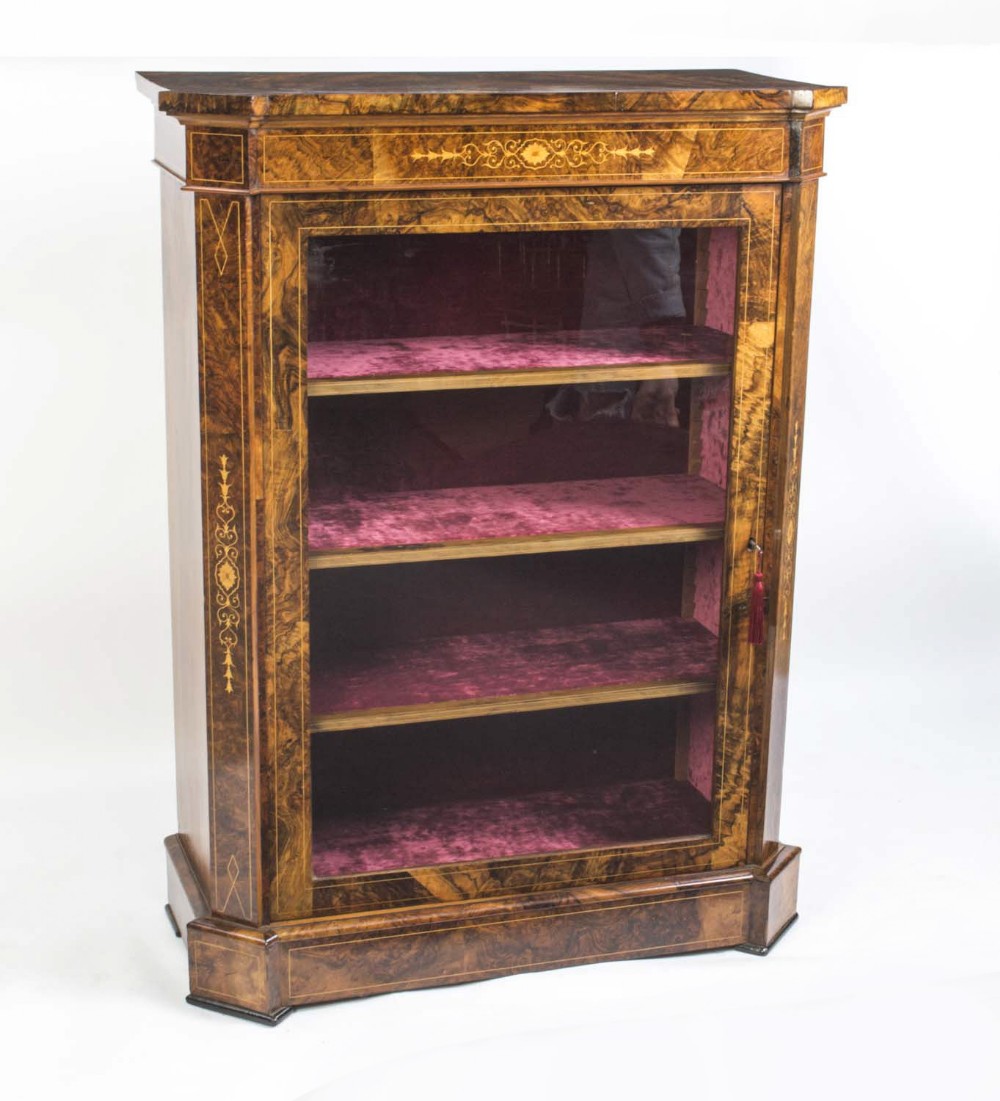
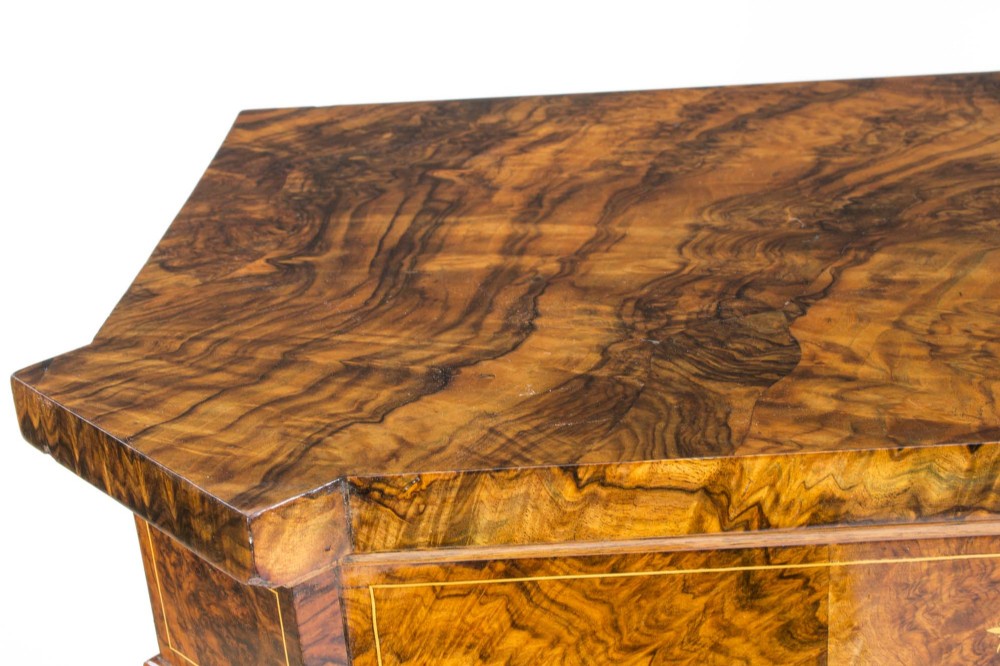
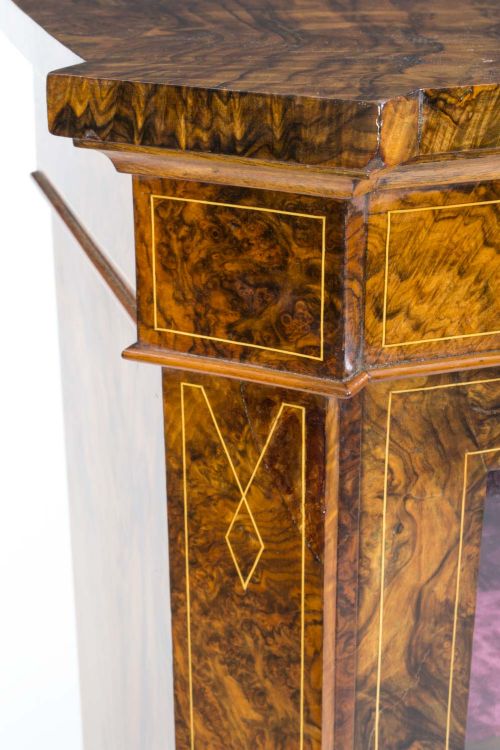
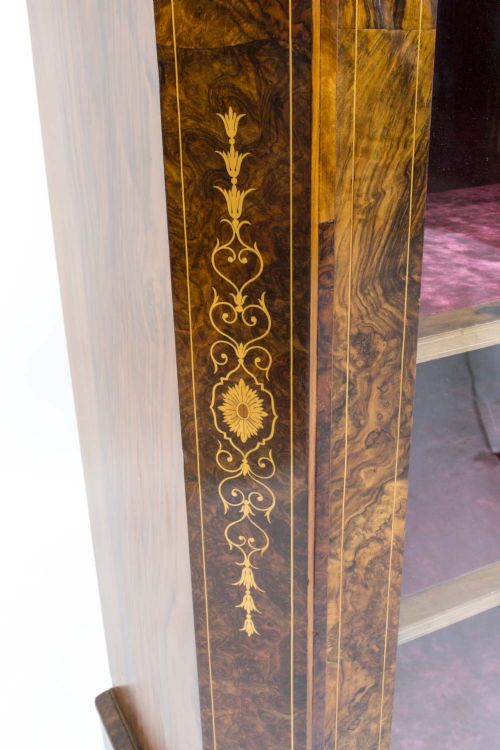
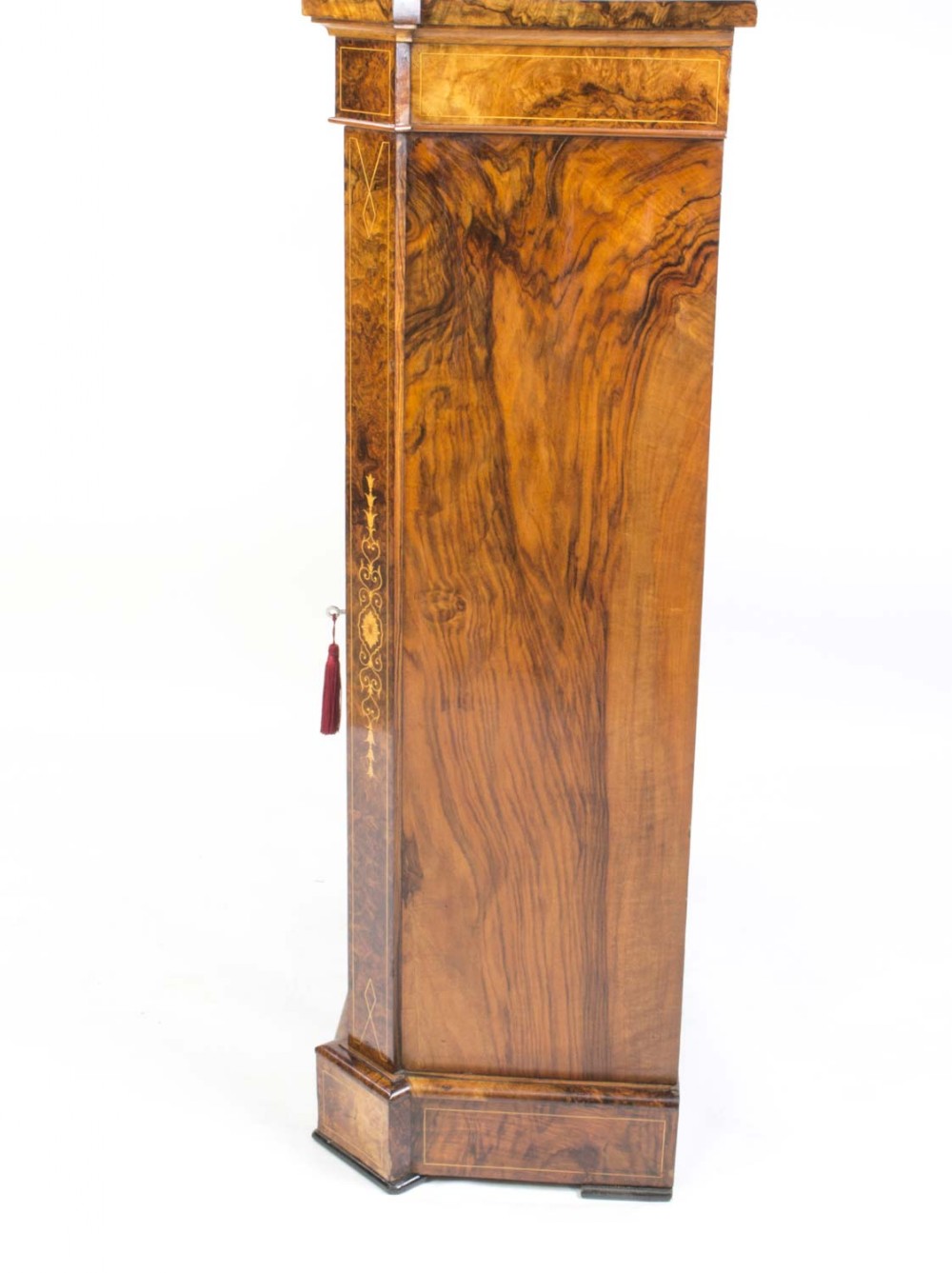
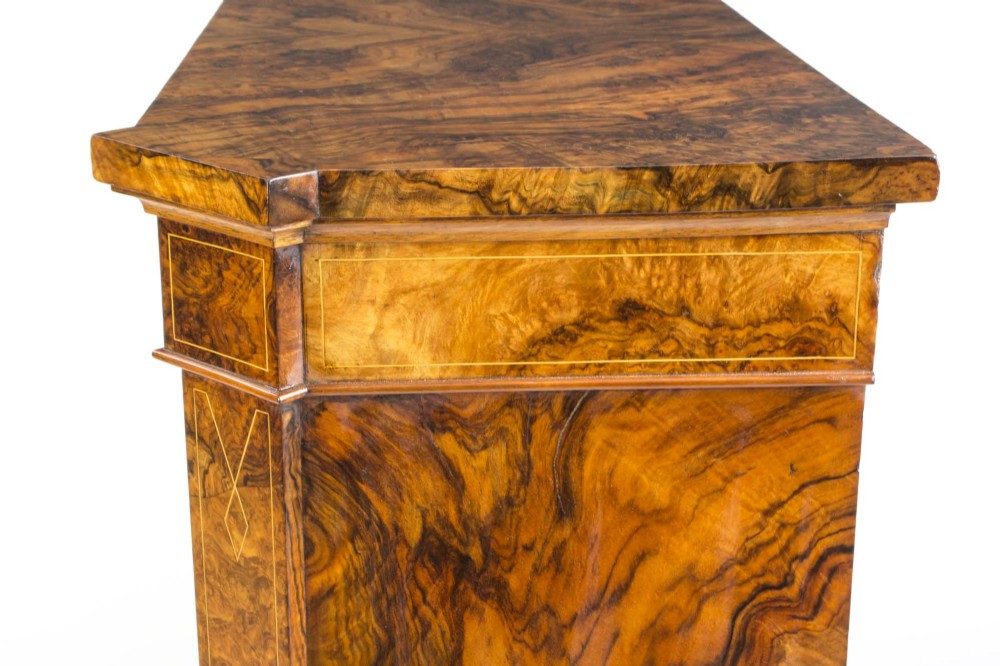
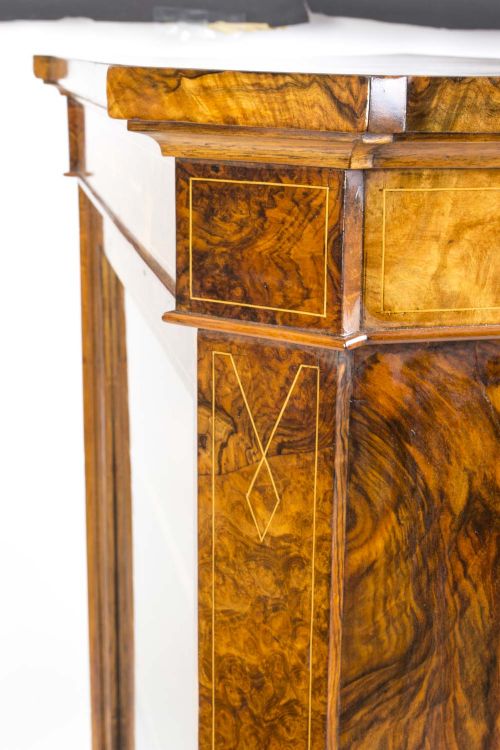
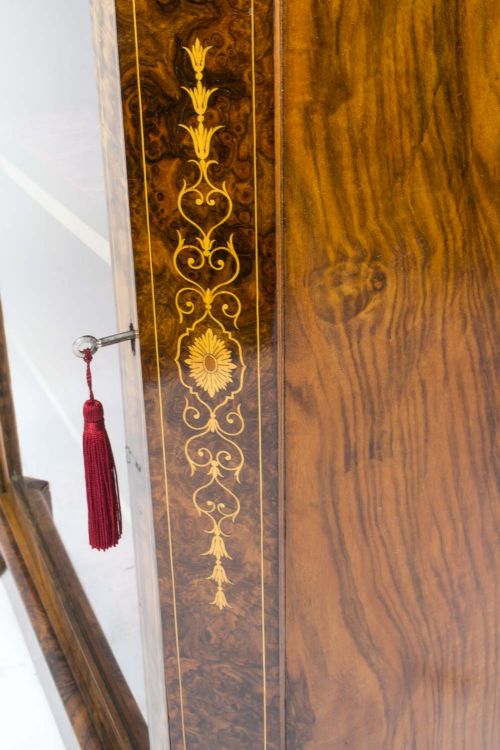
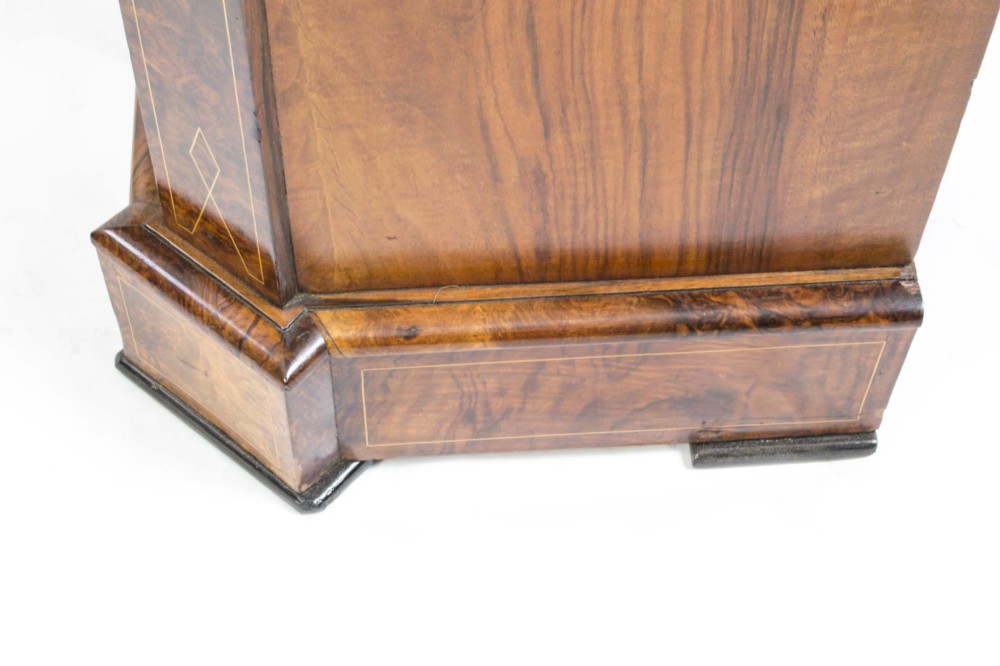
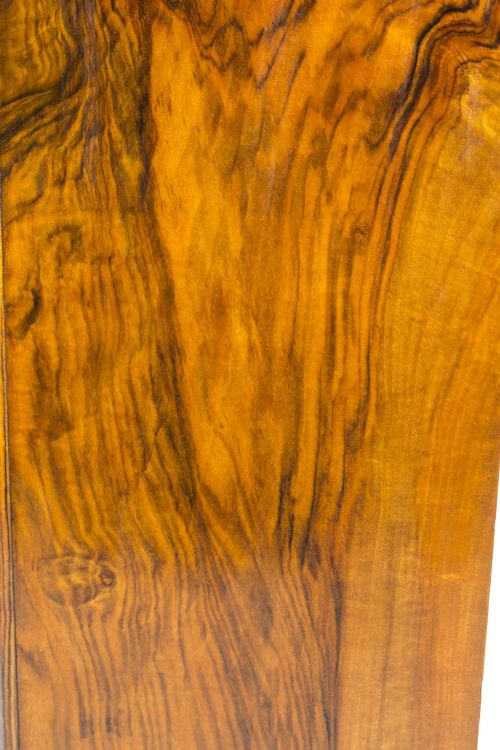
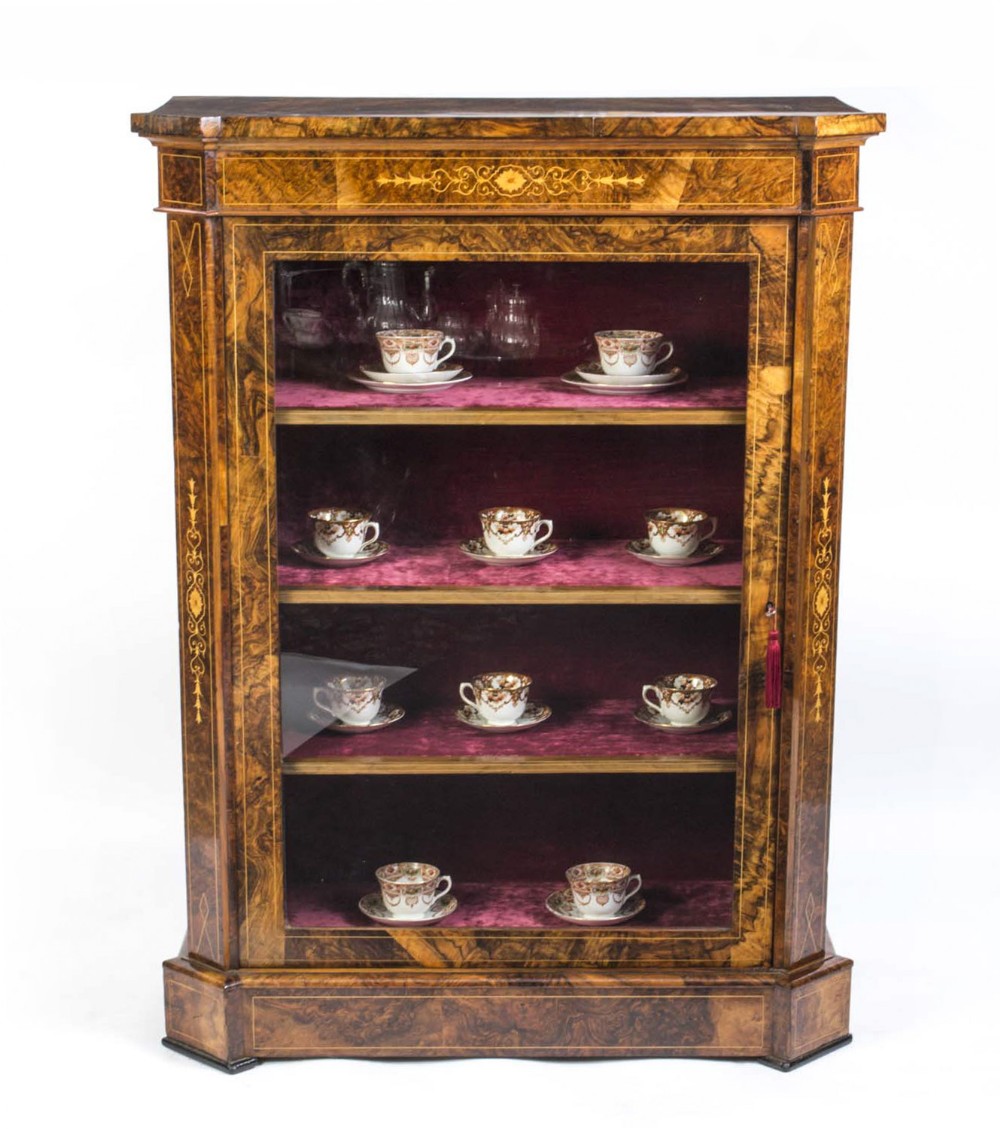
This is a lovely antique Victorian burr walnut pier cabinet, circa 1860.
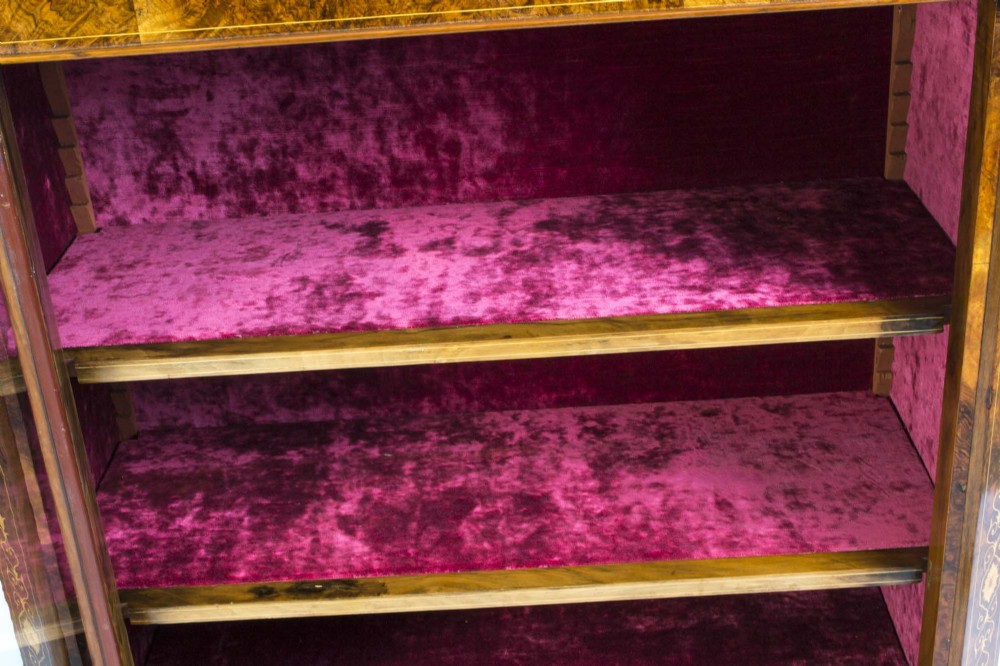
It has been accomplished in burr walnut with a glazed door enclosing interiors lined with burgundy velvet and three shelves.
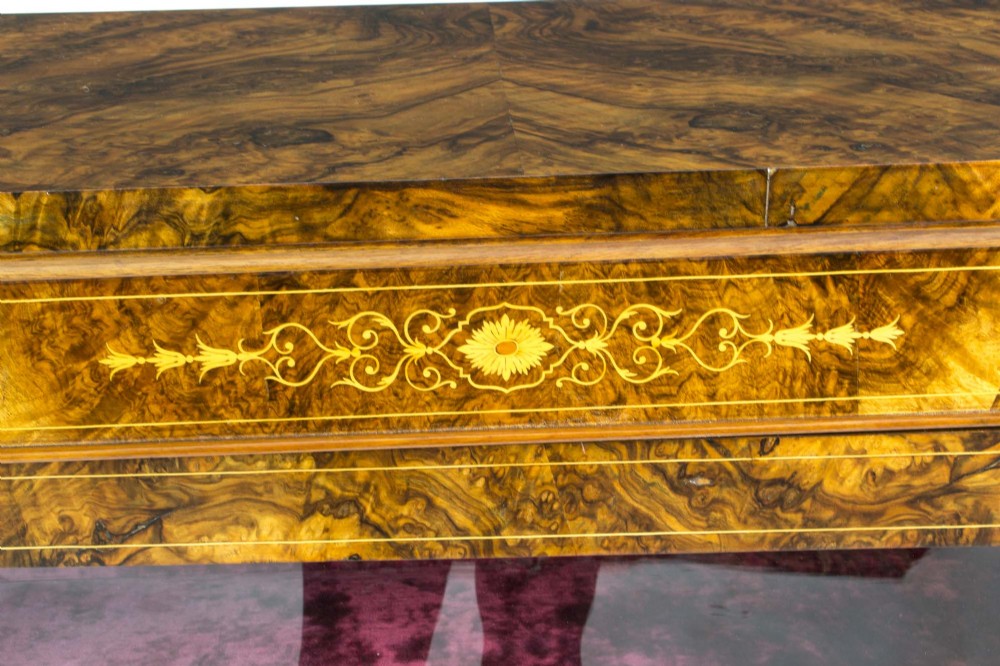
It is an unusually tall for a pier cabinet and adding to its truly unique character, it is decorated with satinwood marquetry.
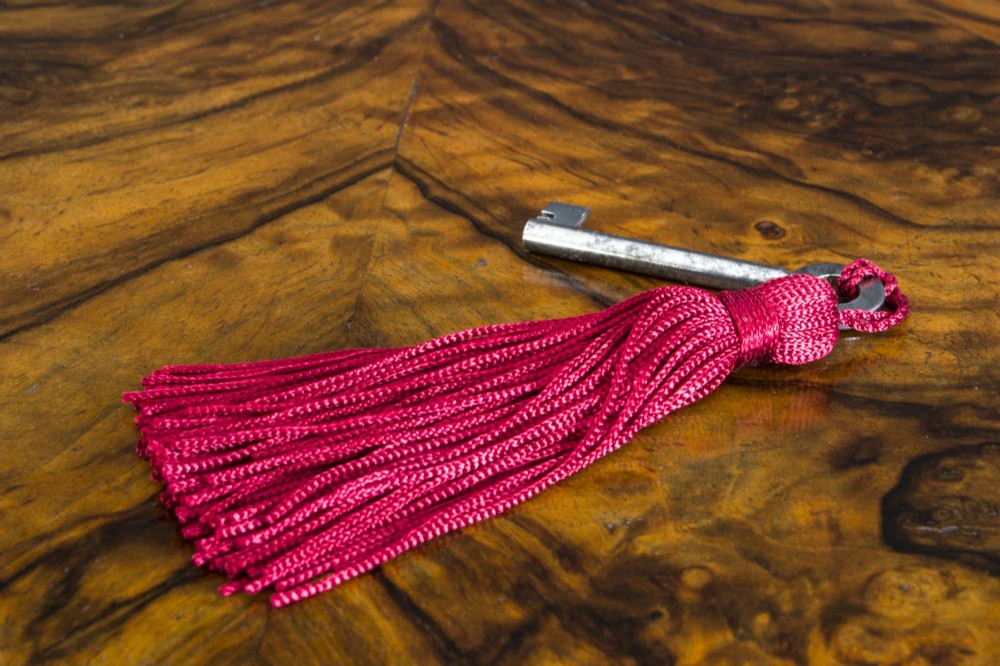
With original key and working lock.
Provenance: Purchased from Ashwick Court the beautiful late 17th Century Grade II listed house at Ashwick, Oak Hill, near Bath.
One cannot overstate the truly unique opportunity to own such a delightful cabinet.
Condition:
In excellent condition having been beautifully restored and the interior relined in our workshops, please see photos for confirmation.
Dimensions in cm:
Height 127 x Width 95 x Depth 40
Dimensions in inches:
Height 50.0 x Width 37.4 x Depth 15.7
Burr Walnut
refers to the swirling figure present in nearly all walnut when cut and polished, and especially in the wood taken from the base of the tree where it joins the roots. However the true burr is a rare growth on the tree where hundreds of tiny branches have started to grow. Burr walnut produces some of the most complex and beautiful figuring you can find.
Satinwood
is a hard and durable wood with a satinlike sheen, much used in cabinetmaking, especially in marquetry. It comes from two tropical trees of the family Rutaceae (rue family). East Indian or Ceylon satinwood is the yellowish or dark-brown heartwood of Chloroxylon swietenia.
The lustrous, fine-grained, usually figured wood is used for furniture, cabinetwork, veneers, and backs of brushes. West Indian satinwood, sometimes called yellow wood, is considered superior. It is the golden yellow, lustrous, even-grained wood found in the Florida Keys and the West Indies.
It has long been valued for furniture. It is also used for musical instruments, veneers, and other purposes. Satinwood is classified in the division Magnoliophyta, class Magnoliopsida, order Sapindales, family Rutaceae.
Marquetry is decorative artistry where pieces of material (such as wood, mother of pearl, pewter, brass silver or shell) of different colours are inserted into surface wood veneer to form intricate patterns such as scrolls or flowers.
The technique of veneered marquetry had its inspiration in 16th century Florence. Marquetry elaborated upon Florentine techniques of inlaying solid marble slabs with designs formed of fitted marbles, jaspers and semi-precious stones. This work, called opere di commessi, has medieval parallels in Central Italian "Cosmati"-work of inlaid marble floors, altars and columns. The technique is known in English as pietra dura, for the "hardstones" used: onyx, jasper, cornelian, lapis lazuli and colored marbles. In Florence, the Chapel of the Medici at San Lorenzo is completely covered in a colored marble facing using this demanding jig-sawn technique.
Techniques of wood marquetry were developed in Antwerp and other Flemish centers of luxury cabinet-making during the early 16th century. The craft was imported full-blown to France after the mid-seventeenth century, to create furniture of unprecedented luxury being made at the royal manufactory of the Gobelins, charged with providing furnishings to decorate Versailles and the other royal residences of Louis XIV. Early masters of French marquetry were the Fleming Pierre Golle and his son-in-law, André-Charles Boulle, who founded a dynasty of royal and Parisian cabinet-makers (ébénistes) and gave his name to a technique of marquetry employing shell and brass with pewter in arabesque or intricately foliate designs.
Ashwick Court is Grade II* listed house on Heckley Lane northwest of Ashwick, in Mendip district, eastern Somerset, England, which is adjacent to the Church of St James. It is a country house, dating from the late 17