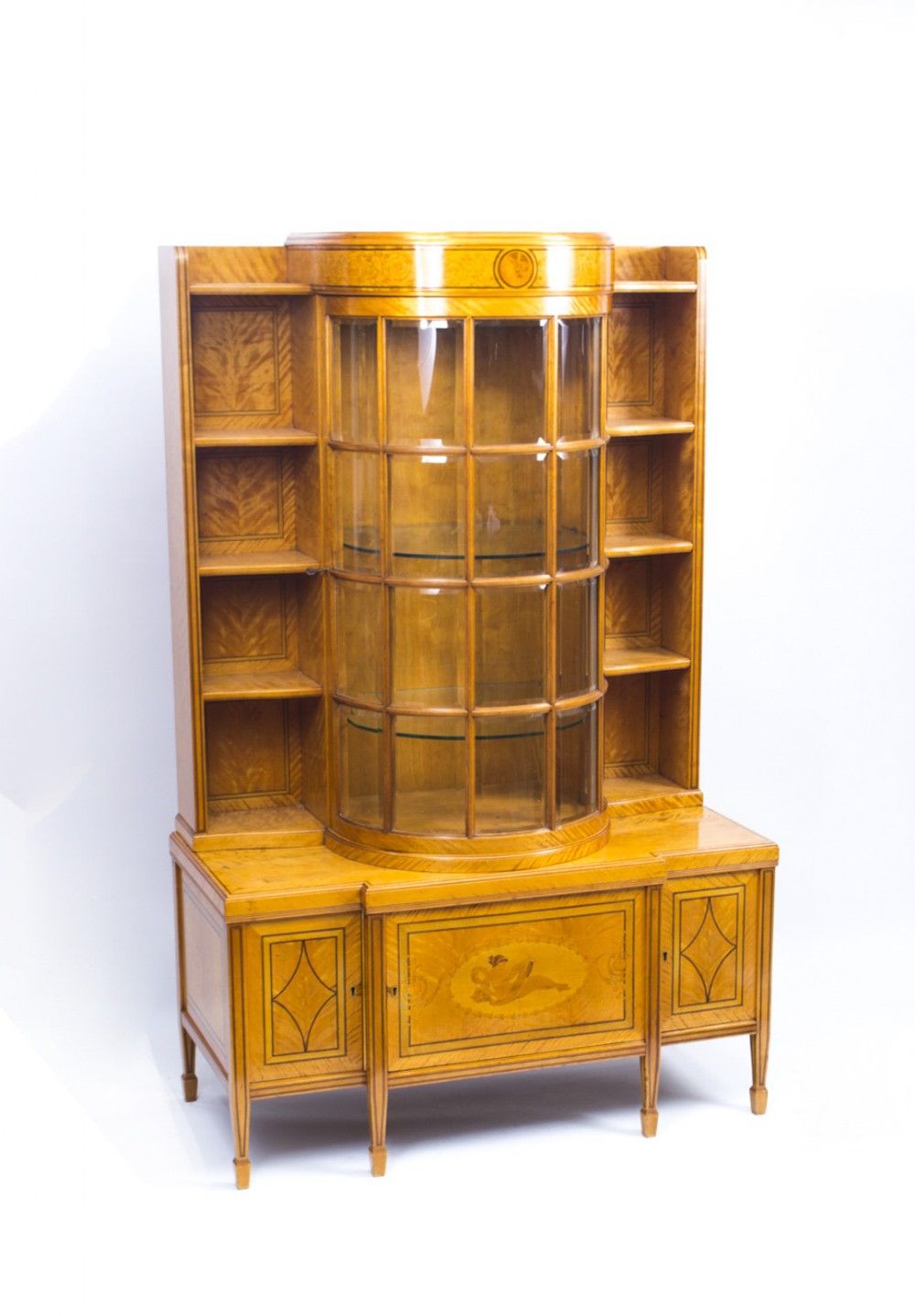
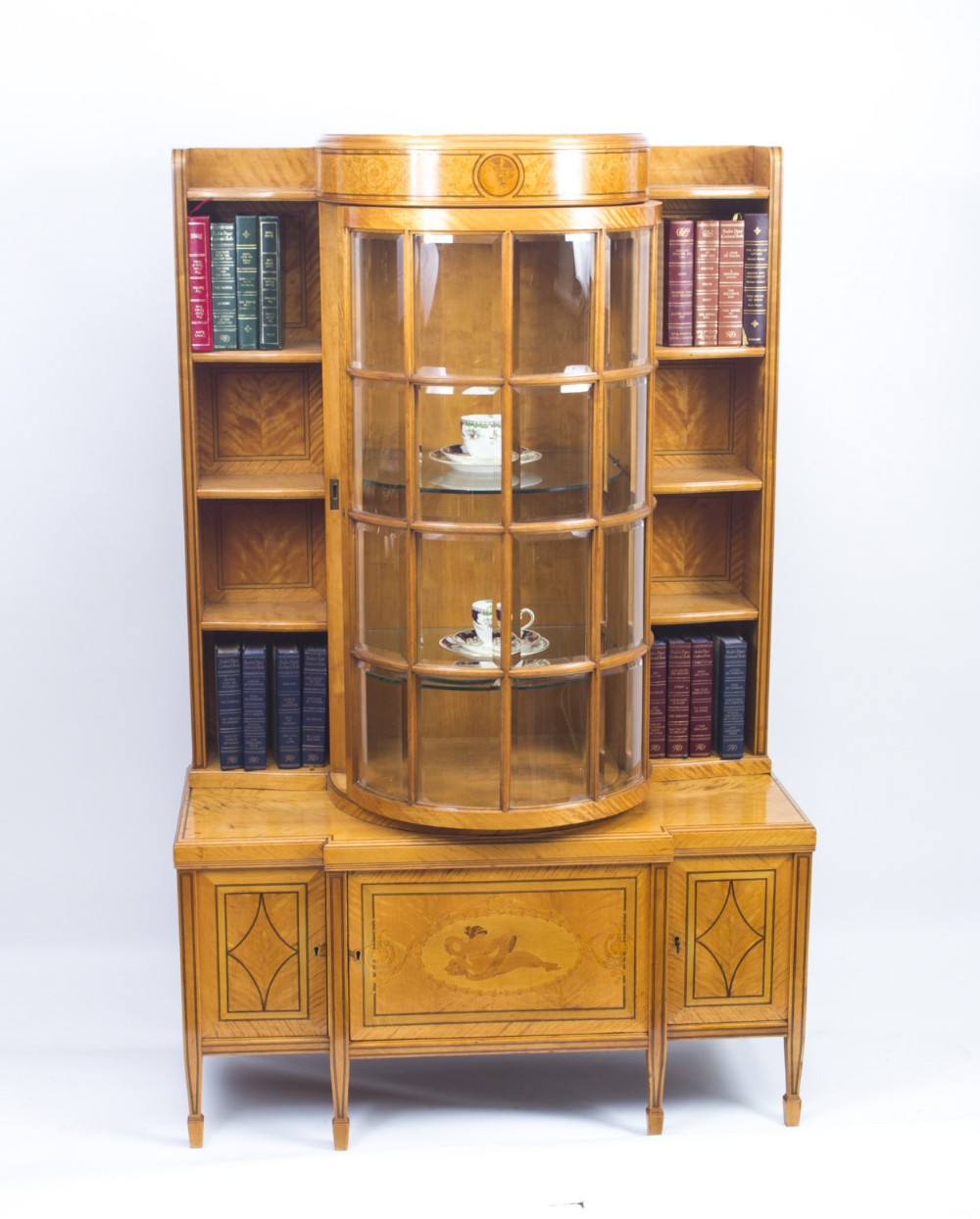
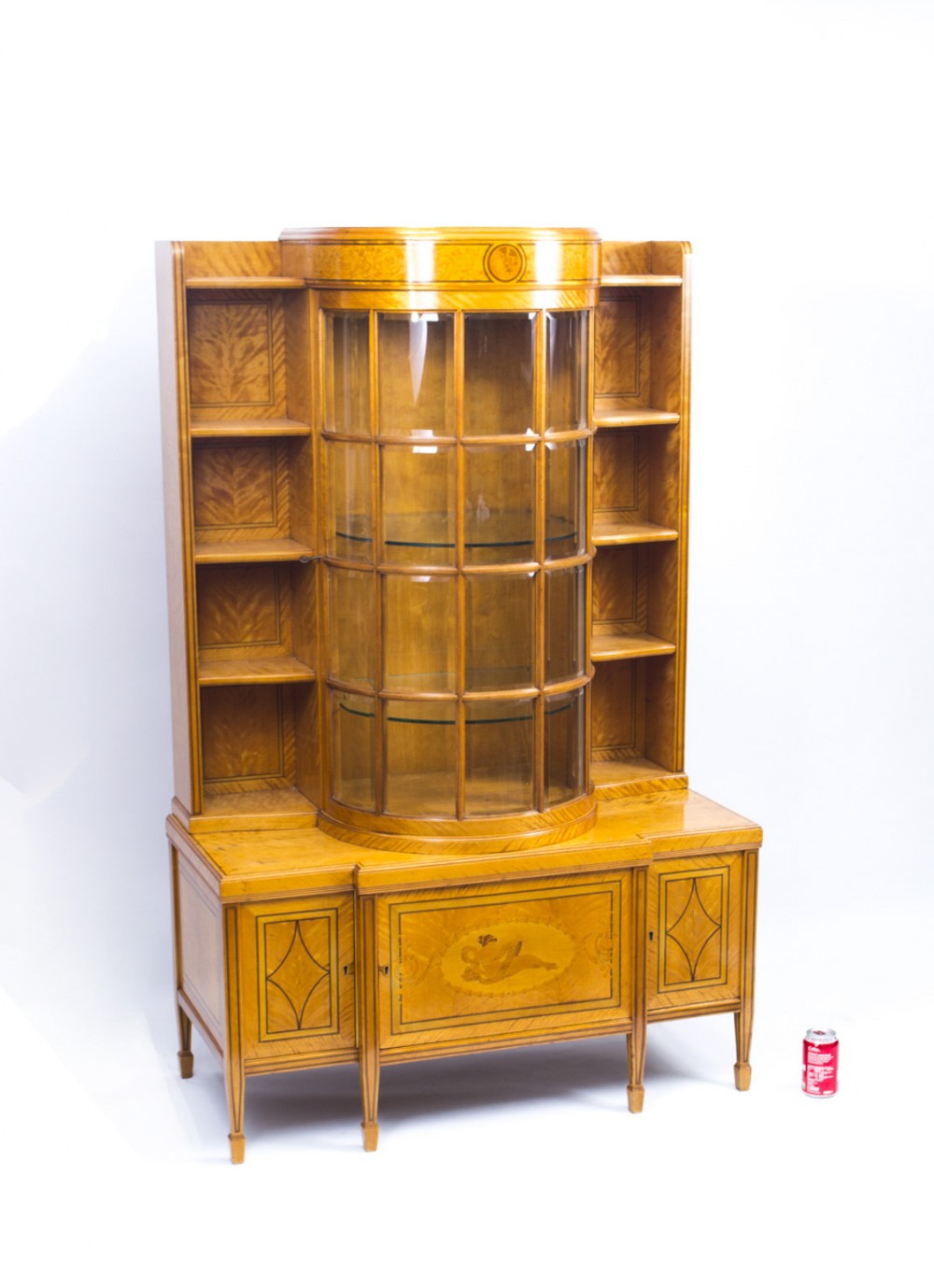
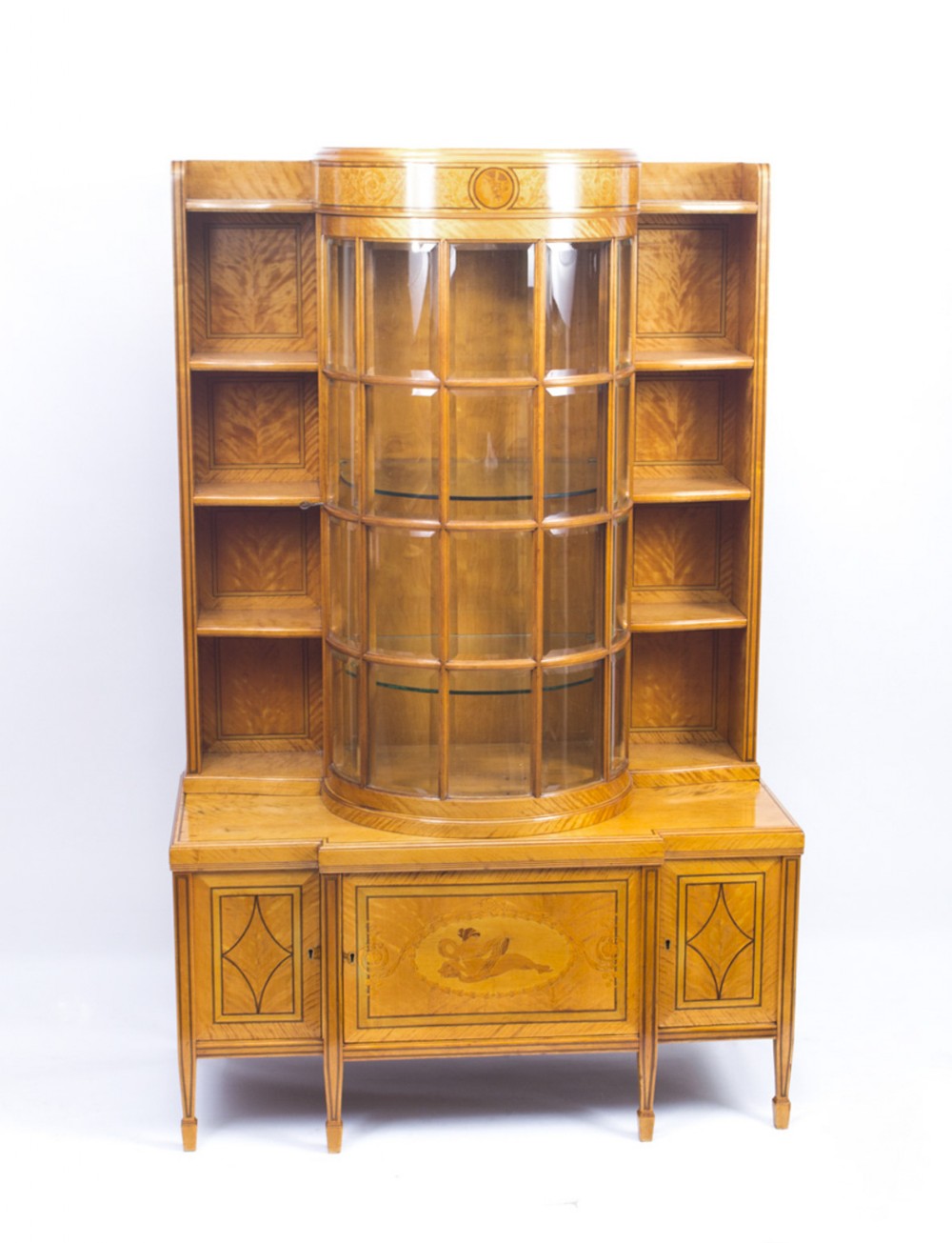
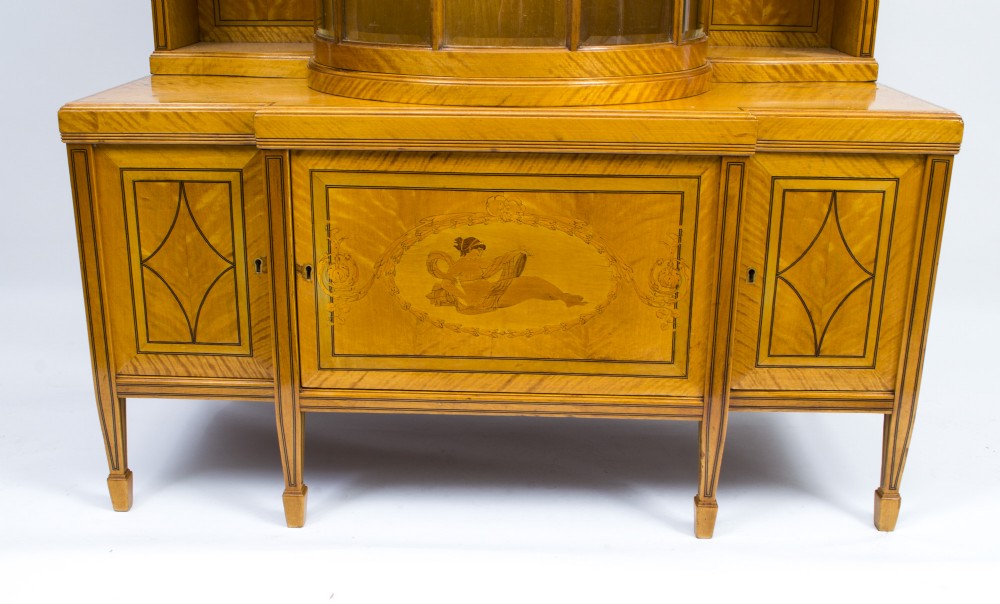
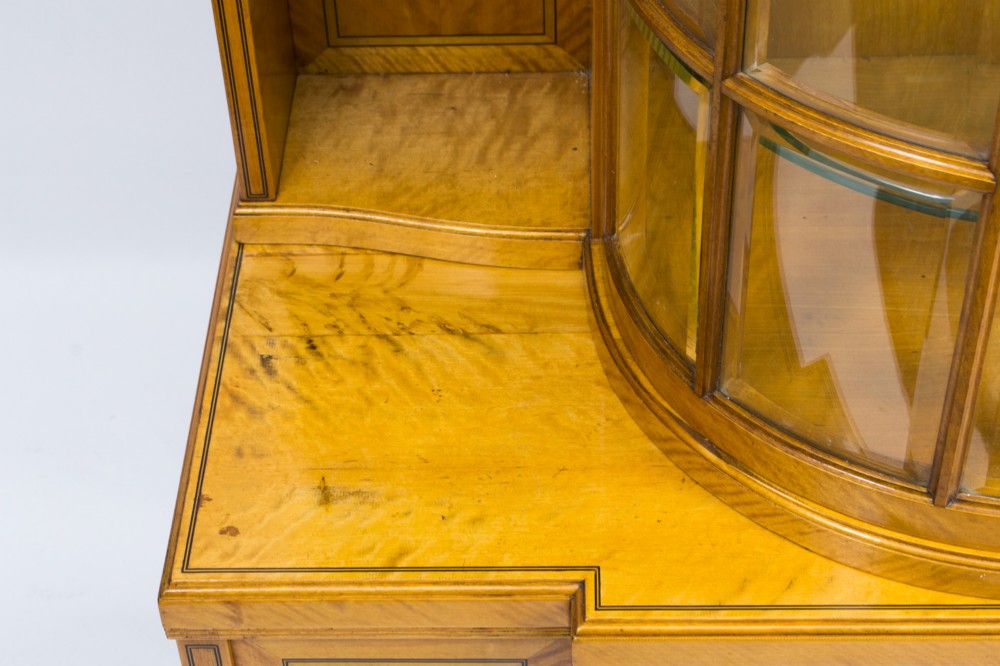
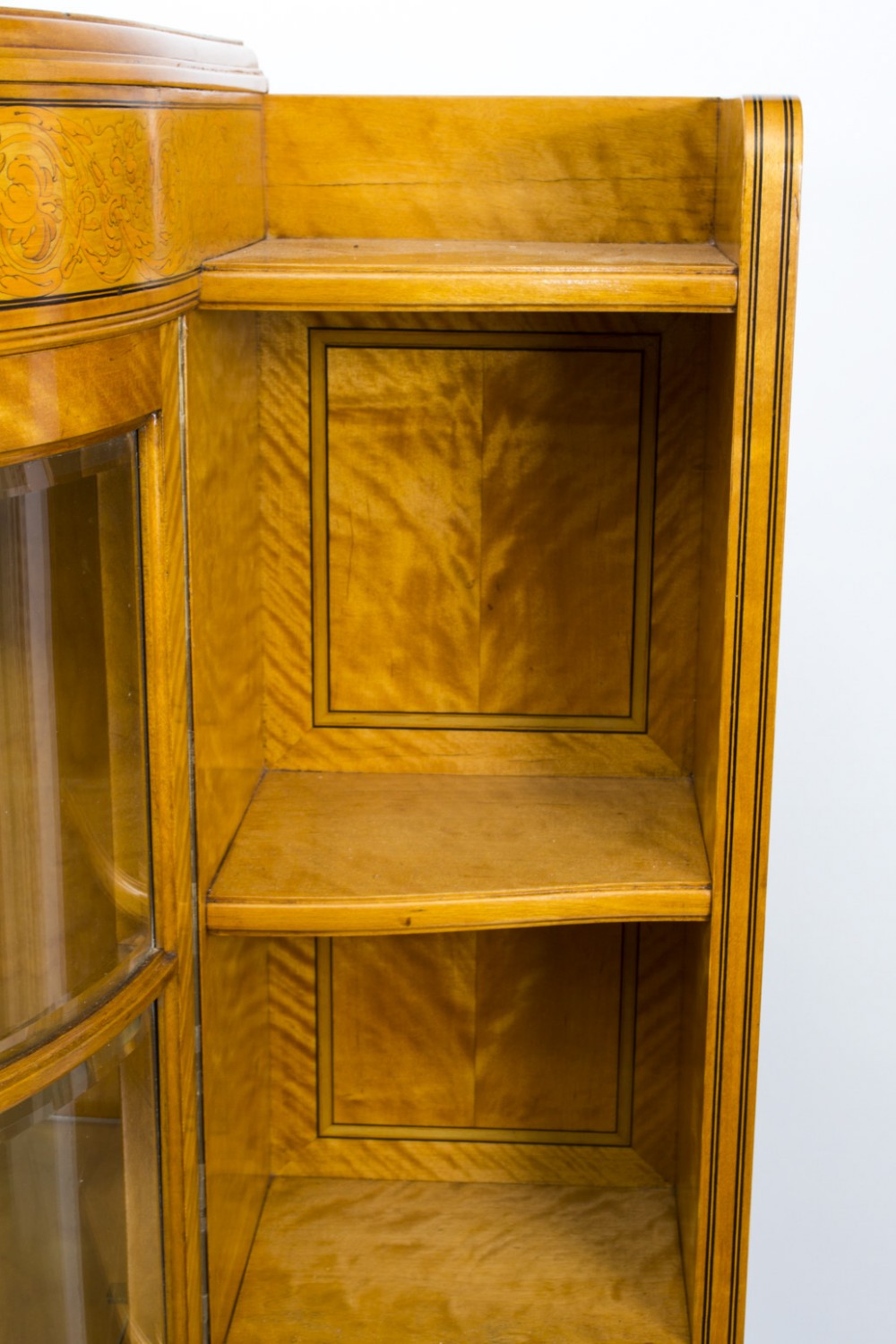
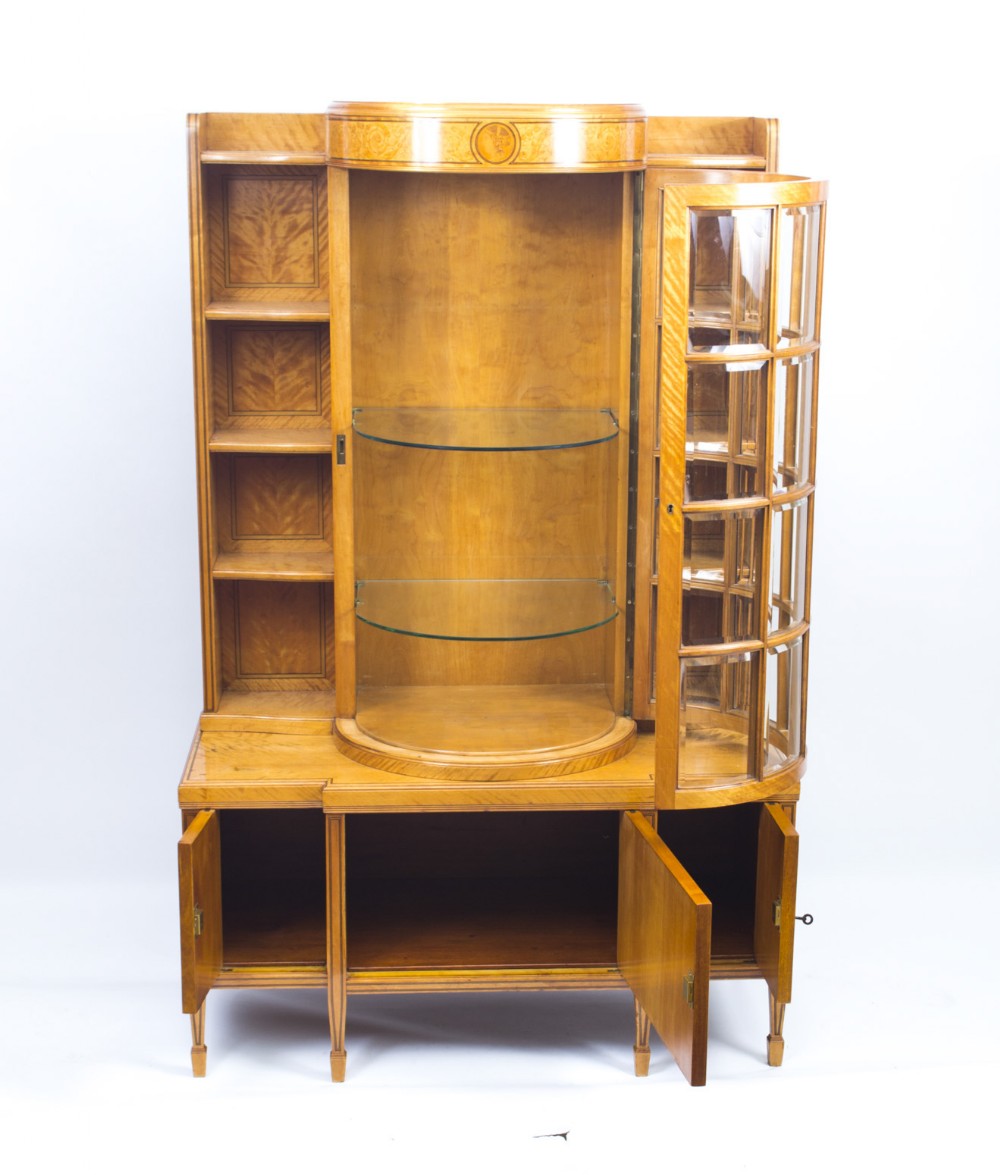
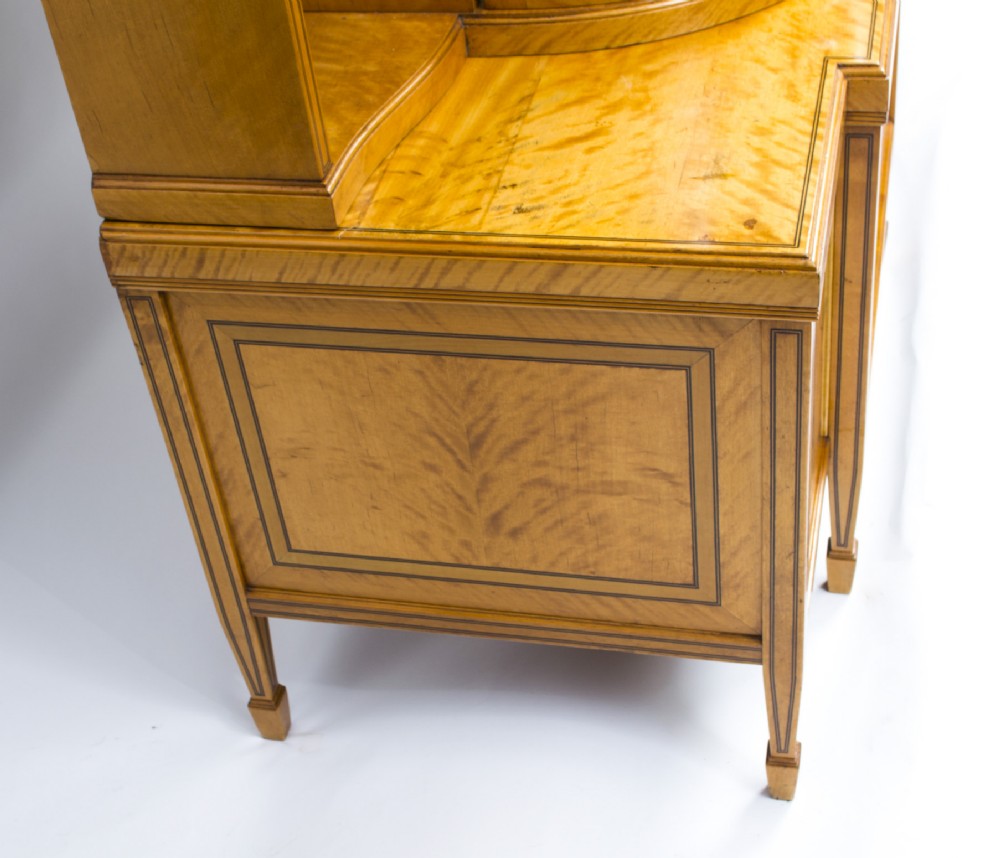
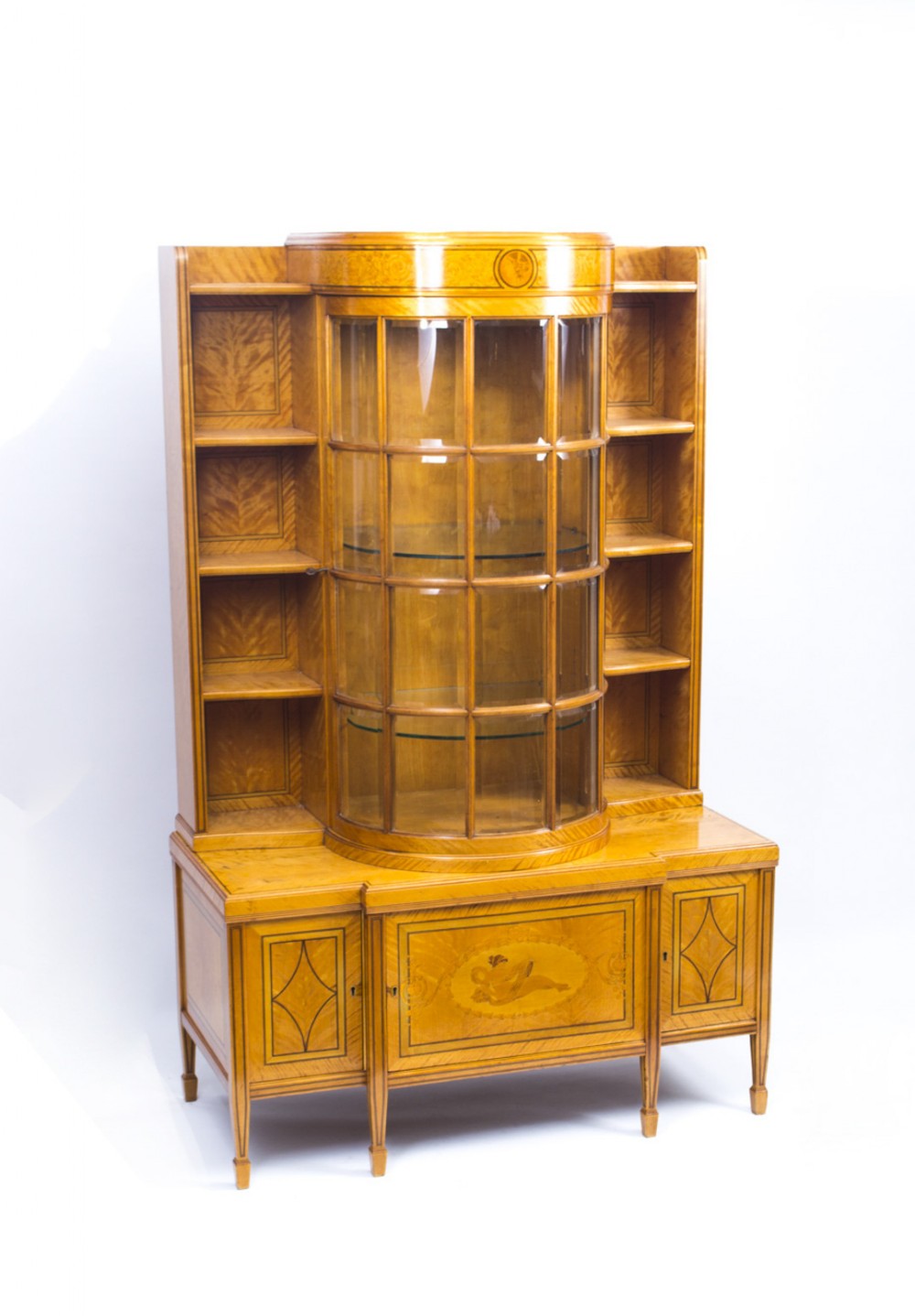
This is a superb antique late 19th century satinwood display cabinet, outlined throughout with boxwood and ebony stringing.
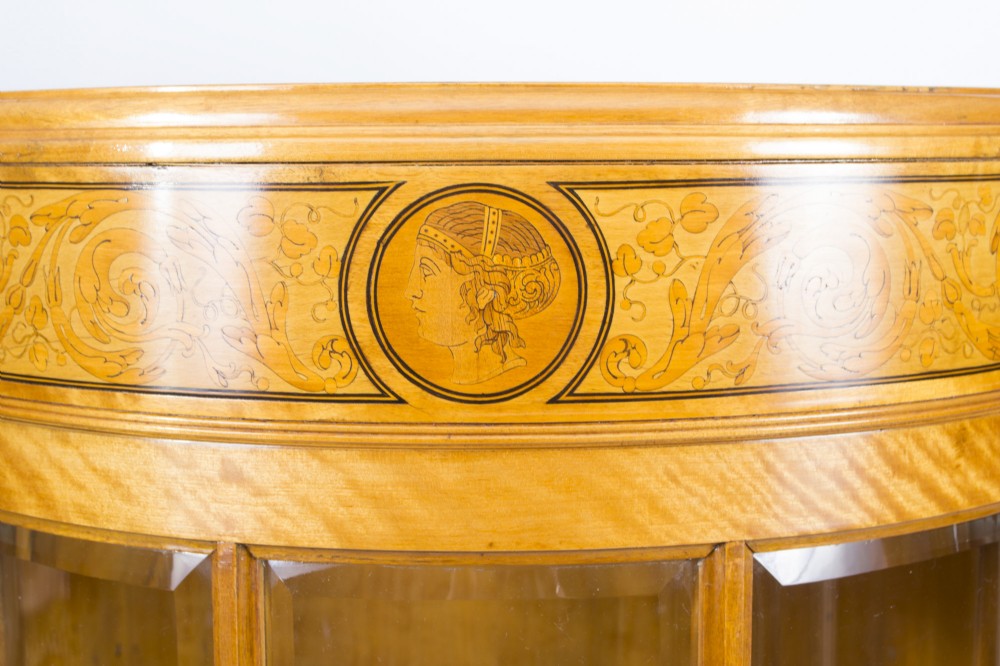
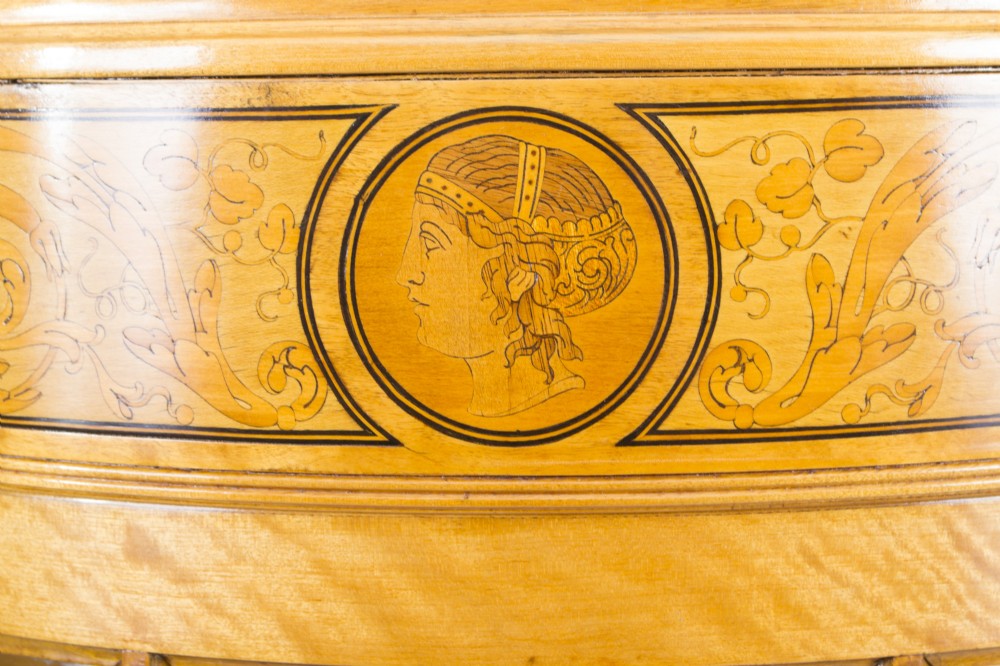
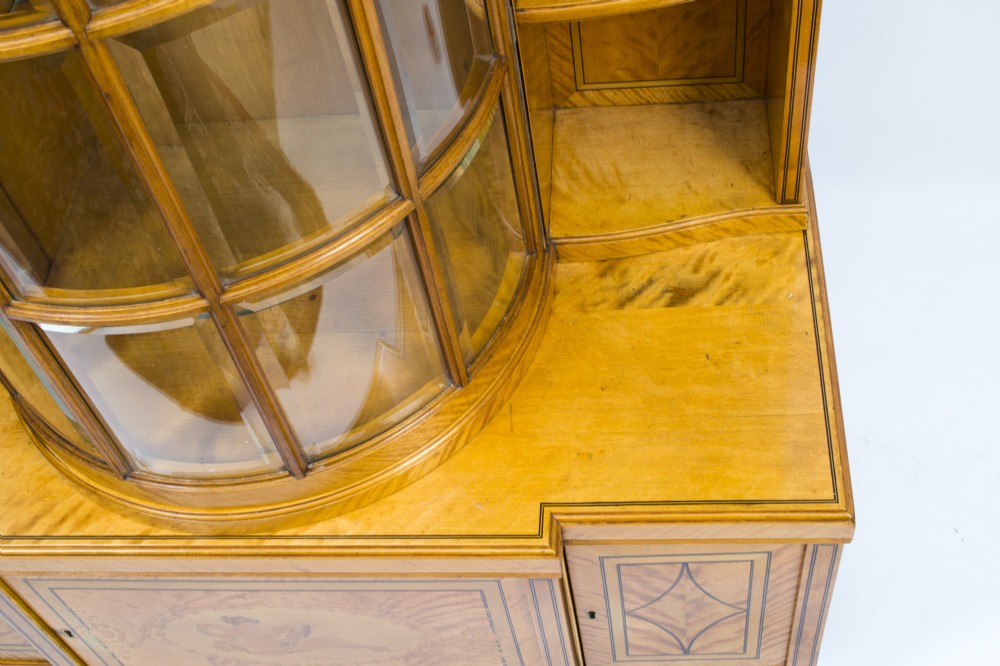
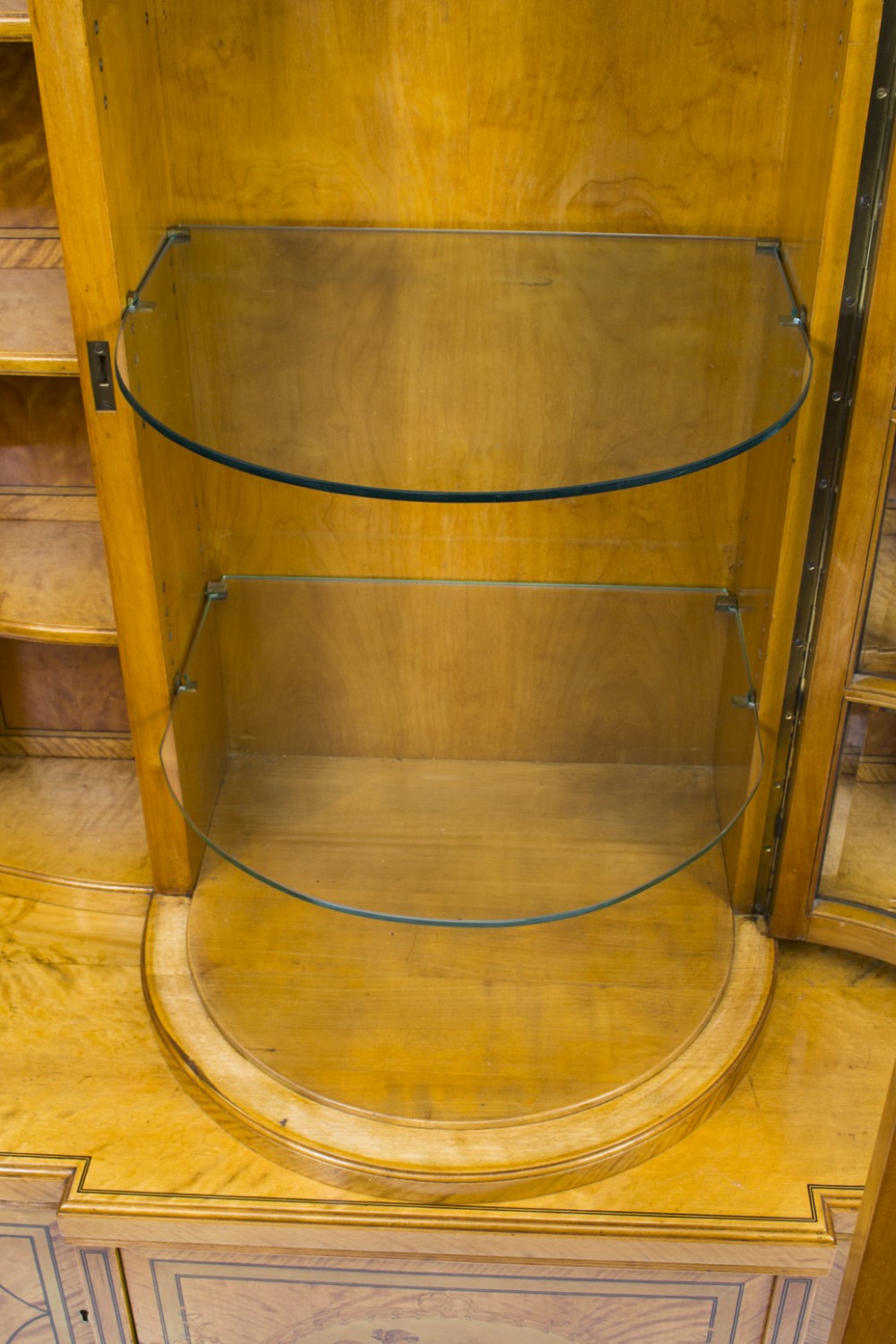
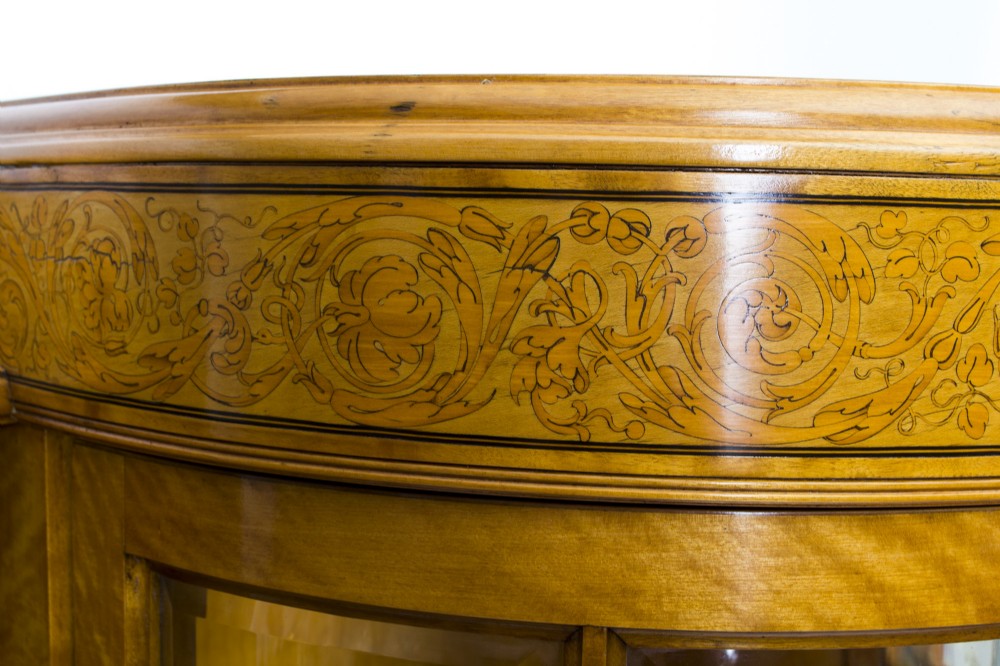
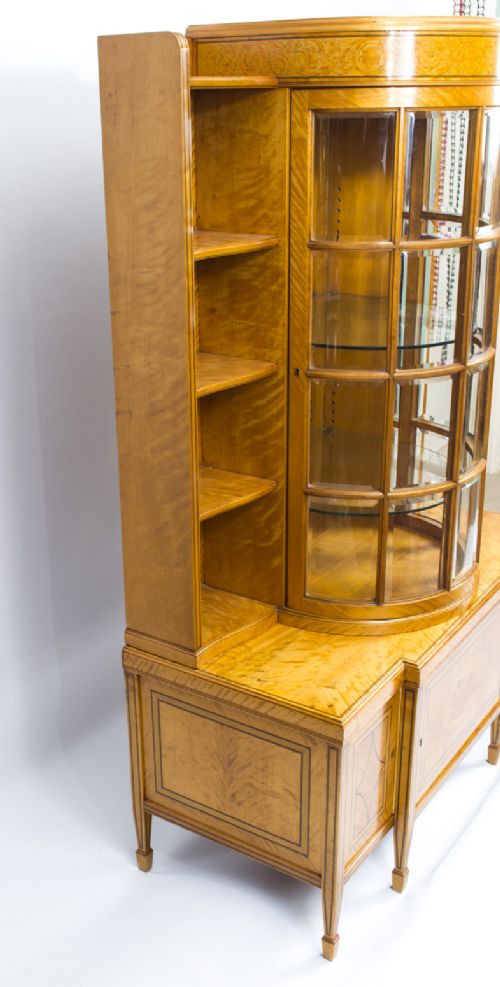
It has a decorative central bowed door with twenty bevelled glass panels, opening to reveal two adjustable glass shelves. The top frieze is beautifully inlaid with a central roundel with female head flanked by foliate arabesques.
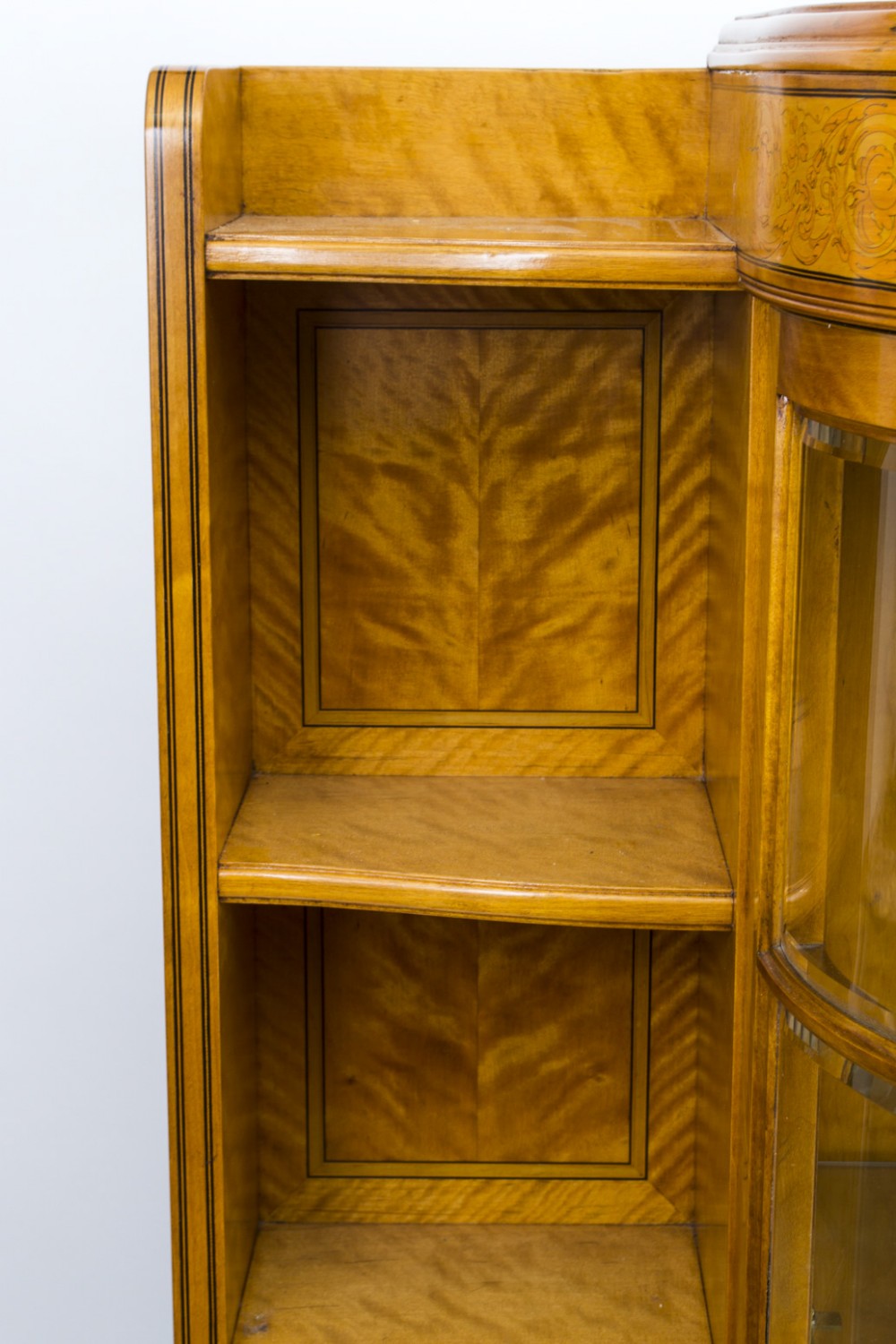
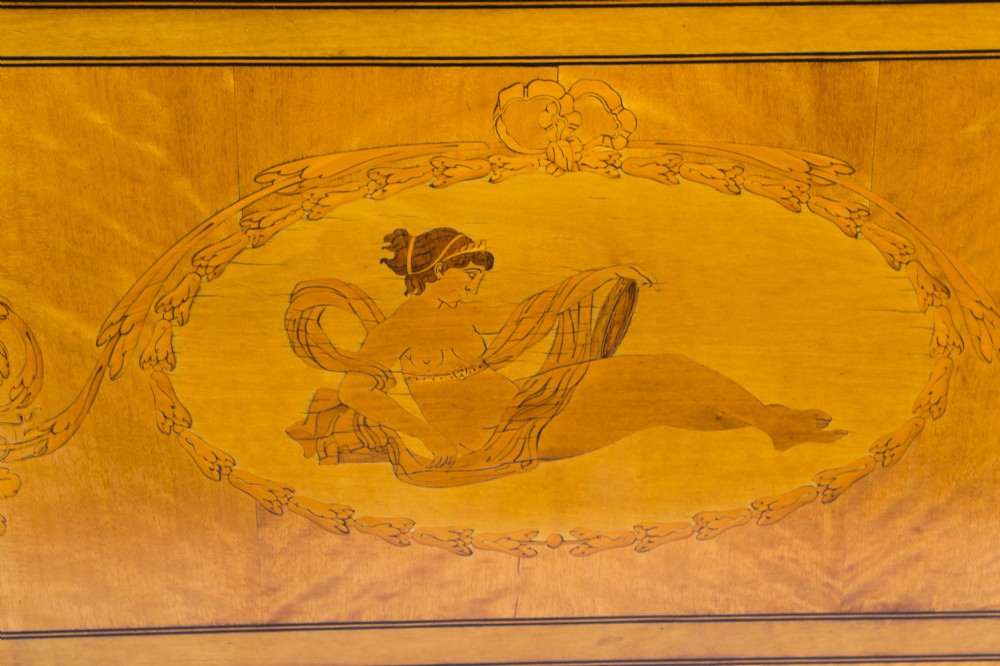
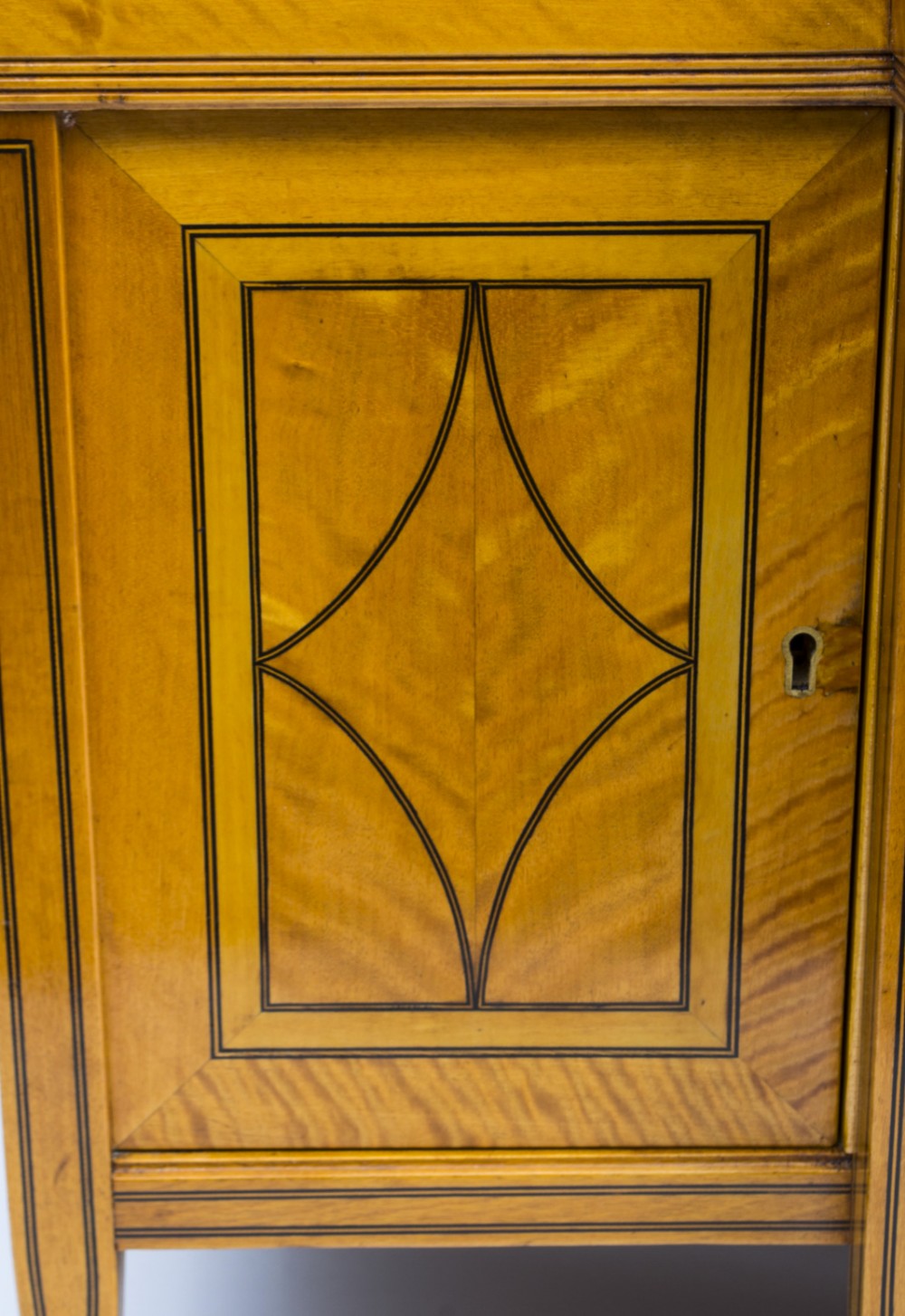
The sides shelved with butterfly veneered backs with boxwood and ebony stringing and the base fitted with a large central cupboard, the door inlaid with a ribbon tied oval and a reclining woman, flanked by a small cupboard on each side.
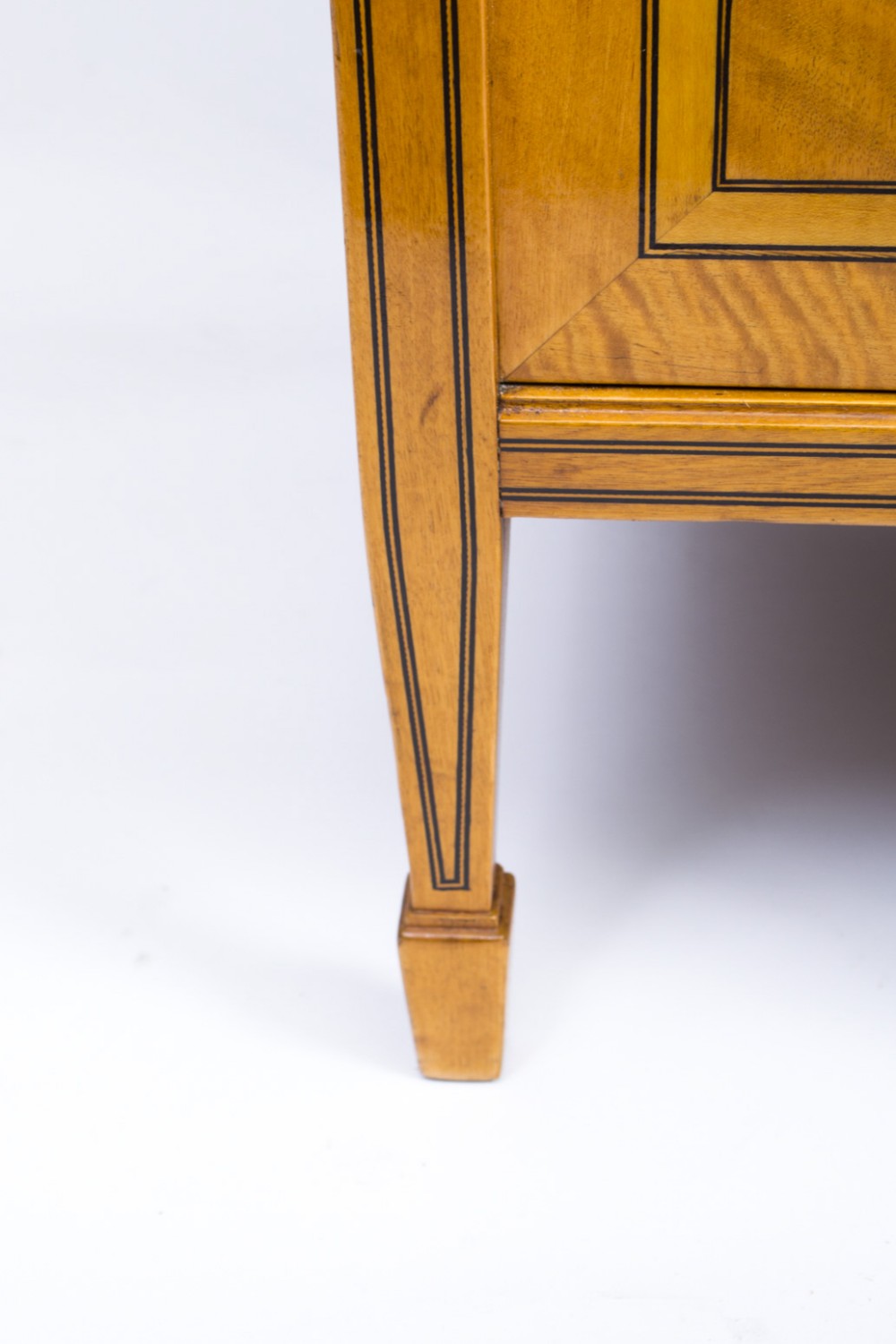
It stands on square tapered legs and is complete with working locks and keys.
The entire piece highlights the unique and truly exceptional pattern of the satinwood extremely well. It has masterfully executed black line ebony and boxwood inlaid decoration.
Condition:
In excellent condition having been beautifully restored in our workshops, please see photos for confirmation.
Dimensions in cm:
Height 153 x Width 97 x Depth 48
Dimensions in inches:
Height 60.2 x Width 38.2 x Depth 18.9
Satinwood
is a hard and durable wood with a satinlike sheen, much used in cabinetmaking, especially in marquetry. It comes from two tropical trees of the family Rutaceae (rue family). East Indian or Ceylon satinwood is the yellowish or dark-brown heartwood of Chloroxylon swietenia.
The lustrous, fine-grained, usually figured wood is used for furniture, cabinetwork, veneers, and backs of brushes. West Indian satinwood, sometimes called yellow wood, is considered superior. It is the golden yellow, lustrous, even-grained wood found in the Florida Keys and the West Indies.
It has long been valued for furniture. It is also used for musical instruments, veneers, and other purposes. Satinwood is classified in the division Magnoliophyta, class Magnoliopsida, order Sapindales, family Rutaceae.
Our reference: 07184