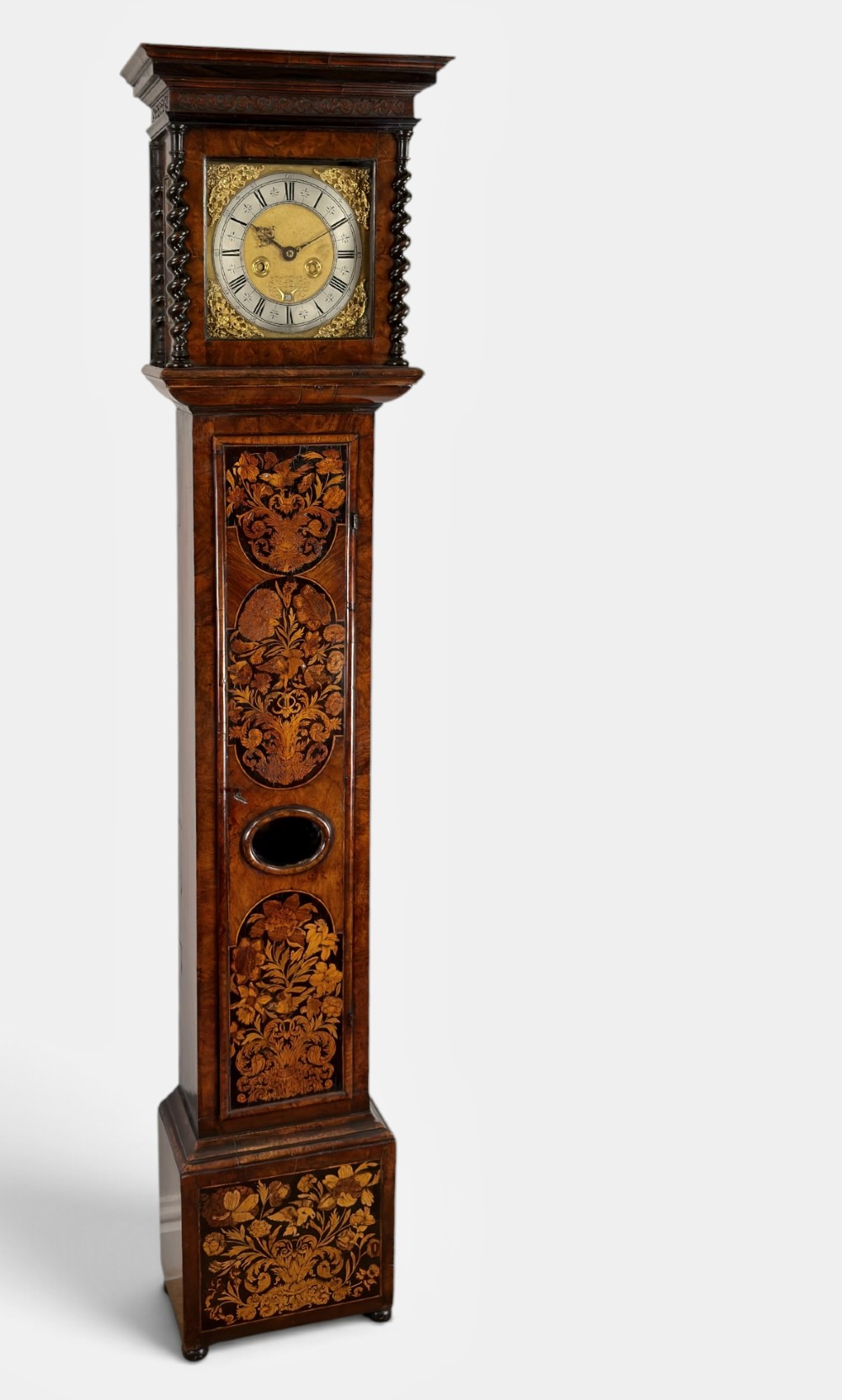
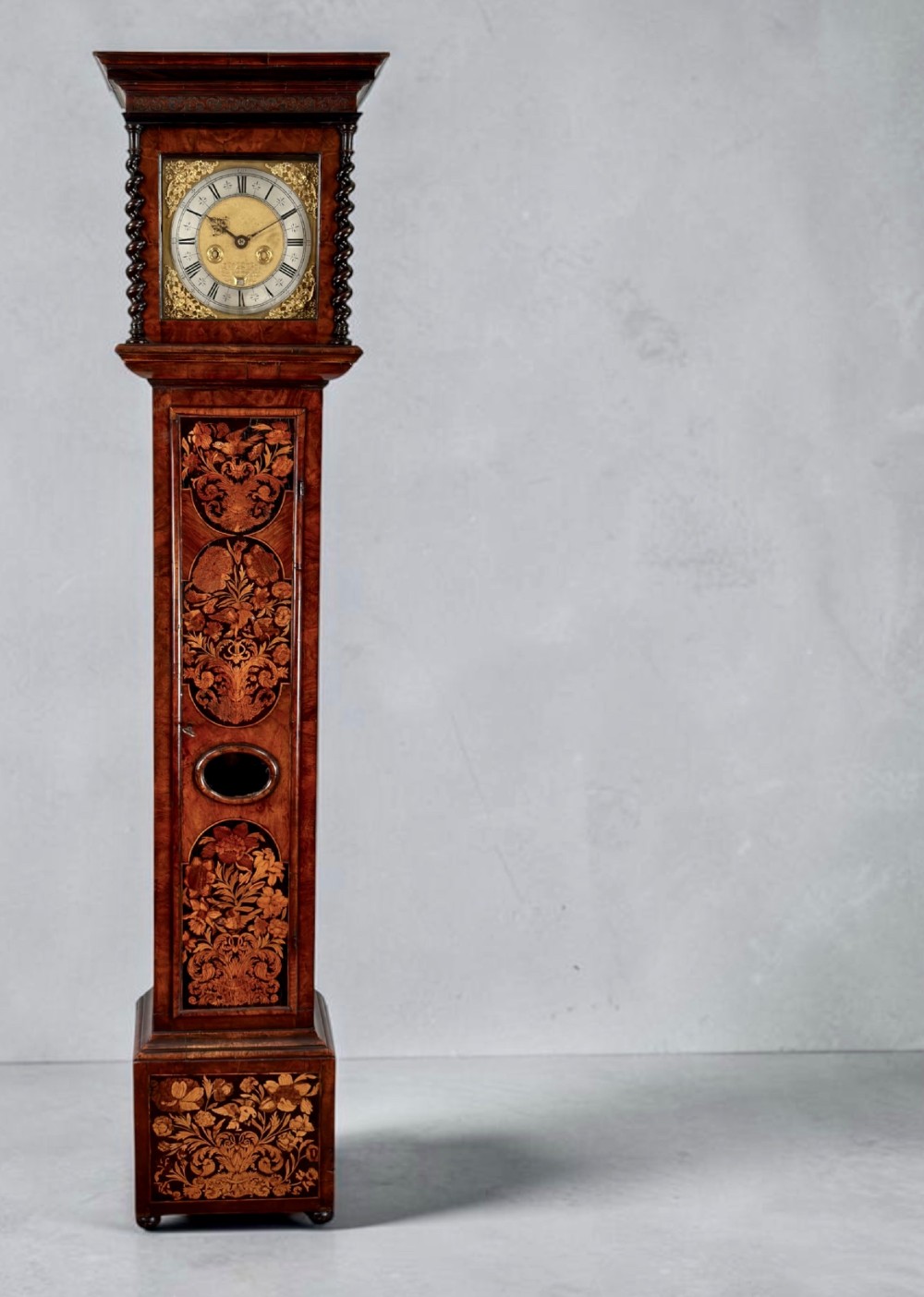
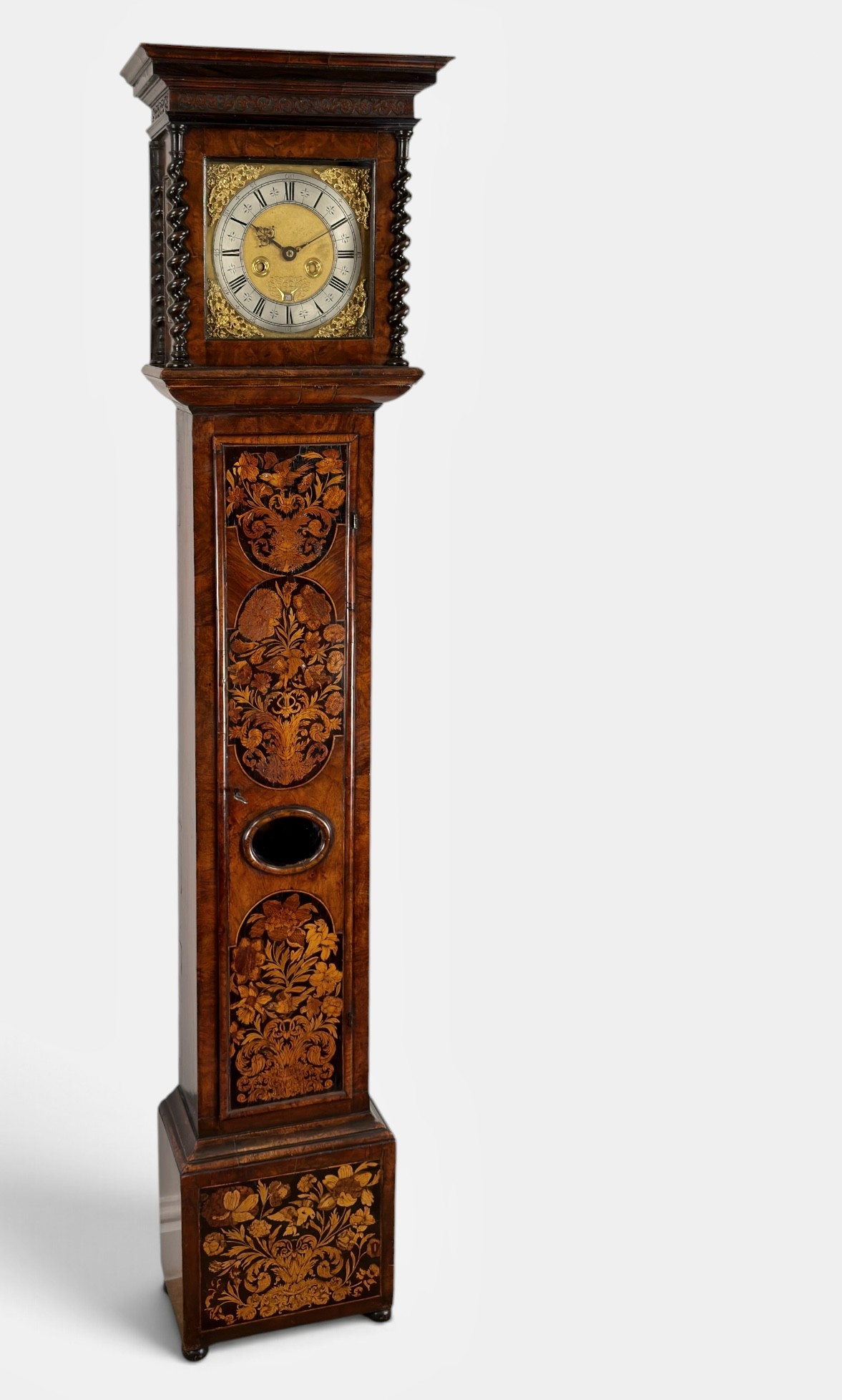
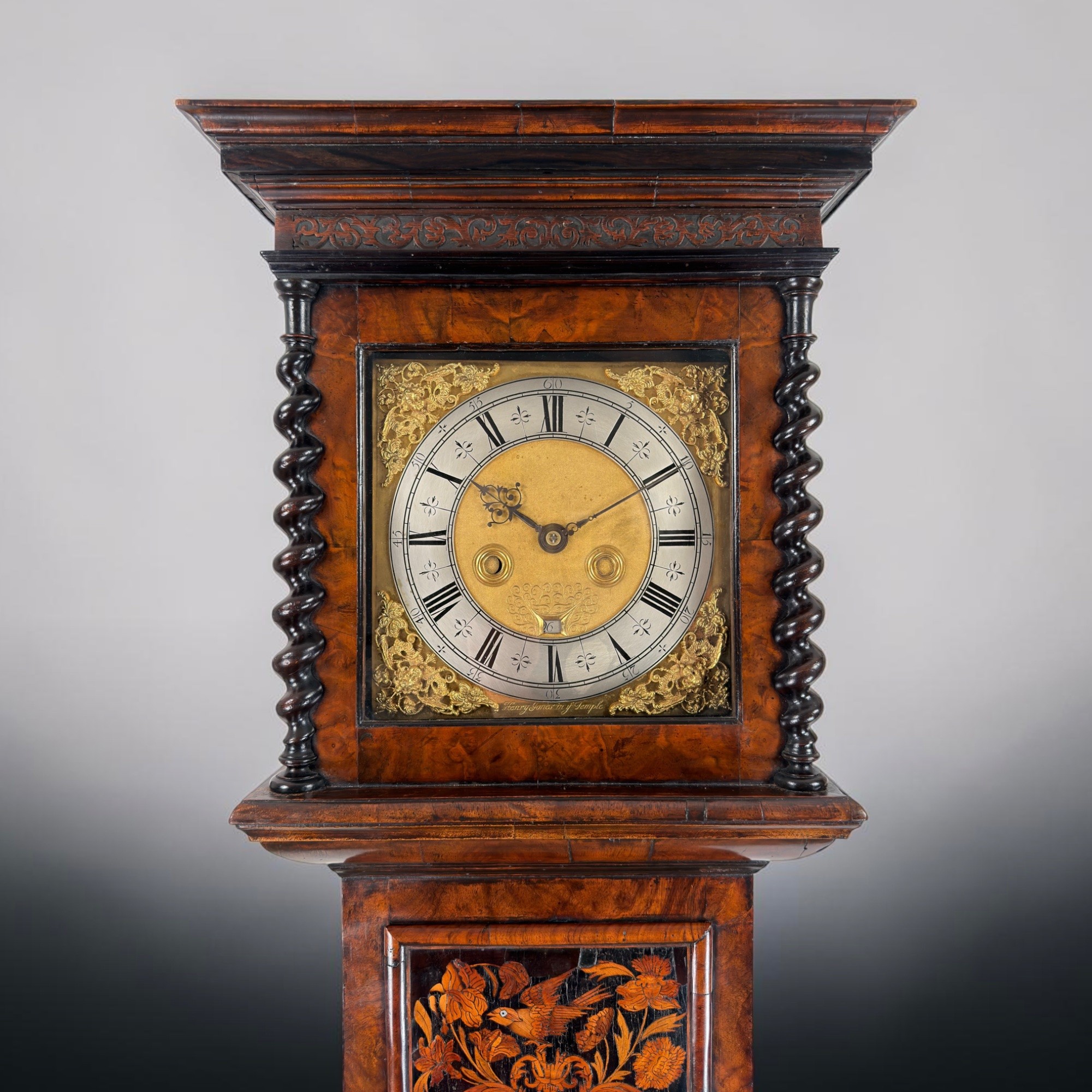
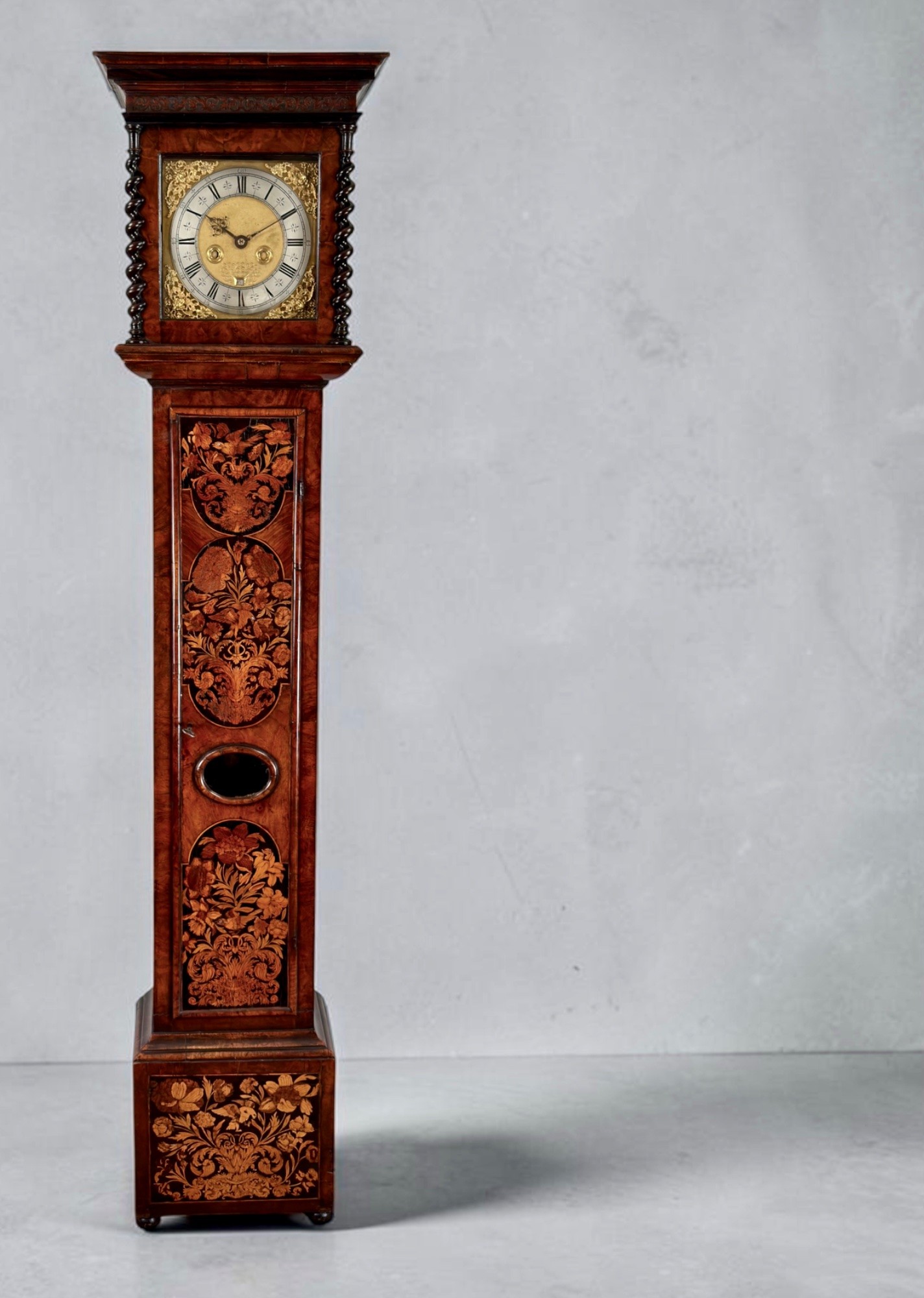
An exceptional and highly decorative William & Mary walnut and floral marquetry longcase clock by Henry Jones of London.
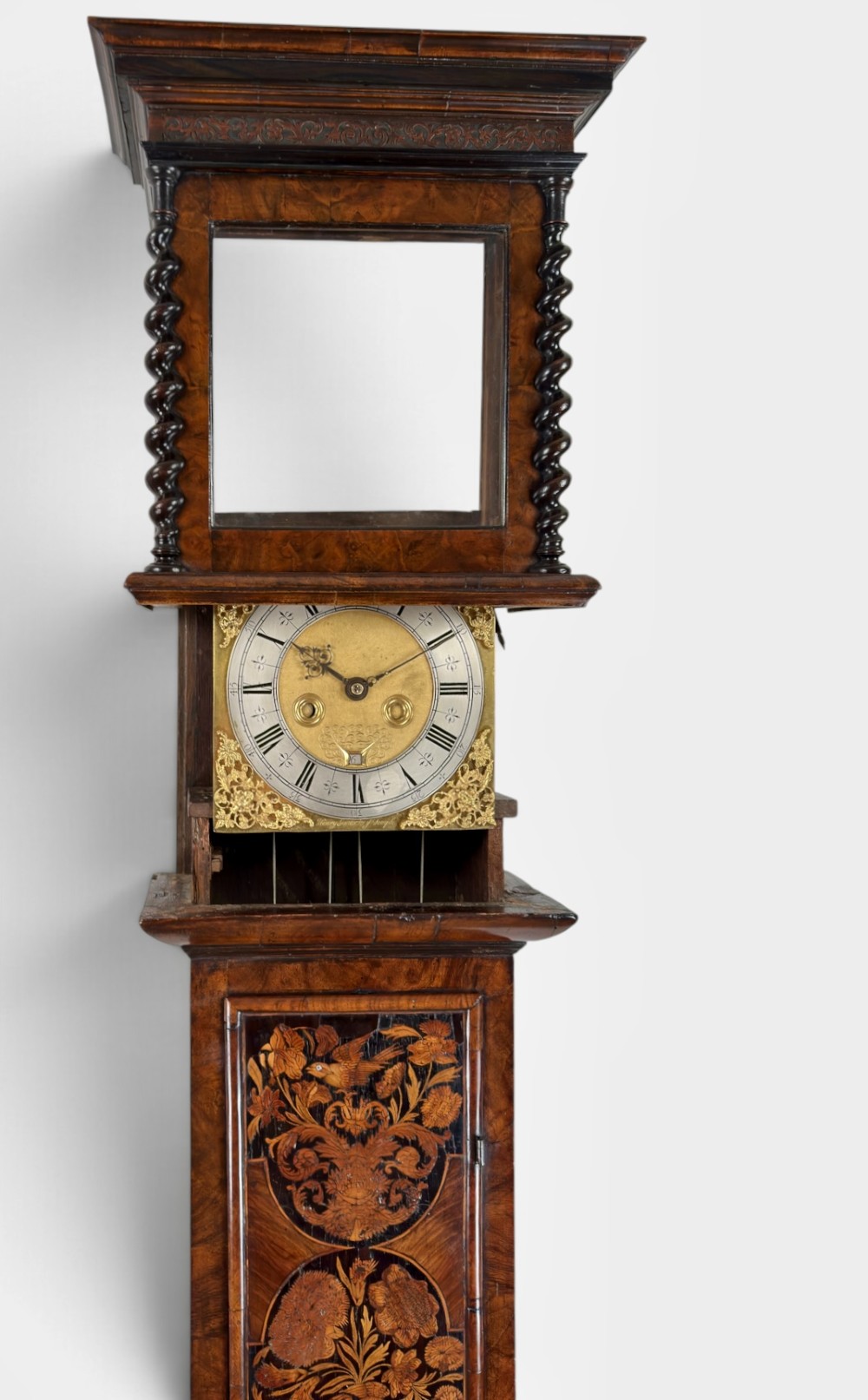
The 8 day duration, six-pillar London quality movement incorporates bolt-and-shutter maintaining power and strikes the hours on a single bell using an external countwheel mechanism.
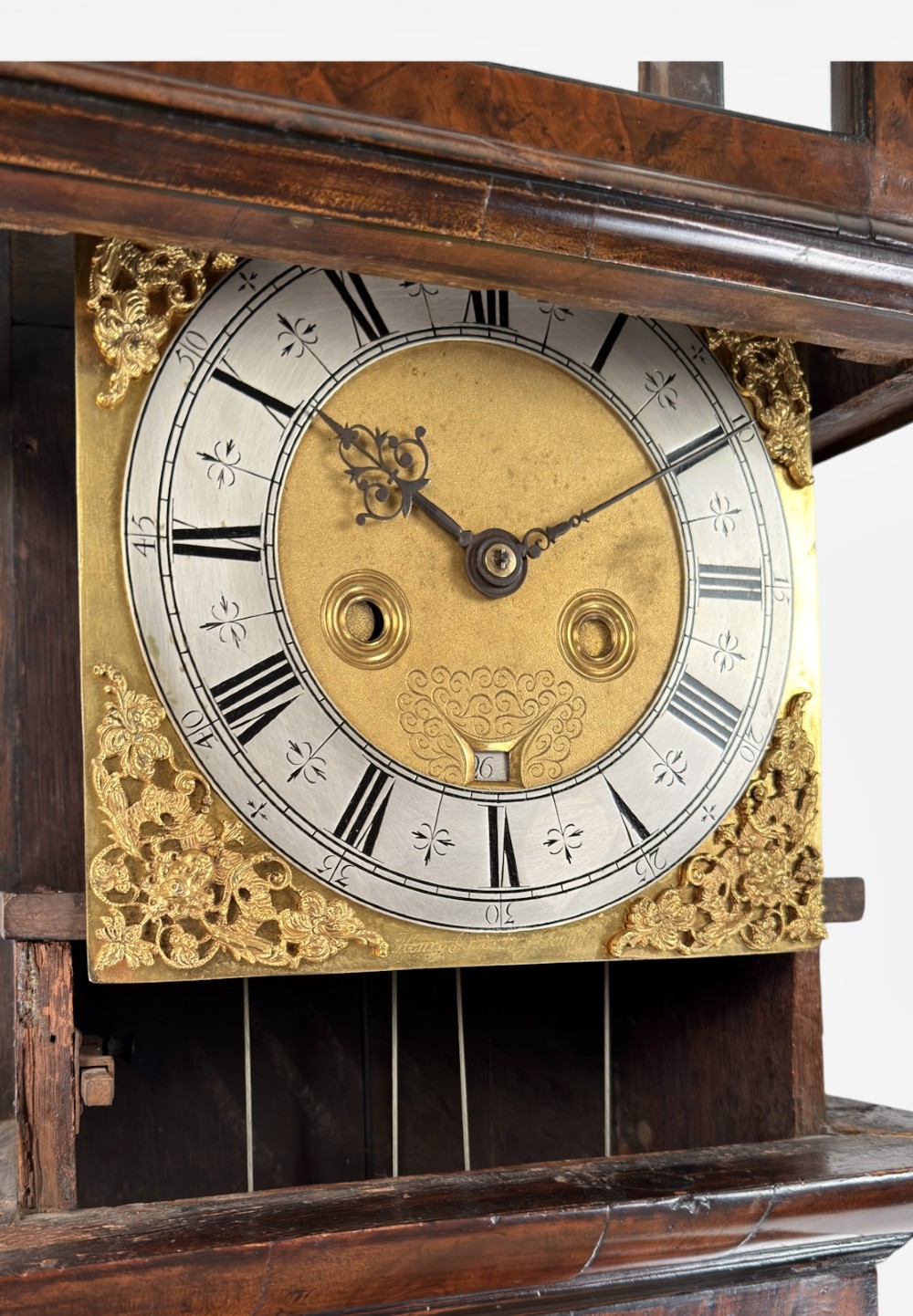
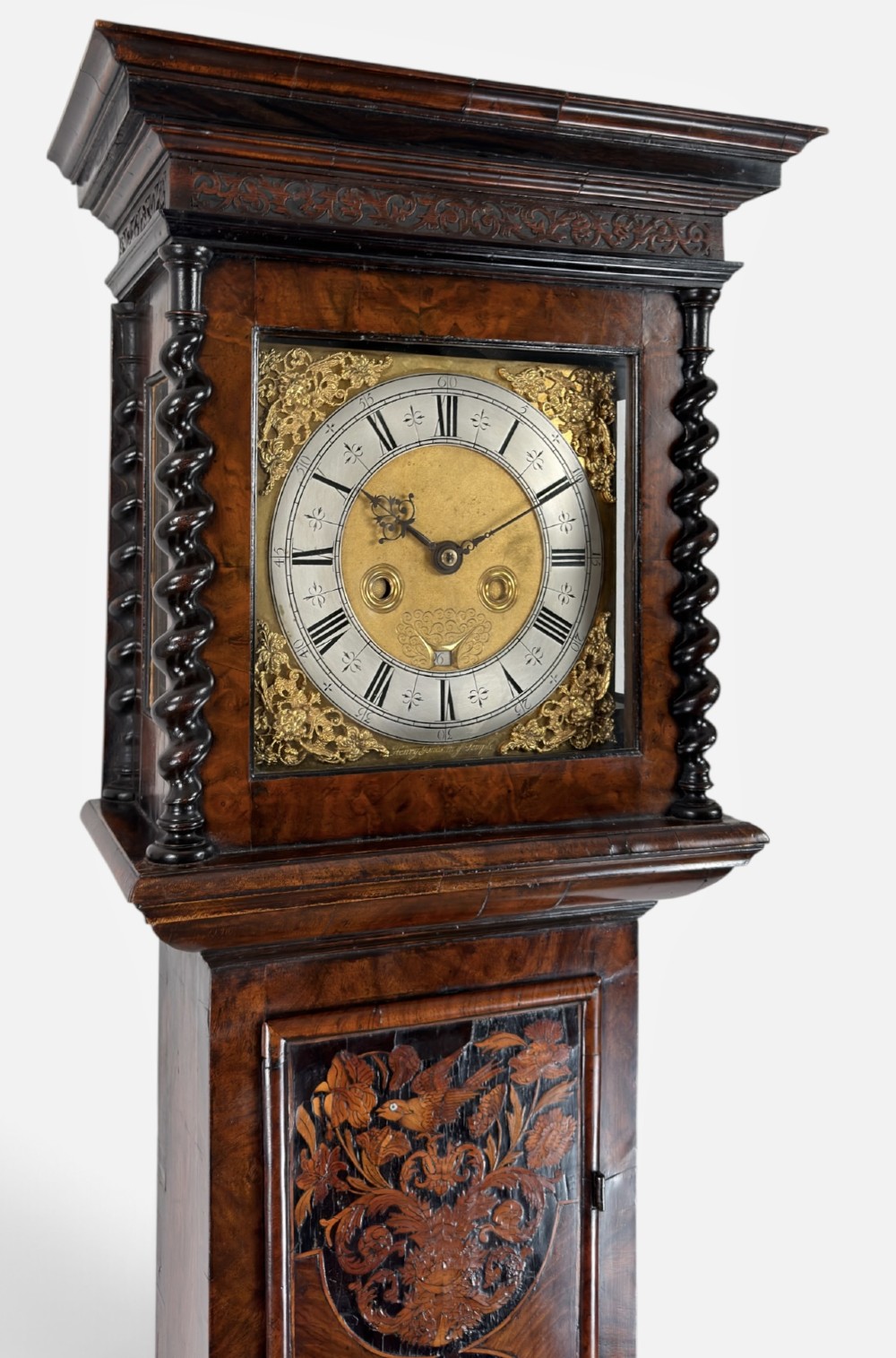
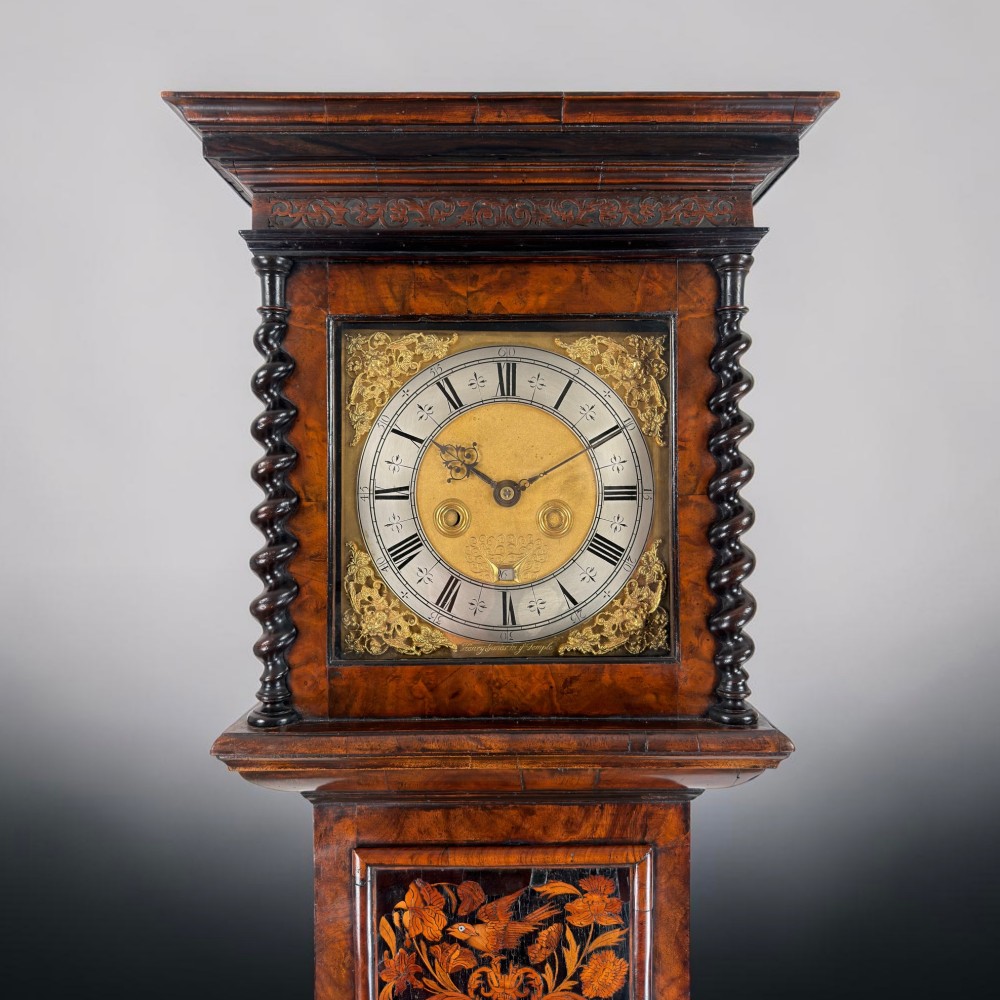
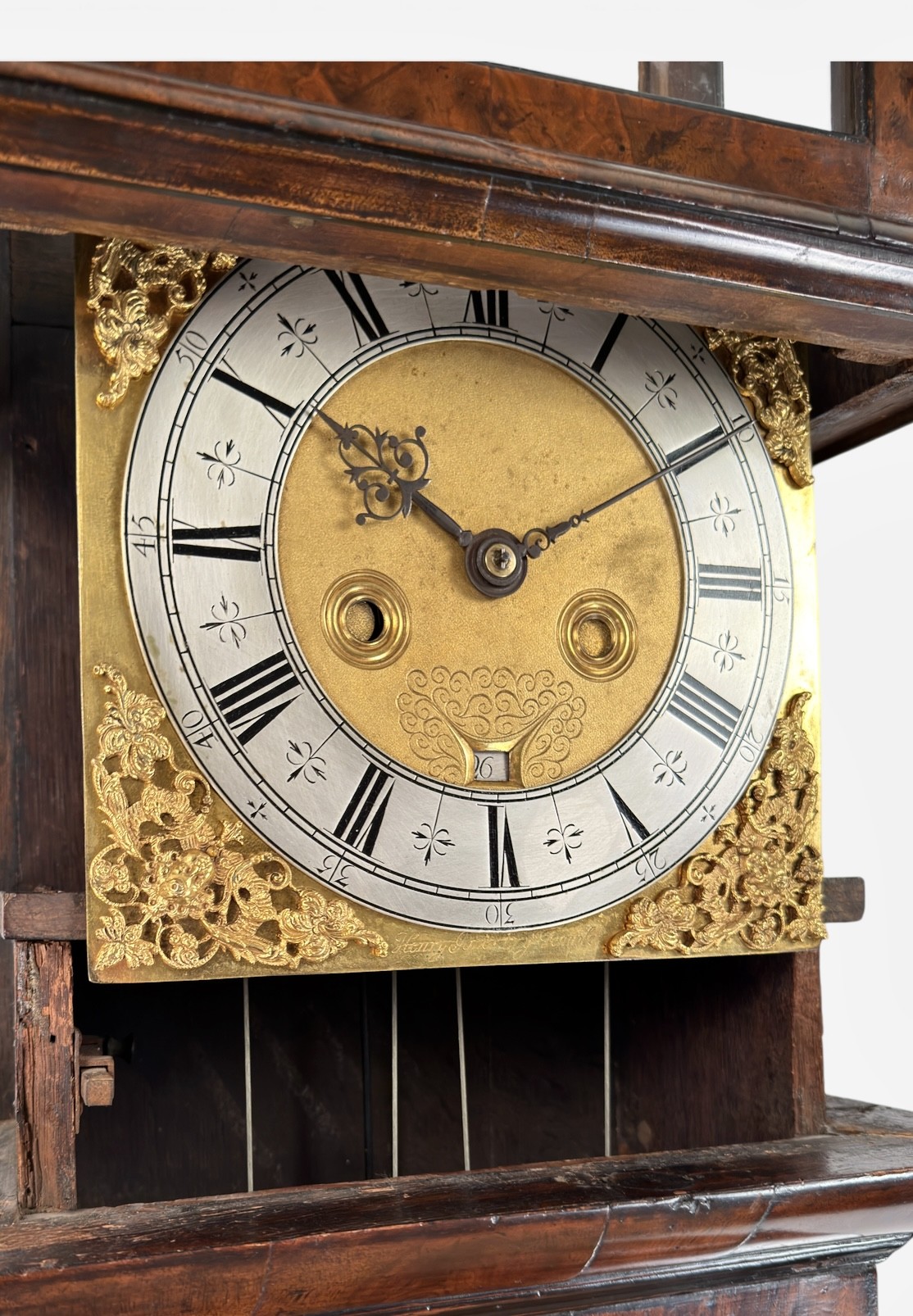
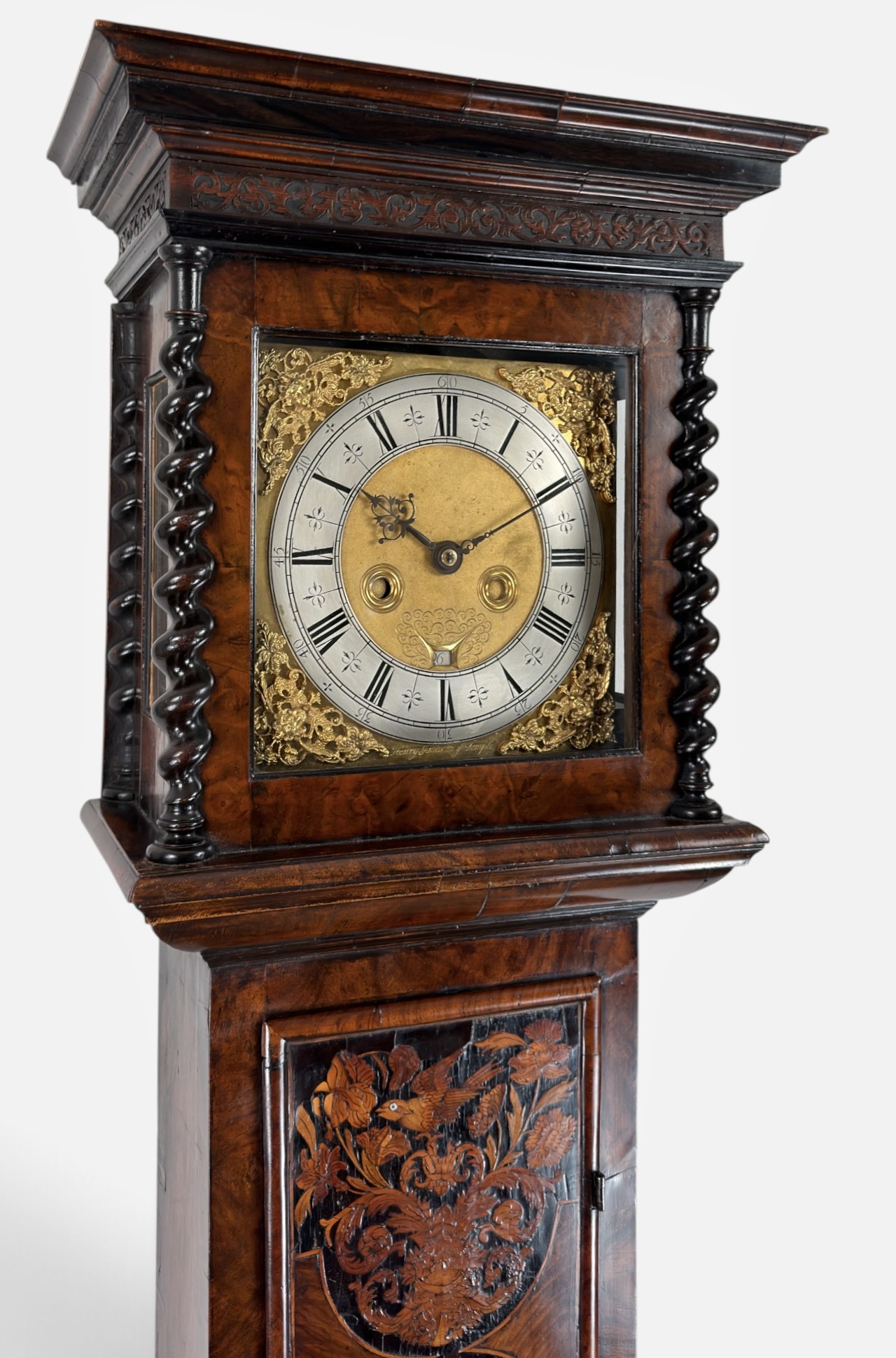
The 9 3/4 inch square brass dial features a separate silvered brass chapter ring with Roman hour numerals, fleur-de-lys half-hour markers, and outer Arabic five-minute numerals. The finely matted brass center incorporates ringed winding holes, a square date aperture above the VI framed by delicate foliage engraving, and a signature engraved along the lower edge of the dial. Ornate pierced blued-steel hands and cast gilt-brass winged cherub corner spandrels complete the dial.
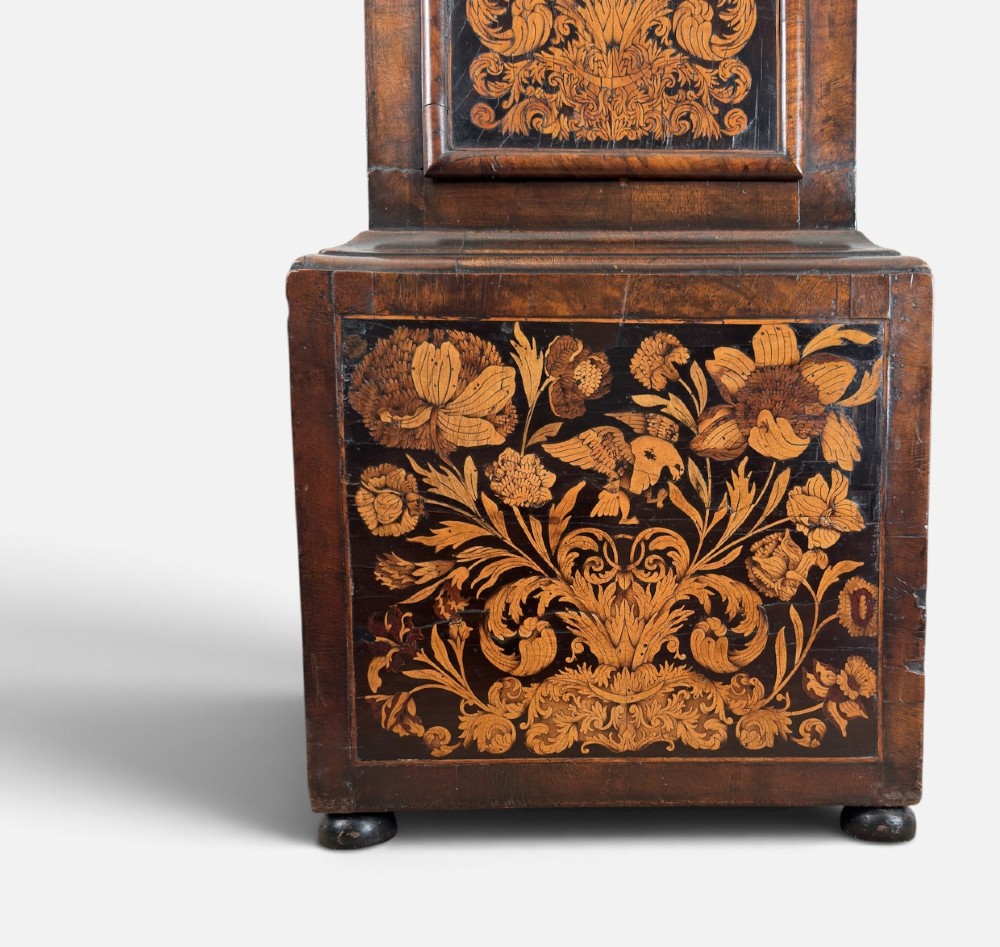
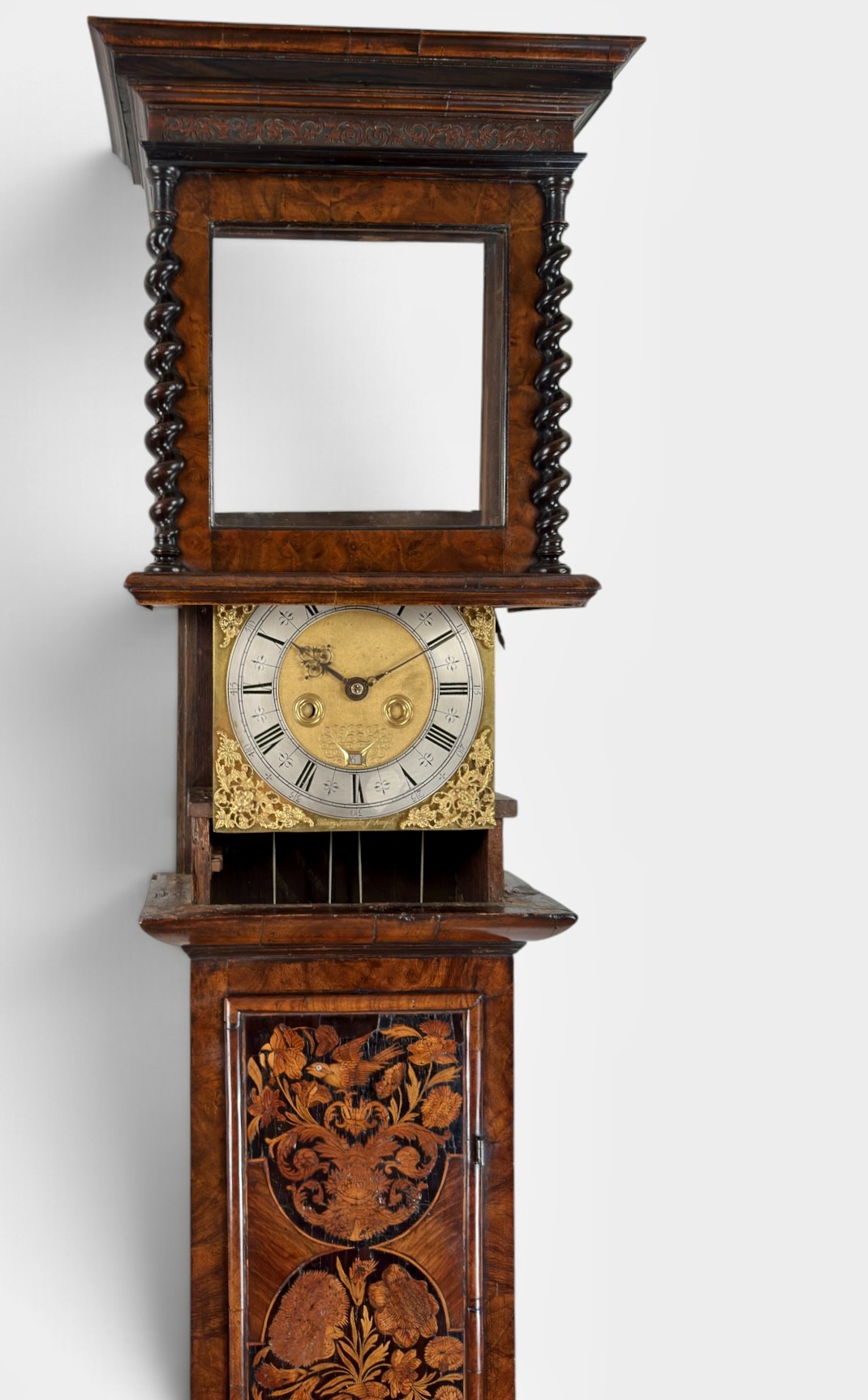
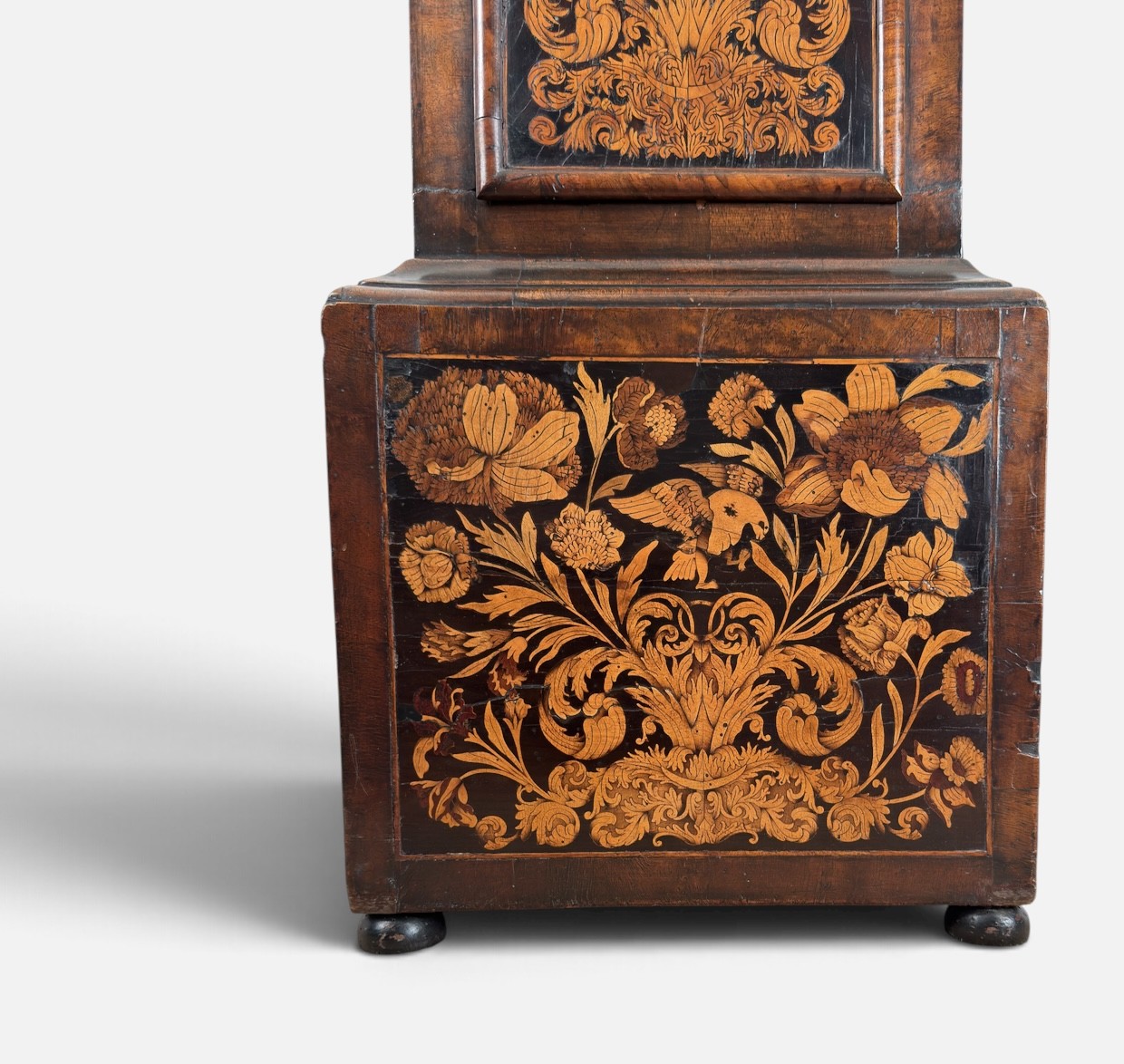
The richly figured walnut case is lavishly inlaid with panels of intricate floral marquetry depicting scrolling foliage, carnations, tulips, and perched birds set within reserves on an ebonised ground. The full-length moulded trunk door displays three vertical marquetry reserves and an oval lenticle glass to view the swinging pendulum bob. The square plinth base is similarly decorated with a large floral marquetry panel and rests on turned bun feet. The flat-topped rising hood is flanked by ebonised barley-twist columns and surmounted by finely pierced foliate fretwork on both the front elevation and sides.
Height: 6ft 6.5 inches
The movement is currently in working order, but it will require a full service before delivery. It will then be guaranteed for 3 years. The case also requires some minimal restoration before delivery.
The Maker Henry Jones (circa 1632–1695) stands among the most eminent English clockmakers of the late 17th century. Arriving in London from Hampshire in 1654, he was initially apprenticed to Benjamin Hill before transferring to the prestigious workshop of Edward East, clockmaker to King Charles I and Charles II. Jones earned his freedom in the Worshipful Company of Clockmakers in 1663 and later established his own celebrated premises in Inner Temple Lane.
Renowned for his technical mastery and exquisite craftsmanship, he supplied timepieces to King Charles II and rose through the guild ranks to serve as Warden before being elected Master of the Clockmakers' Company in 1691.
Surviving longcase clocks from his workshop are prized by collectors for their early engineering and refined London casework.