Rob Hall Antiques has dated this Elizabethan Carved Oak Chest to the 16th Century.
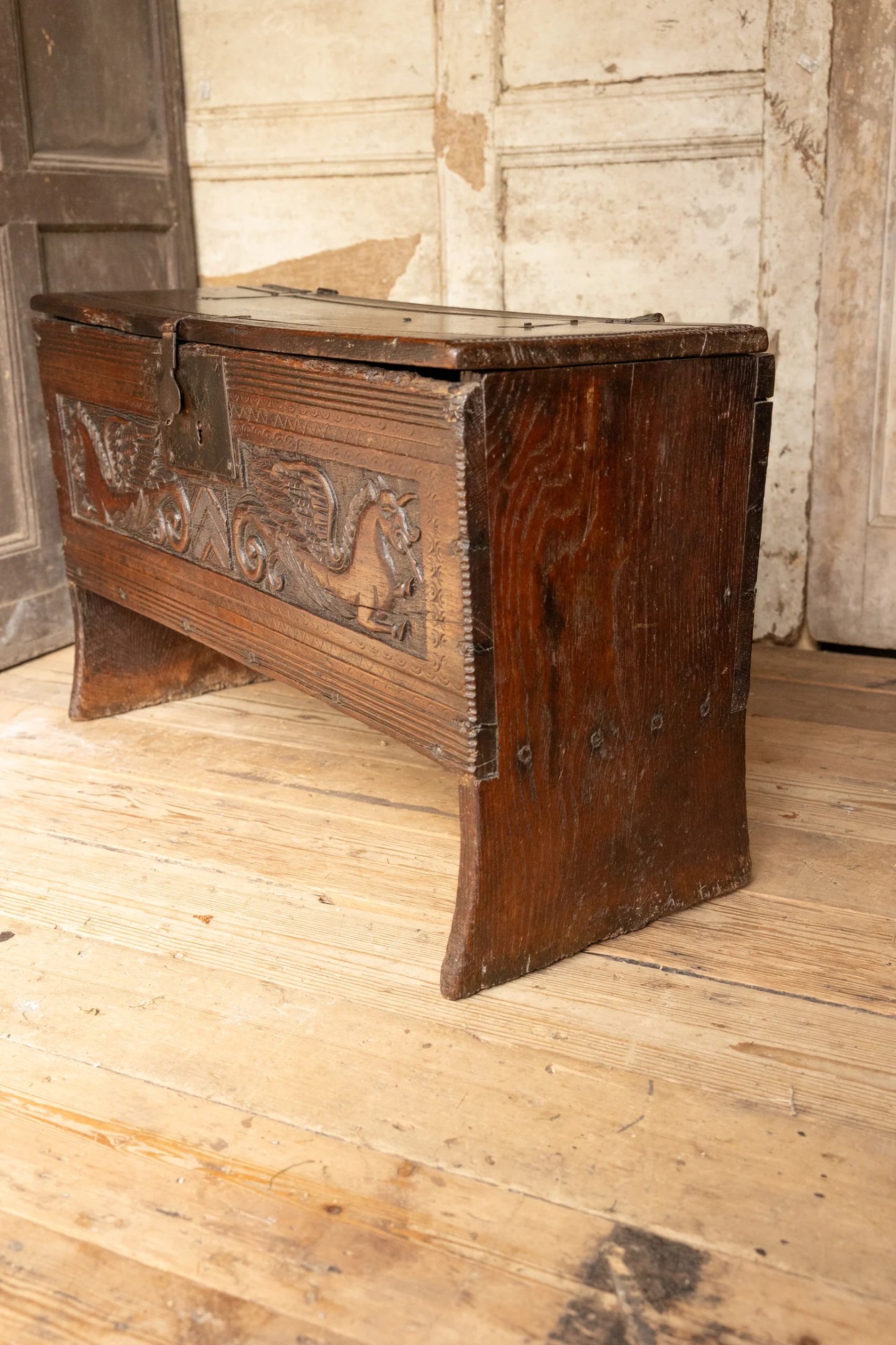
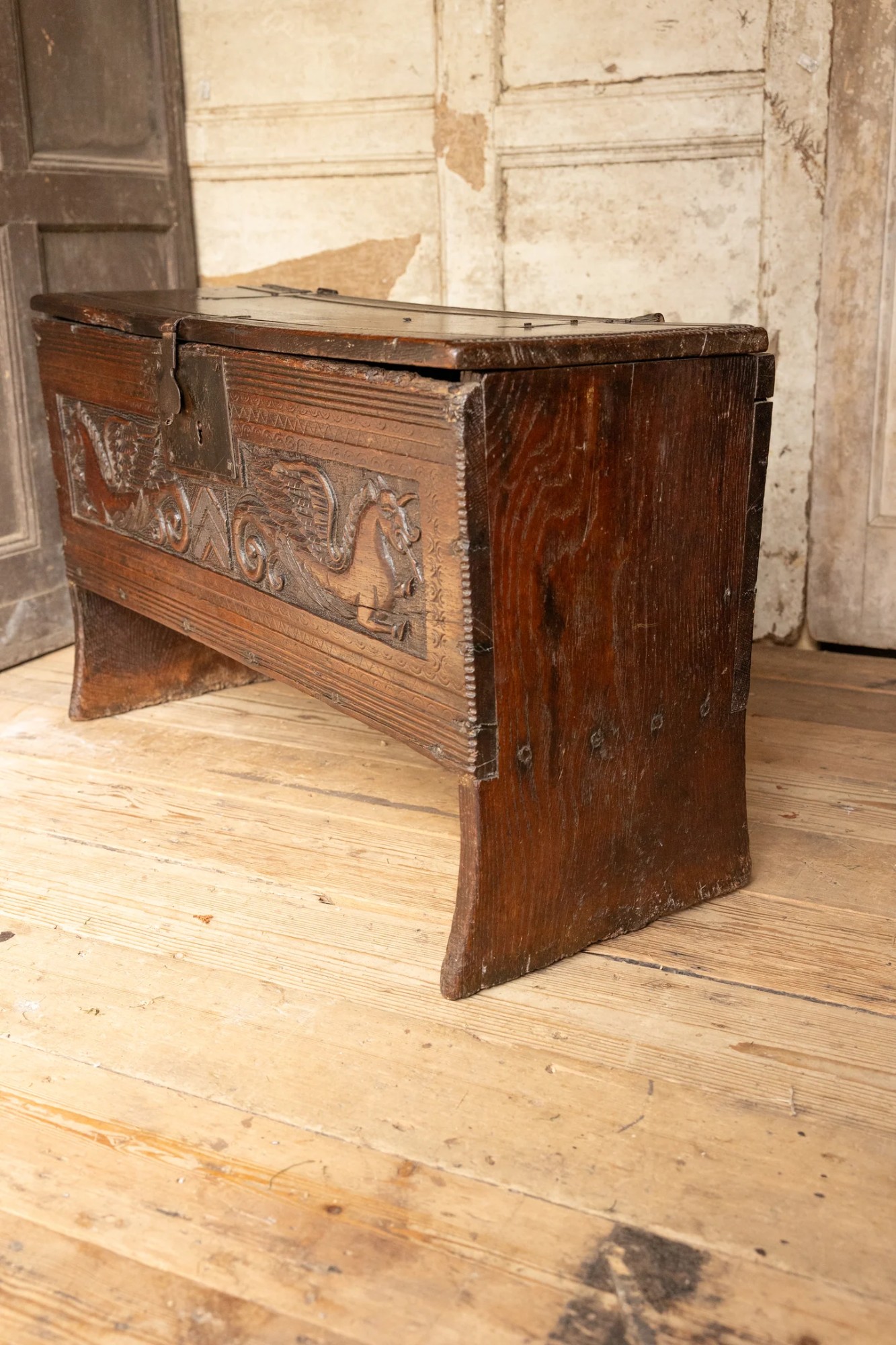
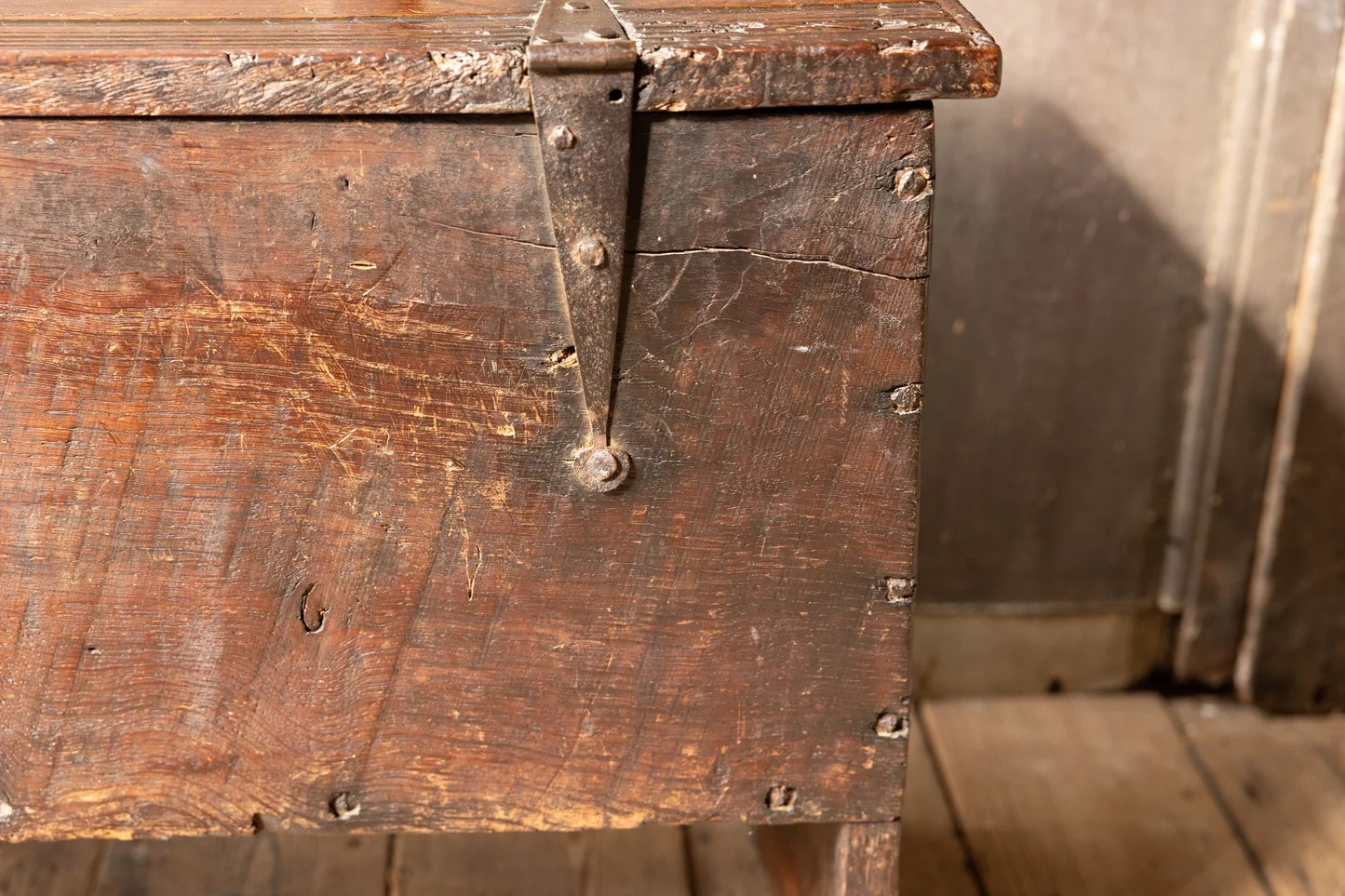
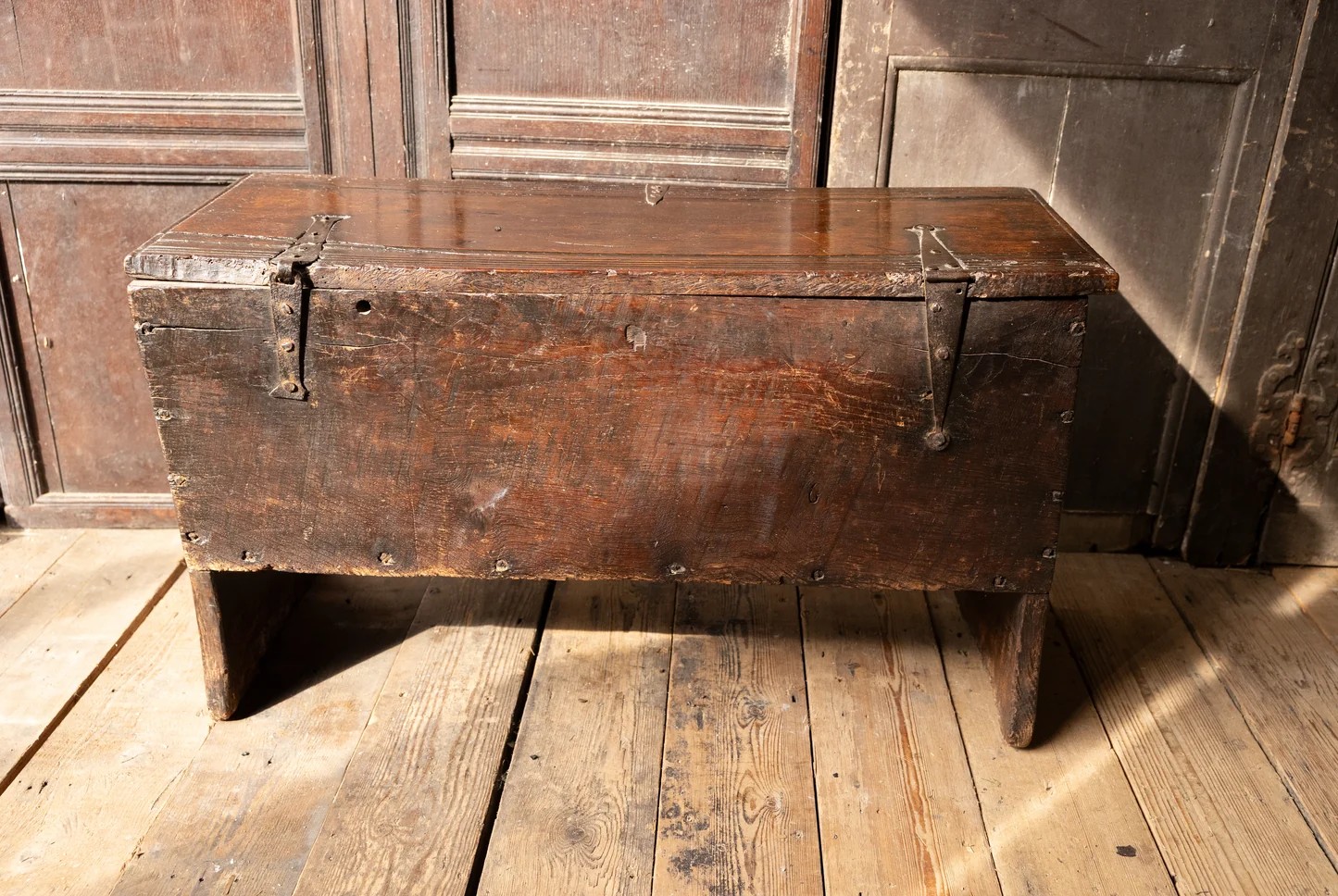
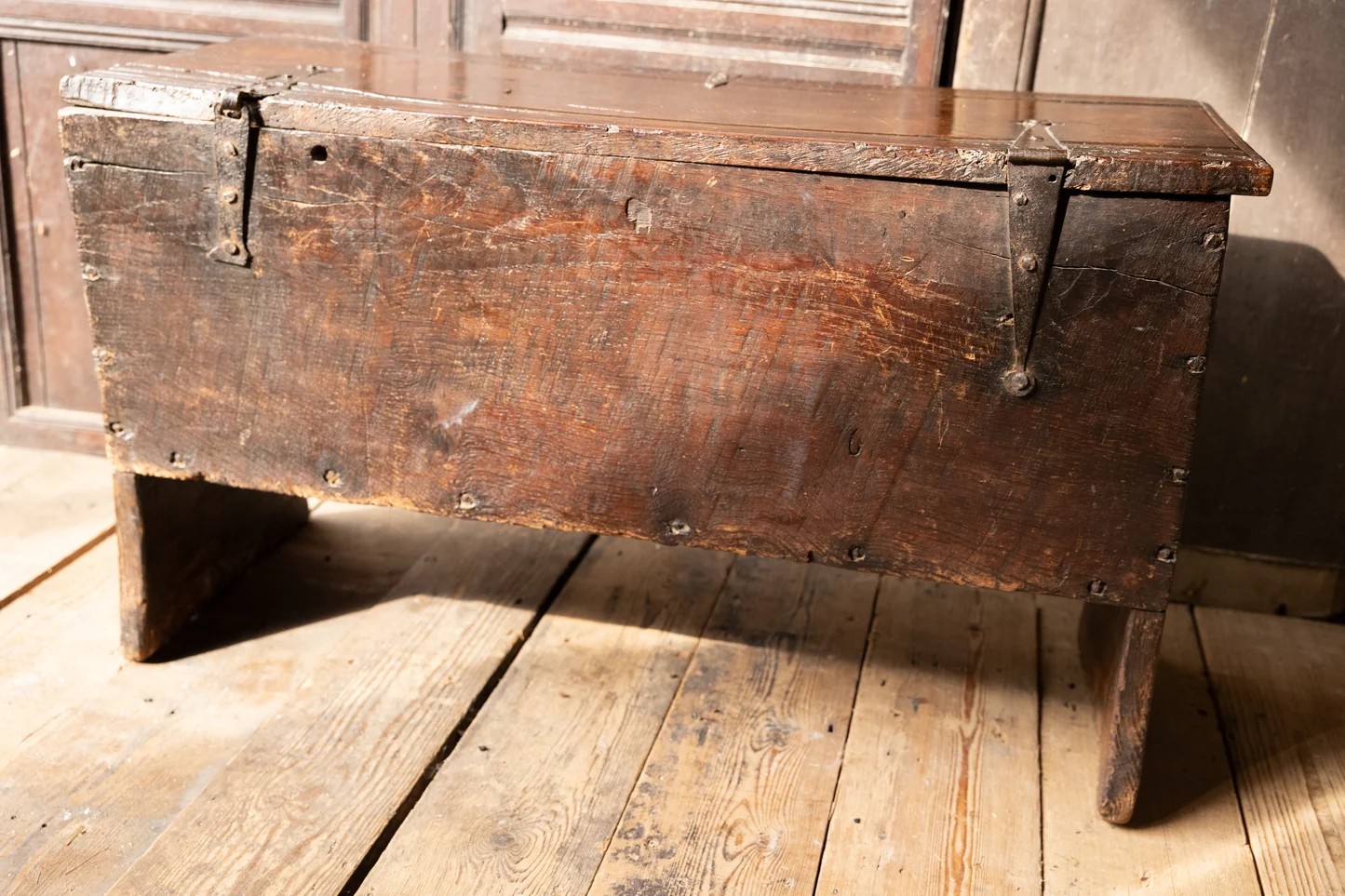
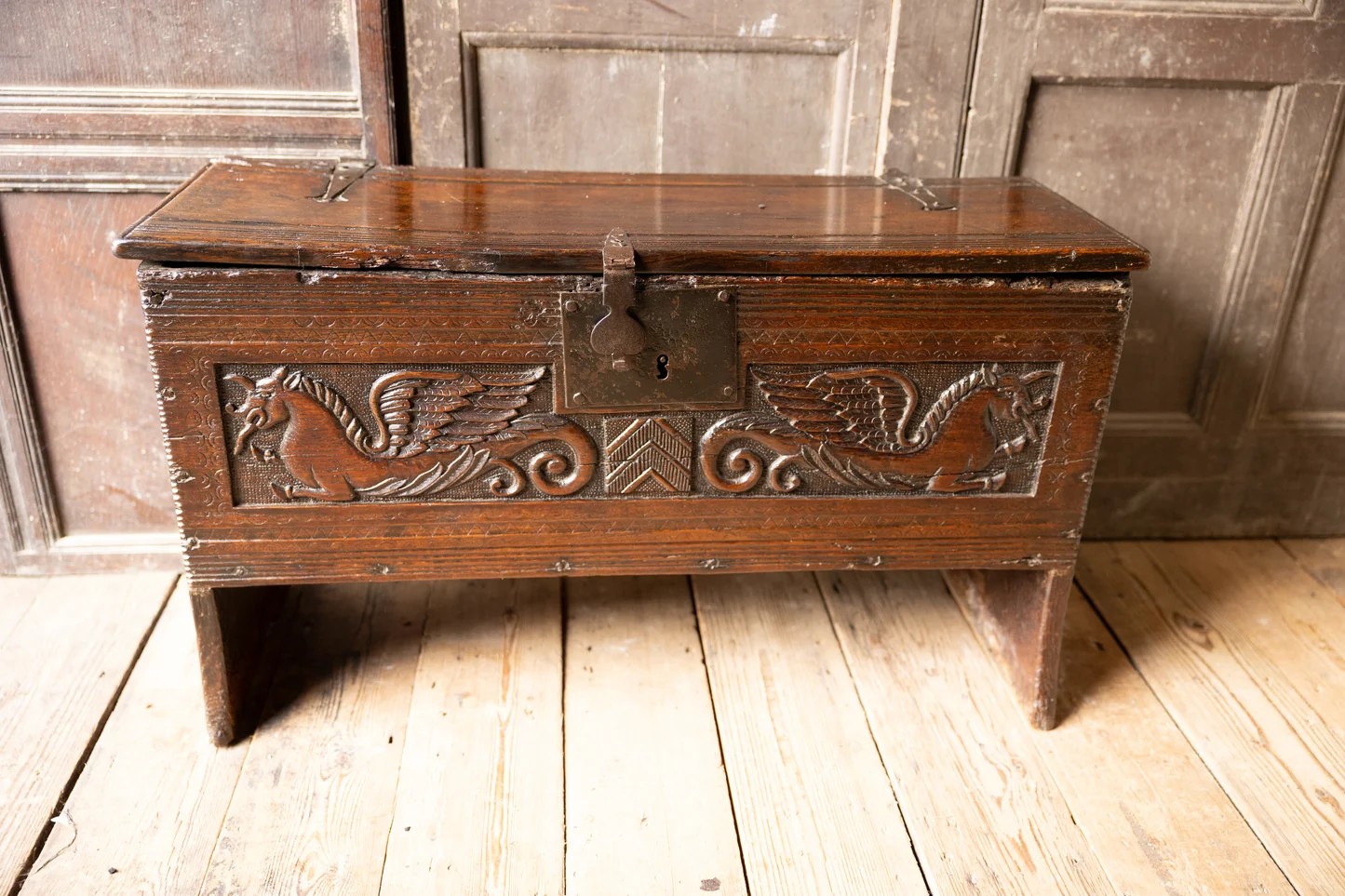
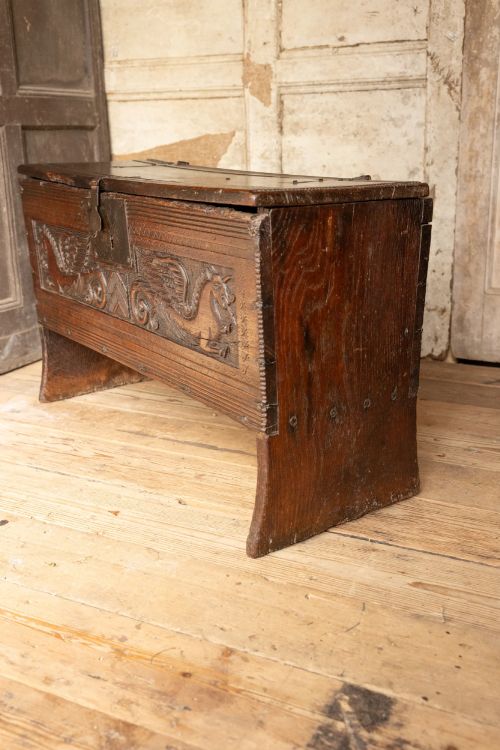
There is no conventional arched or V-shaped cut-out beneath the chest and no formation of separate feet. Instead, the lower front and rear edges of each end board are concavely swept outwards, broadening towards a continuous ground-bearing lower edge. It is an uncommon variation on the familiar boarded or six-plank chest form.
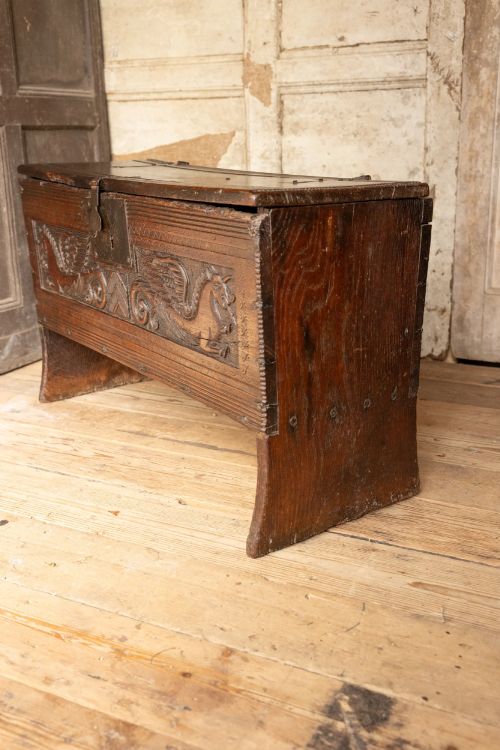
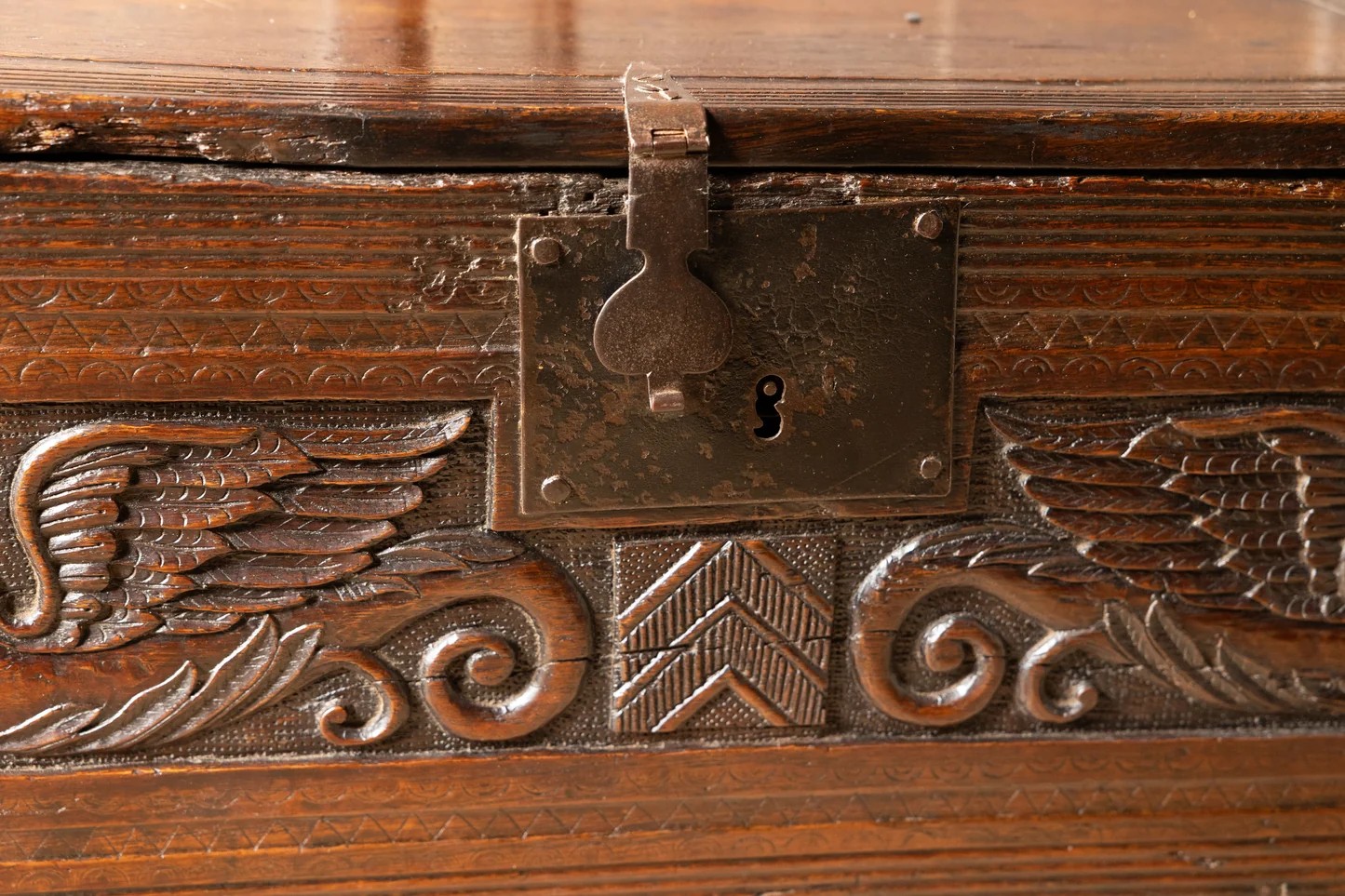
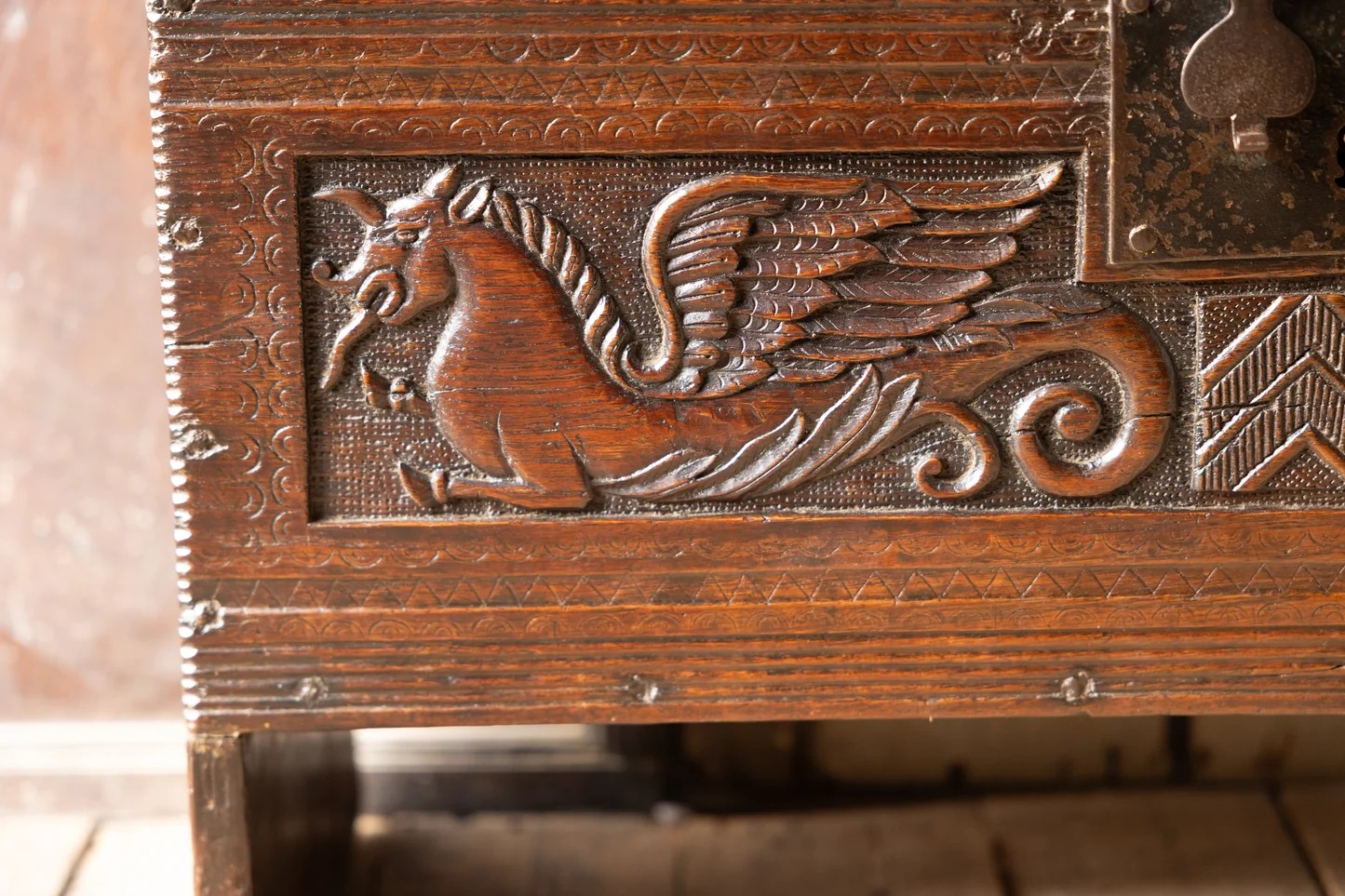
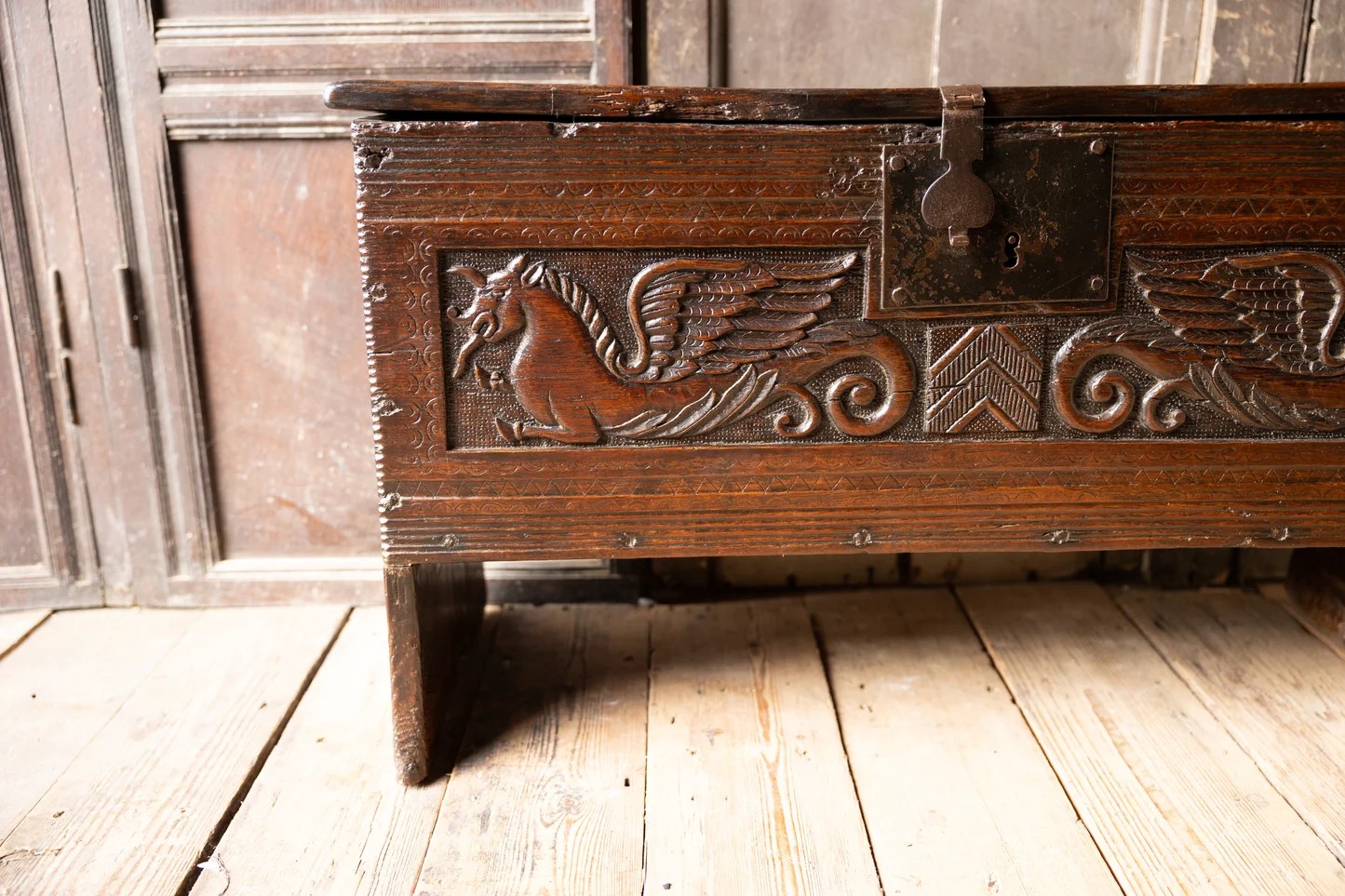
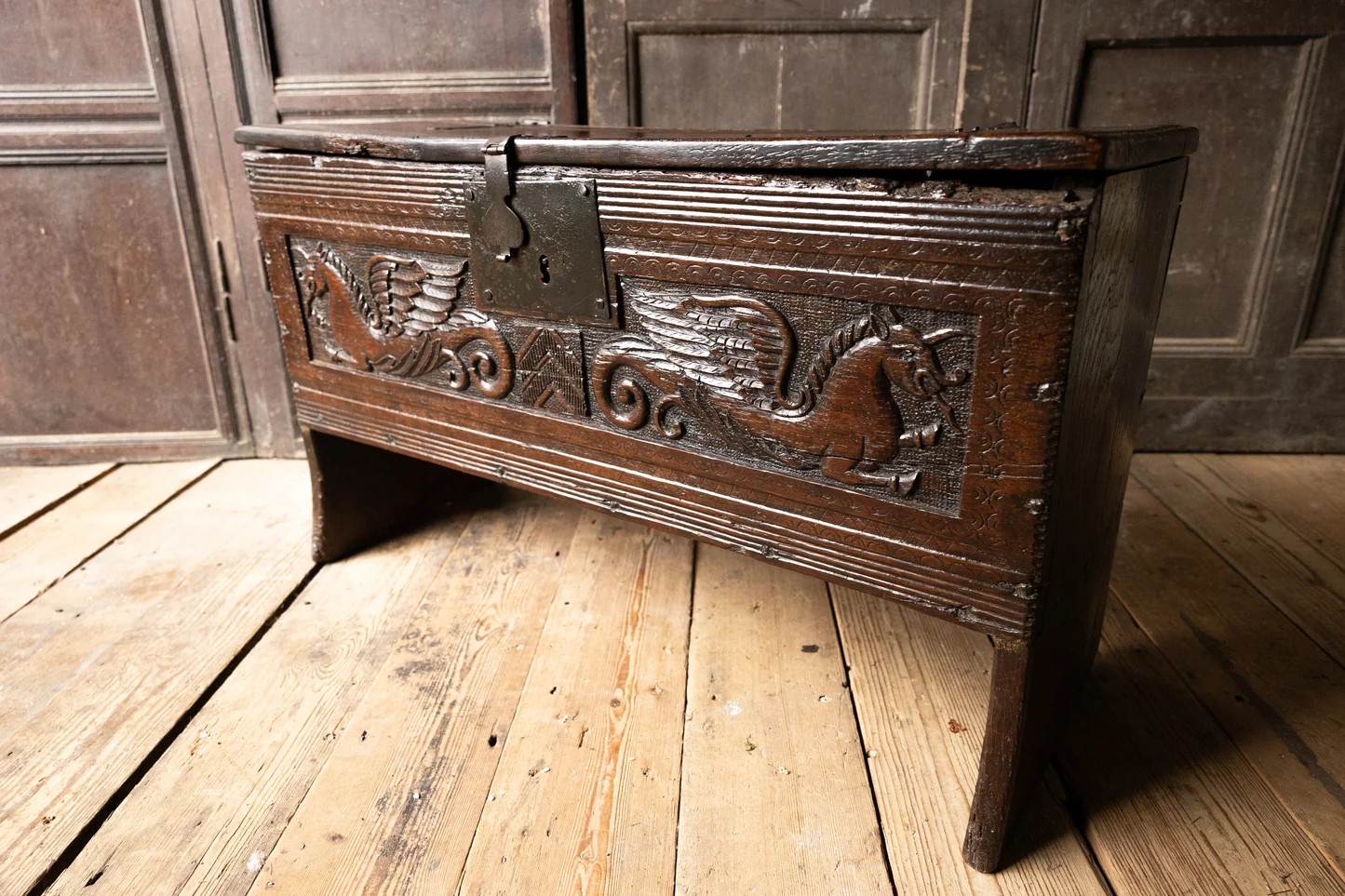
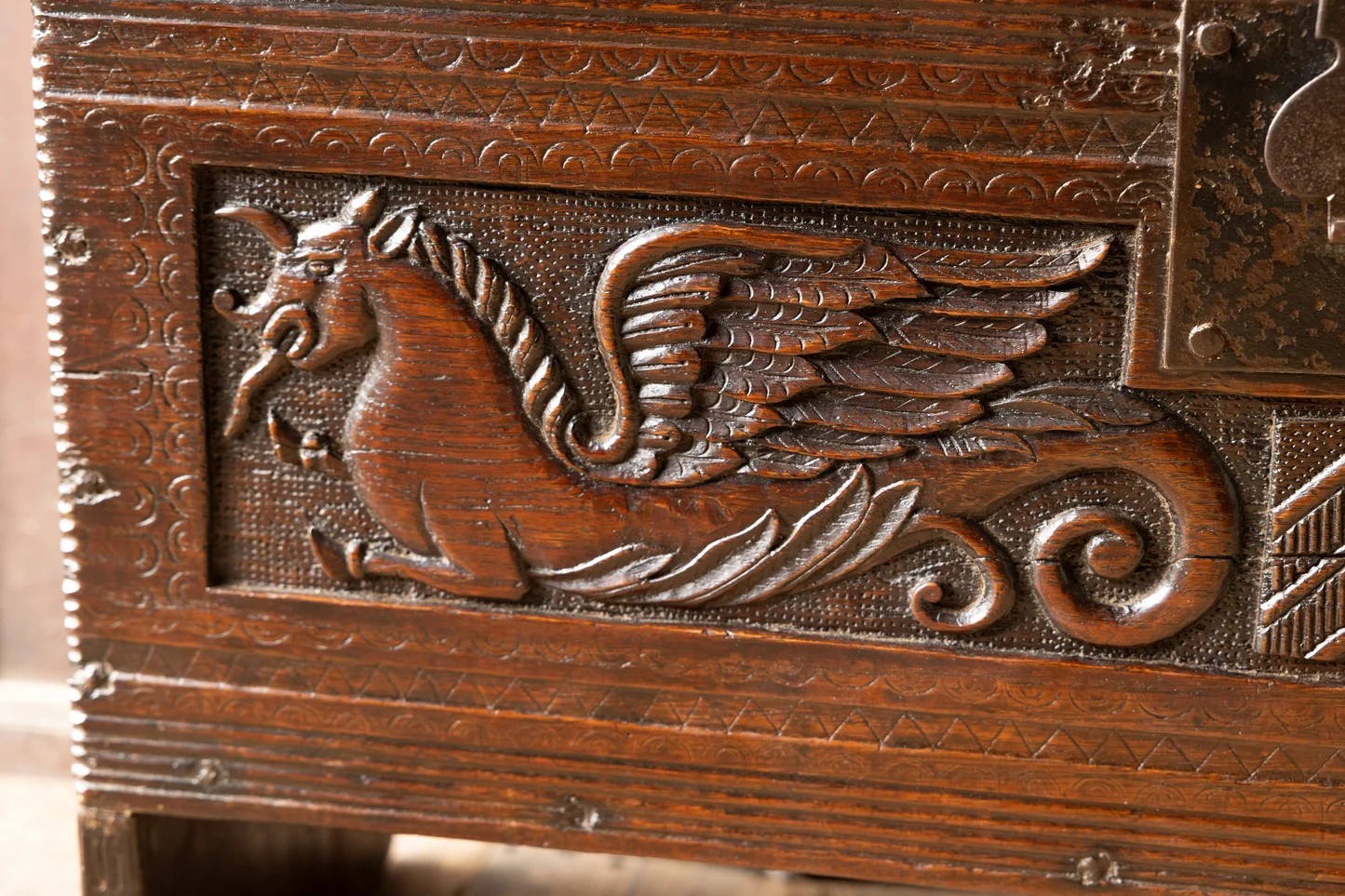
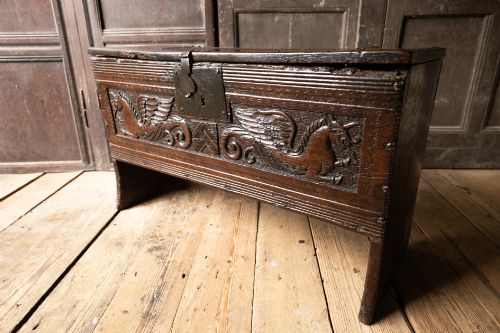
Two large winged fantastic beasts occupy the principal field, arranged to either side of a prominent central triple-chevron device. The three nested chevrons are formed as strongly defined V-shaped ribs and provide the central axis for the otherwise broadly symmetrical composition.
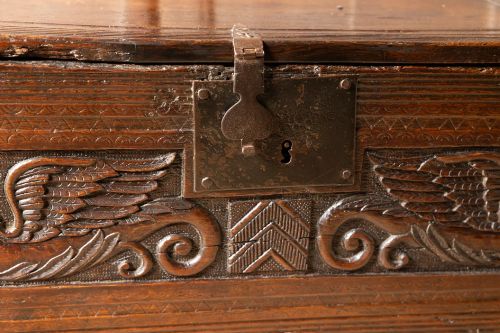
The beasts face outwards from the centre and are boldly rendered, with elongated heads, small forelimbs and large scrolling bodies and tails.
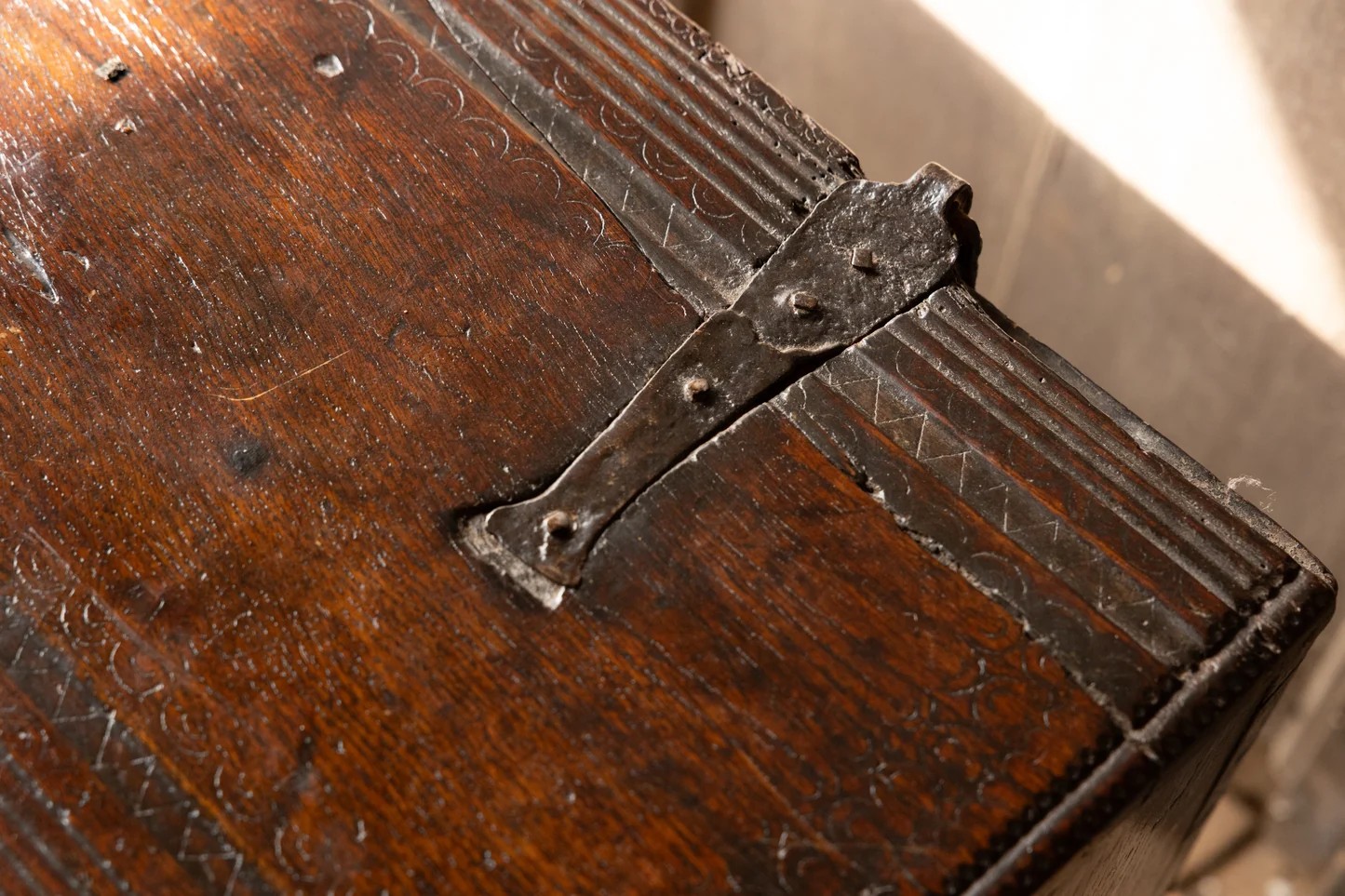
Particularly prominent are the repeated bands of deeply cut dog-tooth or triangular ornament, together with lunette carving, narrow geometric borders and horizontal moulded and incised lines. The decoration continues onto the lid, where further demi-lune, triangular and linear ornament forms part of the overall decorative scheme.
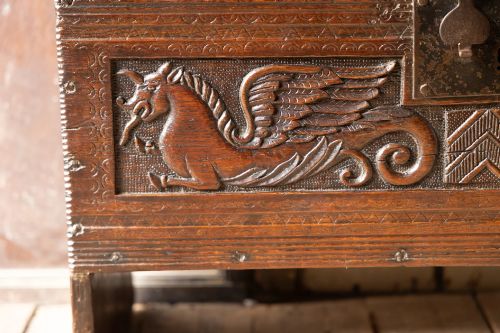
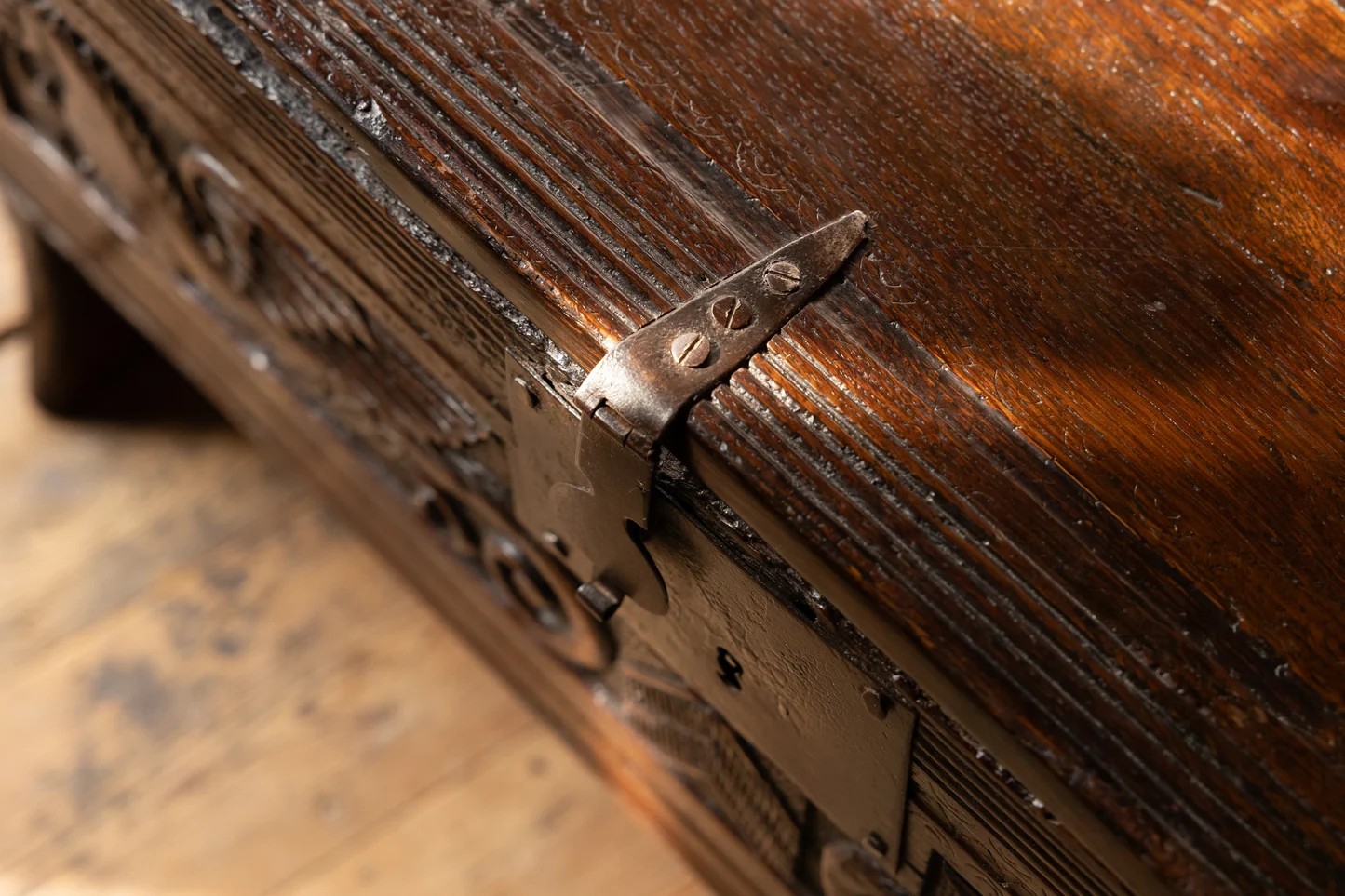
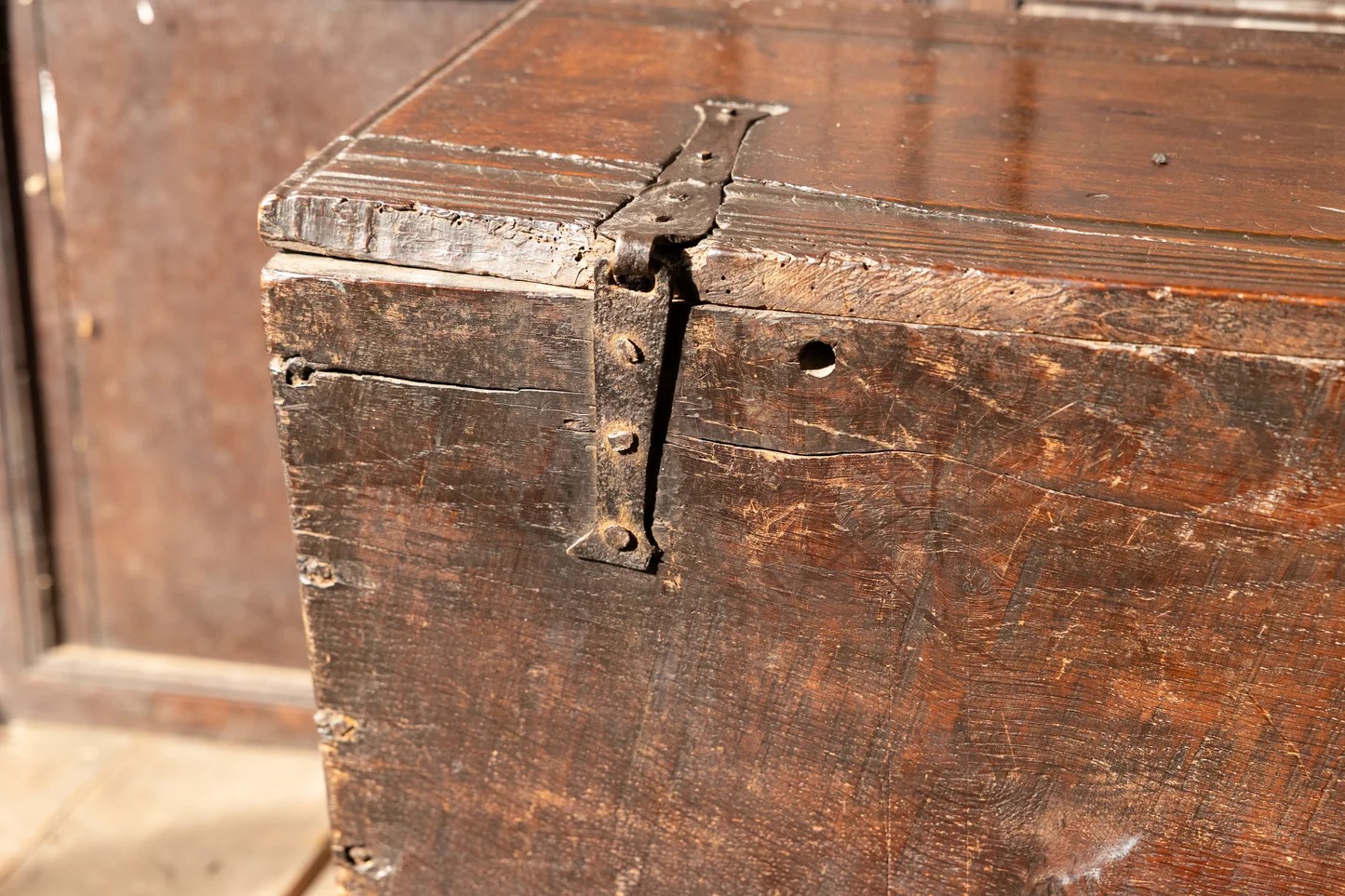
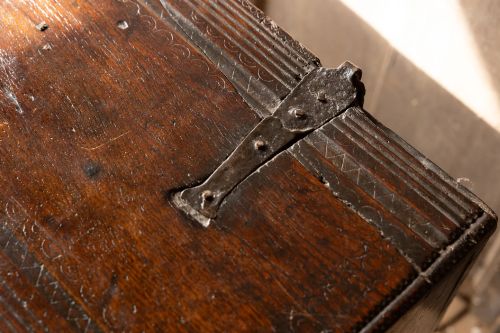
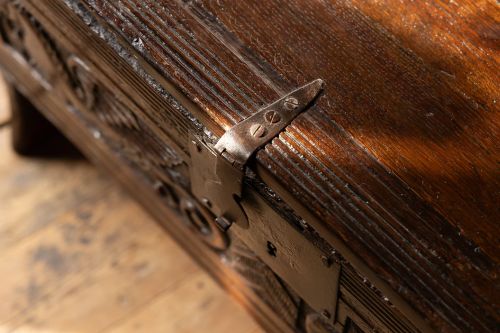
The chest's lockplate appears a later replacement although very many years ago.. The lid is carried on two long iron strap hinges. The left-hand hinge when viewed from the rear is original, although it has broken historically and been re-seated during the working life of the chest. The second hinge is an old replacement, probably dating from the 18th century.
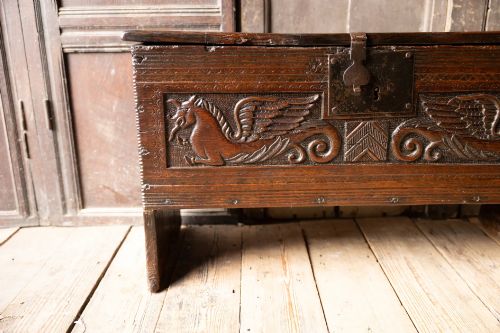
The oak has developed naturally worn surface and good colour.
Dating and regional context
This example belongs to the Elizabethan continuation of that long-established method of chest construction.
Fantastic beasts, chevrons, punched grounds, lunettes and dog-tooth ornament all occur within Tudor carved woodwork, drawing upon decorative traditions established considerably earlier.
The treatment of the two fantastic beasts is especially distinctive. Rather than confronting one another, they face outwards from the central triple-chevron device, their elongated bodies terminating in large scrolling tails. The central chevrons appear to function as the organising element of the composition.
There are interesting comparisons with surviving West Country woodcarving, particularly in Somerset, where fantastic creatures, geometric borders and densely punched backgrounds occur amongst 16th-century architectural and ecclesiastical carving.
The unusual construction of the solid end boards provides a further point of interest. Concave slab-ended construction is subsequently recognised amongst regional furniture from West Somerset. This later tradition cannot in itself establish the origin of an Elizabethan chest, but the distinctive concavely flared solid ends, considered alongside the character of the carving, support the broader attribution to the West Country.
Condition
The chest retains its extensive carved decoration and substantial iron lockplate. One iron strap hinge is original but has broken and been re-seated historically. The second is an old replacement, probably dating from the 18th century.
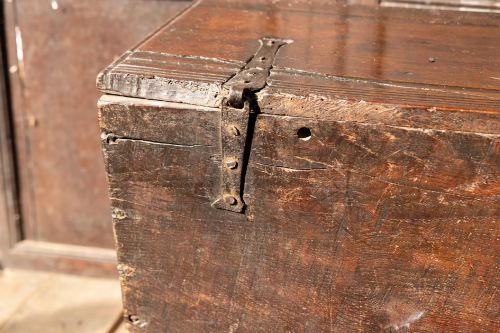
Expected wear, old marks, minor losses and movement consistent with age and use. The extensive wear to the carved and punched surfaces forms an important part of the chest’s character and history. There is a split to the top, most likely through the use of unseasoned oak, and this would likely have been visible to the first owner of the chest.
Measuring: 81 cm wide × 47 cm high × 29 cm deep.
English, probably West Country, circa 1570–90
Rob Hall Antiques has dated this Elizabethan Carved Oak Chest to the 16th Century.
You can view the stock and full dealer information on the Rob Hall Antiques Profile Page
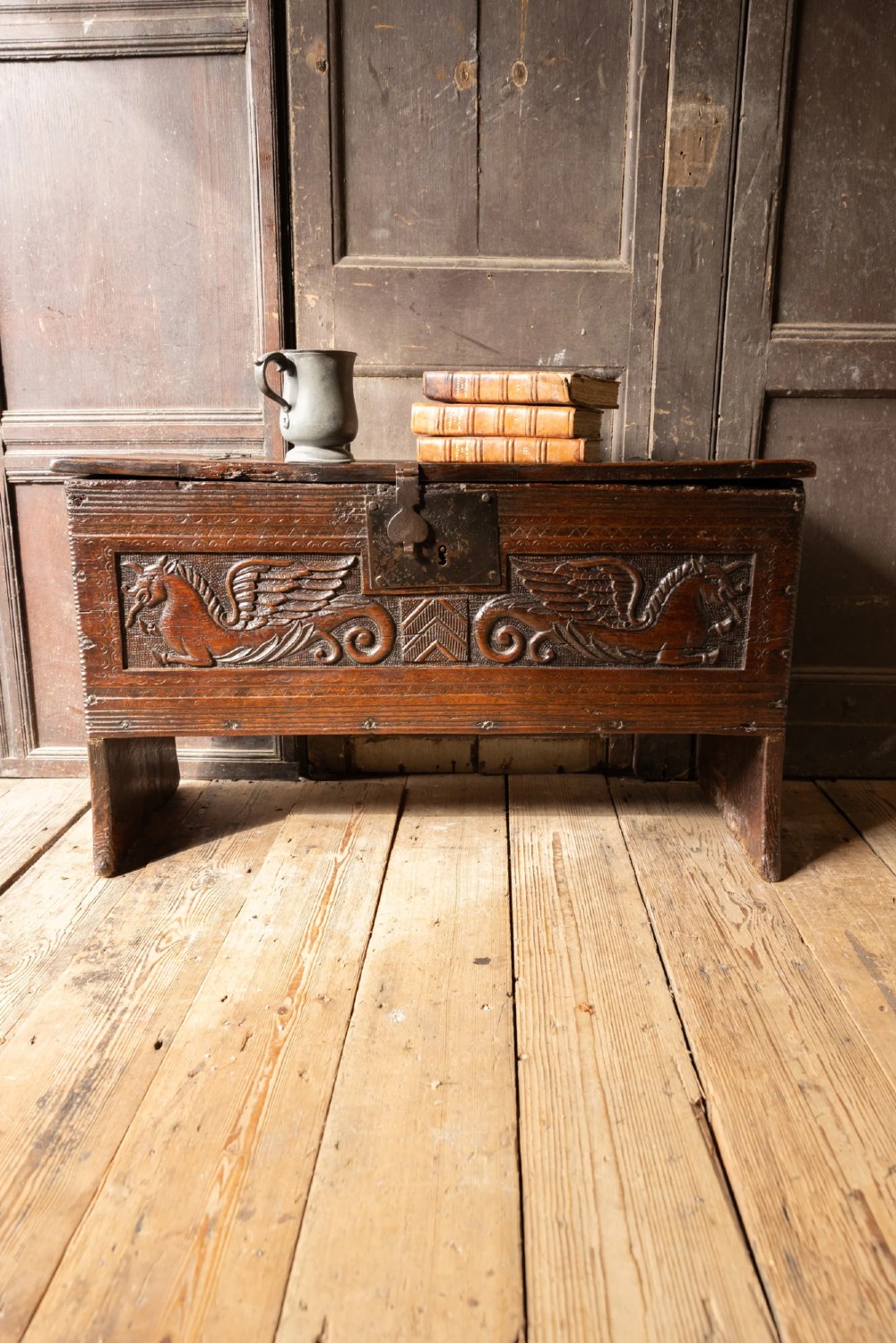
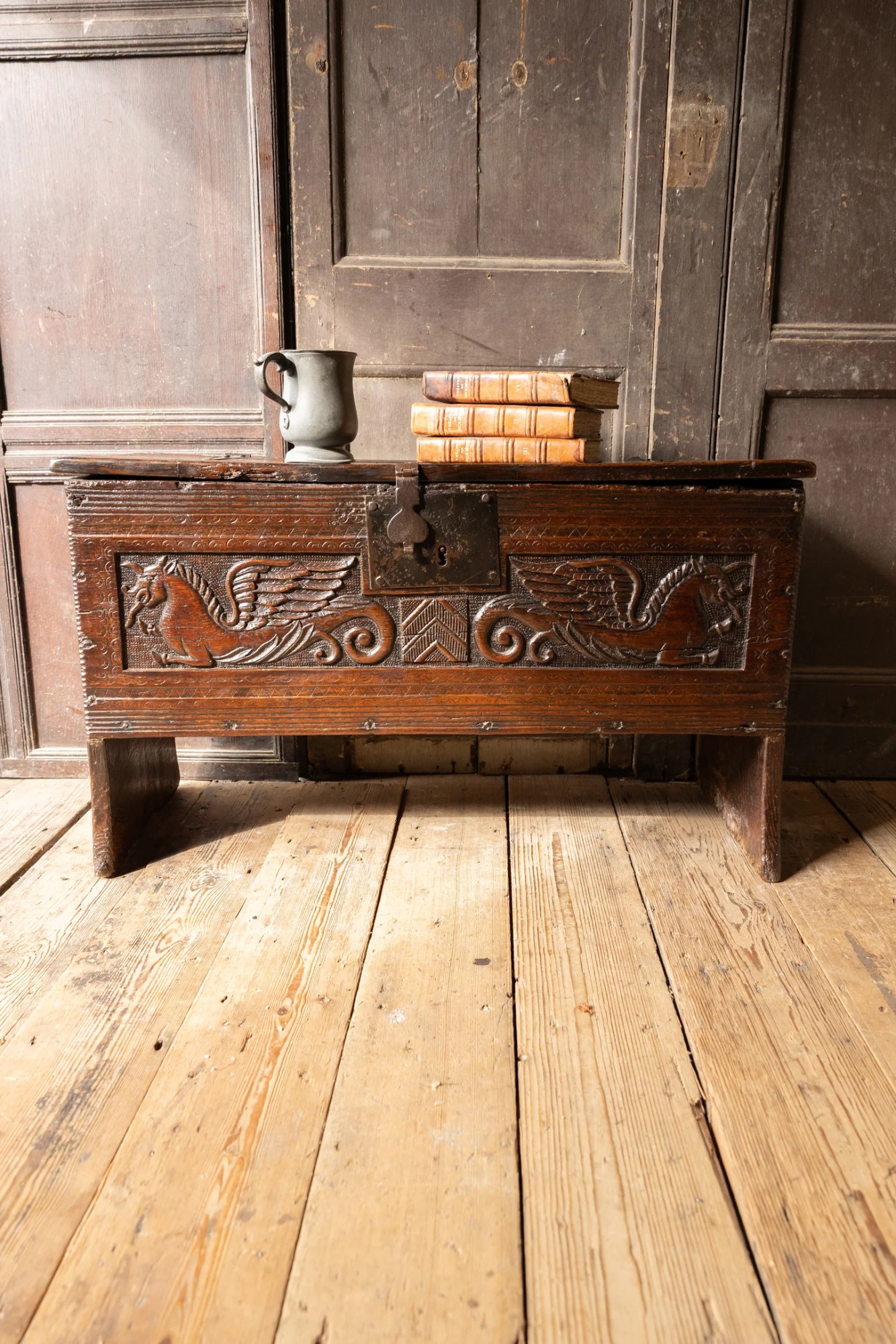
An Elizabethan Carved Oak Boarded Chest with Winged Fantastic Beasts, English, Probably West Country, Circa 1570–90