



Antique Mahogany Chests
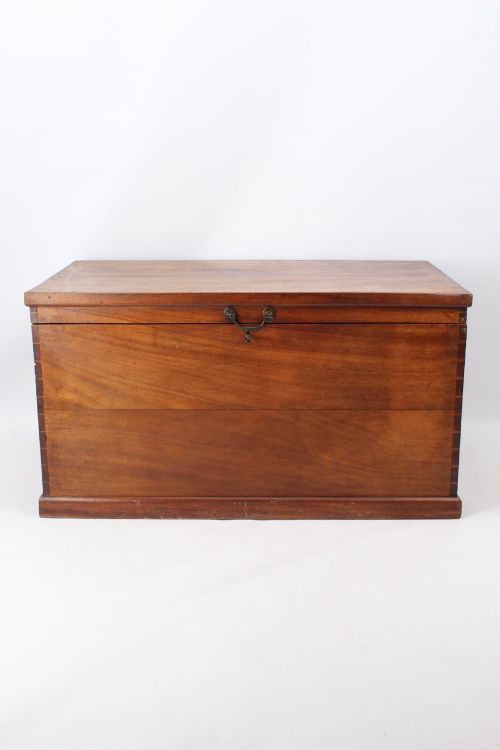
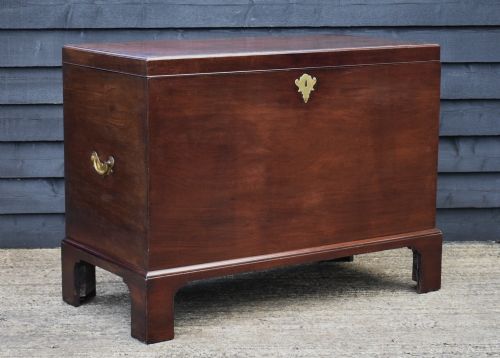
A lidded mahogany case for storing, sitting on or carrying, from upholstered box ottomans and brass-bound travelling trunks to mule chests, blanket boxes and sarcophagus cellarettes.
Antique Mahogany Chests
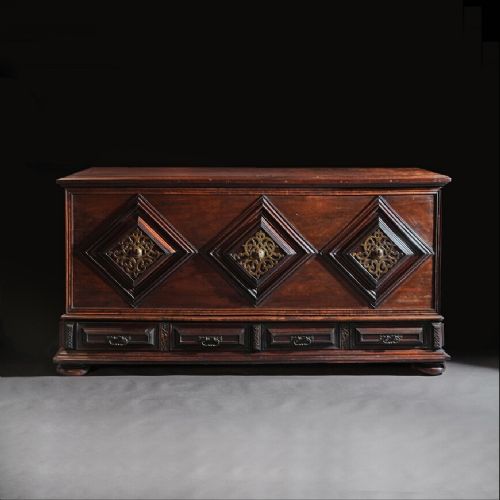
They're storage cases with lids, roughly one to three feet wide, gathered on Sellingantiques under a single heading. Box ottomans with upholstered or leather tops, flat and dome-lidded trunks, mule chests with a drawer in the base, fitted silver and campaign chests, blanket boxes and cellarettes all sit in the same pool. A handful of bedside and Wellington chests appear alongside them.
Mahogany came into general English use for chests from the second quarter of the 18th century, when imported timber gave wide, dense boards. From there the form split two ways: fixed domestic storage such as mule chests, blanket boxes and cellarettes, and portable cases built for travel, military service and valuables.
The likeliest encounter is Victorian. "Victorian" appears in 69 of the 244 titles, and the box ottoman is the commonest single form, followed closely by trunks. Georgian work is the second block, with George III named most often within it. Dating is often loose: "19th Century" is the largest single label, and where decades are given they cluster in the second half of that century.
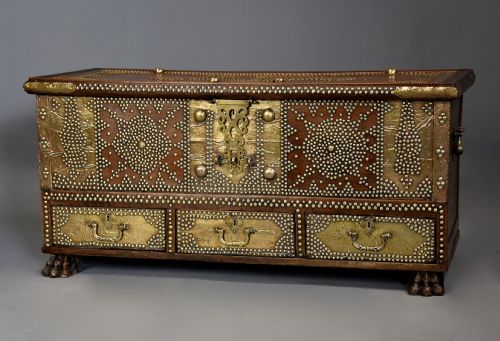
Regional and foreign names are scarce. The Lancashire mule chest is the one regional term that recurs, in six titles, and several of those pair oak with mahogany crossbanding rather than being mahogany throughout. Zanzibar traders' chests, an Anglo-Indian blanket chest and Italian bombé bedside chests turn up once or twice each.
Where The Range Splits
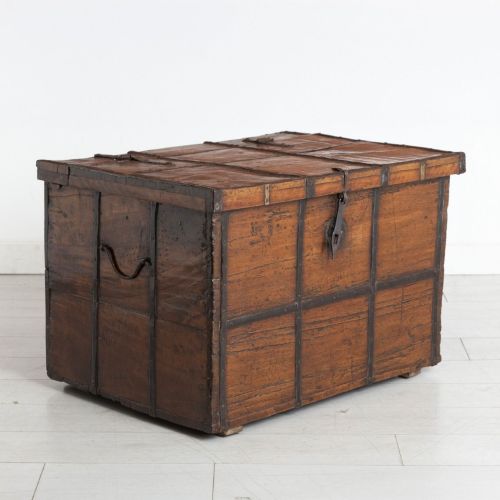
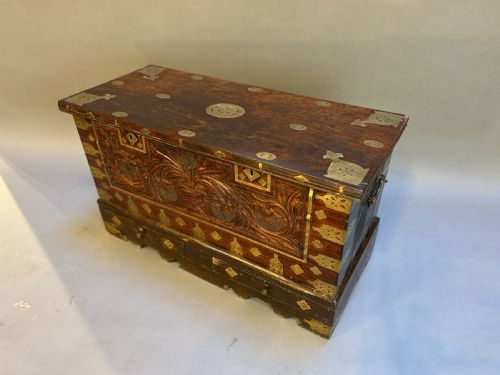
Metal makes the difference at the trunk end. Brass, steel and iron binding on corners and edges, along with campaign fittings and recessed handles, puts a case well above the plain entries titled simply as a mahogany box. Fourteen titles name brass, fifteen use "bound", and campaign appears in sixteen.
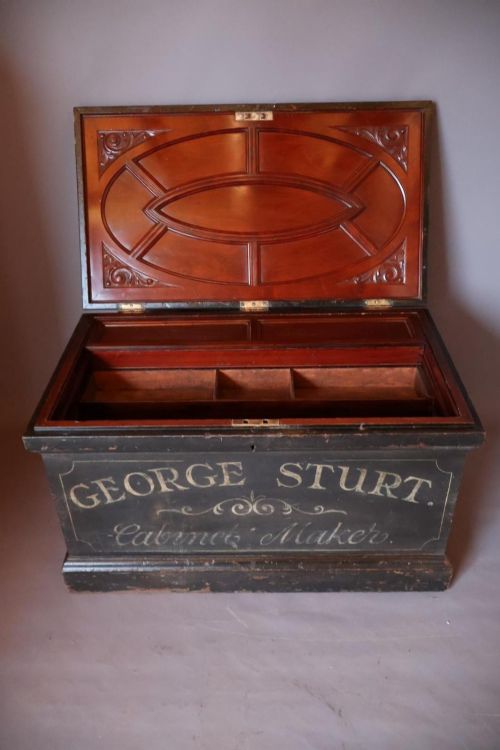
Interiors do the same work. Fitted silver chests, deed chests, apothecary and necessaire boxes, and cabinet maker's or master shipwright's tool trunks, one of them advertised with at least 165 tools still inside, occupy the upper reaches. A case with a purpose built into it reads differently from an empty box.
Then there's the timber and the shape. "Figured mahogany", "flame mahogany", "Cuban mahogany" and ebony inlay appear on the higher-placed titles. So do shaped cases: sarcophagus form, waisted, bow fronted, paw feet. Scale counts too, with large examples and pairs above the middle and small marking the modest end.
Antique Mahogany Chests Retail Price Guide 2026
Typical UK retail prices for mahogany chests, calculated from the Sellingantiques database of over a million retail prices indexed since 2003. This retail price guide relies exclusively on Sellingantiques data; no external sources or auction records are used, so the figures do not describe the wider market.
19th Century is the period label used most on Sellingantiques for mahogany chests, with Georgian next and Victorian third.
The Antique Mahogany Chests Glossary
- Box ottoman
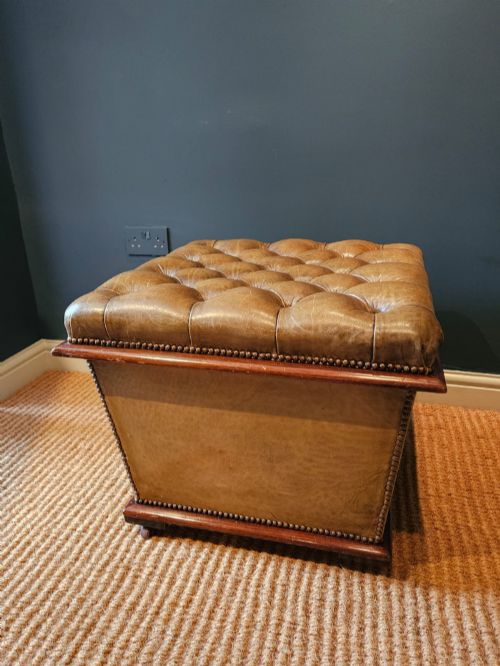
- An upholstered-top storage chest made to be sat on, sometimes titled as a window seat or stool. The commonest single form in this archive.
- Mule chest
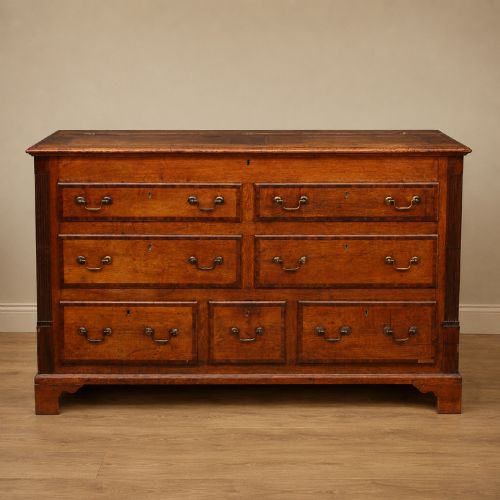
- A lift-lid chest with one or more drawers built into the base. Twenty titles, often called Lancashire, and several of those combine oak with mahogany.
- Brass bound
- Corners and edges strapped in brass for strength in transit. Nine titles say brass bound, and fifteen use "bound" of brass, iron, steel or zinc.
- Campaign
- Made to travel with an officer, usually bound and fitted with flush or recessed handles. Sixteen titles, overlapping heavily with the trunk group.
- Sarcophagus form
- A case with sloping, tapering sides after the antique tomb shape. Nine titles use it, of both ottomans and cellarettes.
- Cellarette
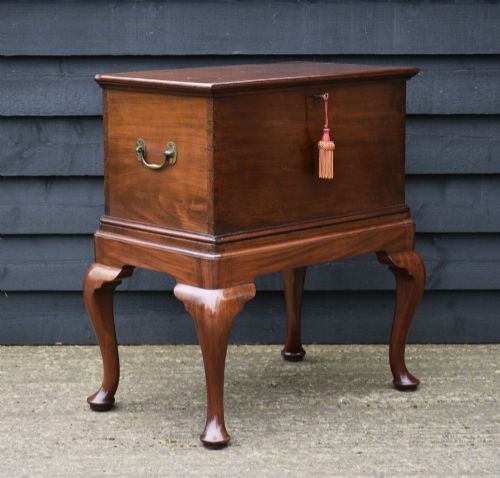
- A lined chest or bin for wine bottles, often on paw feet. Nine titles, and a slice that has been growing in live stock.
Antique Mahogany Chests: Frequently Asked Questions
What is the most common form?
The Victorian mahogany-framed box ottoman. Ottoman appears in 50 of the 244 titles, with upholstered, stool and leather turning up alongside it.
Trunks run it close, named in 57 titles, so a flat or metal-bound travelling case is the other likely encounter.
How old are these chests?
The dated field runs from 1750 to 1930, with 88 listings carrying a clean year. The earliest are a pair of George II brass-banded trunks and a Dutch East Indies trunk, all placed at 1750.
Nearly half the archive is bracketed by reign or century instead. "19th Century" is the biggest single label, then "Georgian" and "Victorian".
One title claims a 17th-century Portuguese colonial chest, sitting outside that 1750 floor and at the top of the range.
Are mule chests always mahogany?
Not in this group. The Lancashire mule chest recurs in six titles, and several of those pair oak carcases with mahogany crossbanding.
Mule means the construction rather than the timber: a lift-lid chest with drawers built into the base.
Do any carry maker's names or dates?
Names don't come through in this evidence. Titles are all there is, and no maker clears any useful threshold.
Inscribed dates are almost as scarce. Two muniment or deed chests are stamped 1844, and those are the only dates cut into a piece anywhere in the archive.
What are tool chests doing in this category?
Cabinet maker's and master shipwright's chests turn up repeatedly, mahogany-cased with fitted interiors. They're a small pocket, but a consistently high-placed one.
Several are advertised with their tool sets still in them, one with at least 165 woodworking tools.
How many come up for sale each year?
Around 20 a year on Sellingantiques, drawn from 103 different dealers across the archive.
That spread says something about the category: almost no dealer specialises in mahogany chests, and almost every dealer handles one sooner or later.