
A 2026 Guide by Sellingantiques
The movement emerged in Paris before spreading globally, peaking between the two World Wars.
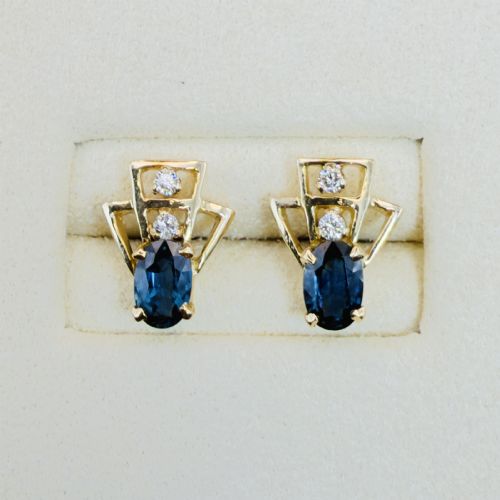
Designers embraced machinery and modern architecture. Art Deco jewellery often mirrors the stepped outlines of skyscrapers.
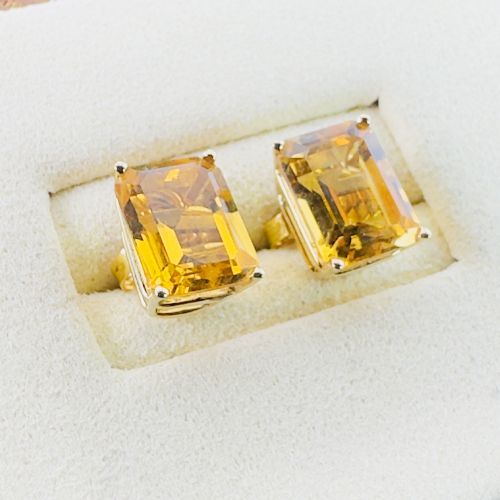
Look at the broader cultural shifts. Women cutting their hair short required longer linear earrings to balance the face.
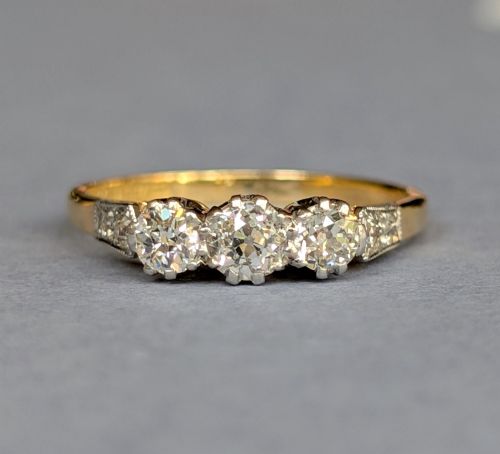
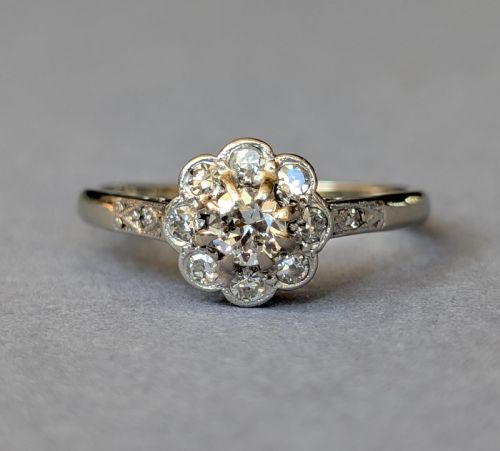
Platinum became the standard during the 1920s, allowing craftsmen to create robust but very fine settings for diamonds.
Cartier dominated the Paris scene. They popularised the Tutti Frutti style, mixing carved rubies and sapphires in platinum.
Van Cleef & Arpels developed the mystery setting in the 1930s. This technique hid the metal prongs beneath the gemstones.
Boucheron produced highly architectural pieces. Their work often featured stepped motifs and heavy use of rock crystal.
The 2026 retail price guide for Art Deco Jewellery is drawn from a proprietary archive of over 1.1 million retail prices indexed by Sellingantiques since 2003. This guide relies exclusively on their own internal data; no external sources or auction records are used.
Analysing nearly 25 years of UK antique market history alongside current retail values, the data indicates that typical UK retail prices for Art Deco Jewellery range between £500 and £6,300. Entry-level prices generally fall under £500 and premium examples upwards of £6,300.
Symmetry drives the design. You rarely find the chaotic trails of earlier periods here.
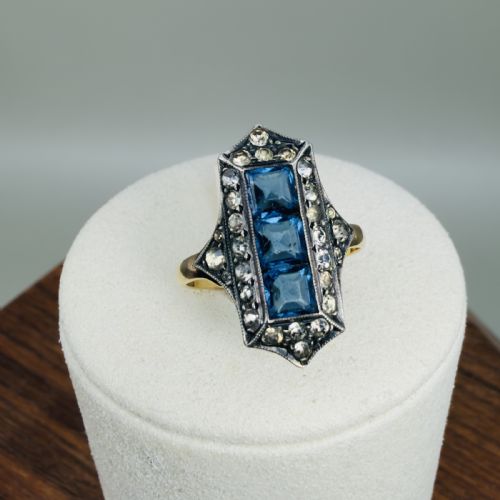
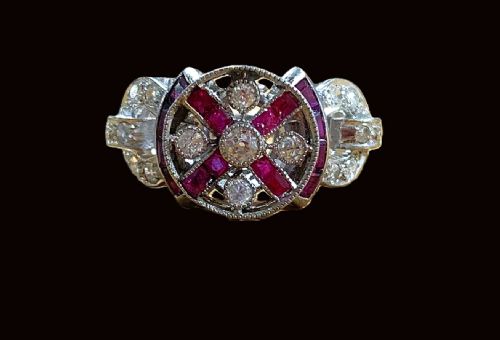
Calibre-cut stones sit tightly together. These custom-cut coloured gems form seamless borders around main stones.
Watch for multi-purpose pieces. Clips often separate into two dress clips or attach to a rigid bangle frame.
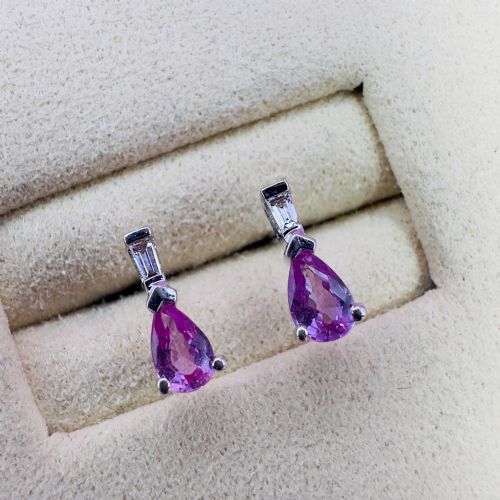
Lapidary techniques advanced rapidly. Gem cutters learned to shape stones into complex trapezoids and baguettes to fit architectural mounts.
Pierced work reached new levels of precision. Jewellers used fine handsaws to cut geometric webs directly into solid platinum sheets.
Study the hinge work on double clip brooches. The mechanisms are highly engineered to slide securely onto specific frames.
"Early plastics were embraced by high-end designers. Bakelite provided bold colours that suited the geometric aesthetic perfectly."
"Asian and Egyptian motifs strongly influenced the period. The opening of Tutankhamun's tomb sparked a massive trend for pharaonic shapes."
"Watchmaking merged with jewellery design. The era produced clever concealed watches hidden inside chunky geometric platinum bracelets."
Based on almost 25 years of Sellingantiques UK antique market data, Art Deco Jewellery appeared 7854 times (out of 1,100,000 antiques) which gives it a rarity score of 21/100.
This score measures scarcity within the Sellingantiques archive only and is not a survey of the entire antiques market, so these statistics may not be indicative of the general availability of Art Deco Jewellery elsewhere.
Platinum is highly durable, making it suitable for regular wear. It resists bending and holds diamonds securely, even in very fine settings.
However, you need to consider the specific gemstones. Emeralds and opals are brittle and can chip if you strike them against hard surfaces.
Settings with intricate millegrain edges will eventually rub smooth with constant friction. Save the delicate architectural pieces for occasions where they will not take heavy knocks.
Onyx feels cold to the touch and has a solid weight. When you look at it under a loupe, you might see tiny natural inclusions or surface scratches, but the colour remains opaque and flat.
Enamel is glass fused to a metal base. If you check the edges, you can sometimes spot where the enamel meets the metal border, and any chips will look like broken glass rather than fractured stone.
A double clip brooch consists of two symmetrical dress clips that slide onto a central metal frame. When joined, they form a single large brooch.
You detach them by pressing a small hidden clasp on the reverse. The individual clips were traditionally worn on dress straps or either side of a neckline.
Calibre-cut stones were custom-shaped to fit a specific space within a single piece of jewellery. Lapidaries worked alongside jewellers to cut these gems into precise geometric shapes that slotted together without gaps.
Modern square stones are usually cut to standard dimensions first, and the mounting is cast to fit them. The Deco method required cutting the stone to fit the mount, allowing for those seamless, sweeping borders of colour.
This technique demands a high level of hand-craftsmanship and significant waste of the rough gem. It is rarely done today outside of bespoke commissions.
Please note: This Art Deco Jewellery guide and its associated pricing data are provided for general informational purposes only. It does not constitute formal financial, investment, or appraisal advice and should not be relied upon as the sole basis for any commercial activity, purchasing, or sales decisions. Sellingantiques.co.uk accepts no liability for any actions taken in reliance on this information. Always consult with a qualified professional or independent appraiser.
