



A 2026 Guide by Sellingantiques
English glassmaking shifted heavily in the late seventeenth century. George Ravenscroft introduced lead oxide to the mix.
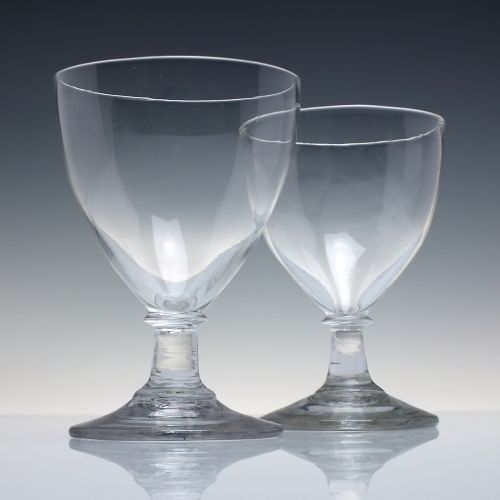
Look at the bowl capacity. Eighteenth-century wine glasses often held less liquid than modern equivalents because the drink was stronger.
Tax laws changed the shape of antique drinking glasses. The Excise Act taxed glass by weight, forcing makers to blow thinner bowls.
Earlier examples were mostly soda glass. Lighter in the hand and slightly grey compared to later heavy lead crystal.
George Ravenscroft operated the Savoy glasshouse in London. His sealed glasses from the 1670s are rare and heavily crizzled.
Beilby of Newcastle painted white and coloured coats of arms onto the bowls.
Most pieces remain anonymous. The trade relied on regional glasshouses across Stourbridge, Bristol, and London sharing similar patterns.
The 2026 retail price guide for Antique Drinking Glasses is drawn from a proprietary archive of over 1.1 million retail prices indexed by Sellingantiques since 2003. This guide relies exclusively on their own internal data; no external sources or auction records are used.
Analysing nearly 25 years of UK antique market history alongside current retail values, the data indicates that typical UK retail prices for Antique Drinking Glasses range between £100 and £600. Entry-level prices generally fall under £100 and premium examples upwards of £600.
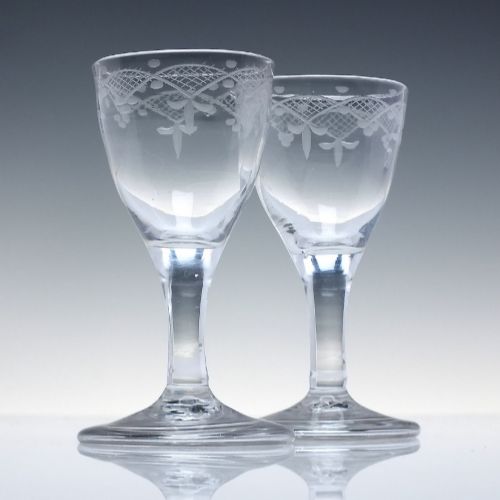
Check the footrim. Antique drinking glasses often have a conical foot that folds under at the edge for extra strength.
The pontil mark sits under the foot. This rough or polished scar shows where the glassblower snapped the iron rod away.
Stems carry most of the decorative weight. You find them plain, twisted with air tears, or wound with opaque enamel threads.
Stems evolved from heavy cast balusters to complex twists. Glassmakers pulled hot glass rods containing air bubbles to form intricate spirals.
Bowl shapes were blown directly or formed in a dip mould. Moulds left faint ribbing on the surface.
Engraving required a copper wheel. Craftsmen cut shallow motifs into the surface using an abrasive slurry mixed with oil.
"Many stems contain threads of coloured glass. Bristol glasshouses excelled at weaving red, green, and blue enamel into complex twists."
"Favour the firing glass. Freemasons used these unusually thick items to strike the table loudly in unison during toasts."
"Jacobite sympathisers hid political symbols on their wares. You can find engraved roses, oak leaves, and subtle Latin mottos."
Based on almost 25 years of Sellingantiques UK antique market data, Antique Drinking Glasses appeared 251 times (out of 1,100,000 antiques) which gives it a rarity score of 95/100.
This score measures scarcity within the Sellingantiques archive only and is not a survey of the entire antiques market, so these statistics may not be indicative of the general availability of Antique Drinking Glasses elsewhere.
It refers to a heavy stem profile used in the late seventeenth and early eighteenth centuries. The shape features a prominent bulge or knop, often placed near the top or middle of the stem.
The style copied silver and architectural forms of the period. They carry significant weight in the hand because they contain a high percentage of lead.
Bowl shape does suggest the original contents. Tall, narrow flutes were usually intended for ale or cider. The tight rim helped preserve the carbonation and funnelled the scent upwards.
Smaller rounded bowls often held strong wines or cordials. Wide, shallow shapes like the pan-topped bowl were popular for champagne, though they let the fizz escape quickly.
Glassmakers twisted stems to catch the candlelight across the dining table.
They trapped air bubbles or embedded white enamel canes in the hot glass.
A folded foot was a practical choice for early antique drinking glasses. The glassblower rolled the edge of the footrim under itself while the glass was still hot, doubling the thickness at the very edge.
This simple technique stopped the rim from chipping when the glass was set down hard on a table. It was standard practice for tavern glassware and many domestic pieces.
The practice died out around the middle of the eighteenth century. Flat feet became the norm, especially after the Glass Excise Act made makers conscious of the weight of their goods.
Please note: This Antique Drinking Glasses guide and its associated pricing data are provided for general informational purposes only. It does not constitute formal financial, investment, or appraisal advice and should not be relied upon as the sole basis for any commercial activity, purchasing, or sales decisions. Sellingantiques.co.uk accepts no liability for any actions taken in reliance on this information. Always consult with a qualified professional or independent appraiser.
