


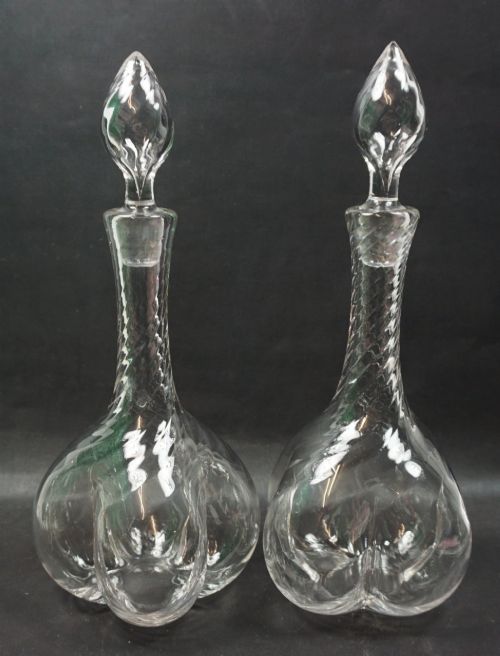
Antique Carafes
A glass bottle for bringing wine, water or spirits to the table, stoppered as a decanter or open-mouthed as a carafe.

Antique Carafes
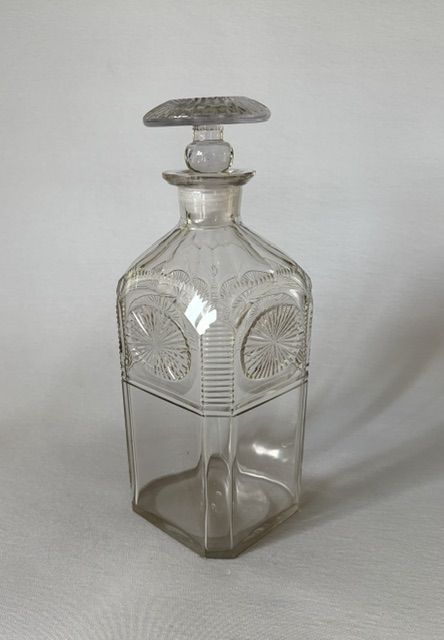
Glass vessels for serving decanted wine, water and spirits became standard on English tables in the eighteenth century: the stoppered decanter for wine and spirits, the open carafe for water and single servings. The forms carried on with little change of purpose through the nineteenth century as cutting and engraving spread.
The heading covers a decanter-and-carafe pool of 19th and early 20th century British table glass. 'Glass' appears in two thirds of titles and 'decanter' in far more than 'carafe', so dealers use the word carafe loosely, for smaller unstoppered wine and water bottles and for pieces they also call decanters.
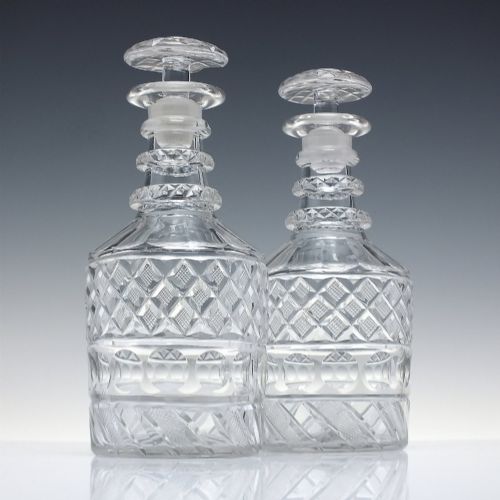
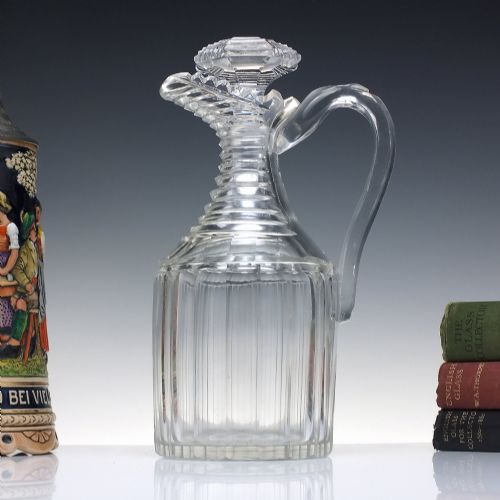
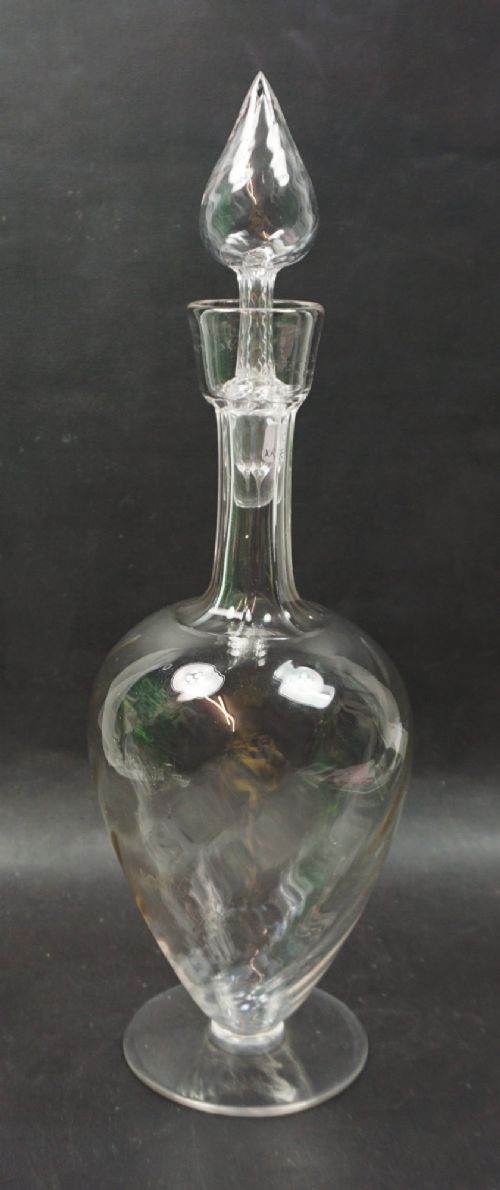
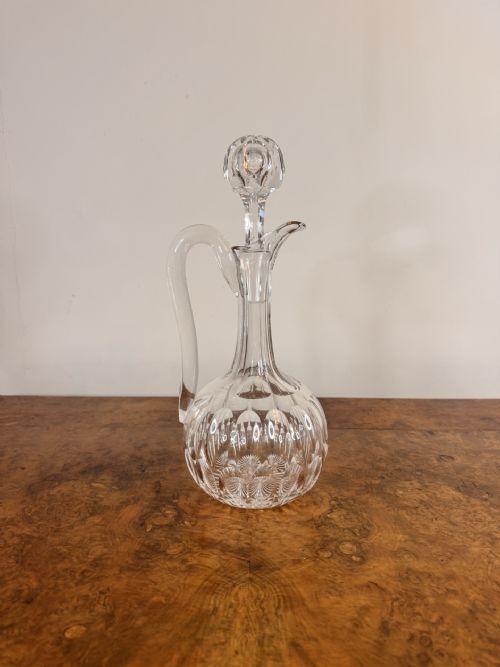
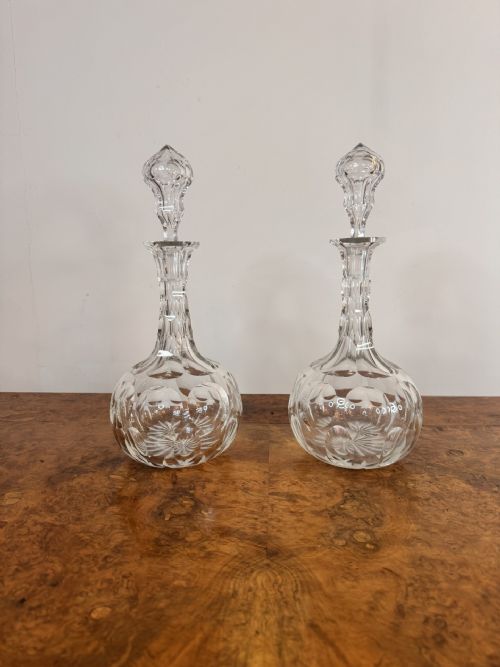
The most likely encounter is a clear cut or engraved wine decanter or carafe of Victorian date, either singly or as a matched pair. Pairs are a habit of the category, running to one title in five, with trios and full decanter-and-glasses services turning up too.
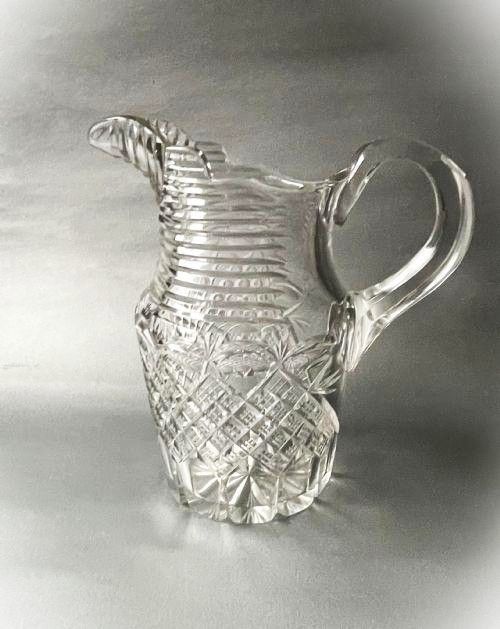
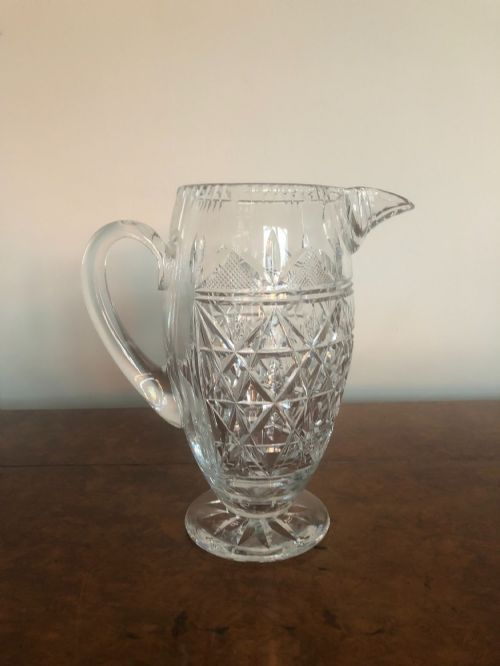
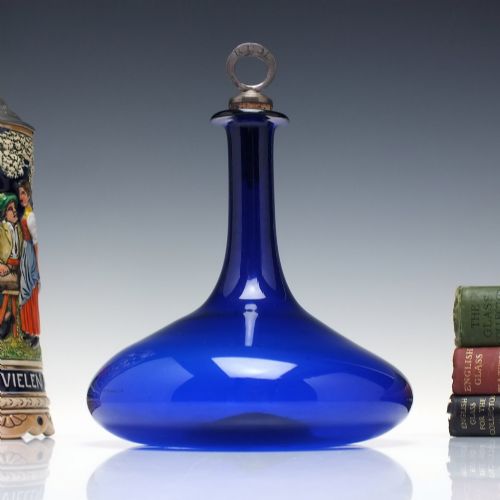
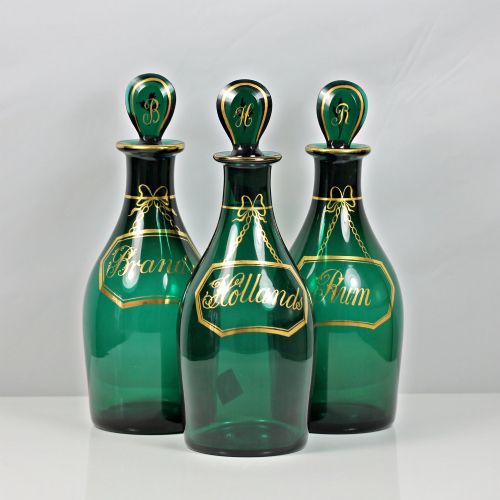
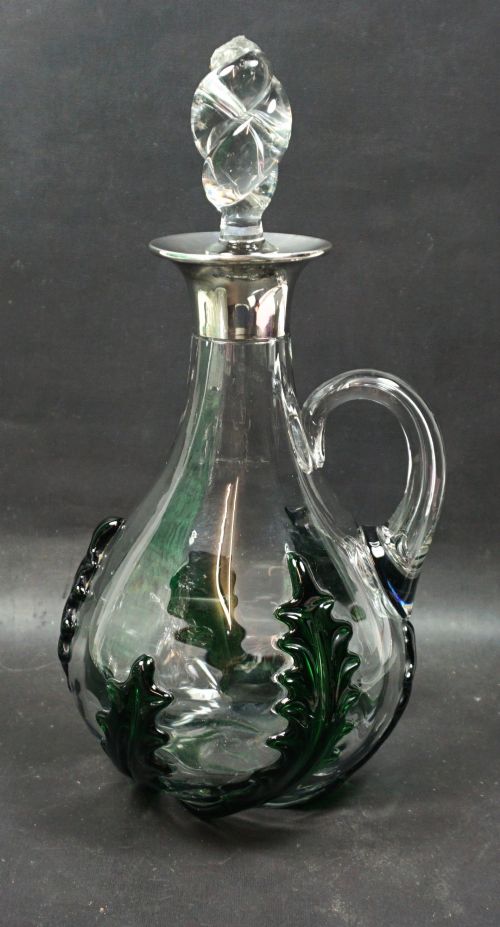
Around the clear glass sit four smaller groups: unstoppered wine and water carafes, including spa, bedside and personal whisky bottles; coloured bodies in Bristol blue, green, amethyst, cranberry and ruby; claret jugs, ewers and water jugs, some with silver or plated mounts; and the squat mell decanter, a Scottish and Bristol spirit form usually dated around 1830. Dating runs from the late Georgian and Regency end through to Edwardian, with a handful reaching the 1920s and 30s.
Where The Range Widens
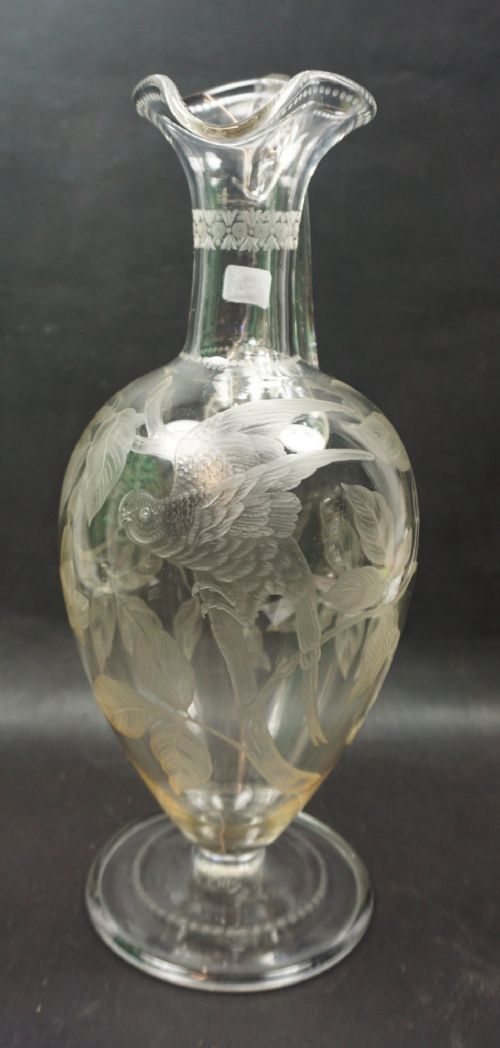
Decoration does most of the work. A plain Victorian glass wine carafe sits at the very bottom of the range; cutting lifts it, engraving lifts it further, and gilded or enamel-painted bodies climb higher again. Cut glass is the single biggest group in the category, so plain surfaces stand out as the cheap end rather than the norm.
Colour and metal pay. Bristol blue, green, amethyst, cranberry, ruby overlay, cobalt and opaline carry a premium over clear glass of comparable date, and silver collars, hallmarked mounts and plated claret jug frames sit well above the middle of the range. Number matters as much: pairs, trios and full services of decanter with six or four matching glasses cluster in the upper half.
Scale and unusual form take the top. Magnums, ship's decanters, sugarloaf shapes and shoulder carafes with Lynn rings all appear at the upper end, as do the few titles naming a glasshouse or designer, which are one-off appearances rather than any pattern across the category.
Antique Carafes Retail Price Guide 2026
Typical UK retail prices for carafes, calculated from the Sellingantiques database of over a million retail prices indexed since 2003. This retail price guide relies exclusively on Sellingantiques data; no external sources or auction records are used, so the figures do not describe the wider market.
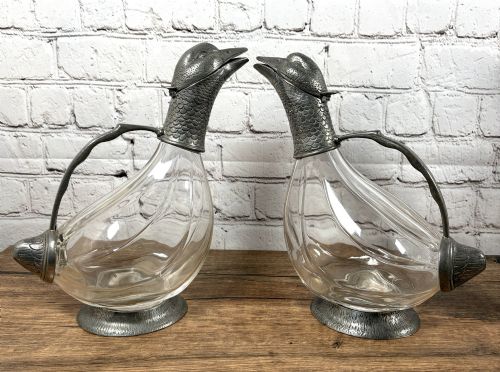
Odd forms in the archive include a decanter modelled as a dog, a magnum sugarloaf beer decanter and a wrought-iron mounted wine carafe dispenser.

The Antique Carafes Glossary
- Decanter
- A stoppered glass bottle for wine or spirits, and the commonest word in these titles after 'glass'.
- Carafe
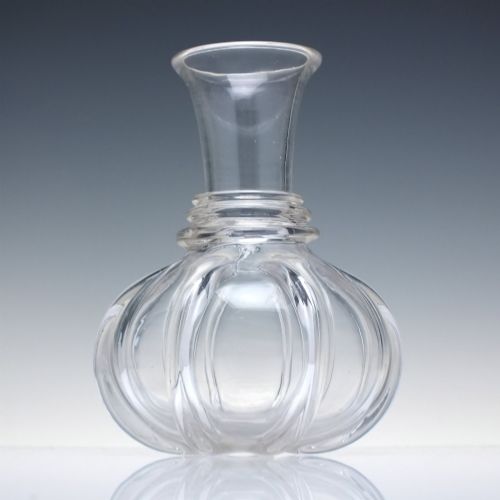
- An open, unstoppered serving bottle for wine or water, though dealers apply the word to some stoppered pieces as well.
- Three ring
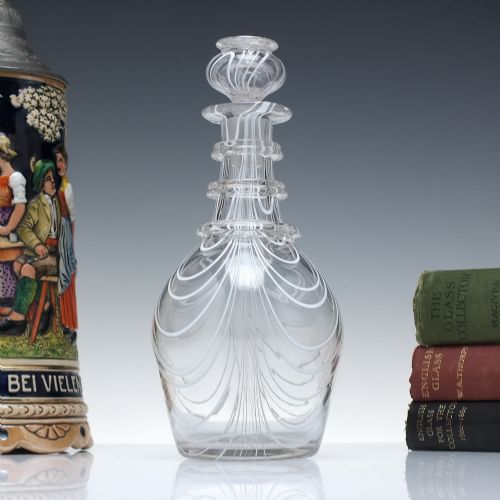
- Three applied rings round the neck for grip, a recurring Regency and Victorian feature in this category.
- Shaft and globe
- A bulbous body with a long narrow neck, named directly in several titles.
- Mell decanter
- A squat spirit form seen in Bristol blue, green, amber and amethyst, and usually dated around 1830.
- Silver collar
- A silver band at the neck, sometimes hallmarked, and part of the small run of titles carrying the word silver.
Antique Carafes: Frequently Asked Questions
What is the difference between a carafe and a decanter?
In principle the decanter has a stopper and holds wine or spirits, while the carafe is open-mouthed and serves water or single measures.
In these listings the two words are used interchangeably, sometimes within the same title. Dealers call small unstoppered wine and water bottles carafes, and also apply the word to stoppered pieces.
How old are most pieces in this category?
The dated field runs from 1750 to 1930, with Victorian the single commonest period word and 19th Century close behind.
Late Georgian and Regency material through to Edwardian is well represented. Circa dates cluster around 1830, 1860, 1870 and 1880, and a handful of pieces reach the 1920s and 30s.
Are pairs common?
Yes. One title in five describes a pair, which makes matched sets a defining habit rather than an occasional find.
Beyond pairs, the archive holds a trio of cut decanters and full services of a decanter with six or four matching glasses.
What colours turn up in antique glass carafes?
Bristol blue and Bristol green appear most often, alongside amethyst, cranberry, ruby overlay, amber, cobalt and opaline.
Coloured bodies sit in the upper half of the range, while plain clear Victorian carafes anchor the bottom.
Which makers are associated with these?
No maker runs through this category. The named glasshouses and designers that do appear in titles are one-off entries rather than a pattern.
Where a source is named it tends to sit near the top of the sampled range, but the great bulk of the category is unattributed British table glass.
Do any unusual forms come up?
They do. The archive records a decanter modelled as a dog, a wrought-iron mounted wine carafe dispenser and a magnum sugarloaf beer decanter.
Also recorded: a shoulder carafe with five Lynn rings, a bedside water carafe with its own tumbler, and enamelled whisky decanters advertising Glasgow and Aberdeen blends.
About 31 pieces come to market in a typical year on Sellingantiques, listed by 65 different dealers over time.