






A 2026 Guide by Sellingantiques
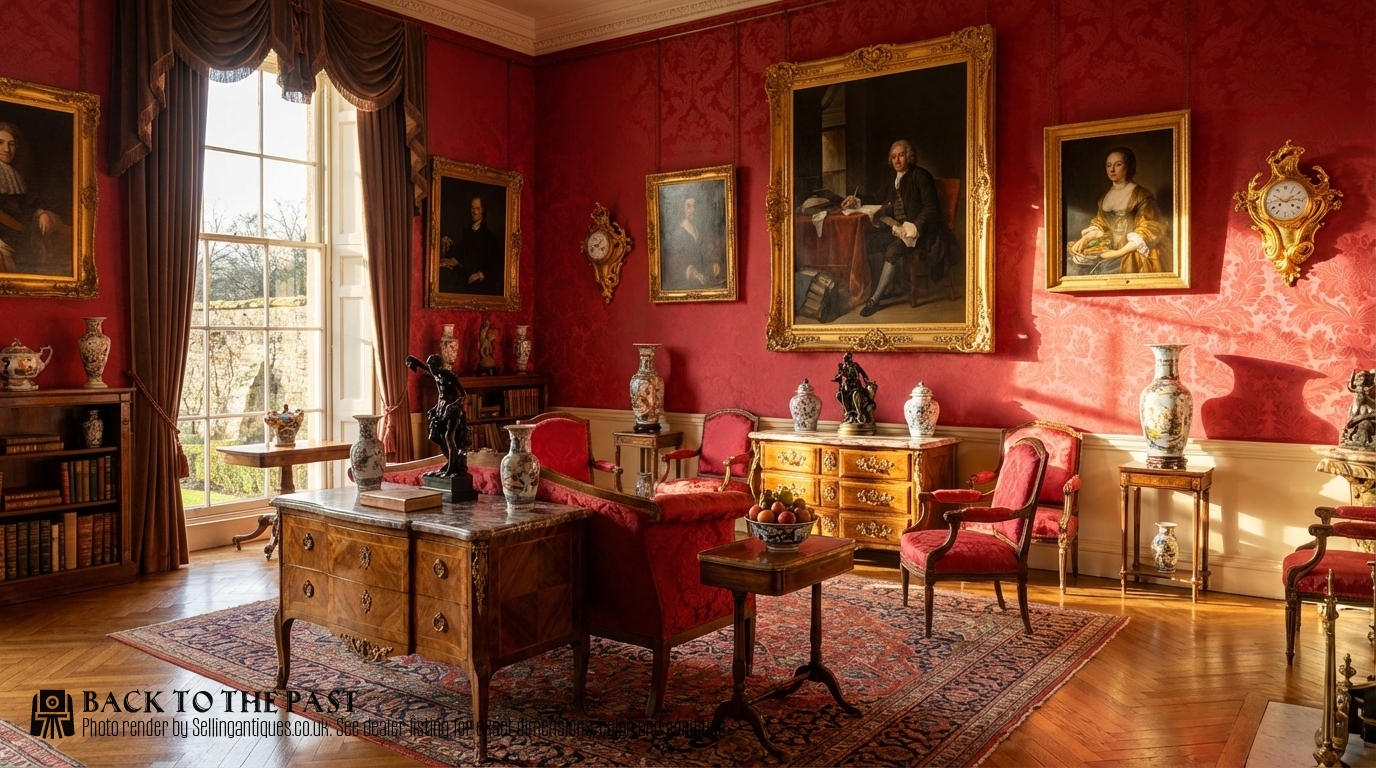
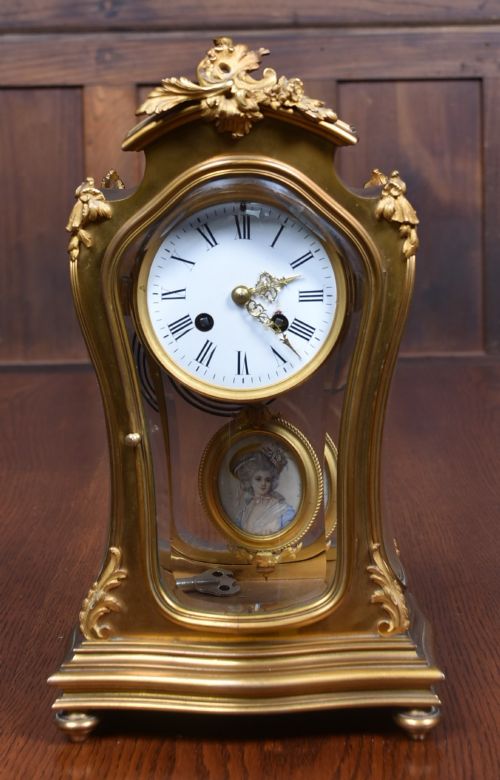
Large Antique French Ormolu Rococo Cartel Wall Clock Louis Xv, 1880
Priced at £4,395 from Dragon-Antiques.com
Clockmaking in Paris shifted during the eighteenth century. Cases became architectural and sculptural, moving away from simple functional wooden boxes.
Provincial regions developed their own traditions alongside the capital. Look at the Comtoise clocks with their pressed brass surrounds and painted dials.
Guild regulations separated the casemakers from the movement makers. Bronze workers cast the metalwork while horologists focused on the gear trains.
Industrial production expanded in the nineteenth century. Factories supplied rough movements to finishing workshops across the country.
Antide Janvier produced complex astronomical and planetary mechanisms during the late eighteenth and early nineteenth centuries.
The Japy Frères factory supplied rough movement blanks from their base in Beaucourt. Finishers across France bought these stamped ebauches to complete.
Abraham-Louis Breguet operated in Paris from the late 1770s. His workshop developed carriage clocks and precision regulators for the wealthy elite.
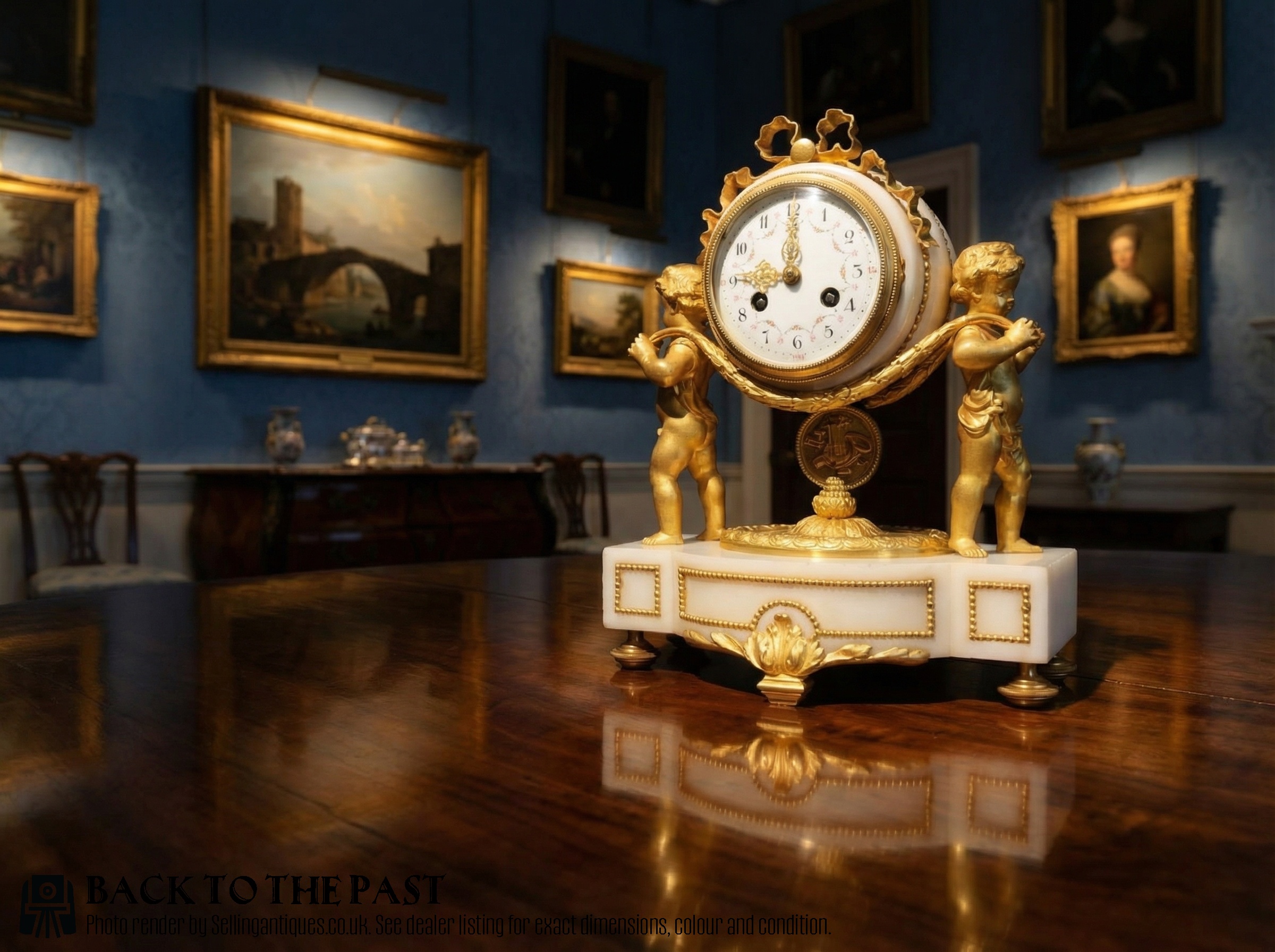
Antique French Ormolu and White Marble Clock ~ Cherubs, 1860
Priced at £2,750 from Dragon-Antiques.com
The 2026 retail price guide for Antique French Clocks is drawn from a proprietary archive of over 1.1 million retail prices indexed by Sellingantiques since 2003. This guide relies exclusively on their own internal data; no external sources or auction records are used.
Analysing nearly 25 years of UK antique market history alongside current retail values, the data indicates that typical UK retail prices for Antique French Clocks range between £800 and £3,000. Entry-level prices generally fall under £800 and premium examples upwards of £3,000.
Porcelain enamel dials often bear painted Roman or Arabic numerals. Some earlier examples use separate enamel cartouches mounted onto a cast brass backing.
Countwheel striking mechanisms usually control the sequence of chimes. This grooved wheel sits on the backplate, turning slowly to regulate the number of hammer blows.
Check the pendulum suspension. Silk thread held the pendulum rod on older movements, adjusted by a small arbor near the twelve o'clock mark.
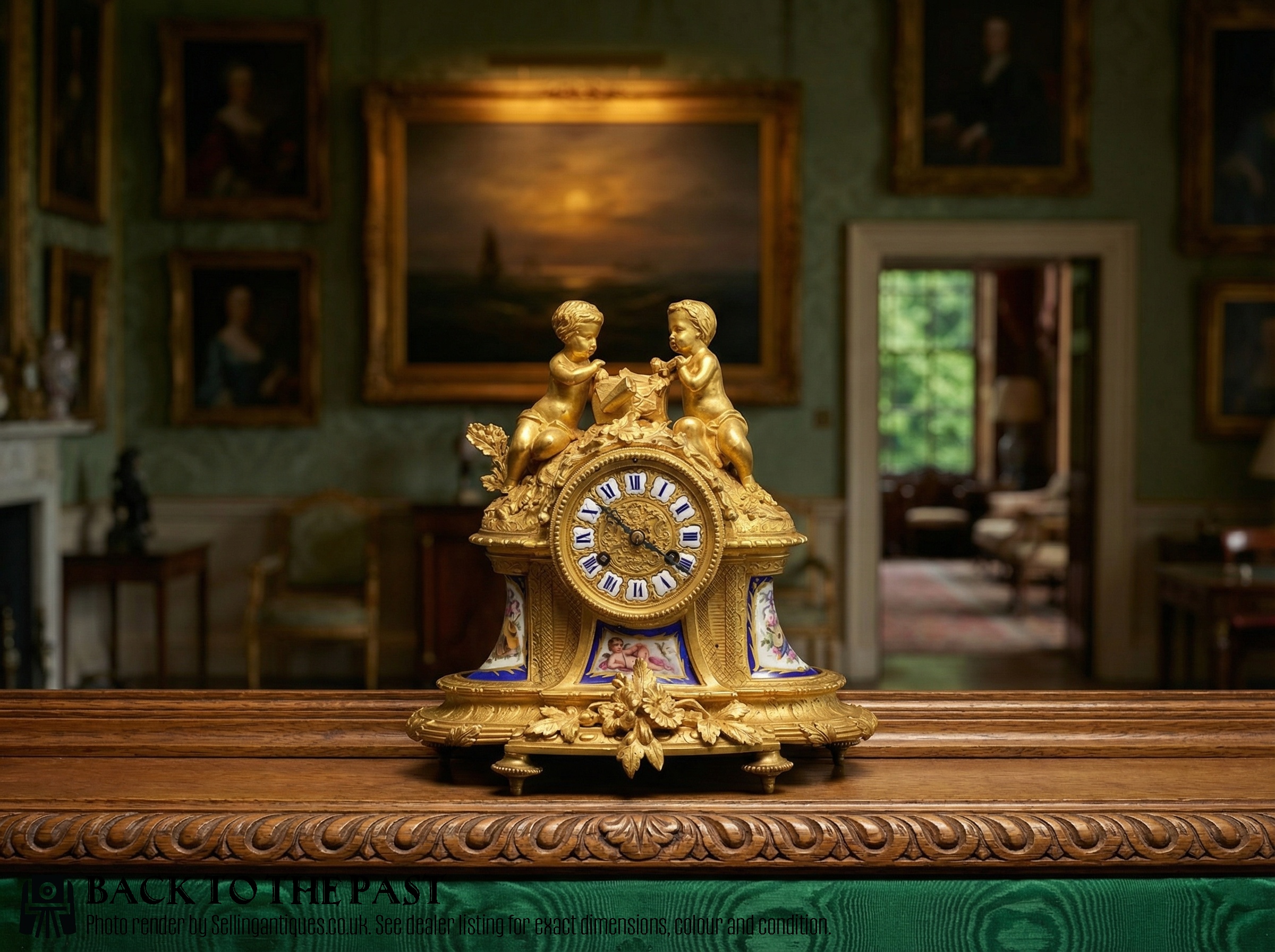
Antique French Ormolu and Porcelain Mantle Clock, 1880
Priced at £725 from Andrew Lovatt Antiques
Movement plates transitioned from cast brass to rolled brass sheet. Rolling created a denser metal that took a smoother polish and reduced friction on the pivots.
Pinion cutting improved with early nineteenth-century machinery. Steel gear leaves became more uniform, allowing antique French clocks to run with less driving power.
Notice the casing assembly methods. Bronze components join via threaded rods and square nuts rather than modern spot welding or glue.
"Regional makers designed Comtoise clocks specifically to strike the hour twice. The repeat chimes a few minutes later, giving farmers time to listen."
"Many Parisian dial painters signed their work on the reverse. Removing the dial pan sometimes reveals a faint signature and date fired into the enamel."
"Silk suspension threads allow for running on uneven surfaces. The flexible string compensates slightly if the mantelpiece sits off-level."
Based on almost 25 years of Sellingantiques UK antique market data, Antique French Clocks appeared 8005 times (out of 1,100,000 antiques) which gives it a rarity score of 20/100.
This score measures scarcity within the Sellingantiques archive only and is not a survey of the entire antiques market, so these statistics may not be indicative of the general availability of Antique French Clocks elsewhere.
Most antique French clocks have two winding squares on the dial. The right side typically powers the timekeeping train, while the left side powers the striking mechanism. Turn the key firmly until you feel a definite resistance.
Never force the key once it stops. If the clock runs but does not chime, you can choose to wind only the right-hand square.
You can usually adjust the rate yourself. If your clock has a pendulum on a suspension spring, look for a small square arbor near the twelve o'clock position on the dial. Turning this slightly with a double-ended key raises or lowers the pendulum bob to change the speed.
Turn the arbor to the left to lower the pendulum and slow the clock down. If the clock has a fixed pendulum rod without a dial adjustment, look for a small rating nut directly under the bob at the back.
The strike train has likely fallen out of sync with the hands. This happens frequently if the clock winds down.
Move the minute hand to the next hour and count the strikes. Slip the hour hand independently on its friction fit pipe to match the chimes.
Moving the hands backward is risky on countwheel strike mechanisms. Pushing past the hour or half-hour catches the lifting pins against the levers, which can bend or break the brass components inside.
Some later rack-and-snail striking mechanisms tolerate backward movement. If you do not know which system your movement uses, always move the hands forward, pausing to let each sequence finish.
Please note: This Antique French Clocks guide and its associated pricing data are provided for general informational purposes only. It does not constitute formal financial, investment, or appraisal advice and should not be relied upon as the sole basis for any commercial activity, purchasing, or sales decisions. Sellingantiques.co.uk accepts no liability for any actions taken in reliance on this information. Always consult with a qualified professional or independent appraiser.
