


A 2026 Guide by Sellingantiques

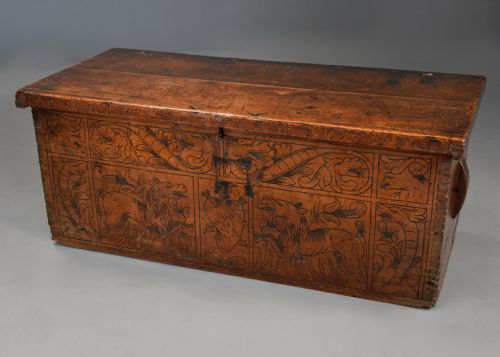
17th Century Continental Walnut Cassone, 17th century
Priced at £1,400 from LVS Decorative Arts
Wealthy Italian families commissioned these large chests for weddings between the fourteenth and sixteenth centuries.
Processions through the streets often featured the bride's dowry carried securely inside an antique cassone.
Florence and Siena became the primary centres for the most elaborate painted and carved examples.
Displaying heraldic shields on the front panel showed the alliance between two powerful houses.
Look for pairs. They were typically made in twos, though single survivors are much more common today.
Specific cabinetmakers rarely signed their work, so pieces are attributed to regional workshops rather than individuals.
Apollonio di Giovanni ran a famous Florentine workshop in the fifteenth century producing painted panels for antique cassoni.
Master painters often collaborated with master carvers to finish a single high-status wedding chest.
The 2026 retail price guide for Antique Cassoni is drawn from a proprietary archive of over 1.1 million retail prices indexed by Sellingantiques since 2003. This guide relies exclusively on their own internal data; no external sources or auction records are used.
Analysing nearly 25 years of UK antique market history alongside current retail values, the data indicates that typical UK retail prices for Antique Cassoni range between £1,300 and £5,000. Entry-level prices generally fall under £1,300 and premium examples upwards of £5,000.
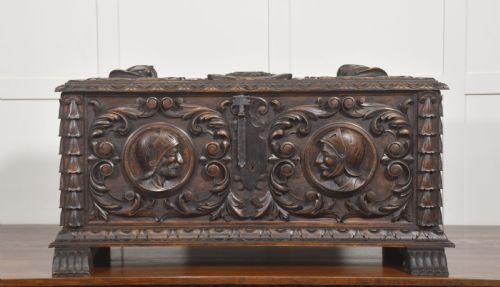
The front panel acts as the focal point, covered in high-relief carving or tempera painting.
Heavy paw feet frequently support the base, sometimes carved as lions or mythical beasts.
Lift the lid. You will often find fabric linings or traces of patterned paper pasted inside.
Early chests relied on thick iron straps and simple dovetails to hold heavy planks together.
Carvers moved from flat surface decoration to deep sculptural relief as the sixteenth century progressed.
Notice the joinery. Wooden pegs secure the thick boards, sometimes hidden beneath layers of paint or gilding.
"The inside of the lid often hides a private painting, meant only for the bride when she opened it."
"Many panels depict classical myths or heroic battles, chosen to inspire virtue and courage in the newly married couple."
"Smaller companion boxes called cassonetti were sometimes made to sit neatly inside the main compartment."
Based on almost 25 years of Sellingantiques UK antique market data, Antique Cassoni appeared 141 times (out of 1,100,000 antiques) which gives it a rarity score of 97/100.
This score measures scarcity within the Sellingantiques archive only and is not a survey of the entire antiques market, so these statistics may not be indicative of the general availability of Antique Cassoni elsewhere.
They are substantial pieces. A full-sized walnut chest requires two strong people to move it.
The thick boards and heavy iron fittings add considerable mass.
Renaissance hinges were forged from thick iron. They were designed for daily use and tend to outlast modern equivalents.
If the pins wear down, a metalworker can easily replace them without altering the original strap. Check that the wood holding the screws or nails remains sound.
Dust the surface lightly with a dry, soft brush. Avoid using any liquid cleaners, waxes, or chemical polishes on tempera paint or gilding.
If the panel is darkened by old varnish or soot, leave it alone. Only a trained conservator should attempt to remove centuries of grime from antique cassoni.
Regional styles varied widely across Italy during the period. Florence favoured particular classical motifs, but individual workshops had their own distinct patterns and carving techniques.
A single city supported multiple guilds and carving shops. Wealthy clients also dictated specific requests for their commissions, meaning strict uniformity across surviving examples is rare.
Please note: This Antique Cassoni guide and its associated pricing data are provided for general informational purposes only. It does not constitute formal financial, investment, or appraisal advice and should not be relied upon as the sole basis for any commercial activity, purchasing, or sales decisions. Sellingantiques.co.uk accepts no liability for any actions taken in reliance on this information. Always consult with a qualified professional or independent appraiser.
