


A 2026 Guide by Sellingantiques
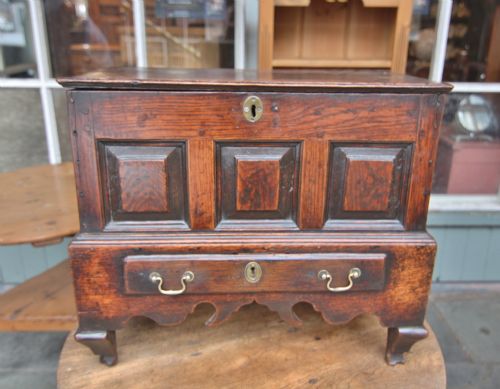
Georgian Coffer Bach, Georgian
Priced at £480 from The Ark Stores
These compact chests emerged early in the eighteenth century as bedrooms became private spaces requiring dedicated dressing furniture.
Look at the proportions to understand their original context, usually built just wide enough to hold a folded shirt.
Antique bachs solved a practical storage problem in cramped city townhouses where floor space remained at a premium.
Owners often placed them in dressing alcoves or upstairs corridors rather than parading them in main reception rooms.
Documented London makers like George Seddon occasionally produced these forms during the late eighteenth century.
Most antique bachs lack any identifying stamp, relying instead on the established patterns of the provincial trade.
Northern regional workshops frequently adapted metropolitan designs using whatever dense local timbers the joiners had to hand.
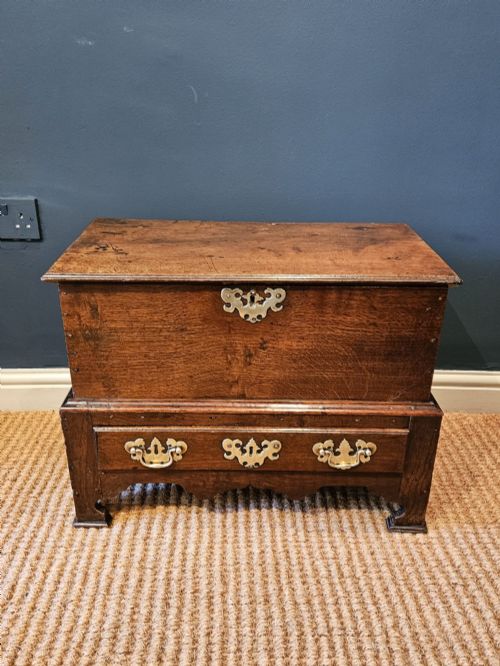
Tiny Welsh Oak Coffor Bach (Small Chest), Circa 1770, 18th Century
Priced at £1,900 from WelshAntiques
The 2026 retail price guide for Antique Bachs is drawn from a proprietary archive of over 1.1 million retail prices indexed by Sellingantiques since 2003. This guide relies exclusively on their own internal data; no external sources or auction records are used.
Analysing nearly 25 years of UK antique market history alongside current retail values, the data indicates that typical UK retail prices for Antique Bachs range between £800 and £2,900. Entry-level prices generally fall under £800 and premium examples upwards of £2,900.
A hinged top folding forward onto sliding lopers remains the defining characteristic of most early antique bachs.
Check the drawer arrangement, which normally features two short drawers sitting above three long graduated ones.
Bracket feet commonly support the lower carcase, though some country versions rest on heavy turned bun feet.

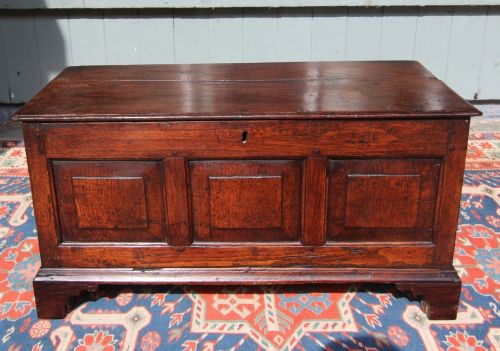
Early Welsh Oak Coffor Bach (Small Chest), Circa 1690, 17th century
Priced at £2,100 from WelshAntiques
Early eighteenth-century joiners favoured crossbanding to protect and decorate the vulnerable edges of the folding top.
Notice the drawer dovetails on later pieces, which become notably finer and narrower than earlier robust joints.
Provincial cabinetmakers gradually shifted from solid panel construction towards thin, decorative veneers laid over stable secondary woods.
"Many examples retain shallow secret compartments hidden behind the bottom drawer runners."
"The dense timber folding tops often double as effective acoustic baffles in modern domestic spaces."
"You'll sometimes find fragments of original Georgian wallpaper preserved underneath the bottom carcase boards."
Based on almost 25 years of Sellingantiques UK antique market data, Antique Bachs appeared 222 times (out of 1,100,000 antiques) which gives it a rarity score of 96/100.
This score measures scarcity within the Sellingantiques archive only and is not a survey of the entire antiques market, so these statistics may not be indicative of the general availability of Antique Bachs elsewhere.
Brass swan-neck handles appear frequently on these chests from the mid-eighteenth century onwards. Wooden knobs tend to turn up on later provincial pieces.
Look at the holes behind the current brasses. Extra plugged holes usually mean the handles are later replacements fitted to suit a changing fashion.
Some do hide a shallow compartment in the frieze or behind the lopers. You pull the main drawer right out to reach them.
They never held anything bulky. A few coins or private letters usually fit, but nothing larger.
Antique bachs are intentionally low pieces of furniture. Joiners built them to sit easily in cramped dressing rooms without dominating the space.
Examine the bracket feet closely. If the grain matches the main carcase and the bottom edge shows even wear, they're probably original. Cut-down chests usually lose their base mouldings.
Look at the proportions. A square profile often suggests the height remains unchanged since the eighteenth century.
Solid timber responds to seasonal moisture changes. Drawers that run smoothly in summer often bind slightly when the autumn damp sets in.
Rubbing a little candle wax along the wooden runners helps ease friction. Avoid placing the chest directly against a cold external wall where condensation gathers.
Veneered pieces need more stable conditions. Thin wood layers lift if the animal glue absorbs too much atmospheric moisture over a long wet season.
Please note: This Antique Bachs guide and its associated pricing data are provided for general informational purposes only. It does not constitute formal financial, investment, or appraisal advice and should not be relied upon as the sole basis for any commercial activity, purchasing, or sales decisions. Sellingantiques.co.uk accepts no liability for any actions taken in reliance on this information. Always consult with a qualified professional or independent appraiser.
