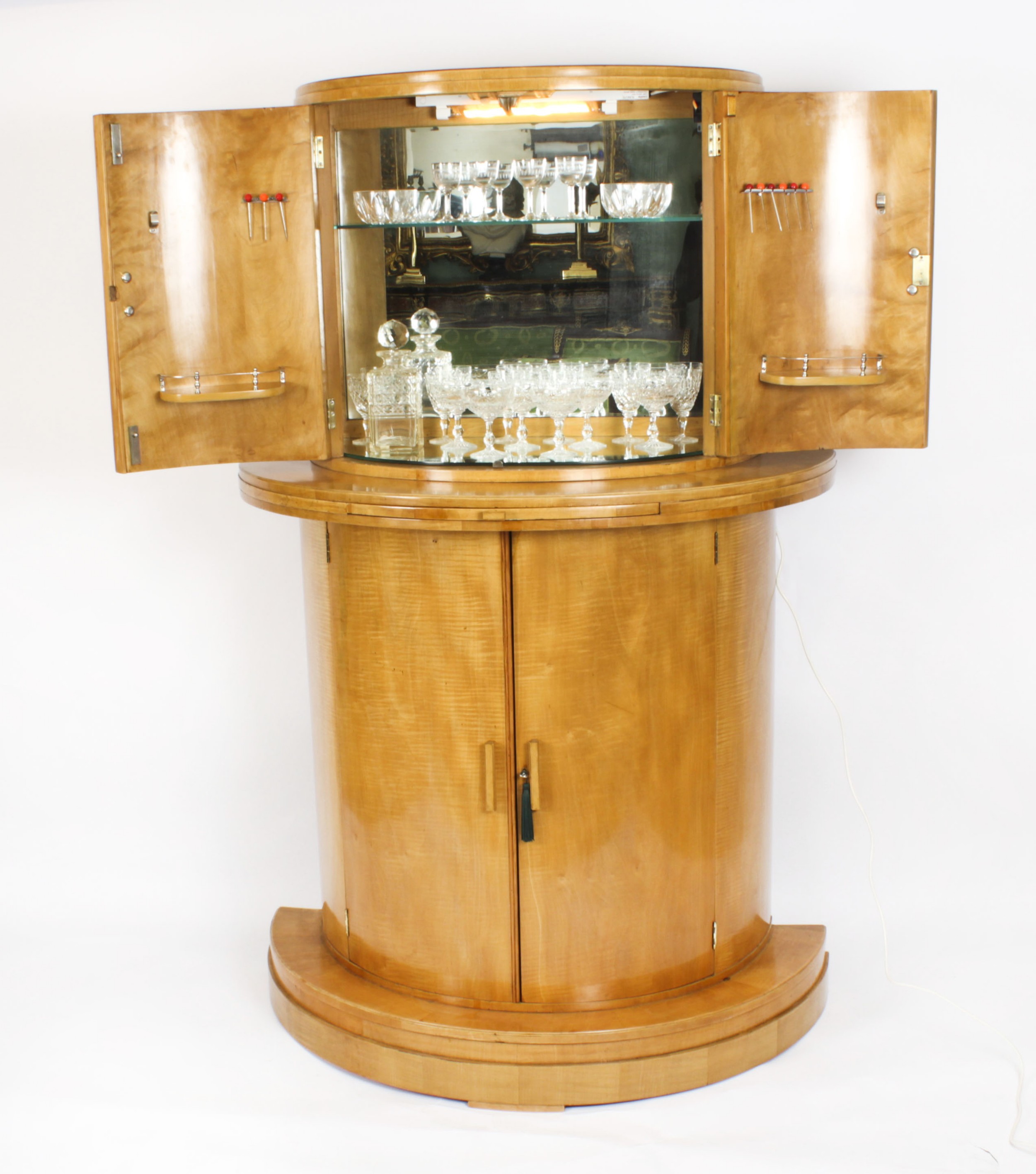
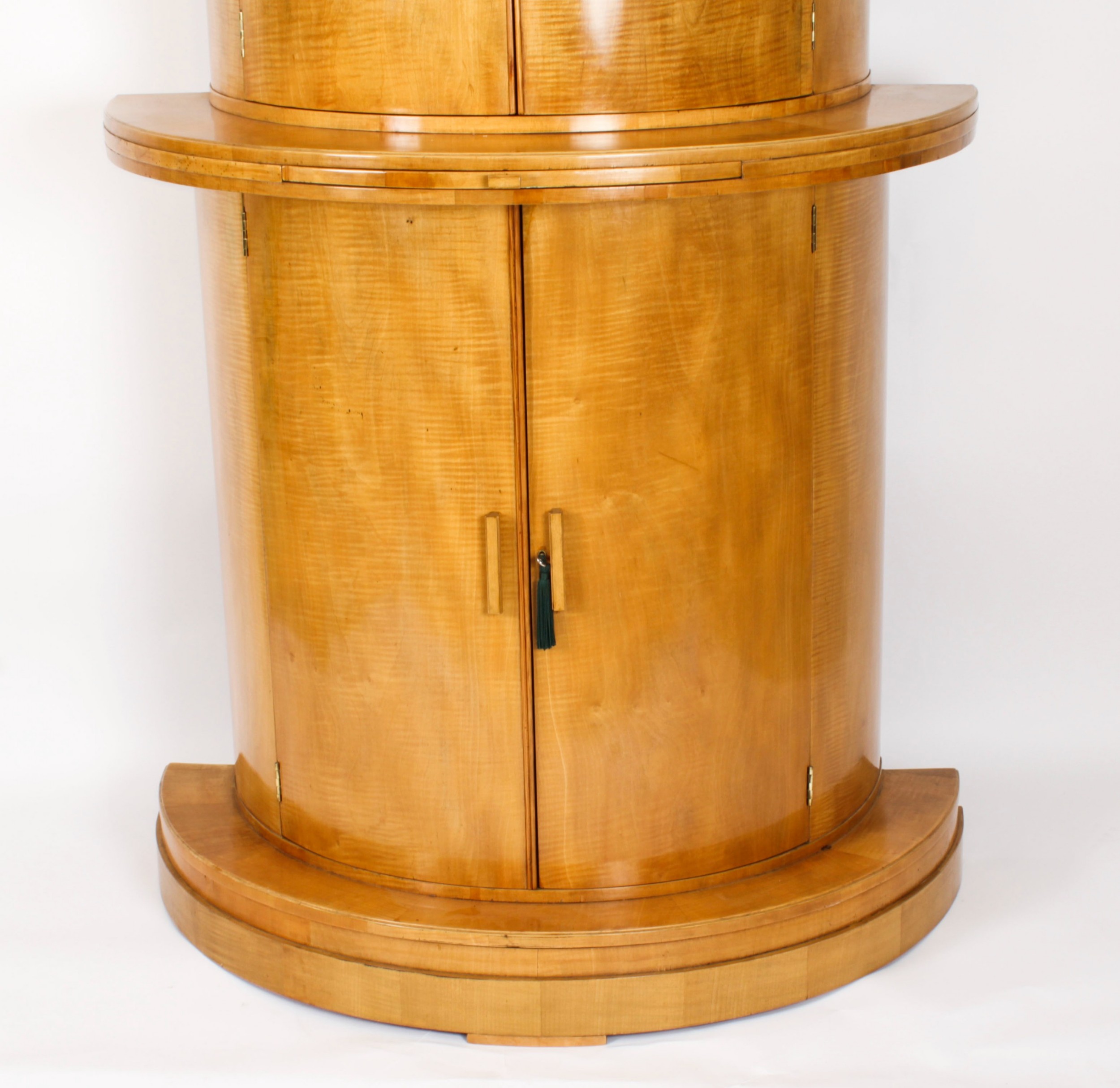
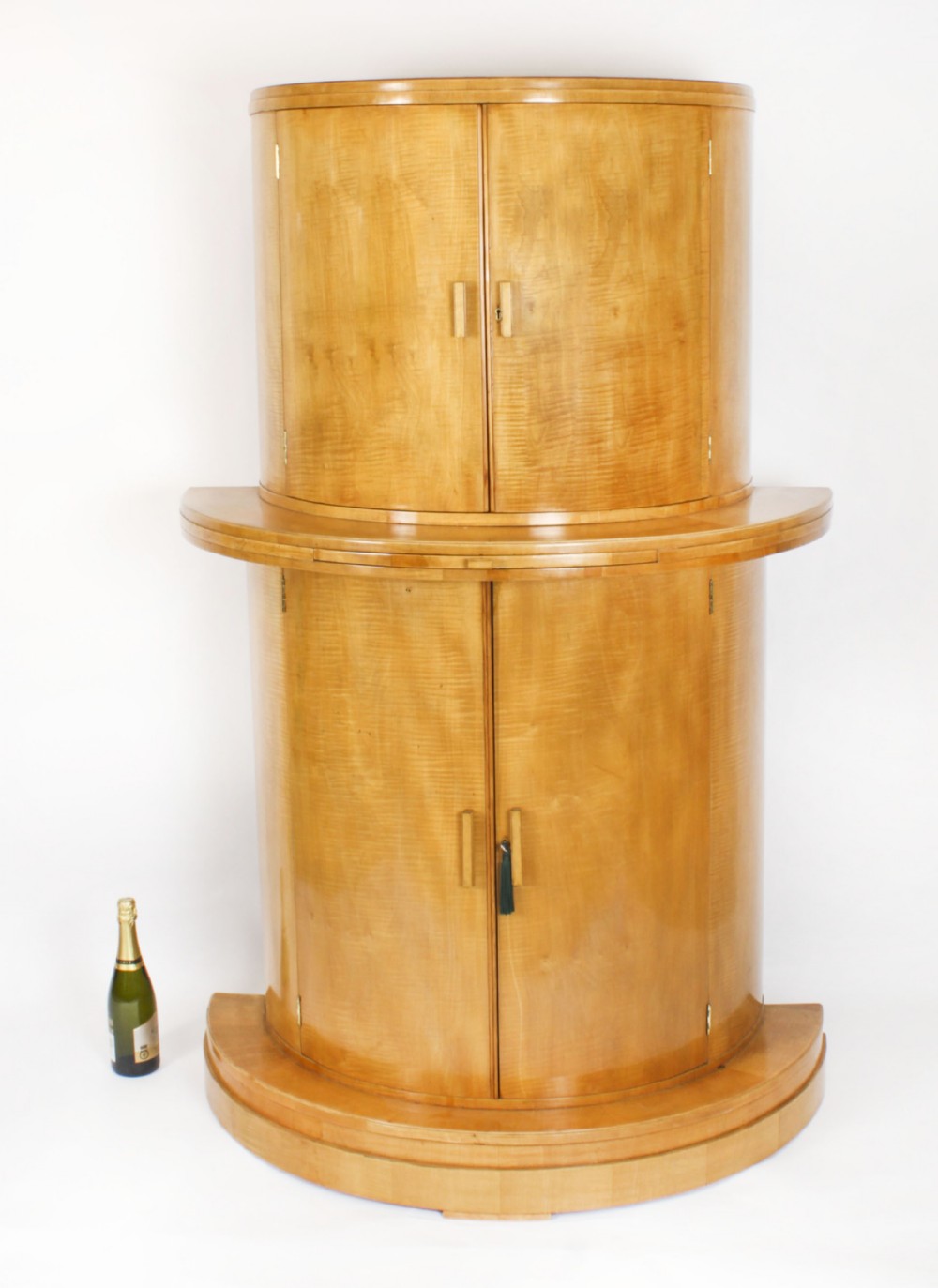
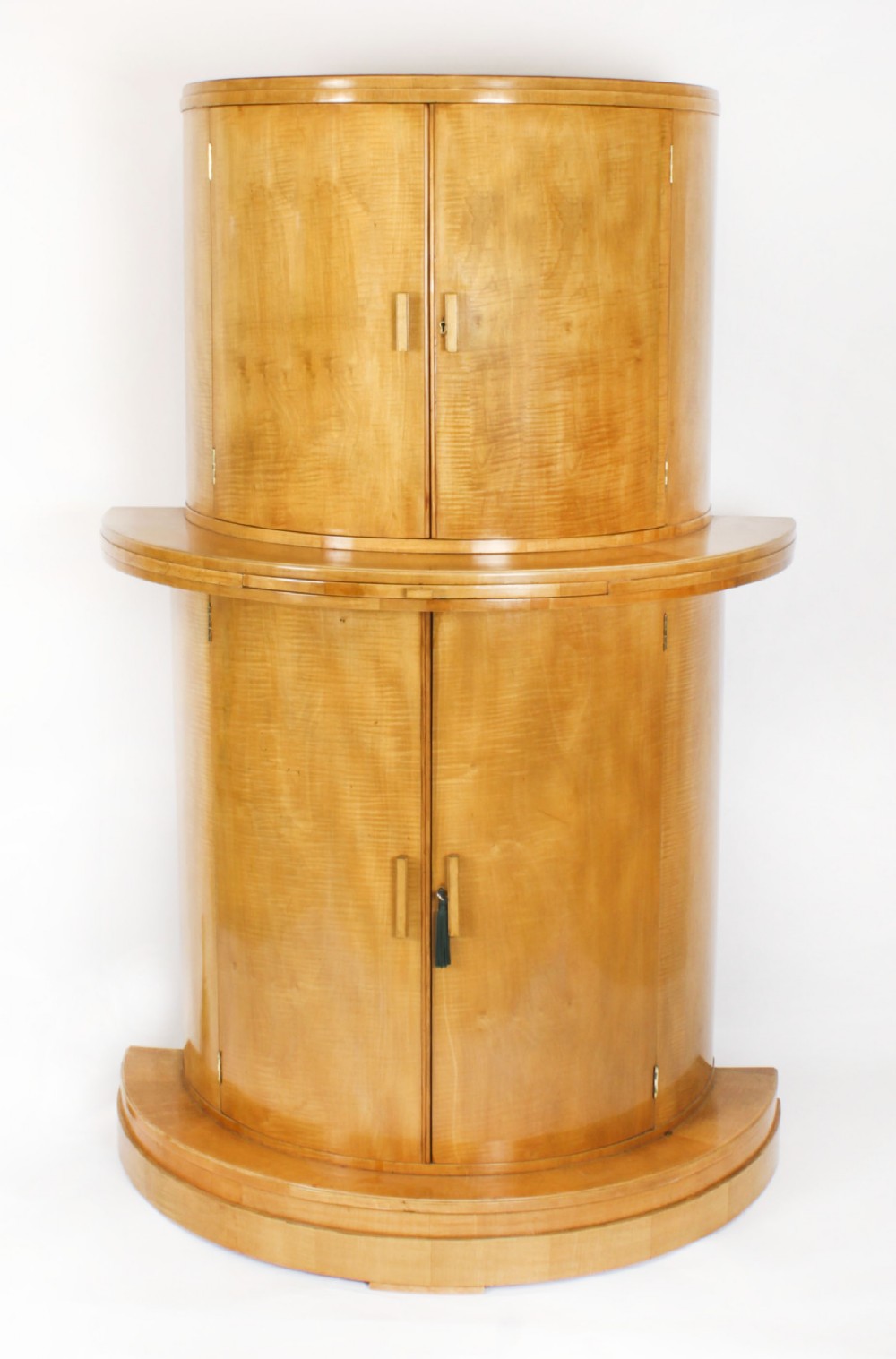
Regent Antiques has dated this piece to the 1920s.
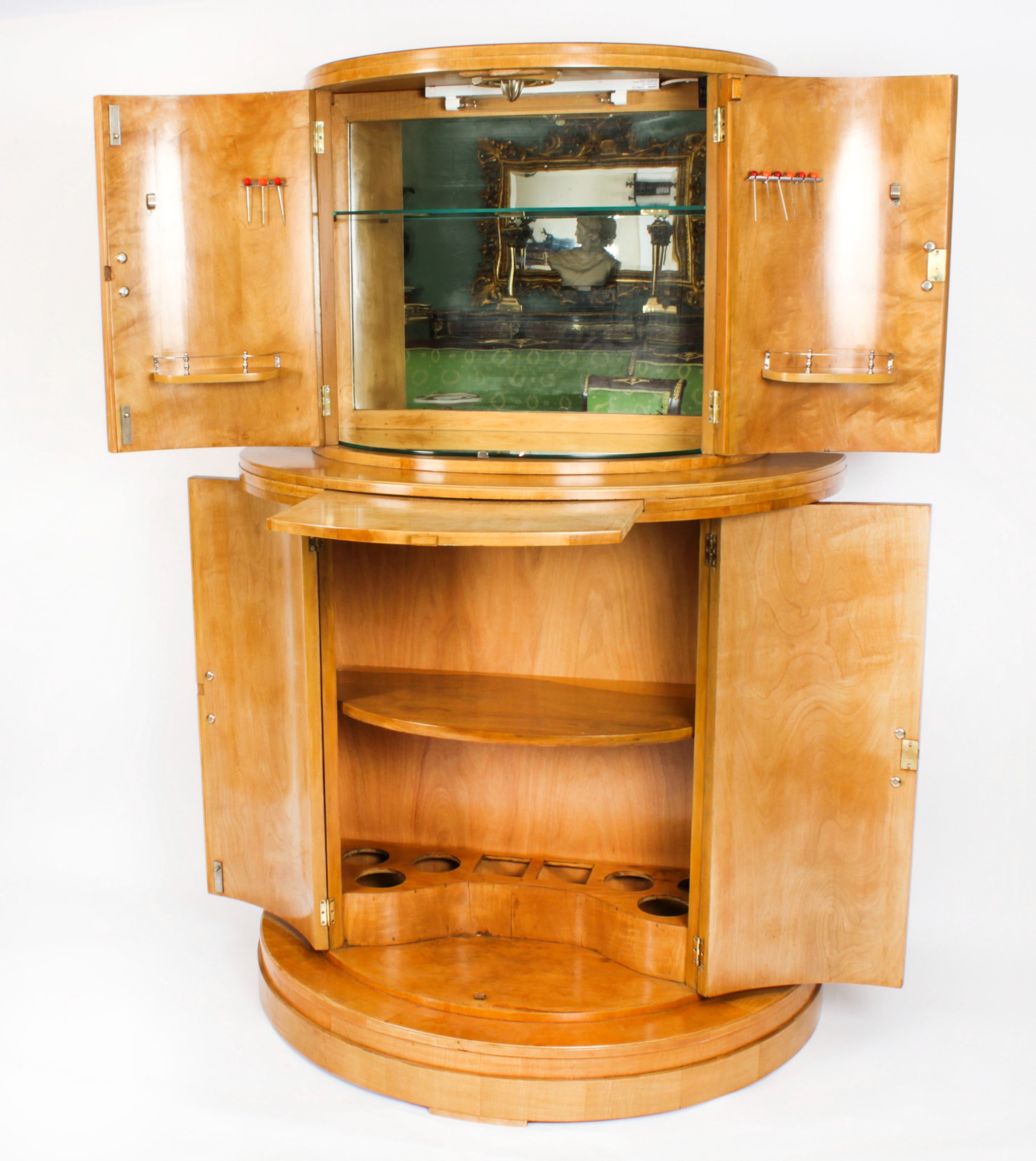
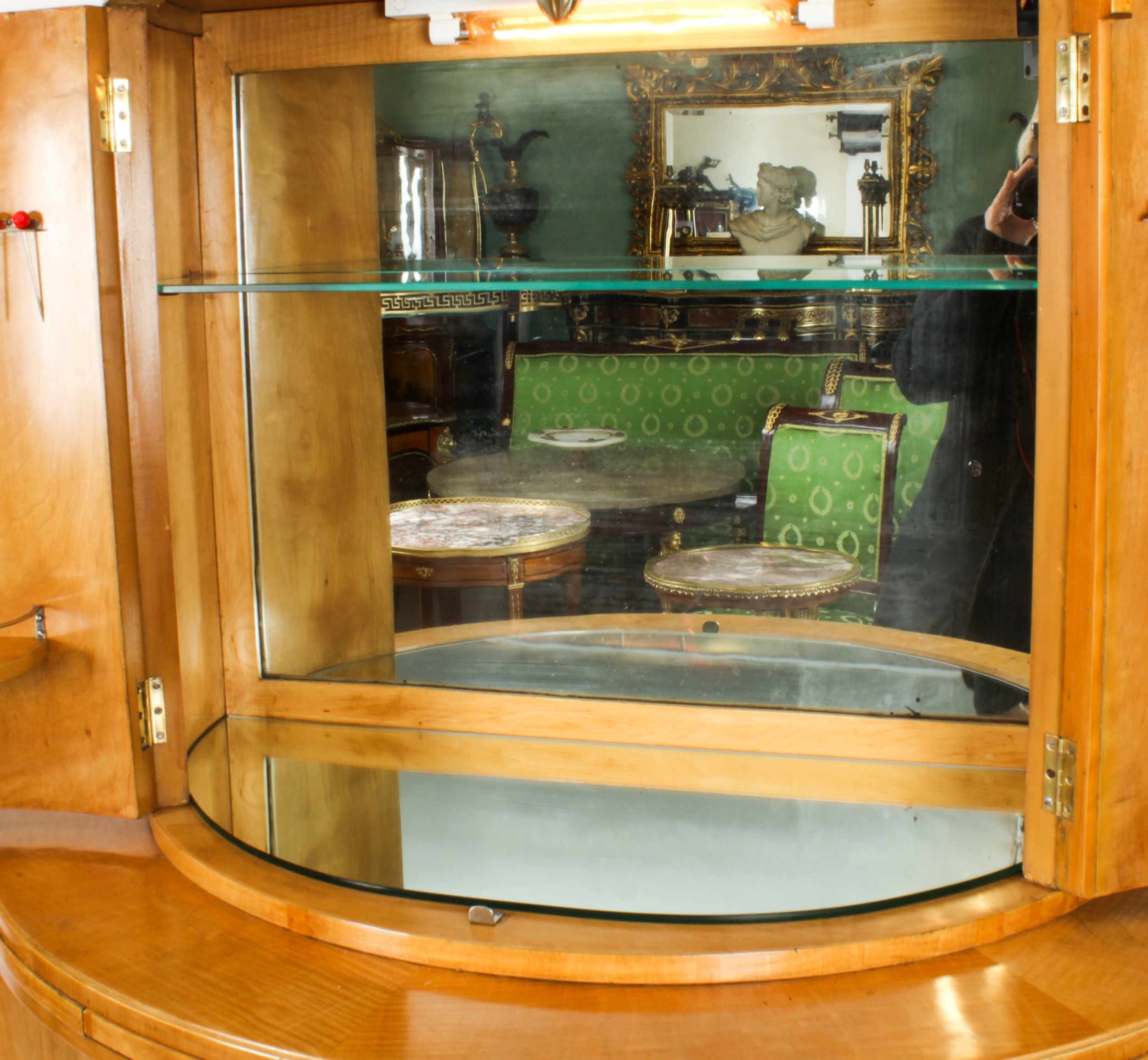
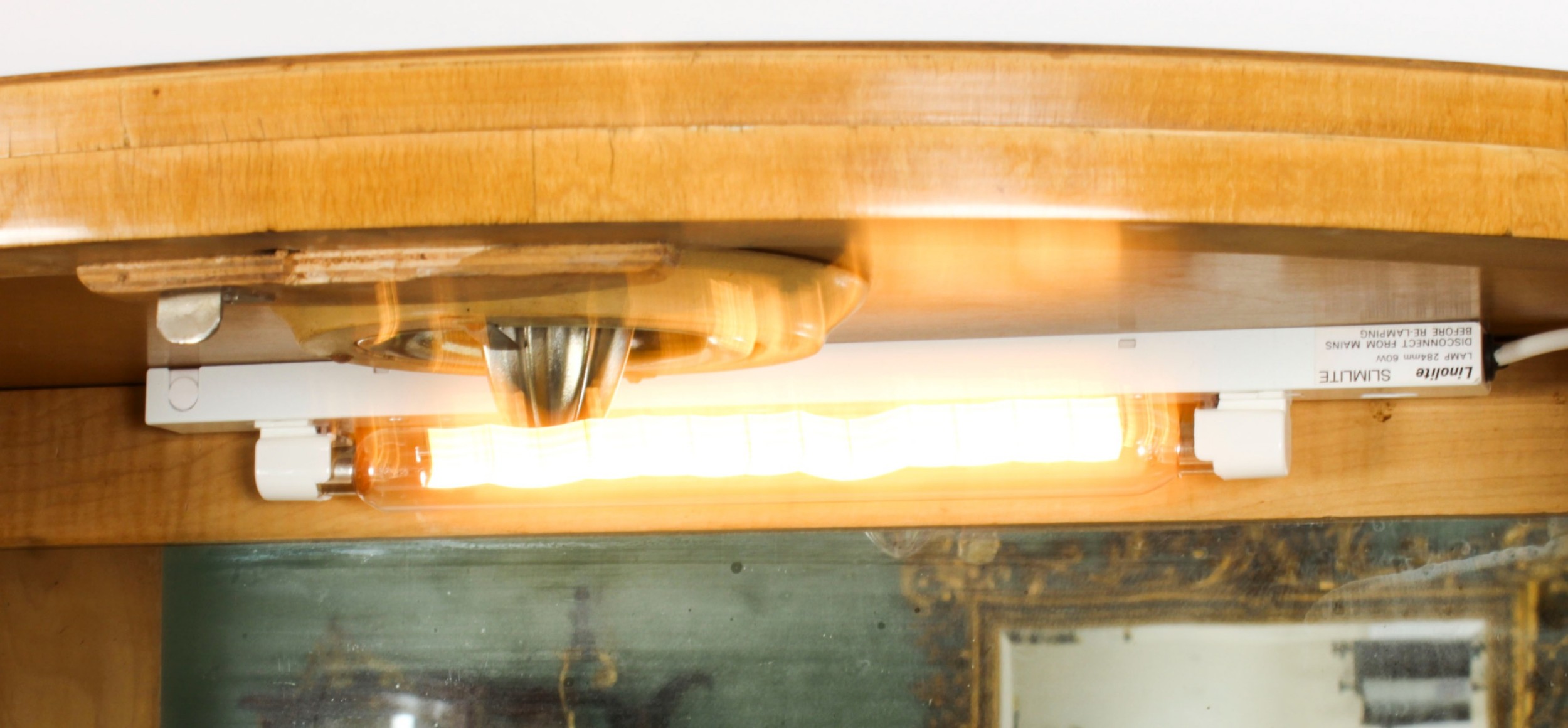
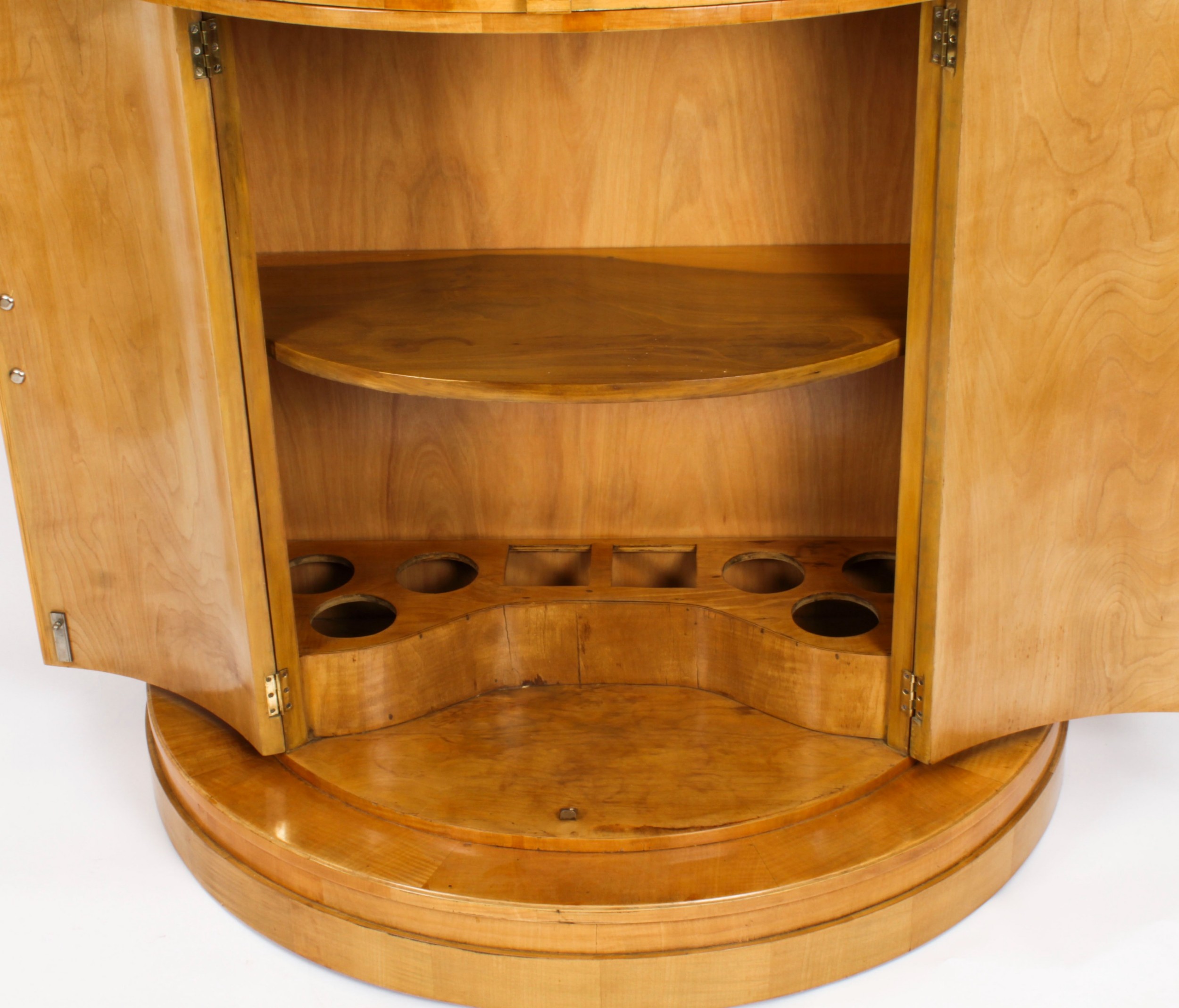
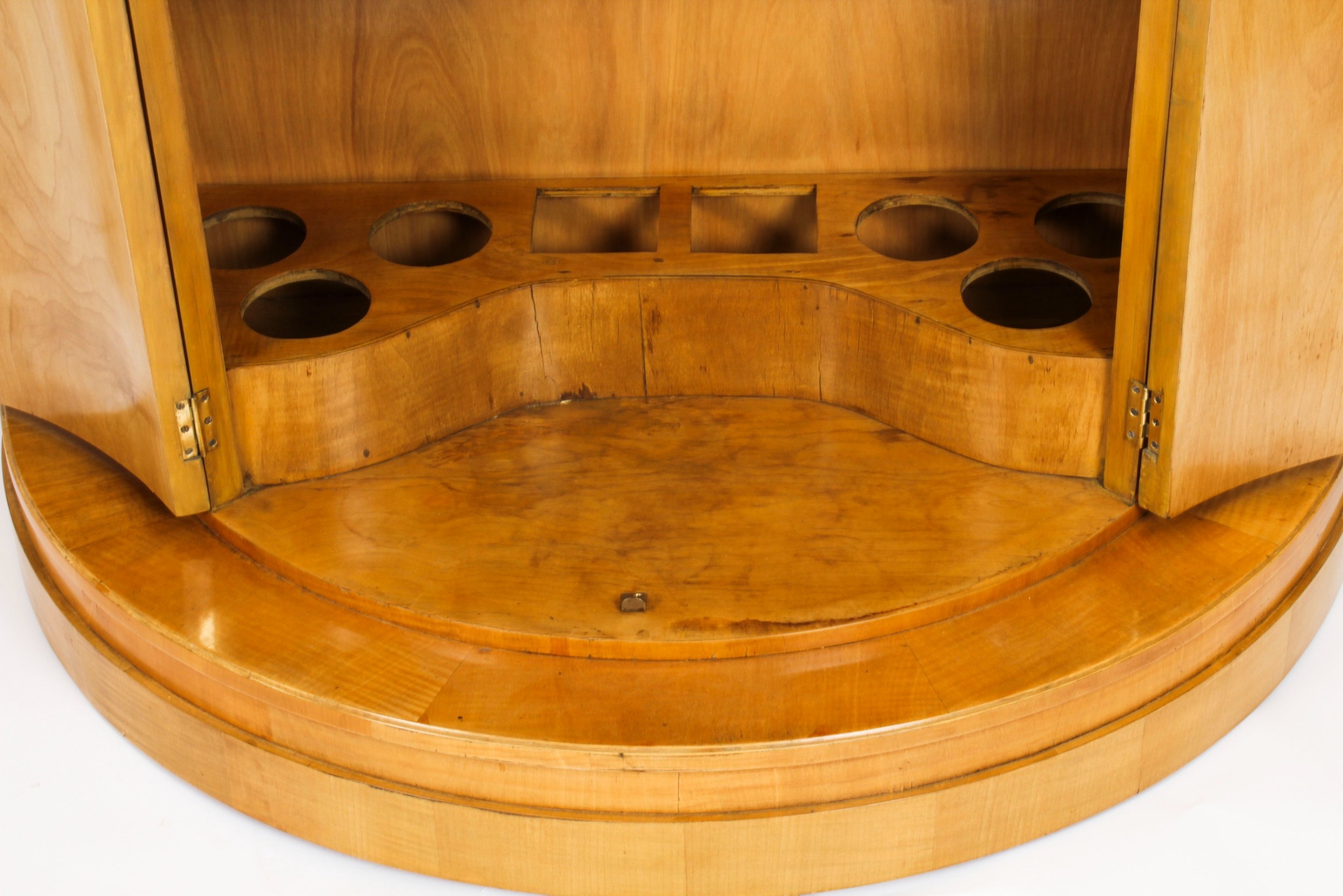
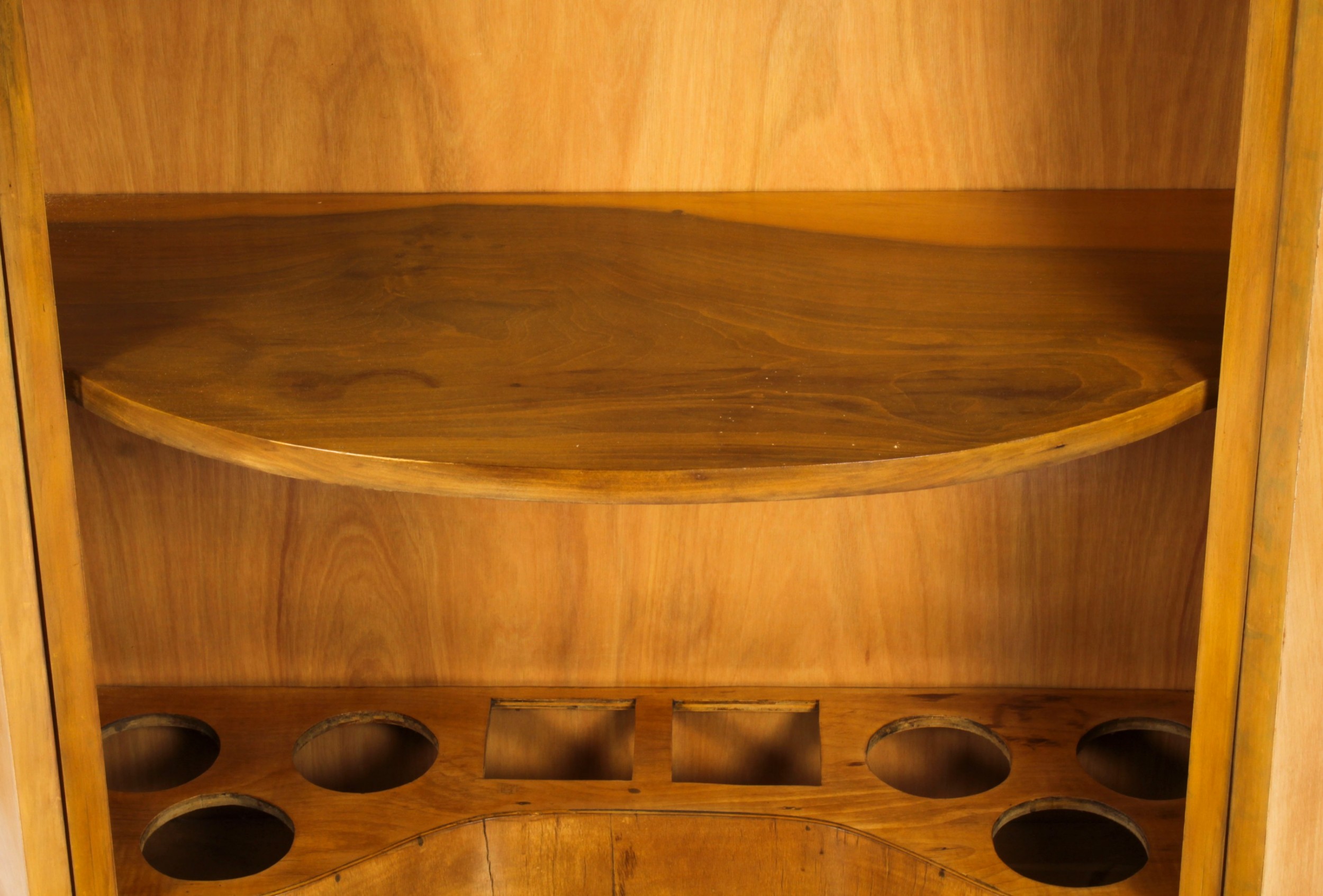
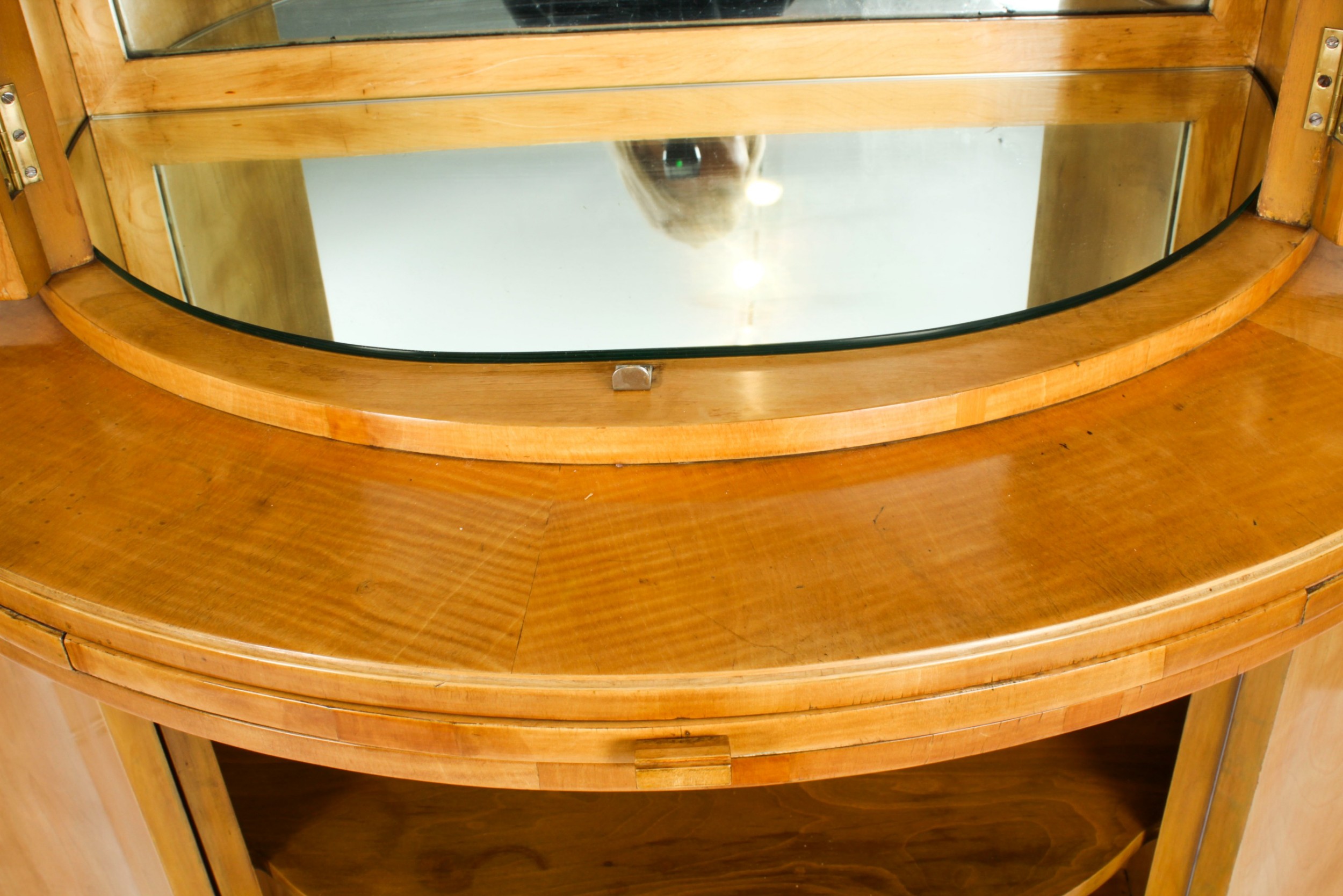
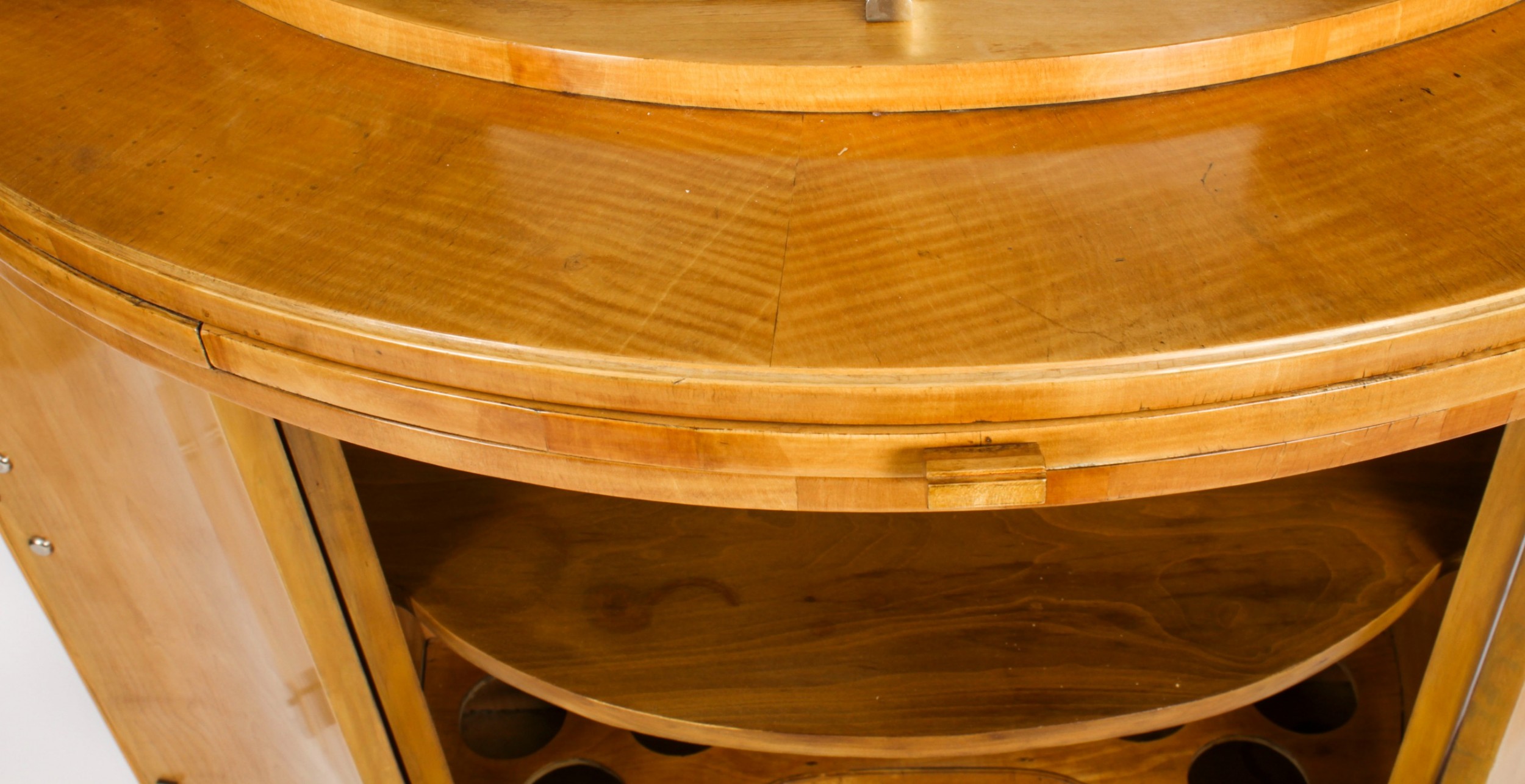
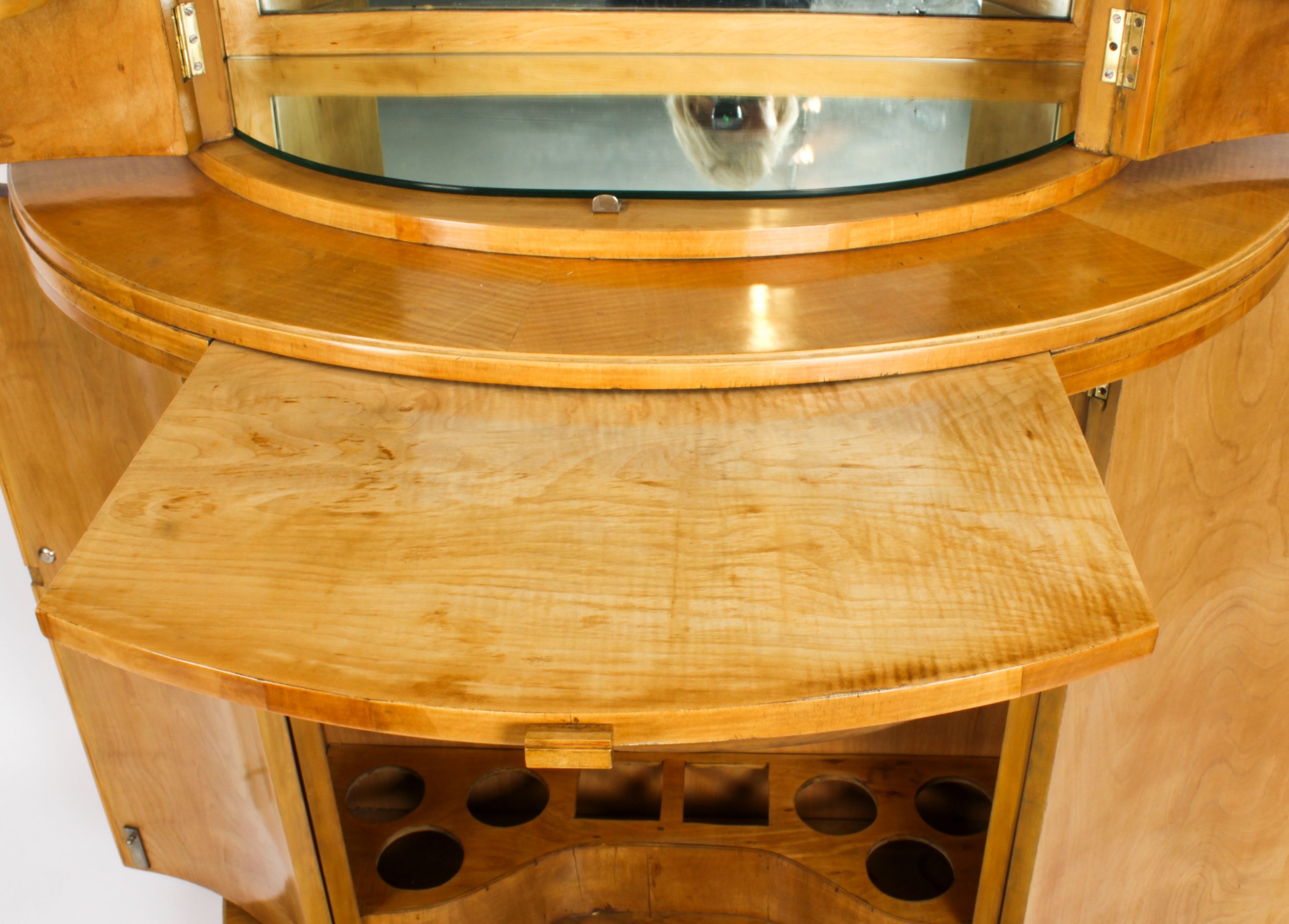
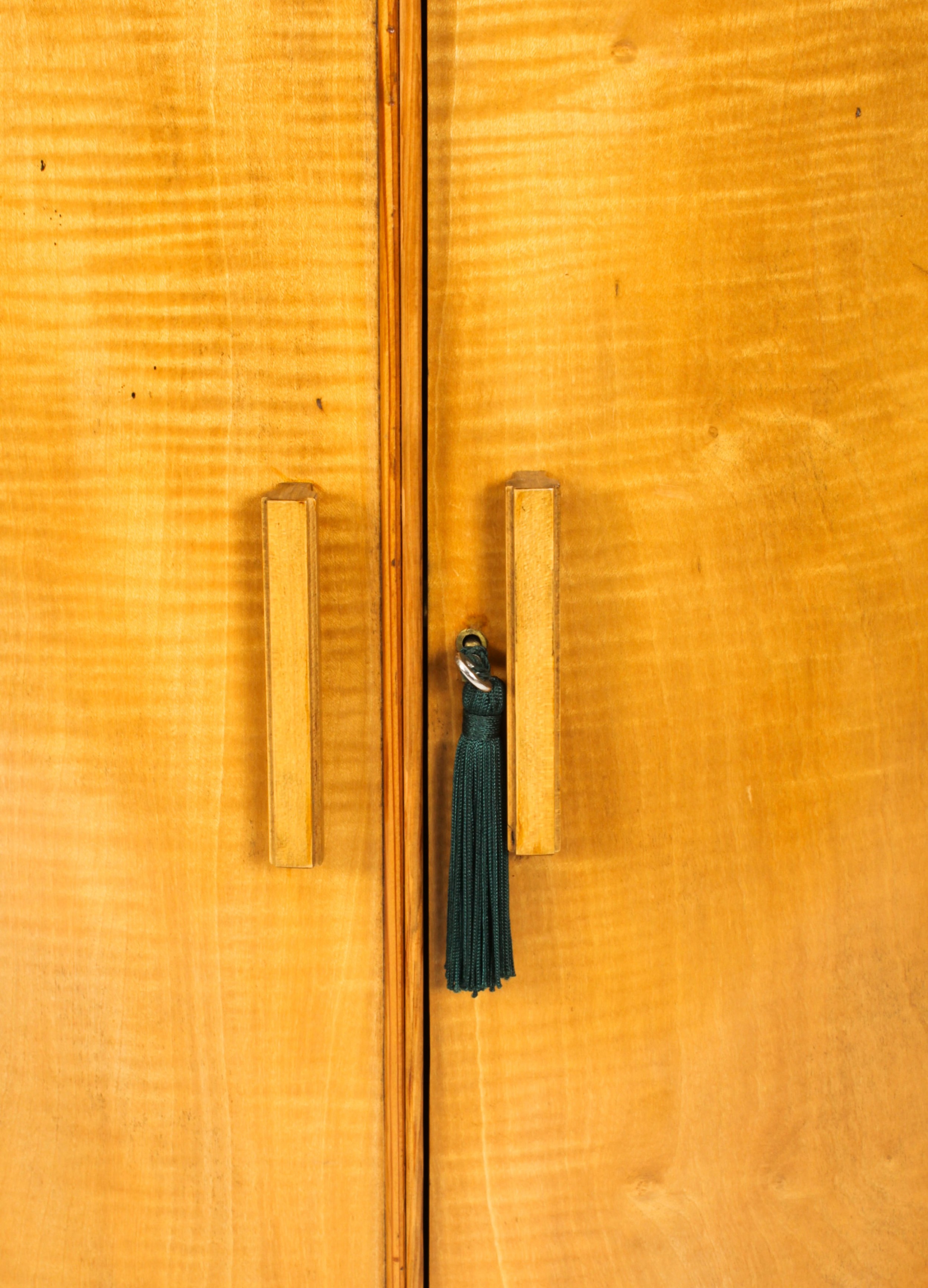
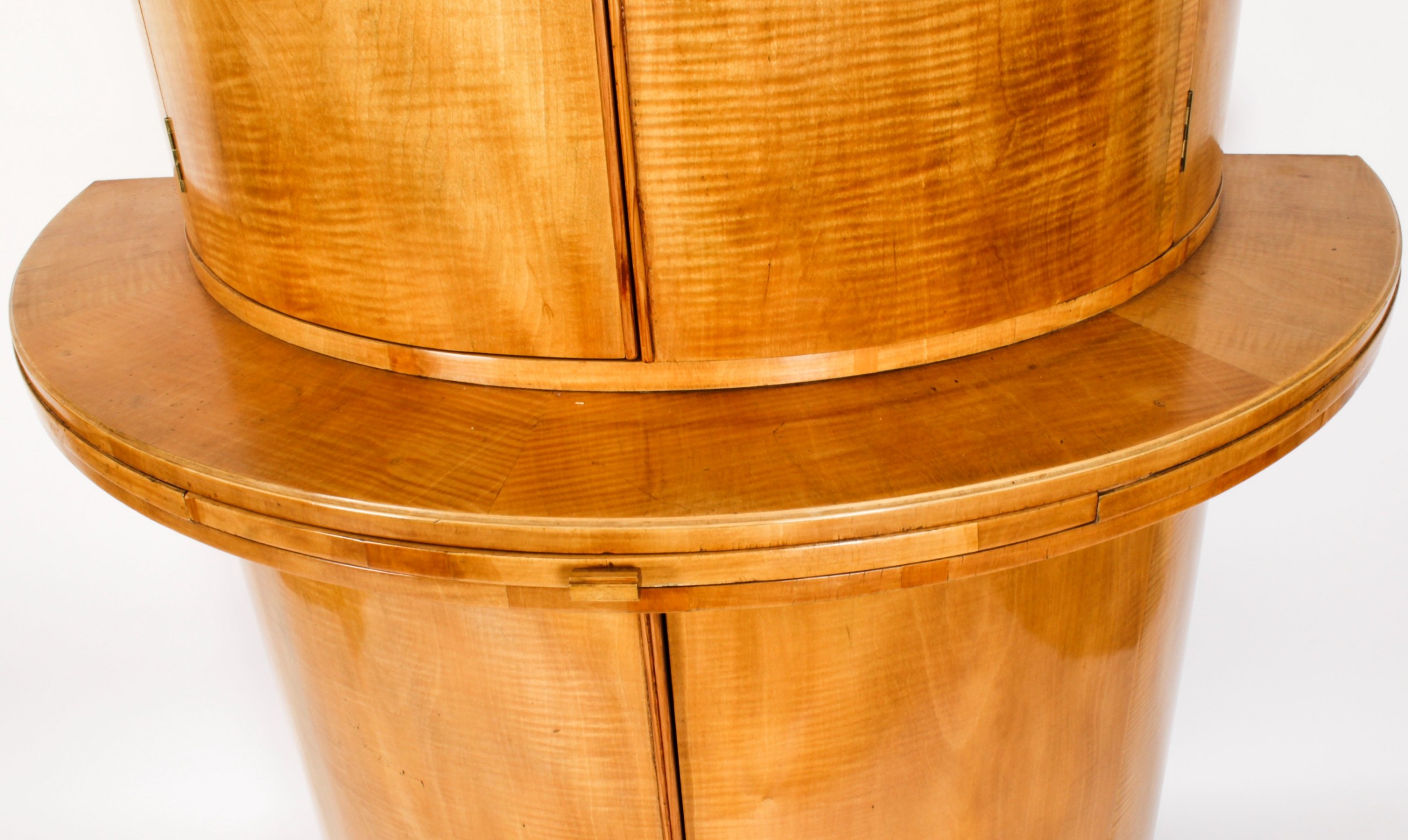
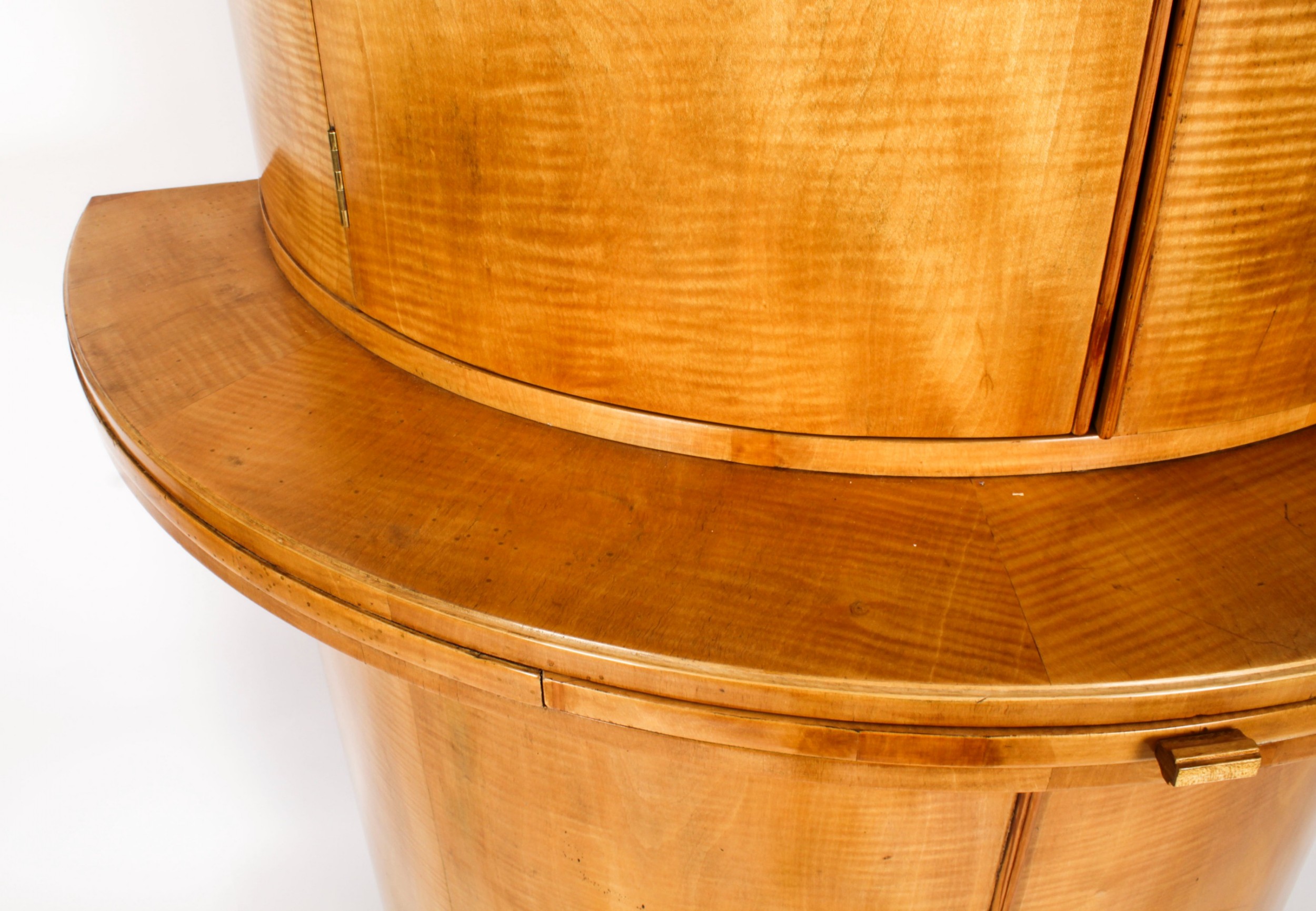
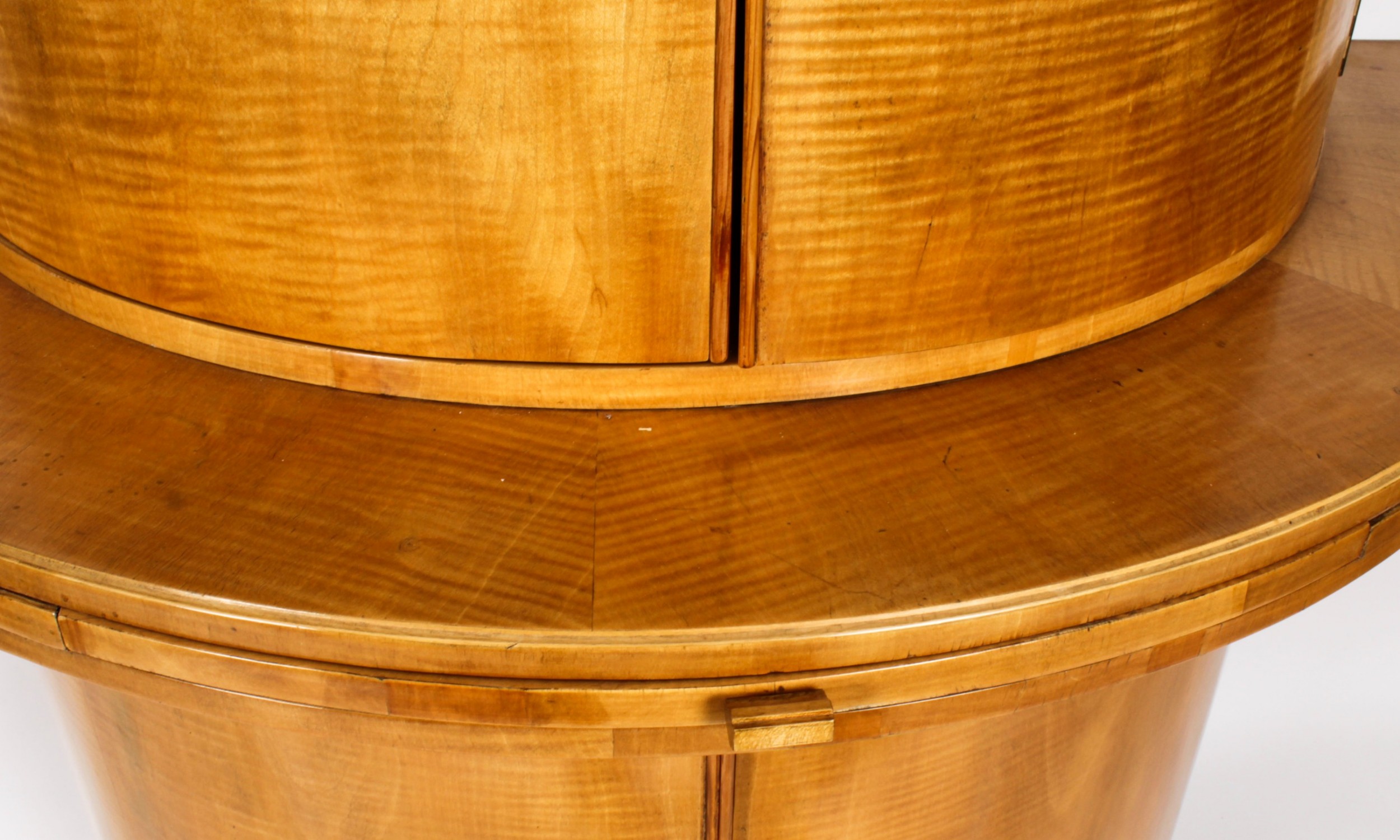
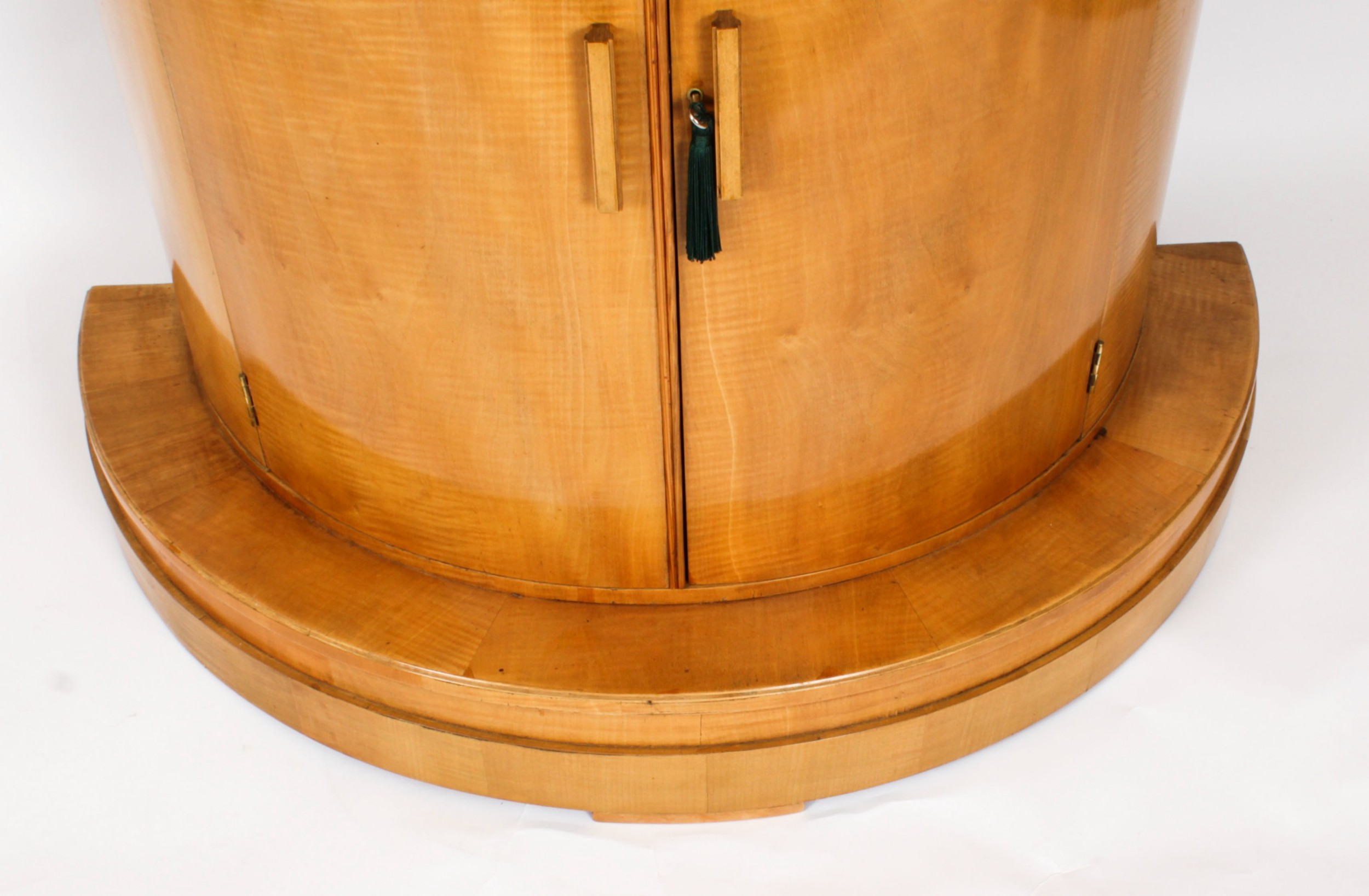
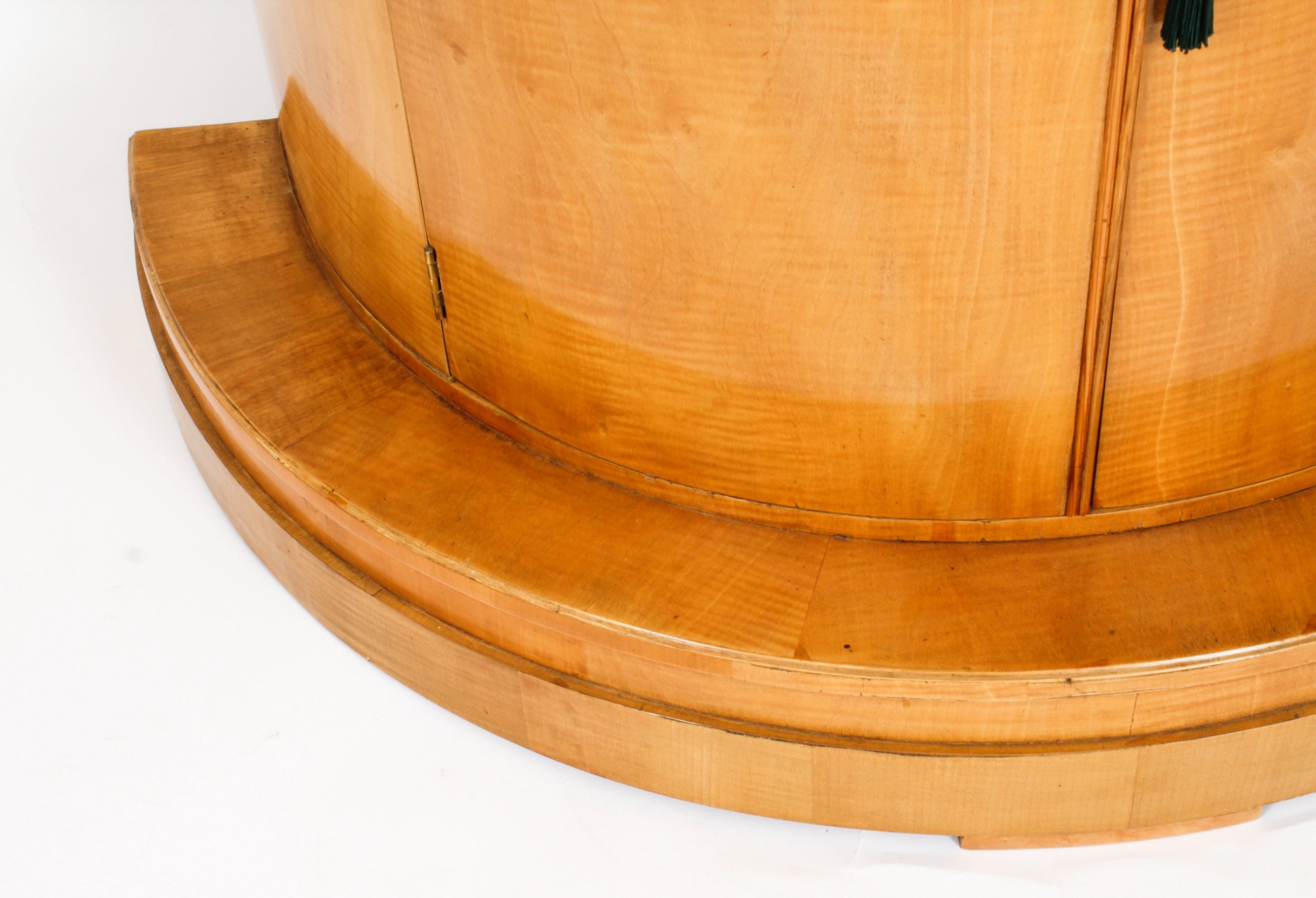
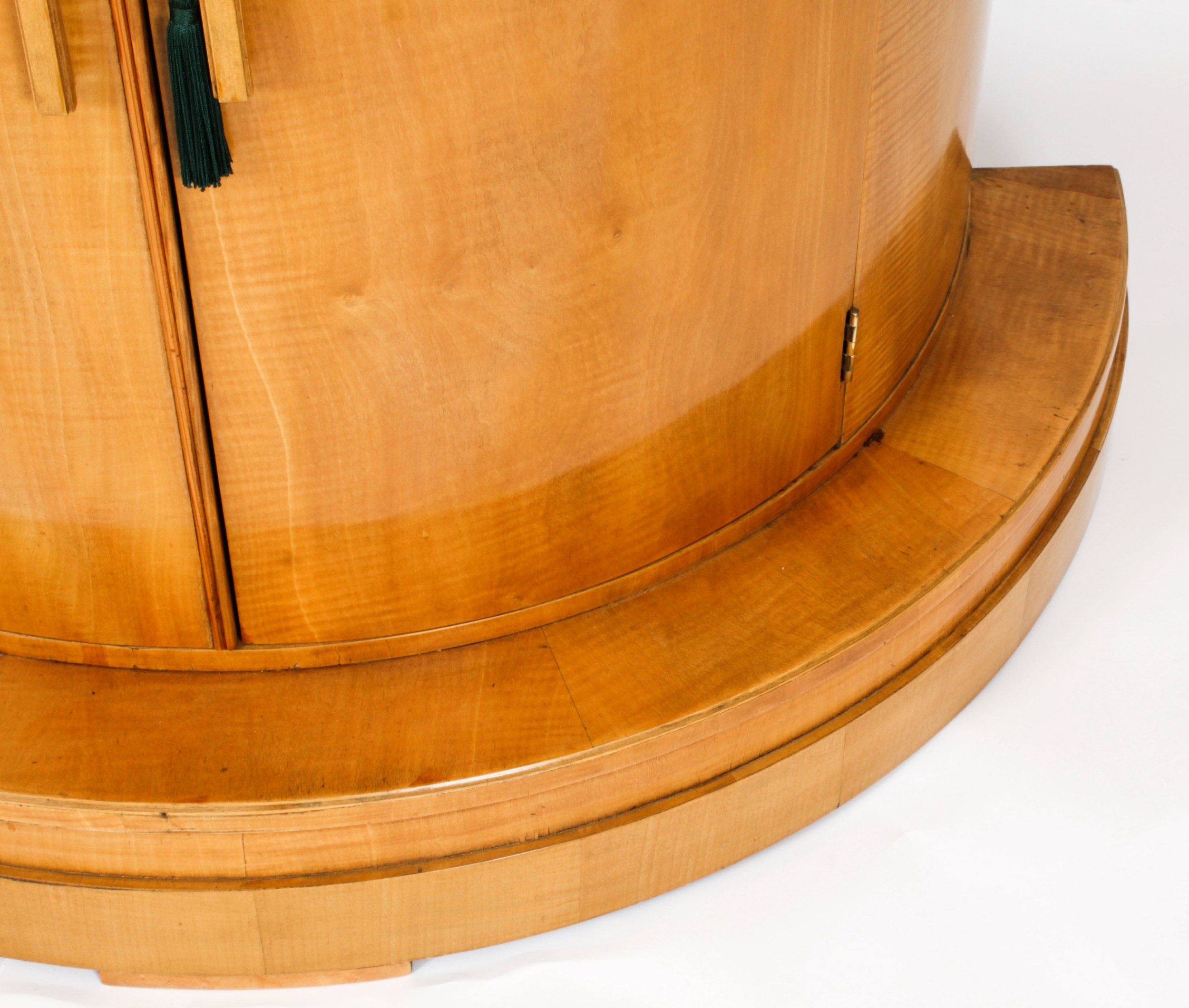
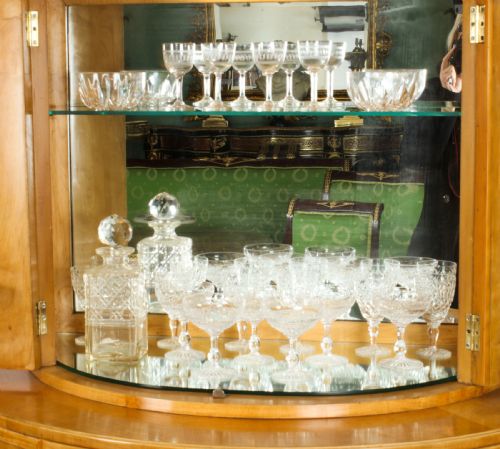
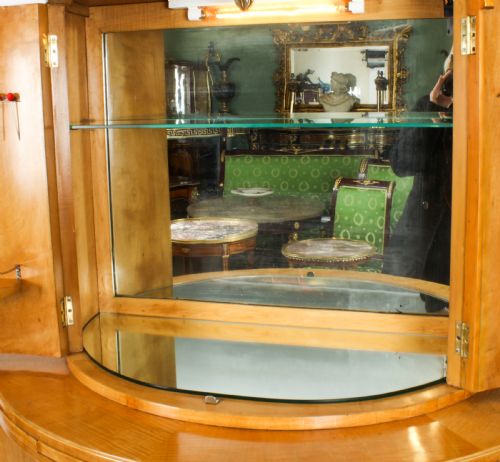
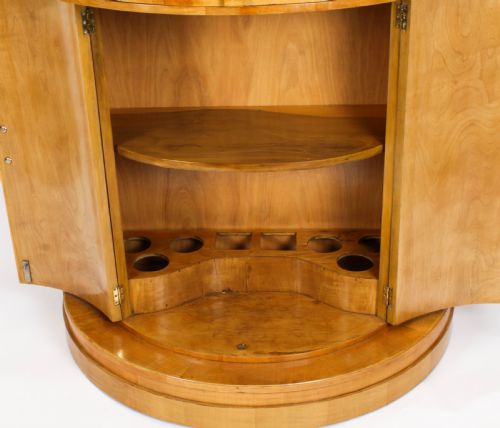
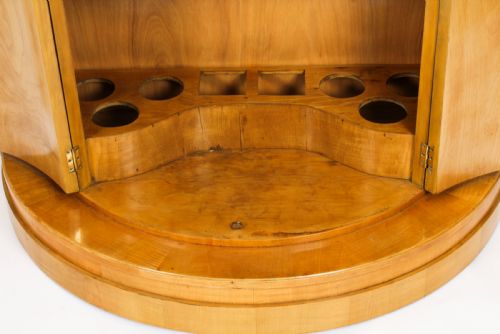
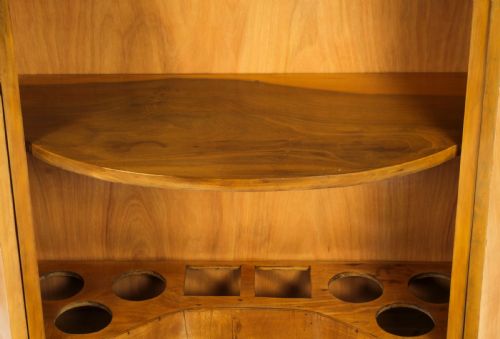
It is of architectural form, made in figured satinwood, the upper part comprises a pair of doors enclosing a fitted maple and mirrored interior with a pull out slide, over a lower part with two doors that open to house the bottles.
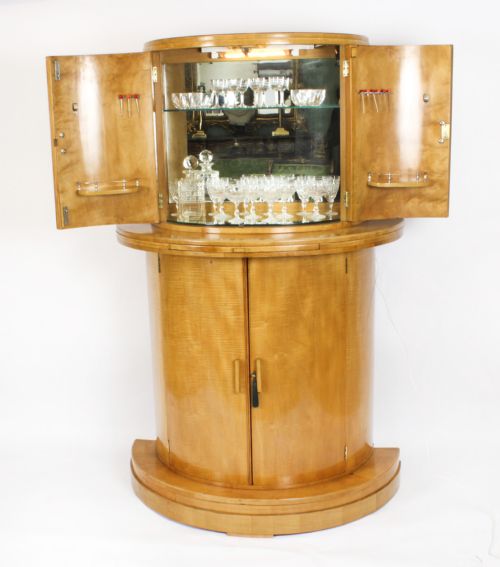
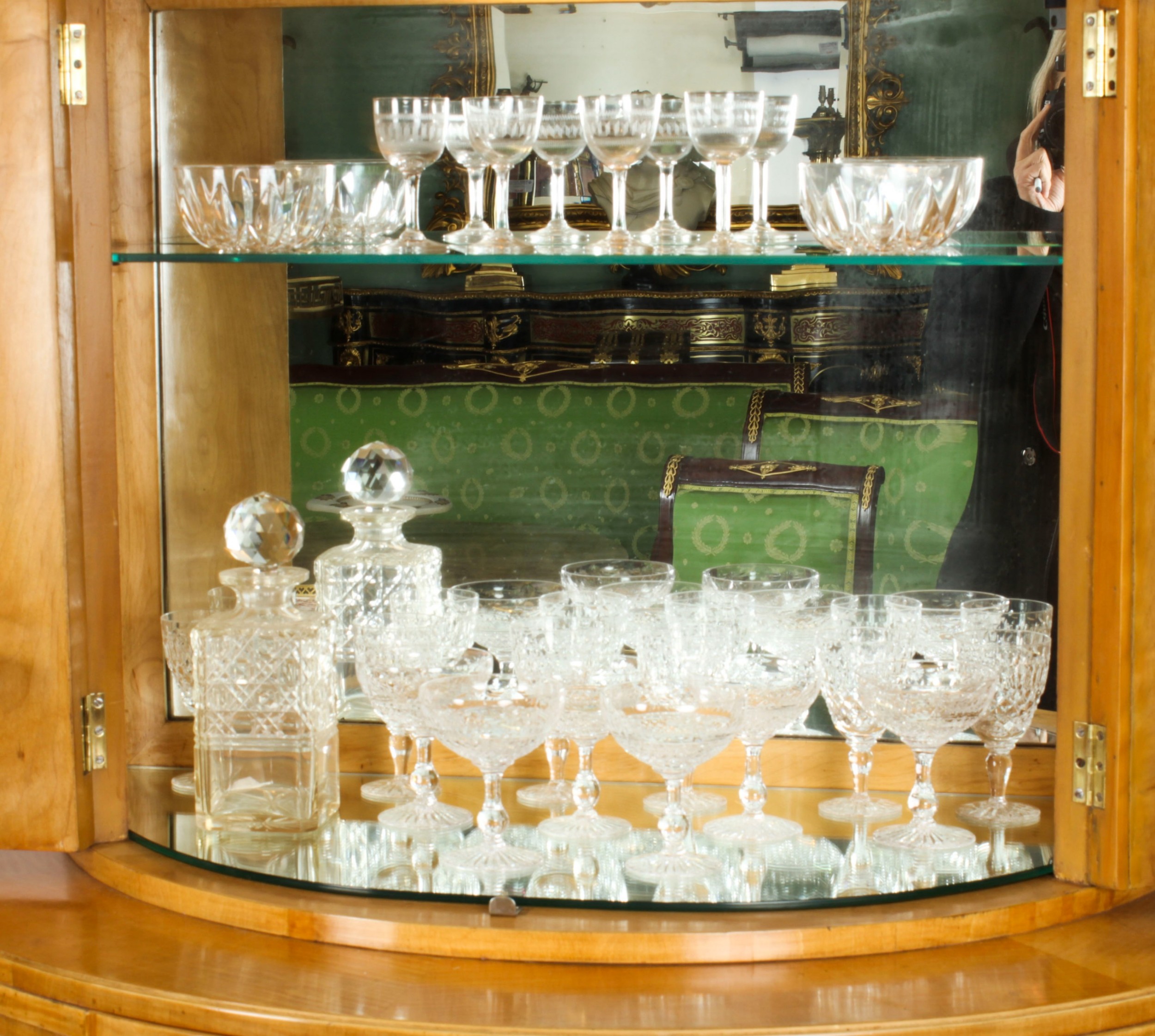
1x Decanter
6x Champagne Glasses
6x Wine Glasses
4x Sherry Glasses
2x Nut Bowls
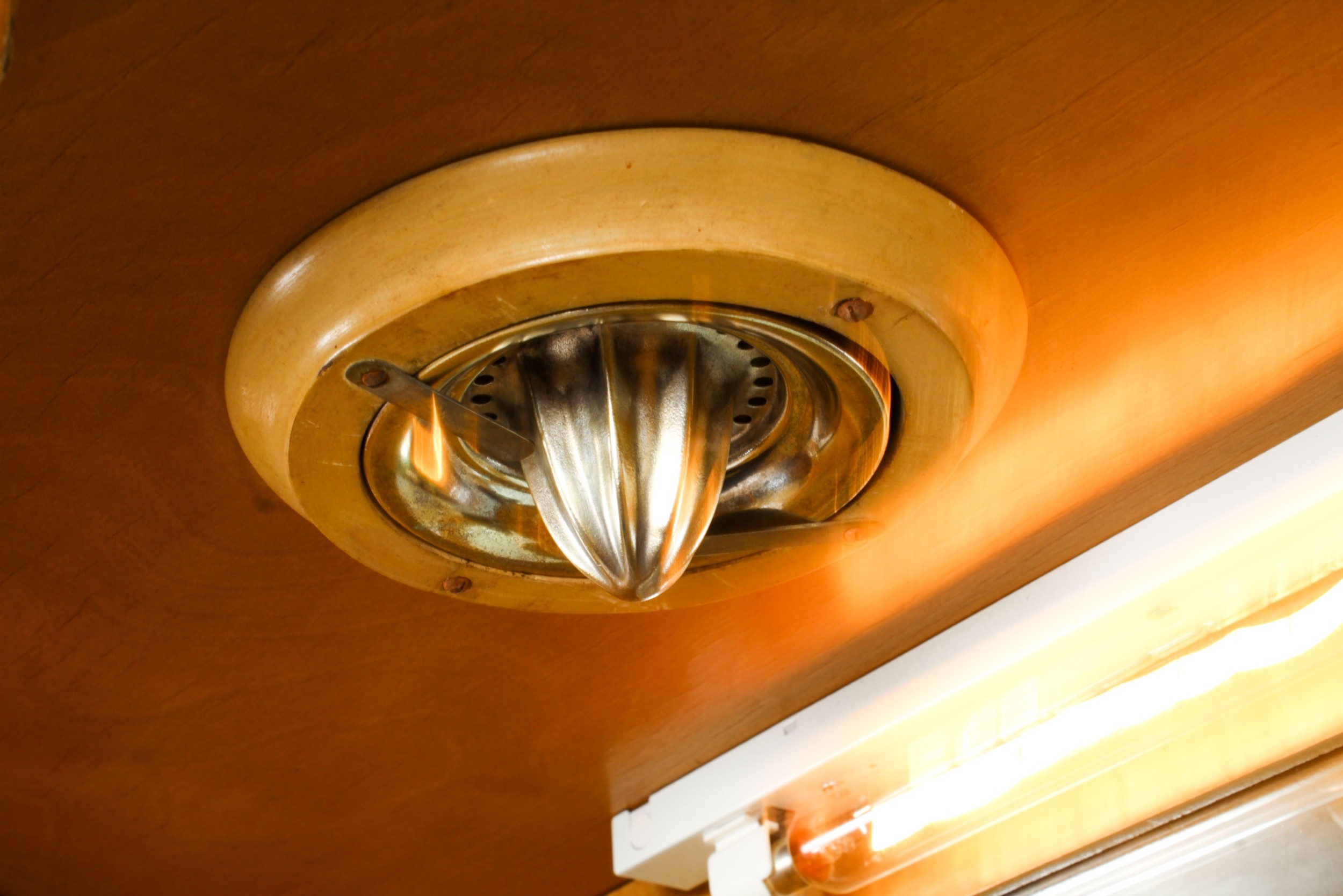
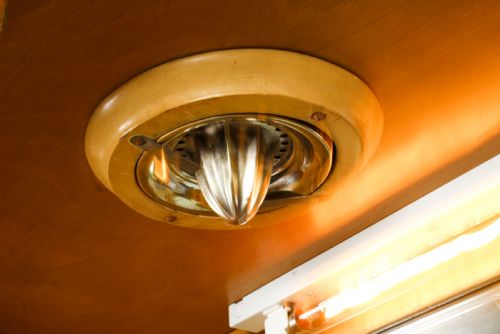
1x Fitted juicer
Cocktail sticks
There is no mistaking the timeless appeal of this highly collectable item. This cocktail bar would be a wonderful addition to your lounge or family room and is sure to get noticed wherever it is placed.
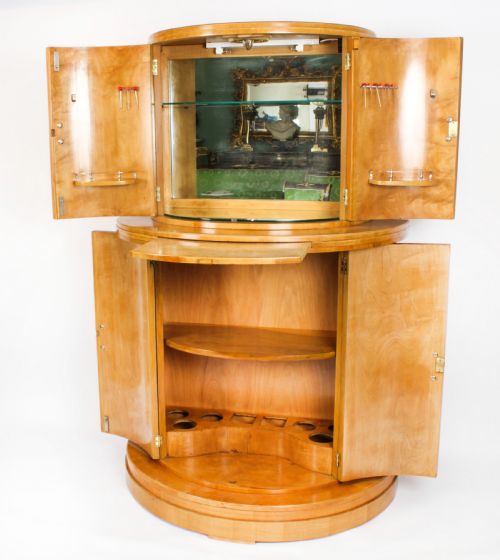
Condition:
In excellent condition, please see photos for confirmation.
Dimensions in cm:
Height 169 x Width 107 x Depth 56
Dimensions in inches:
Height 5 foot, 6 inches x Width 3 foot, 6 inches x Depth 1 foot, 10 inches
Satinwood
is a hard and durable wood with a satinlike sheen, much used in cabinetmaking, especially in marquetry. It comes from two tropical trees of the family Rutaceae (rue family). East Indian or Ceylon satinwood is the yellowish or dark-brown heartwood of Chloroxylon swietenia.
The lustrous, fine-grained, usually figured wood is used for furniture, cabinetwork, veneers, and backs of brushes. West Indian satinwood, sometimes called yellow wood, is considered superior. It is the golden yellow, lustrous, even-grained wood found in the Florida Keys and the West Indies.
It has long been valued for furniture. It is also used for musical instruments, veneers, and other purposes. Satinwood is classified in the division Magnoliophyta, class Magnoliopsida, order Sapindales, family Rutaceae.
The Hille furniture company was started in the East End of London in 1906 by Salamon Hille, a Russian emigrant, to renovate and reproduce eighteenth century furniture.
The focus of the business was very much quality rather than large volumes, employing skilled craftsmen and gaining customers such as Hamptons, a well known furniture store, amongst others.
By the 1930’s the company had established an international reputation supplying products all over the world. Salamon's daughter, Ray, subsequently joined and worked with the company to produce furniture to original designs. In 1932, Salamon retired and Ray took over the the business with Hille becoming a Limited company that year under her leadership.
In 1940 tragedy struck as Salamon Hille died, followed by the destruction of the North London home, factory and stores. The war had already been a challenge with reduced numbers of commissions and a restriction on timber to furniture makers. Under Ray Hille’s leadership Hille were recommended by the curator of the Victoria & Albert Museum to the City Guildhalls to repair bomb damaged furniture, collecting it in a hired van. With new timber being unobtainable, old furniture was sourced and the wood used and re-worked. Old employees came back from the war and in 1945 the business moved to Lea Bridge Road, Leytonstone, and Ray Hille was re-joined by husband Maurice, daughter Rosamind, son-in-law Leslie Julius and then later by Leslie’s army colleague John Collier.
Due to the restrictions in the UK, quality furniture could only be made for overseas customers so Hille’s only option was to focus on export markets. Following visits to the US Hille built up a suitable customer base. Export was to become a permanent feature for Hille from then on.
In 1950 Hille moved to premises in Hainault but almost immediately the 1951 financial crisis hit resulting in the factory having to move to an old brewery in Watford. The company recovered and
Regent Antiques has dated this piece to the 1920s.
We specialise in english and continental furniture, silver, porcelain and decorative items.
You can view the stock and full dealer information on the Regent Antiques Profile Page
Regent Antiques is a registered member of LAPADA CINOA
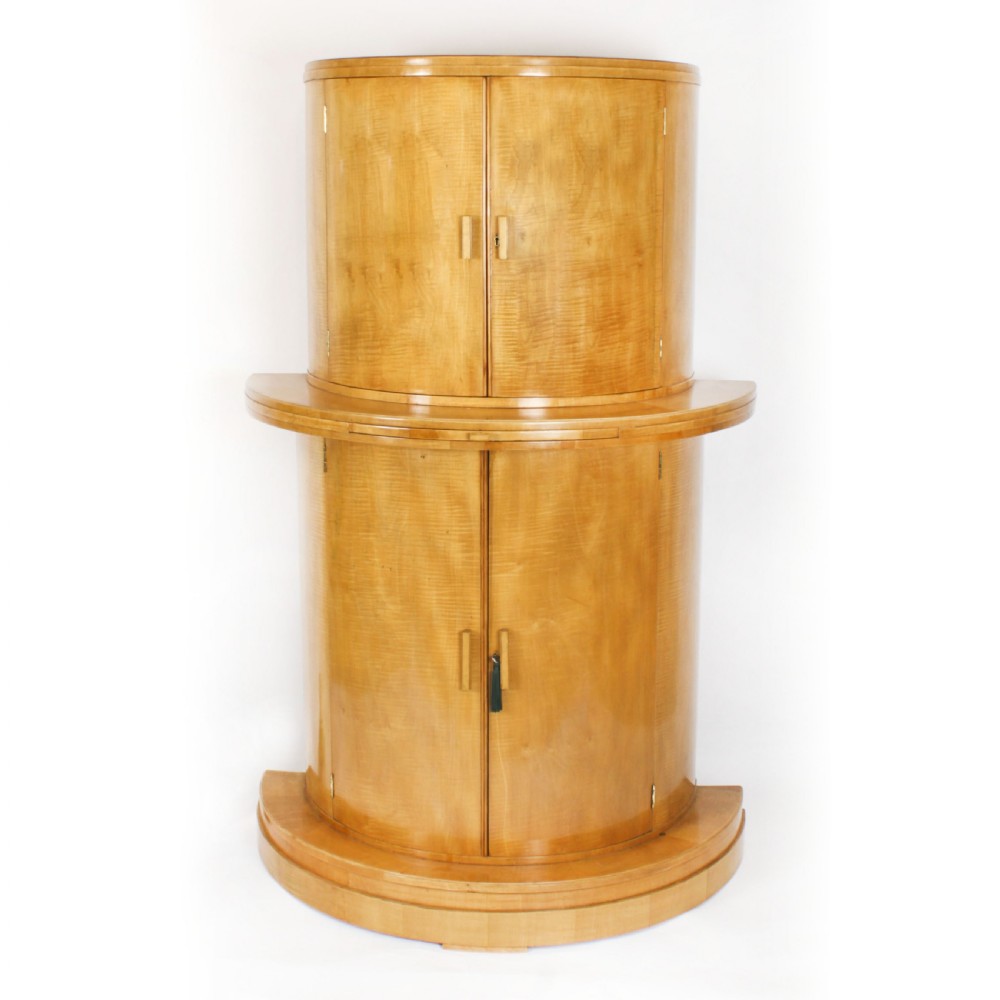
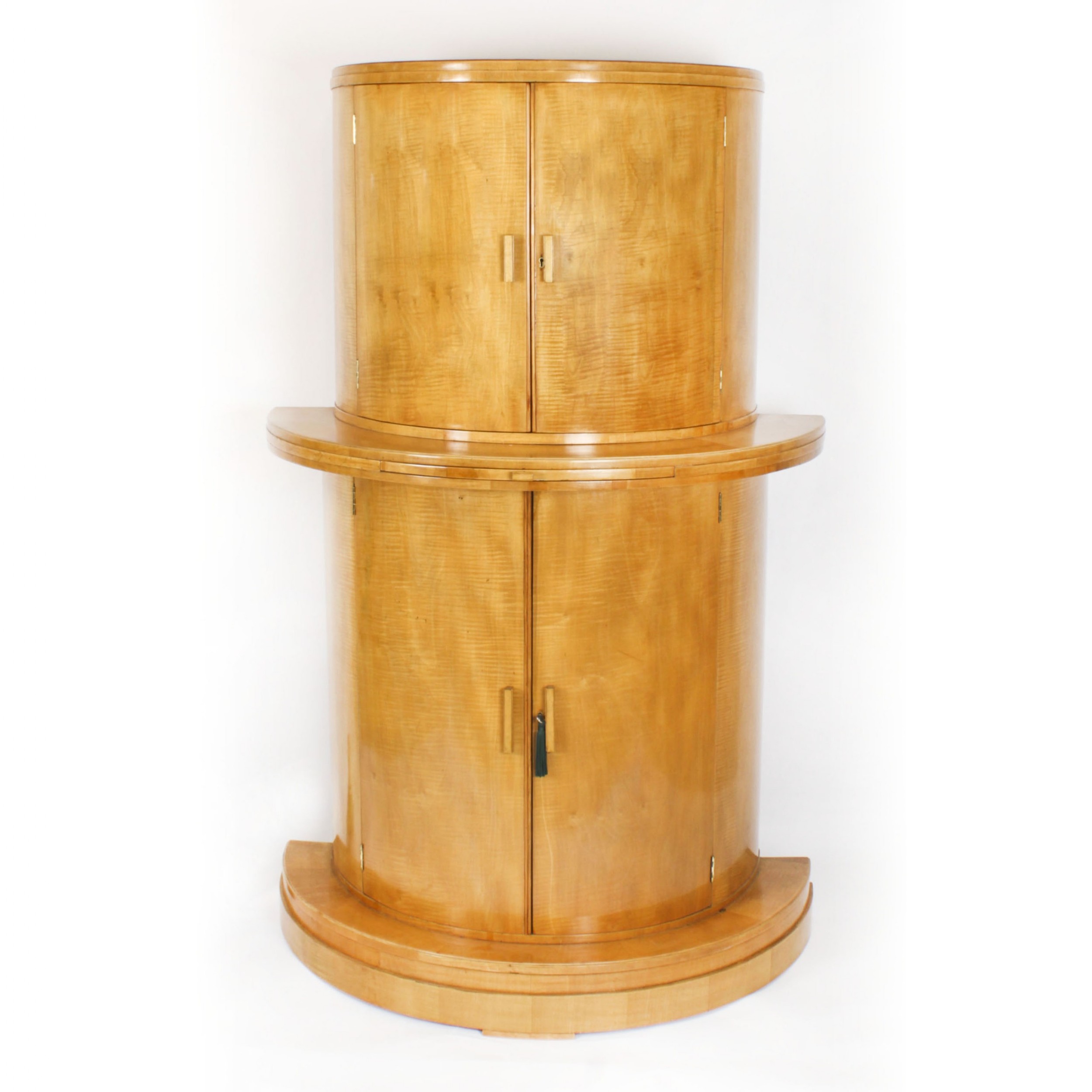
Antique Art Deco Satinwood Cocktail Cabinet by Hille & Glassware C1920