

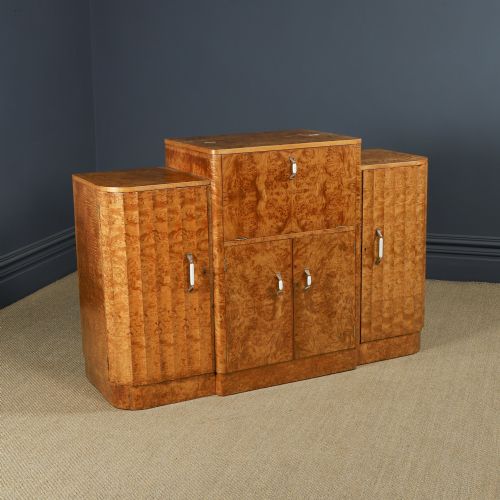


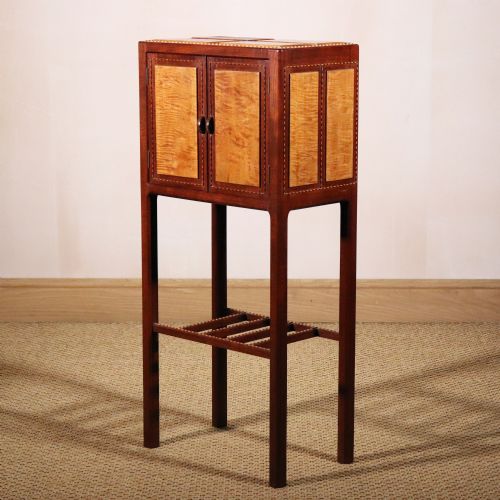


Satinwood Drinks Cabinet
These satinwood drinks cabinets bring figured veneers and fitted interiors together for entertaining, offering a polished centrepiece for any room.
Satinwood Drinks Cabinet
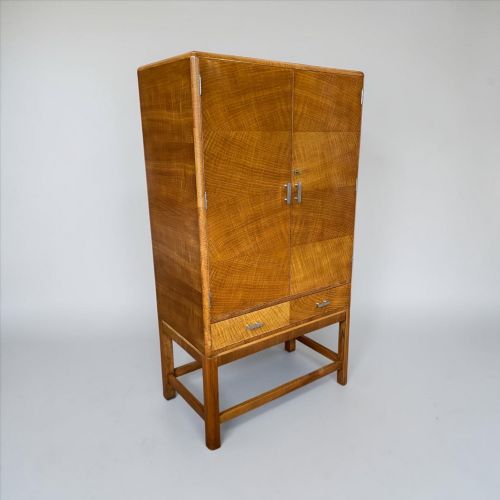
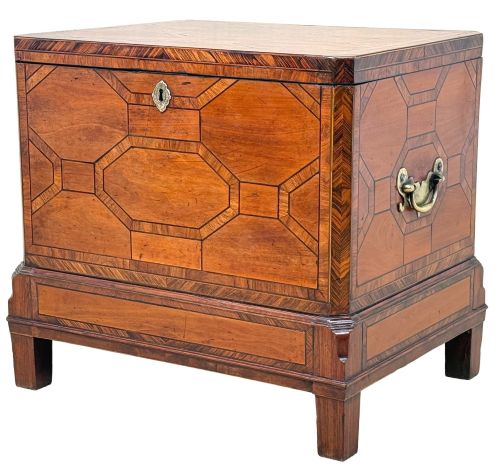
A satinwood drinks cabinet combines figured timbers with practical storage for bottles, glassware and mixing equipment. When exploring these pieces, buyers encounter forms ranging from Georgian cellarettes and wine coolers to Edwardian surprise cabinets and Art Deco cocktail furniture.
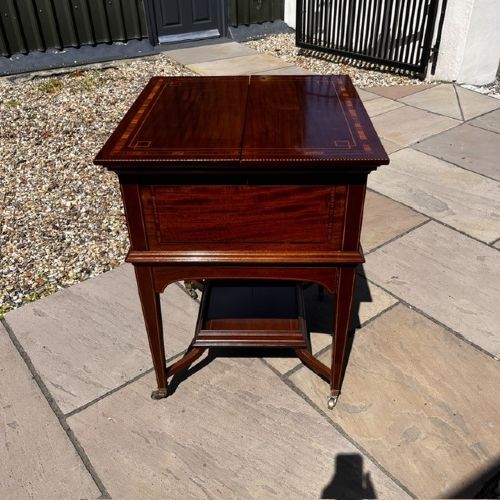
The selection on this page draws primarily from Edwardian, 1930, 1890, 18th Century, 1960, 1880 and Georgian periods. Cabinets appear alongside cellarettes, tantaluses, games tables and cabinets on stand, showing how makers adapted timber storage for hospitality over successive centuries.
Edwardian examples and 1930 designs dominate the variation seen here, frequently incorporating contrasting woods like mahogany and kingwood. Each form reflects the social habits of its era, from formal dining room cellarettes to dedicated cocktail furniture.
Materials and construction methods
Makers utilised satinwood as a primary timber or decorative veneer, often pairing it with mahogany, kingwood and burr walnut. Banding and inlay highlight the grain of the wood, creating geometric or floral patterns across doors, lids and tabletops.
Hardware played an essential structural and decorative role, with brass fittings securing corners, lids and locking mechanisms. Fitted interiors frequently incorporate lead crystal glassware, mirrors and specialised compartments designed to hold bottles and decanters securely.
Art Deco pieces integrate modern materials like bakelite alongside traditional hardwoods and glass, while earlier items rely on solid timber carcases and fine dovetail joinery. The physical construction reflects the functional demands placed on each piece, whether housing heavy wine bottles or delicate cocktail glasses.
Satinwood Drinks Cabinet Retail Price Guide 2026
Typical asking prices for satinwood drinks cabinet among the pieces listed under this phrase on Sellingantiques today, from the lower quarter to the upper quarter. They describe what is for sale here now, not the wider market.
Listings feature satinwood drinks cabinets across Edwardian, Art Deco, Victorian, George II, Sheraton Revival, Arts and Crafts and George III styles.
Markers of distinction and build
Quality rests in the selection of the satinwood veneer and the precision of the contrasting banding and inlay. Superior pieces display carefully matched grain patterns that wrap symmetrically across the front and top surfaces.
The sophistication of the internal mechanism distinguishes standard storage from finer examples, particularly in Edwardian surprise cabinets and fitted games combinations. Robust brass hardware, intact lead crystal components and original locks indicate a higher standard of original manufacture.
The integrity of the carcase construction and the condition of the polished finish dictate the overall standard. Pieces with well-preserved timber surfaces and smoothly operating internal fittings represent the upper tier of the range.
Harry and Lou Epstein
The Satinwood Drinks Cabinet Glossary
- Cellarette
- A lockable container or cabinet designed for storing wine bottles near the dining table. They appear in forms ranging from freestanding 18th Century boxes to larger fitted furniture.
- Tantalus
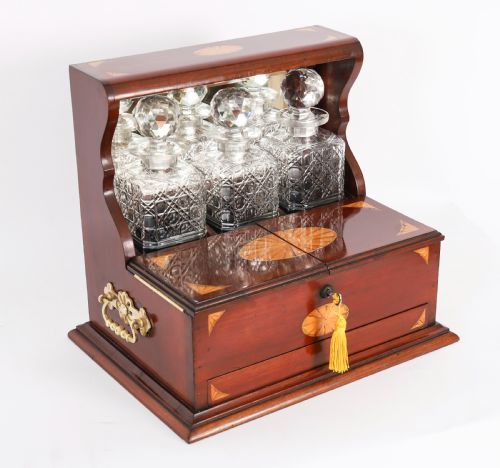
- A locking wooden frame holding decanters that displays the contents while preventing unauthorized access to the liquor. They frequently incorporate satinwood frames and cut crystal glassware.
- Surprise cabinet
- A piece of furniture with mechanical internal fittings that rise or reveal themselves when the cabinet is opened. Edwardian makers favored this clever mechanism for drinks storage.
- Inlay
- A technique where pieces of contrasting timber, such as mahogany or kingwood, are inserted into recessed portions of the satinwood base to create decorative patterns.
- Sheraton Revival
- A late 19th and early 20th Century style that reinterprets the neoclassical designs of the 18th Century. These items make extensive use of satinwood veneers and delicate floral banding.
Satinwood Drinks Cabinet: Frequently Asked Questions
How do I date a satinwood drinks cabinet?
Dating relies on identifying the prevailing style, construction methods and secondary timbers used in the carcase. Georgian and 18th Century pieces show heavier solid construction, while Edwardian items frequently employ detailed inlay and Sheraton Revival motifs.
Art Deco examples from 1930 introduce streamlined geometries and modern materials like bakelite alongside traditional satinwood veneers.
What is a tantalus used for?
A tantalus holds decanters securely within a wooden frame fitted with a locking metal bar across the stoppers. This design prevented servants or guests from accessing the spirits without permission while displaying the cut crystal bottles.
They are often mounted on satinwood bases and occasionally combined with games compartments.
How do I care for satinwood furniture?
Satinwood requires protection from direct sunlight and excessive humidity to prevent the fine veneers from fading or lifting. Regular dusting with a soft, dry cloth preserves the polished surface without building up residue.
Avoid placing damp glasses directly on the timber, using coasters to protect the polished top during use.