
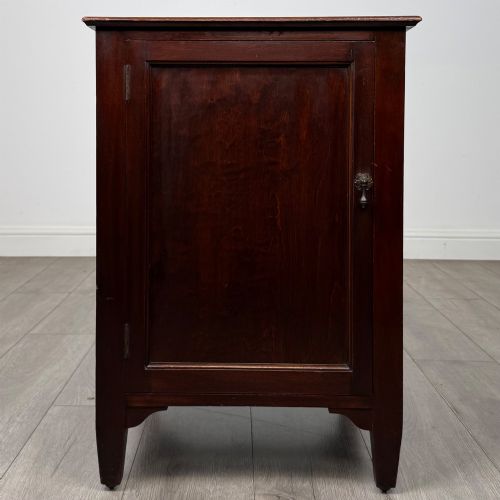
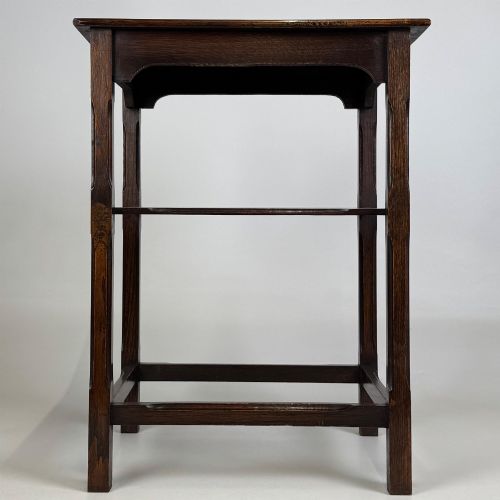
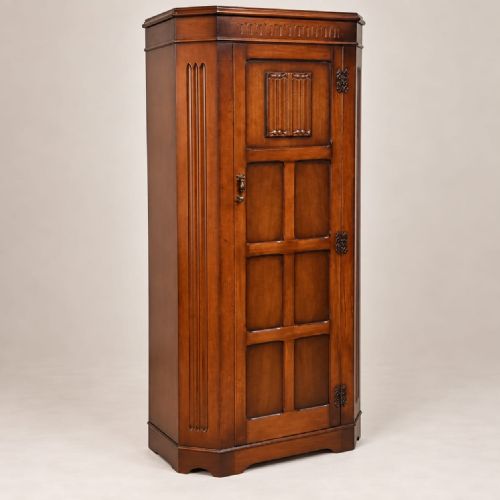
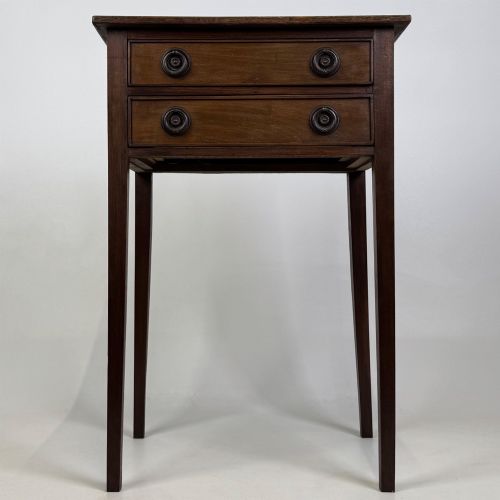
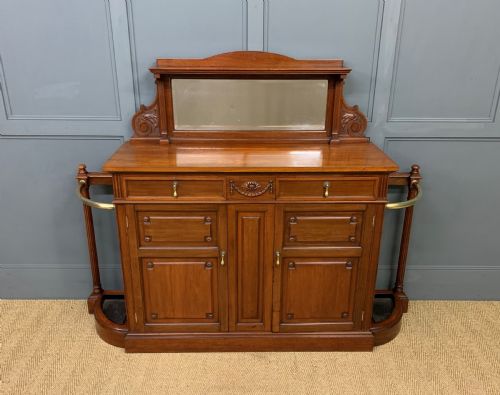
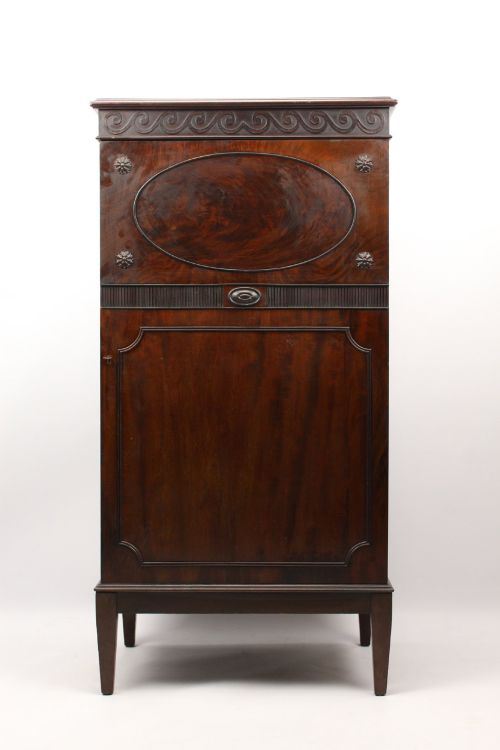
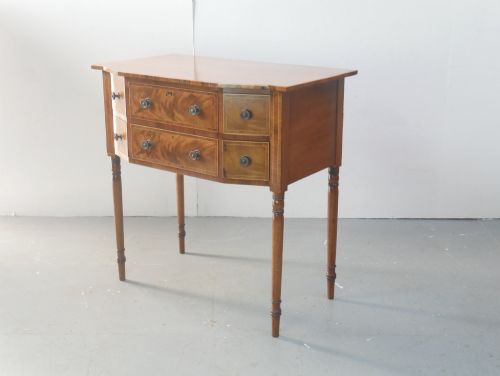
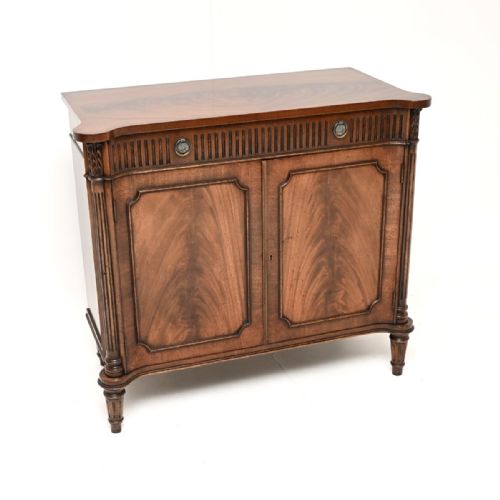
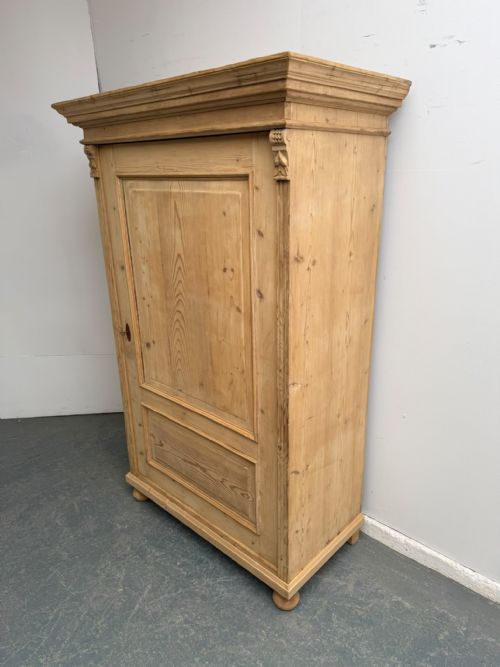
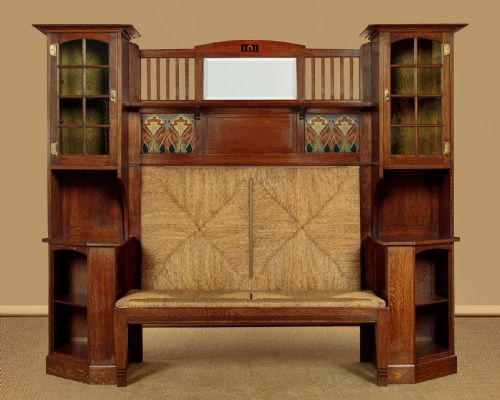

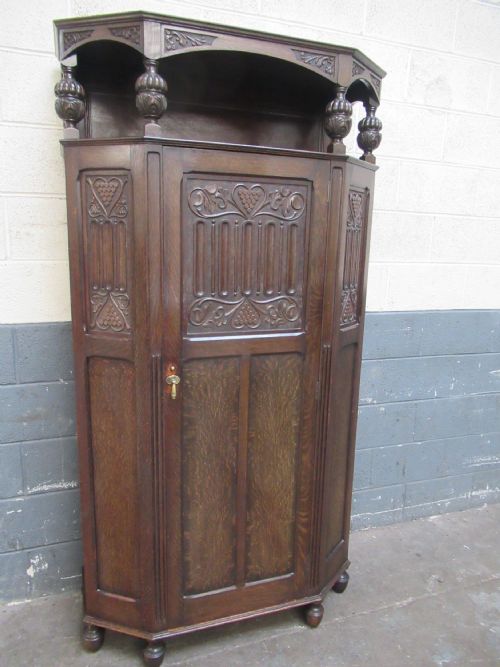
Edwardian Hall Cabinet
An edwardian hall cabinet anchors an entrance space with timber storage designed for everyday comings and goings.
Edwardian Hall Cabinet
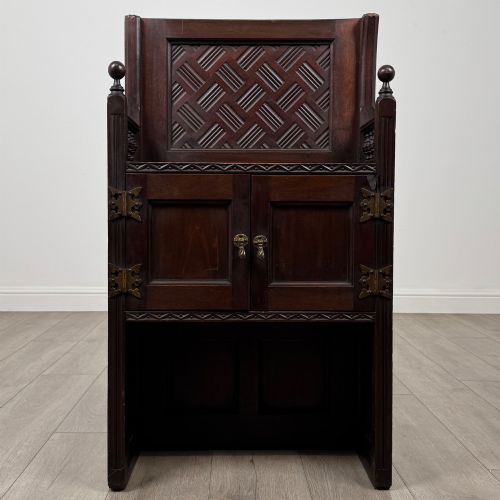
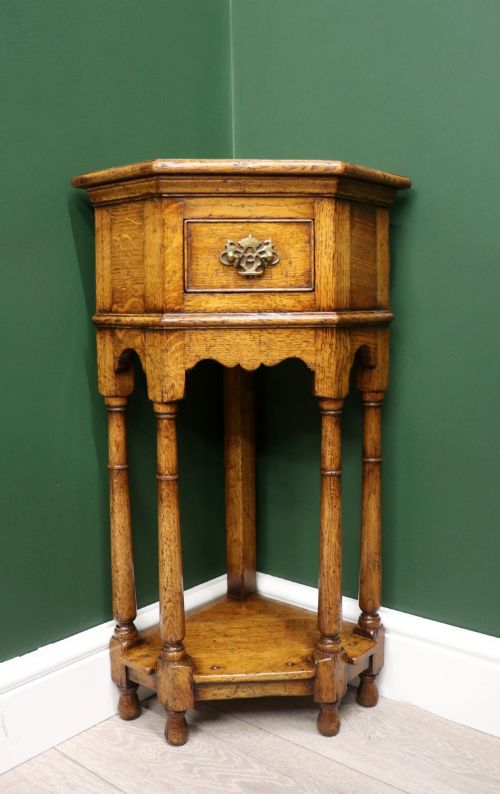
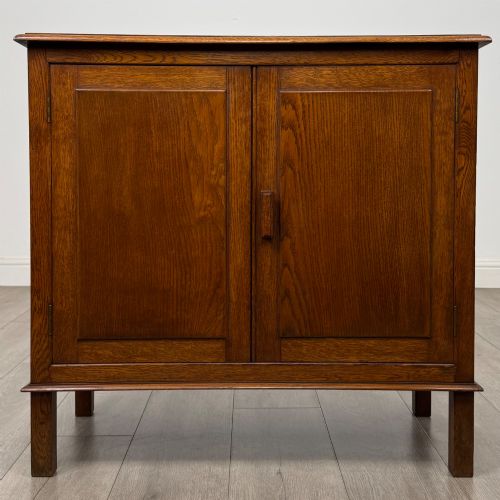
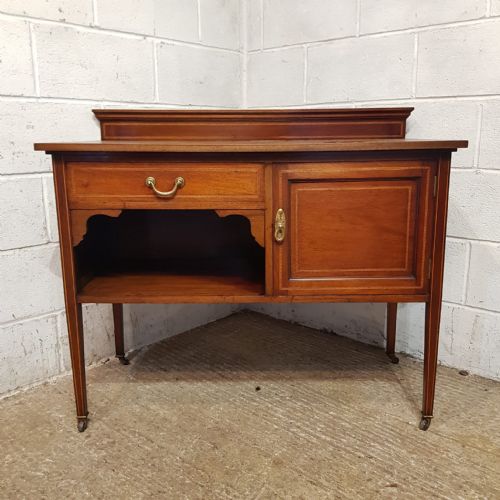
An edwardian hall cabinet encompasses upright storage pieces, compact sideboards, and combination stands built around the turn of the twentieth century. These items serve entryways by holding outdoor accessories, letters, and daily essentials within domestic interiors.
The pieces on this page draw from Edwardian, Victorian, and later revival periods, spanning oak, mahogany, and walnut woods. Side cabinets, wardrobes, washstands, and hall seats appear frequently alongside fitted cupboards and shelf units.
Oak and mahogany dominate the construction materials, often paired with brass hardware, ceramic elements, or inlaid satinwood details. Forms range from narrow floor-standing cupboards to wall-hanging key cabinets and compact side tables.
Materials and Construction
Cabinetmakers built these items using solid timbers and veneered surfaces of oak, mahogany, walnut, and satinwood. Joinery relies on traditional methods to stabilize upright frames, doors, and internal shelving against daily use.
Metal components include brass hinges, locks, and handles, while select pieces incorporate ceramic inserts, marble tops, or glass panels. Finishes involve polishing or waxing to protect the wood grain and highlight natural figuring.
Listings feature oak, mahogany, walnut, and satinwood alongside brass, glass, and ceramic elements across Edwardian and Victorian periods.
Distinctions in Standard
The standard of a piece rests on the selection of timber and the precision of its joinery. Closely matched wood grains and tight corner joints separate disciplined workshop production from simpler utility items.
Refinements such as inlaid stringing, fitted interior compartments, and original brass or ceramic hardware elevate certain examples. The integrity of the structure and the retention of original surface finishes define the upper tier.
Shoolbred and Co·Denby and Spinks·Walker and Hall·Thurston and Co
The Edwardian Hall Cabinet Glossary
- Inlay
- The technique of embedding contrasting strips of wood, such as satinwood, into the primary timber surface to create decorative borders.
- Cupboard
- An enclosed piece of furniture fitted with internal shelves or hanging space behind one or more doors.
- Washstand
- A wooden stand originally designed to hold a basin and pitcher for personal washing, often topped with marble.
- Hall Stand
- A tall piece combining coat hooks, a mirror, and a tray for umbrellas or walking sticks.
- Pedestal Cabinet
- A compact, single-pedestal storage unit designed to stand against an entryway or hallway wall.
Edwardian Hall Cabinet: Frequently Asked Questions
Where do I put an edwardian hall cabinet?
These pieces fit naturally into entrance halls, landings, and narrow corridors where floor space is limited. Their compact footprints provide practical surface areas and enclosed storage without crowding a room.
They pair well with existing hallway furniture, serving as drop zones for keys, post, and daily accessories near the front door.
What is the difference between a hall cupboard and a wardrobe?
A hall cupboard is typically scaled for smaller entryways, designed to hold hats, gloves, and miscellaneous items rather than full garments. Wardrobes offer deeper hanging space for coats and apparel.
Many hall-specific pieces incorporate umbrella wells, mirrors, or small drawers suited to transitional spaces.
How do I care for mahogany and oak furniture?
Maintain the timber by dusting regularly with a soft, dry cloth and applying traditional wax polish periodically to nourish the surface. Keep pieces away from direct sunlight and heat sources to prevent wood movement.
Avoid liquid cleaners that strip historical finishes and wax layers built up over decades of use.
How can I tell an Edwardian piece from a Victorian one?
Edwardian furniture generally exhibits lighter proportions, simpler lines, and brighter wood tones compared to earlier Victorian production. Inlaid satinwood and neoclassical revival motifs appear frequently in pieces from this era.
Victorian items often lean toward heavier timbers, darker finishes, and more robust decorative carving across doors and panels.