

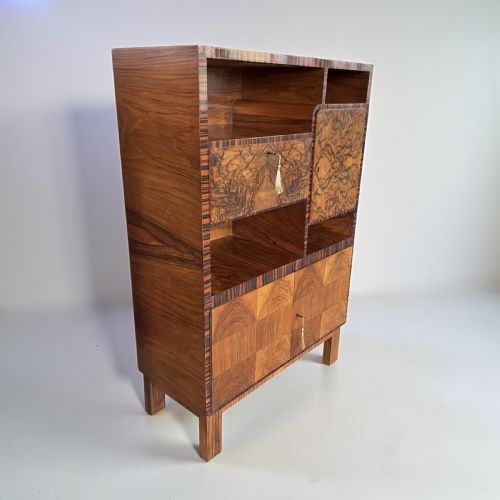


1920s Drinks Cabinet
A 1920s drinks cabinet brings forth the golden age of entertaining, offering fitted interiors and drop-down bars for home mixology.
1920s Drinks Cabinet
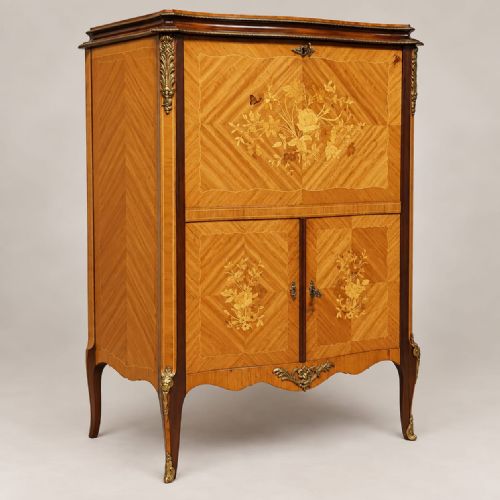
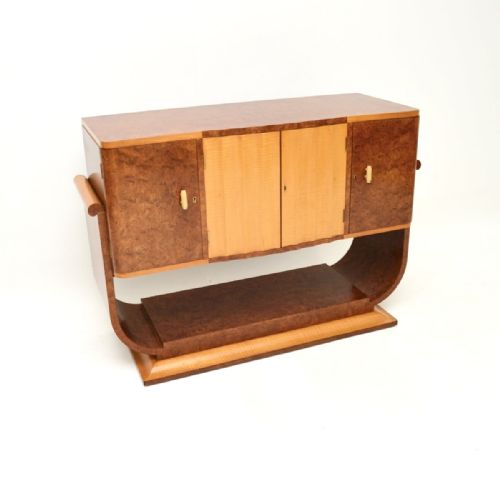
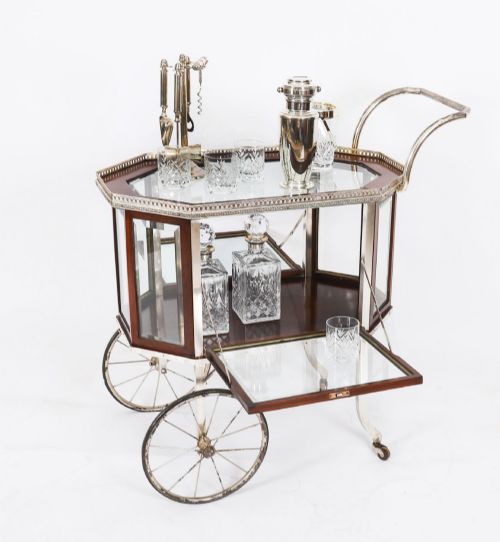
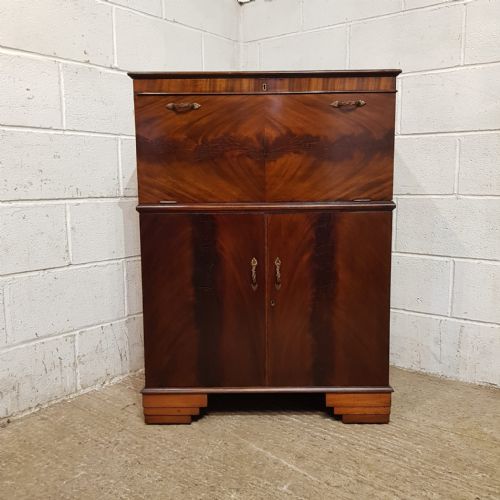
A 1920s drinks cabinet sits firmly in the realm of interwar entertainment, taking the form of cocktail cabinets, dry bar cabinets, and serving trolleys designed specifically to house spirits, glassware, and mixing equipment. These pieces emerge predominantly from the 1920 and 1930 periods, capturing an era when home hospitality shifted towards dedicated cocktail service.
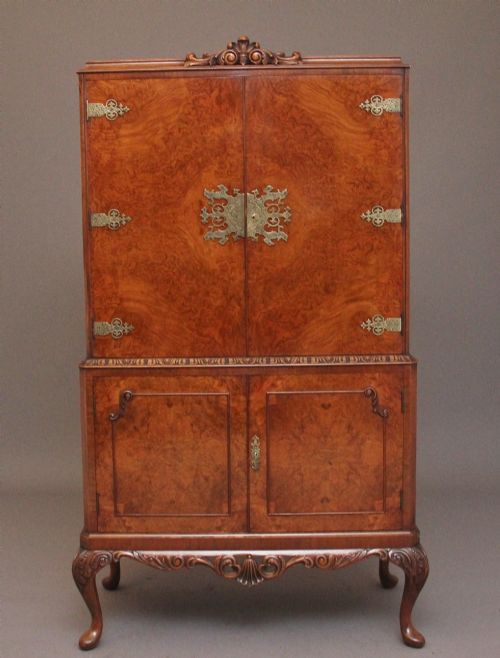
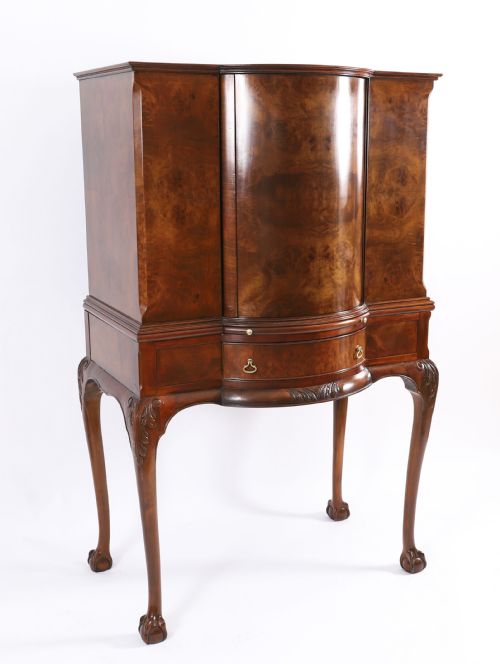
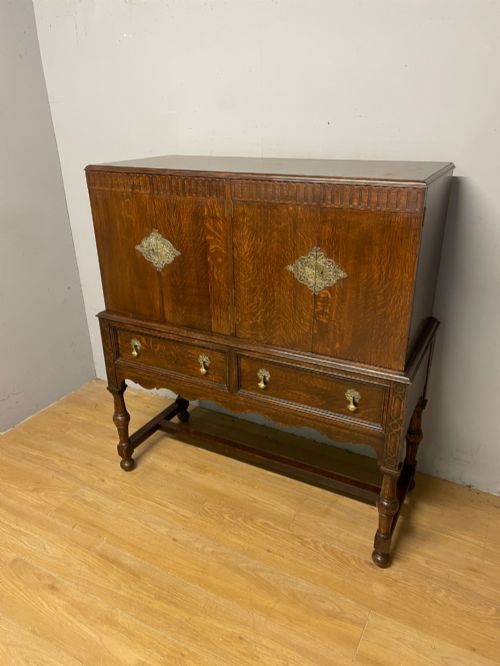
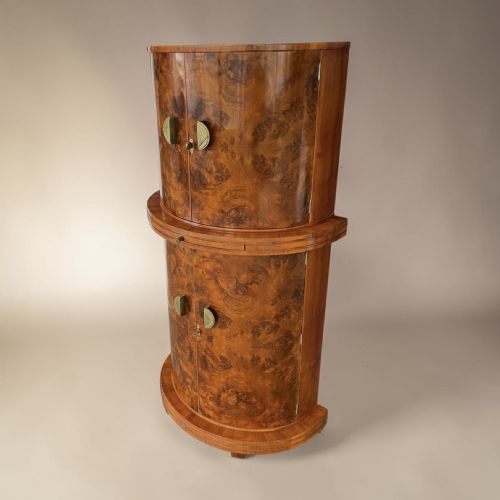
The dominant aesthetic you will encounter relies heavily on Art Deco styling, though revivalist tendencies such as Queen Anne, Jacobean, and Colonial influences also appear across the selection. Forms range from compact revolving bar cabinets and oval display tables to large sideboards and metamorphic chests with drop fronts.
Origin and regional variation introduce distinct character to these items, including French pieces alongside British and Colonial variants. Buyers seeking a 1920s drinks cabinet will find that burr walnut and standard walnut form the backbone of the available inventory, frequently accompanied by specialised drinks trolleys and fixed side cabinets.
How they were made
Cabinetmakers constructed these pieces using a foundation of solid woods like mahogany, oak, and sycamore, upon which they applied decorative veneers such as burr walnut. This veneering technique allowed craftsmen to showcase dramatic, swirling grain patterns across large flat surfaces like cabinet doors and drop-down writing or mixing flaps.
Specialised interior mechanisms define the construction of these cabinets, from revolving carousels in dry bars to metamorphic folding actions and drop-down serving shelves. Specialised finishes like black lacquer appear alongside traditional French polishing to seal and protect the timber surfaces.
1920s Drinks Cabinet Retail Price Guide 2026
Typical asking prices for 1920s drinks cabinet among the pieces listed under this phrase on Sellingantiques today, from the lower quarter to the upper quarter. They describe what is for sale here now, not the wider market.
Some cabinets incorporate revolving mechanisms, allowing you to spin the entire drinks store like a cocktail-fueled merry-go-round.
What varies in quality
The selection of timber veneer dictates much of the visual hierarchy, with heavily figured burr walnut sitting at the upper end of the scale compared to plain mahogany or standard walnut. The symmetry and book-matching of these grain patterns across double doors reveal the skill of the original workshop.
Internal complexity and the completeness of original fittings separate standard utility pieces from high-end commissions. Cabinets retaining their original mirrored interiors, pull-out slides, glass shelves, and specialised bottle racks demonstrate superior original design.
The cohesion of the design style also marks the distinction, particularly where Art Deco geometric lines or specific revivalist details are executed with precision. Pieces attributed to notable makers or specific stylistic movements command attention through more ambitious proportions and refined hardware.
H and L Epstein
The 1920s Drinks Cabinet Glossary
- Art Deco
- A design style characterised by sleek geometric shapes, streamlined forms, and modern materials that dominated the 1920s and 1930s. It represents a sharp break from heavy Victorian and Edwardian aesthetics.
- Burr Walnut
- A specialised wood veneer taken from the wart-like growth on a walnut tree, producing intricate, swirling grain patterns. Cabinetmakers prize this timber for its decorative impact on focal surfaces.
- Metamorphic
- A term describing furniture that transforms its function through folding, sliding, or pivoting mechanisms. In this category, it refers to cabinets that expand or alter shape to reveal a cocktail bar.
- Chinoiserie
- European interpretations of Chinese and East Asian decorative arts, often featuring hand-painted lacquer scenes. This finish occasionally appears on vintage cocktail cabinets from the period.
- Dry Bar
- A specialised cabinet configured for storing bottles, glassware, and bar accessories without refrigeration. These units often feature specialised revolving mechanisms or drop-down preparation ledges.
1920s Drinks Cabinet: Frequently Asked Questions
What is a 1920s drinks cabinet?
A 1920s drinks cabinet is a specialised piece of furniture designed to store and serve alcoholic beverages, glassware, and mixing equipment during the interwar period. These pieces often feature fitted interior compartments, mirrored backs, and drop-down shelves intended for preparing cocktails at home.
They reflect the cultural shift towards home-based entertaining and the rise of cocktail culture in the nineteen-twenties and nineteen-thirties. Forms range from compact revolving dry bars to large sideboards and trolley carts.
How do I use a drinks cabinet today?
You can use a vintage drinks cabinet for its original purpose by stocking the interior compartments with your preferred bottles, glassware, and bar accessories. The drop-down flaps and pull-out slides serve as convenient ledges for pouring drinks when hosting guests.
When not in use, closed cabinets conceal the contents while adding a statement piece of period furniture to a dining room, living space, or hallway. Their decorative wood grains and mirrored interiors make them effective focal points in modern interiors.
How do I tell Art Deco from revival styles?
Art Deco pieces from this era rely on sleek geometric lines, symmetry, streamlined shapes, and decorative veneers like burr walnut and blonde maple without historical ornamentation. They emphasise modernity and clean architectural forms.
Revival styles, such as Jacobean or Queen Anne, incorporate traditional motifs like carved oak panels, cabriole legs, or period-specific hardware. These cabinets utilise older design vocabularies while maintaining the interior functionality of a 1920s bar.
Are all 1920s cabinets made of walnut?
While walnut and burr walnut are the most common timbers found across these listings, cabinets were also constructed from mahogany, oak, and sycamore. Some pieces incorporate contrasting veneers and black lacquer to achieve specific visual effects.
Secondary woods and internal framing often utilised sturdier structural timbers, while exterior surfaces received decorative treatments suited to the prevailing style of the decade.