



Burr Walnut Bar
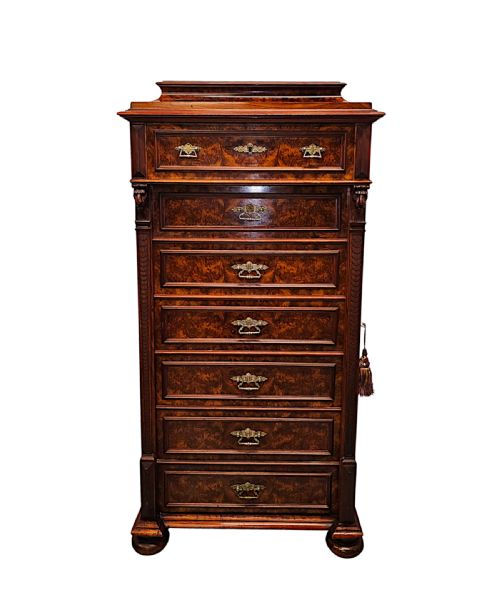
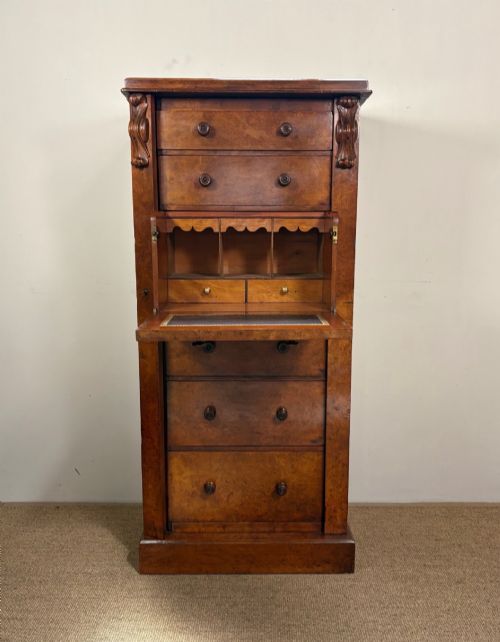
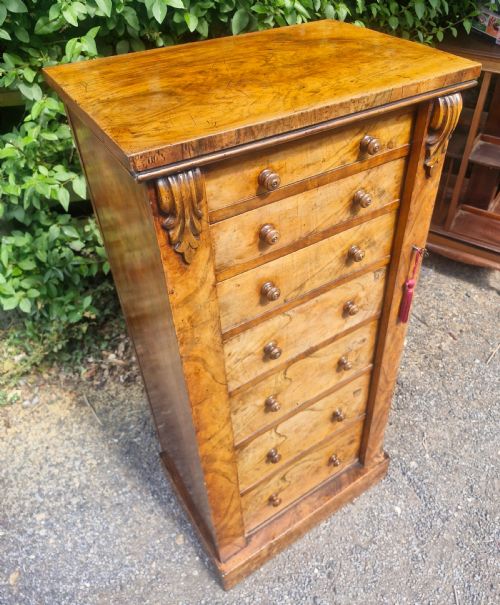
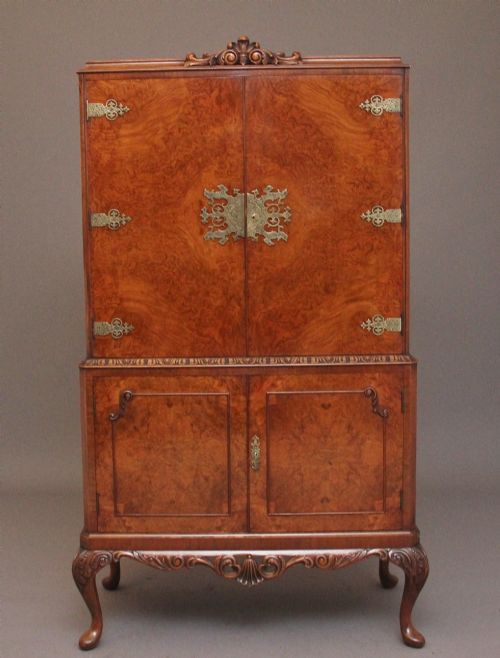
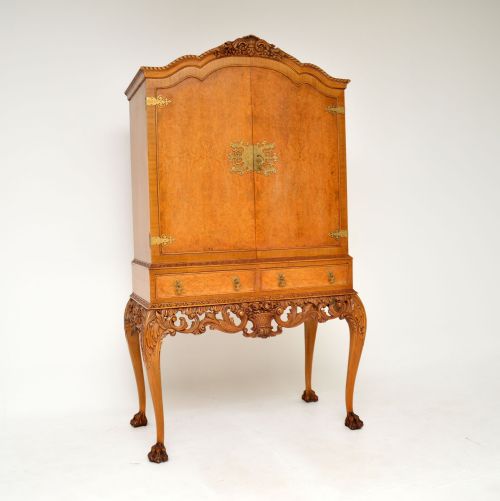
A burr walnut bar brings together rich, swirling timber grains and functional design tailored for entertaining.
Burr Walnut Bar
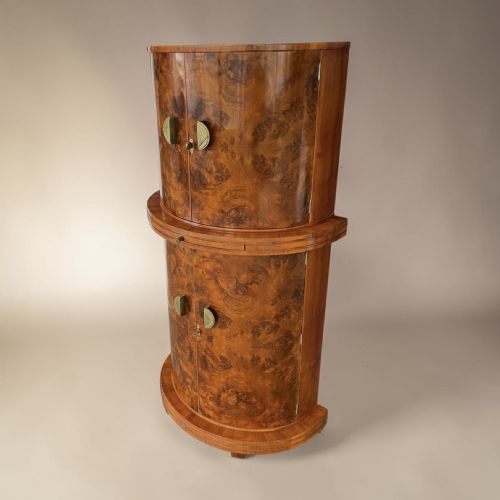
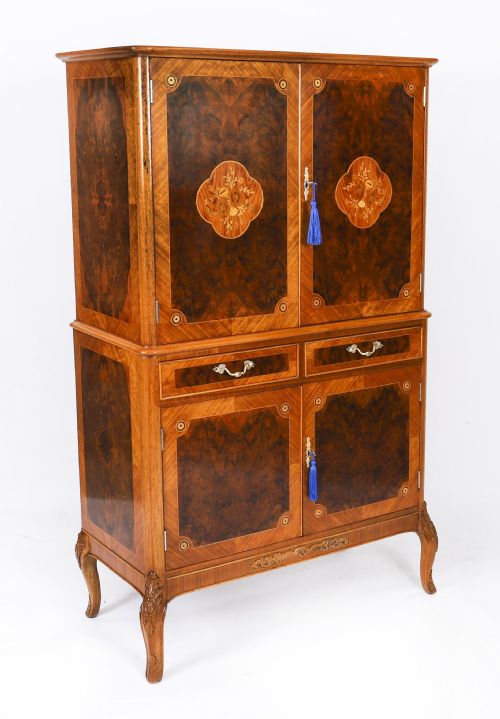
When searching for a burr walnut bar, buyers encounter a specific variety of cocktail cabinets, drinks cabinets, and folding dry bars designed for hospitality. These pieces predominantly date from the Art Deco period of the 1930s and the earlier 1920s, drawing on Queen Anne revival styles alongside modernist curves.
The form typically manifests as a substantial cabinet or sideboard equipped with fitted interior compartments for glassware, bottles, and mirrors. Alongside these dedicated cocktail units, the category occasionally spans earlier Victorian and 19th-century tantalus sets and barometers that incorporate the same figured wood.
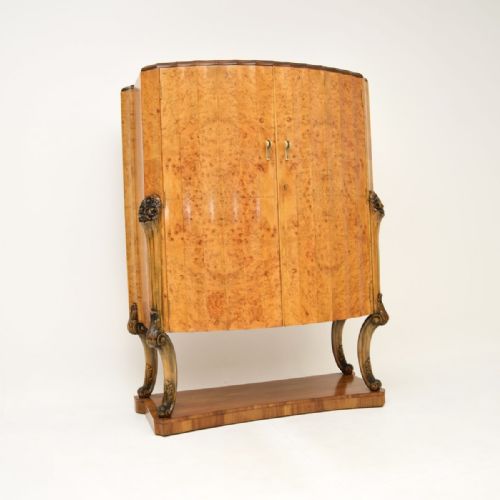
The most prevalent iteration on this page is the 1930s Art Deco cocktail cabinet, often featuring double bow fronts, cloud shapes, or geometric veneers. These items were conceived to house spirits and accessories in domestic sitting rooms and dining spaces.
How they were made
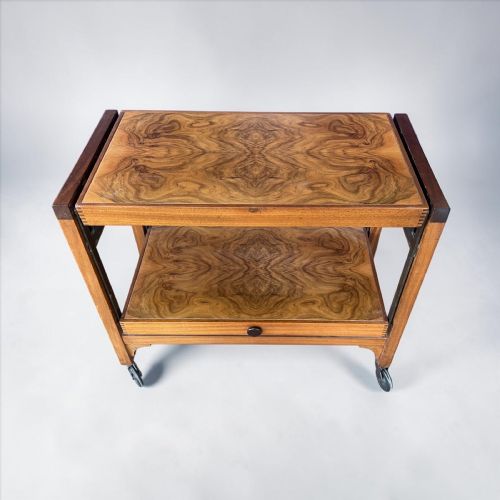
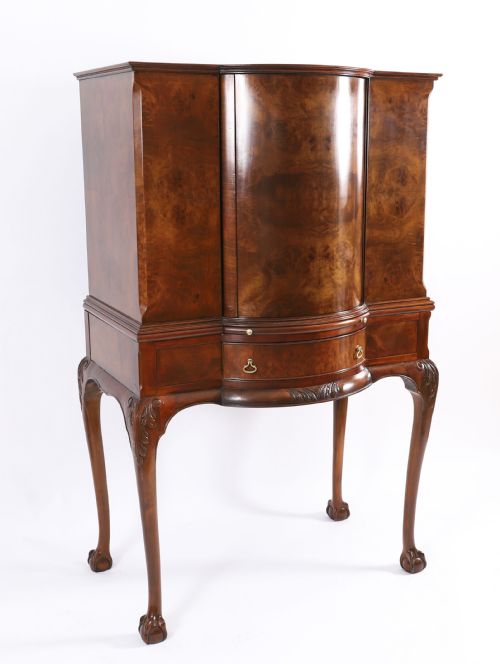
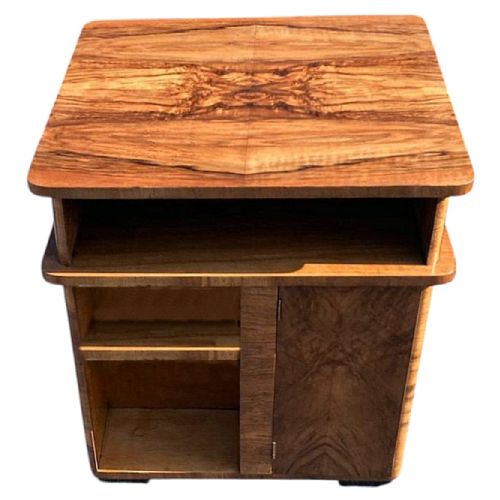
The defining exterior surfaces rely on burr walnut veneer, selected for its swirling, highly figured grain patterns, which are laid over solid supporting timbers such as oak or plain walnut. Craftsmen matched these decorative veneers symmetrically across double doors and fall fronts to create striking visual movement.
Interior fittings integrate glass shelving, mirrored backs, and metal hardware such as brass hinges and locks. Many Art Deco examples incorporate specialised lighting fixtures and pull-out serving slides lined with glass or mirror to handle bottle service.
Listings span the 19th century, Victorian era, Edwardian period, 1920s, and 1930s Art Deco movement.
What varies in quality
The standard of a burr walnut bar is largely dictated by the ambition of the veneering and the prestige of the maker. Master workshops applied figured timber with meticulous grain alignment across complex curves like bow fronts and demi-lune shapes, whereas simpler builds relied on flat planes.
Fitted interiors also separate standard production from high-end pieces. Superior cabinets feature elaborate pull-out mechanisms, integrated electric lighting, marquetry inlay, and complete sets of matched crystal glassware rather than empty shelving.
Epstein·Hille·Harry and Lou Epstein·Waring and Gillow·Barber and Son·Hill and Price of Bristol·Short and Mason London·W Johnson·CW Dixey London·Callaghan Bond Street London·William Barr of Govan
The Burr Walnut Bar Glossary
- Burr walnut
- A veneer sliced from the gnarled growths or burls of walnut trees. This timber yields intricate, swirling grain patterns highly prized for cabinet fronts.
- Tantalus
- A locking wooden frame holding decanters of spirits to prevent unauthorized access. These are frequently encountered housed in Victorian burr walnut cases.
- Marquetry
- The art of applying pieces of veneer to a structure to form decorative patterns and pictures. In these listings, it often enhances Art Deco cabinet doors.
- Demi-lune
- Half-moon shape. Cabinets built to this profile sit flush against walls while offering curved front storage.
- Trolley
- A mobile serving cart on wheels. Art Deco examples utilise walnut veneers and metal details for portable drinks service.
Burr Walnut Bar: Frequently Asked Questions
What is a burr walnut bar?
A burr walnut bar is a specialised cabinet or serving piece designed to store and serve drinks, distinguished by the swirling, highly figured grain of walnut burl veneer.
These items range from 1920s and 1930s Art Deco cocktail cabinets to 19th-century tantalus sets and serving trolleys.
How were these cabinets used?
They served as dedicated home bars for entertaining guests, holding spirits, wine, and matching crystal glassware within fitted compartments.
Many featured drop-down flaps or pull-out glass shelves that acted as preparation surfaces for mixing drinks during social gatherings.
How do I date a burr walnut bar?
Dating relies on stylistic markers, contrasting the geometric curves, waterfall edges, and symmetrical veneers of 1930s Art Deco pieces against earlier Queen Anne revival forms.
Victorian and 19th-century examples display heavier traditional carving, barley twist supports, or functional brass hardware distinct from modernist designs.
How do I care for burr walnut furniture?
Burr walnut veneer requires protection from direct sunlight and extreme humidity fluctuations to prevent the wood from fading or lifting.
Cleaning should be restricted to soft, dry dusting, avoiding harsh chemical polishes that can damage the delicate French polished or lacquered finish.