

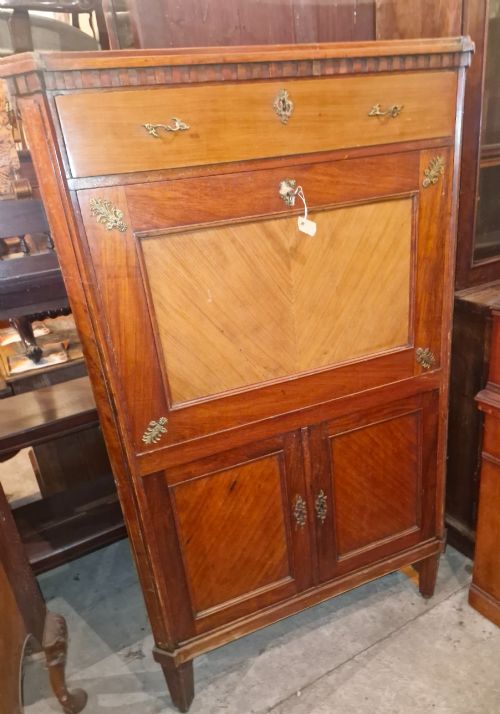
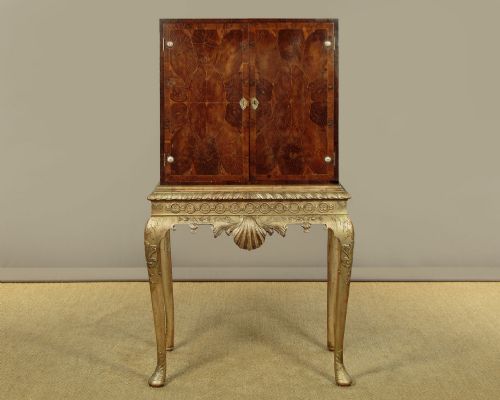
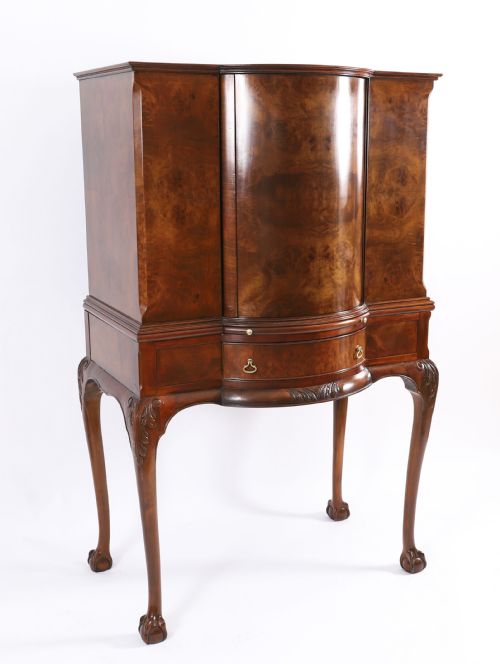
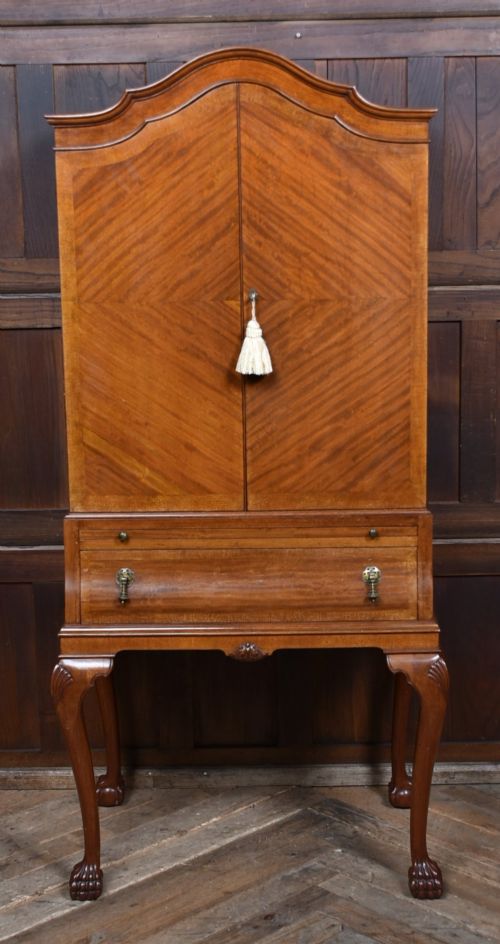
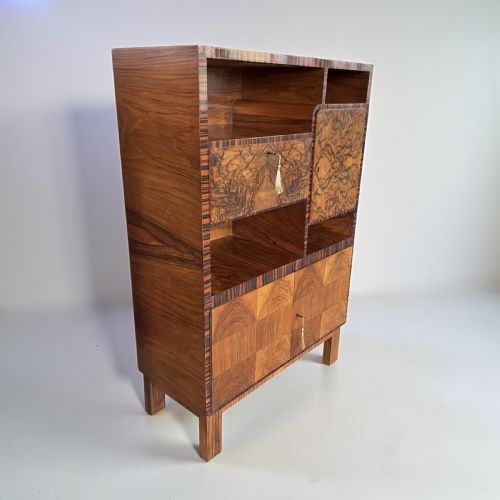


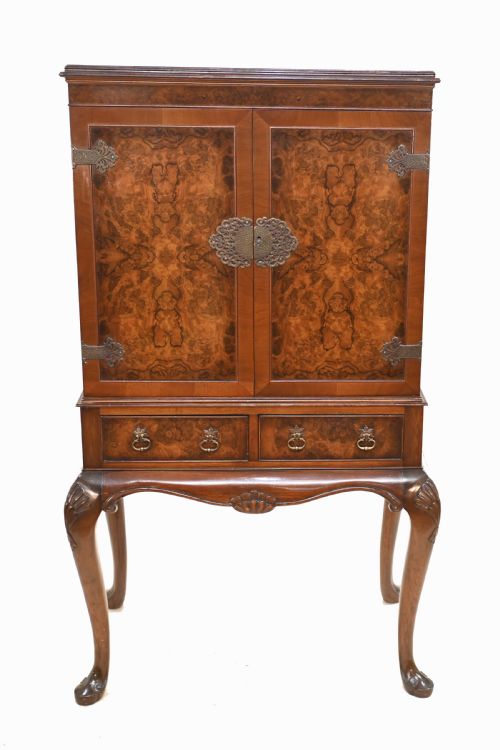
Brown Wood Cocktail Cabinet
A brown wood cocktail cabinet brings distinct period character to entertaining, offering fitted storage for glassware and bottles with strong decorative presence.
Brown Wood Cocktail Cabinet
A brown wood cocktail cabinet encompasses forms designed specifically for serving drinks, appearing across periods from the Victorian era through the Edwardian years and into the nineteen thirties. Buyers searching this phrase encounter tall drinks cabinets, cabinets on stands, revolving dry bars, and fitted sideboards that serve a similar function.
The selections available lean heavily towards the nineteen thirties, featuring prominent Art Deco styling alongside earlier Edwardian and Victorian pieces. Materials range from burr walnut to mahogany, often incorporating glass and brass details that define the aesthetic of each period.
Construction and materials
Cabinet makers utilised rich timbers like burr walnut, mahogany, and rosewood, frequently applying burr veneers to create striking grain patterns across the main body. These wooden structures were enhanced with applied brass hardware, mirrored sections, and occasionally silver leaf or giltwood finishes.
Internal layouts often combined fitted shelving with specialised compartments for bottles and glassware, sometimes pairing the wooden cabinetry with glass doors or mounting the main body upon a decorative stand.
Brown Wood Cocktail Cabinet Retail Price Guide 2026
Typical asking prices for brown wood cocktail cabinet among the pieces listed under this phrase on Sellingantiques today, from the lower quarter to the upper quarter. They describe what is for sale here now, not the wider market.
Some nineteenth-century pieces cleverly disguise functional drinks storage inside what appears to be a standard bookcase or a formal library piece.
Assessing quality and craftsmanship
Quality in these pieces is dictated by the selection of timber veneers, such as finely figured burr walnut or amboyna, and the precision of the cabinet work. Superior examples show careful attention to grain alignment and robust construction that supports heavy internal fittings.
The distinction between standard production and exceptional work also rests in the complexity of the internal fitments, the quality of the hardware including brass mounts, and the cohesion of revival or Art Deco design elements.
Epstein and Co Furniture
The Brown Wood Cocktail Cabinet Glossary
- Burr walnut
- A prized wood harvested from walnut tree growths, yielding intricate, swirling grain patterns that decorators favour for prominent surface panels. It defines many pieces from the interwar period.
- Art Deco
- A design movement spanning the nineteen twenties and thirties characterised by streamlined forms, geometric motifs, and luxurious materials. This style heavily influences the cocktail cabinets of that era.
- Cabinet on stand
- A form comprising a main storage body elevated on a separate framework or legs, which offers a lighter visual footprint. These stands frequently incorporate decorative carving or gilding.
- Secretaire
- A cabinet incorporating a pull-down writing flap that conceals small drawers and pigeonholes. In drinks furniture, this feature adds a practical surface for mixing beverages.
- Revolving dry bar
- A specialised furniture type designed to turn on a base for easy access to bottles and glassware stored within. It represents a more mechanical approach to home entertaining.
Brown Wood Cocktail Cabinet: Frequently Asked Questions
How do I date a cocktail cabinet?
Dating relies on observing stylistic markers such as clean Art Deco geometric lines versus ornate Victorian carving or Edwardian proportions. Timber choices and hardware styles further clarify the likely decade of production.
Examining internal construction methods and secondary woods also assists in confirming the period of origin for each cabinet.
Where should I place my cabinet?
These cabinets suit principal reception rooms, dining spaces, or home bars where their decorative wooden exteriors and fitted interiors can be appreciated. Ensure adequate clearance around doors or revolving sections for smooth access.
Positioning away from direct sunlight protects sensitive wood veneers and finishes from fading over time.
What is the difference between a sideboard and a cocktail cabinet?
A traditional sideboard primarily provides general dining storage with cupboards and drawers, whereas a cocktail cabinet is specifically arranged for glassware, bottles, and drink preparation. Some hybrid pieces combine sideboard proportions with dedicated drinks storage.
Cocktail versions often include specialised internal lighting, mirrored backs, or pull-out mixing trays not typically found in standard sideboards.
How do I care for walnut veneer?
Maintenance involves dusting with a soft, dry cloth and avoiding silicone-based polishes that can degrade the historic finish. Keep the wood away from extreme temperature shifts and moisture to prevent veneer lifting.
Occasional application of appropriate wax preserves the sheen and nourishes the timber grain.