It was listed by Clockwise. Sold pieces stay on Sellingantiques as a record of what has passed through, and the next one is rarely far away.
Clockwise has dated this piece to the 18th Century.
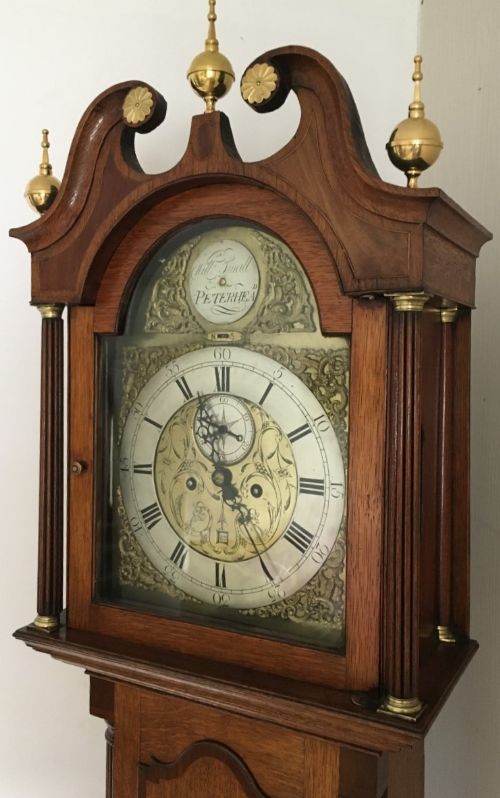
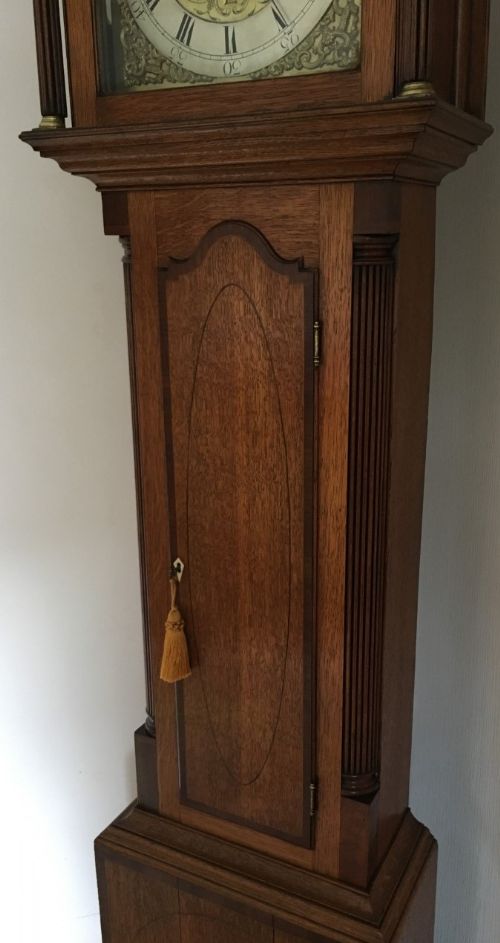
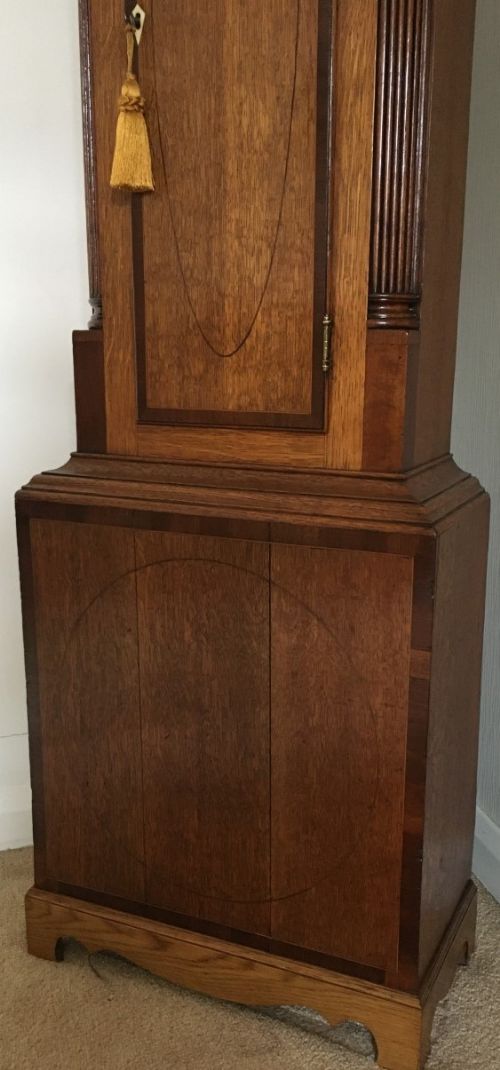
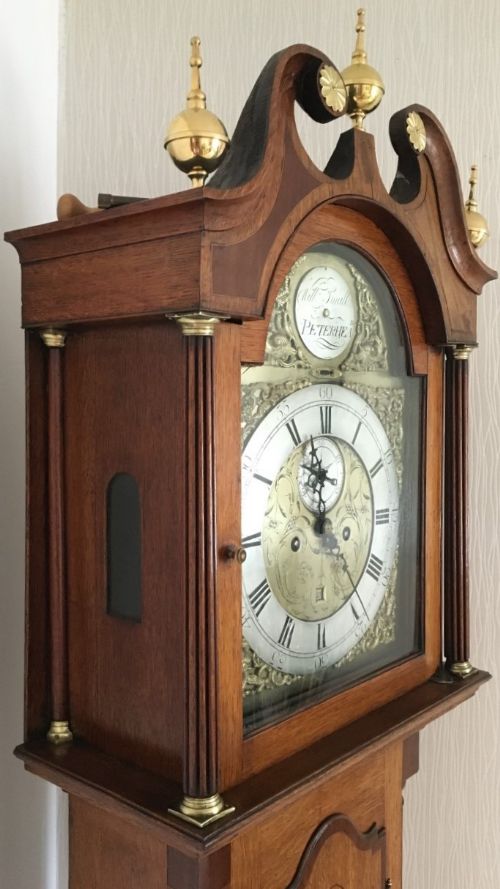
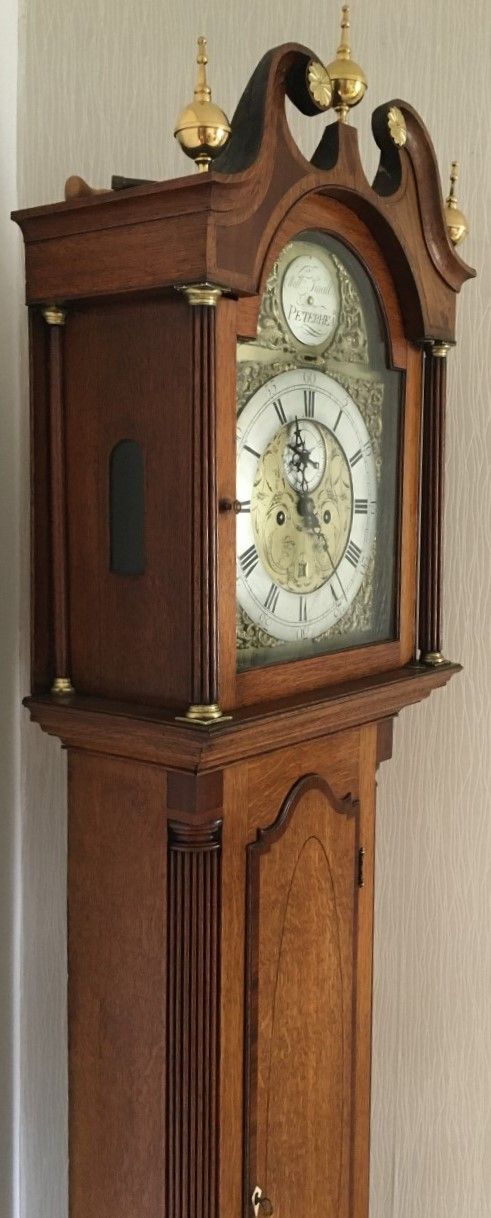
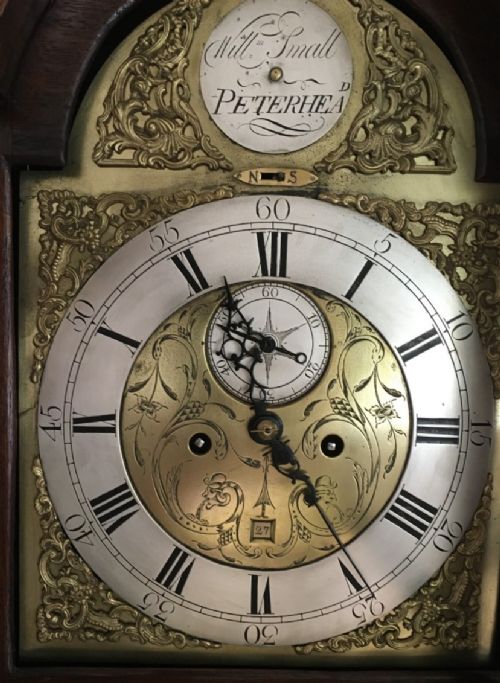
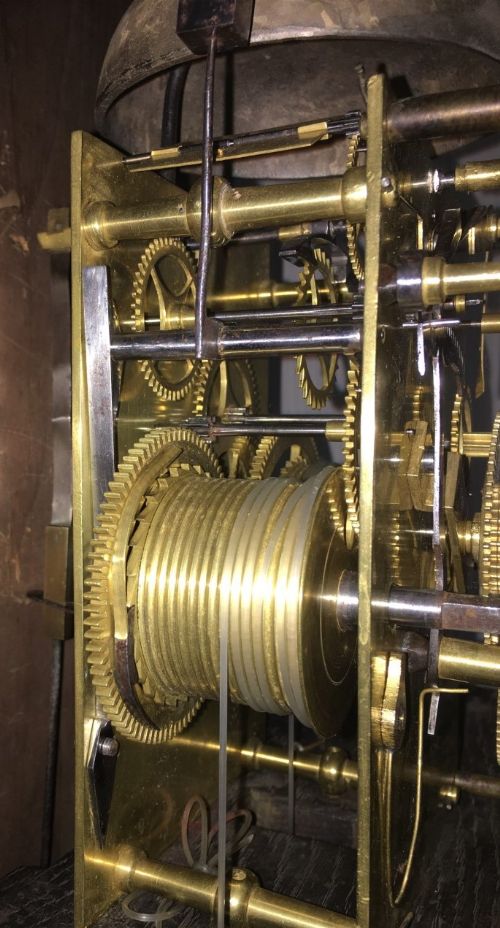
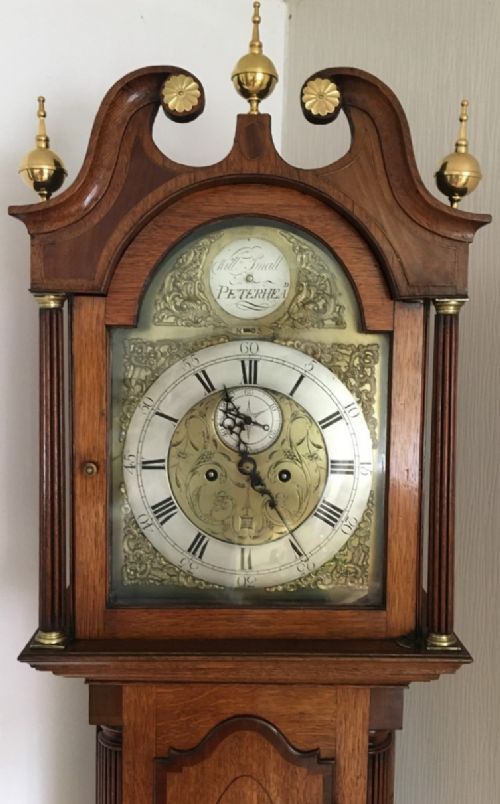
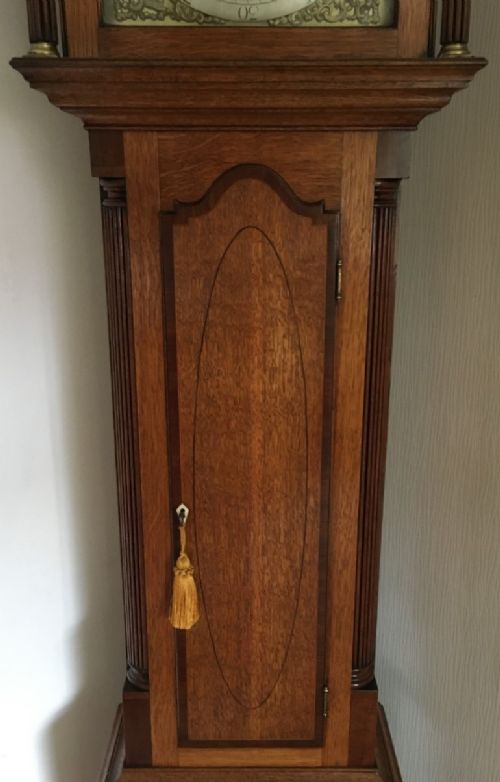
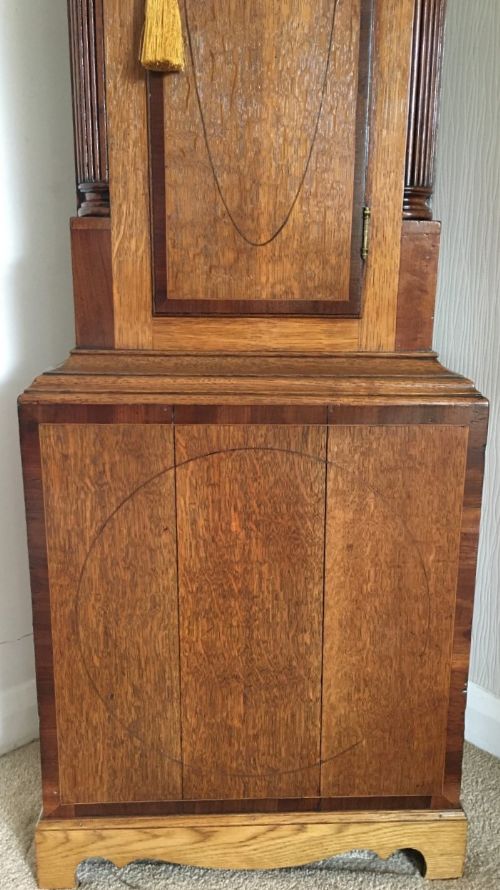
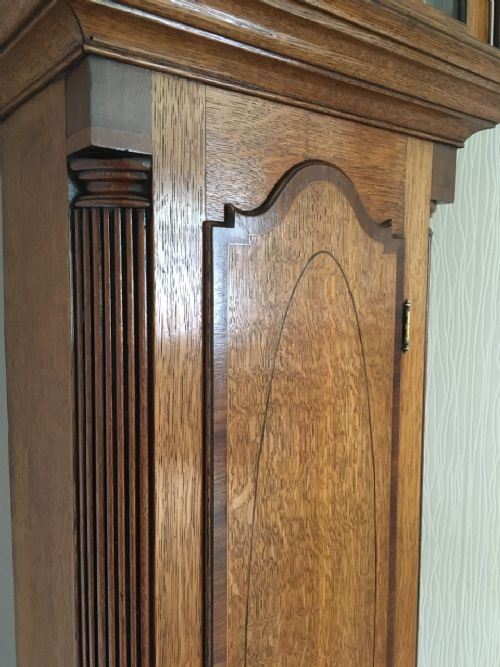
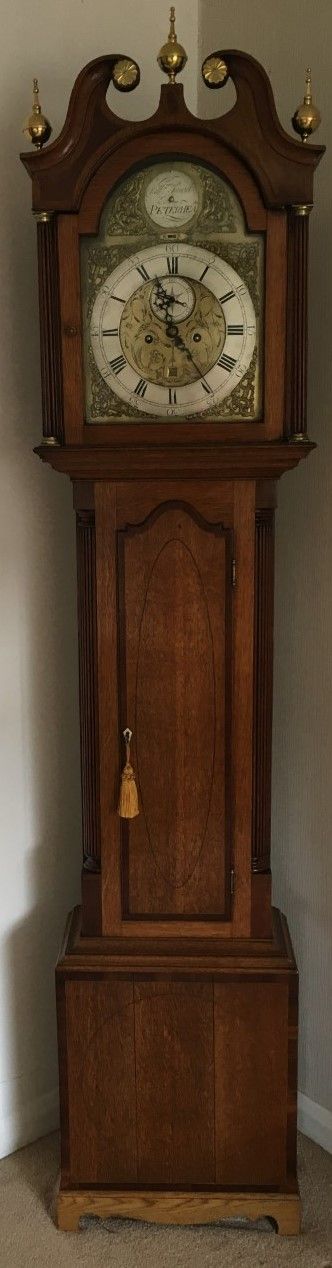
The oak and mahogany case has a lovely patina and the inlaid hood has a swan neck pediment top with brass details and glazed door flanked by reeded columns. There are side viewing windows to the hood. The trunk also has reeded columns and detailed inlaid door with working lock over a stepped lower section. The dial has been disassembled and polished and resilvered and comprises of a silvered working date ring, subsidiary seconds dial, chapter ring and cartouche. This clock really is a piece of history and whilst not a famous clockmaker William Small was certainly a famous and influential man.
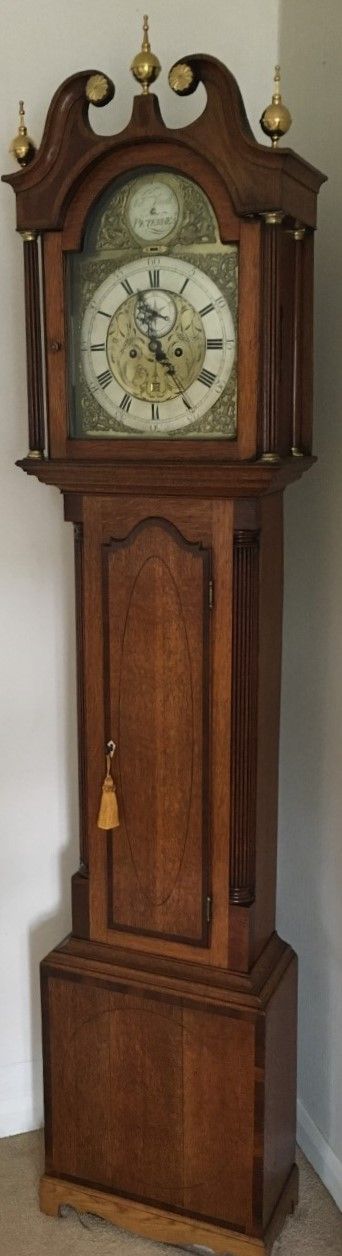
William Small (1734-1775), the son of a Presbyterian minister, was born in Carmyllie in Scotland. He attended Dundee Grammar School, and Marischal College, Aberdeen where he received an MA. In 1758 he was appointed Professor of Natural Philosophy at the College of William and Mary in Williamsburg, Virginia, which is where he met and taught Thomas Jefferson. In 1764 Small returned to Britain, with a letter of introduction to Matthew Boulton from Benjamin Franklin. Through this connection Small was elected to the Lunar Society. In 1765 he received his MD and established a medical practice in Birmingham. Small was Boulton’s physician and he became a close friend of Erasmus Darwin, Thomas Day, James Keir and James Watt. He helped to bring the Theatre Royal to Birmingham in 1774 and was involved in planning and building Birmingham General Hospital. Small died in Birmingham and is buried in the city’s St. Philip’s churchyard.
Clockwise has dated this piece to the 18th Century.
The cotswolds leading antique clock dealer and restorer
You can view the stock and full dealer information on the Clockwise Profile Page
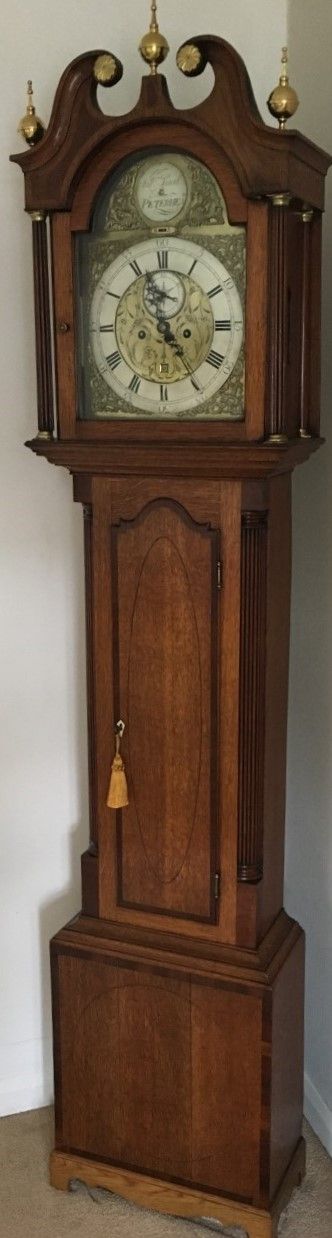
Rare Scottish George III Longcase by the Famed William Small