23,601  PAGES BROWSED TODAY PAGES TODAY • 99 ANTIQUES UPLOADED TODAYNEW ARRIVALS
GIFTS
99 ITEMS ADDED TODAY
Sort Order
Items Per Page
Browse Categories
Sort order
Relevant Links
Items per page
ID #SA1244658
FOR SALE
£180
Email Phone
Save
18th Century Liege Balustroid Wine Glass C1725
For sale by Exhibit Antiques
for sale €211     $229
£180
Exhibit Antiques

Exhibit Antiques

Sellingantiques Verified Since Mar 2019
Browse dealers 248 items
  • About Us
    Specialists in 18th & 19th century antique glass
Id #SA1244658
PDF SHARE
SAVE

18th Century Liege Balustroid Wine Glass C1725

18th century
For Sale by Exhibit Antiques
Description

Description

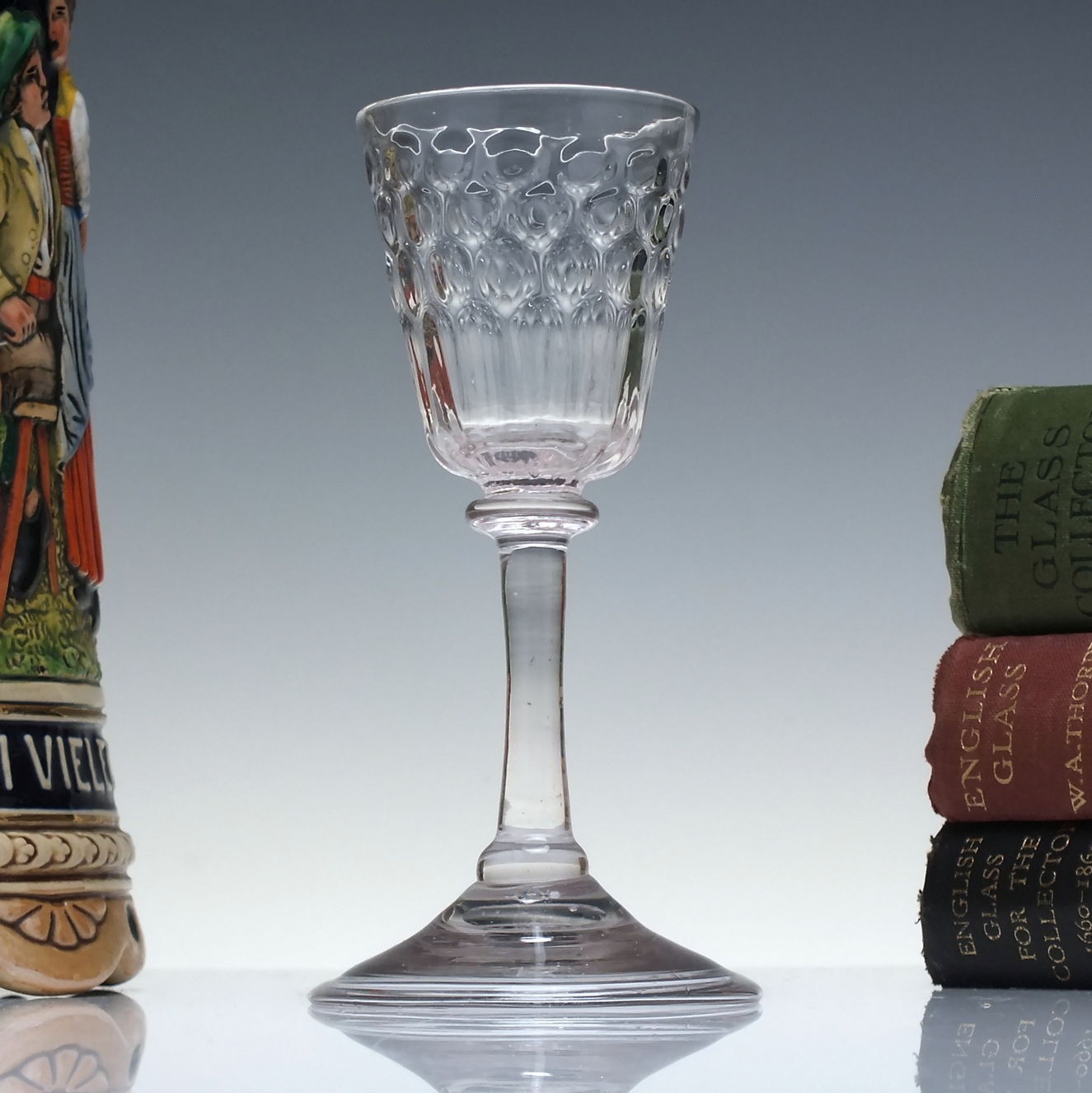
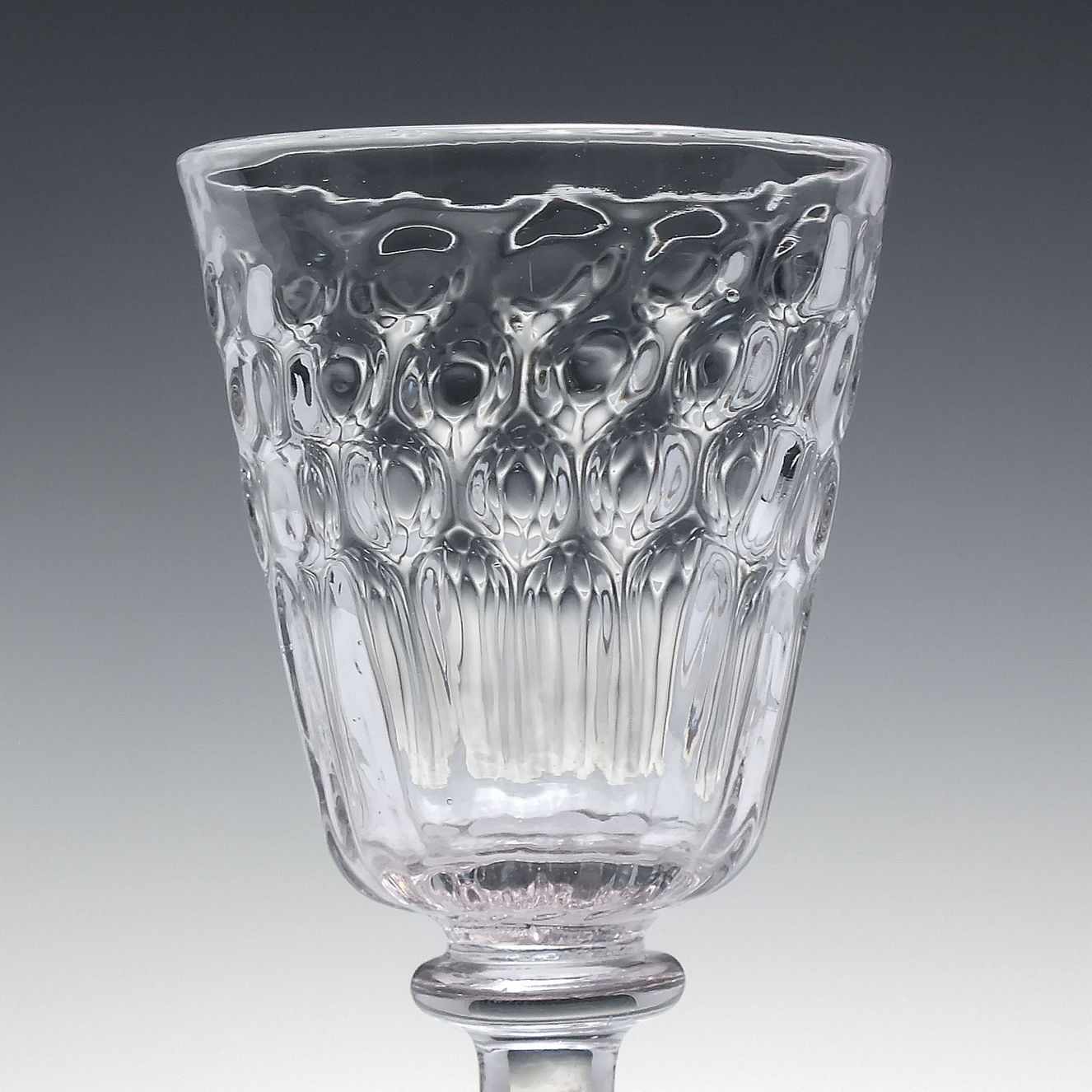
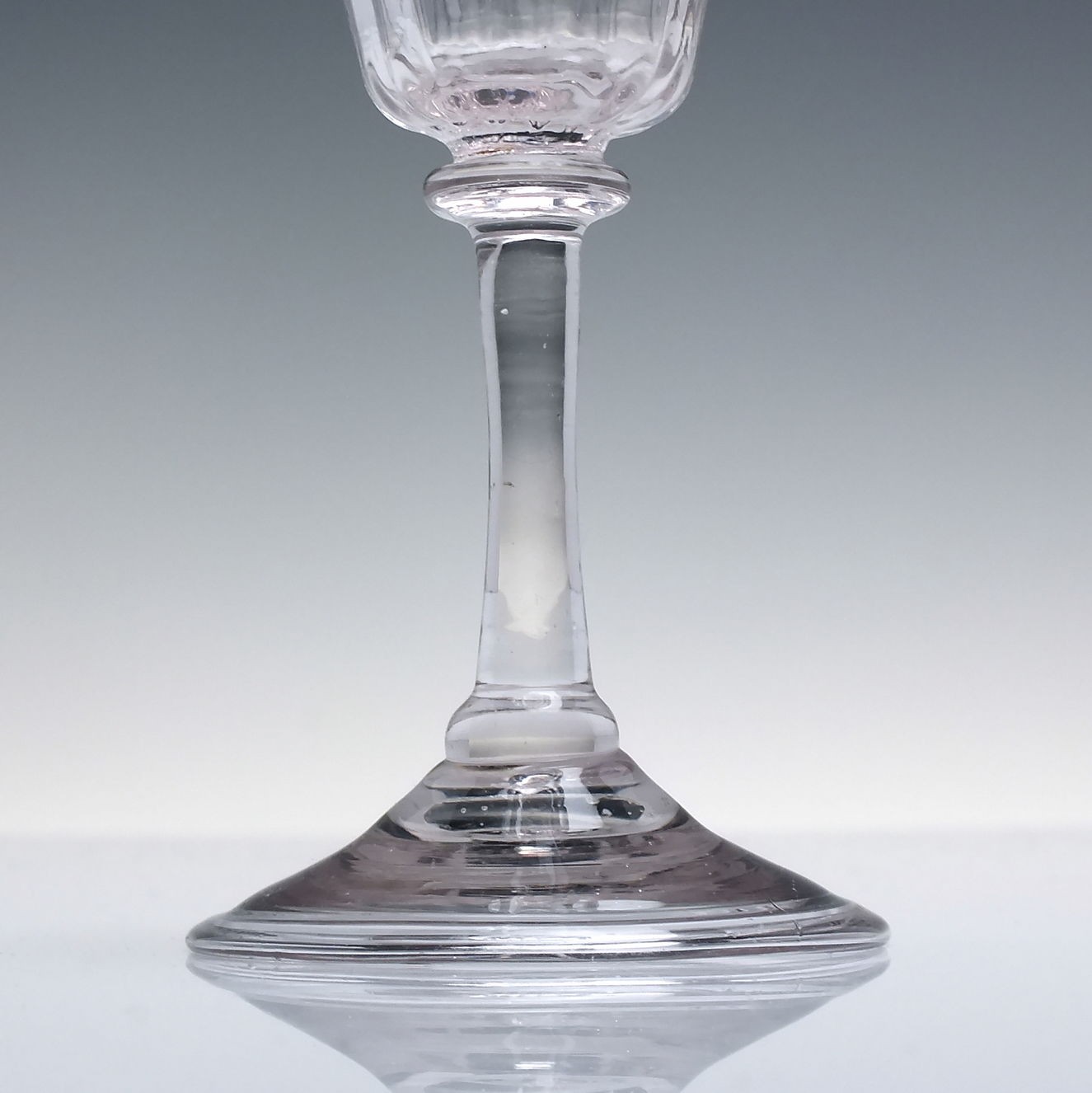
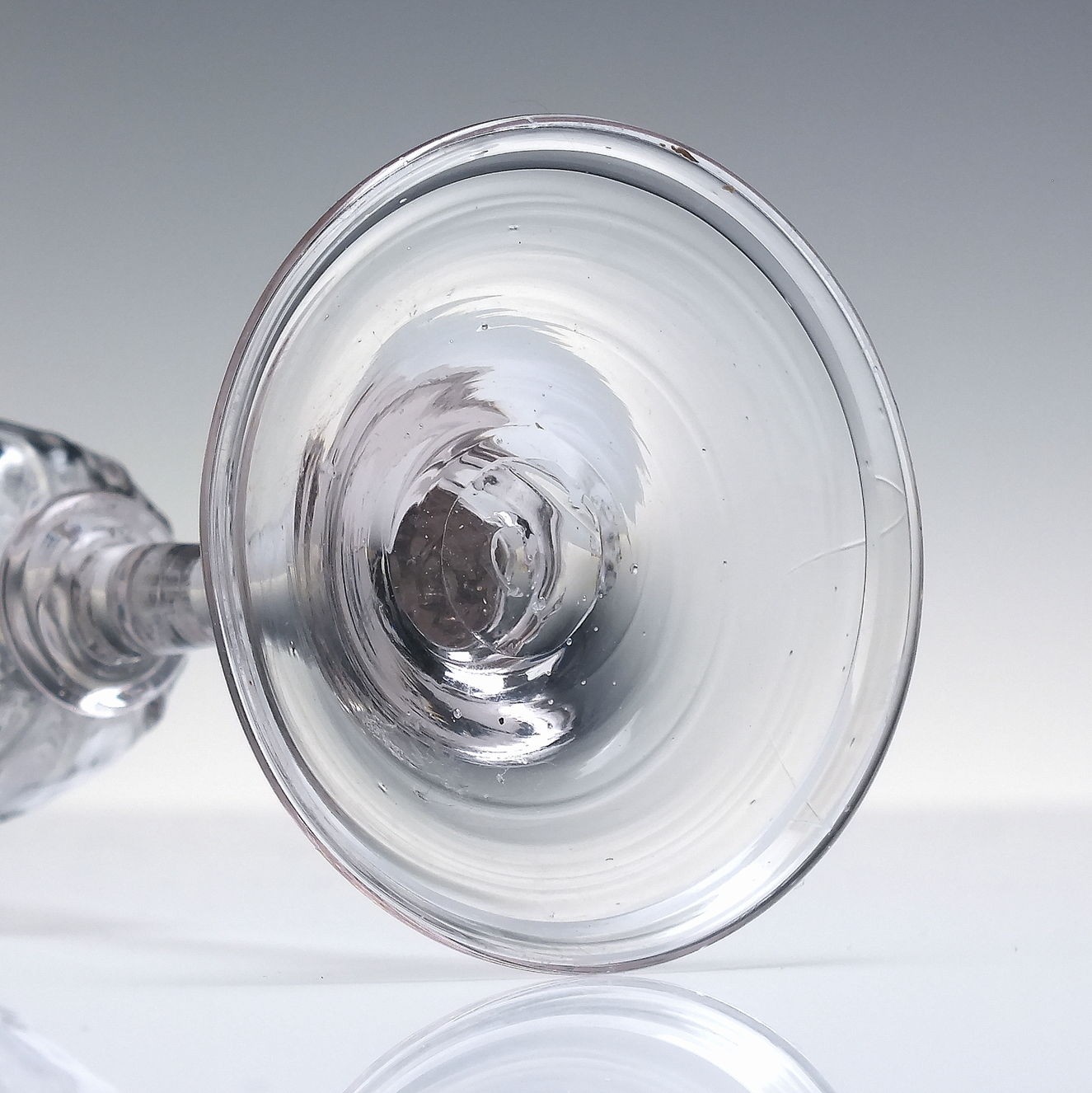
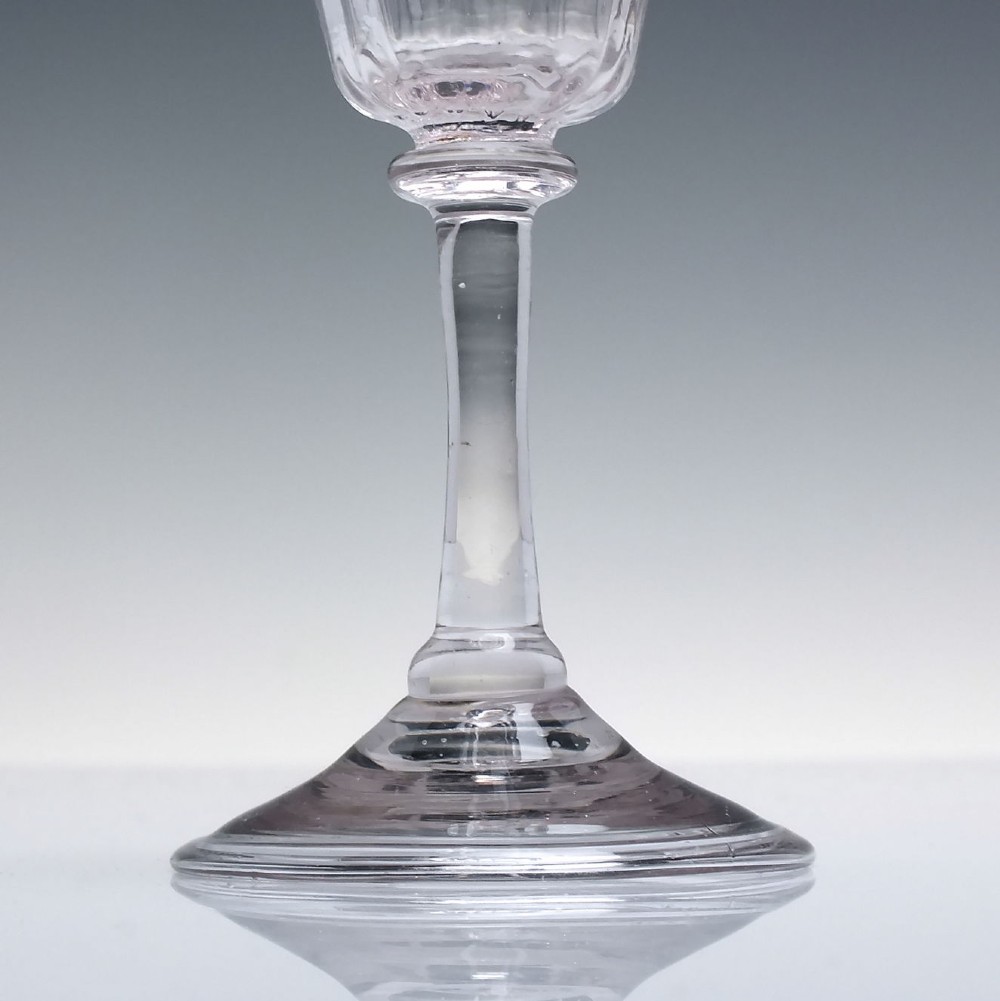
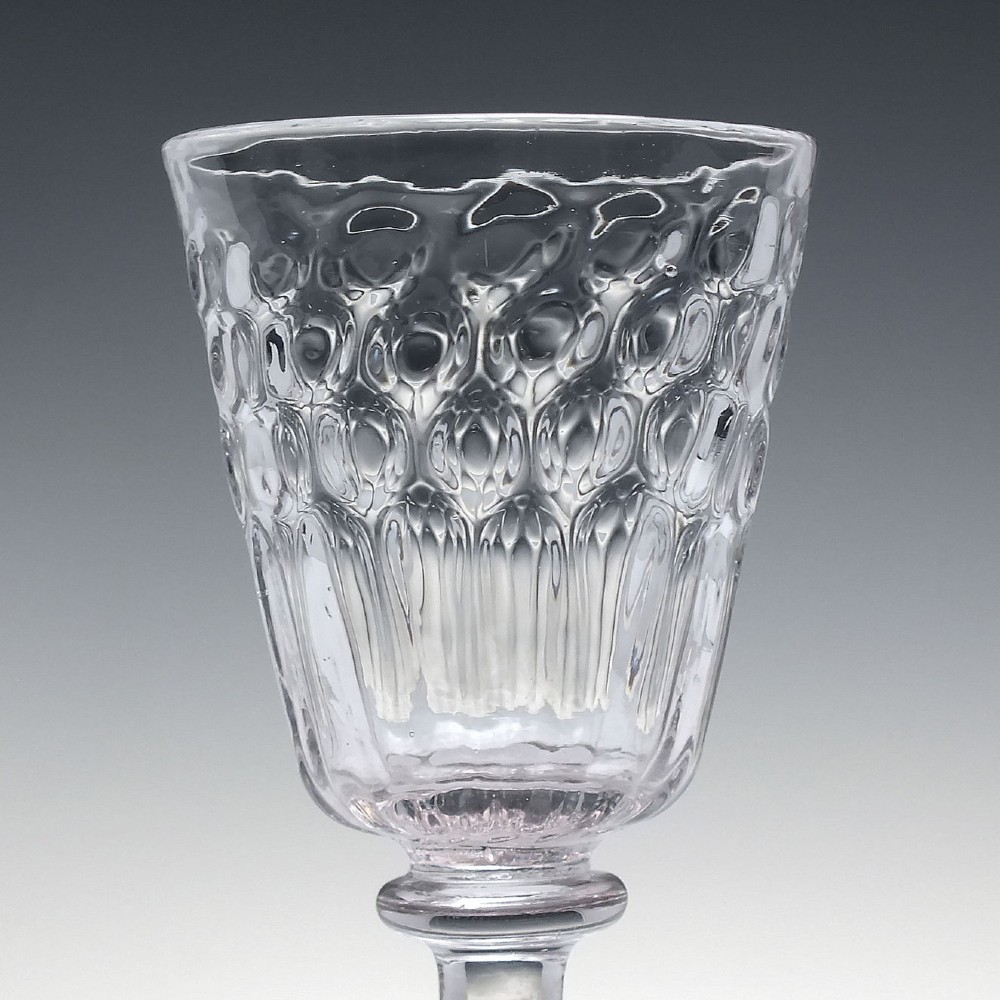
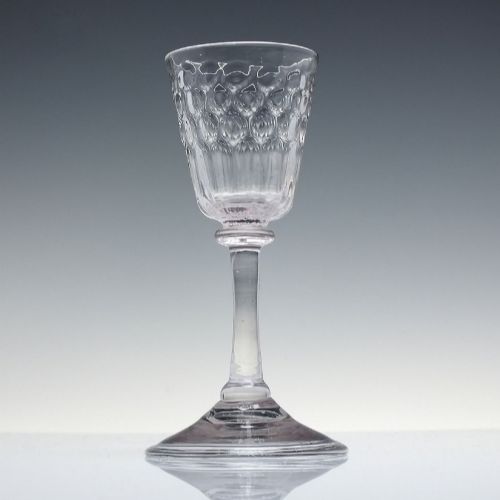
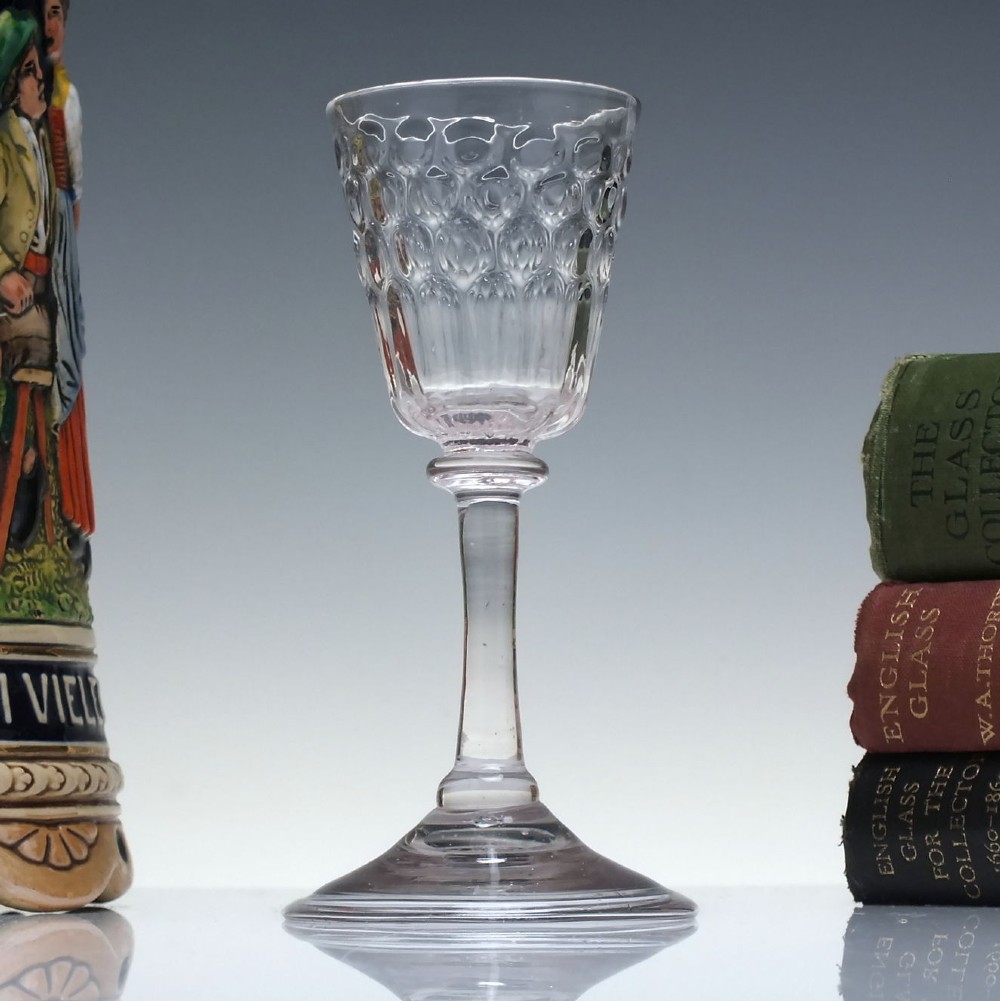
A rather fine 18th century Liège wine glass, dating to circa 1725. It features a round funnel bowl with nut moulding to the upper section and flute moulding to the lower section. The glass stands on a fine stem with an annulated shoulder knop and a basal knop, raised on a conical folded foot.
Historical Context

Liege (in present-day Belgium) was an important continental glassmaking centre in the late 17th and early 18th centuries. During the first half of the 18th century, its glasshouses began adopting lead glass technology, influenced by developments in England, producing excellent glasses with good clarity and often a slightly grey tone. These pieces reflect the spread of English lead glass technology into continental Europe, while retaining their own distinct character in form and finish.

Date & Origin

Belgium, c1725. Period of King George II.

Condition

Excellent. No chips, cracks or restoration.

Dimensions

Height: 13.5cm

Rim diameter: 5.2cm

Foot diameter: 6.9cm

Date of Manufacture

Exhibit Antiques has dated this Liege Balustroid Wine Glass to the Georgian era.

Independent Date Check ID 09712606
Dealer's Item DateGeorgian era
Sellingantiques DateGeorgian era
Sellingantiques agingItem 275-315 years old
Test ResultsPassed dating check
Why Sellingantiques dated this piece to THE GEORGIAN ERA:
Folded foot rim: traditional technique used to strengthen the foot against chipping.
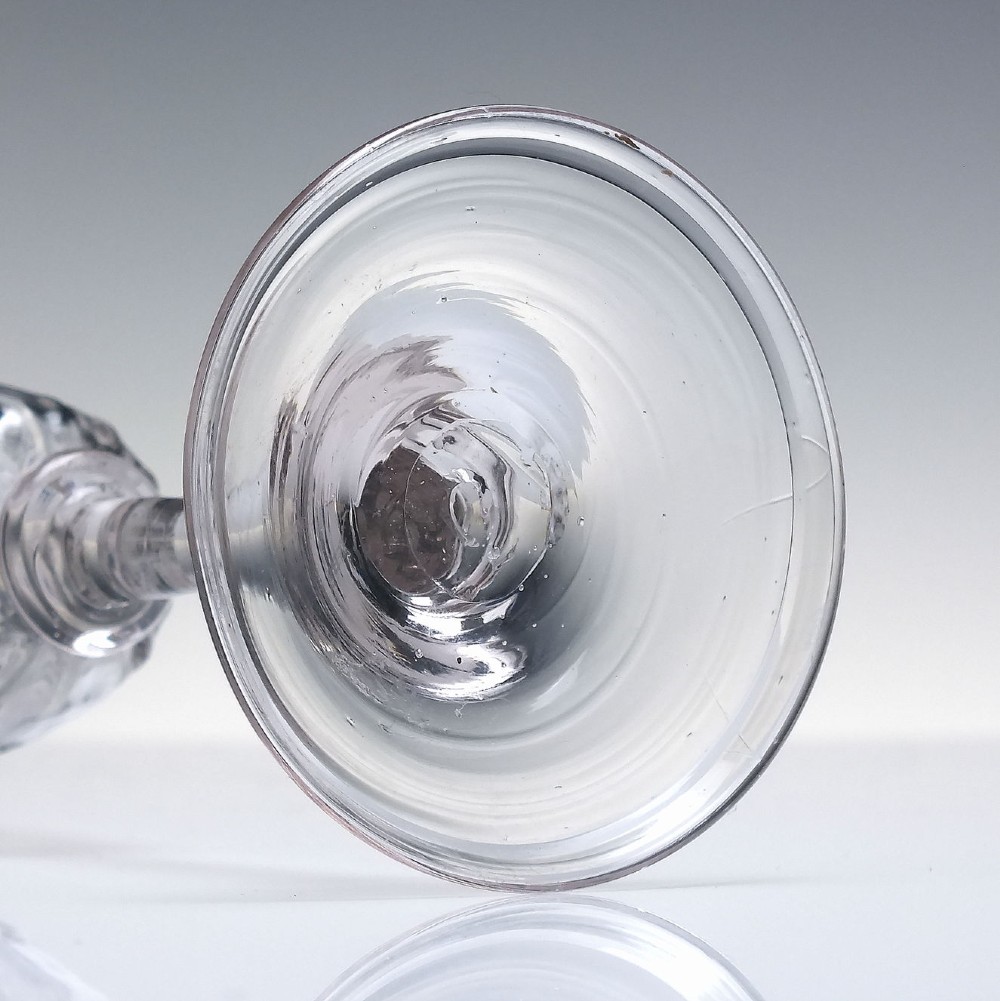
Rough snapped pontil mark on the base: made before polished pontils became common.
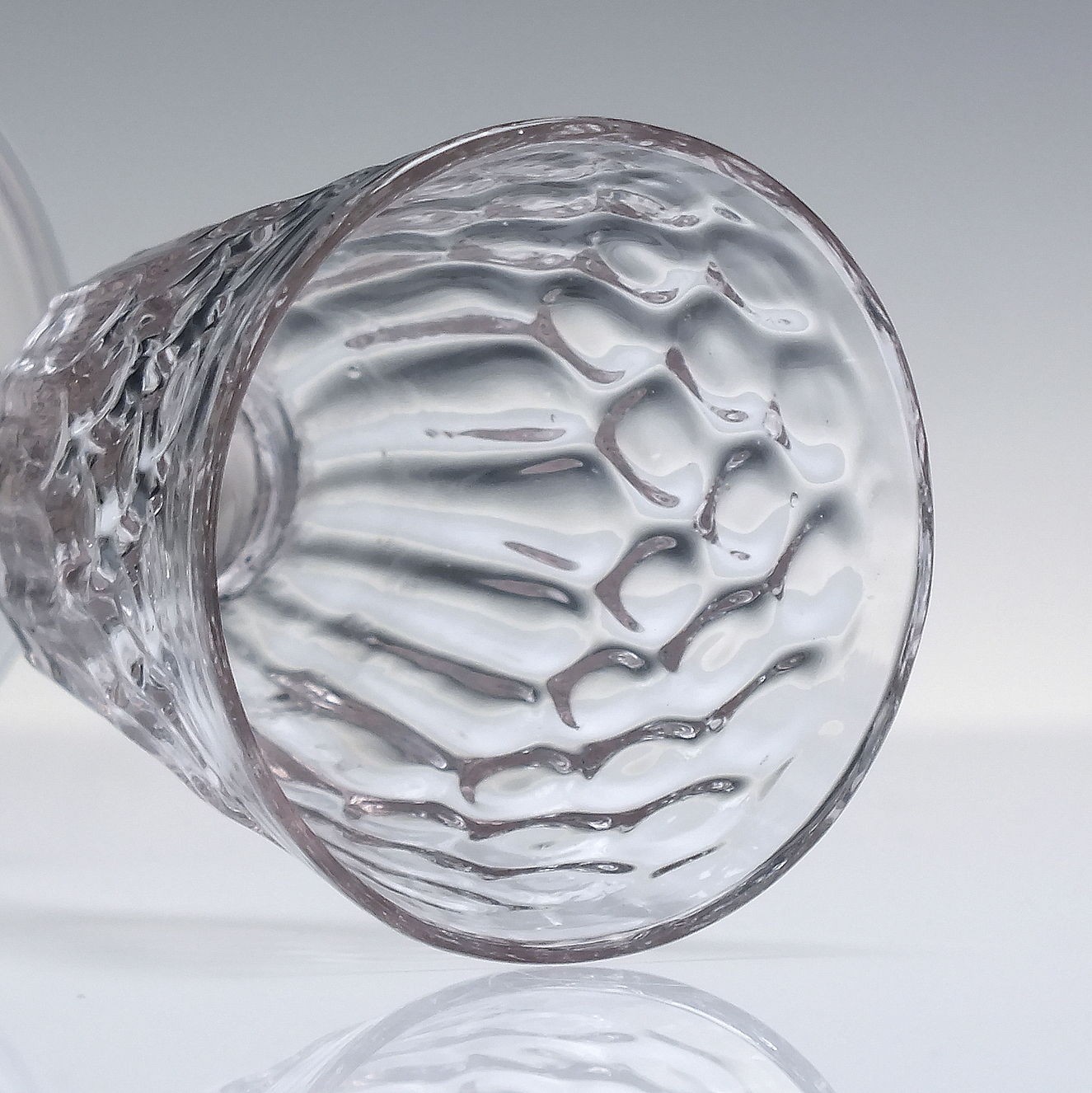
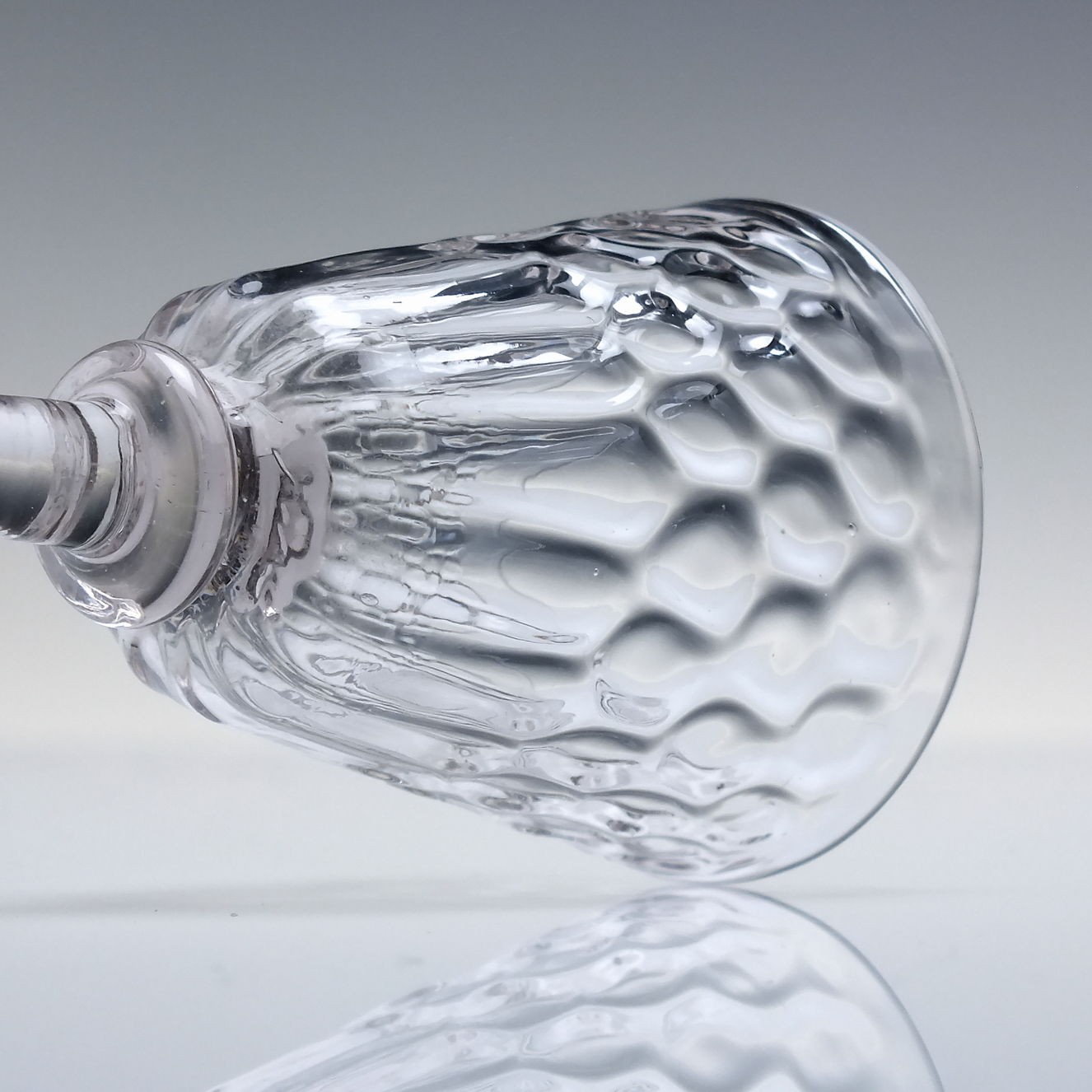
Moulded honeycomb pattern and lower flutes: distinctive early eighteenth-century Low Countries styling.
Small air seeds and swirl lines in the glass: early hand batch melting.

This is an independent date report produced by Sellingantiques using its own proprietary system. The process uses the photographs shown on this page. The system is never told the date the dealer has declared. This report shows that the two dates corroborate.

Reference Numbers
Sellingantiques Reference
SA1244658
Dealers Internal Reference
2024010918
Description
Description

A rather fine 18th century Liège wine glass, dating to circa 1725.

“
It features a round funnel bowl with nut moulding to the upper section and flute moulding to the lower section.
Exhibit Antiques

The glass stands on a fine stem with an annulated shoulder knop and a basal knop, raised on a conical folded foot.

fig 1. An 18th-century clear glass wine goblet featuring a honeycomb-patterned bowl, baluster-shaped stem, and broad conical foot.
fig 1. 18th Century Liege Balustroid Wine Glass C1725

Historical Context

Liege (in present-day Belgium) was an important continental glassmaking centre in the late 17th and early 18th centuries. During the first half of the 18th century, its glasshouses began adopting lead glass technology, influenced by developments in England, producing excellent glasses with good clarity and often a slightly grey tone. These pieces reflect the spread of English lead glass technology into continental Europe, while retaining their own distinct character in form and finish.

Date & Origin

Belgium, c1725. Period of King George II.

Condition

Excellent. No chips, cracks or restoration.

Dimensions

Height: 13.5cm

Rim diameter: 5.2cm

Foot diameter: 6.9cm

Date of Manufacture

Exhibit Antiques has dated this Liege Balustroid Wine Glass to the Georgian era.

Independent Date Report ID 09712606
Dealer's Item DateGeorgian era
Sellingantiques datingGeorgian era
Sellingantiques agingItem 275-315 years old
Test ResultsPassed dating check
Why Sellingantiques dated this piece to the Georgian era:
Folded foot rim: traditional technique used to strengthen the foot against chipping.
Rough snapped pontil mark on the base: made before polished pontils became common.
Moulded honeycomb pattern and lower flutes: distinctive early eighteenth-century Low Countries styling.
Small air seeds and swirl lines in the glass: early hand batch melting.

This is an independent date report produced by Sellingantiques using its own proprietary system. The process uses the photographs shown on this page. The system is never told the date the dealer has declared. This report shows that the two dates corroborate.

Reference Numbers
Sellingantiques Ref
SA1244658
Dealers Internal Ref
2024010918
Exhibit Antiques
Exhibit Antiques
Sellingantiques verified Since Mar 2019

Specialists in 18th & 19th century antique glass

Dealer Profile

You can view the stock and full dealer information on the Exhibit Antiques Profile Page
PDF SHARE
SAVE
An 18th-century clear glass wine goblet featuring a honeycomb-patterned bowl, baluster-shaped stem, and broad conical foot.
1 / 7
Archive I An 18th-century clear glass wine goblet featuring a honeycomb-patterned bowl, baluster-shaped stem, and broad conical foot.

18th Century Liege Balustroid Wine Glass C1725
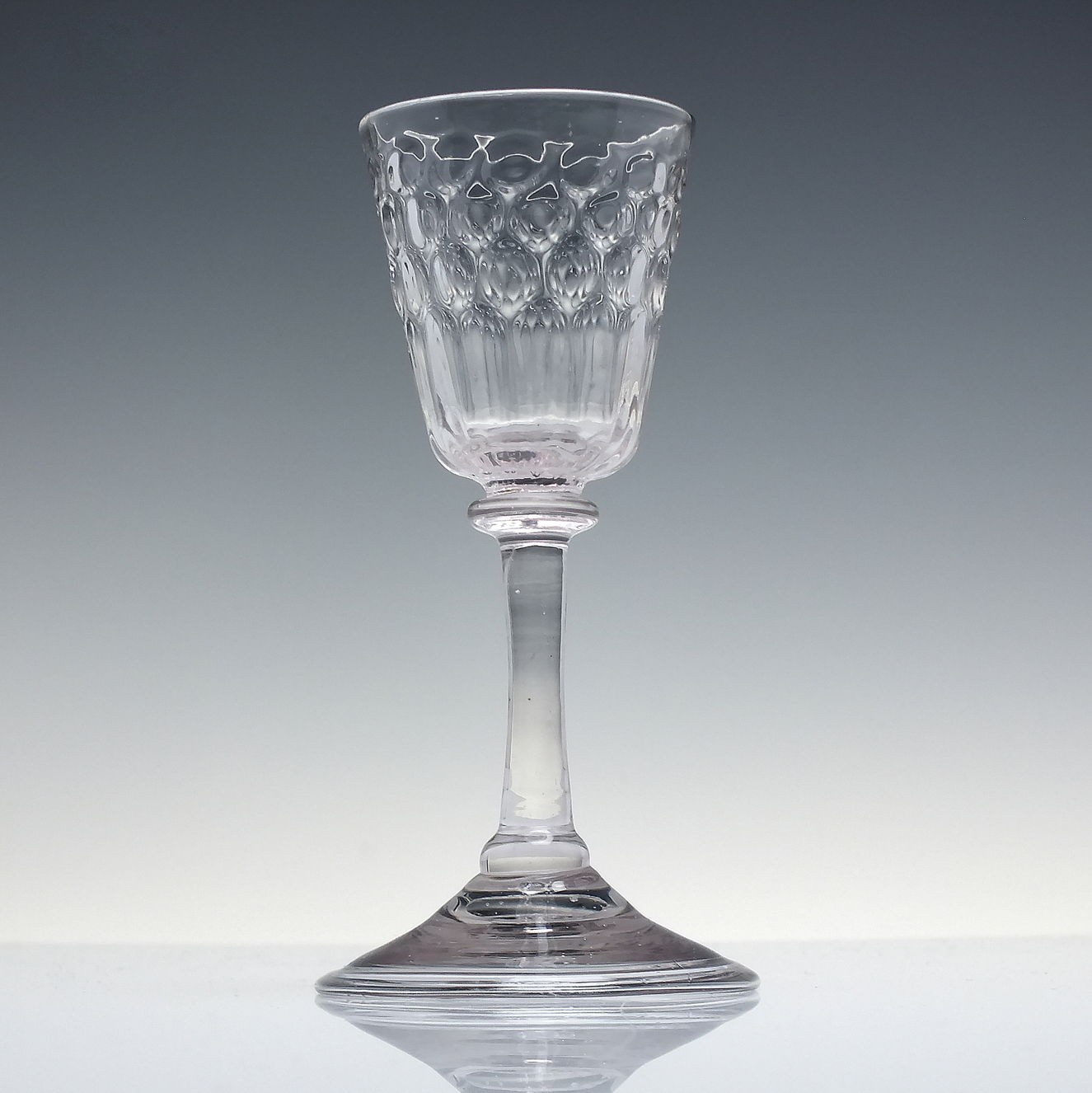
Archive II An 18th-century clear glass wine goblet featuring a honeycomb-patterned bowl, baluster-shaped stem, and broad conical foot. View II
Archive III An 18th-century clear glass wine goblet featuring a honeycomb-patterned bowl, baluster-shaped stem, and broad conical foot. View III
Archive IV An 18th-century clear glass wine goblet featuring a honeycomb-patterned bowl, baluster-shaped stem, and broad conical foot. View IV
Archive V An 18th-century clear glass wine goblet featuring a honeycomb-patterned bowl, baluster-shaped stem, and broad conical foot. View V
Archive VI An 18th-century clear glass wine goblet featuring a honeycomb-patterned bowl, baluster-shaped stem, and broad conical foot. View VI
Archive VII An 18th-century clear glass wine goblet featuring a honeycomb-patterned bowl, baluster-shaped stem, and broad conical foot. View VII
Enlarged Archival View
Telephone 01501 228 282
Location
Glasgow
Scotland
United Kingdom
Verified Since Mar 2019
Items For Sale 248
Items Sold 2,199
Exhibit Antiques
Exhibit Antiques
Verified Since Mar 2019
View Dealer Info
Location: Glasgow, Scotland, United Kingdom
Verified
Mar 2019
For Sale
248
Sold
2,199
An 18th-century clear glass wine goblet featuring a honeycomb-patterned bowl, baluster-shaped stem, and broad conical foot.
18th Century Liege Balustroid Wine Glass c1725
Ref: SA1244658
An 18th-century clear glass wine goblet featuring a honeycomb-patterned bowl, baluster-shaped stem, and broad conical foot.
Detail View 1
Detail View 2
Detail View 3
Detail View 4
Detail View 5
Detail View 6
Archival Detail
Every single antique dealer on our platform is individually approved by our internal team. We verify their professional trade history, ethical standards, and photographic quality to ensure a secure, high-standard buying environment. Upon joining, every dealer agrees to a strict 9-point code of conduct. While issues can occasionally arise, our dealers typically resolve them swiftly and directly with the buyer. In fact, since our founding in 2002, Sellingantiques has only had to step in to help resolve an issue on roughly five occasions—a true testament to the quality of our dealers and their dedication to your happiness.
Our dealers are highly experienced in packing and shipping fragile, high-value antiques. Because you are in direct contact with the dealer, you will be able to easily go through all available shipping and insurance options together to ensure your item arrives safely.
Antiques are the ultimate green purchase. By choosing historical pieces over newly manufactured goods, you completely eliminate the carbon footprint of modern mass production while preserving exceptional, timeless craftsmanship.
Written by Sellingantiques from the dealer’s photographs and listing
  • ObjectWine Glass
  • Period18th century
  • Style18th Century European
  • MaterialClear Glass
  • ColourClear
  • MotifsHoneycomb moulding, Baluster stem, Conical foot

This Georgian 18th-century Liège balustroid wine glass from Belgium dates to circa 1725 during the period of King George II. Produced in clear glass with a slightly grey tone, the piece stands 13.5 cm high with a 5.2 cm rim diameter and a 6.9 cm foot diameter. The round funnel bowl features nut moulding to the upper section and flute moulding to the lower section, rising above a stem with an annulated shoulder knop and a basal knop. The entire drinking vessel rests upon a conical folded foot. In a home today, this continental glassmaking item is well suited for display upon a sideboard top within a gentleman's library setting. The condition is excellent, showing no chips, cracks or restoration. The clear glass construction offers transparency, while the varied moulding patterns along the bowl and the knopped formation of the stem create distinct textural highlights for an interior space.

Balustroid wine glasses are 18th-century drinking vessels characterized by turned stems featuring knops inspired by architectural balusters. Produced throughout Western Europe, these pieces often feature optical moulding or pattern-moulded bowls combined with wide conical feet.

Glasses from this era were hand-blown using lead crystal or soda glass mixtures. Craftsmen utilized optical moulds to create patterns like honeycomb detailing, hand-shaping the stems and attaching separately blown feet.

Authentic period stemware demonstrates hand-crafting characteristics including pontil scars on the underside of the base, subtle structural asymmetry, minute trapped air bubbles, and natural shelf wear around the bottom rim.

Historical stemware displays effectively on sideboard tops, inside illuminated glass cabinets, or arranged along open shelving where light highlights the clarity and moulded details of the glass.

Clean historical glass by hand using lukewarm water and gentle soap, avoiding automated dishwashers and abrasive sponges. Ensure rapid temperature changes are avoided to prevent thermal shock and cracking.
items
Add keywords to the filter
Price
£100
£250000
Era
Period
Style
Material
Origin
Stock Location
Recently Added
Online Payments
Categories