

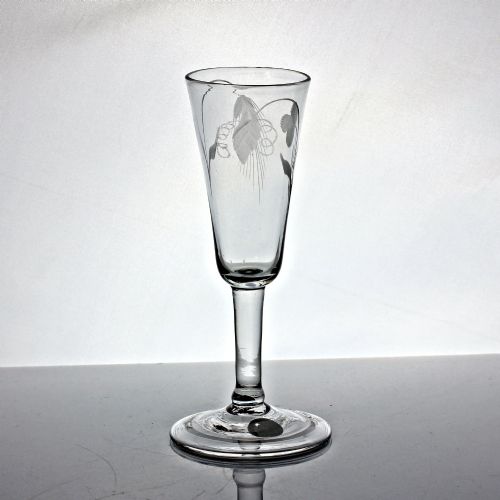
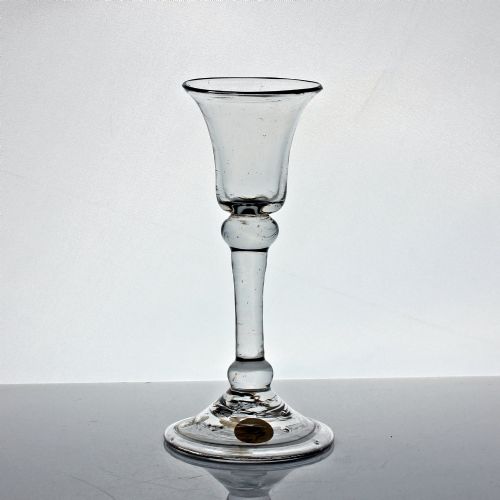



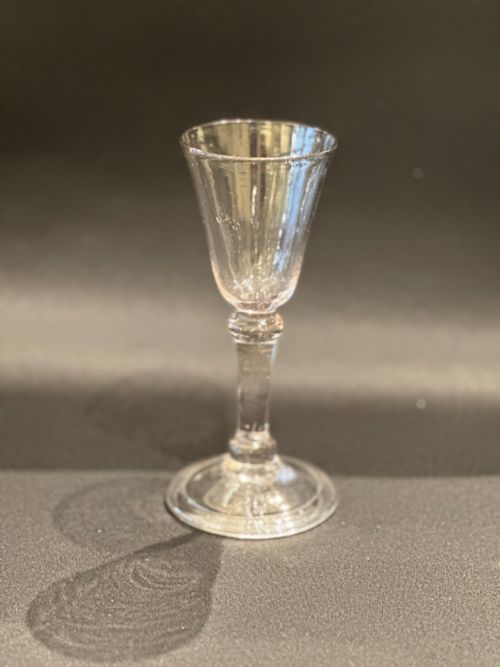
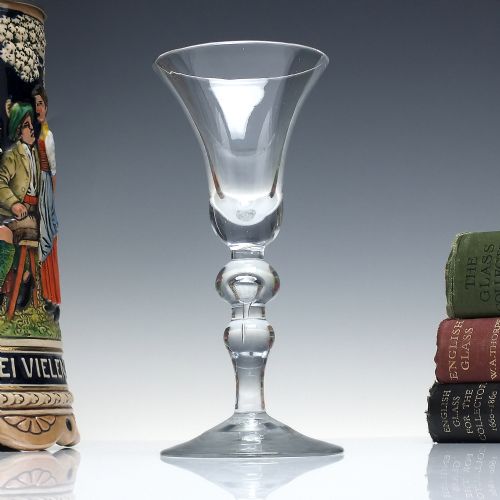


Balustroid Stem Goblet
A balustroid stem goblet is an eighteenth-century drinking vessel defined by its sturdy, shaped stem, offering collectors a tactile piece of Georgian history.
Balustroid Stem Goblet
A balustroid stem goblet is an eighteenth-century drinking vessel that combines a generous bowl with a distinctive, swelling lower stem. When you search for a balustroid stem goblet, you encounter Georgian glassware dating primarily from the seventeen-thirties and forties. These pieces belong to the broader category of stemware and wine glasses produced during the reigns of the early Georges.
The versions you are most likely to meet on this page feature clear lead glass or flint glass formed into slender or kit kat profiles. Makers of the period fashioned these objects for drinking wine, utilising robust materials that have survived centuries. Each item reflects the domestic tableware traditions of eighteenth-century England.
How they were made
These items were shaped from molten lead glass and flint glass by skilled glassblowers working in English glasshouses. The metal was gathered, blown, and manipulated while hot to create the characteristic baluster and balustroid stems that support the upper bowl.
Craftsmen often added domed feet to provide stability to the heavier stems, whilst surface enrichment such as swag and tail engraving was applied by hand using a wheel. The combination of heavy lead crystal and careful optical manipulation gave the material its characteristic weight and clarity.
Balustroid Stem Goblet Retail Price Guide 2026
Typical asking prices for balustroid stem goblet among the pieces listed under this phrase on Sellingantiques today, from the lower quarter to the upper quarter. They describe what is for sale here now, not the wider market.
Every listed piece on this page originates from the Georgian period and relies entirely on lead glass, lead crystal, or flint glass materials.
What varies in quality
Quality in these drinking vessels rests upon the proportion and balance of the stem relative to the bowl. A superior example displays harmonious lines where the balustroid node transitions cleanly into the foot and bowl without awkward thickness.
The purity and brilliance of the lead glass also separate finer pieces from standard domestic wares. Subtle details like a properly formed domed foot or crisp wheel engraving elevate the piece above simpler contemporary equivalents.
The Balustroid Stem Goblet Glossary
- Balustroid stem
- A stem form derived from the architectural baluster, featuring a swelling knop above the foot. This shape provides a satisfying grip and visual weight to eighteenth-century drinking vessels.
- Lead glass
- A heavy, durable glass containing lead oxide, used extensively in Georgian England to improve clarity and refractive index. It allows for deeper cutting and engraving.
- Domed foot
- A raised, conical foot shape found on certain eighteenth-century wine glasses. This profile adds structural stability and elegant elevation to the piece.
- Kit Kat
- A specific proportion of balustroid glass featuring a slender stem and particular bowl profile. The term links the glassware to the famous eighteenth-century political club.
- Flint glass
- An early English term for high-quality clear glass resembling crystal. It was valued for its brightness and freedom from cloudiness.
Balustroid Stem Goblet: Frequently Asked Questions
What is a balustroid stem?
A balustroid stem is a thickened, swelling section positioned lower down on the stem of an eighteenth-century drinking glass. It sits between the foot and the bowl.
This form evolved from earlier, heavier baluster stems, offering a more slender profile while retaining a solid feel in the hand.
How old are these goblets?
These drinking vessels date from the eighteenth century, specifically originating during the Georgian period between seventeen-thirty and seventeen-fifty.
Pieces from this era reflect the early development of English lead glass manufacturing following the introduction of heavier metal formulations.
Were they used for wine?
Yes, these vessels functioned primarily as wine glasses during elite and domestic dining in Georgian households. Their capacities and bowl shapes suited the consumption of contemporary wines.
Over time, many survived through careful use as tablewares before transitioning into collector cabinets.
What does domed foot mean?
A domed foot rises centrally towards the point where it meets the stem, creating a distinct slope rather than resting flat. This technique added physical stability to taller drinking vessels.
Glassmakers utilised this feature on finer Georgian stems to balance the visual weight of the upper portion.