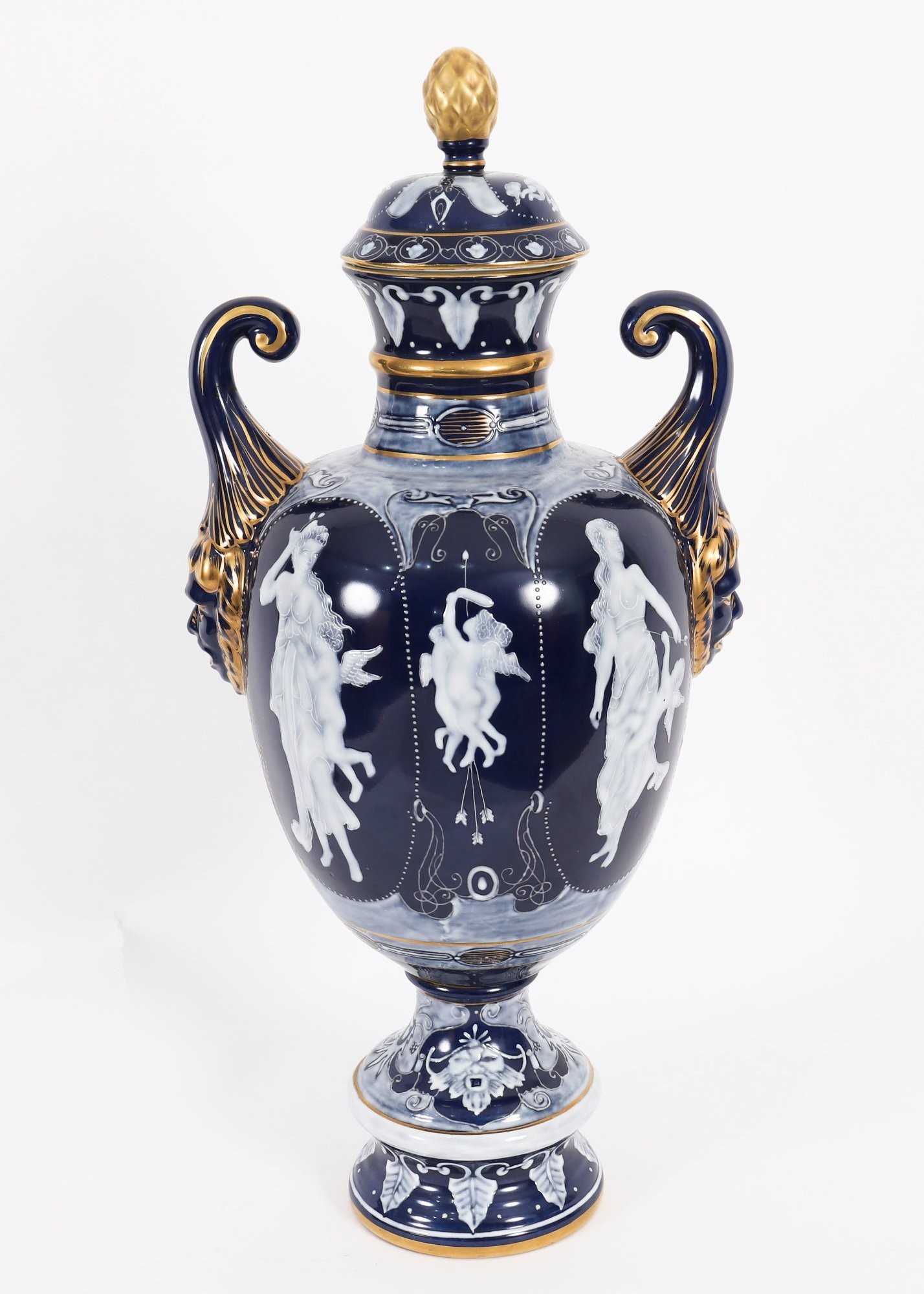
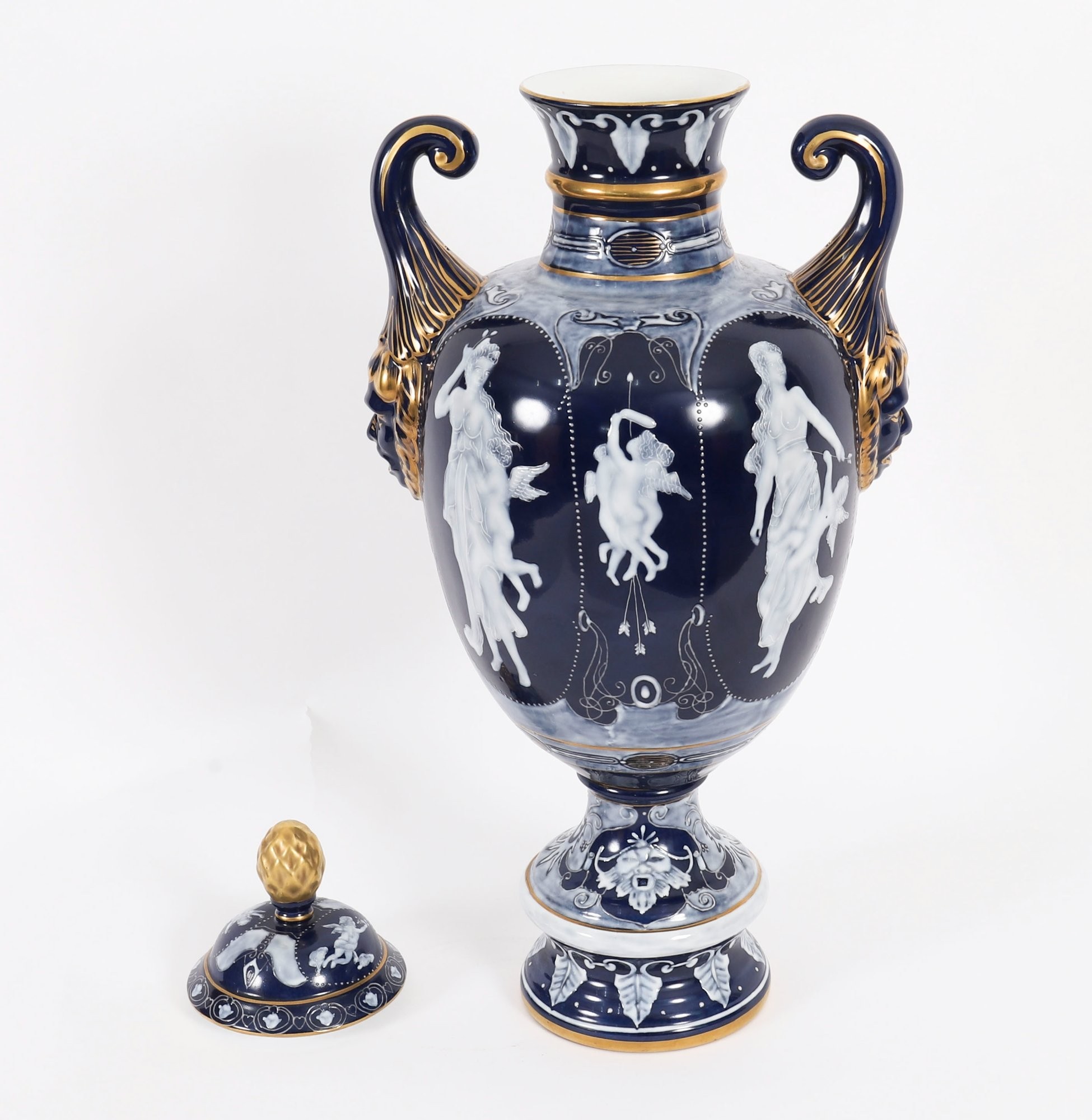
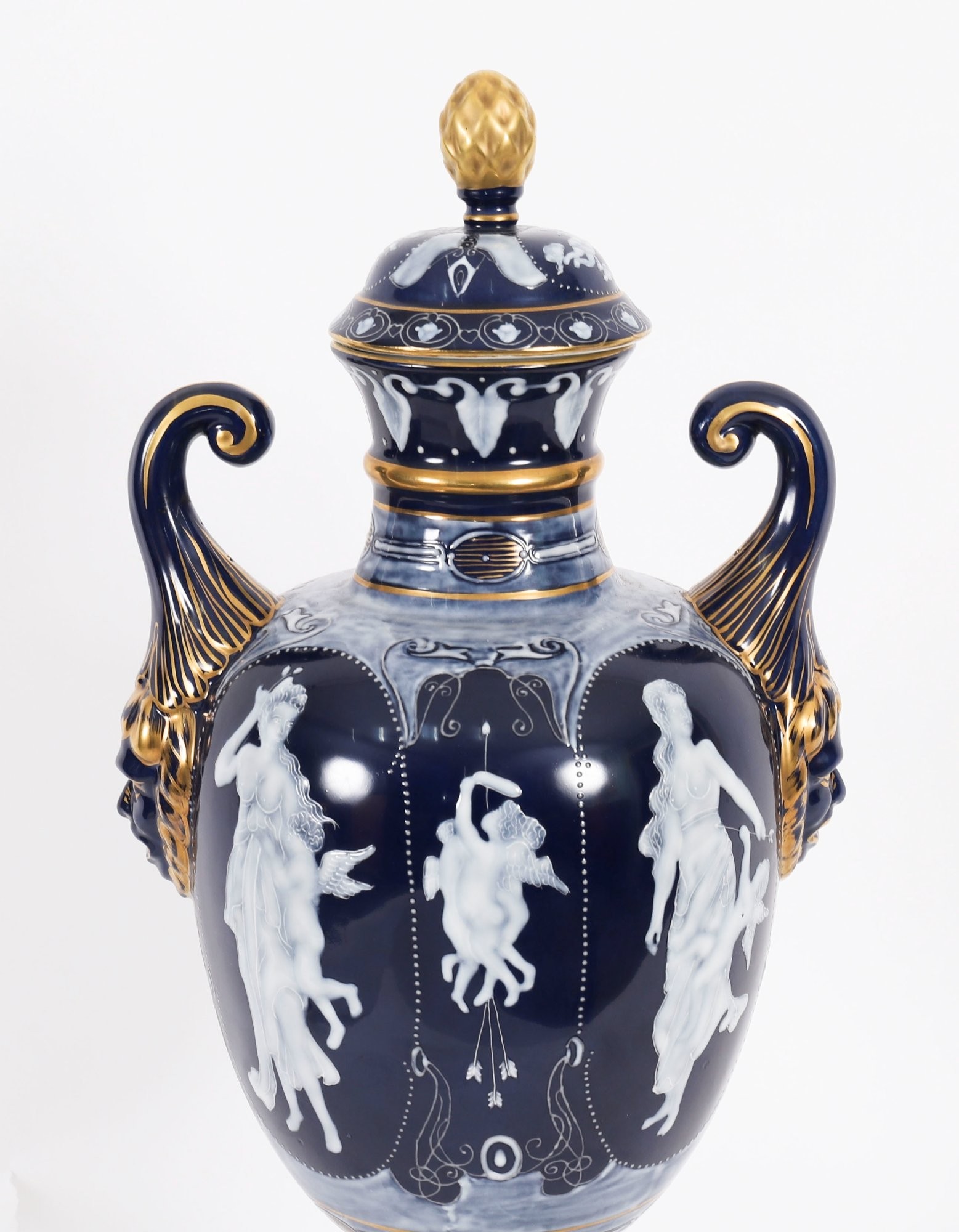
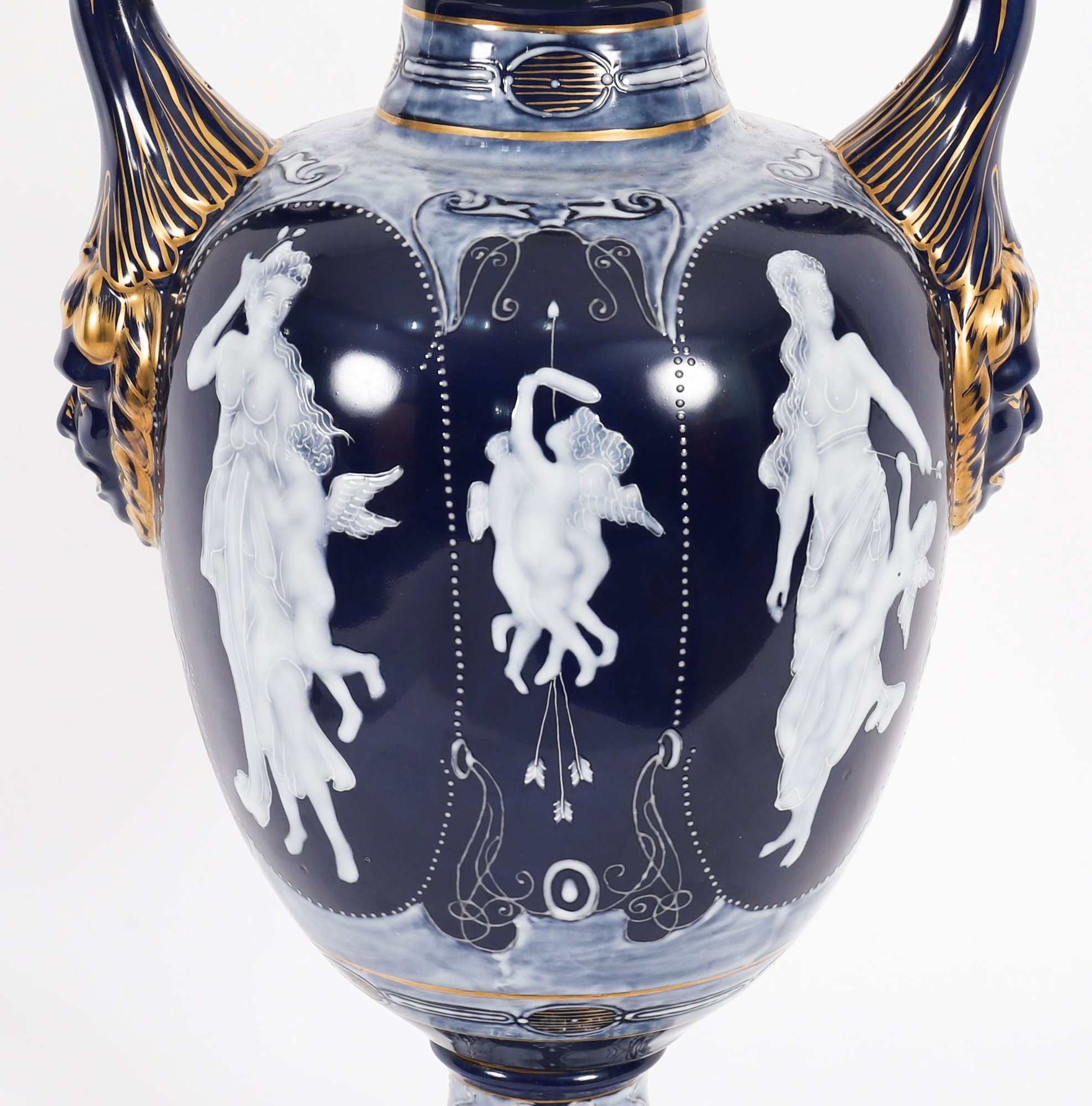
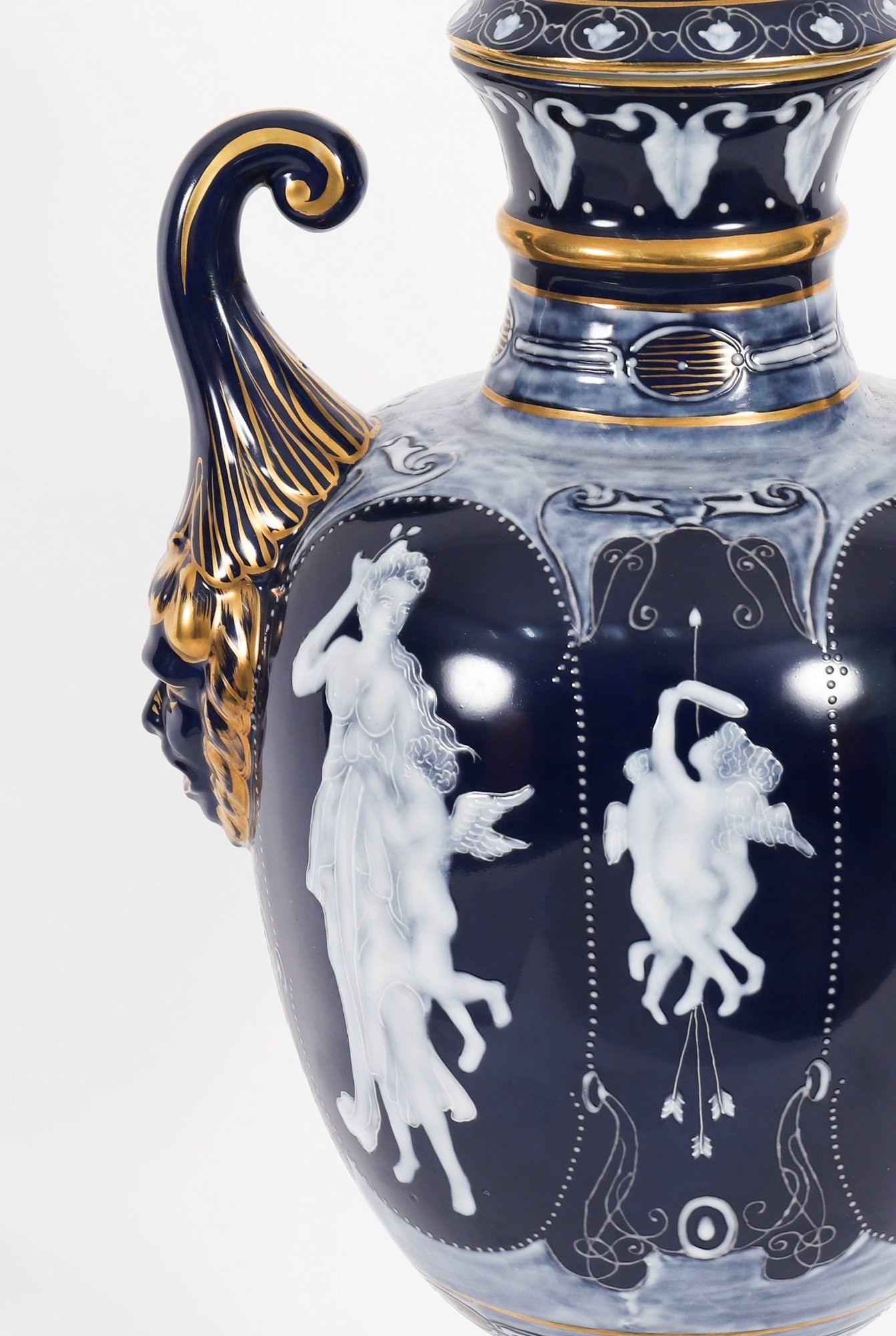
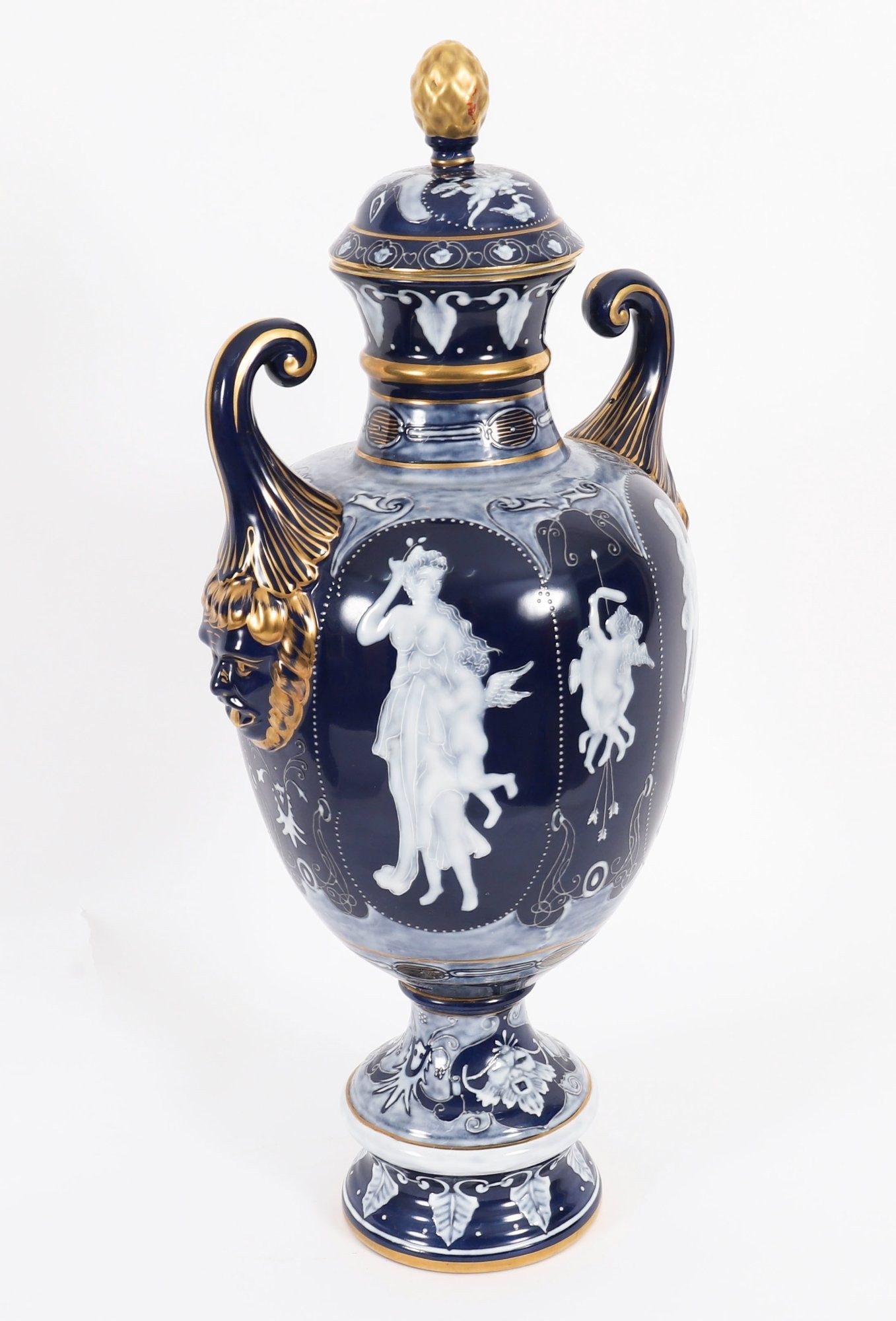
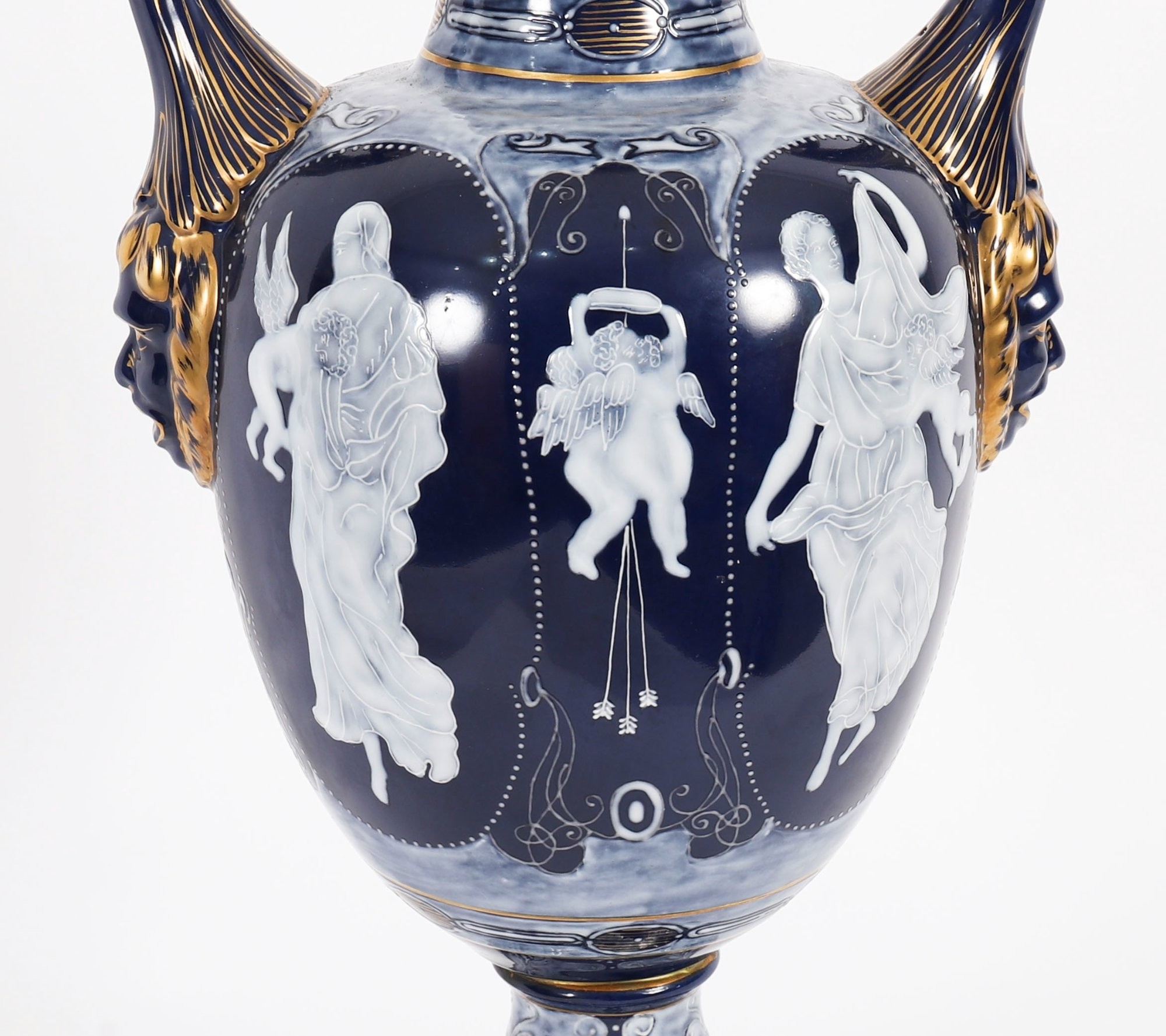
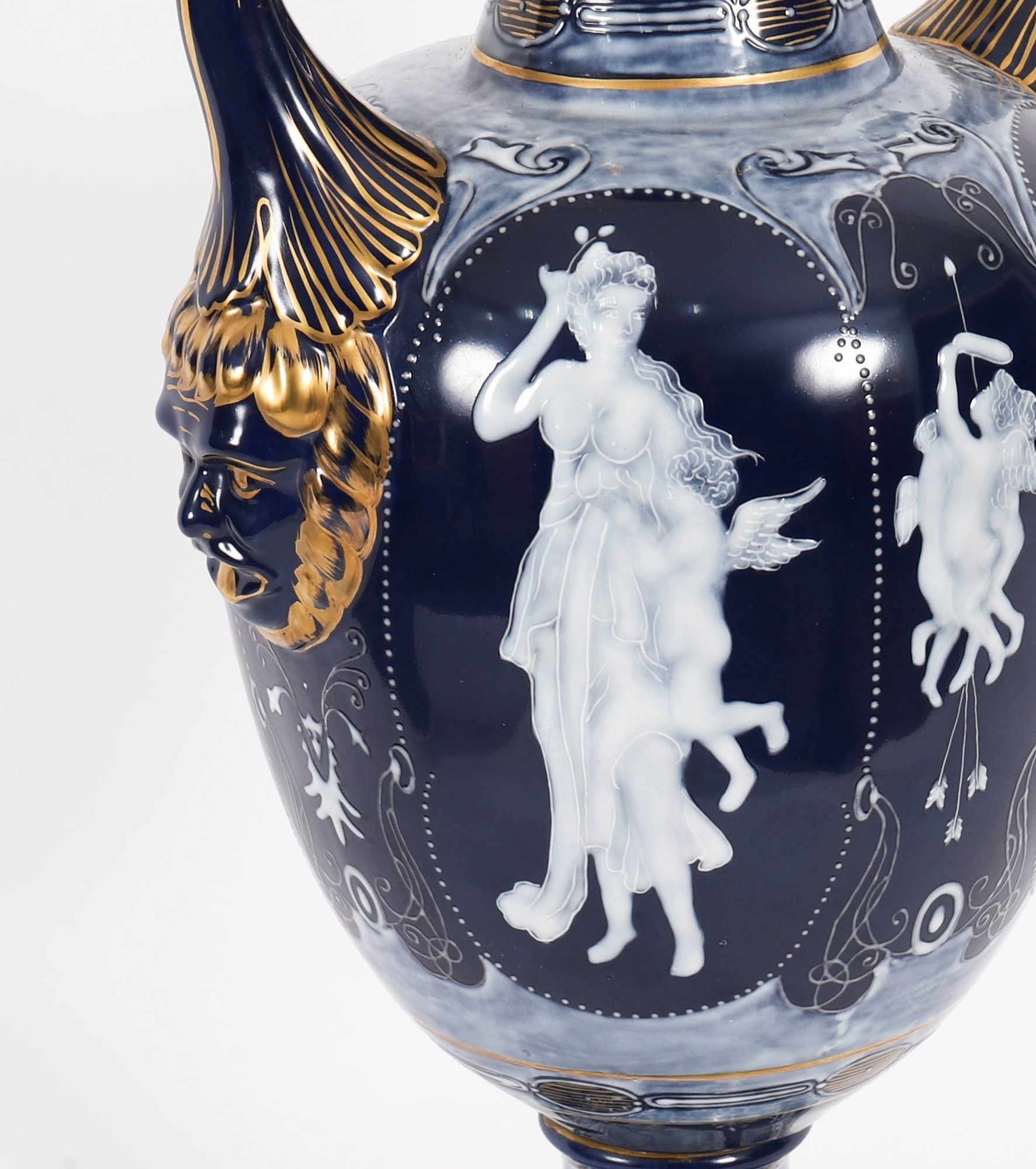
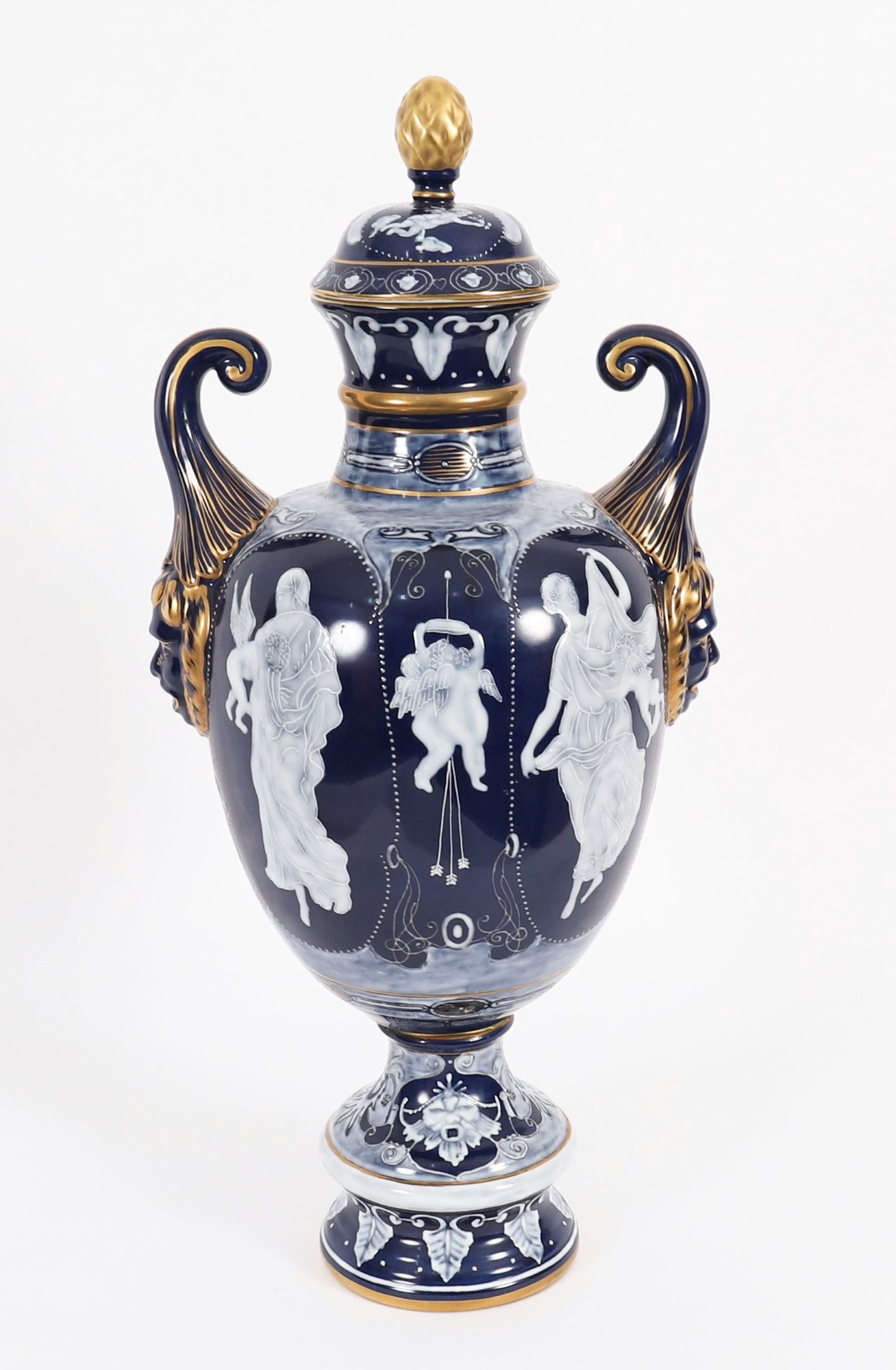
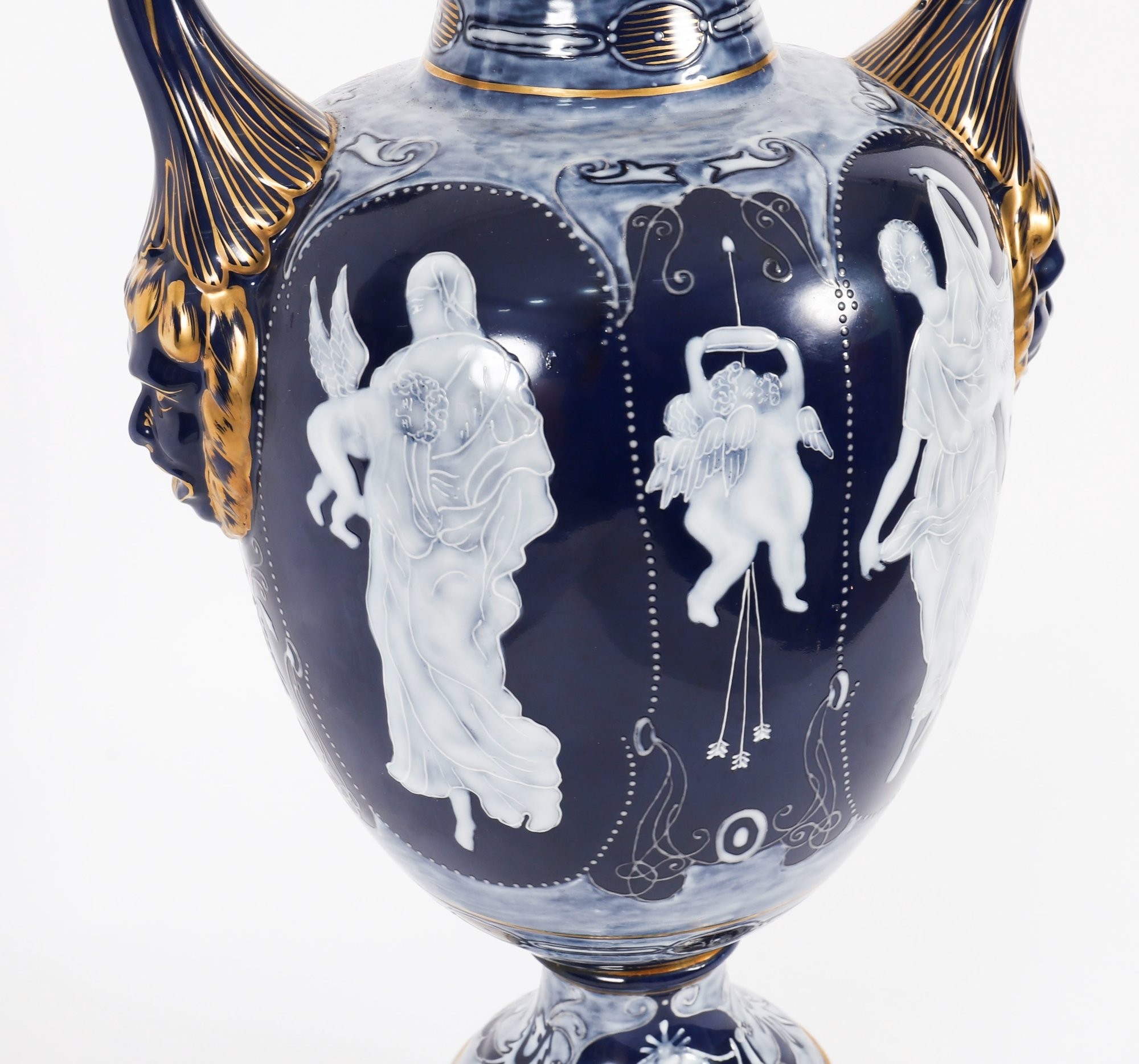
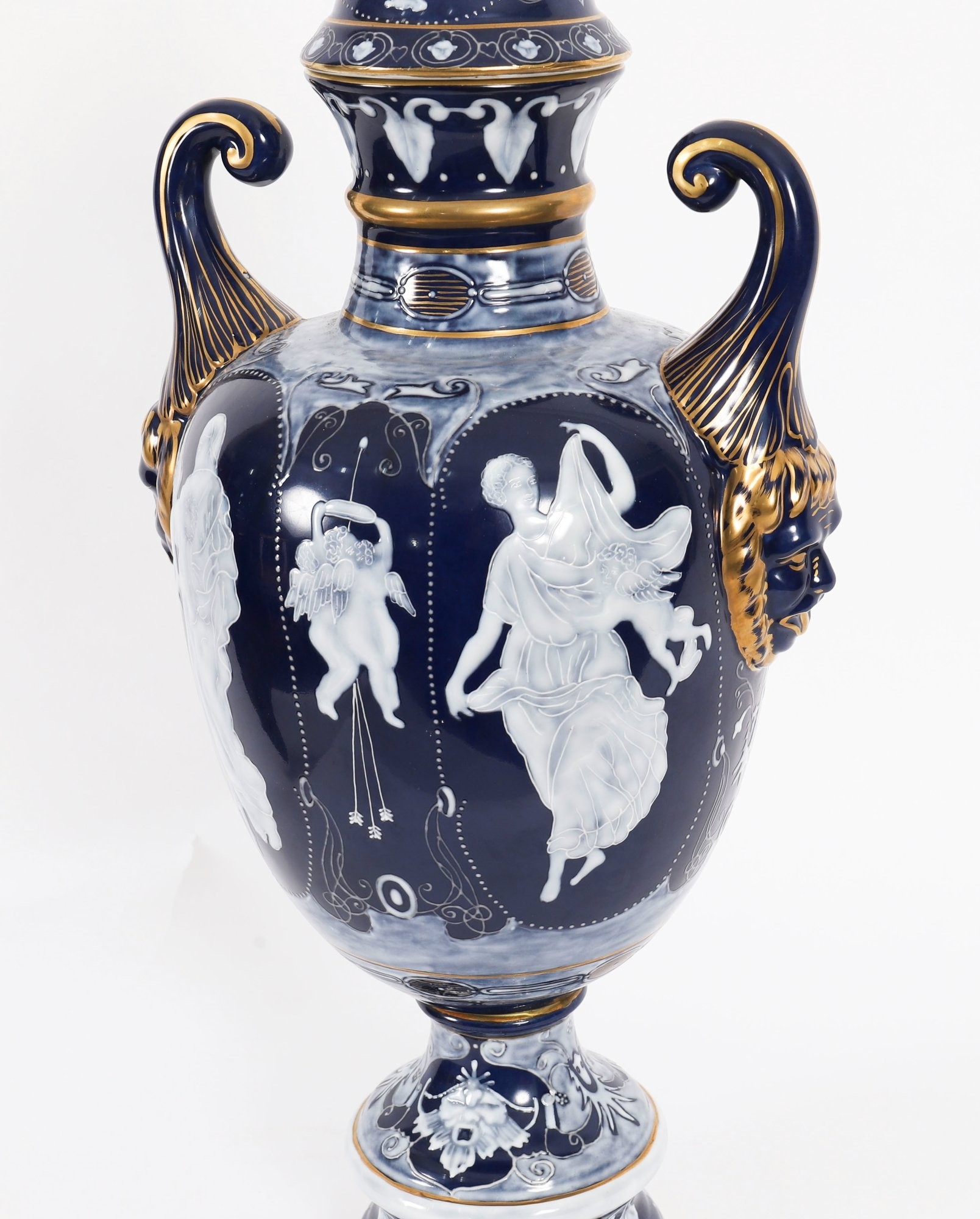
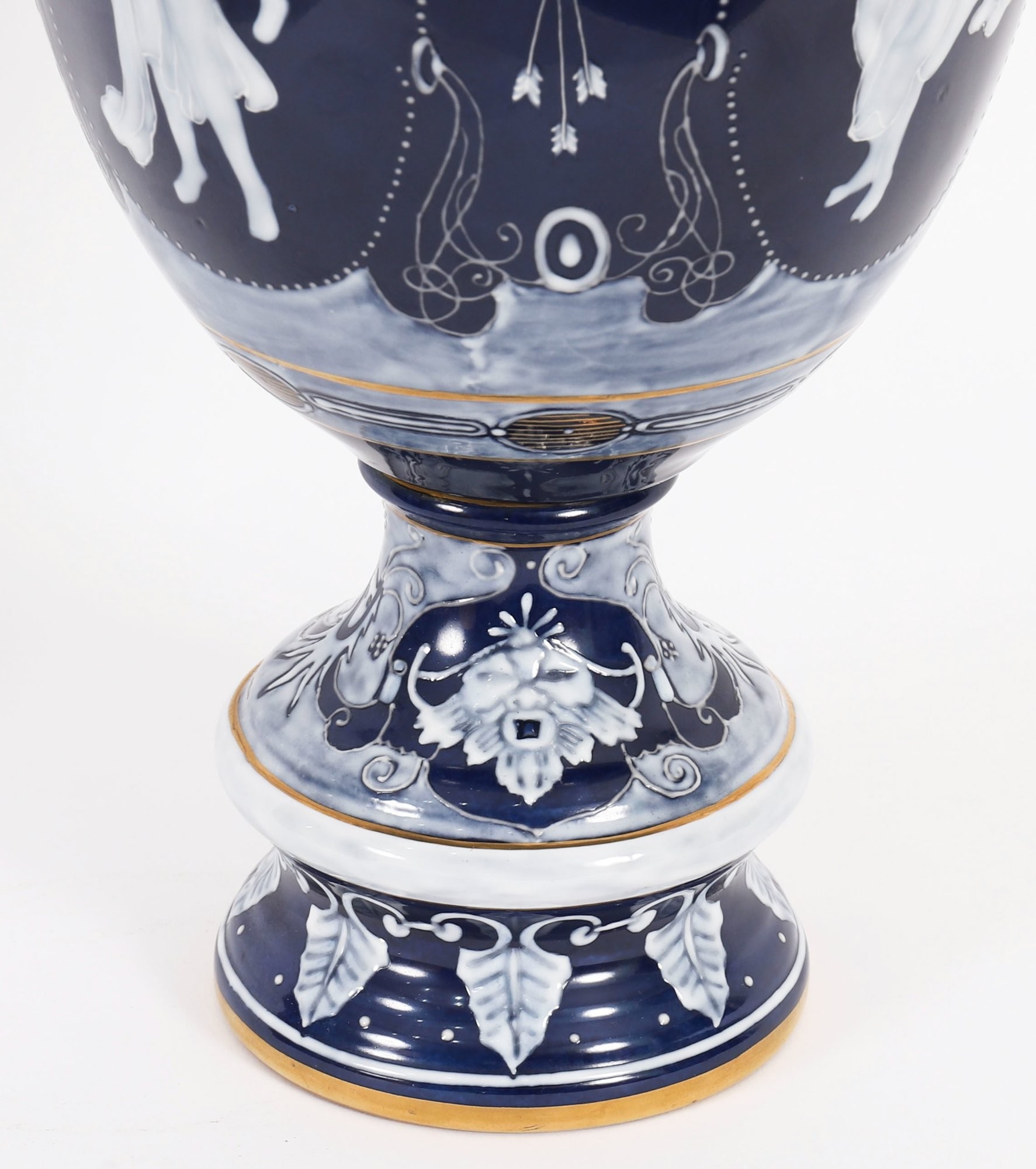
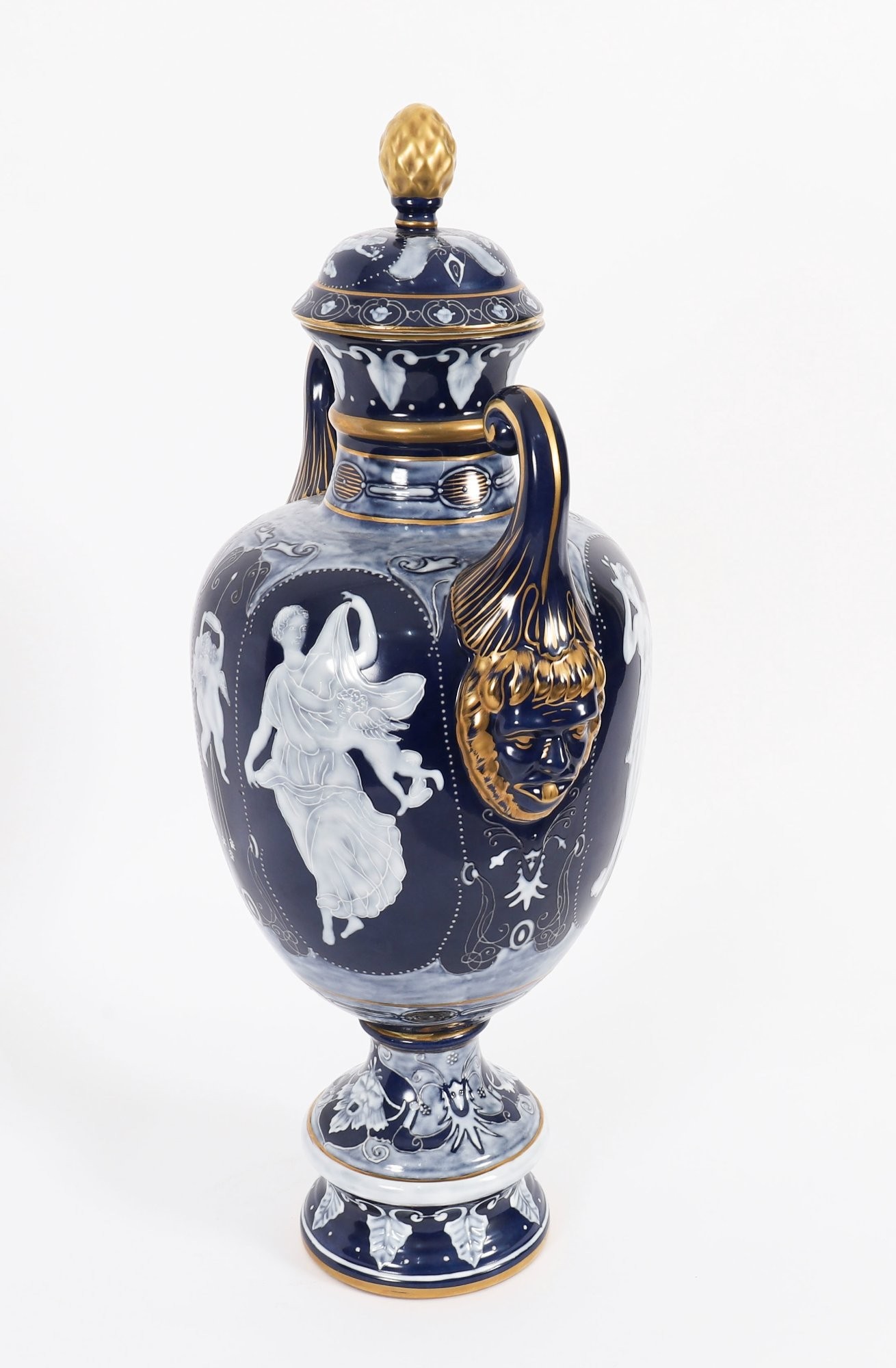
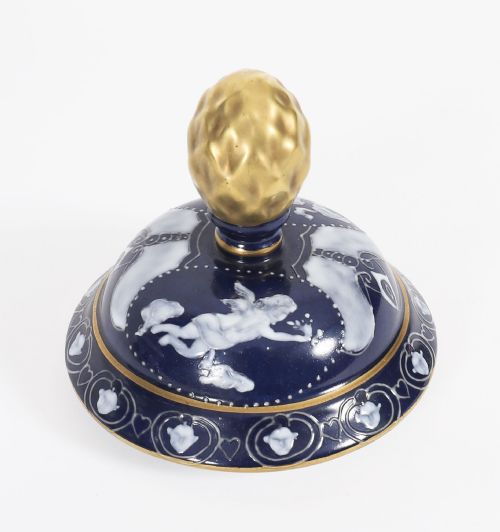
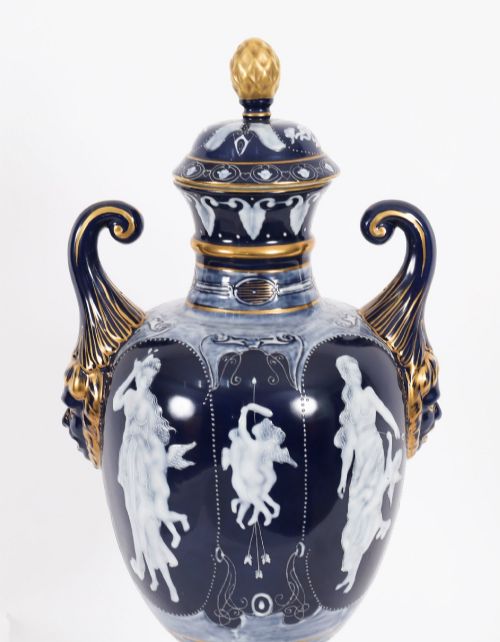
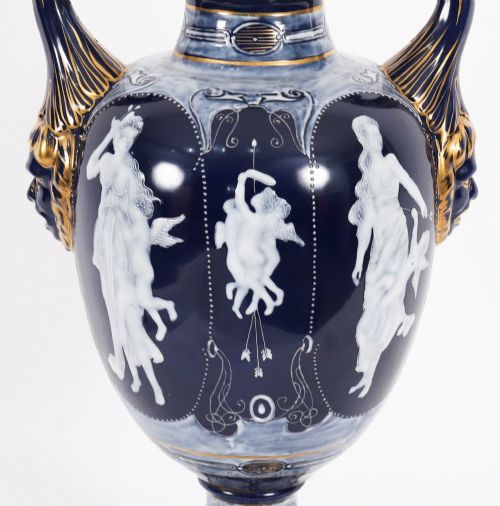
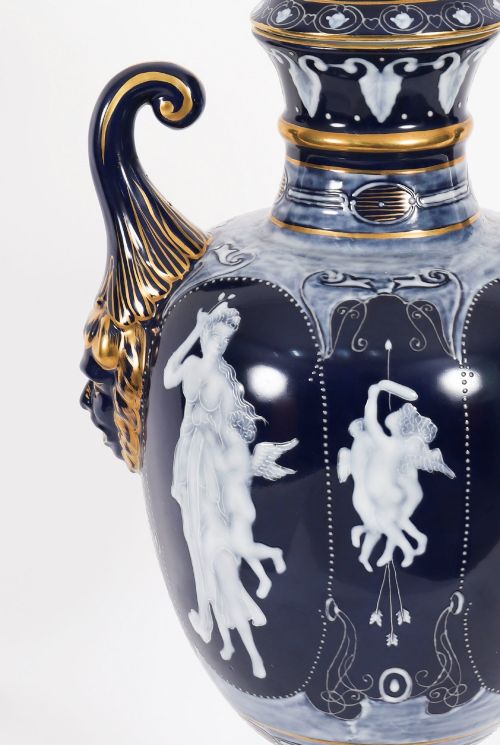
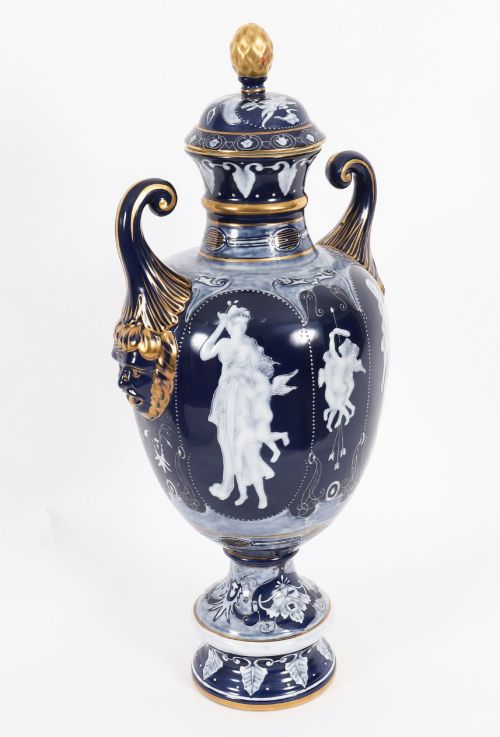
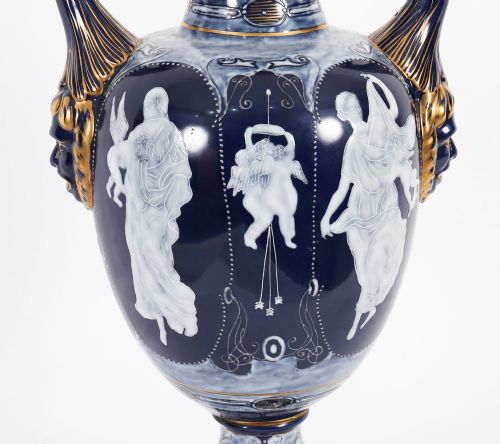
Regent Antiques has dated these Cobalt Blue Porcelain Vases to the 1880s.
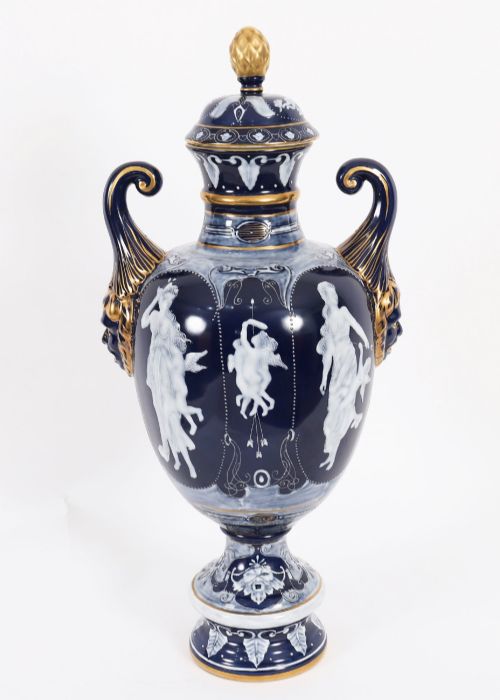
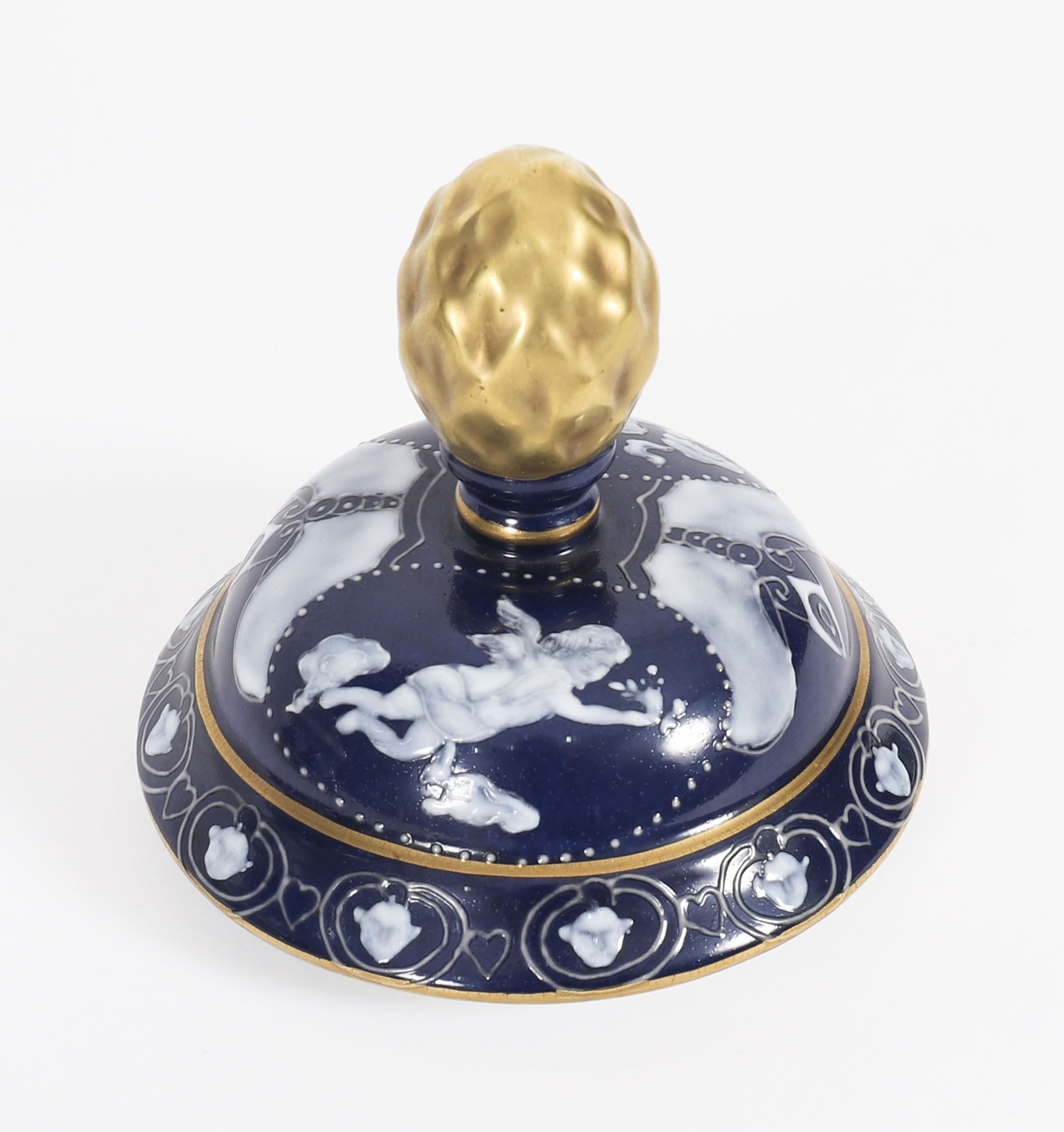
The body displays finely painted classical allegorical figures and dancing mythological characters set against a deep, vibrant cobalt blue ground with gilt high-lights.
The Meissen Porcelain Manufactory made specific series of vases and decorative objects in the Limoges enamel style often referred to as French enamel or Limoges-style.
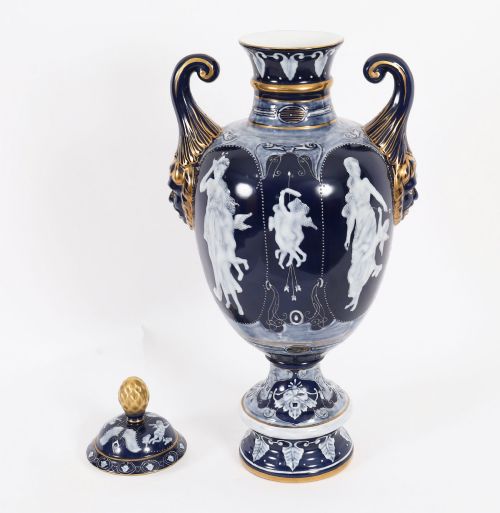
With the Meissen underglaze blue crossed swords mark on each, they are beautiful objects which will look fabulous in most surroundings.
Condition:
In excellent condition, please see photos for confirmation.
Dimensions in cm:
Height 56 cm x Width 28 cm x Depth 22 cm
Dimensions in inches:
Height 22 inches x Width 11 inches x Depth 9 inches
Meissen porcelain or Meissen china is the first European hard-paste porcelain that was developed from 1708 by Ehrenfried Walther von Tschirnhaus. The production of porcelain at Meissen, near Dresden, started in 1710 and attracted artists and artisans to establish one of the most famous porcelain manufacturers, still in business today as Staatliche Porzellan-Manufaktur Meissen GmbH.
Its signature logo, the crossed swords, was introduced in 1720 to protect its production; the mark of the crossed swords is one of the oldest trademarks in existence. It dominated the style of European porcelain until 1756.
The first successful ornaments were gold decorations applied upon the fired body and finely engraved before they received a second firing at a lower temperature. Multicolour enamelled painting was introduced by Johann Gregorius Höroldt in 1723, with an increasingly broad palette of colours that marked the beginning of the classic phase of Meissen porcelain. Initially paintings often imitated oriental patterns. The signature underglaze "Meissen Blue" was introduced by Friedrich August Köttig. Soon minutely detailed landscapes and port scenes, animals, flowers, galante courtly scenes and chinoiseries— fanciful Chinese-inspired decorations— were to be found on Meissen porcelain.
The Albrechtsburg was utilized to protect the secrets of the manufacture of the white gold. As a further precaution, very few workers knew the special secret of how to make porcelain, and then perhaps only part of the process. Thus, for a few years, Meissen retained its monopoly on the production of hard-paste porcelain in Europe. By 1717, however, a competing production was set up at Vienna, as Samuel Stöltzel sold the secret recipe, which involved the use of kaolin also known as china clay.
Böttger early foresaw the production of tableware, and the first services were made in the 1720s. Initial services were plain, but Kaendler soon introduced matching decorations. Kaendler also produced the 1745 'New Cutout' pattern, characterized by a wavy edge cut. Other popular patterns are: 'Blue Onion', 'Court Dragon', 'Red Dragon ', 'Purple Rose' and 'Vine-Leaf'.
At the beginning the Meissen manufactory was owned by the King of Saxony; by 1830 it came to belong to the State of Saxony. After World War II, most of the equipment was sent to the Soviet Union as part of war reparations. After the German reunification in 1990, the company was restored to the State of Saxony which is the sole owner. While its products are expensive, the high quality and artistic value make Meissen porcelain very desirable by collectors and connoisseurs.
Our reference: A5451
Regent Antiques has dated these Cobalt Blue Porcelain Vases to the 1880s.
We specialise in english and continental furniture, silver, porcelain and decorative items.
You can view the stock and full dealer information on the Regent Antiques Profile Page
Regent Antiques is a registered member of LAPADA CINOA
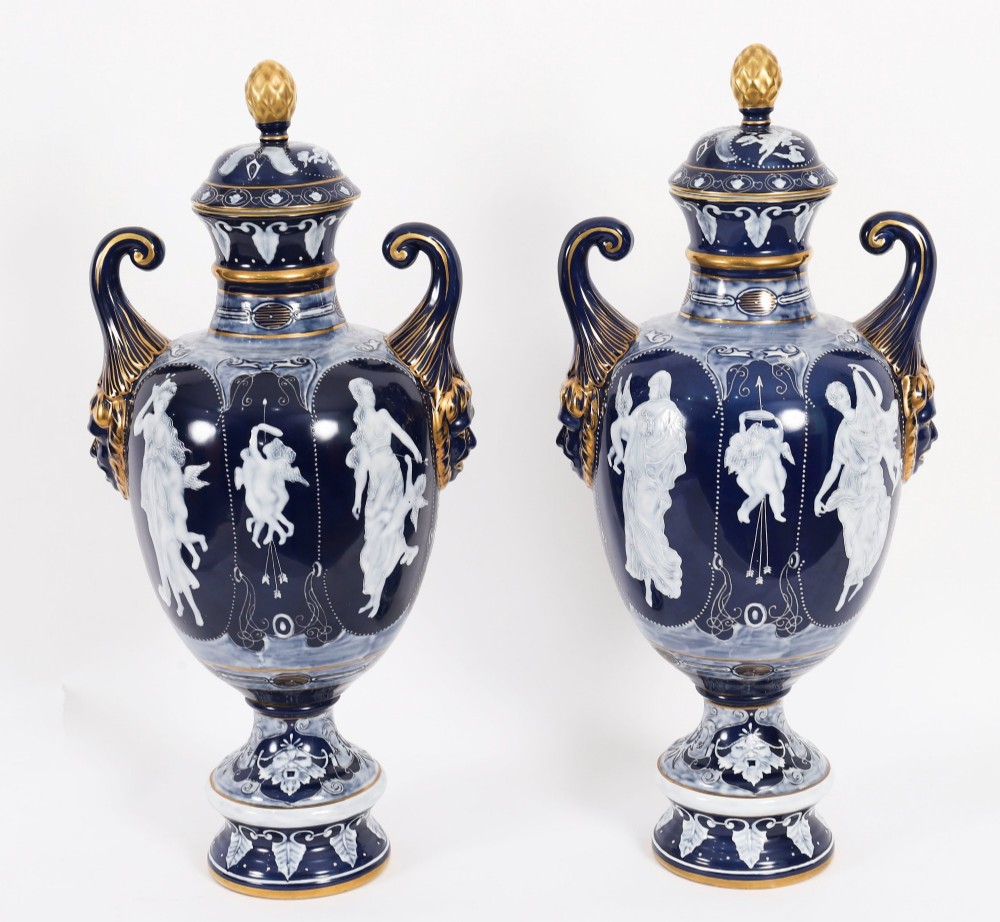
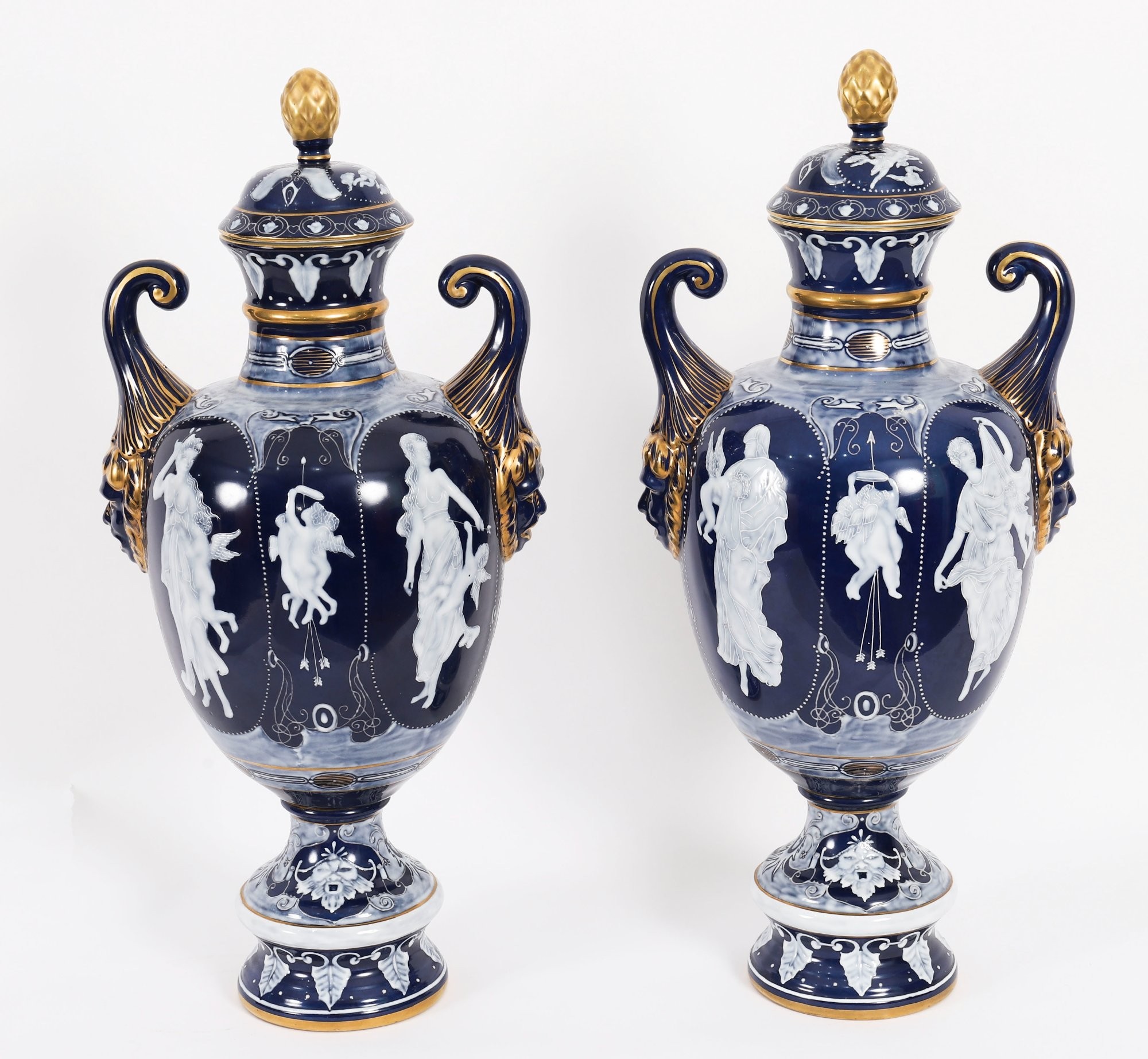
Antique Pair Meissen Limoges Enamel Porcelain Vases C.1880