


Meissen Style Porcelain
These pieces capture the ornate grace of eighteenth-century European court taste, offering intricate figural groups and decorative vessels under the banner of meissen style porcelain.
Meissen Style Porcelain
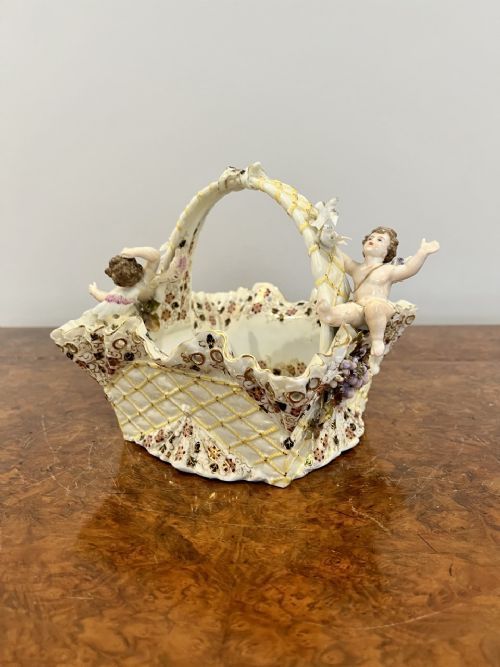
When you search for meissen style porcelain, you encounter a lineage of European ceramics that emulates the decorated figures, centrepieces, and vases originating from Saxony. These works draw heavily upon neoclassical and romantic aesthetics, often presenting cherubs, musicians, romantic pairs, and allegorical figures modelled in three dimensions.
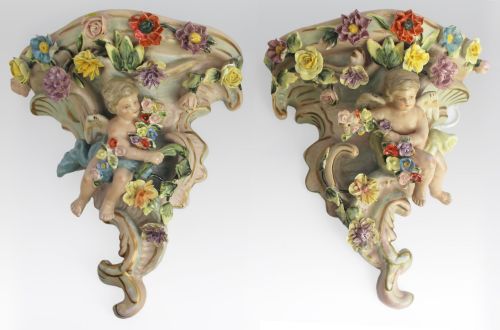
The objects on this page span from eighteenth-century originals to nineteenth-century revivals and later continental interpretations. You will frequently meet figural groups, wall corbels, candelabras, and lidded jars shaped within the Rococo Revival and Victorian vocabularies.
How they were made
Makers utilised hard-paste porcelain as the primary body, shaping complex forms through detailed moulding and hand-modelling of individual elements such as foliage and garments. Enamel pigments were then applied by hand, often heightened with gold leaf, gilding, and gilt bronze mounts.
The firing process demanded precise kiln control to vitrify the hard-paste body and fix the polychrome enamels. Craftsmen frequently combined ceramic bodies with metalwork components like ormolu candelabra mounts and gilt bronze clock housings.
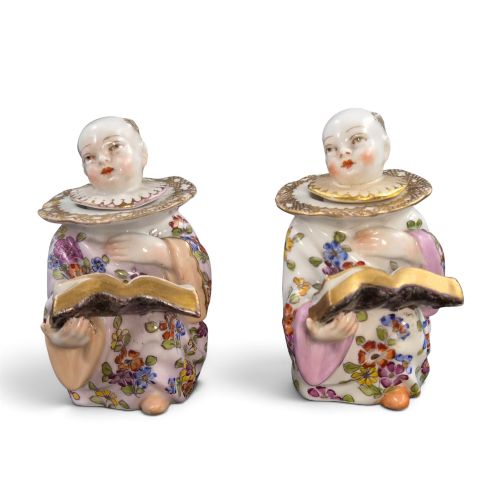
Nodding pagodas swing their porcelain heads in perpetual agreement.
What varies in quality
The distinction between tiers rests upon the crispness of the modelling and the sensitivity of the hand-painting. Superior examples display finely rendered facial expressions, delicate lace details, and precise enamel brushwork without muddiness.
Substantial centrepieces and large figural groups demonstrate greater technical ambition in balancing complex compositions during firing. The integration of auxiliary materials, such as gilt bronze mounts and ormolu, further separates standard production from ambitious workshop output.
Edmé Samson·Wolfsohn Dresden·Augustas Rex
The Meissen Style Porcelain Glossary
- Hard-paste porcelain
- A dense, vitrified ceramic composed of kaolin and petuntse fired at high temperatures. It forms the durable white body characteristic of these continental figures.
- Ormolu
- Gilt bronze mounted onto or framing ceramic bodies. This technique adds structural support and metallic contrast to candelabras and clock garnitures.
- Schneeballen
- A dense encrustation of small ceramic petals and blossoms covering the surface of a vessel. It requires meticulous individual application before firing.
- Demitasse
- A small cup designed for serving strong black coffee. These vessels often feature delicate hand-painted scenes and gilt accents.
- Gilding
- The application of gold leaf or powdered gold onto the porcelain surface. It accentuates rims, handles, and raised decorative moulding.
Meissen Style Porcelain: Frequently Asked Questions
What is meissen style porcelain?
These items encompass eighteenth-century originals alongside nineteenth-century European revivals that copy the forms, painting styles, and sculptural subjects originating from the German factory. They range from utilitarian cups to large decorative centrepieces and figural groups.
Production centres largely in Germany and France during the nineteenth century, where workshops sought to recreate the prestige and artistry of earlier Saxon ceramics for contemporary collectors.
How do I identify periods?
Dating relies on examining the ceramic body, the palette of the enamel colours, and the nature of any painted or impressed marks underneath. Eighteenth-century pieces often display lighter, more spontaneous brushwork and different paste density compared to later Victorian revivals.
Stylistic cues also help, as nineteenth-century interpretations frequently adopt heavier Rococo Revival framing or incorporate Victorian metal mounts like ormolu and gilt bronze.
How were they used?
Many of these objects served as decorative centrepieces, mantel clocks, and table garnitures intended to display wealth and refinement in formal dining rooms and drawing rooms. Figural groups and figures of children, musicians, or animals functioned purely as visual ornaments.
Other items combined utility with display, including inkwells, wall brackets, lidded ginger jars, and oil lamps that brought colour and texture into domestic interiors.
How do I care for them?
Maintenance requires gentle dusting with a soft, dry brush to prevent accumulation in the intricate crevices of flowers and garments. Avoid using water or chemical cleaners, particularly on areas with delicate enamel work or gold leaf.
Display them away from direct sunlight and areas subject to sudden temperature shifts to protect both the ceramic body and any attached metal mounts.