



Gilded Porcelain Covered Urns
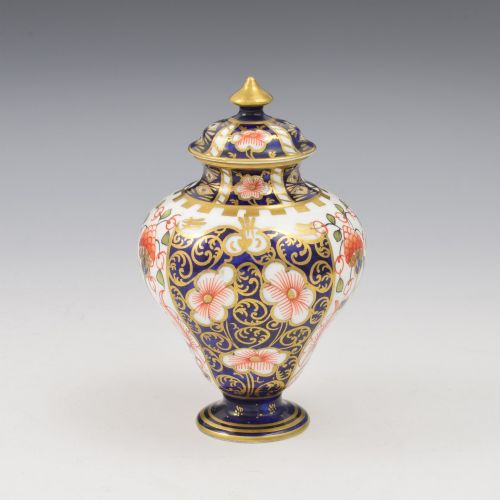
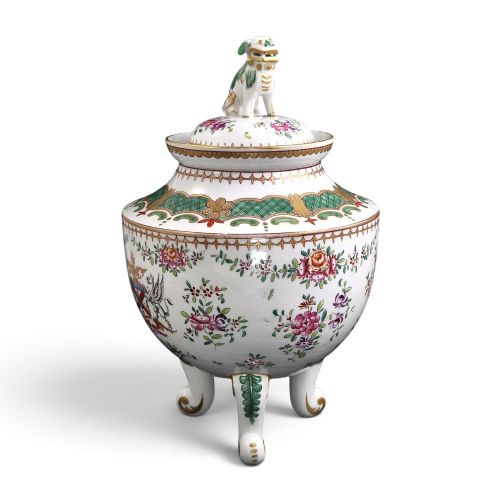
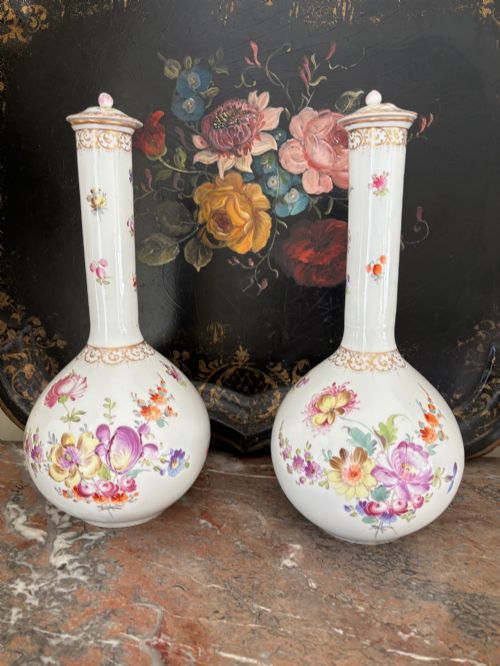
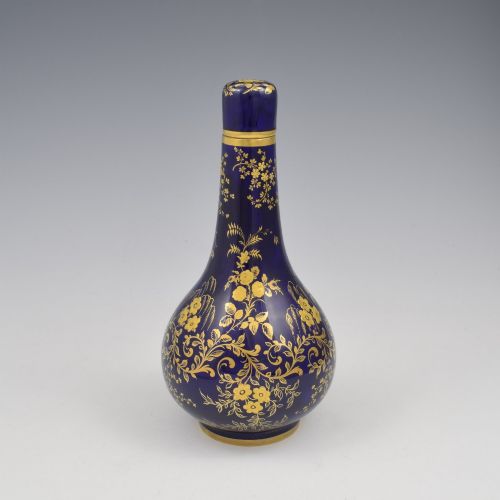
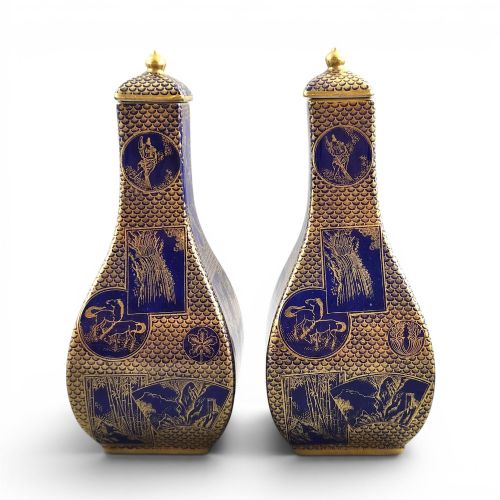
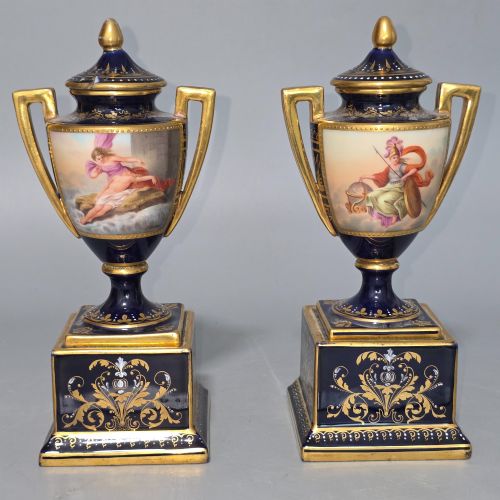
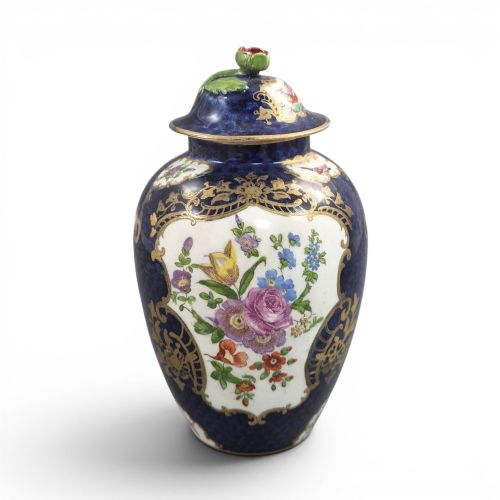
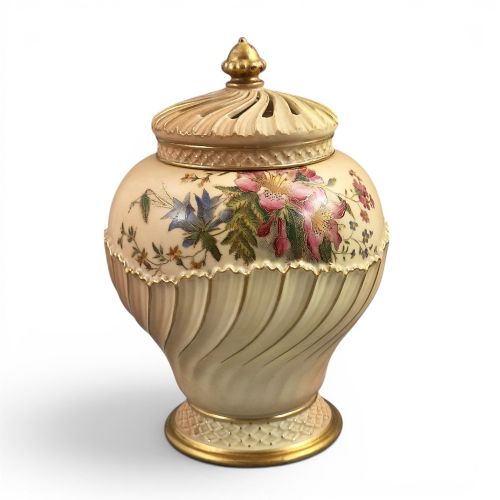
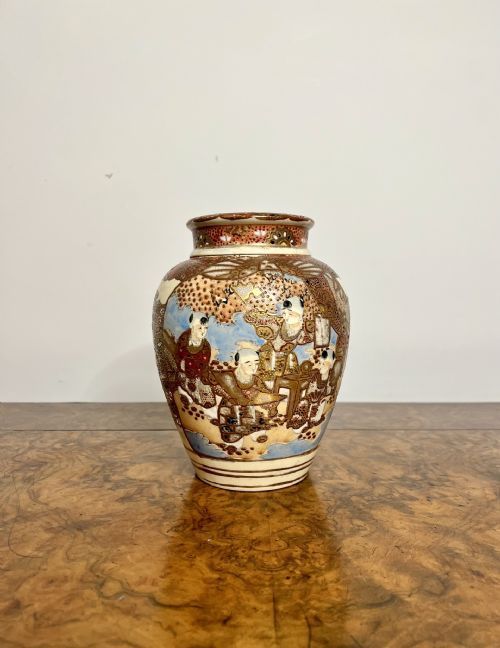
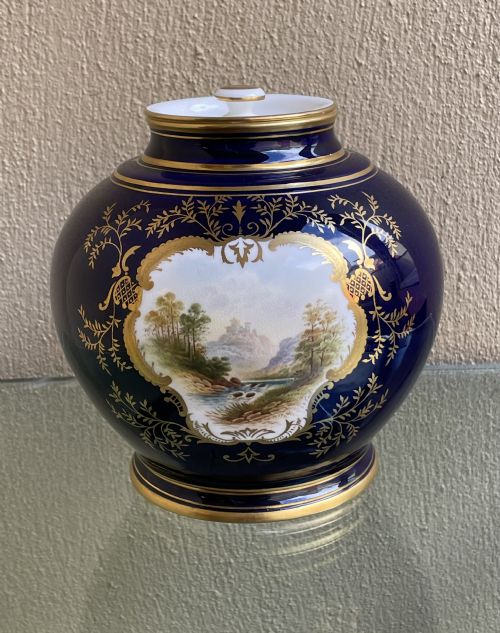
These gilded porcelain covered urns bring together elaborate hand-painting and heavy gilding across nineteenth-century European and Japanese forms.
Gilded Porcelain Covered Urns
Gilded porcelain covered urns combine lidded vessels with metallic enrichment, appearing predominantly in nineteenth-century styles such as Rococo Revival, Neoclassical, and Japanese Imari. These pieces range from miniature scent bottles and ginger jars to large pedestal vases and amphorae.
The selection on this page centres on European factories including Royal Worcester, Vienna, and Dresden, alongside Japanese Satsuma and Imari works. Buyers encounter both single display urns and symmetrical pairs designed for mantelpieces or side tables.
How They Were Made
Potters shaped hard-paste porcelain, earthenware, and ironstone into bulbous forms and pedestal urns before applying ground colours like blue, blush ivory, or scale blue. Artisans then hand-painted floral motifs, landscapes, and figures directly onto the ceramic body.
Gilding was applied using gold leaf or liquid gold highlights, sometimes complemented by ormolu mounts. Firing set the enamel colours and fixed the metallic lustre onto the glaze.
Several Satsuma jars carry the Shimazu crest, letting a crest-spotter trace feudal Japanese lineage straight to the mantelpiece.
What Varies in Quality
Quality rests upon the precision of the hand-painted decoration, ranging from standard factory output to detailed panels signed by known artists. Finer pieces display careful brushwork in figural scenes and intricate gilding rather than transfer-printed outlines.
The weight and crispness of the porcelain body, along with the complexity of the mould, separate standard production pieces from exhibition-scale urns. Intact covers and well-preserved gilding define the better-surviving examples.
Royal Crown Derby·Samson Paris·Sitzendorf·Mason's·Vienna Porcelain·Booths·Royal Worcester·Crown Staffordshire·Spode·Coalport·Satsuma·Helena Wolfsohn·Berlin·Flight Barr And Barr·Hadley's Worcester
The Gilded Porcelain Covered Urns Glossary
- Gilding
- The application of gold leaf, gilt, or gold paint to the surface of porcelain. This technique highlights rims, handles, and painted panels.
- Hard-Paste Porcelain
- A dense, durable ceramic material fired at high temperatures using kaolin and petuntse. It provides a smooth white body suitable for detailed enamel painting.
- Ormolu
- Gilt bronze mounts used as decorative feet, handles, or rims on nineteenth-century urns. It adds structural weight and metallic contrast to the ceramic body.
- Imari
- A Japanese export style characterised by underglaze blue and iron red, accompanied by extensive gilding. European factories frequently copied these patterns during the nineteenth century.
Gilded Porcelain Covered Urns: Frequently Asked Questions
How were gilded porcelain covered urns used?
These lidded vessels served primarily as decorative garnitures on mantelpieces, sideboards, and pedestals in nineteenth-century interiors. Certain forms, such as pot-pourri jars, functioned to perfume domestic spaces.
Larger urns and amphorae acted as status objects, often displayed in pairs to create symmetry within formal reception rooms.
How do I care for antique gilded porcelain?
Clean these pieces gently using a soft, dry feather duster or a dry microfiber cloth to remove surface dust. Avoid liquid cleaners and chemical solvents, which can damage hand-painted enamels and wear away delicate gold leaf.
Keep urns away from direct sunlight and areas prone to sudden temperature shifts to protect the glaze and body.
How can I tell the difference between periods?
Early nineteenth-century pieces, such as Georgian and Regency examples, often feature classical Neoclassical shapes and hand-painted Imari or armorial motifs. Later nineteenth-century items tend toward heavier Rococo Revival forms, elaborate Dresden painting, and Japanese-influenced Satsuma wares.
Factory marks, backstamps, and artist signatures stamped or painted underneath provide definitive clues to the date of manufacture.