




Antique Austrian Porcelain Vases
These antique austrian porcelain vases bring florid nineteenth-century artistry and rich gilding directly to a mantelpiece or cabinet.
Antique Austrian Porcelain Vases
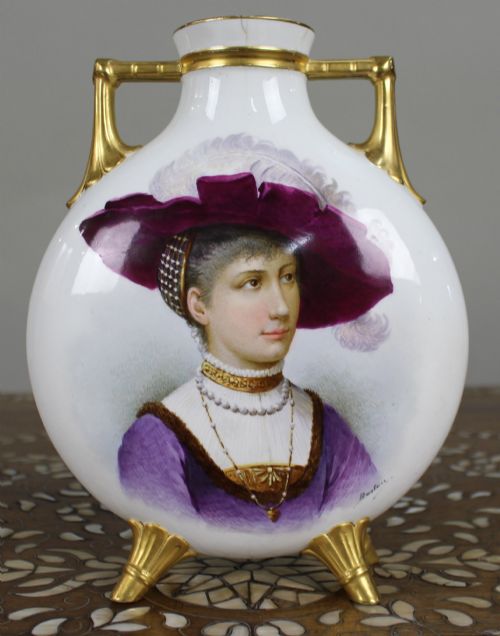
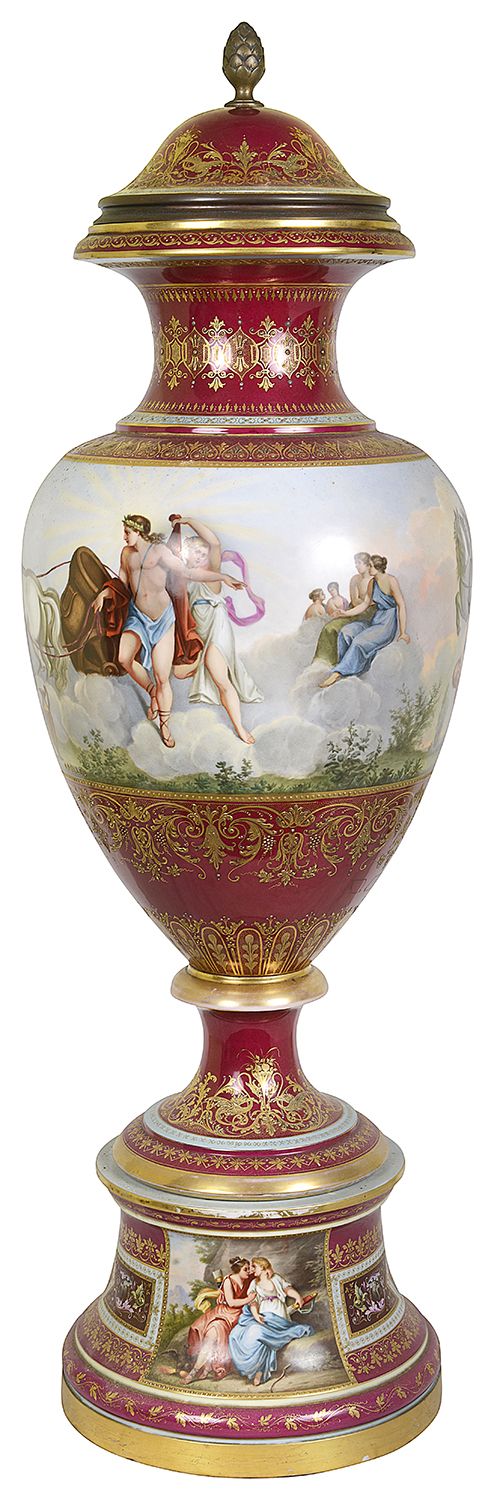
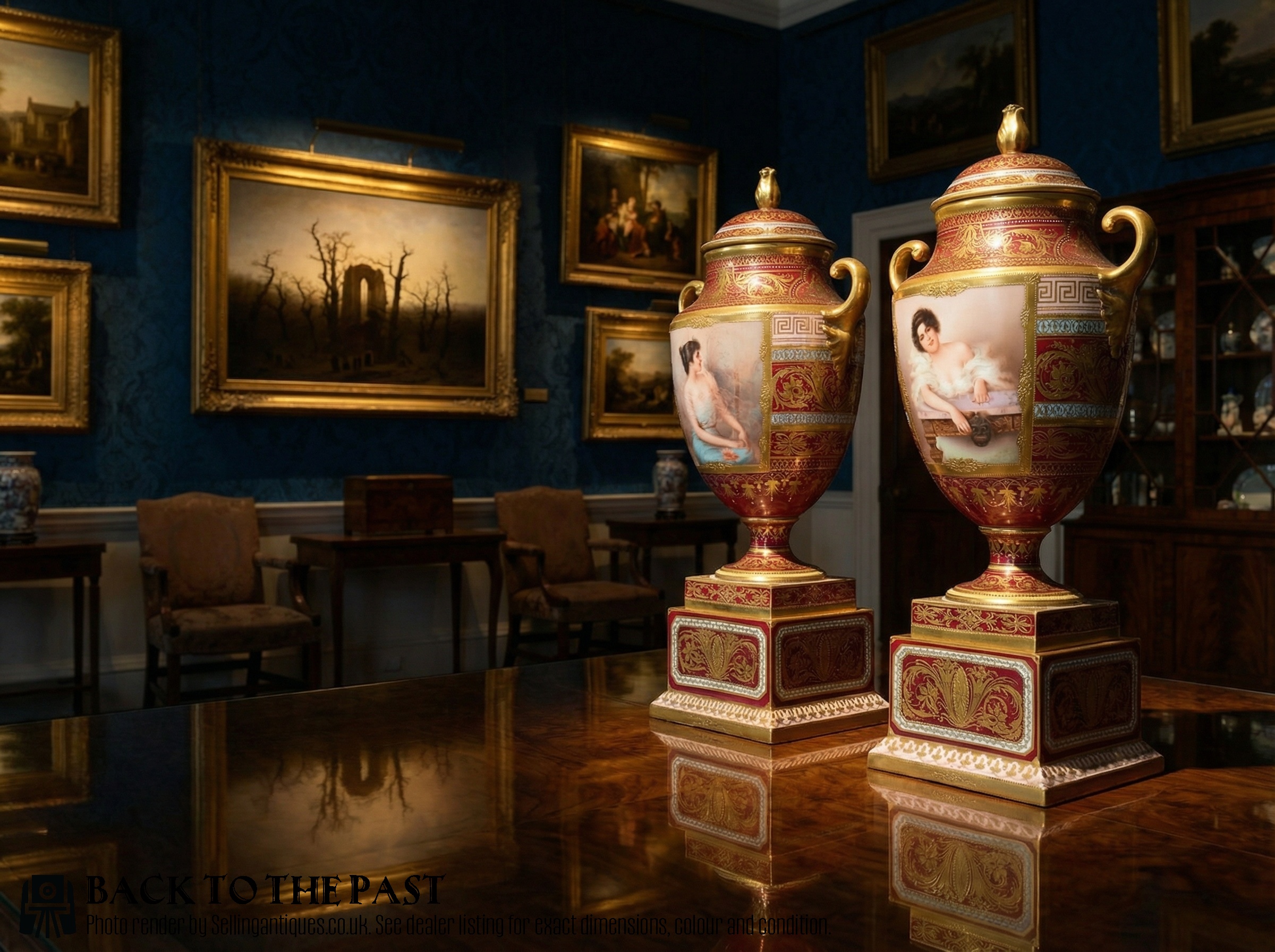
When you search for antique austrian porcelain vases, you encounter a selection spanning the nineteenth century and the turn of the twentieth. The forms range from simple spill vases and moon flasks to monumental lidded urns, garniture sets, and decorative ewers.
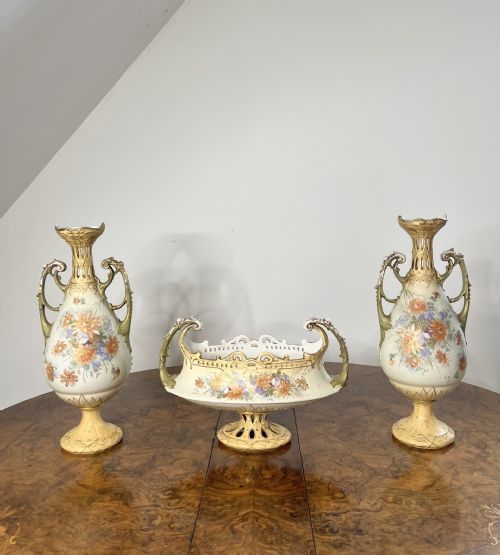
Most examples lean towards classical Vienna designs, ornate Rococo revival shapes, or flowing Art Nouveau contours. You frequently meet pairs and multi-piece garnitures alongside individual centrepieces intended for grand table settings.
How they were made
Potters shaped these vessels from fine porcelain or earthenware, often applying glazes and enamel paint by hand. Artisans then enriched the surfaces using gold leaf, gilt, and intricate gilding to highlight raised motifs and figural panels.
Makers utilised techniques such as hand-painting portraits and classical scenes, followed by firing to bond the enamel and metal leaf permanently to the ceramic body.
What varies in quality
The standard of hand-painted detail heavily influences the character of each piece, distinguishing simple floral decoration from finely executed portraits or intricate classical scenes. Precision in the application of gold leaf and the crispness of moulded porcelain elements also divide standard production from exceptional studio work.
Subtlety in glaze finish and the preservation of delicate enamel work determine how well a vessel retains its visual impact over time.
Ernst Wahliss·Alexandra Porcelain Works Ernst Wahliss·Royal Vienna
The Antique Austrian Porcelain Vases Glossary
- Moon flask
- A flattened circular vase with a short neck and small handles, often decorated with pictorial scenes on each flat side. These vessels draw inspiration from traditional pilgrim flasks.
- Garniture set
- A matching group of three or more vases or urns designed to be displayed together on a mantelpiece or sideboard. They typically feature a larger centrepiece flanked by matching smaller vessels.
- Ewer
- A large jug with a wide spout and looped handle, originally intended for pouring water but frequently produced in porcelain purely for ornamental display.
- Cornucopia
- A horn-shaped vessel traditionally symbolising abundance, adapted by ceramicists into an open-mouthed decorative vase.
Antique Austrian Porcelain Vases: Frequently Asked Questions
Were these vases meant for flowers?
Many larger urns, garnitures, and portrait vases served strictly as decorative ornaments for formal rooms rather than functional flower holders. Smaller spill vases and jugs saw actual use for holding cut stems or liquids on tables.
Examine the interior for water staining or wear to determine whether a specific vessel held water in the past.
What defines the Art Nouveau style on these vases?
Art Nouveau examples feature organic, asymmetrical lines inspired by natural forms like plant stems and flowing hair. These pieces often date from the late nineteenth or early twentieth century.
Earthenware materials and stylised floral motifs frequently accompany these fluid contours.
How can I tell a lidded urn from a standard vase?
Lidded urns include a matching removable cover that completes the symmetrical silhouette of the vessel. They often stand as the centrepiece of a garniture set or appear as substantial standalone decorative items.
Vases lack this fitted top, terminating in an open rim designed for display or holding contents.