




Royal Vienna Vases
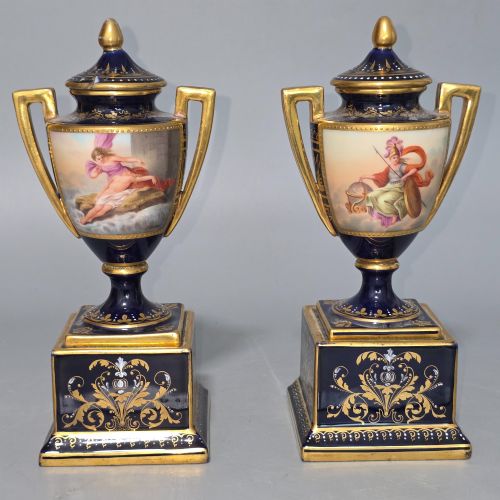
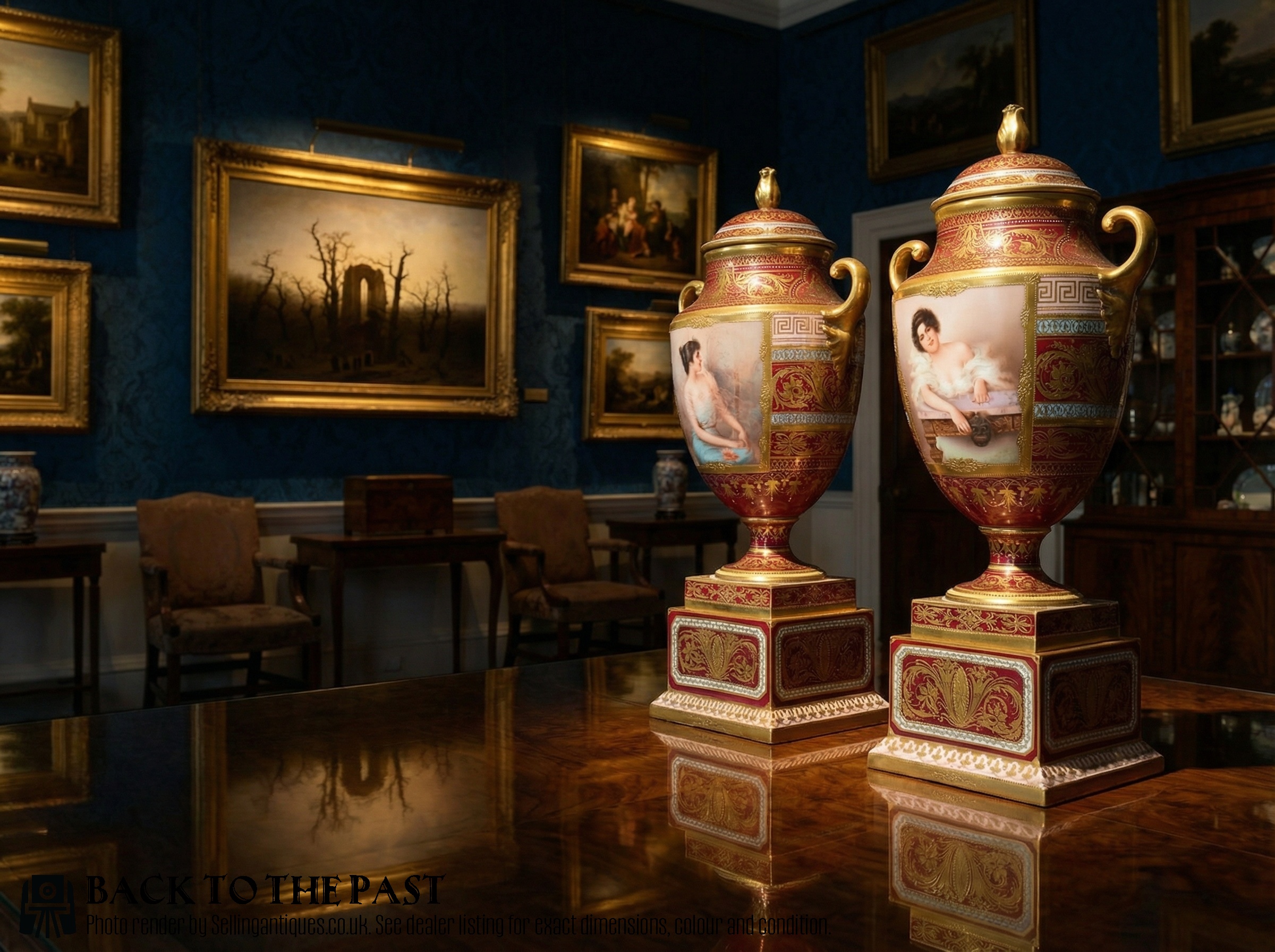
Royal vienna vases bring hand-painted porcelain and neoclassical form into a room, offering nineteenth-century craftsmanship for display.
Royal Vienna Vases
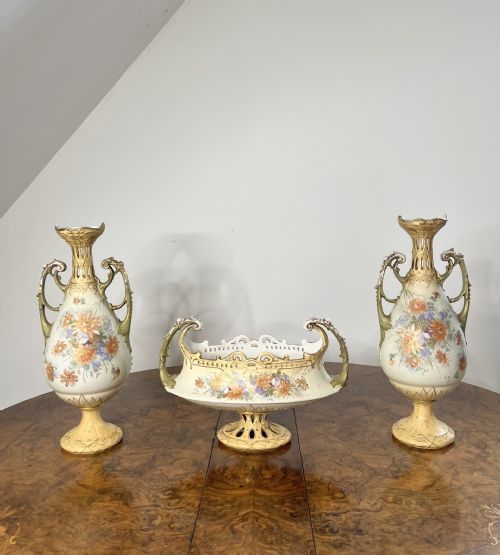
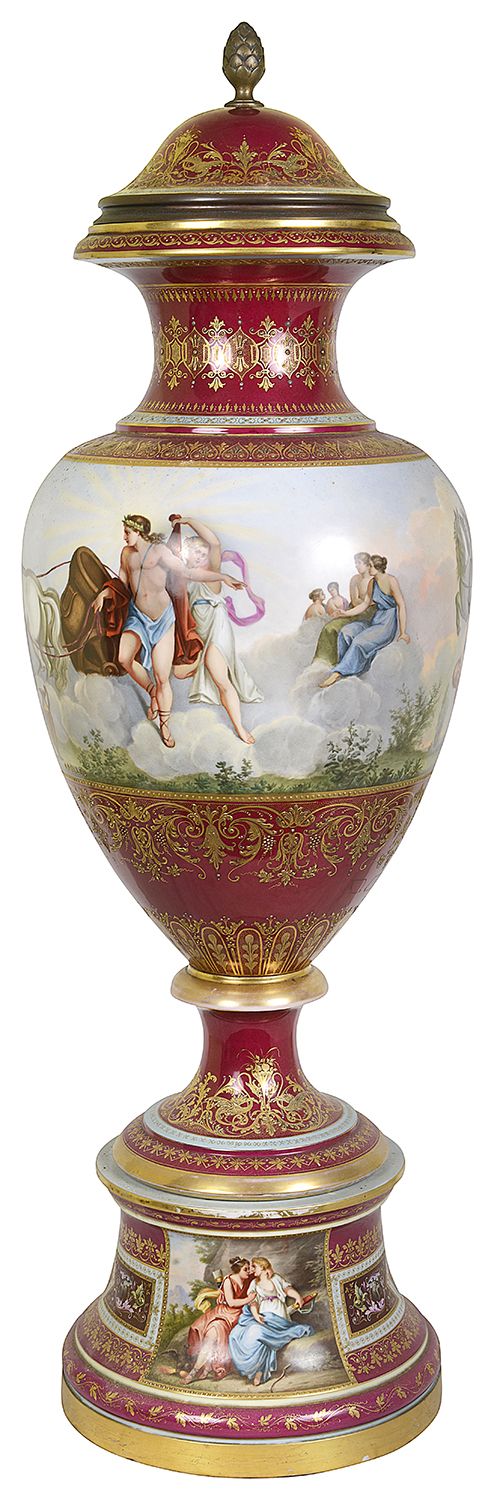
Royal vienna vases encompass nineteenth-century porcelain vessels, including amphora vases, lidded urns, decorative ewers, and garniture sets. These pieces emerge primarily from the nineteenth century, with specific examples dated around eighteen-eighty, eighteen-ninety, and nineteen-hundred.
The most common forms on this page are pairs and single large urns or vases exhibiting classical and revival styles. Buyers encounter pieces styled in neoclassical, empire, rococo revival, and victorian classical revival traditions.
How they were made
These items are constructed from porcelain and finished with hand-painted details. Makers applied gold leaf, gilt, and enamel to decorate the ceramic surface.
Wood is also documented in the construction or mounting of these objects, supporting the porcelain bodies and stands.
Listings feature nineteenth-century porcelain pieces spanning neoclassical, empire, and rococo revival styles.
What varies in quality
Quality separates standard production from exceptional pieces through the intricacy of the hand-painted decoration and the application of gold leaf and enamel. Superior examples display refined portrait work or complex classical scenes rendered across the porcelain.
The scale and ambition of the form also distinguish the range, moving from simple single vessels to large pairs, lidded urns with covers, and multi-piece garniture sets.
F. Koller
The Royal Vienna Vases Glossary
- Amphora vase
- A two-handled jar of ancient Greek origin utilised for storage or decoration in nineteenth-century porcelain revival styles.
- Garniture set
- A matched group of three or more vases or urns designed to be displayed together on a mantelpiece or sideboard.
- Ewer
- A large jug with a wide spout and handle, rendered in porcelain for decorative rather than utilitarian purposes.
- Gilt
- A thin layer of gold applied to the surface of porcelain or wood to provide metallic highlights.
Royal Vienna Vases: Frequently Asked Questions
What styles are royal vienna vases?
The pieces available demonstrate neoclassical, empire, rococo revival, and victorian classical revival aesthetics.
These designs draw on classical forms and nineteenth-century interpretations of historical periods.
How were these urns used?
These porcelain vessels served primarily as decorative items for display within nineteenth-century interiors.
Pairs, centrepieces, and garniture sets were arranged on tables, cabinets, and mantelpieces.
How do I identify a nineteenth-century piece?
Identification relies on observing the porcelain body, hand-painted enamel decoration, and application of gold leaf or gilt.
Stylistic markers align with nineteenth-century neoclassical and revival design movements seen across the listings.
What is a vase garniture?
A garniture consists of a matched set of vessels, typically a central urn accompanied by side vases.
These sets were created to stand together as a decorative unit on large pieces of furniture.