
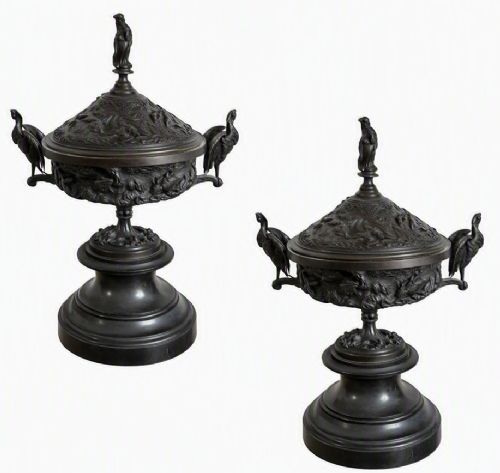
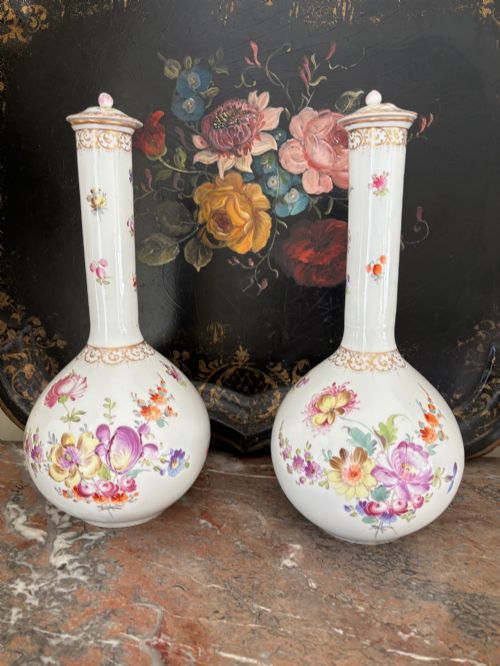
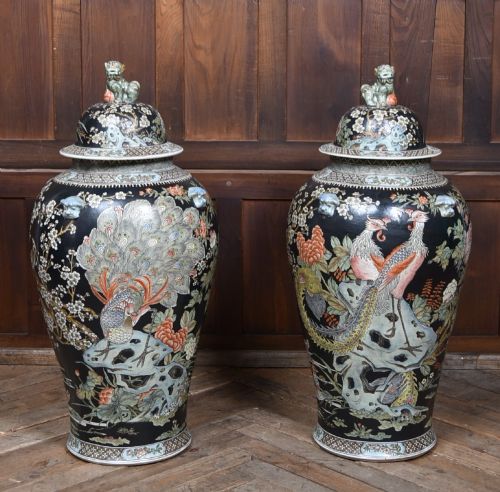
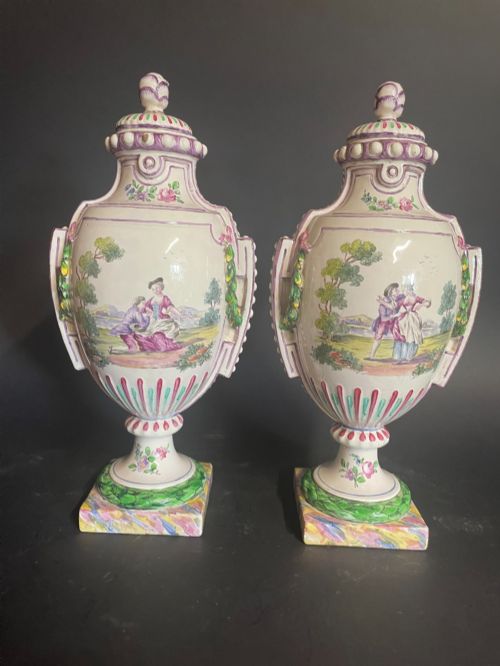

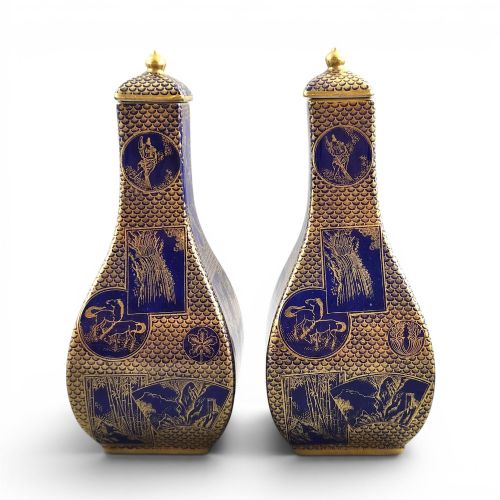
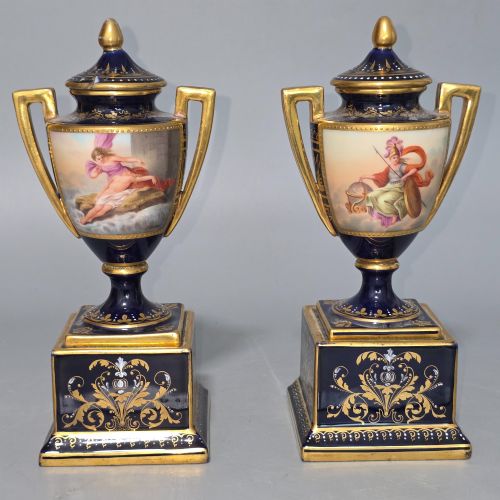
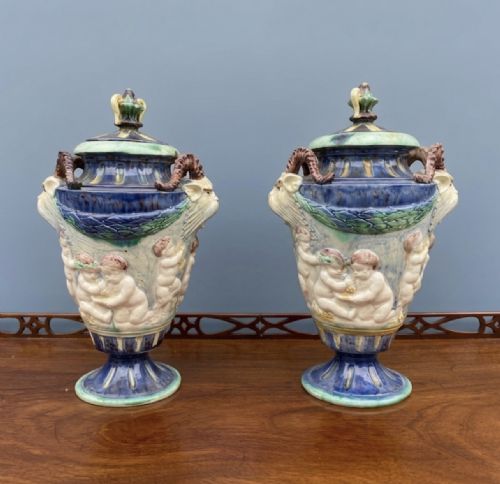
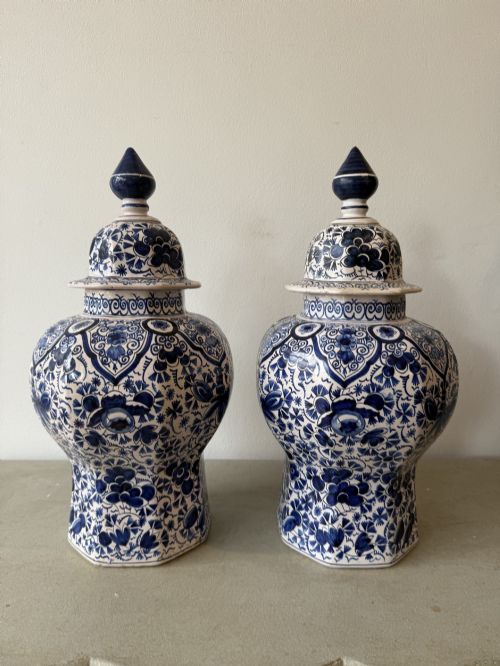
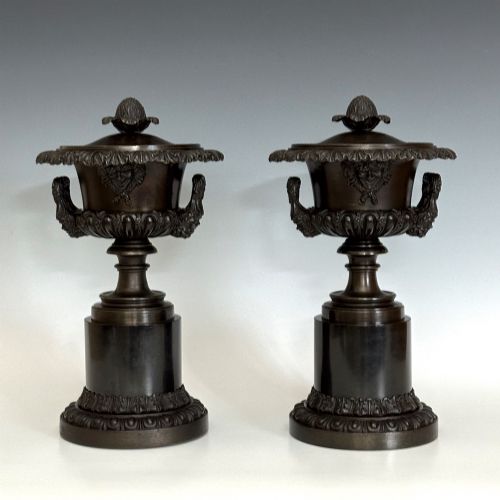


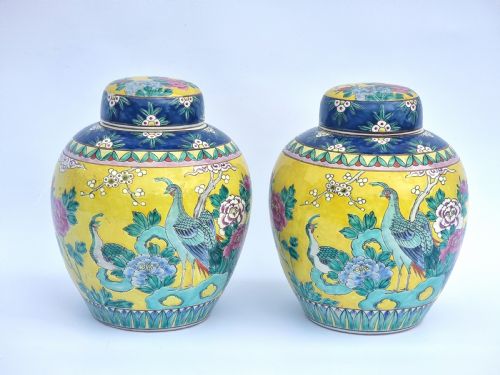

Pair Covered Urns
These pair covered urns bring symmetry and presence to a room, offering grand decorative form through lidded vessels shaped for display.
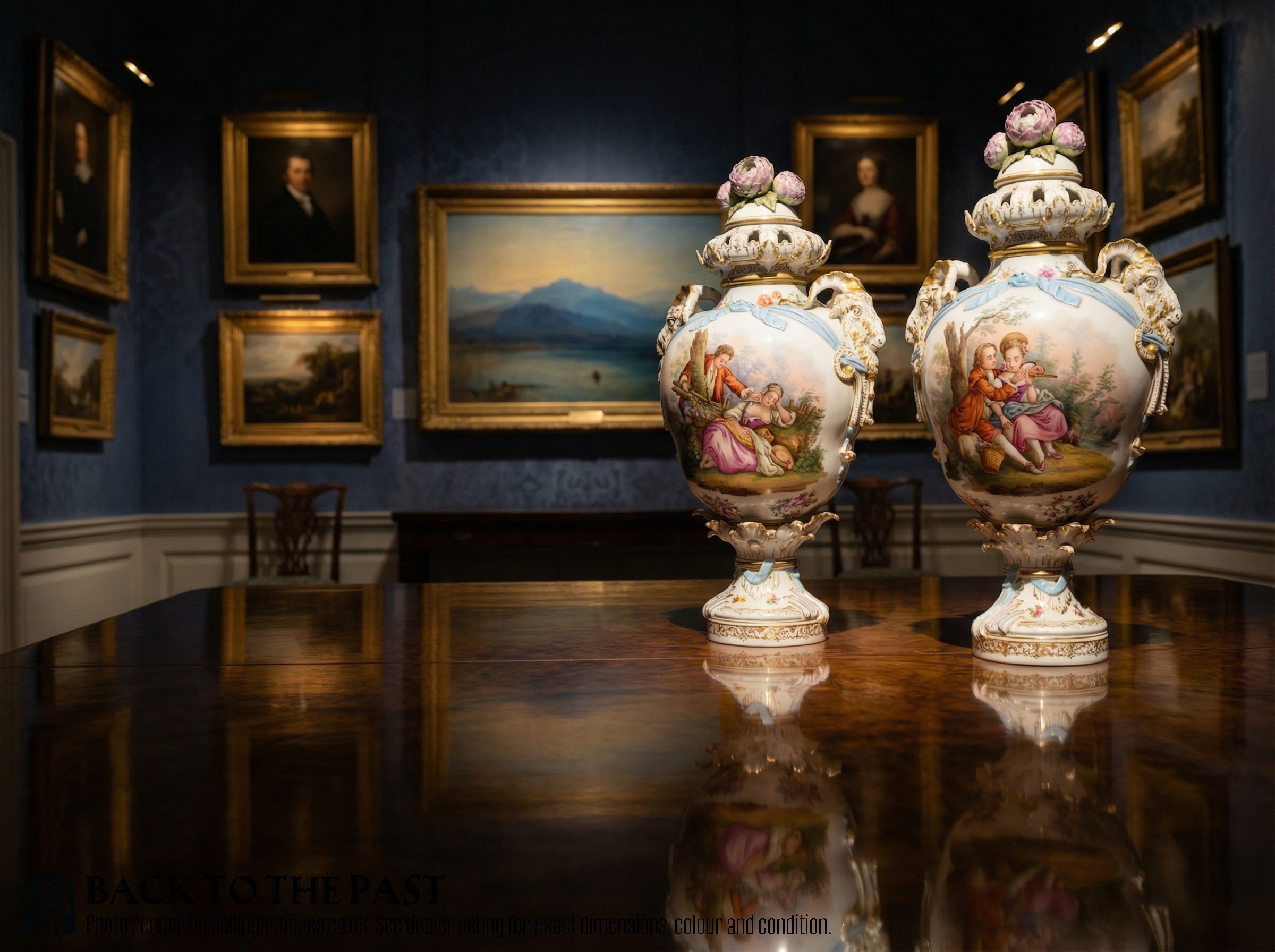
Pair Covered Urns
When searching for pair covered urns, a buyer encounters lidded vessels designed to stand in balanced sets on mantelpieces, pedestals, or console tables. These decorative objects take the form of amphorae, ginger jars, and classical vases fitted with matching lids.
The options span European porcelain factories, East Asian export ceramics, and French bronze workshops, with nineteenth-century continental pieces forming the most frequent encounters on this page.
Forms range from tall palace floor jars down to compact pot pourri vessels, demonstrating how makers adapted the lidded urn shape across different decorative scales and materials.
Materials and Techniques
Porcelain and earthenware serve as the primary media, often finished with hand-painted floral decorations, cobalt blue underglaze, or ironstone glazes.
Metal components introduce bronze, ormolu mounts, and gilt bronze details that secure marble bodies, porcelain sections, and cloisonne ginger jars.
Surface ornamentation relies on enamel pigments, gold leaf, and tin-glazed applications to achieve the rich polychrome patterns recorded across these pieces.
Listings feature porcelain, earthenware, marble, and bronze materials spanning the seventeenth through the twentieth centuries.
Distinctions in Quality
Quality rests upon the precision of the hand-painted details and the crispness of the modelled handles, lids, and mounts.
Excellence shows in the structural harmony between the ceramic body and its fitted cover, alongside the weight and chasing of any accompanying ormolu or bronze elements.
Jules Moigniez·Sitzendorf·Mason·Sceaux·Derby·Coalport·Flight Barr and Barr·Royal Worcester
The Pair Covered Urns Glossary
- Ormolu
- Gilt bronze mounts applied to furniture and ceramic vessels. This technique adds metallic definition to the shoulders and bases of lidded vases.
- Tin-Glazed Earthenware
- Pottery covered with a tin-opacified glaze that provides a white background for painting. Examples include faience and delftware.
- Imari
- Japanese export porcelain decorated in underglaze blue, iron red, and gold. These colourful wares found wide imitation in European factories.
- Ginger Jar
- A wide-mouthed storage jar with a domed cover, originating in China. They appear frequently in ceramic pairs on this page.
- Cassolette
- A dual-purpose vessel functioning as a vase or a perfume burner with a pierced cover. They are often carved from white marble or cast in bronze.
Pair Covered Urns: Frequently Asked Questions
Where should I place pair covered urns in a room?
These matching vessels work best on balanced surfaces such as mantelpieces, sideboards, or flanking a central mirror.
Their symmetrical presence provides visual weight and anchors the arrangement of a room.
How do I distinguish European porcelain from Asian export pieces?
European factories often adopted neoclassical or revival styles with gilded accents, while East Asian examples frequently feature traditional underglaze blue or Imari palettes.
Examining the paste and the nature of the painted motifs helps clarify the origin.
Are the lids original to the vases?
Matching lids are a defining characteristic of these matched sets, shaped to complete the silhouette of the body.
Checking the fit and glaze continuity ensures the cover belongs to the base.
What periods are represented among these urns?
The selection spans from the seventeenth century through the Regency era and deep into the nineteenth century.
Victorian and revival styles dominate the later dates found on this page.