


Rococo Revival Vases
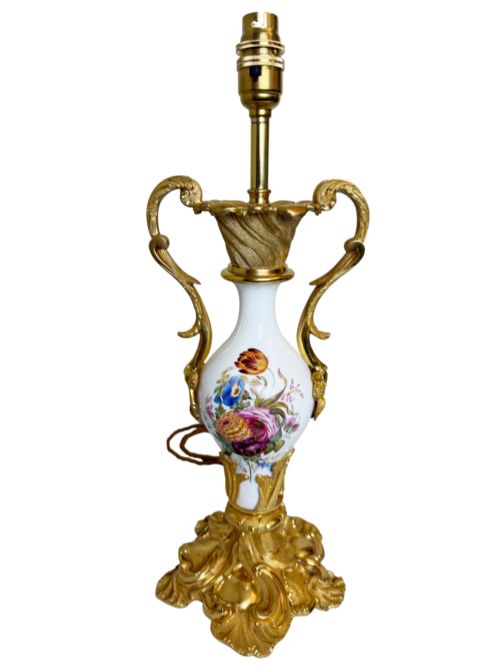
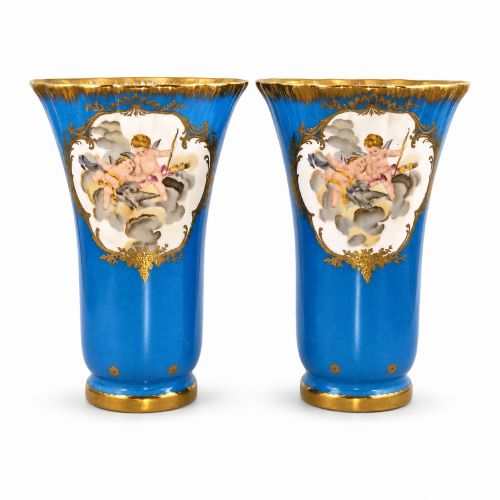
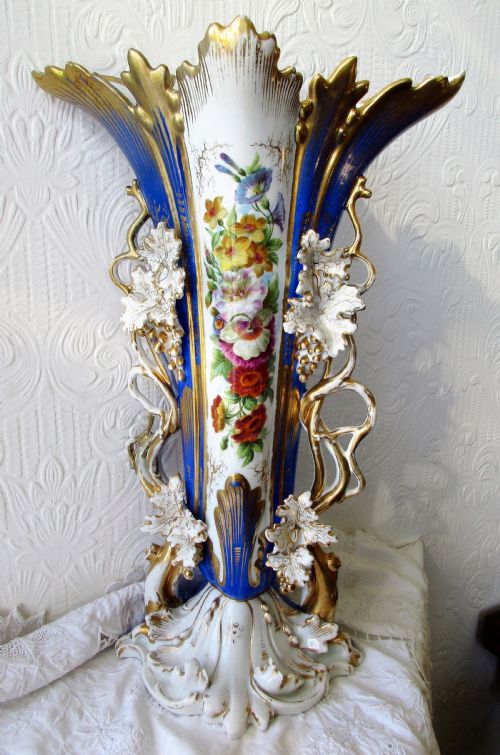
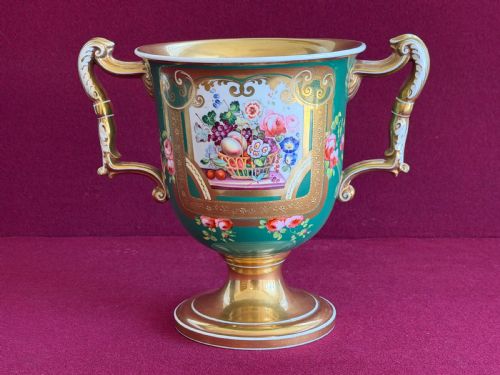
These rococo revival vases combine extravagant porcelain forms with rich gilt mounts, offering an opulent centrepiece for nineteenth-century interiors.
Rococo Revival Vases
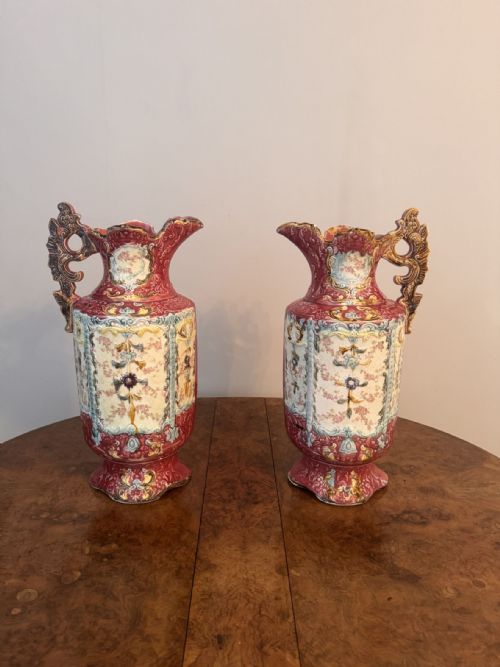
Buyers examining rococo revival vases encounter a range of nineteenth-century decorative forms, including lidded urns, ewers, and table lamps influenced by earlier French aesthetics. These pieces often draw inspiration from Sevres, Meissen, and Paris porcelain factories, replicating eighteenth-century curvilinear designs with asymmetric scrolls and nature motifs.
The selection on this page leans heavily toward nineteenth-century French and English production, featuring pairs of garnitures and cabinet pieces. Potpourri jars, pilgrim flasks, and loving cups appear alongside standard vase shapes, reflecting the varied domestic uses of the period.
Dated examples stretch from the Regency era through the Victorian period and into the early twentieth century, showing a persistent taste for gilt-accented porcelain. English factories such as Coalport and Samuel Alcock sit alongside continental makers, demonstrating how widely the style spread across European kilns.
Materials and construction
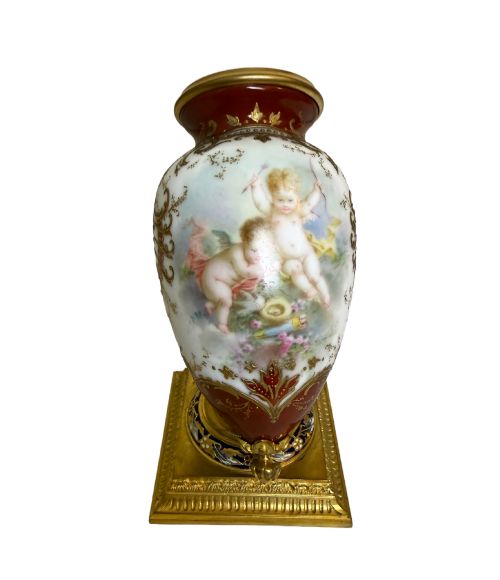
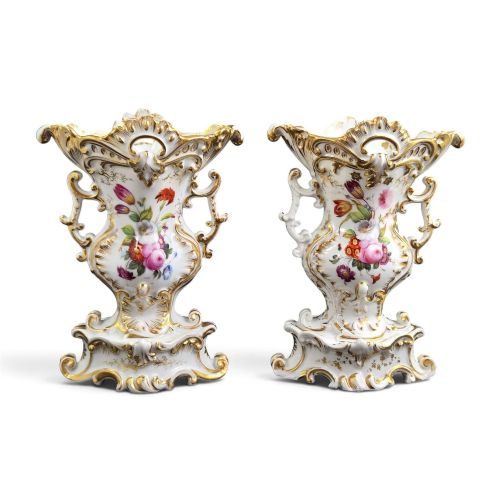
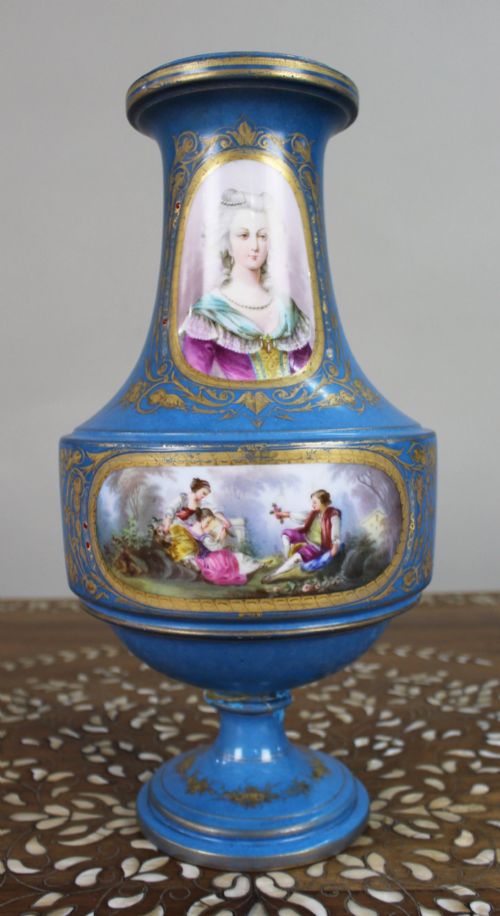
Makers utilised fine porcelain bodies, often finished with cobalt blue grounds or bleu celeste glazes, to replicate the luxury wares of royal European kilns. Hand-painted floral panels, Watteau scenes, and gallant figures decorate the ceramic surfaces, frequently enhanced by raised white enamel and delicate gilding.
Gilt bronze and ormolu mounts provide structural framing and decorative handles for many nineteenth-century vessels. These metal elements require careful casting and fire gilding or gold leaf application to complement the glossy sheen of the underlying porcelain glaze.
Listings span the nineteenth and early twentieth centuries, recording porcelain, enamel, gold leaf, and ormolu across English and French factories.
Judging quality and execution
The distinction between ordinary and superior pieces rests on the precision of the hand-painted details and the crispness of the gilt bronze mounts. Finer examples display meticulous brushwork in figurative scenes and floral reserves, whereas lesser items rely on stencilled transfers.
The weight and finish of the metal mounts also indicate the standard of production, with heavier, more deeply chased ormolu separating top-tier garnitures from mass-produced wares. Furthermore, the clarity of the porcelain paste and the brilliance of the gilding determine the overall visual impact of each vase.
Jacob Petit·Samson Paris·H and R Daniel·Samuel Alcock·Helena Wolfsohn·Sitzendorf Porcelain·Coalport
The Rococo Revival Vases Glossary
- Ormolu
- A technique of applying finely ground high-carat gold to a bronze object, creating a rich golden finish. It appears frequently as mounts on nineteenth-century decorative pieces.
- Bleu Celeste
- A bright, sky-blue ceramic glaze famously developed at the Sevres pottery. It provides a striking background for hand-painted panels.
- Ewer
- A large jug with a wide spout and scroll handle, often adapted into a purely decorative vase during the nineteenth century. These vessels emphasise sweeping, asymmetrical lines.
- Garniture
- A set of matching vases, usually three or five in number, designed to sit together on a mantelpiece or cabinet top. They form a balanced decorative display.
- Bisque
- Unglazed porcelain with a matte, marble-like texture. It allows sculptural details to show with great clarity.
Rococo Revival Vases: Frequently Asked Questions
How do I identify a Sevres style vase?
These pieces typically feature rich blue grounds, elaborate hand-painted pastoral scenes, and heavy gilding inspired by eighteenth-century French royal manufacture. Many carry pseudo-marks or factory styles intended to evoke that earlier heritage.
Look closely at the quality of the brushwork in the central panels and the application of gold leaf around the rims and handles. Genuine nineteenth-century interpretations display exceptional craftsmanship even when not produced at the original French kiln.
What is a garniture of vases?
A garniture consists of a matching set of three or five vessels designed to be displayed together as a decorative unit on a mantelpiece or sideboard. They share identical colour palettes, motifs, and mounting styles.
In period interiors, these sets provided symmetrical balance to formal rooms. Finding a complete, undamaged garniture remains a key goal for collectors of nineteenth-century decorative arts.
Where were these vases displayed?
Nineteenth-century households placed these decorative vessels on prominent mantelpieces, console tables, and drawing-room cabinets where guests would notice their colour and gilding. Large pairs and lidded urns served as focal points in formal entertaining spaces.
Because many were fragile cabinet pieces rather than functional flower holders, they remained safely out of daily reach. This careful placement explains why so many survive with their delicate ormolu mounts and painted panels intact.
How are porcelain and ormolu cleaned?
Ceramic bodies require gentle dusting with a soft, dry cloth to protect delicate hand-painted enamel and surface gilding from abrasion. Moisture should be avoided, particularly around unglazed bisque areas or old repair sites.
Metal mounts benefit from careful isolation during cleaning so that polishes do not stain the surrounding glaze. A soft brush removes dust from chased crevices in the bronze without harming the gold finish.