
Gilded Blue Urn
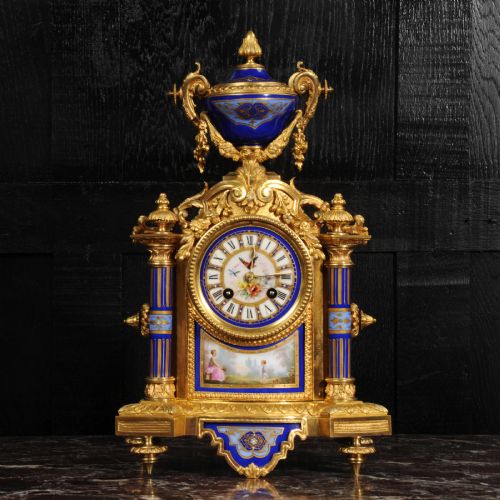
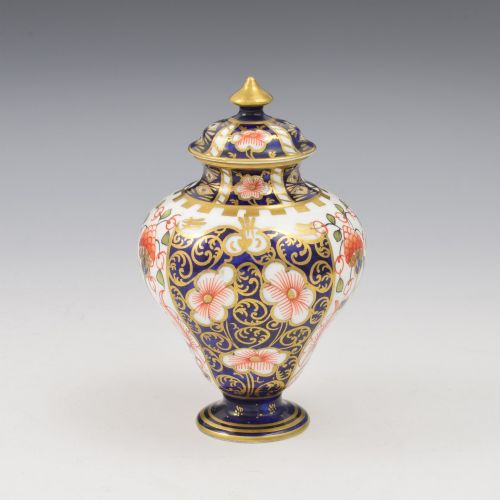
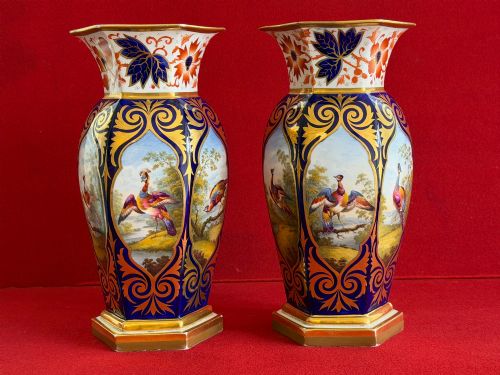
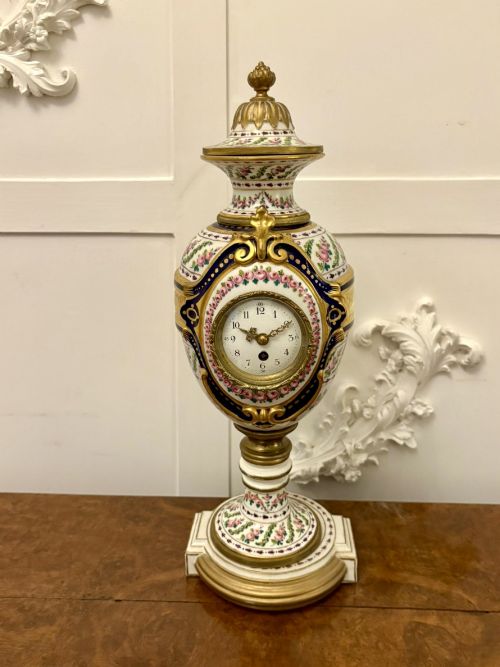
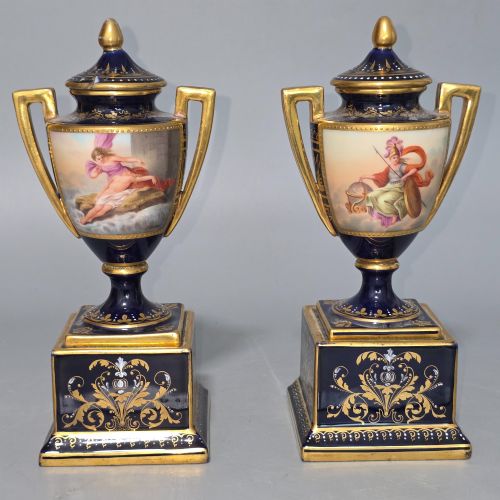
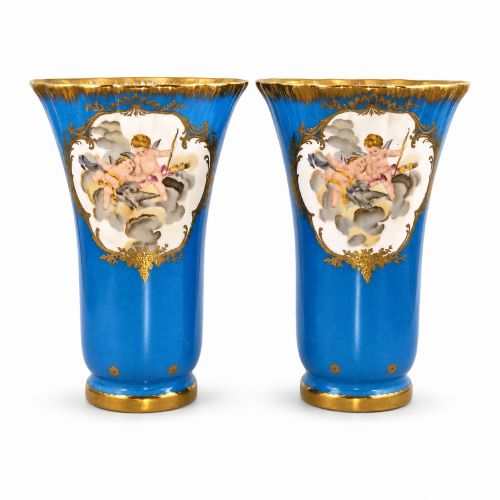
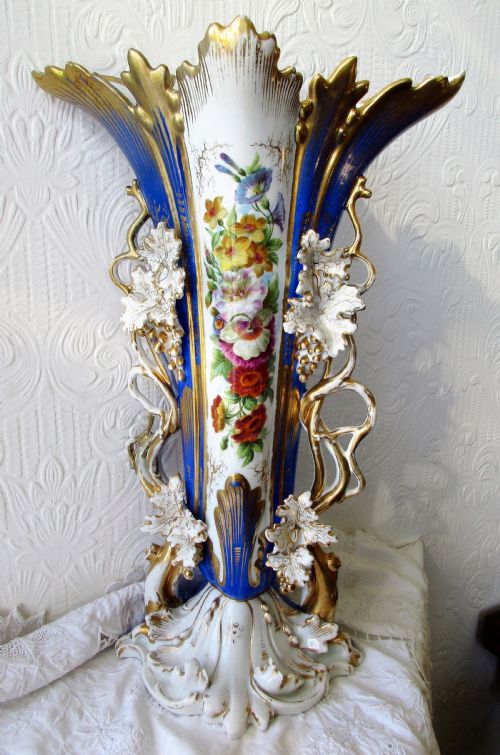
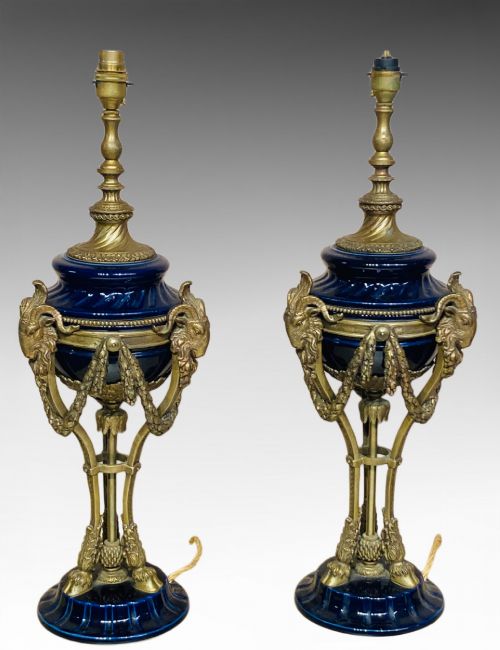
When you search for a gilded blue urn, you are looking at richly coloured ceramic and porcelain vessels decorated with gold leaf and metallic highlights.
Gilded Blue Urn
A gilded blue urn combines deep cobalt or cerulean ceramic grounds with applied gold leaf, ormolu, or painted gilding.
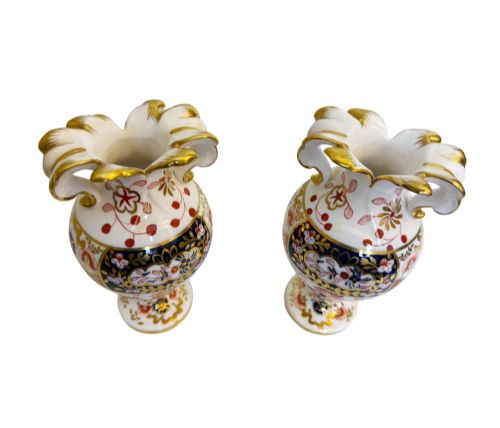
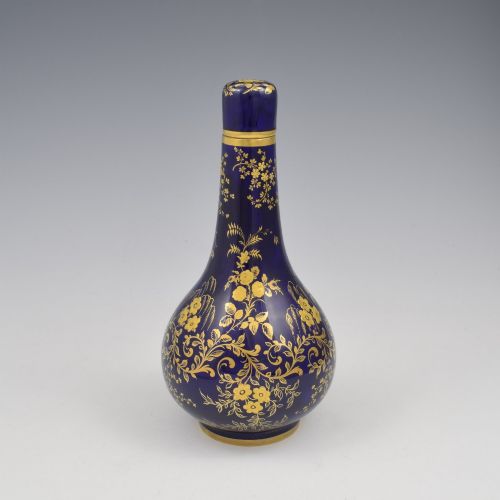
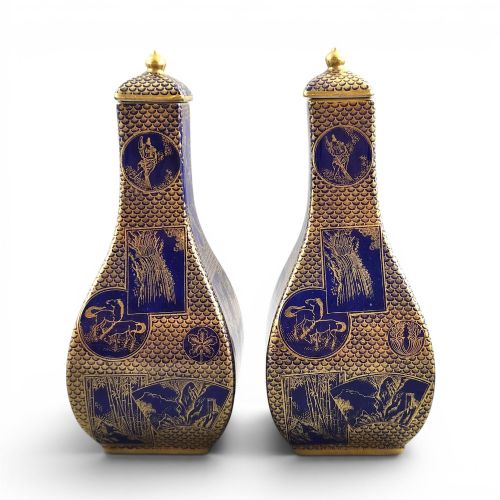
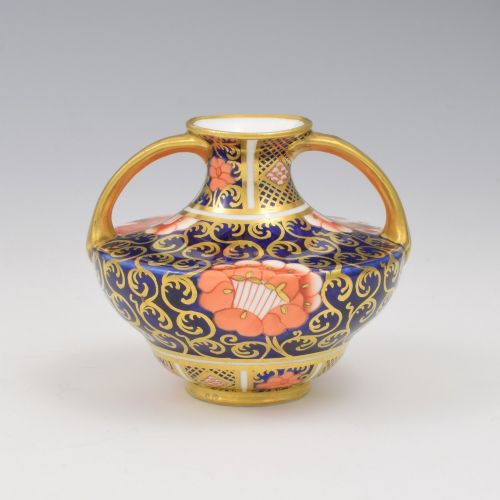
The objects found here span the nineteenth century and the Edwardian era, taking the form of mantel clocks, covered vases, and twin-handled garnitures.
Originating from English factories like Spode and Worcester alongside French and Japanese workshops, these pieces function primarily as decorative centrepieces.
How they were made
Potters shaped porcelain, earthenware, and ironstone before firing the bodies and applying rich blue glazes or enamels.
Craftsmen then added gold leaf, hand-painted gilt details, or cast ormolu mounts to complete the metallic enrichment.
Some nineteenth-century makers used cobalt grounds so deep they absorb the light entirely.
What varies in quality
The refinement of the hand-painted panels and the precision of the gilt work separate standard production ware from superior examples.
The weight and detail of the cast ormolu mounts or twin handles indicate the standard of the workshop that produced the vessel.
Japy Freres·Royal Crown Derby·Flight Barr and Barr·Spode·Mason·Samson Paris·Coalport·Royal Doulton·Carlton Ware·William Moorcroft·Royal Worcester
The Gilded Blue Urn Glossary
- Ormolu
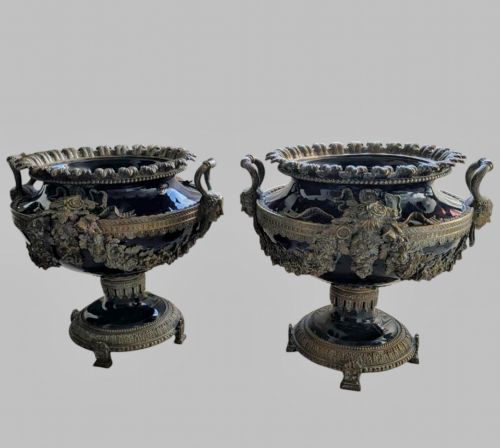
- Cast and gilt-bronze metalwork used for mounts, feet, and handles on decorative porcelain.
- Bleu Céleste
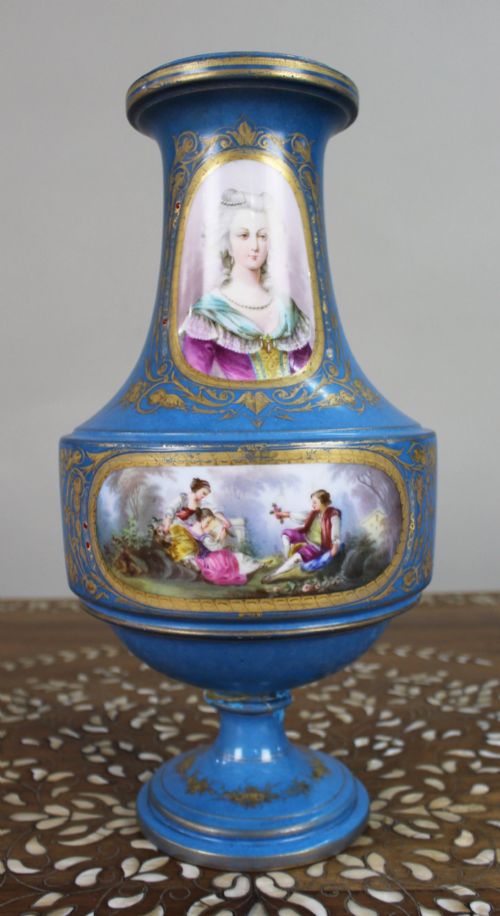
- A bright sky-blue porcelain ground colour popularized by European factories such as Sèvres.
- Imari
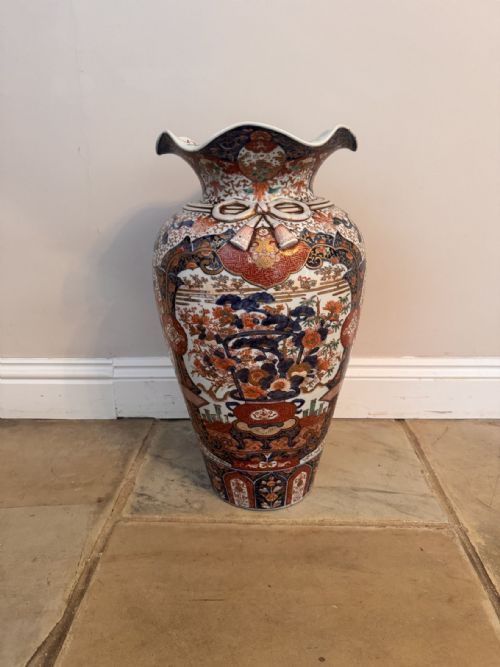
- A Japanese decorative style featuring deep cobalt blue and iron red highlighted with gold.
- Garniture
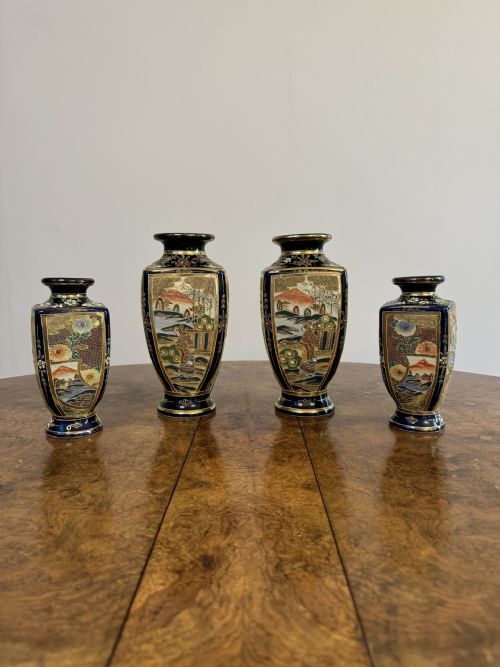
- A set of matching vases or urns designed to be displayed together on a mantelpiece.
- Moriage
- A Japanese ceramic technique using raised slip to create textured decorative patterns.
Gilded Blue Urn: Frequently Asked Questions
What is a gilded blue urn used for?
These vessels were created primarily for interior decoration on mantelpieces, tables, or cabinets within formal nineteenth-century rooms.
They often formed part of matched garnitures designed to create symmetrical displays in grand domestic settings.
How do I identify a Sèvres-style piece?
Sèvres-style pieces typically feature rich blue enamel grounds, known as bleu céleste or gros bleu, combined with elaborate hand-painted panels and heavy gilding.
Many European factories emulated this distinctive eighteenth-century French aesthetic throughout the Victorian period.
What is the difference between Japanese Imari and Satsuma?
Imari wares use a distinctive palette of cobalt blue and iron red on porcelain with abundant gold enrichment.
Satsuma pieces consist of a cream-coloured earthenware body decorated with fine crackle glaze and detailed enamels.
How do I care for antique porcelain with gold leaf?
Dust these decorative objects gently with a soft, dry brush to protect the delicate metallic surfaces and hand-painted enamel details.
Keep them away from direct sunlight and moisture to preserve the integrity of the original gilt mounts and ceramic body.