

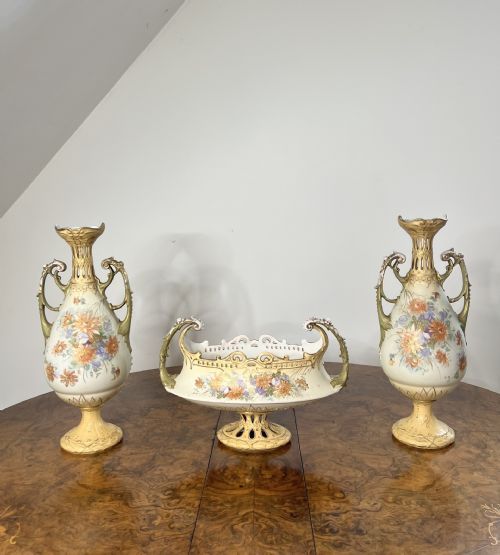


Gilded Ceramic Urn Set
A gilded ceramic urn set brings classical elegance to a room, offering matched decorative impact across mantelpieces and cabinets.
Gilded Ceramic Urn Set
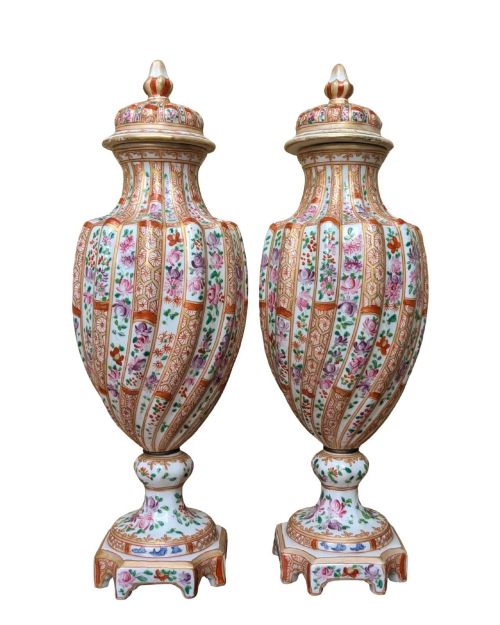
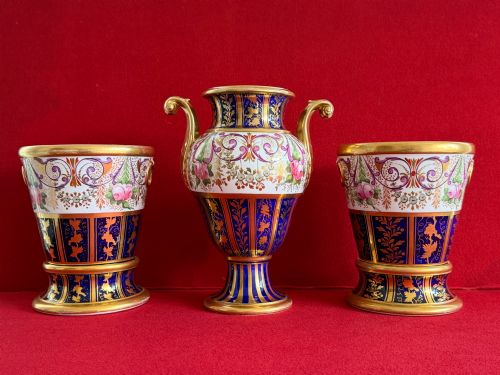
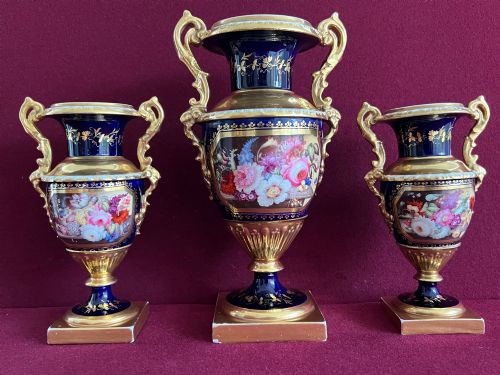
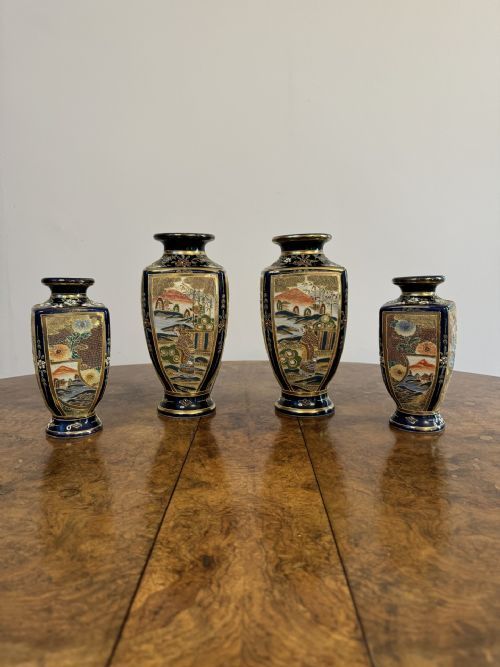
A gilded ceramic urn set comprises multiple matching vessels designed to be displayed together as a unified decorative arrangement. These sets range from pairs and trios to larger garnitures of four pieces intended for prominent placement in reception rooms.
The selections available here draw on centuries of craftsmanship, featuring European porcelain and earthenware alongside Japanese export ceramics. Buyers will encounter Victorian classical revivals, continental factory productions, and intricate Meiji period designs.
Vessels within these sets frequently incorporate lidded forms, centrepieces, and side vases configured for balanced mantel or console display. Each piece relies on the visual rhythm created by matching motifs and shapes across the complete arrangement.
How they were made
Potters shaped these vessels using traditional earthenware and porcelain bodies, fired to high temperatures to ensure structural stability before decoration. Artisans then applied detailed hand-painted scenes, floral garlands, and intricate patterns across the ceramic surfaces.
Gilding was meticulously added using gold leaf or liquid gold paint, often highlighting raised relief elements and framing painted panels. Glazes provided a protective, glossy finish that secured the metallic applications and colours beneath.
Gilded Ceramic Urn Set Retail Price Guide 2026
Typical asking prices for gilded ceramic urn set among the pieces listed under this phrase on Sellingantiques today, from the lower quarter to the upper quarter. They describe what is for sale here now, not the wider market.
Some nineteenth-century makers hid tiny painted beetles beneath handles just to test if observant buyers were really looking.
What varies in quality
The sophistication of the hand-painted decoration and the precision of the gilding largely determine the standing of an individual set. Finer examples display crisp detail in figural or floral motifs, with heavy, well-preserved gold leaf rather than thin metallic washes.
Completeness and uniformity across all constituent pieces heavily influence the integrity of a garniture. Sets that retain all original matching lids and show consistent wear across every vessel command greater appreciation from collectors.
Doulton Lambeth Carrara Ware·Royal Vienna·Mason’s Ironstone China
The Gilded Ceramic Urn Set Glossary
- Garniture
- A set of matching decorative vases or urns designed to be displayed together on a mantelpiece or sideboard. They typically consist of three or more pieces sharing identical decorative schemes.
- Imari palette
- A traditional Japanese decorative style utilising cobalt blue, iron red, and abundant gold. This distinctive colour scheme was widely imitated by European porcelain factories.
- Ormolu
- Cast brass that has been gilded with a mercury and gold amalgamation, often used for mounts on nineteenth-century European porcelain. It provides a bright, durable metallic finish.
- Satsuma
- A type of Japanese earthenware featuring a crackled ivory glaze decorated with polychrome enamels and gilding. These wares were heavily produced for export during the Meiji period.
Gilded Ceramic Urn Set: Frequently Asked Questions
How should I display a garniture set?
Garniture sets are traditionally arranged on a mantelpiece, sideboard, or large console table with the tallest vessel placed centrally and the matching side pieces or vases flanking it symmetrically. This arrangement creates a balanced visual anchor for the room.
Ensure the surface is stable and deep enough to support the full width of the set safely, keeping them away from heavy foot traffic where the outer vessels might be brushed against.
What is the difference between porcelain and earthenware?
Porcelain is fired at extremely high temperatures, resulting in a dense, vitrified body that is white, non-porous, and sometimes translucent. Earthenware is fired at lower temperatures, producing a more porous and opaque material that requires a glaze to hold liquids.
Both materials serve as foundations for gilded decoration, but porcelain generally allows for finer detail and thinner vessel walls.
How do I identify a Meiji period piece?
Meiji period Japanese ceramics, such as Satsuma wares, typically date from the late nineteenth or very early twentieth century and display dense, intricate hand-painted designs incorporating rich gilding. The paste is often an earthenware body covered in a finely crackled creamy glaze.
Examining the base may reveal maker marks or signatures associated with Japanese export workshops of this era.