

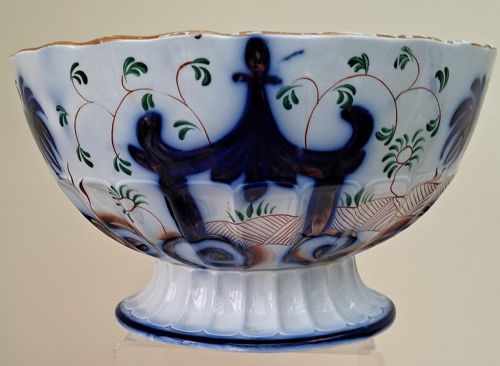
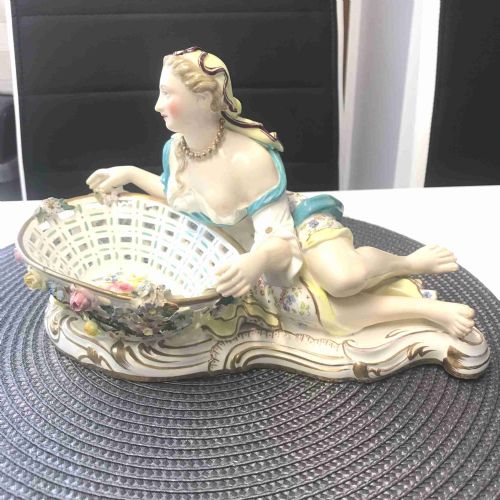
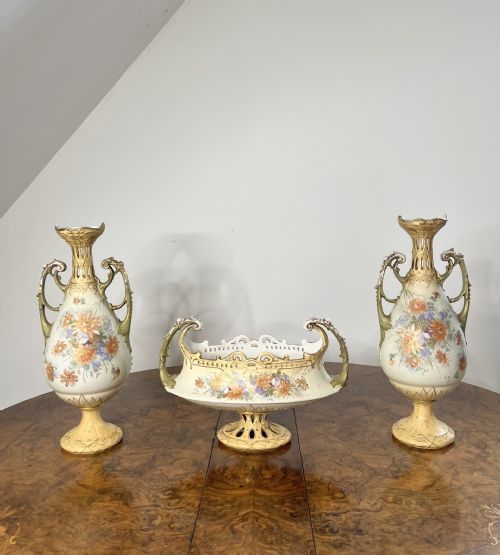
Antique Porcelain Centrepiece Bowl
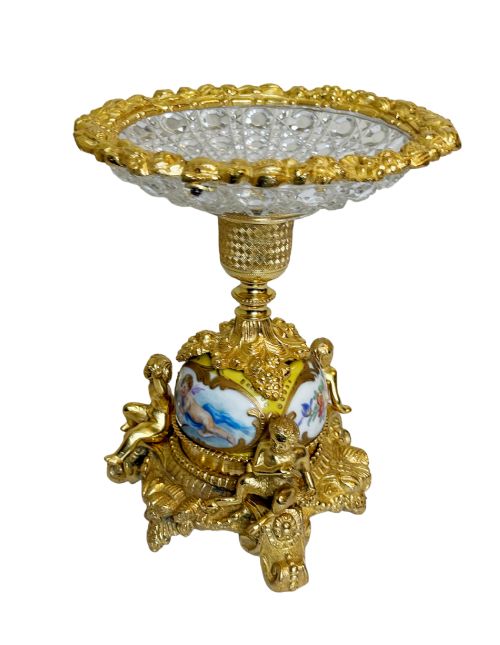
An antique porcelain centrepiece bowl serves as the dramatic focal point of a formal table, combining utility with intricate sculptural design.
Antique Porcelain Centrepiece Bowl
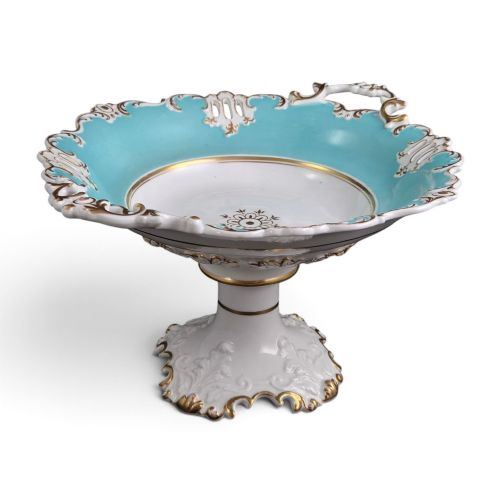
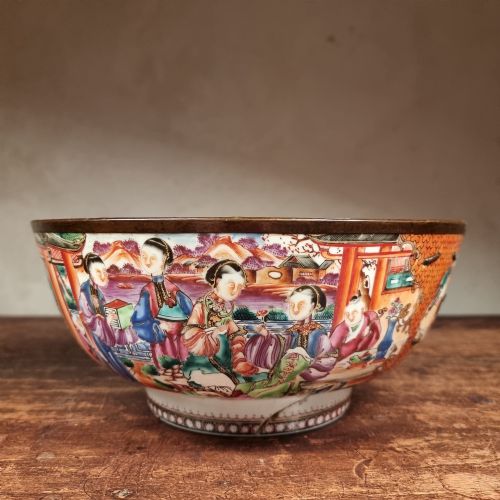
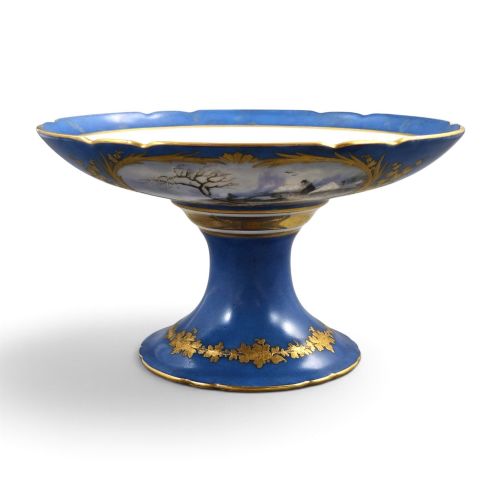
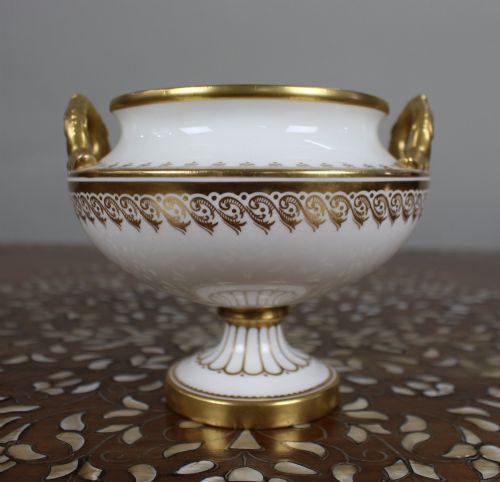
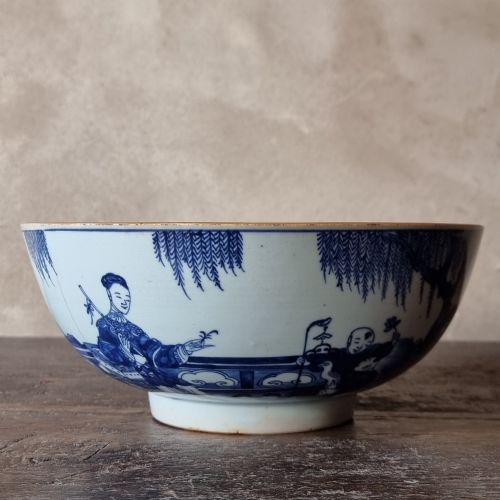
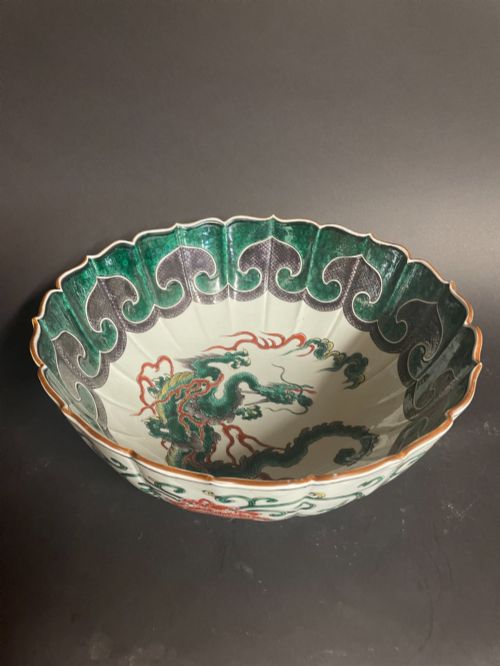
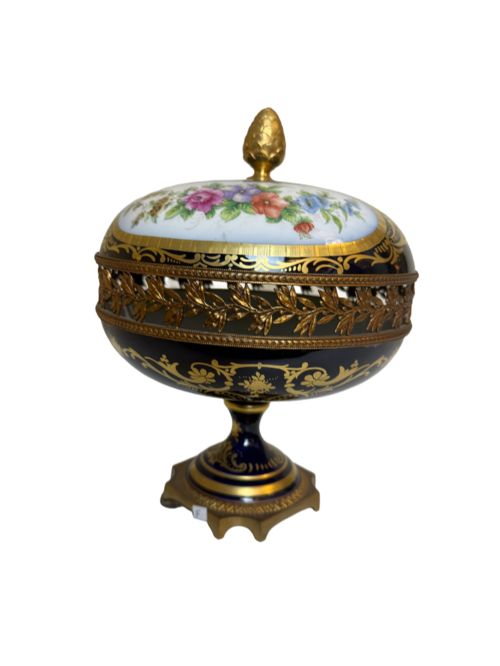
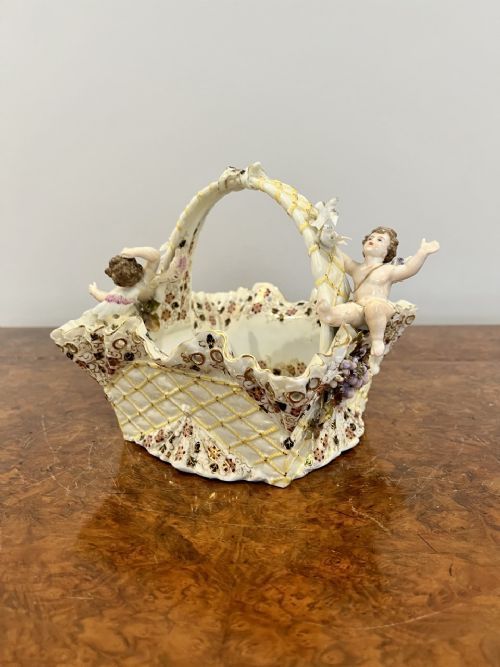
When searching for an antique porcelain centrepiece bowl, collectors encounter substantial footed vessels, ornate baskets, and wide presentation pieces designed for display. These objects originate from major European factories and Asian export markets, spanning the Georgian, Victorian, and Edwardian eras.
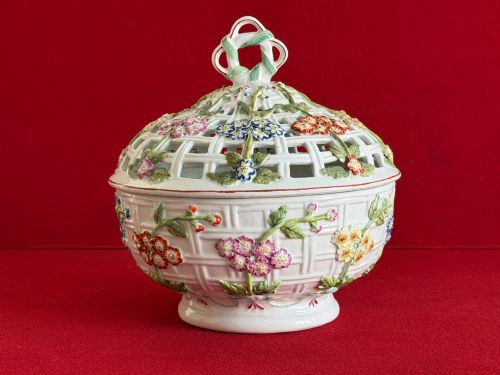
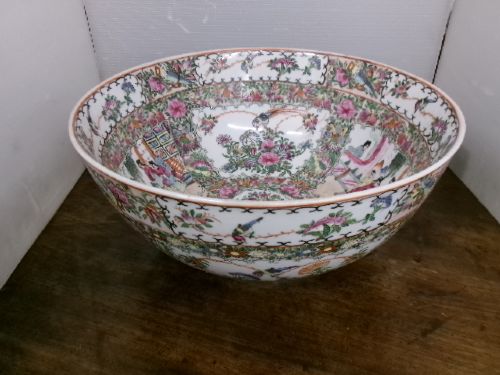
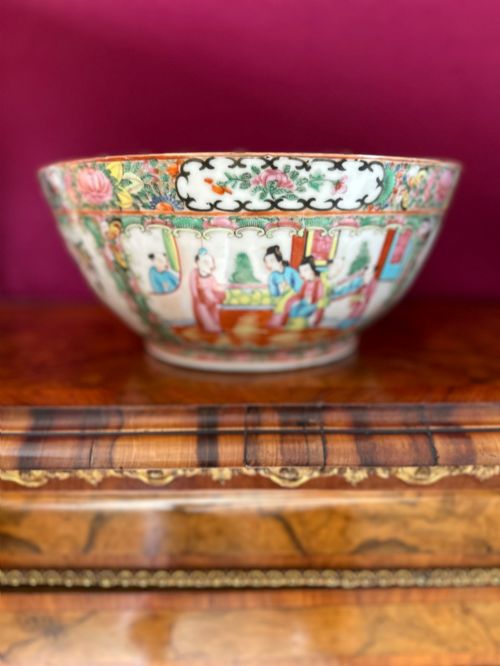
The most common examples on this page include large Japanese Imari bowls, Chinese Canton punch bowls, and elaborately painted English and French porcelain footed comports. Many pieces incorporate specialised forms such as tazzas, sweet baskets, and pedestal bowls.
Earlier Georgian and 18th-century specimens often display hand-painted botanical or landscape scenes, whilst later Victorian and Edwardian iterations lean towards bolder decorative motifs and gilded mounts.
Materials and Technique
Makers shaped these vessels from fine porcelain, bone china, and ironstone, applying glossy glazes before adding intricate hand-painted enamels. Many examples utilise gold leaf, gilding, and gilt bronze mounts to accentuate their sculpted rims and handles.
Advanced manufacturing techniques of the 18th and 19th centuries allowed for delicate openwork baskets, applied porcelain flowers, and complex multi-part structures involving metal fittings and champlevé enamel.
The selection includes Japanese Imari and Satsuma wares alongside traditional European factory productions.
Craftsmanship and Detail
The distinction between ordinary production and superior quality rests in the precision of the hand-painting, the crispness of the porcelain modeling, and the preservation of the original gilding. Finer pieces demonstrate meticulous brushwork in polychrome enamels and careful control during high-temperature firing.
Additional merit lies in the originality of mounts and covers, where heavier cast bronze, detailed figural supports, and unrubbed surface decoration elevate a vessel's overall presence.
Coalport·Derby Porcelain·Sèvres·Meissen·Royal Vienna·Wedgwood·Worcester Porcelain·Doulton Burslem·Royal Worcester
The Antique Porcelain Centrepiece Bowl Glossary
- Tazza
- A shallow bowl or cup mounted on a stem and foot, traditionally used for serving fruit or sweetmeats at formal meals. These elevated dishes create varying heights on a dining table.
- Imari
- A style of Japanese porcelain decorated in underglaze blue and predominant colours of iron red and gold, widely exported to Europe. This palette remains instantly recognizable for its rich ornamentation.
- Comport
- A decorative footed dish or bowl used for presenting fruit or confectionery during the 18th and 19th centuries. They frequently match larger garniture sets.
- Famille Rose
- A major palette of Chinese ceramic glazes introduced in the 18th century, distinguished by opaque pink or purple enamel colours. It often depicts elaborate figural and floral scenes.
- Gilding
- The application of gold leaf or powdered gold onto the surface of porcelain or bronze mounts to highlight decorative edges. Over time, gentle handling helps preserve its original brilliance.
Antique Porcelain Centrepiece Bowl: Frequently Asked Questions
What was a centrepiece bowl used for?
These vessels held fruit, flowers, or sweetmeats to anchor the middle of a dining table during formal banquets and gatherings.
Over time, their role shifted toward pure decorative display on sideboards, cabinets, and pedestals within wealthier households.
How do I care for antique porcelain?
Wash pieces by hand using lukewarm water and mild soap, avoiding modern dishwashers that can damage delicate painted enamels and gold leaf.
Display them away from direct sunlight and areas subject to sudden temperature fluctuations to protect the glaze and body.
How can I tell English porcelain from continental pieces?
Examine the base for factory marks, paste composition, and stylistic clues such as specific floral motifs or transfer-printed patterns typical of English potteries.
Continental factories like Sèvres and Meissen often utilised distinct soft-paste or hard-paste formulas alongside specialised blue underglaze signatures or impressed ciphers.
What is Chinese export porcelain?
This term describes ceramics manufactured in China specifically for the European and American markets from the 16th through the 19th centuries.
Designers blended traditional Chinese techniques with Western shapes and armorial requests to satisfy foreign consumer demand.