




Royal Vienna Urn
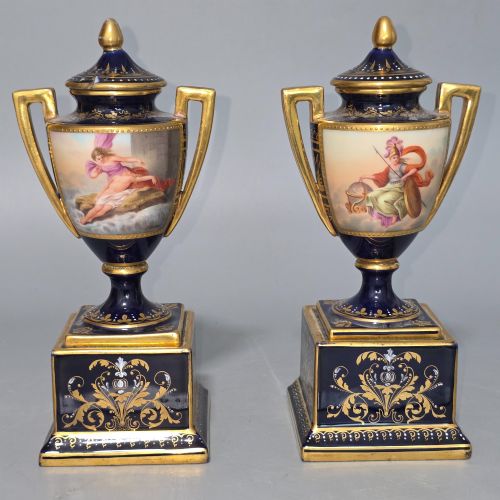
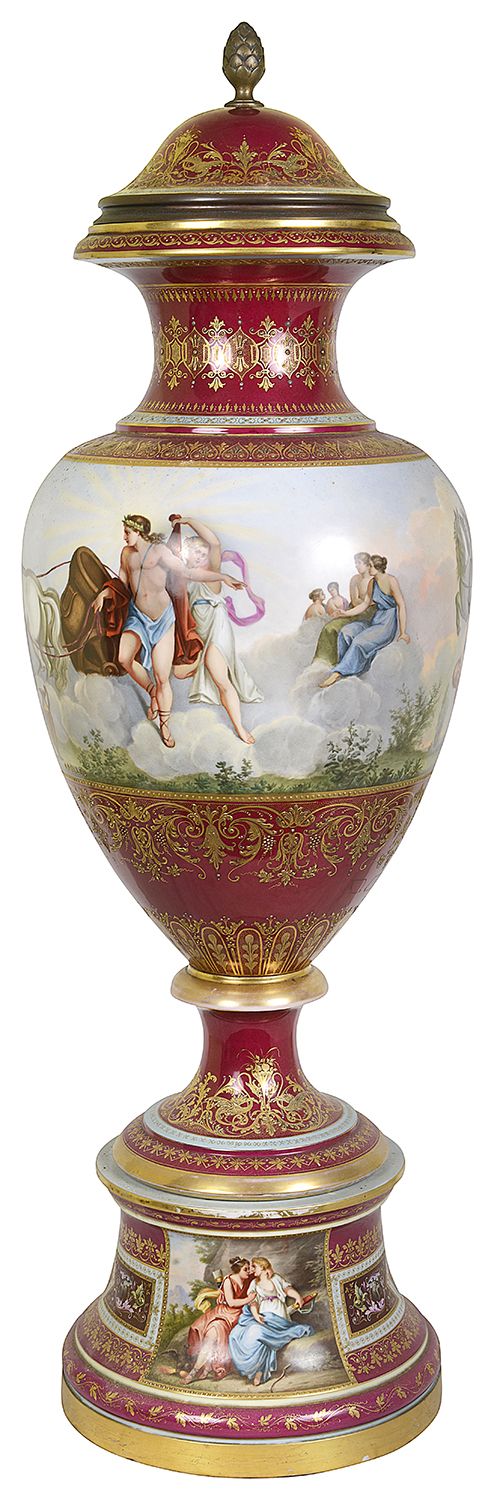
These royal vienna urn pieces are ornate porcelain vessels prized for intricate hand-painted classical scenes and rich gilding.
Royal Vienna Urn
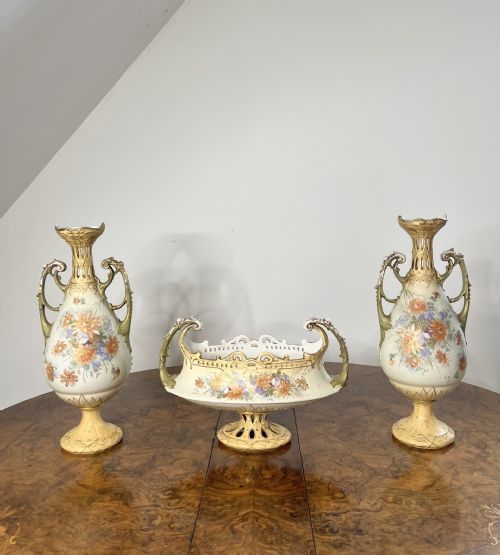
When you search for a royal vienna urn, you are looking at nineteenth-century decorative porcelain vessels that often feature neoclassical or empire styling. The pieces on this page span from eighteen fifty to nineteen hundred, including lidded urns, amphora vases, ewers, and garniture sets.
You are most likely to meet pairs of lidded vases or single decorative urns produced in porcelain. These objects showcase elaborate painted figurative scenes, portraits like Lissette, and ornate gilt handles or stands.
The aesthetic draws heavily on classical revival motifs, merging nineteenth-century European porcelain production techniques with historical themes. Collectors seek these items for their striking decorative presence and detailed craftsmanship.
Materials and construction
Makers shaped these vessels from white porcelain before applying hand-painted enamel decoration and detailed gold leaf or gilding. Many examples incorporate wooden display elements or stands alongside the ceramic body.
The surface decoration relies on careful brushwork for classical figures and floral motifs, often finished with raised gold leaf detailing. Kiln firing fixed the enamel pigments and heavy gilding to the porcelain substrate.
Listings feature nineteenth-century porcelain urns, vases, and ewers employing gold leaf, enamel, and wood materials.
Assessing quality
The richness and depth of the gilding and enamel work dictate the upper tier of the range. Solid execution in handles, covers, and associated stands separates standard production wares from exceptional studio output.
F. Koller
The Royal Vienna Urn Glossary
- Porcelain
- A hard, white ceramic material fired at high temperatures, forming the base body for all these vessels.
- Gilding
- The application of gold leaf or gold paint to highlight rims, handles, and decorative borders.
- Garniture
- A set of matching vases or urns, typically numbering three or more, designed to be displayed together on a mantelpiece.
- Amphora
- A two-handled ancient vessel shape with a narrow neck, frequently referenced in nineteenth-century neoclassical urn designs.
- Ewer
- A large jug with a wide spout and ornate handle, often produced as a matching partner to an urn.
Royal Vienna Urn: Frequently Asked Questions
What is a royal vienna urn?
A royal vienna urn is a nineteenth-century porcelain decorative vessel characterised by classical painting and rich gilding.
These pieces range from single lidded vases to large matching garniture sets created for display.
How were these urns used?
These vessels served primarily as decorative display items in nineteenth-century drawing rooms and parlours.
Pairs and garniture sets sat upon mantelpieces or pedestals to demonstrate the homeowner's refined taste.
How do I date these pieces?
Dating relies on stylistic clues like neoclassical revival motifs and recorded production periods from eighteen fifty to nineteen hundred.
Changes in porcelain body weight and enamel palettes also help distinguish earlier nineteenth-century examples.
Where should I display an urn?
Display these porcelain vessels on sturdy surfaces away from high-traffic areas to protect their delicate handles and gilding.
Mantelpieces, sideboards, and glass cabinets offer secure and prominent settings for single urns or pairs.