




Gilded Porcelain Vienna Urn
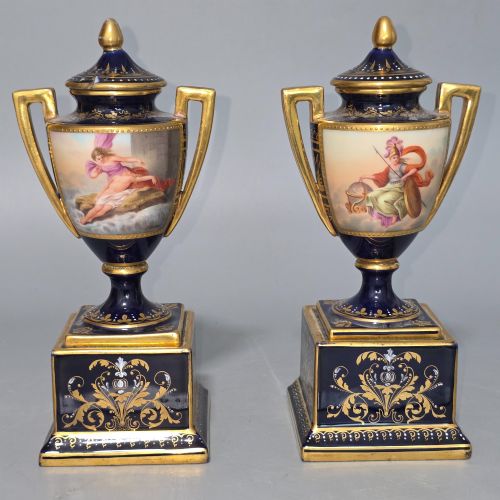
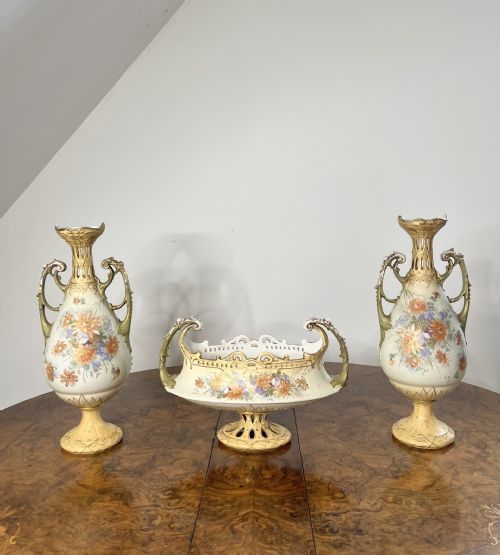
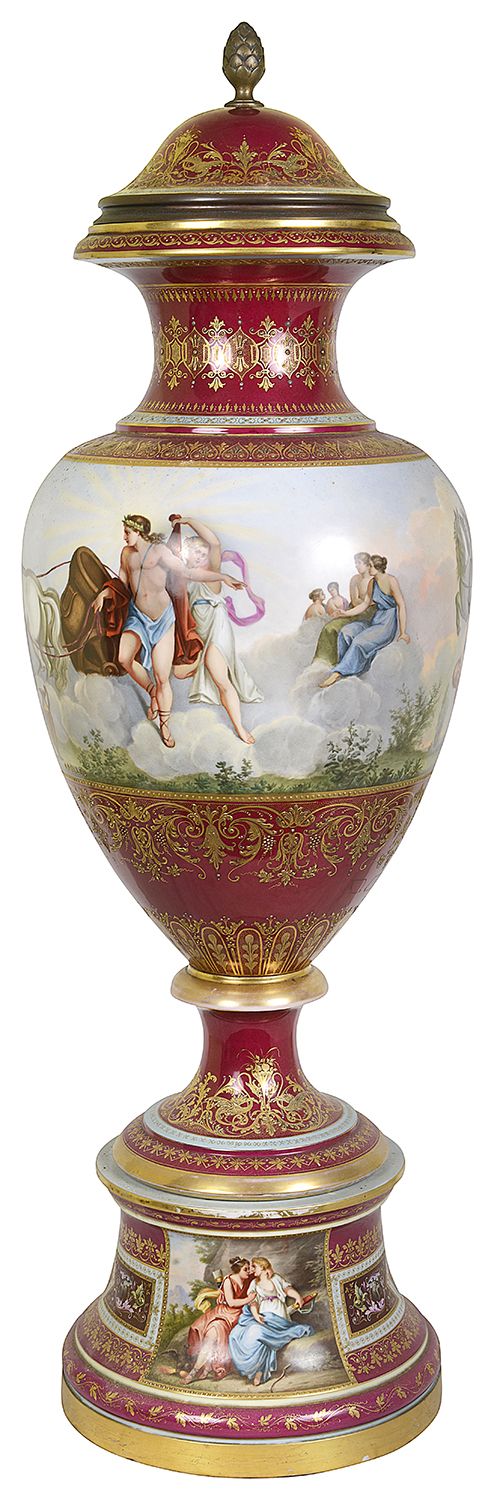
These gilded porcelain vienna urn pieces offer classical dignity and rich surface ornament, perfect for a grand mantelpiece or console.
Gilded Porcelain Vienna Urn
When you search for gilded porcelain vienna urn, you are looking at ornamental ceramic vessels created in various periods including the nineteenth century, eighteen-eighty, and nineteen-hundred. The selection on this page centres on vases, decorative urns, lidded urns, and garniture sets.
The dominant aesthetic draws upon neoclassical, empire, and rococo revival styles, alongside occasional art nouveau expressions. These pieces range from single grand items to matched pairs and three-piece garnitures.
How they were made
These items rely upon a core of ceramic and porcelain shaped into substantial vessels and finished with glaze. Surface decoration often incorporates hand-painted elements alongside enamel work.
The characteristic metallic enrichment is achieved through gold leaf, gilt, and extensive gilding applied across handles, rims, and figural panels.
Listings feature porcelain, enamel, and gold leaf applied across nineteenth-century neoclassical and art nouveau styles.
What varies in quality
Distinction across the range lies in the crispness of the porcelain moulding and the ambition of the painted scenes. Masterful portraiture and intricate enamel work separate standard decorative production from the finest cabinet pieces.
The application and preservation of the gold leaf and gilding also determine the visual impact. Heavy, burnished gold detailing commands greater presence than simple flat leaf application.
F. Koller·Ernst Wahliss
The Gilded Porcelain Vienna Urn Glossary
- Gilding
- The application of gold leaf or gold dust to a porcelain surface. This technique highlights raised motifs and frames hand-painted scenes.
- Garniture
- A set of matching vases or urns designed to be displayed together on a mantelpiece or sideboard. They typically comprise a central piece flanked by two smaller vessels.
- Amphora
- A two-handled ancient vessel shape adopted by nineteenth-century porcelain makers for classical decorative urns. These forms often feature prominent curved handles springing from the shoulder.
- Enamel
- Vitreous coloured glass fused to the porcelain surface during firing. It provides the brilliant pigments used for portraits and floral reserves.
- Neoclassical
- A design style inspired by classical Greece and Rome that emphasises symmetry, urn shapes, and restrained ornamentation. It forms the backbone of many nineteenth-century Vienna designs.
Gilded Porcelain Vienna Urn: Frequently Asked Questions
What is a gilded porcelain vienna urn?
It is a decorative ceramic vessel produced in the Vienna tradition, featuring glazed porcelain bodies enriched with gold leaf or gilt. These pieces frequently incorporate classical forms such as amphorae and lidded urns.
They served primarily as decorative garniture for nineteenth-century drawing rooms and formal spaces, displaying intricate hand-painted motifs.
How do I date a vienna urn?
Dating relies on stylistic clues, ranging from nineteenth-century empire and neoclassical revivals through to later art nouveau curves around nineteen-hundred. Form, handle shape, and the style of hand-painted decoration provide the clearest chronological markers.
Makers or specific artists noted in the listings also help narrow the decade of production.
Where should I display a garniture set?
Garniture sets of three lidded urns look best arranged across a wide mantelpiece, sideboard, or dedicated console table. The larger central vessel anchors the composition while the side vases balance the display.
Ensure they sit safely away from heavy traffic areas to protect delicate handles and raised gilding.
How do I care for antique porcelain and gilt?
Dust these decorative urns gently using a soft, dry brush rather than a cloth that might snag on raised gilding. Avoid liquid cleaners entirely, as moisture can damage enamel and fragile gold leaf.
Keep them out of direct, harsh sunlight to preserve the vibrancy of the hand-painted enamels.