




Antique Vienna Porcelain Vases
Antique vienna porcelain vases combine classical form with meticulous hand-painting, offering collectors grand decorative urns and garniture sets from the nineteenth century.
Antique Vienna Porcelain Vases
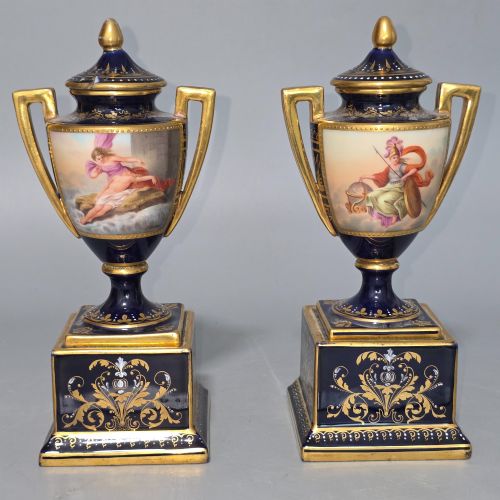
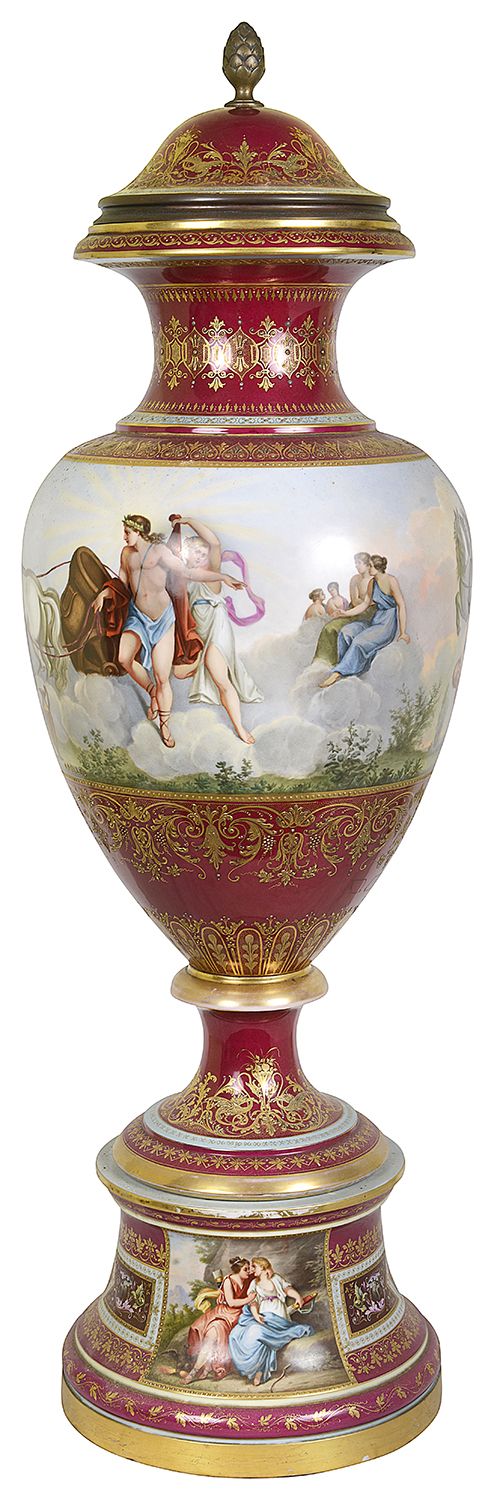
When you search for antique vienna porcelain vases, you encounter a selection of urns, ewers, and lidded vessels spanning the nineteenth century. These pieces range from substantial pairs of amphora vases to multi-piece garniture sets designed for prominent display.
The objects on this page emerge from various periods within the nineteenth century, including specific decades such as 1850, 1870, 1880, 1890, and 1900. Forms vary from single decorative ewers to large classical lidded urns and matching side vases.
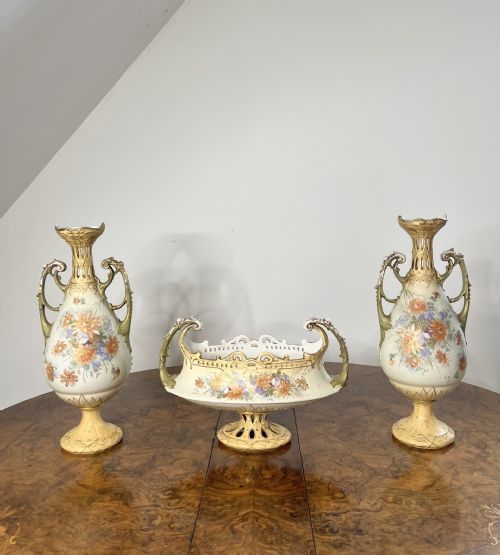
Makers and styles represented here encompass Royal Vienna productions alongside pieces by Ernst Wahliss and items executed in the Vienna style. Aesthetic influences draw heavily upon Neoclassical, Empire, Art Nouveau, and Rococo Revival movements.
Assessing quality and execution
Quality in these pieces rests upon the precision of the hand-painted execution and the crispness of the porcelain moulding. Superior examples display refined brushwork on portrait panels and botanical motifs rather than repetitive stencilled patterns.
The application of gold leaf and enamel work distinguishes finer productions from simpler wares. Rich, substantial gilding and detailed relief work indicate higher workshop standards during the manufacturing process.
Listings feature porcelain pieces spanning the nineteenth century, incorporating Neoclassical, Empire, and Art Nouveau styles.
Ernst Wahliss·F. Koller
The Antique Vienna Porcelain Vases Glossary
- Garniture set
- A matched group of three or more decorative vessels designed to be displayed together on a mantelpiece or sideboard.
- Amphora
- A two-handled ancient vessel form revived during the nineteenth century for large decorative vases.
- Ewer
- A large jug with a wide spout and ornate handle, produced in porcelain as a decorative display piece.
- Gilding
- The application of gold leaf or gold paint to highlight ceramic details and structural borders.
- Enamel
- Opaque glass-like substance fused to the porcelain surface to create raised coloured decoration and patterns.
Antique Vienna Porcelain Vases: Frequently Asked Questions
How do I display a vase garniture?
Garniture sets of three large lidded vases work best arranged across a wide mantelpiece or a dedicated side table, placing the tallest vessel in the centre.
Keep the pieces away from direct heat sources and heavy foot traffic to protect the delicate enamel and gold leaf details.
What is a lidded urn used for?
These large porcelain urns served purely as decorative centrepieces in nineteenth-century interiors rather than functional vessels.
Their substantial scale makes them focal points for formal rooms and grand architectural spaces.
How do I identify Art Nouveau pieces?
Art Nouveau examples, such as those by Ernst Wahliss, feature flowing organic lines and naturalistic motifs rather than strict classical symmetry.
These pieces typically date towards the very end of the nineteenth century or around nineteen hundred.
What distinguishes Empire style vases?
Empire style vessels draw upon classical antiquity and military motifs, often incorporating strict symmetry, bold amphora shapes, and rich gilding.
Parks of handles and covers on these pieces reflect formal Napoleonic design influences.