



Decorative Porcelain Lidded Urns
These decorative porcelain lidded urns bring colour and formal symmetry to a room, offering covered vessels shaped across the nineteenth and twentieth centuries.
Decorative Porcelain Lidded Urns
When you search for decorative porcelain lidded urns, you encounter covered vessels, ginger jars, and pot pourri vases originating from English, French, German, and Japanese makers. These pieces span the nineteenth century into the mid twentieth century, encompassing Victorian, Edwardian, and Art Deco periods.
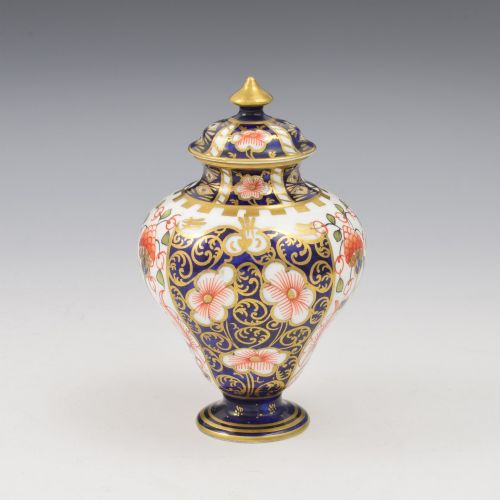
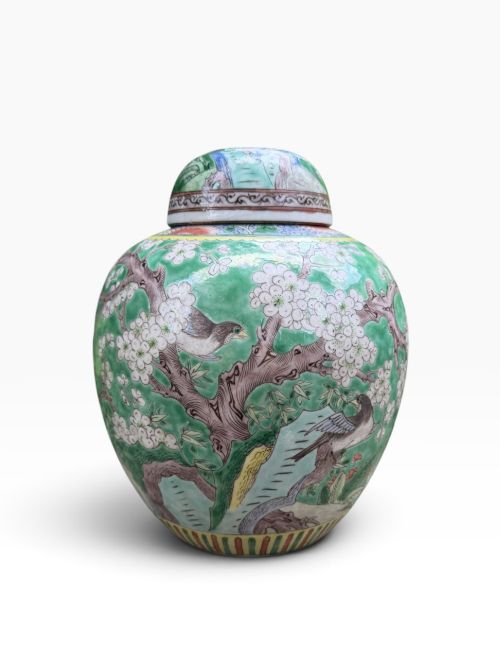
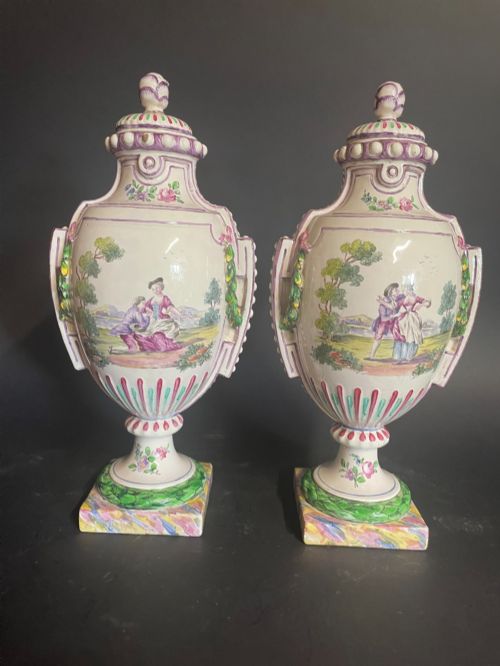
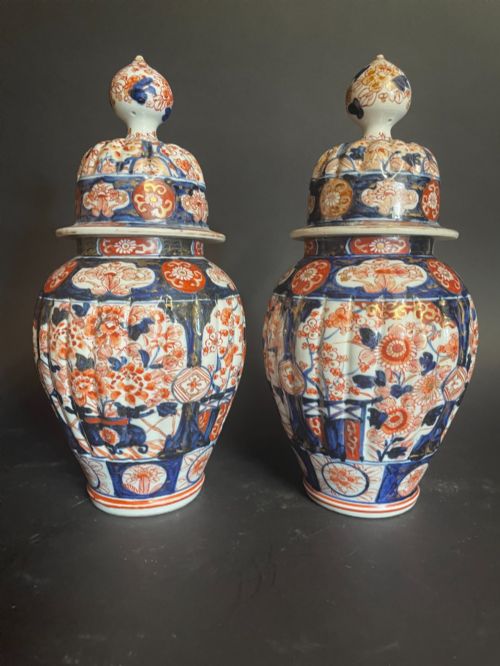
The most common examples on this page are nineteenth century Japanese Imari and Chinese ginger jars, alongside English painted fruit vases and continental Sevres style garnitures. Their forms range from miniature cabinet pieces to monumental pair urns mounted with ormolu.
Makers utilised earthenware, ironstone, and hard paste porcelain, decorating surfaces with hand painted fruit, blue and white pigments, and rich enamel palettes. Covers take various forms, from domed lids with crown tops to simple recessed discs.
Materials and production methods
Potters shaped clay bodies on the wheel or pressed them into moulds, applying white glazes before firing the ceramic at high temperatures. Artisans then added hand painted motifs, enamels, and gold leaf gilding in subsequent low temperature kiln firings.
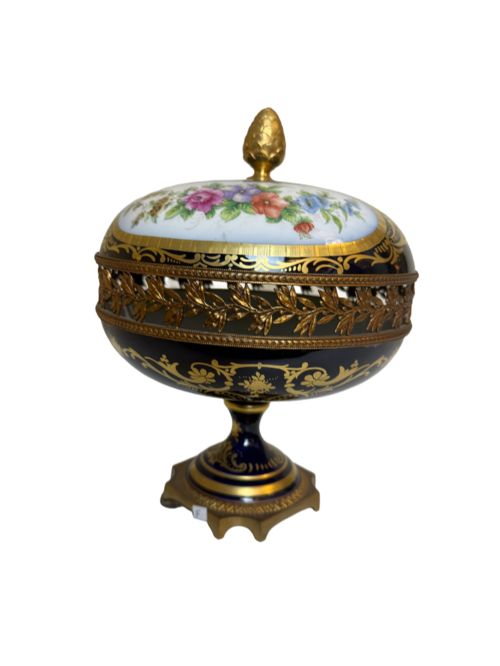
Mounts in cast ormolu secure the bases and rims of larger continental pieces, adding structural weight and metallic contrast to the porcelain. Certain workshops combined earthenware or ironstone bodies with intricate overglaze transfer printing and painted highlights.
The inventory spans porcelain, earthenware, and ironstone, featuring Victorian, Edwardian, Meiji, and Art Deco periods alongside French Rococo revival styles.
Distinctions in quality and execution
The standard of a piece depends on the precision of the hand painting and the crispness of the enamel and gilding details. Royal Worcester fruit compositions and signed works by artists display meticulous brushwork compared to standard factory production.
Proportion and symmetry separate standard utility vessels from grand display urns, particularly in matched pairs where the contours must align precisely. The presence of original matching covers and gilt bronze ormolu mounts elevates the standing of an antique.
Royal Worcester·Wolfsohn Dresden·Hadley and Sons·Royal Crown Derby·Coalport·Minton
The Decorative Porcelain Lidded Urns Glossary
- Pot pourri
- A decorative vase or jar with a pierced cover designed to diffuse dried scented petals into a room. These pieces often feature hand painted fruit or floral panels.
- Ginger jar
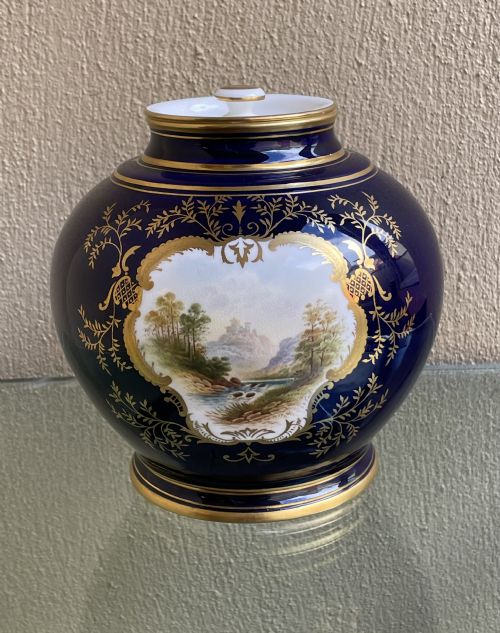
- A high shouldered ceramic storage vessel with a short neck and flat fitting cover, originating from China and later imitated by European potteries. Imari and blue and white examples appear frequently.
- Ormolu
- Gilded bronze mounts applied to the handles, rims, or bases of decorative porcelain urns. This technique gained prominence on nineteenth century continental and Sevres style pieces.
- Imari palette
- A traditional decorative scheme utilising cobalt blue, iron red, and gold on a white porcelain ground. This style originated in Japan and heavily influenced European manufacturers.
- Garniture
- A set of three or more matching vases and urns designed to be displayed together on a mantelpiece or sideboard. Victorian and continental workshops produced these in pairs or larger sets.
Decorative Porcelain Lidded Urns: Frequently Asked Questions
What were lidded urns used for?
These covered vessels served primarily as decorative garnitures on mantelpieces and sideboards, adding symmetry to formal room displays.
Specific forms like pot pourri jars held dried fragrant plant materials, allowing scent to drift through the pierced lids.
How do I date a porcelain urn?
Dating relies on factory bottom marks, artist signatures, and stylistic indicators such as Victorian revival shapes or Art Deco palettes.
Comparing the glaze texture and the method of gilding also provides clues to whether a piece belongs to the nineteenth or twentieth century.
Are these pieces waterproof?
While the ceramic bodies are vitrified and glazed, antique lidded urns were made for display rather than utility.
Using them to hold water for fresh flowers risks damaging fragile enamel work, gilding, and historical interior surfaces.
What is the difference between an urn and a ginger jar?
Ginger jars typically feature a rounded body, broad shoulders, and a flush fitting lid, originating from traditional storage containers.
Urns usually stand on a defined pedestal base with handles and a decorative cover, designed strictly for ornamental presentation.